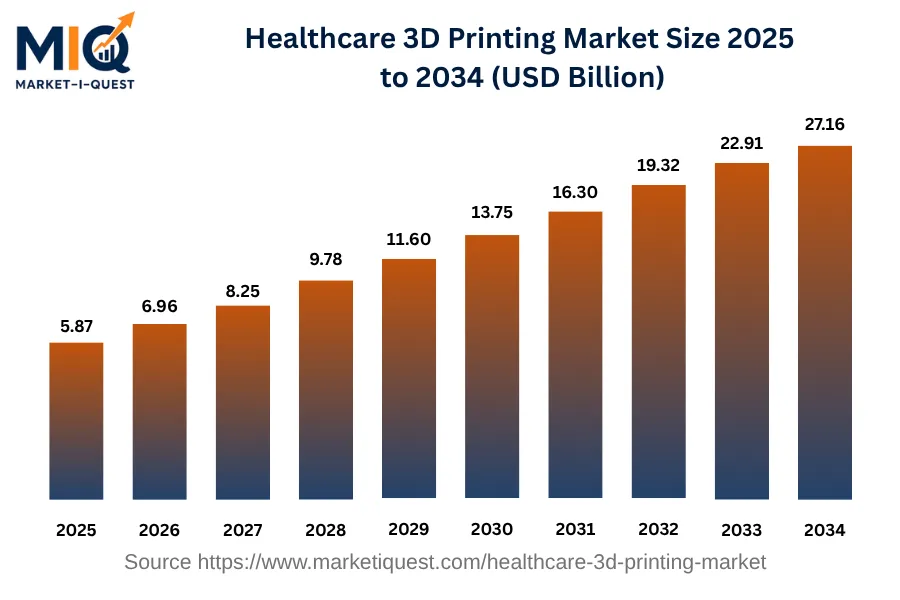
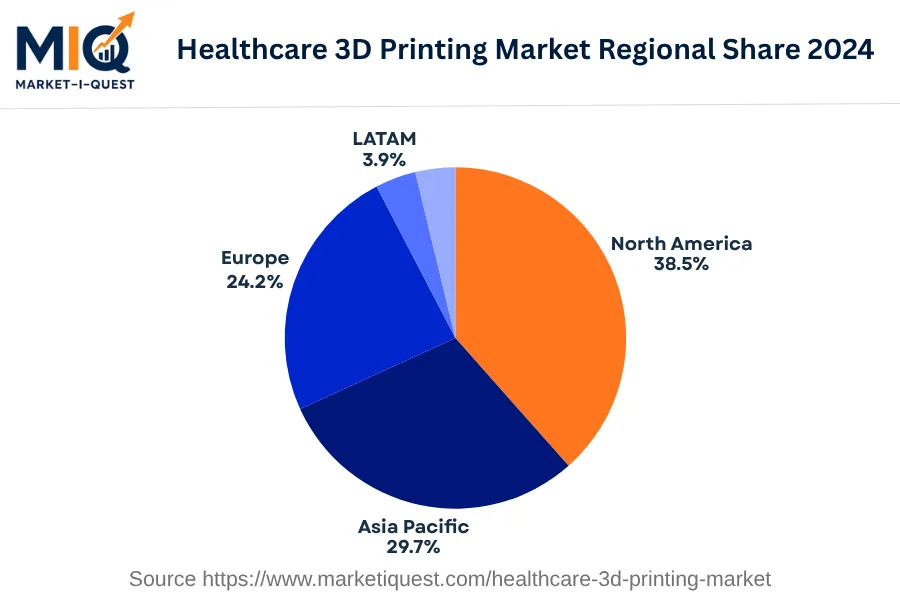
In 2024, the North American Healthcare 3D Printing Market exhibited substantial growth due to several factors. Key drivers included increasing healthcare investment by the U.S and Canadian governments, and the rising need for personalized medical solutions in orthopedics and dental sectors. Innovation in technology, particularly within bio-printing, encouraged market expansion, with companies such as Organovo pioneering in tissue and organ manufacturing. Increasing demand for advanced healthcare solutions and the availability of funding for R&D also stimulated the market's steady growth. Trends shaping the landscape included a shift in buyer behavior towards personalized, on-demand, medical devices such as prosthetics. With cost-effective innovations, the adoption of 3D printing technology became widespread in healthcare institutions and research centers.
The emergence of strategic partnerships and mergers among leading players, such as Stratasys’s joint venture with Materialise, facilitated market consolidation, improving the reliability and quality of printed products. Regulatory changes by the FDA concretized the standards for 3D printed medical devices, fostering a supportive environment for market growth. Industry sectors playing key roles included government, healthcare, and manufacturing. Governmental initiatives in the U.S., Canada, and Mexico, focused on integrating 3D printing into healthcare systems, significantly contributing to the market's dynamism. Meanwhile, demand in healthcare facilities indicated the rising interest for tailored medical solutions, particularly in orthopedics, dental, and surgical units.