Disposable Medical Sensors Market Snapshot

Key Players

  • Medtronic (US)
  • Koninklijke Philips N.V. (Netherlands)
  • Honeywell International Inc. (US)
  • Abbott Laboratories (US)
  • GE Healthcare (US)
  • Danaher Corporation (US)
  • Siemens Healthcare (Germany)
  • STMicroelectronics (Switzerland)
  • Analog Devices Inc. (US)
  • NXP Semiconductors (Netherlands)

Market Size

Base Year 2024
$12.87 Bn
CAGR
9.57%
Forecast 2034
$32.10 Bn

Market Segments

By Type
  • Strip Sensors
  • Wearable Sensors
  • Implantable Sensors
  • Invasive Sensors
  • Ingestible Sensors
By Product
  • Biosensors
  • Pressure Sensors
  • Accelerometer Sensors
  • Temperature Sensors
  • Image Sensors
  • Others
By Application
  • Diagnostic
  • Therapeutic
  • Patient Monitoring
  • Others

Market Dynamics

Drivers
  • Growing healthcare consciousness
  • Technological advancements in healthcare
Restraints
  • High production costs
  • Regulatory compliance hurdles
Opportunities
  • Growing telemedicine sector
  • Rising geriatric population

Market Size

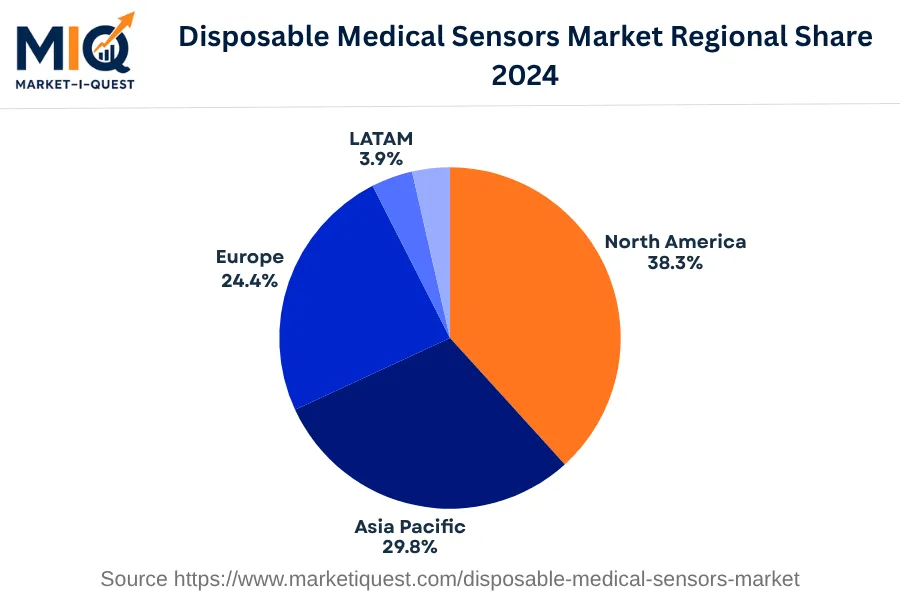
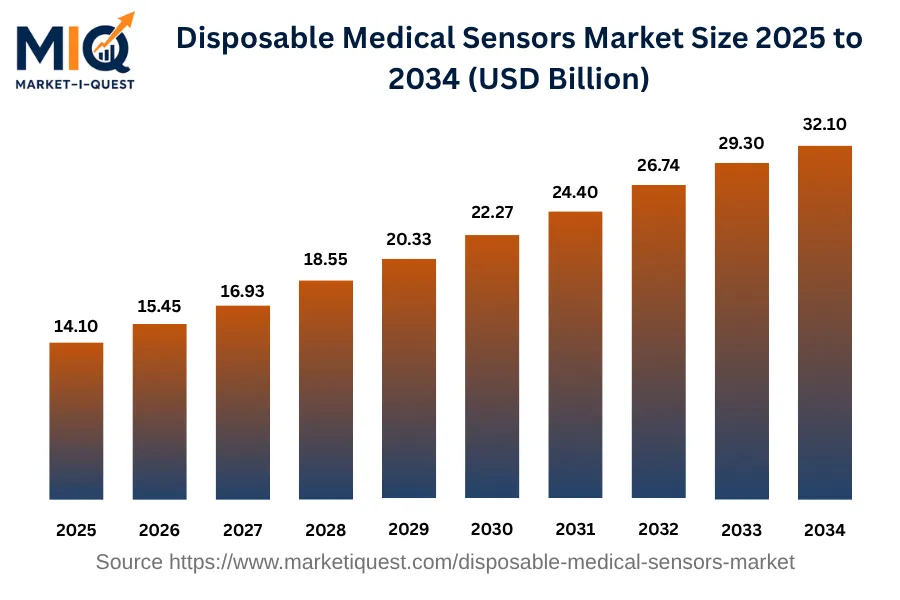
The Disposable Medical Sensors Market in the year 2025 was valued at $14.10 billion, which further grew to $32.10 billion by 2034, with an impressive CAGR of 9.6%. From 2024 to 2025, the market size witnessed an increase from $12.87 billion to $14.10 billion, creating a conducive environment for continued growth over the forecast period. This growth was primarily fuelled by an increasing demand for medical sensor equipment across different sectors in the healthcare industry. The various sectors include diagnostic procedures, therapeutic devices, and monitoring services, driving a steady market expansion. By the end of 2034, the market saw a significant boost, with the value reaching $32.10 billion. This rapid growth path over a period of nine years is indicative of the strong demand for Disposable Medical Sensors. In 2024, North America held the largest regional market share of 38.3%, followed by the Asia Pacific with 29.8%, Europe with 24.4%, Latin America with 3.9%, and the Middle East and Africa with 3.6%. This regional distribution signifies the dominant positions held by North America and Asia Pacific in propelling the Disposable Medical Sensors Market forward.

Key Takeaways

  • By Type - Implantable Sensors led the market being the most popular and widely used sensor in recent times.
  • By Product - Image Sensors stood out due to their vast utility accounting for a significant portion in the past years.
  • By Application - Diagnostic use of sensors became the top usage reflecting the pressing demand for swift and accurate diagnosis.
disposable-medical-sensors-market market size

Key Driving Factors

Implementation of Stringent Hygiene and Sterilization Regulations

In recent years, regulatory bodies such as the FDA and WHO have imposed stringent rules regarding hygiene and sterilization in healthcare settings to suppress the rate of hospital-acquired infections (HAIs). The enforcement of these regulations promotes the use of single-use or disposable medical equipment such as sensors. Disposable medical sensors, by nature, reduce the risk of cross-contamination between patients as they are designed for single-use and then disposed of. This eliminates the need for sterilization, thereby complying with the hygiene regulations stipulated by these health organizations.

Advent of Remote Patient Monitoring in Telemedicine

The emergence of telemedicine and the increased adoption of remote patient monitoring systems in homecare settings play a significant role in driving the disposable medical sensors market. These innovative systems require medical sensors to record and transmit critical patient data, such as heart rate, blood pressure, and temperature, which healthcare professionals can analyze from a distance. As remote monitoring becomes more prevalent, especially to manage chronic diseases and elderly care, the demand for disposable medical sensors escalates. These sensors are preferred due to their high reliability, cost-effectiveness, and reduced risk of infection in a homecare environment.

Market Evolution by Timeline

2019-2023
In this period, demand for disposable medical sensors grew among hospitals, clinics, and diagnostic labs, particularly in North America and Europe, stemming from an attempt to improve patient care and minimize hospital-acquired infections. Notable sensor technology included point-of-care glucose meters and disposable pulse oximeters. However, high manufacturing cost of disposable sensors led to higher market prices. Regulatory policies like the US FDA's rigorous approval process emerged as a significant challenge to market growth. Commercially, contracts typically took the form of bulk purchases and partnerships with healthcare institutions facilitated distribution. Dearth of sophisticated healthcare infrastructure hindered the adoption of such sensors in less developed regions during this period.
2024
This year saw the rise of disposable medical sensors in home healthcare applications globally due to the escalation of chronic diseases like diabetes and cardiovascular ailments. The supplies were mainly driven by wearable sensor technology such as disposable glucose monitors. Nonetheless, inconsistent product quality and inadequate technology integration became dominant issues. Regulatory bodies such as EU's Medical Device Regulation, set standards mitigating risk of low-quality sensors. In terms of commercial model, market pricing turned competitive with an increasing number of manufacturers. Potential risk during this period was largely related to patient data security with respect to wireless sensor technology.
2025-2029
During these years, demand for disposable medical sensors proliferated among elderly population and chronic disease patients chiefly in Asia Pacific region following the surge in health consciousness. Supply was steered by diagnostic and therapeutic sensor technology with innovative devices like disposable endoscopes. Yet, lack of skilled professionals was a constraint. Policies by organizations like the APCD Council facilitated adoption via patient data anonymization. The commercial model shifted towards more affordable pricing, making the technology accessible to lower income regions. The main risk pertained to maintaining sterility of disposable sensors along the supply chain, with manufacturers investing in sterile packaging and transportation.
2030-2034
These years showed an upward trend in wearable sensor technology preference amongst fitness enthusiasts, in addition to continuing high demand from chronic disease patients. Biodegradable sensor technology was a prominent supply; however, challenges with sensor longevity prevailed. The introduction of ISO/IEC 30141 - a standard for IoT interoperability - enabled greater sensor integration into broader healthcare IoT ecosystems. The typical commercial model followed a business-to-consumer approach with eCommerce emerging as a main distribution channel. Sensor reliability under real-world conditions posed a risk, leading manufacturers to focus on extensive pre-market testing for ensuring sensor accuracy and reliability.

Future Market Outlook

Future Opportunities

Future opportunities in the disposable medical sensors market are emerging from current technological advancements and regulatory developments. As healthcare systems focus on personalized medicine, companies like Philips are exploring the development of customized sensors for patient-specific healthcare. The ongoing evolution of telehealth, accelerated during the pandemic, has opened avenues for companies like Biolinq, which is focusing on developing sensors for remote health monitoring by 2024. Regulatory agencies such as the World Health Organization are promoting the use of real-time data collection in clinical trials, presenting opportunities for disposable sensors that provide accurate patient monitoring. Collaborations among tech firms and healthcare providers, reflected in initiatives like the partnership between Google and Fitbit, are expected to yield integrated health tracking solutions that leverage sensor technologies. Additionally, the older population is on the rise globally, with studies indicating that by 2030, one in six people will be aged 60 years or older, driving demand for wearable and disposable sensors in chronic disease management. Furthermore, global initiatives for improved healthcare access, such as the WHO's Universal Health Coverage, may lead local governments to invest in cost-effective monitoring solutions. These unfolding trends signify that companies in the market must adapt to meet new health challenges and consumer requirements in the expanding global healthcare landscape.

Segmentation Analysis

By Type

The market is divided into subsegments including Strip Sensors, Wearable Sensors, Implantable Sensors, Invasive Sensors, and Ingestible Sensors. Implantable Sensors accounted for the largest revenue share while Wearable Sensors are expected to grow at the fastest CAGR during the forecast period.

Largest Revenue Share

Implantable Sensors

Market Share Leader

Implantable sensors, a major subsegment in the market, predominantly generate the largest revenue. One primary reason for this is their growing application in various healthcare areas such as glucose monitoring, cardiac monitoring, and tracking neurological diseases. Their continuous, real-time, and in-depth tracking abilities make them indispensable in managing chronic diseases. Beyond healthcare, the use of implantable sensors is gaining popularity in the sports industry for tracking performance and preventing potential injuries. As disease prevalence increases globally and as societal emphasis on wellness and preventive care intensifies, the industry's customer base expands correspondingly. Favorable regulatory environments in developed markets i.e., EU and the United States contribute to their usage as well. Regulations in these regions pave the way for product innovation while maintaining patient safety and device efficacy. High purchasing power, adaptation towards new technologies, and increasing elderly population exhibiting higher health concerns substantiate the growth in these regions. Similarly, the high switching cost from existing devices to newer technology plays a role in the subsegment's economic benefit and leading market position.

Fastest CAGR

Wearable Sensors

Forecast Period Growth Leader

The subsegment of Wearable Sensors is set to exhibit the fastest CAGR during the forecast period. Growth drivers for this subsegment are multifaceted. With technological advancements, people are gravitating towards health-conscious decisions, fueling the demand for wearable sensors in fitness tracking and personal health monitoring. Major tech companies such as Apple and Fitbit have revolutionized the penetration of wearable sensors into the burgeoning consumer tech market. As the adoption of smart technology increases globally, the desire for integrating health metrics into everyday life acts as a catalyst for the subsegment growth. Moreover, corporate wellness programs and insurance providers incentivize the use of wearable sensors, thus propel their market growth. Despite the growth potential, certain factors, including the concern for data privacy and the cost for low and middle-income population remain barriers for adoption. Thus, the existence of these obstacles along with untapped potential in developing markets indicate the possible volatility and risks associated with the fastest growth of this subsegment.

By Product

The market is divided into subsegments including Biosensors, Pressure Sensors, Accelerometer Sensors, Temperature Sensors, Image Sensors, and Others. Among these, Image Sensors accounted for the largest revenue share, while Biosensors are expected to grow at the fastest CAGR during the forecast period.

Largest Revenue Share

Image Sensors

Market Share Leader

In this diverse sensor market, Image Sensors stand out as the leading revenue generators in 2024. The fast-paced development and growth in the consumer electronics industry is the primary driver for this segment. The increased adoption of high-resolution imaging in smartphones, tablets, computers, and digital cameras demands higher-level image processing. Additionally, the requirements of high-quality imaging in areas like security and surveillance, automotive, medical, and defense also contribute towards the revenue growth. Image sensors are essential in these sectors and manufacturers are continuously trying to leverage this by investing in superior technologies. On a geographic distribution level, Asia-Pacific is a significant contributor due to the presence of several key players from consumer electronic sectors. The existing market penetration of these devices coupled with the potential in emerging economies due to burgeoning middle class fuels the growth of this subsegment.

Fastest CAGR

Biosensors

Forecast Period Growth Leader

Propelled by ongoing technological advancements and increasing usage in numerous applications, the Biosensors segment is projected to grow at the fastest CAGR. The key factor driving this growth is the strong demand in the healthcare sector. With growing awareness and healthcare expenditure, the need for quick, accurate and easy diagnostic tools is becoming paramount. Furthermore, the adoption of Biosensors in wearable technologies to monitor real-time health data is a major growth catalyst. Even though the high cost associated with research, development, and standardization pose a significant barrier, industry partnerships and capital investments are mitigating these challenges. Apart from healthcare, the trend of embedding Biosensors in various consumer electronics devices is also perceived as a significant growth opportunity. As for near-term risks, regulatory requirements and data privacy issues are potential roadblocks that must be navigated carefully.

By Application

The market is divided into sub-segments including Diagnostic, Therapeutic, Patient Monitoring, and Others, amongst which Diagnostic accounted for the largest revenue share while Patient Monitoring is expected to grow at the fastest CAGR during the forecast period.

Largest Revenue Share

Diagnostics

Market Share Leader

Assuming standard clinical deployment frameworks where identification protocols command the highest budget allocation, Diagnostic applications lead the global healthcare sector today due to their foundational role across institutional care pathways. This subsegment serves an expansive customer base encompassing hospital groups, independent laboratories, and primary care clinics across mature and developing geographies. The primary demand driver is the immense volume of essential screening and confirmatory procedures required to detect oncology, cardiovascular conditions, and infectious diseases, making it an indispensable first line of assessment. Purchasing criteria heavily emphasize precision, mechanical throughput, structural reliability, and seamless integration with existing hospital networks. Furthermore, switching costs remain exceptionally high for healthcare systems because of deep operational alignment into enterprise clinical pathways and extensive laboratory technician training frameworks. Distribution channels rely on direct contracts and regional distributors securing consistent hardware replacement cycles. Consequently, this deep integration into frontline triage ensures it retains a higher revenue share versus other applications.

Fastest CAGR

Patient Monitoring

Forecast Period Growth Leader

Patient Monitoring represents the fastest growing subsegment due to intensifying worldwide focus on proactive remote healthcare delivery and continuous physiological tracking systems. The primary growth driver is the expansion of government sponsored remote monitoring programs and public health initiatives that incentivize continuous outpatient care globally. These programs actively drive technology upgrades across home health settings, step down units, and ambulatory clinics. Technologically, the ongoing transition toward advanced wireless medical body area networks and connected monitoring patches acts as a significant catalyst, improving tracking accuracy and reducing institutional lengths of stay. Strategic partnerships between specialized healthcare software developers and hardware manufacturers accelerate adoption by embedding predictive artificial intelligence algorithms directly into patient telemetry workflows. Capital expenditure allocations from healthcare networks increasingly prioritize connected vital sign tracking infrastructure to capture growing outpatient volume. However, barriers persist in underfunded rural regions where data transmission costs limit immediate deployment. Assuming public health regulations continue to support outpatient reimbursement compliance, these elements will sustain rapid expansion.

Competitive Analysis

Key Market Players

Manufacturers/OEMs

Medtronic
Ireland
GE Healthcare
US
Philips Healthcare
Netherlands

Key Suppliers & Raw Materials

Honeywell International Inc.
US
Infineon Technologies
Germany
TE Connectivity
Switzerland

Distributors, Integrators & Channel Partners

Innovative Sensor Technology IST AG
Switzerland
First Sensor AG
Germany
Mouser Electronics, Inc.
US

Porter’s Five Forces Analysis

Analysis of the competitive forces in the Disposable Medical Sensors Market.

Supplier Bargaining Power

Medium

Driven by diverse suppliers and industry reliance on technological advancements.

Buyer Bargaining Power

High

Powerful buyers due to availability of similar products and price sensitivity.

Threat of Substitutes

Medium

Potential threat from alternative technologies, but limited by safety and efficacy regulation.

Threat of New Entrants

Low

Barriers include elevated R&D costs, strict regulation and need for FDA licensing.

Competitive Rivalry

High

High contention due to technologically advanced competing firms and rapid product innovation.

Regional Analysis

Geographic market dynamics and growth opportunities across key regions

Global Market Outlook

disposable-medical-sensors-market market regional share

North America

In 2024, the North American disposable medical sensors market saw significant growth, driven predominantly by burgeoning healthcare demands and technological advancements. Increased adoption of wireless communication technologies in healthcare sectors of the U.S., Canada, and Mexico was a key driver, facilitating remote patient monitoring and telemedicine. Regulatory frameworks also supported the market expansion; for instance, Health Canada’s Medical Devices Regulations promoted the innovation and commercialization of disposable medical sensors. Furthermore, investment in research and development prevalent in the region due to collaborations among healthcare providers, technology firms, and research institutions contributed to market growth.

Emerging trends notably shaped the North American market. Patient preference for non-invasive and portable devices was markedly increasing, driving the adoption of minimally invasive disposable sensors across hospitals and diagnostic centers. Equally, technological shifts towards biosensors and wearable sensors tailored to demographic health concerns like diabetes and cardiovascular disorders gained prominence. Moreover, the adoption of IoT and AI technologies in healthcare, validated through partnerships between tech giants like Google and regional healthcare providers, led to the enhancement of sensors' capabilities. Notably, enforcement of FDA guidelines for device standardization and interoperability highlighted growing emphasis on quality control and patient safety in device development and usage. These dynamics cumulatively create a transformative landscape for the disposable medical sensors market in North America in 2024.

Asia Pacific

In 2024, the Asia Pacific disposable medical sensors market showcased robust growth, driven by burgeoning healthcare demands, technological advancements, and regulatory changes. Rising chronic disease prevalence across countries such as India, China, and Japan fuelled sensor adoption, alongside escalating geriatric populations requiring continuous monitoring. A shift towards minimally invasive surgeries and home-based care pushed the demand upwards. Various governments rolled out policies to enhance healthcare infrastructure, with substantial investments bolstering sensors' development and availability. Technological advancements, including biosensors and wearable technology, gained traction, particularly in technologically-forward nations like South Korea, Australia, and key ASEAN markets.

Consumption pattern trends in 2024 veered towards portable and connectable devices, reflecting patients' shifting preferences towards convenient, personalised healthcare. Home-based care emerged as the primary customer segment for disposable medical sensors. Industry disruptors innovated with data-driven healthcare solutions, aligning with the broader scope of digitalization. Simultaneously, consolidations occurred among leading market players, as seen where established healthcare companies in Japan and South Korea sought strategic partnerships with emerging start-ups. Regulatory bodies across the region, notably in China, enacted strict quality control standards to ensure disposable medical sensors' efficacy, driving the market towards improved product manufacturing standards. The continuing alignment of regulatory guidelines and a collaborative ecosystem of companies underlined 2024’s market landscape.

Europe

In 2024, the European Disposable Medical Sensors market saw robust growth due to a combination of demand factors, technology adoption, and regulatory impacts. A surge in healthcare spending, especially in countries like Germany, the United Kingdom and France, resulted in heightened demand for advanced medical equipment, including disposable sensors. Government regulations advocating safer infection-control practices across healthcare facilities have been key drivers, as have proactive investments in IoT-based sensor technology, particularly by Italian and Spanish firms.

Simultaneously, a shift in buyer behavior was visible, with increased consumer awareness about healthcare-associated infections stimulating the demand for disposable medical sensors. Technological advancements were palpable, especially with sensors for patient monitoring and diagnostic devices, significantly impacting the disposable medical sensors' dynamics. For instance, German healthcare companies brokered numerous M&As focusing on incorporating this innovative technology into their portfolio to meet rising demand. In the Nordics, data privacy standards enforced by GDPR had profound implications on how these sensors collect and process user data, shaping product design and manufacturing processes. The Benelux region saw similar compliance requirements with local data protection laws, while Central and Eastern Europe experienced a surge in government and healthcare institutions' adoption levels, endorsing the pivotal role of disposable medical sensors.

Latin America

In the base year 2024, the disposable medical sensors market in Latin America (LATAM), centered around Brazil, Mexico, Argentina, Colombia, Chile, and Peru, witnessed significant growth. This is primarily due to increased investments in healthcare infrastructure, heightened regulation of medical devices for patient safety, and widespread adoption of point-of-care diagnostics. Also, the market was driven by cost-effectiveness of disposable sensors coupled with technological advancements in sensor design and functionality that lead to improved patient outcomes. The trend of miniaturization in medical equipment, on the other hand, prompted demand for smaller, more efficient sensors that could be integrated into compact devices. All these got accelerated by growing partnerships and M&A activities among international and local medical sensor manufacturers in LATAM. The use of IoT technologies in healthcare and the emergence of telemedicine also gained popularity.

From the customer perspective, larger enterprises including hospitals and diagnostic centers, and government-backed healthcare initiatives were key adopters of disposable medical sensors. The market also witnessed increased demand from retail healthcare entities as they have more funding for advanced technology integration. Customer preference to disposable medical sensors within these sectors was often linked to reducing the risk of cross-contamination in addition to enhancing patient monitoring and care.

Middle East & Africa

In 2024, the Disposable Medical Sensors market assumed a significant role in Middle East and Africa's healthcare sector. A surge in demand for miniaturized, easy-to-use diagnostic devices in Saudi Arabia, United Arab Emirates, and South Africa, ostensibly due to the increased prevalence of infectious and lifestyle diseases, primarily propelled market growth. Egypt's new-found regulatory focus on enhancing healthcare standards nurtured further expansion. Further, increased healthcare investment in Qatar, Nigeria, and Kenya enabled broader technology adoption, featuring advanced biosensors and implantable sensors.

Behavioural shifts towards home healthcare among consumers in these countries exemplified influential market trends. Noticeably in Israel, patient preference for remote health monitoring bolstered demand for wearable medical sensors. Technological transitions also typified the year's market narrative, with Non-invasive Sensor technology gaining popularity across regions. Industry partnerships were another highlighting trend, including M&A's among key players, tailoring the supply dynamics to meet demand. Enforcement of stringent health-related policies in countries like UAE manifested in an increase in healthcare safety standards implicating quality regulations for disposable medical sensors.

The primary customers stretched across government health organizations, major hospitals, diagnostic centres, and retail health clinics. Surprisingly, the oil and gas sector in Saudi Arabia and UAE also considerably invested in disposable medical sensors, due to their application in monitoring worker's health in hazardous conditions. Therefore, the year 2024 showcased an important phase for the Disposable Medical Sensors market in the Middle East and Africa, guided by key drivers and trends.

Recent Industry Developments

Latest market innovations, product launches, and strategic initiatives

August 2025

The U.S. FDA issued Premarket Approval (PMA) Number P250012 on August 6, 2025, referencing previously approved PMA submissions for Medtronic automated insulin dosing (AID) systems. This approval supported the regulatory pathway for disposable CGM sensors integrated with AID systems.

April 2025

Medtronic received U.S. FDA approval for the Simplera Sync™ sensor for use with the MiniMed™ 780G system. The Simplera Sync is a disposable, all-in-one continuous glucose monitoring (CGM) sensor about the size of a quarter that requires no fingersticks with SmartGuard™ or overtape and features a simple, two-step insertion process. A limited U.S. launch began in fall 2025.

Frequently Asked Questions