
Wearable Sensors Market Snapshot

Key Players

  • Apple Inc. (United States)
  • Fitbit Inc. (United States)
  • Garmin Ltd. (Switzerland)
  • Huami Corp. (China)
  • Koninklijke Philips N.V. (Netherlands)
  • Withings (France)
  • Polar Electro Oy (Finland)
  • Omron Corporation (Japan)
  • Fossil Group Inc. (United States)
  • Xiaomi Corporation (China)

Market Size

Base Year 2024
$4.55 Bn
CAGR
13.3%
Forecast 2034
$15.86 Bn

Market Segments

By Type
Accelerometer, Gyroscope, Optical, Force & Pressure, Inertial Sensor, Temperature, Magnetometers, Medical Based Sensors, Others
By Component
(Hardware, Software, Services
By Device Type
Wristwear, Patches & Smart Fabrics, Eyewear, Earwear, Footwear, Neckwear & Accessories
By End User
Consumers, Healthcare Providers, Industrial Users, Sports & Fitness Organizations, and Government & Defense Agencies

Market Dynamics

Drivers
  • Increasing health awareness
  • Advancements in sensor technology
Restraints
  • High production costs
  • Regulatory compliance issues
Opportunities
  • Increasing health consciousness
  • Technological advancements in sensor technology

Market Size

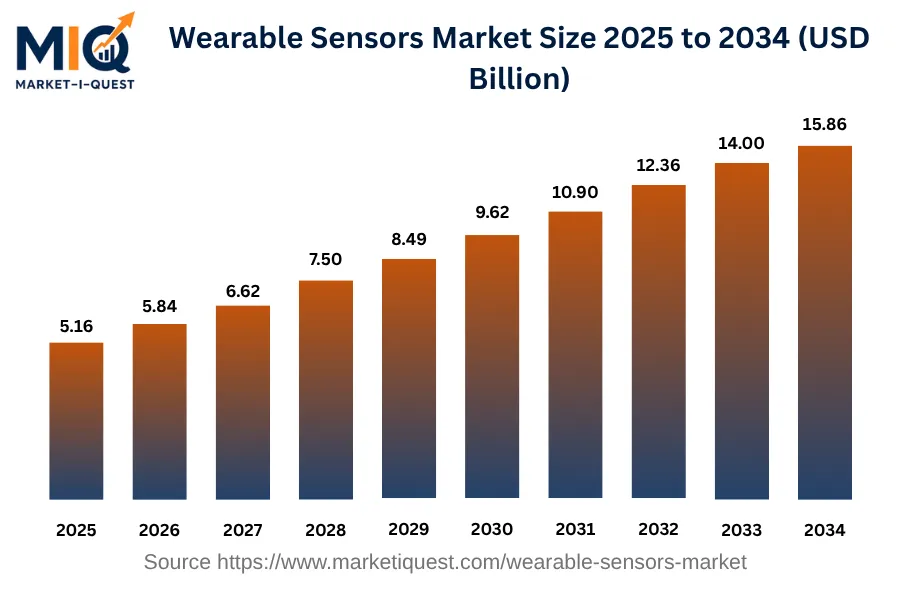
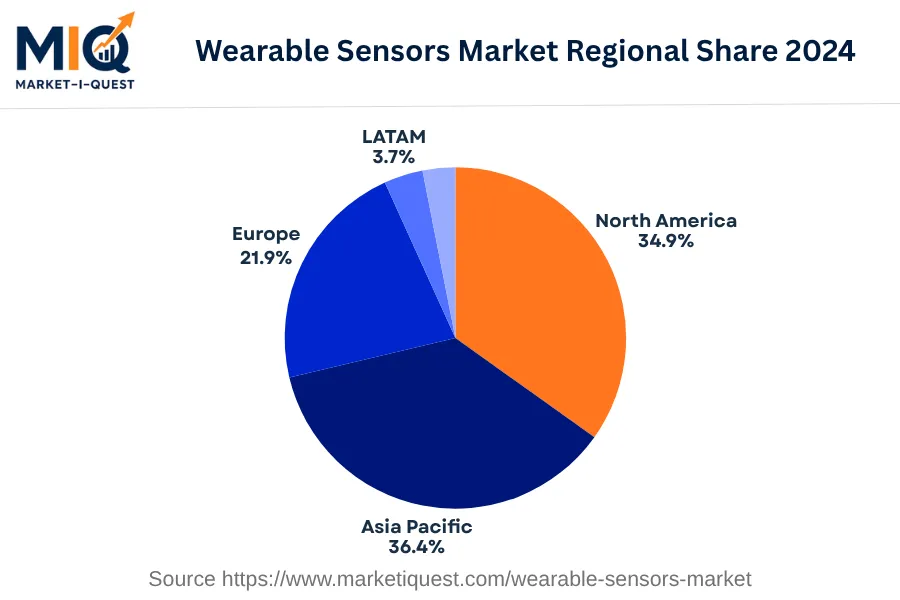
The Wearable Sensors Market is projected to witness substantial expansion, with its size increasing from USD 5.16 billion in 2025 to USD 15.86 billion in 2034. This signifies a CAGR of 13.3% over the forecast period. This considerable escalation encapsulates the ten-year trajectory from 2025 to 2034, traversing the distance from USD 5.16 billion to USD 15.86 billion. Driving this growth is the cumulative incorporation and adoption of wearable sensor technologies among diverse sectors, resulting in a consistent annual growth rate. Moving on to the regional market share distribution in 2024, the biggest share was held by the Asia Pacific region with a substantial 36.4%, followed by North America and Europe with 34.9% and 21.9% respectively. The regions of Latin America and the Middle East & Africa held the remaining smaller shares, containing about 3.7% and 3.1% of the market respectively.

Key Takeaways

  • By Type - Medical Based Sensors held a major share of the segment in 2024.
  • By Component - Hardware held the dominant share in 2024.
  • By Device Type - Wristwear led the market segment demonstrating a steady growth in 2024.
  • By End User - Healthcare Providers generated a significant portion in 2024.
wearable-sensors-market market size

Key Driving Factors

Integration into Healthcare Management

The increasing integration of wearable sensors in the healthcare sector is acting as a key driver for the market. Various healthcare providers are resorting to the deployment of wearable sensors to remotely monitor patients' health. Wearable sensors offer continuous, real-time data collection, helping medical professionals monitor vital aspects like heartbeat, blood pressure, and glucose levels. This approach aids in early detection of potential health risks, enhancing patient care and management. In addition, wearable sensors support preventative healthcare measures, reducing hospitalization rates and healthcare costs. This rising integration into healthcare management is further supported by interoperability requirements for medical devices, allowing seamless data flow between devices and health systems. Therefore, the need to enhance patient outcomes and healthcare efficiency is driving the adoption of wearable sensors in the healthcare sector.
Fitness and Sports Performance Analysis

The use of wearable sensors in fitness and sports industries for performance analysis and tracking is another distinct factor propelling the market forward. These sensors provide precise data related to physical attributes during workouts, such as distance covered, speed, heart rate and calories burned. Professional sports teams and athletes extensively use wearable sensors to optimize their training and improve performance. The sensors not only collect crucial information but also allow for data-driven decision-making, helping in customizing training regimens and preventing potential injuries. The trend of fitness and well-being among the general population is also accentuating the demand for wearable sensors in day-to-day fitness tracking. Thus, the continuous real-time performance analysis in the fitness and sports segments is stimulating the wearable sensors market.

Market Evolution by Timeline

2019-2023
During this period, wearable sensors had increased adoption in the fitness and healthcare sectors due to health awareness. North America leading in terms of demand primarily due to an existing healthcare infrastructure. On the supply side, major tech companies piloted wearable sensors integrated with IoT and AI technologies. However, interoperability between different devices was a significant constraint. Certain data privacy standards like GDPR in Europe influenced adoption. The commercial model typically involved a one-time product purchase with the addition of subscription services for advanced features. A major risk was data security, with companies investing in enhanced encryption standards.
2024
The year 2024 saw increased demand from the corporate wellness programs in Europe, primarily driven by legislation promoting employee health. On the supply side, many companies started offering wearable sensors with improved battery life but faced challenges due to the lack of widespread 5G connectivity. The adoption of ISO/IEC 27001 data security standard grew which positively impacted the adoption in corporate sectors. Pricing moved towards subscription models including both the device and bundled health monitoring services. With wearable devices having more health data, risk of personal data leakage was high, leading to better data management policies.
2025-2029
This period saw a rise in demand from the elderly population segment in Asia, primarily Japan, due to an increased aging population. Shipping of wearable sensors with features dedicated for elderly care like fall detection increased. However, adoption remained relatively low due to tech illiteracy among the older population. HIPAA standards in the US influenced the growth of sensors in healthcare providers' segment. Collaborative partnerships between tech and healthcare companies became common. Pricing dynamics changed, with the cost reducing due to increased production. Potential risks included those related to device reliability and precision, which was mitigated by providing product warranties and rigorously testing the products.
2030-2034
Increased demand for wearable sensors from developing countries was evident due to improving healthcare infrastructures, particularly in India and Africa. Cutting-edge technologies like flexible electronics got integrated into wearable sensors. But the high cost of technology was a constraint. Adoption was influenced by policies like India's Digital Health Mission. Pay-as-you-go models became popular with contracts hinting at a partnership between tech companies and healthcare providers, while the typical pricing favored affordability. The main risk was market saturation in developed countries, forcing companies to diversify their offerings and leverage untapped markets.

Future Market Outlook

Future Opportunities

Future opportunities in the wearable sensors market are rooted in current technological and regulatory developments. The implementation of the Digital Imaging and Communications in Medicine (DICOM) standard for transmitting medical images is expected to open up new avenues for wearable devices in clinical settings. With health authorities in the United States emphasizing remote patient monitoring under the 2022 Medicare payment guidelines, there is potential for growth in wearables that facilitate distance health management. Additionally, as the World Health Organization highlights the need for chronic disease prevention strategies, companies like Fitbit and Withings may explore partnerships within healthcare ecosystems. The increasing prevalence of mental health issues has also prompted exploration into wearables that monitor stress and emotional well-being, evidenced by WHO's 2021 Mental Health Action Plan. Furthermore, the push for sustainability has led to a rise in eco-conscious wearables, as seen with Puma's biodegradable fitness tracker launched in late 2022. By capitalizing on these trends, businesses can design products catering to evolving consumer demands while adhering to environmental standards. The anticipated growth of augmented reality in wearables, as showcased by the 2023 release of the Meta Quest Pro, presents additional opportunities for immersive health management solutions. All of these factors create a dynamic landscape for wearable technology, suggesting a rich tapestry of future developments.

Segmentation Analysis

By Type

The market encompasses a variety of sensor types, including Accelerometer, Gyroscope, Optical, Force & Pressure, Inertial Sensor, Temperature, Magnetometers, Medical Based Sensors, among others. Among them, the Medical Based Sensors generated the most revenue, while the Optical segment is anticipated to expand at the fastest CAGR in the upcoming years.

Largest Revenue Share

Medical Based Sensors

Market Share Leader

The medical-based sensors market thrives courtesy of their widespread application in healthcare, from diagnostic tools to patient monitoring systems. The current rise in chronic diseases has amplified the need for early detection and regular monitoring, thereby ramping up the demand for these sensors. Furthermore, with an emphasis on precision medicine and patient-centric care, these tools provide the accuracy and specificity necessary for individualised treatment plans. The growing elderly population also adds to the customers for these sensors given that they are more susceptible to various diseases requiring constant monitoring. Regulatory support in many regions for innovative medical devices and the deep entrenchment of these sensors in various standard medical equipment further consolidate its revenue-generating capacity. Given these drivers, the medical based sensor subsegment continues to command considerable market share and revenue.

Fastest CAGR

Optical

Forecast Period Growth Leader

Projected to exhibit the highest growth rate, the Optical sensor segment owes its rising trajectory to several key factors. Primarily, there has been an uptick in the adoption of these sensors in various end-use industries, such as consumer electronics and automotive, where they play a critical role in gesture recognition, ambient light detection, and distance sensing. Moreover, advancements in technology and subsequent adoption of fibre optic sensors for remote sensing are expected to catalyse growth. However, high initial investment may pose adoption barriers for smaller firms. In terms of risks, supply chain disruptions and changing regulations can affect the growth pace. As a supplementary driver of growth, strategic partnerships and increasing capital expenditure towards sensor technologies may bring new opportunities for the sub-segment. Overall, the outlook for the Optical subsegment forecasts a rapid growth trajectory.

By Component

The market is divided into subsegments including Hardware, Software, and Services, with Hardware accounting for the largest revenue share while Software is projected to grow at the fastest CAGR during the forecast period.

Largest Revenue Share

Hardware

Market Share Leader

Hardware components form the base of any technology infrastructure and are integral to the operations of businesses, institutions and individual consumers across various sectors. The demand for hardware in 2024 is largely driven by wider digital transformation initiatives, the need for data storage facilities, the growing use of advanced technologies like artificial intelligence, and the adoption of automated methods of operations in various industries. Geographically, lucrative markets for hardware exist in regions where tech infrastructure is constantly advancing, such as North America and Asia-Pacific. The market structure is also influenced by favourable regulations encouraging digitization and IT infrastructure enhancements. In terms of purchasing criteria, decision-makers consider factors like technology, price, durability, after-sales service, and the overall reputation of the brand. High switching costs also often result in consumers sticking with their initial hardware choices.

Fastest CAGR

Software

Forecast Period Growth Leader

Software components are projected to register the highest CAGR during the given forecast period. This growth can be attributed to the accelerating adoption of software solutions for various businesses and personal applications. These span a variety of fields, from project management and customer relationship management systems, to applications in AI and machine learning. The growth drivers lie in the scalability, customization possibilities, and the increasing need to streamline and automate functions. However, adoption barriers exist, some of which include concerns over data security and high costs. Nonetheless, technological advancements, investment in software R&D, and strategic partnerships are playing a significant role in overcoming these challenges. It's also worth keeping an eye out for potential risks such as dependence on software causing business vulnerabilities or disruption due to software failures or cyber-attacks.

By Device Type

The market is divided into subsegments including Wristwear, Patches & Smart Fabrics, Eyewear, Earwear, Footwear, Neckwear & Accessories. In 2024, Wristwear accounted for the largest revenue share, while Smart Fabrics is expected to grow at the fastest CAGR during the forecast period.

Largest Revenue Share

Wristwear

Market Share Leader

In 2024, the Wristwear subsegment dominated the Device Type market due to several reasons. Primarily, wrist-worn devices such as smartwatches and fitness trackers have become a significant part of consumer electronics, driven by their convenience and wide range of functionalities. From fitness tracking to mobile payments, these wristwear gadgets offer numerous applications that are appealing to consumers across different age groups and occupations. The yearly technology advancements are making these devices smarter and more efficient, attracting even more consumers. Another contributing factor to Wristwear's large revenue share is the high penetration rate in developed economies where health and fitness are prioritized by consumers. Furthermore, companies are investing heavily in marketing approaches that promote the daily usage of these devices, encouraging further market adoption.

Fastest CAGR

Smart Fabrics

Forecast Period Growth Leader

Expected to grow at the fastest CAGR in the forecast period are Smart Fabrics. Several factors contribute to the rapid growth rate of this subsegment. Technological advancements in textiles and apparel are enabling the integration of electronic components into fabrics, creating clothing pieces that not only provide traditional protection and comfort but also have digital capabilities. These can range from health monitoring to warm-up features, opening a plethora of possibilities that consumers are responding positively to. However, there are barriers to adoption such as relatively high prices and lack of awareness about these products. The latter is expected to diminish as partnerships between technology and apparel companies increase, promoting better understanding and acceptance of Smart Fabrics. In terms of near-term risks, privacy issues linked to data gathered by these fabric-based devices are of concern and may pose a challenge for growth.

By End User

The market is divided into subsegments including Consumers, Healthcare Providers, Industrial Users, Sports & Fitness Organizations, and Government & Defense Agencies. Of which, Healthcare Providers accounted for the largest revenue share while Sports & Fitness Organizations is expected to grow at the fastest CAGR during the forecast period.

Largest Revenue Share

Healthcare Providers

Market Share Leader

In the base year of 2024, Healthcare Providers subsegment emerged as the leading revenue generator. This trend can be attributed to the significant increase in the adoption of technology in healthcare sector yielding improved patient metrics and operational efficiency. Accelerated by the necessity of remote patient monitoring during global crises, telehealth services have become indispensable, driving significant revenue. Geographically, heavily developed healthcare systems in regions such as North America and Europe contribute significantly to overall revenue. Regulatory policies supporting digital healthcare and adoption of cutting-edge technology by healthcare providers have also contributed to this subsegment’s dominant market position. The critical requirement for quality healthcare infrastructure globally has been a strong purchasing driver, while high switching costs have ensured steady clientele. Lastly, digital adoption in healthcare is mostly achieved through direct healthcare provider-driven channels, safeguarding the revenue stream.

Fastest CAGR

Sports & Fitness Organizations

Forecast Period Growth Leader

Sports & Fitness Organizations subsegment is anticipated to register the fastest growth. The continuous pursuit for performance optimization and injury reduction in sports and fitness activities propels the demand for advanced technological solutions. Barriers to growth, such as adoption reluctance and higher initial costs, are overcome through the advancement of cost-effective technological innovations and proven effectiveness of technology in the field of sports science. Additionally, partnerships with sports technology companies have catalyzed the growth in this subsegment. Capital Investments in R&D for performance-enhancing solutions, recovery and preventive technology has been substantial, aiding in capturing untapped markets. However, near-term risks such as possible economic downturn or changes in sports and fitness industry dynamics and policies may pose as a hurdle for the growth of this subsegment.

Competitive Analysis

Key Market Players

Manufacturers / OEMs

Apple Inc.
US
Garmin Ltd.
Switzerland
Fitbit, Inc.
US

Key Suppliers & Raw Materials

STMicroelectronics N.V.
Switzerland
Amkor Technology, Inc.
US
Infineon Technologies AG
Germany

Distributors, Integrators & Channel Partners

Arrow Electronics, Inc.
US
Avnet, Inc.
US
Future Electronics Inc.
Canada

Porter’s Five Forces Analysis

An analysis of the competitive forces within the wearable sensors market.

Supplier Bargaining Power

Medium

Dependent on diverse supplier base for semiconductor elements and sensor components.

Buyer Bargaining Power

High

Large OEMs dominate buying volumes, with ample substitute products available.

Threat of Substitutes

Medium

Non-smart fitness devices and smartphones perform similar functions, posing a credible threat.

Threat of New Entrants

Low

Barriers like technology development, patent landscape and capital expenditure are high.

Competitive Rivalry

High

Fierce competition from both established electronics manufacturers and new entrants.

Regional Analysis

Geographic market dynamics and growth opportunities across key regions

Global Market Outlook

wearable-sensors-market market regional share

North America

In 2024, North America's Wearable Sensors Market thrived primarily due to technological advancement, demand surge, and policy-driven initiatives. Drivers included increased investment in wearable technologies driven by high consumer demand and interest from the healthcare sector. For instance, these sensors were widely adopted in wellness and fitness tracking, remote patient monitoring, early disease detection and prevention. Expansion in 5G connectivity also enhanced data accuracy and collection from wearable sensors; interestingly, wireless carriers were incentivized by governmental regulations to prioritize healthcare data traffic. Despite mixed price dynamics, growing economies of scale fueled greater market penetration.

Trends included growing consumer preference towards non-invasive and IoT-integrated wearable sensors. Advances like smart textiles and mixed reality glasses defined product evolution in regions like the U.S. and Canada. More healthcare providers began incorporating these wearable sensors into telehealth services, a significant shift propelled by national health policies, primarily in the U.S., favoring digital health. Meanwhile, strategic partnerships highlighted the year - tech giants collaborating with medical institutions to refine sensor capabilities. Also noteworthy was the widespread application of wearable sensors beyond healthcare, extending into sectors such as manufacturing and retail for tasks like employee health monitoring and real-time data capturing. North America thus positioned itself as a key pivot in the adaptive metamorphosis of wearable sensor technology in 2024.

Asia Pacific

In 2024, the Asia Pacific wearable sensors market demonstrated strong growth with prominence in manufacturing, utilities, healthcare, and retail sectors. The growth was fueled by factors like increased government investments in technological innovations and escalated interest and adoption level of wearable sensor technology across the region. China's introduction of the "Internet Plus" action plan played a pivotal role in encouraging local businesses to engage with wearable sensor technologies, cultivating increased demand.

Furthermore, a significant rise in middle-class disposable income, particularly in India and key ASEAN markets, has resulted in increased demand. South Korea’s aggressive 5G adoption facilitated smoother integration and utility of these wearable devices in the mainstream market. Alongside increased demand and adoption, affordable pricing influenced by competitive manufacturing in China and Japan also bolstered this growth trend.

User-behavior trends revealed a preference for wearable sensor devices that provide health monitoring features, triggered by increased health awareness in markets like Australia. Retail channels also expanded dynamically, with online platforms playing a central role in sales across China, Japan, and Southeast Asia. Corporate partnerships in healthcare and manufacturing industries witnessed a surge, with companies synergizing their resources for advanced product development. Compliance to strict privacy regulations was discernible as manufacturers adhered to user-data privacy policies, especially in healthcare applications across the region.

Europe

In 2024, Europe’s wearable sensor market exhibited substantial growth as emerging applications widened across several sectors. Increased adoption in enterprise and healthcare, spurred by rising awareness of worker safety regulations and remote health monitoring needs, were major drivers in market expansion. Investment in technology innovation led to enhanced sensor accuracy, fuelling further adoption. Demand outstripped supply, creating upward pressure on prices, although economies of scale began to moderate this towards year-end.

Consumer behavior reflected a shift towards health and fitness tracking, propelled by the Covid-19 pandemic's aftermath and an ageing population. Continent-wide, wearable tech brands focused on partnerships and M&A to expand their reach and respond to the increasing demand, with Apple and Fitbit leading in the strategic acquisition of smaller sensor manufacturers. Government policy also influenced market trends, with GDPR regulations causing a significant impact on data storage and privacy measures in connected wearable devices. Within the region, Germany and the United Kingdom were predominant in both demand and supply capacities. Health sectors in France and Italy extensively employed wearables for patient monitoring, while enterprise applications drove the market in Spain and Benelux. In the Nordics and Central & Eastern Europe, growth was slower but steady as these regions began adopting wearable sensors more broadly across various sectors.

Latin America

In 2024, the wearable sensors market in Latin America saw notable growth, underpinned by several forceful drivers and emerging trends. Increasing health awareness, particularly in populous countries like Brazil and Mexico, fueled demand for wearable tech enabled with biosensors. Concurrently, regulatory clarity in Argentina and Chile fostered a conducive investment environment, attracting tech firms to the wearable sensors market. Additionally, a rise in technology adoption among corporations in sectors such as healthcare, manufacturing, and retail contributed to a burgeoning supply dynamic.

Customers' growing preference for integrated devices, reflected predominantly in Colombia's tech-savvy youth, transformed buyer behavior across the region. Innovative product introductions, favoring compact designs and enhanced features, further validated this shift. Retail channels played a significant role in market development with increased online sales of sensors in Peru, spurred by wider internet accessibility and improved logistics. Mergers and acquisitions also surfaced as a trend, with numerous companies seeking collaborative growth. Lastly, the establishment of uniform standards across LATAM countries and strict policy enforcement amplified product reliability and consumer trust.

Middle East & Africa

In 2024, the wearable sensors market experienced substantial growth in the Middle East and Africa due to distinct drivers and trends. An increased demand for proactive health monitoring and the prevalence of chronic diseases drove the market, fuelled by prominent investments in the medical and health-tech sector within countries such as Saudi Arabia, Israel, and South Africa. Technological adoption, especially healthcare-focused innovation within Israel's thriving tech industry, also played a key role. Rapid digitisation was a marked trend within the telecommunication and retail sectors of countries like United Arab Emirates and South Africa; this was coupled with a growing consumer penchant for smart devices ensuring market growth. Furthermore, government policies such as Saudi Arabia's Vision 2030, emphasizing digital transformation, provided an additional boost.

These factors created a progressive flow within sectors such as government, telecom, healthcare, and manufacturing. In healthcare particularly, solutions like wearable fitness trackers, heart rate monitors, and sleep diagnostic devices gained prominence. Meanwhile, oil and gas sectors in the UAE and Qatar benefitted from wearable sensors for real-time safety and health monitoring. Despite the presence of edge-cutting technology in Israel, extensive use of wearable sensors extended from utilities to financial services, driven by significant technological adoption and a conducive policy environment. We saw the expansion of partnerships and mergers within these sectors as companies sought to tap into this fast-growing market segment.

Recent Industry Developments

Latest market innovations, product launches, and strategic initiatives

April 2026

AliveCor received European regulatory approval for its new portable heart monitor. This device uses artificial intelligence to quickly check for 35 different heart issues, making it easier for doctors to identify problems without needing traditional, bulky hospital equipment.

March 2026

Oura, the company that makes the health-tracking Oura Ring, bought a software startup called Doublepoint. This purchase gives Oura the code needed to better track specific finger and hand movements, which will eventually let users control other screens or devices just by moving their hands.

February 2026

Natus Sensory purchased a smaller medical company called TheraB Medical to expand its newborn care products. Through this deal, Natus gained ownership of a wearable blanket that provides light therapy for infants, allowing babies to be held while receiving treatment instead of lying alone under a lamp.

Frequently Asked Questions