Endoscopes Market Snapshot

Key Players

  • Olympus Corporation (Japan)
  • Boston Scientific Corporation (United States)
  • Medtronic Plc (Ireland)
  • KARL STORZ GmbH & Co. KG (Germany)
  • Richard Wolf GmbH (Germany)
  • Fujifilm Holdings Corporation (Japan)
  • Hoya Corporation (Japan)
  • Arthrex Inc. (United States)
  • Cook Medical Inc. (United States)
  • Stryker Corporation (United States)

Market Size

Base Year 2024
$15.58 Bn
CAGR
7.36%
Forecast 2034
$31.70 Bn

Market Segments

By Product Type
  • Rigid Endoscopes
  • Flexible Endoscopes
  • Capsule Endoscopes
  • Disposable (Single-Use) Endoscopes
By Application
  • Gastroenterology
  • Pulmonology
  • Urology
  • Gynecology
  • Orthopedics
  • Others
By End User
  • Hospitals
  • Specialty Clinics
  • Ambulatory Surgical Centers (ASCs)
  • Diagnostic Centers

Market Dynamics

Drivers
  • Increasing prevalence of chronic diseases
  • Advancements in endoscopic technologies
Restraints
  • High device costs
  • Regulatory compliances
Opportunities
  • Innovations in endoscopic technology
  • Growing demand for minimally invasive surgeries

Market Size

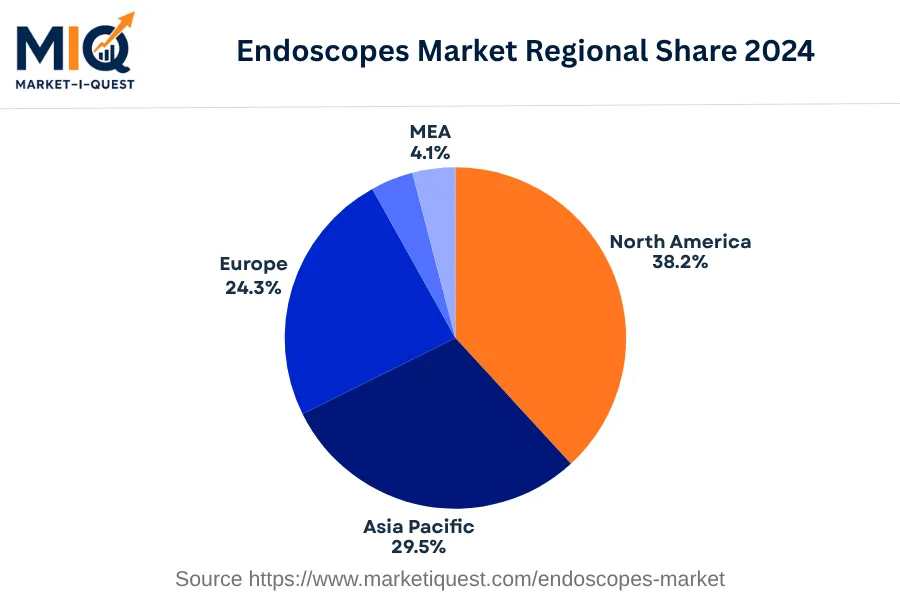
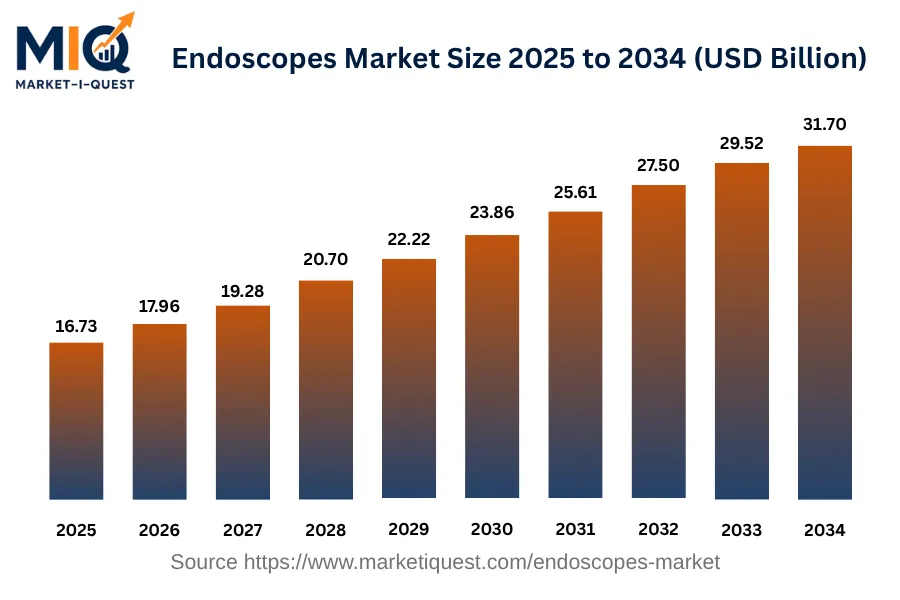
The Endoscopes Market size in 2025 is projected to be $16.73 billion, an increase from its previous valuation of $15.58 billion in 2024. This upward trajectory makes a significant leap by 2034, culminating to an estimated market valuation of $31.70 billion. Over this 9-year period from 2025 to 2034, the compound annual growth rate (CAGR) is noted to be 7.4%. This steady growth is primarily attributed to advancements in the healthcare industry particularly in the field of minimally invasive surgeries which considerably utilize endoscopes. In terms of regional market shares in 2024, North America held the majority stake with 38.2%, followed by Asia Pacific region at 29.5%. Europe accounted for 24.3% of the market share, while Latin America and Middle East and Africa had relatively smaller shares of 4.0% and 4.1%, respectively.

Key Takeaways

  • By Product Type - Rigid Endoscopes held the leading position in the Endoscopes Market last year.
  • By Application - Orthopedics subsegment held a notable position in 2024.
  • By End User - Hospitals led the Endoscopes Market accounting for a significant market share in 2024.
endoscopes-market market size

Key Driving Factors

Emergence of Robotic-Assisted Surgery

The rise of robotic-assisted surgery is influencing the endoscopes market. This trend is driven by the attractive benefits of robotic surgeries, which include accurate targeting, less invasive procedures, and reduced recovery times. Robotic-assisted surgeries often require the use of endoscopes, which integrate with the robotic systems to provide doctors with a clear view of the surgery area, thus, resulting in increased demand in the endoscopes market. Key market players are actively collaborating with robotic technology companies to introduce advanced models, therefore contributing to the market growth.

Adoption of Minimal Invasive Surgeries

The implementation of minimal invasive surgeries in treating gastrointestinal diseases is driving the endoscopes market. Owing to the need for precise diagnosis and effective treatment of conditions such as colon cancer, esophageal cancer, and stomach ulcers, doctors are increasingly using endoscopes. Endoscopes allow high resolution imaging and direct visual inspection of organs, which makes them an integral part of diagnosis and treatment of these ailments. This has consequentially increased the purchase and usage of endoscopes in hospitals and diagnostic centers across the globe, leading to market expansion.

Market Evolution by Timeline

2019-2023
This period witnesses the increased adoption of endoscopes in North American countries, specifically in diagnosis procedures. Factors like an aging population and high incidence of gastrointestinal diseases were evident. Technologically, manufacturers shifted towards minimally invasive endoscopy devices with high-definition visualization. However, regulatory policies stepped up with FDA's reprocessing protocols, and the EU MDR mandate, both aiming at patient's safety. Pricing dynamics favored premium pricing for devices featuring AI and advanced imaging. Major risks included contamination issues which saw companies, Boston Scientific for example, revisiting their sterilization methods.
2024
Robotic endoscopy made its entry, with Auris Health's Monarch platform gaining market foothold, catering to thoracic procedures. East Asia showed an increased demand for endoscopy procedures, arising from lifestyle diseases and burgeoning middle-class fraction that was ready to spend on health. Despite integration issues with standard devices, hospitals accommodated them considering the benefit of accuracy. CMS's decision to reimburse disposable endoscopes encouraged providers to opt for them, which also addressed the contamination risk prevalent in the previous year.
2025-2029
Shift to wireless capsule endoscopy and AI-embedded endoscopes were key technology trends. Chronic disorders remained compelling reasons for the market demand, while it shifted base from developed to other developing markets, such as India and South Africa. With regulatory bodies embracing innovation, procedures saw smoother device integration, while partnerships were formed per market needs, Medtronic-Steris being a case in point. Major risk was the high cost of these advanced systems, which enforced adjustments in the pay-per-procedure and leasing contract model.
2030-2034
3D endoscopy becomes prominent, providing more accurate and detailed imaging, favorably impacting surgical outcomes. Market demand was influenced by an aging population, obesity rates, and cancer prevalence in regions such as Latin America. IoT integration with endoscopy systems was fairly mature by now, but physician training lagged in many regions. The positive shift in reimbursement policies by Medicare for therapeutic endoscopy procedures influenced adoption. The threat of data breaches emerged as a new risk factor, resulting in increased investments in cybersecurity.

Future Market Outlook

Future Opportunities

The global endoscopes market presents significant opportunities driven by technological advancements and evolving healthcare demands. As of 2023, the growing prevalence of gastrointestinal disorders is prompting healthcare providers to seek more effective diagnostic tools, creating demand for innovative endoscopic solutions. Hospitals are increasingly adopting endoscopes that integrate artificial intelligence for improved diagnostic accuracy, as seen in the collaborations between major manufacturers like Medtronic and tech companies to enhance image interpretation. Additionally, the growing trend toward outpatient surgical procedures is expanding the market for portable and efficient endoscopic systems, as noted in a report by the American College of Surgeons in early 2023. Furthermore, the increasing focus on patient-centric care is driving opportunities in developing less invasive techniques, with clinical trials underway exploring new minimally invasive endoscopic methods. Regulatory bodies, including the U.S. Food and Drug Administration, have started fast-tracking approvals for breakthrough endoscopic technologies, which could further accelerate product launches in the coming years. The demand for advanced training and education in endoscopic procedures has also risen, as illustrated by numerous workshops and training programs being organized across Europe and North America, demonstrating a commitment to skill development in this area. Overall, the ongoing interplay between technology and changing healthcare needs is expected to create diverse opportunities for expansion and innovation within the global endoscopes market.

Segmentation Analysis

By Product Type

The market is divided into subsegments including Rigid Endoscopes, Flexible Endoscopes, Capsule Endoscopes, and Disposable (Single-Use) Endoscopes. Of these, Rigid Endoscopes accounted for the largest revenue share while Capsule Endoscopes is expected to grow at the fastest CAGR during the forecast period.

Largest Revenue Share

Rigid Endoscopes

Market Share Leader

The Rigid Endoscopes command the highest revenue share in the product type segment due to their extensive use in a variety of surgical procedures. They have established a strong presence and wide acceptance in the market due to their advantages such as cost-effectiveness, durability, and superior image quality. Rigid Endoscopes are primarily used in operating rooms, especially for procedures involving the abdomen, joints, and spine, inclusive of a wide range of therapeutic and diagnostic applications. Their high resolution offers precise visual guidance to doctors, achieving better clinical outcomes and overall value. Heavily regulated by health authorities to maintain safety and sterility, these devices are purchased based on physician preference, applicable procedures, and budget allocations. They are primarily distributed through direct sales and select distributors. The saturation of mature markets for rigid endoscopes poses a considerable switching cost for hospitals upgrading to novel technologies.

Fastest CAGR

Capsule Endoscopes

Forecast Period Growth Leader

Capsule Endoscopes, a relatively newer entrant to the market, is anticipated to grow the fastest in the coming years. They offer non-invasive diagnostic imaging for the gastrointestinal (GI) tract, which is propelling their adoption. Providing greater patient comfort and eliminating the need for sedation, they pave the way for early detection and subsequent treatment of diseases such as small bowel diseases. Technological advancements, like longer battery life and higher image quality, are serving as catalysts for the expansion of this subsegment. Partnerships with tech firms are propelling product development and commercialization; however, the intricacies of the technology and high cost remain major barriers to adoption. In the shorter term, regulatory approval processes may act as a dampener to growth, but the benefits they confer - early diagnosis, patient ease, and their non-invasive nature - are likely to overcome these hurdles and augment their market share.

By Application

The market is divided into subsegments including Gastroenterology, Pulmonology, Urology, Gynecology, Orthopedics, and Others. In 2024, Orthopedics accounted for the largest revenue share while, in terms of CAGR, Gynecology is projected to grow at the fastest pace.

Largest Revenue Share

Orthopedics

Market Share Leader

The Orthopedics subsegment leads the market in terms of revenue, primarily driven by the increasing geriatric population across the globe that is commonly susceptible to bone and joint disorders. The rise in cases of orthopedic injuries owing to an active lifestyle and sports activities have contributed to the demand for orthopedic solutions. Furthermore, continuous technological advancements in orthopedic surgeries like minimally invasive surgeries, robot-assisted surgeries, and 3D printing technology have boosted the market. Geographically, developed countries with advanced healthcare infrastructure like the US, UK, Germany and Japan dominate the market for orthopedics. Regulatory bodies' approval has direct impact in propelling these advanced technologies in the market while assuring safety and effectiveness.

Fastest CAGR

Gynecology

Forecast Period Growth Leader

The Gynecology subsegment is projected to experience the fastest growth owing to several catalysts. The primary growth driver is the increasing awareness and better understanding about women's health, leading to earlier detection of diseases and disorders. Technological advancements have modernized gynecological procedures with the introduction of novel procedures like minimally invasive surgeries and telehealth consultations. Increased healthcare spending and the implementation of women-centric health policies have propelled the demand for gynecological treatment. Partnerships and collaboration among leading market players and healthcare providers have led to the spread and adoption of modern gynecological procedures, thus pushing growth. However, uncertainties in regulatory approvals and limited access to technology in developing regions pose as short-term risks within this segment.

By End User

The market is divided into subsegments including Hospitals, Specialty Clinics, Ambulatory Surgical Centers (ASCs), and Diagnostic Centers. Of these, Hospitals accounted for the largest revenue share, while Ambulatory Surgical Centers are projected to grow at the fastest rate during the forecast period.

Largest Revenue Share

Hospitals

Market Share Leader

Driving the highest revenue, hospitals are the backbone of the healthcare sector. The reason for their commanding lead is multifold. Hospitals offer a wide range of procedures and services, having a diverse patient base, thus resulting in higher revenue. Moreover, hospitals are more equipped to deal with emergency situations and complex ailments, thus frequently being the first point of contact for patients in critical condition. Geographically, both urban and rural regions have hospitals, increasing their coverage and accessibility. With the onset of public- private partnerships, the hospital sector has seen a rise in investment, leading to technological advancements and improved service quality. These factors together have increased the frequency of visits and in turn, the revenue for hospitals. Lastly, the regulatory framework has also played a role in making hospitals a default choice for a majority, as many health insurance policies require hospitalization.

Fastest CAGR

Ambulatory Surgical Centers (ASCs)

Forecast Period Growth Leader

While they may not currently hold the largest revenue share, Ambulatory Surgical Centers (ASCs) are expected to grow at the highest CAGR in the forecast period. The rapid growth can be attributed to the changing landscape of healthcare services as outpatient care becomes more popular. ASCs offer patients the convenience of having procedures done outside the traditional hospital setting. Additionally, ASCs are equipped with advanced technology which enables them to carry out various surgeries and treatments efficiently, making them an attractive alternative to hospitals. Furthermore, ASCs usually offer lower costs for procedures, appealing to cost-sensitive patients. Possible barriers inhibiting their growth include regulatory approval for certain complex procedures and the misconception of inadequate care in non-hospital settings. Despite these barriers, industry trends and capital investments suggest a bright future for ASCs.

Competitive Analysis

Key Market Players

Manufacturers / OEMs

Olympus Corporation
Japan
KARL STORZ SE & Co. KG
Germany
Stryker Corporation
US

Key Suppliers & Raw Materials

Seoul Semiconductor Co., Ltd.
South Korea
Schott AG
Germany
Corning Incorporated
US

Distributors, Integrators & Channel Partners

Johnson & Johnson Services, Inc.
US
Boston Scientific Corporation
US
Medtronic Plc
Ireland

Porter’s Five Forces Analysis

This analysis summarizes key forces affecting competitiveness within the endoscopes market.

Supplier Bargaining Power

Medium

Limited number of OEMs allows moderate price-setting power yet competitive alternatives are present.

Buyer Bargaining Power

High

Purchasers typically have numerous choices and negligible switching costs.

Threat of Substitutes

Low

Substitutes like open surgeries are less preferred due to higher risks and longer recovery time.

Threat of New Entrants

Medium

High R&D costs and regulatory barriers limit entry, but growing market attracts new competitors.

Competitive Rivalry

High

Large international players dominate, creating intense competition for market share.

Regional Analysis

Geographic market dynamics and growth opportunities across key regions

Global Market Outlook

endoscopes-market market regional share

North America

In 2024, the endoscope market in North America manifested significant growth facilitated by healthcare advancements, stringent regulations, and technology adoption. A paramount driver was the escalating demand for minimally invasive surgeries in the United States, Canada, and Mexico, propelling increased endoscope utilization. Simultaneously, the implementation of rigorous sanitation standards by healthcare authorities necessitated substantial investment in high-quality, reusable endoscopes. Furthermore, rapid technology adoption fostered market growth, with telehealth platforms increasingly integrating endoscopes for remote diagnostics in Canada. Among the noteworthy trends, buyer preference gravitated towards flexible, disposable endoscopes for infection control, drastically altering the product landscape. In terms of channel dynamics, online sales for endoscopic equipment witnessed a surge, primarily in the U.S due to the increased digitalization in healthcare retail.

New partnerships and acquisitions characterized the market in 2024 too, as industry players aimed to expand product range and reach. Lastly, strict policy enforcement around device sterilization, especially in U.S hospitals, emphasized the benefits of opting for single-use endoscopes. The primary sectors influencing the endoscope market comprised healthcare institutions, specialist clinics, and government health departments. Their decisions and investment trends substantially impacted the overall endoscope market landscape further in 2024.

Asia Pacific

In 2024, the Asia Pacific endoscopes market experienced a significant uplift owing to the convergence in technological innovation and increasing healthcare infrastructure. The market was primarily driven by the rising incidences of chronic diseases like cancer and gastrointestinal conditions, coupled with growing minimally invasive surgery trends in major countries including China, India, Japan, South Korea, and Australia. Additionally, governmental regulations promoting advanced healthcare facilities and increased investments in the healthcare industry played a significant role in the prevalent adoption of endoscopes. Simultaneously, the evolving medical tourism sector particularly in key ASEAN markets such as Thailand and Malaysia encouraged the spread. There was a marked shift toward digitization with the implementation of advanced technologies in endoscopy procedures enhancing diagnosis and treatment options. Coupled with this, growing partnerships among healthcare providers, and manufacturers contributed to the strengthened market dynamics.

Sectors witnessing substantial usage included healthcare facilities - such as hospitals, diagnostic centers, and clinics, proving instrumental in driving demand. However, high equipment costs posed a barrier for widespread prevalence of endoscopes, whilst increased emphasis on policy enforcement on the quality of medical devices and patients' safety standards emerged in response to growing market needs, thereby underlining a momentous year for the Asia Pacific endoscopes market.

Europe

In 2024, Europe's endoscopes market witnessed considerable activity, buoyed by both demand and supply-side dynamics. Contributors to growth included heightened investment in medical technology and policy mandates such as the Medical Device Regulation (MDR), which offered a stringent regulatory framework encouraging better quality and safety. Increased demand stemmed from pervasive diseases like cancer, and the need for minimally invasive clinical procedures, particularly in the healthcare sector across Germany, UK, France and Italy. On the supply side, technological advancements propagated market trends with manufacturers inclining towards producing innovative, user-friendly and portable devices providing efficient results.

The adoption of smart endoscopes became a burgeoning trend – particularly in tertiary clinics in Spain and Central & Eastern Europe - resonating with the shift towards digital healthcare. Channel dynamics evolved with a noticeable desire for OEM partnerships, ensuring quicker access to groundbreaking innovations. Macro trends were shaped by policy enforcement ensuring more harmonized standards. M&A activity appeared robust, especially in the Nordics and Benelux, as companies sought to increase footprint and leverage synergies. In sum, the endoscope market in 2024 was propelled by an amalgam of drivers, leading to product-technological shifts, establishing new standards in healthcare treatments.

Latin America

In 2024, the Endoscopes market in Latin America witnessed sizeable growth, predominantly driven by escalating healthcare standards and an advancing technological landscape. The rising incidence of chronic diseases, such as cancer, led to increased demand for minimally invasive procedures, fuelling endoscope utilization across Brazil, Mexico, Argentina, Colombia, Chile, and Peru. Enhanced government investments in healthcare infrastructure also catalyzed the market growth. Yet, the high cost of endoscopic procedures can constitute a moderate restraint. Notably, the year was marked by an accelerated adoption of robot-assisted endoscopies, chiefly in Brazil and Mexico, illustrating a significant shift towards sophisticated technological solutions. Telemedicine saw propagation, further introducing remote endoscopy in rural areas. Moreover, the reliance on reusable endoscopes decreased, giving rise to single-use devices, a change predominantly driven by infection control regulations.

In terms of buyer behavior, health institutions, predominantly hospitals, showed an increased preference for high-resolution endoscopes for more accurate diagnostics. A discernable trend was the burgeoning partnerships between local healthcare providers and international endoscope manufacturers, aimed at cost-effective procurement of advanced equipment, particularly in Argentina and Chile. In conclusion, the LATAM Endoscopes market in 2024 was defined by increasing demand due to health concerns, technological advancements, and regulatory measures geared towards enhanced infection control.

Middle East & Africa

The Endoscopes market in the Middle East and Africa showed significant activity in 2024, driven by increased health awareness, government funding, and technological advancements. The expanded health insurance coverage in Saudi Arabia and the rising government investment in healthcare in the UAE catalysed demand growth for endoscopy devices. Adoption of newer technologies such as capsule endoscopy was notable in Nigeria. Meanwhile, price competitiveness fuelled competition amongst suppliers, particularly in South Africa and Egypt. Consumer behaviour gravitated towards minimally invasive endoscopy procedures, necessitating shifts in product development across the region. Consequently, technology upgrades centred around artificial intelligence in endoscopy were witnessed in countries like Israel. The rise in strategic partnerships, particularly in Qatar's healthcare sector, fostered market expansion.

Additionally, adherence to international endoscopy standards became more stringent, particularly in Kenya where policymakers enforced stricter guidelines for Import and usage of medical devices. Significantly, the market was not limited to the healthcare sector but expanded into manufacturing, notably in oil and gas industries where industrial borescopes were utilised. While the primary customer base comprised of healthcare facilities including hospitals and diagnostic centres, a considerable demand in retail came from private practice clinics and individual users across the given region.

Recent Industry Developments

Latest market innovations, product launches, and strategic initiatives

May 2025

Olympus Corporation announced FDA 510(k) clearance for its EZ1500 series endoscopes, incorporating Extended Depth of Field (EDOF) technology to enhance visualization and diagnostic precision.

Frequently Asked Questions