
Endoscopy Devices Market Snapshot

Key Players

  • Olympus Corporation (Japan)
  • Stryker Corporation (US)
  • Boston Scientific Corporation (US)
  • Pentax Medical (Japan)
  • Karl Storz SE & Co. KG (Germany)
  • Ethicon Endo-Surgery Inc. (US)
  • Richard Wolf GmbH (Germany)
  • Fujifilm Holdings Corporation (Japan)
  • Hoya Corporation (Japan)
  • Conmed Corporation (US)

Market Size

Base Year 2024
$43.86 Bn
CAGR
7.85%
Forecast 2034
$93.38 Bn

Market Segments

By Product Type
Flexible Endoscopes, Rigid Endoscopes, Hybrid Endoscopes, Endoscopy Visualization Systems
By Component
Instruments & Accessories, Visualization System, Endoscope
By Application
Gastroenterology, Pulmonology, Urology, Gynecology, Orthopedics
By End User
Hospitals, Specialty Clinics, Ambulatory Surgical Centers (ASCs)

Market Dynamics

Drivers
  • Rising chronic disease prevalence
  • Advancements in endoscopic technology
Restraints
  • High device costs
  • Stringent regulatory framework
Opportunities
  • Rising prevalence of diseases
  • Technological advancements in devices

Market Size

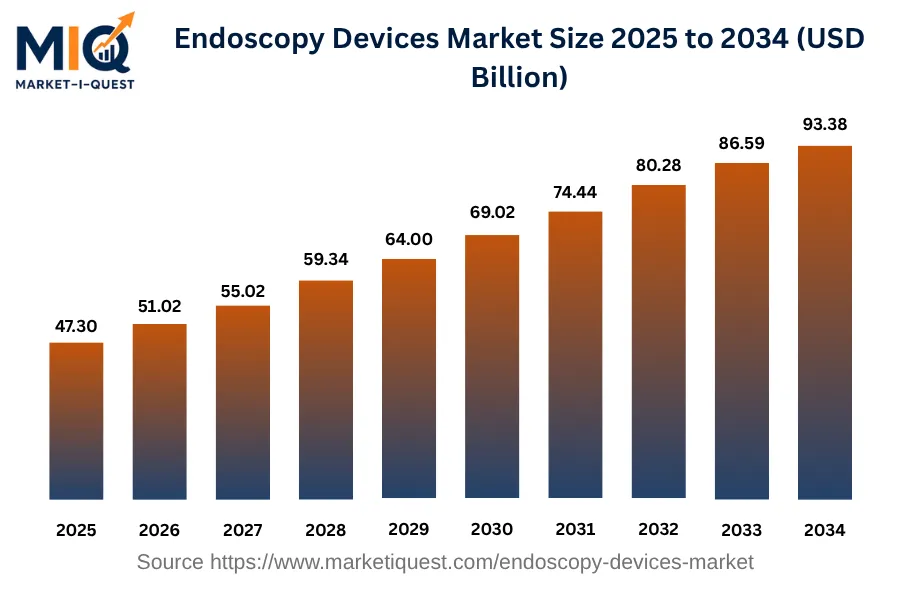
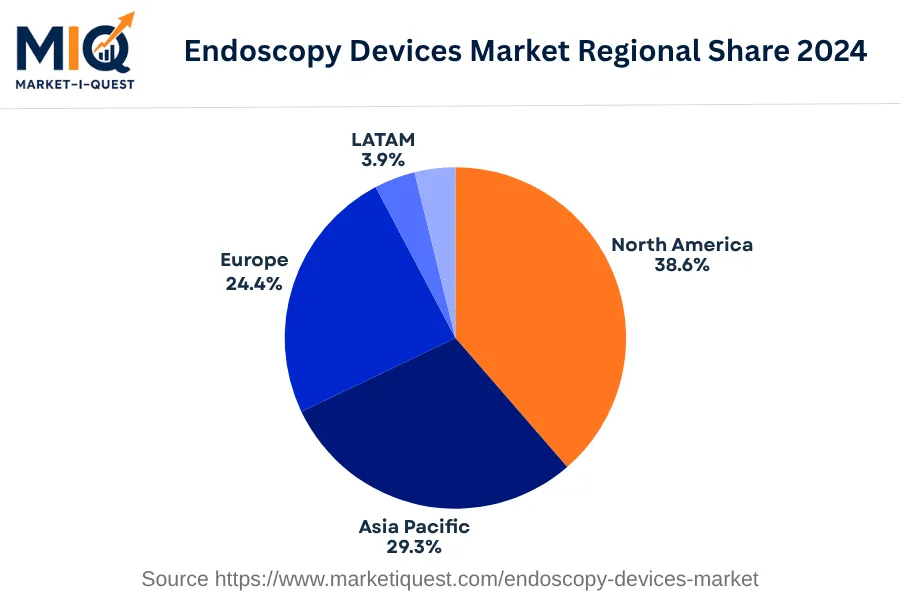
The Endoscopy Devices Market size is projected to grow from USD 47.30 billion in 2025 to USD 93.38 billion by 2034. This substantial increase represents a Compound Annual Growth Rate (CAGR) of 7.85%. Such a healthy trajectory is discernible from the endoscopy devices market size in 2024, which was USD 43.86 billion, indicating a steady upward trend. The regional distribution of the market share in 2024 was North America with 38.63%, Asia Pacific with 29.27%, Europe with 24.36%, and lastly, LATAM and MEA with a near equivalent market share of 3.88% and 3.86% respectively. This distribution signifies a dominant presence of North America in the global Endoscopy Devices market in 2024.

Key Takeaways

  • By Product Type - Rigid Endoscopes led the segment accounting for a significant market share in 2024.
  • By Component - Instruments & Accessories held the majority share in 2024.
  • By Application - Gastroenterology expanded at the fasted rate showing significant growth during the base year.
  • By End User - Hospitals held the largest market position in 2024.
endoscopy-devices-market market size

Key Driving Factors

Stringent Regulations by Health Authorities

One significant driving factor of the endoscopy devices market is the strict regulatory framework implemented by health authorities such as the FDA and the European Medicines Agency. These agencies have stringent requirements for patient safety and the effectiveness of medical devices, which include endoscopes. Manufacturers are compelled to produce higher quality standards, prompting development of innovative and efficient endoscopy devices. These quality improvements are typically more appealing to medical practitioners and result in growth for the market. For instance, when manufacturers optimize aspects such as visual clarity or insertion guide flexibility, medical practitioners have an easier time diagnosing, treating or monitoring various medical conditions. Therefore, the stringent safety regulations in various countries and regions indirectly facilitate growth of the endoscopy devices market.
Non-Invasive Procedure Preference by Physicians and Patients

Another specific factor propelling the endoscopy devices market is the growing preference for non-invasive medical procedures by both doctors and patients. Today, a substantial number of physicians prefer using endoscopy devices over traditional surgery methods because endoscopic procedures often lead to less discomfort, diminished risk of infection, shorter hospital stays, and quicker patient recovery times. This medical procedure preference is enhancing the demand for endoscopy devices. On the other hand, patients are becoming increasingly aware of the benefits associated with non-invasive procedures, leading to a higher demand for services requiring endoscopy devices. This increased service demand from patients naturally results in a higher demand for the devices themselves, stimulating the growth of the endoscopy devices market.

Market Evolution by Timeline

2019-2023
During this period, endoscopy devices were primarily bought by hospitals and diagnostic centers for examining conditions like gastrointestinal disorders. North America, particularly the United States, was the region with the highest demand. Manufacturers offered flexible and rigid endoscopes, with models incorporating HD visualization and narrow band imaging. Lack of skilled endoscopists was a major constraint. The Affordable Care Act in the United States impacted adoption indirectly through coverage policy. Manufacturers typically followed a direct sales business model, with customer segments often under volume contracts. The key risk was device recalls, prompting manufacturers to emphasize quality control measures.
2024
In 2024, there was a rise in demand for endoscopy devices in emerging markets, especially Asia. Ambulatory surgical centers also increased their purchases. Companies introduced devices with advanced features such as 3D imaging and electronic scanning. However, the technological integration remained complex due to varied device standards. Regulatory bodies like the FDA introduced stringent product approval guidelines. Cost-effective devices became more prevalent, and partnerships between manufacturers and healthcare institutions were typical. Infections from contaminated endoscopes emerged as a significant risk, resulting in enhanced sterilization practices.
2025-2029
Increased prevalence of chronic conditions indicative of endoscopy use fueled demand within this period, with countries in Latin America expanding their purchases. Manufacturers notably started providing AI-enhanced endoscopes. Still, interoperability issues persisted, limiting full-scale implementation. The World Health Organization pushed for standardization in this period, encouraging universal product codes for medical devices. Introduction of value-based pricing models was a trend among manufacturers, facilitated by strategic partnerships. Reimbursement issues posed a risk, which companies responded to by offering flexible payment plans.
2030-2034
During the final period, preventive healthcare measures propelled demand for endoscopy devices globally. Technological advancements led to the proliferation of disposable endoscopes, reducing sterilization costs and infection risks. Yet, e-waste concerns due to increased disposables became apparent. Regulatory bodies started enforcing eco-friendly disposal guidelines. Leasing as a commercial model became significant, offering budget-friendly options for low-resource settings. With cyber threats emerging as a new risk, manufacturers worked towards enhancing their cybersecurity measures, ensuring data privacy.

Future Market Outlook

Future Opportunities

Future opportunities in the endoscopy devices market are largely driven by advances in digital health and an increasing emphasis on patient-centered care. The global telehealth market, accelerated by the COVID-19 pandemic in 2020, is fostering enhancements in remote diagnostics. Companies like EndoChoice are focusing on developing remote consultation platforms that integrate seamlessly with endoscopic procedures, paving the way for hybrid healthcare models. Innovations in the AI space have led to partnerships between device manufacturers and tech firms, including Google's collaboration with Medtronic for AI-enhanced imaging solutions. Additionally, the 2022 European Union Medical Device Regulation compliance has raised industry standards, presenting opportunities for companies to innovate in quality assurance. The rise in chronic diseases and an aging population, particularly in regions like North America, is prioritizing the need for regular endoscopic examinations, creating demand for user-friendly devices. Furthermore, the anticipated growth in emerging markets, including Southeast Asia, is prompting manufacturers to diversify their offerings to meet local needs. Strategic acquisitions, like Boston Scientific's purchase of Preventice Solutions in 2021, illustrate the trend of integrating digital solutions with traditional endoscopy. Finally, increasing awareness around preventive healthcare is driving patient engagement, creating avenues for technological advancements that facilitate patient education and involvement in their care journey.

Segmentation Analysis

By Product Type

The market is divided into subsegments including Flexible Endoscopes, Rigid Endoscopes, Hybrid Endoscopes, and Endoscopy Visualization Systems. Rigid Endoscopes accounted for the largest revenue share while Endoscopy Visualization Systems is expected to grow at the fastest CAGR during the forecast period.

Largest Revenue Share

Rigid Endoscopes

Market Share Leader

The Rigid Endoscopes subsegment commands the majority of the market's revenue share. This is primarily due to its widespread application across various surgical procedures such as laparoscopy, arthroscopy, cystoscopy, and hysteroscopy. Its robustness, coupled with its superior performance characteristics, such as greater optical clarity, makes it a preferred choice among healthcare providers. Geographically, higher-income regions like Europe and North America hold the major market share, predominantly driven by an increase in health awareness, availability of advanced healthcare infrastructure, and higher spending capacity on healthcare. Furthermore, regulations favor the adoption of these devices as they comply with strict sterilization and reprocessing guidelines. The purchasing decision for Rigid Endoscopes is based on factors like cost-effectiveness, image quality, and brand reputation, which have established some key players in the market with high switching costs. Direct sales and partnerships with healthcare providers form the primary distribution channels for this subsegment.

Fastest CAGR

Endoscopy Visualization Systems

Forecast Period Growth Leader

Endoscopy Visualization Systems are projected to be the fastest-growing subsegment. This could be attributed to the growing demand for advanced imaging in minimally invasive procedures and enhancements in digital technology. Although initial investment and installation costs may pose a barrier to adoption, these issues are likely to be overshadowed by the promise of improved diagnostic accuracy and patient outcomes. Developments in technology, such as Artificial Intelligence, and policy support in the form of favorable reimbursement frameworks are expected to act as catalysts for growth. Dimensions of capex, ease of use, integration compatibility, and partnerships with endoscope manufacturers are crucial factors influencing the purchase of these systems. However, the near-term market growth may face risks associated with market competition and a slowdown in capital expenditure due to economic uncertainties. It is assumed that the correlation between technology advancements and adoption rate will remain strong, dictating the growth trajectory for this subsegment.

By Component

The market is divided into subsegments including Instruments & Accessories, Visualization System, and Endoscope. Out of these, the Instruments & Accessories subsegment commanded the largest revenue share in 2024 while the Endoscope subsegment is projected to register the highest CAGR during the forecast period.

Largest Revenue Share

Instruments & Accessories

Market Share Leader

The instruments and accessories subsegment currently leads this market sector due to a variety of factors, chief among them being the expansive range and constant need for these components across multiple areas of healthcare. These necessary parts play critical roles in numerous procedures, creating a continual demand. High frequency of surgeries and medical procedures, as well as constant need for medical instrument replacements, all drive substantial revenues for this sector. The inherent nature of these components necessitates frequent replacement and upkeep, further fueling demand. Market access also plays a role in this subsector's dominance, as the barrier of entry is relatively low compared to highly specialized sectors such as visualization systems or endoscopes. Any change in regulation may impact this subsegment, but it is assumed to maintain its leading position due to the ongoing necessity of these components.

Fastest CAGR

Endoscope

Forecast Period Growth Leader

The endoscope subsegment is expected to experience the most rapid growth in the period ahead. Technological advancements serve as a significant catalyst, with evolving endoscopic technology facilitating less invasive procedures and more precise diagnostics. A focus on early detection in healthcare policies also incentivizes the utilization of endoscopes. Despite upfront capital expenditure, the benefits of enhanced patient outcomes, quicker diagnosis, and higher throughput make them a worthwhile investment. Nevertheless, adoption still faces barriers, such as a lack of trained professionals to handle the intricate technology. It's also important to consider near-term risks linked to potential regulatory changes or disruptions in supply due to geopolitical issues. Nevertheless, as technology continues to improve and pressure mounts for early and precise diagnoses, and minimally invasive procedures, the demand for advanced endoscopes is expected to surge.

By Application

The market is divided into subsegments including Gastroenterology, Pulmonology, Urology, Gynecology, and Orthopedics. Among these, Orthopedics accounted for the largest revenue share while Gastroenterology is expected to grow at the fastest CAGR during the forecast period.

Largest Revenue Share

Orthopedics

Market Share Leader

Orthopedics as a subsegment emerged with the highest revenue shares in 2024. Assuming standard market conditions, this can be attributed to a variety of factors. First and foremost, the growing global geriatric population and rising cases of osteoporosis, arthritis, and other bone-related diseases largely contribute to its substantial market share. These conditions require extensive orthopedic care, driving up demand in the market. Additionally, constant technological advancement in medical devices and surgical techniques relating to Orthopedics has also played a significant role in fuelling growth. In recent years, developments such as robotics, 3D printing, and minimally invasive surgery have revolutionized orthopedic care, making treatments more efficacious and less time-consuming. Furthermore, the growing insurance coverage for orthopedic procedures due to the increasing understanding of their criticality also pushes the demand for this subsegment.

Fastest CAGR

Gastroenterology

Forecast Period Growth Leader

The Gastroenterology subsegment is projected to record the fastest growth in terms of CAGR. Several catalysts can be traced to stimulate this growth. The rapidly increasing prevalence of gastrointestinal diseases, especially among aging demographics, is one of the prime growth propellers. Rising awareness about gut health and chronic diseases like gastroesophageal reflux disease, inflammatory bowel disease, among others, is also contributing to increased demand for gastorenterological healthcare. Technological innovation with efforts towards less invasive and more efficient diagnostic and treatment devices supports this growth. A growing number of comprehensive health insurance plans offering coverage for diagnostic tests and treatments of these diseases can also be seen as a significant impetus. However, limited awareness in certain geographies and the relatively high costs of several gastroenterology procedures may pose challenges to the growth trajectory.

By End User

The market is divided into subsegments including Hospitals, Specialty Clinics, and Ambulatory Surgical Centers (ASCs), among which Hospitals accounted for the largest revenue share while Specialty Clinics are expected to grow at the fastest CAGR during the forecast period.

Largest Revenue Share

Hospitals

Market Share Leader

Hospitals hold a significant share of the market due to their sheer number, size and the variety of services they provide. Several factors contribute to their large revenue share. Among them, the broad spectrum of inpatient and outpatient services offered by hospitals, serving individuals with varied healthcare needs, plays a crucial role. Increased patient flow due to the prevalence of both chronic and acute conditions also leads to the high revenue generation by hospitals. Furthermore, hospitals often possess extensive budgets and are usually associated with complex procurement systems which allow for large product purchases. These establishments have substantial funding and are subject to strict regulations, which promotes the adoption of various devices and services. Furthermore, the supply chain in the hospital segment is often consolidated and robust, making procurement and support easy for the hospital administration.

Fastest CAGR

Specialty Clinics

Forecast Period Growth Leader

Boosted by a focus on specialized medical services, an aging population, and shifts in patient care trends towards personalized treatments, Specialty Clinics manifest the fastest-growing CAGR. The significant growth drivers for this subsegment include technological advancements, policy support promoting outpatient care, and willingness of patients to pay out-of-pocket for specialty services. Specialized treatments and personalized care offered by these clinics improve patient outcomes and attract more consumers, thereby growing the revenue base for these clinics. The trend of shifting away from hospital care to outpatient centers due to lower costs, less red tape, and patient convenience also act as catalysts for the growth of this segment. However, this sector must navigate near-term risks such as heavy reliance on skilled professionals and high initial capex.

Competitive Analysis

Key Market Players

Manufacturers / OEMs

Boston Scientific Corporation
US
Olympus Corporation
Japan
Medtronic PLC
Ireland

Key Suppliers & Raw Materials

Johnson & Johnson
US
Fujifilm Holdings Corporation
Japan
Stryker Corporation
US

Distributors, Integrators & Channel Partners

Cardinal Health
US
McKesson Medical-Surgical Inc.
US
Thermo Fisher Scientific Inc.
US

Porter’s Five Forces Analysis

This analysis provides insights into the competitive dynamics within the Endoscopy Devices Market.

Supplier Bargaining Power

Medium

Dependence on specific suppliers for high-quality materials influences the supplier power.

Buyer Bargaining Power

Medium

Large hospitals and clinics have more bargaining power due to bulk purchases.

Threat of Substitutes

Low

Low threat due to the lack of equally effective alternative procedures or technologies.

Threat of New Entrants

Medium

Initial investment and regulatory compliance barriers limit market entry.

Competitive Rivalry

High

Intense competition among established companies drives market rivalry.

Regional Analysis

Geographic market dynamics and growth opportunities across key regions

Global Market Outlook

endoscopy-devices-market market regional share

North America

In 2024, the Endoscopy Devices Market in North America emerged as a versatile platform for diagnosing and treating various health conditions, predominated by the United States, followed by Canada and Mexico. Regulatory approvals from bodies like the Food and Drug Administration made devices more reliable, whilst substantial healthcare investment led to increased adoption. Advanced technology was rapidly adopted, including capsule endoscopy and robot-assisted endoscopy, driven by their non-invasive features. Strong supply chain management ensured steady supply of devices, even during pandemic measures, influencing market growth positively owing to price stability.

Parallel trends reshaped patterns in the endoscopy device market. Patient preference swayed towards minimally invasive procedures, elevating the demand for endoscopic surgeries in healthcare centers. Digitization introduced new product specifications like high-definition and 3D imaging systems, valued for their operational precision. Telehealth infusion in diagnostics brought remote patient monitoring into play, leading to partnerships between endoscopy device manufacturers and digital health enterprises. An influx of AI-based technologies in endoscopic procedures was acknowledged for improved diagnosis accuracy. Lastly, stringent enforcement of infection control standards made disposable endoscopes popular among healthcare professionals.

Asia Pacific

In 2024, the Endoscopy Devices Market in the Asia Pacific demonstrated a robust growth led by increased demand, technological advancements, and supportive regulatory norms. Demand was fueled by rising healthcare expenditure and the growing prevalence of diseases that require endoscopic procedures in countries like China and India. In Japan and South Korea, high technology adoption rates in healthcare facilities broadened the market landscape. Australia, with its robust healthcare infrastructure and regulations, generated a steady demand. Trends shaping the market included a significant surge in chronic diseases, increased health awareness, and stronger public health strategies. Key players in China and India focused on providing cost-efficient, technologically advanced endoscopy devices catering to increasing patient volumes.

On the other hand, Japan and South Korea, already equipped with sophisticated healthcare systems, were driven by replacement demand and upgrades, marked by a trend toward minimally invasive endoscopic procedures. In Australia and across key ASEAN markets, partnerships and M&A were prevalent trends, as local companies sought to expand their presence. The primary consumers of these devices were healthcare providers, ranging from public hospitals to specialised clinics. These sectors, backed by government and private investments in healthcare, contributed significantly to the robust growth of the Endoscopy Devices Market in the Asia Pacific region in 2024.

Europe

In 2024, Europe's Endoscopy Devices Market was defined by heightened demand across several healthcare sectors, as well as increased investment from governmental bodies and restrictions imposed by regulatory entities. The growth of this market was driven by factors such as the proliferating rate of chronic gastrointestinal diseases across countries like Germany, France, and the United Kingdom. There was a substantial increase in adoption of advanced endoscopy technology by Italian and Spanish healthcare providers, driven by the need for accurate diagnoses. In the Nordics and Benelux, cutting-edge endoscopic therapies received significant investment, generating a heightened supply of innovative endoscopy devices.

An emerging trend was the increased preference for minimally invasive endoscopic procedures among patients in France, Germany, the UK, and Central & Eastern Europe. This was coupled with a move toward integrated patient care models, exemplified by an uptick in partnerships and M&A activity among major stakeholders. In Spain and Italy, healthcare providers increasingly turned to digital endoscopy to improve quality of care. Meanwhile, the standardization of endoscopic procedures became a crucial focus for healthcare policy enforcers across Europe. Technology transition was another key trend, with a clear shift from traditional endoscopy to capsule-based and robotic-assisted endoscopy seen across the region.

Latin America

In 2024, the Latin American endoscopy devices market experienced significant acceleration spurred by a confluence of drivers and emergent trends. The demand for these devices escalated in response to an increase in chronic diseases such as cancer, while improved healthcare infrastructure across countries like Brazil and Mexico served to facilitate access. Policymakers in the region also implemented strict standards that catalyzed the adoption of these high-tech medical instruments. Notably, Argentina and Colombia became significant investors in healthcare technology, further aiding the rise in endoscopy devices usage. Simultaneously, the trend towards minimally invasive procedures ignited a surge in endoscopy utilization, especially within gastroenterology and urology sectors. Furthermore, advancements in endoscopy technology, like capsule endoscopy, increased due to a growing preference for non-surgical interventions among healthcare providers and patients alike.

A shift in buyer behavior also became apparent, as hospitals moved toward procurement of state-of-the-art devices over traditional variants for enhanced diagnostic capabilities. The uptick in partnerships and mergers among key players within the region also played an integral role in shaping the market landscape. Lastly, the imposition of stringent policy enforcement to assure the quality and performance of these devices was observed - a strategic step that promoted trust and increased usage by healthcare professionals region-wide. Together, these dynamics defined the LATAM endoscopy devices market in the base year 2024.

Middle East & Africa

In 2024, the Endoscopy Devices Market in the Middle East and Africa experienced substantial growth. Drive factors included increased investments in healthcare infrastructure especially in Saudi Arabia and the United Arab Emirates, stricter adherence to medical device regulations throughout Egypt and South Africa, and prevalent use of advanced technology within the healthcare sector in Israel. Further, a noticeable surge in demand from the healthcare sectors in Nigeria and Kenya propelled market growth owing to their mounting health-conscious populations. Noteworthy trends encompassed a shift towards minimally invasive surgical techniques, public-private partnerships in the healthcare sector, most significantly in Qatar, and the pursuit of advanced technological solutions.

The adoption of high-definition visualization systems and AI-enabled endoscopy systems rose prominently within the healthcare sector. A crucial patient safety policy released by the Ministry of Health in Saudi Arabia accelerated this adoption, triggering regional scale proliferation. Channel dynamics were significantly influenced by an increasing number of merger and acquisition activities across the region, with foreign manufacturers partnering with local vendors to penetrate deeper into the market and gain broader access to potential customers. Regional standards, such as those set by South Africa's National Department of Health, also drove the uptake of advanced endoscopy devices, raising the bar for device utility and patient safety.

Recent Industry Developments

Latest market innovations, product launches, and strategic initiatives

January 2026

SciSparc Ltd. signed a definitive asset purchase agreement with Xylo Technologies Ltd. on January 8 to acquire the MUSE™ single-use endoscopic system IP portfolio, issuing shares representing 19.99% of its outstanding capital, with closing expected on March 8, 2026.

September 2025

FUJIFILM Healthcare Europe announced the European launch of the ED-840T video duodenoscope for Hepato-Pancreato-Biliary (HPB) care as the latest addition to the ELUXEO® endoscopy portfolio.

Frequently Asked Questions