Patient Portal Market Snapshot

Key Players

  • Allscripts Healthcare Solutions (United States)
  • Cerner Corporation (United States)
  • eClinicalWorks (United States)
  • McKesson Corporation (United States)
  • Medfusion (United States)
  • Athenahealth (United States)
  • InteliChart (United States)
  • GE Healthcare (United Kingdom)
  • Bridge Patient Portal (United States)
  • Opus Healthcare Solutions (United States)

Market Size

Base Year 2024
$5.69 Bn
CAGR
18.61%
Forecast 2034
$31.36 Bn

Market Segments

By Software Type
Web-Based Solutions, Mobile Applications, Integrated Platforms
By Functionality
Appointment Scheduling, Medication Management, Lab Results Access, Communication with Healthcare Providers, Billing & Payments
By Deployment Model
On-Premises, Cloud-Based, Hybrid
By End User
Healthcare Providers, Patients, Insurance Companies, Pharmaceutical Companies

Market Dynamics

Drivers
  • Rising healthcare digitization
  • Increasing patient-centric approach
Restraints
  • Data Privacy Concerns
  • Lack of Technological Infrastructure
Opportunities
  • Telehealth integration potential
  • Specialized software development

Market Size

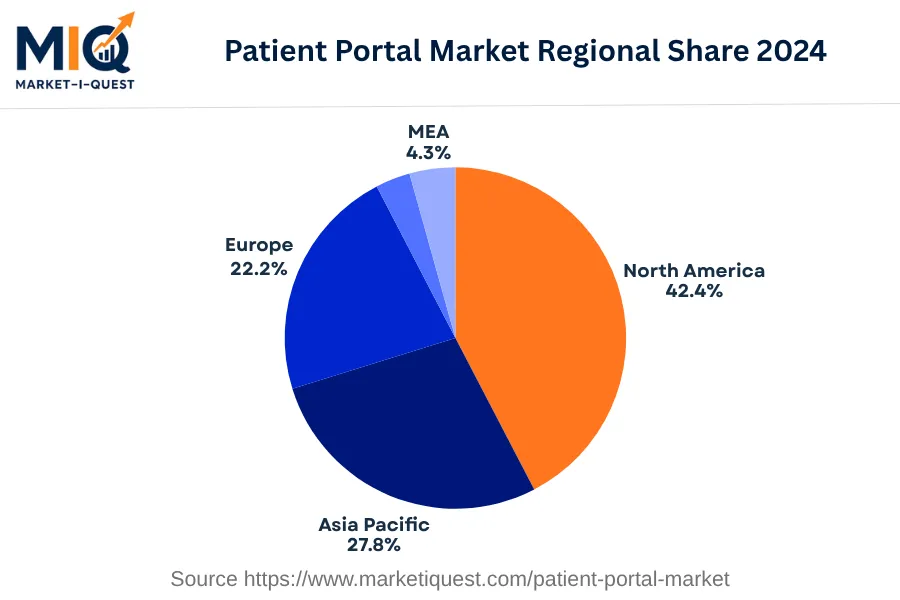
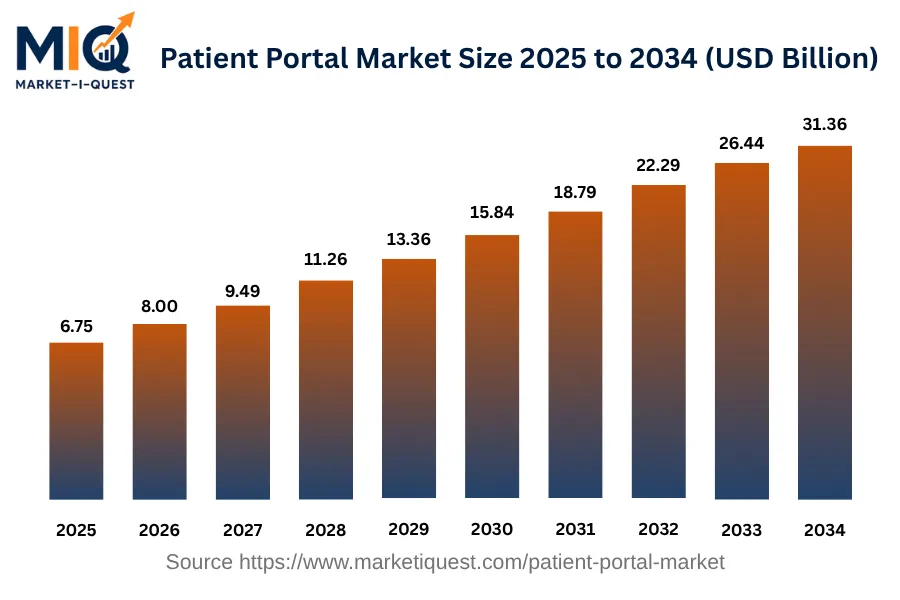
The Patient Portal Market is projected to grow from USD 6.75 Billion in 2025 to USD 31.36 Billion in 2034, with a CAGR of 18.61%. The market, which was at USD 5.69 Billion in 2024, is expected to witness an upward trend with continuous growth year on year till 2034. Growth is driven by multiple factors such as technological advancements in the healthcare sector, increased exposure to internet and digital platforms across the population, and the rising demand for personal health records. As per the regional share in 2024, North America held the largest share with 42.4% because of its vast healthcare and tech industry. Asia Pacific followed next with 27.8%, largely due to its burgeoning population and increasing internet penetration, while Europe held a share of 22.2%. Latin America and the Middle East & Africa held smaller shares, 3.3% and 4.3% respectively, due to slower adoption rates of digital platforms in these regions.

Key Takeaways

  • By Software type - Web-Based Solutions led the market holding the largest market share.
  • By Functionality - Medication Management held a significant market share in the Functionality segment.
  • By End User - On-premises commanded the top position in the Patient Portal Market.
patient-portal-market market size

Key Driving Factors

Shift Towards Value-Based Care Model

One major factor propelling transformation in the Patient Portal Market is the healthcare industry's strategic shift towards a value-based care model. This system relies heavily on patient engagement, proactive health management, and improved outcomes. Patient portals offer a platform for enhanced patient-doctor communication, access to personal health records, and enable more informed decisions about individual healthcare. The financial incentives and penalties linked to the value-based care model performance metrics necessitate the use of tools like patient portals, especially in regions like North America where this model is becoming prevalent. Consequently, this transitions healthcare providers towards adopting patient portals for optimizing patient-related outcomes and financial performance.

Regulatory Mandates Supporting Electronic Health Records (EHR) Adoption

Regulations endorsing the implementation of Electronic Health Record (EHR) systems, like the United States' Centers for Medicare & Medicaid Services' Meaningful Use Stage 2 MU2 regulation, apply a significant push to the Patient Portal Market. This rule, which encourages healthcare providers to demonstrate the 'meaningful use' of certified EHR technology, mandates granting patients online access to their health information. Given this requirement, patient portals, as a crucial component of EHR systems, see elevated market demand. Healthcare providers leveraging these portals can not only comply with regulatory standards but also streamline their operations, thereby facilitating healthier patient outcomes.

Market Evolution by Timeline

2019-2023
In the years 2019–2023, healthcare providers emerged as the primary buyers, seeking ways to enhance patient interaction and data sharing. Notably, the American market accounted for the majority sales. Software development companies capitalized on this, emphasizing the introduction of user-friendly portal interfaces. However, several struggled with integrating existing health systems, impacting the overall product efficacy. Policies such as the HITECH Act encouraged the portal adoption, with the promise of monetary incentives. A common commercial model was a fixed pricing model, despite raising concerns over budgetary constraints for small healthcare facilities. Challenges, such as data security issues and patient's tech illiteracy, were met with coordinated training efforts and improved software upgrades.
2024
By 2024, the increased adoption of digital health records worldwide lead to a surge in demand for Patient Portals. The introduction of cloud-based portals proffered a solution to prior integration difficulties with health systems. There was evident, however, a need for strengthened cyber security measures in light of increasingly sophisticated cyber threats. Policies such as the Cures Act in the US, promoting patient's access to health data, significantly bolstered the market. Furthermore, partnerships between software development companies and healthcare providers became more common, enabling mutual benefits. Challenges still centered around the patient's ability to utilize these portals effectively and responsibly.
2025-2029
In 2025-2029, the demand shifted towards personalized portals, with buyers seeking customization based on patient's specific healthcare needs. Emerging markets such as India and China witnessed demand growth, driven by digital transformation initiatives in their healthcare sector. Telecommunication companies played a vital role in offering seamless connectivity for these portals. Regulators, worldwide, implemented strict privacy laws to moderate patient data access. The pricing model also witnessed changes, with the introduction of a pay-per-use model to cater to diverse customer needs. The major blockade was the unavailability of consistent internet access in several regions, somewhat subsided by ongoing digital infrastructure projects.
2030-2034
From 2030-2034, predictive analytics in patient portals gained popularity, offering personalized care recommendations to patients. North America remained the dominant market due to strong digital infrastructure and healthcare systems. Artificial Intelligence and Machine Learning started to play a significant role in improving portal functionalities. On the regulation side, stringent launching of 'One-Patient-One-Record' in several European countries further accelerated the shift towards patient portals. Contractual agreements between software companies and healthcare providers, guaranteeing regular portal upgrades, became prevalent. The main risk stemmed from data overload, requiring providers to balance the volume of information available to patients to prevent misinterpretation.

Future Market Outlook

Future Opportunities

The present state of the patient portal market reveals several future opportunities shaped by ongoing initiatives and technological advancements. As of 2023, the World Health Organization has underscored the importance of digital health solutions in enhancing patient engagement, which aligns with a rising global demand for patient-centered care. Companies such as Microsoft are partnering with healthcare organizations to leverage cloud technologies, indicating a trend towards more scalable and flexible patient portal solutions. Furthermore, various healthcare providers in Australia are piloting blockchain technology to enhance data security within patient portals, fostering trust among users and encouraging broader adoption. The increased focus on social determinants of health has prompted the development of patient portals that not only manage clinical data but also provide resources for community and social support services. Additionally, with the rise of digital health literacy programs across countries like the United Kingdom, there is potential for greater engagement among patients in managing their health through portals. Telehealth integration is another promising area, facilitated by regulations in the United States allowing reimbursement for virtual visits, further driving patient portal usage. With these developments, the future of patient portals looks to be characterized by innovations aimed at improving user experience, security, and overall healthcare integration on a global scale.

Segmentation Analysis

By Software Type

The market is divided into subsegments including Web-Based Solutions, Mobile Applications, and Integrated Platforms, among which Web-based solutions have accounted for the largest revenue share, whereas Mobile Applications are anticipated to grow at the fastest CAGR during the forecast period.

Largest Revenue Share

Web-Based Solutions

Market Share Leader

Web-Based Solutions have emerged as the leading revenue contributors in this market. Several inherent advantages provided by this segment make it the top revenue-generating subsegment. Web-Based Solutions are commonly preferred because they allow users to access software without the need for installations, which simplifies usage and reduces maintenance costs. Furthermore, these solutions usually offer a seamless user interface and ease of navigation, thereby enhancing user experience. The global workforce's increasing reliance on remote work and cloud computing has also bolstered the demand for Web-Based Solutions. An increase in global digitalization, particularly in developing economies, has expanded the customer base of this segment. From the supplier perspective, Web-Based Solutions enable efficient updates and patches, which keep the software relevant and ensure continued usage. While E-commerce businesses are a key market for this segment, other sectors such as services, manufacturing, and healthcare also exhibit significant potential.

Fastest CAGR

Mobile Applications

Forecast Period Growth Leader

In spite of currently contributing less to the total revenue, Mobile Applications promise a robust outlook in terms of CAGR owing to several factors encouraging their rapid adoption. A pronounced shift towards mobile usage has been witnessed across all consumer demographics, fuelled by the increasing affordability of smartphones and rising internet penetration. This transition is especially prominent in emerging economies, suggesting a large untapped market for Mobile Applications. Also, newer generations of consumers tend to prefer on-the-go solutions, which directly benefits this subsegment. As per the supply perspective, developing Mobile Applications is becoming increasingly cost-effective due to advancing technologies and proliferation of development platforms. Furthermore, partnerships between app developers and businesses are fostering innovative solutions, adding impetus to the market growth. However, potential risks include data security concerns and regulatory changes that stipulate stricter app guidelines.

By Functionality

The market is divided into subsegments including Appointment Scheduling, Medication Management, Lab Results Access, Communication with Healthcare Providers, and Billing & Payments. In 2024, Medication Management accounted for the largest revenue share while Appointment Scheduling is expected to grow at the fastest CAGR during the forecast period.

Largest Revenue Share

Medication Management

Market Share Leader

Medication Management generated the most revenue in 2024, driven by a multitude of factors. A primary driver is the growing patient population that requires regular medication, particularly among aging demographics. These demographics typically require medication for chronic conditions and illnesses, thus necessitating robust medication management to ensure proper drug administration and track medication efficacy. Medication Management also appeals to healthcare providers because it enhances patient safety and reduces mistakes, a critical concern in healthcare delivery. Geographically, our assumption is that developed nations such as North America and Europe contribute the most considerable revenue due to their advanced healthcare systems and the growing acceptance of technology in healthcare. The stringent regulations mandating accurate medication management and patient safety are additionally propelling the growth of this subsegment. Factors like the need for patient-centric care, the ease of purchasing medications online, and low switching costs for patients have all played significant roles in driving revenues in this segment.

Fastest CAGR

Appointment Scheduling

Forecast Period Growth Leader

While Appointment Scheduling did not generate the most revenues in 2024, it is projected to grow at the fastest CAGR during the coming years. The main growth driver is increasing consumer demand for convenience and efficiency in accessing healthcare services. Tech adoption barriers are being mitigated by patients' familiarity with similar scheduling systems in other sectors and healthcare providers' motivation to streamline operations and improve patient satisfaction. Another catalyst for growth is the increased investments by healthcare providers in digital tools to automate and simplify administrative tasks. Furthermore, partnerships between healthcare providers and tech developers are expected to accelerate the subsegment's growth. However, potential risks in the short term may include cybersecurity threats, as patient data is often involved in appointment scheduling applications, and regulatory changes which could affect how these applications are implemented.

By Deployment Model

The market is divided into subsegments including On-Premises, Cloud-Based, and Hybrid deployment models. In 2024, the On-Premises model accounted for the largest revenue share while the Cloud-Based model is expected to grow at the fastest CAGR during the forecast period.

Largest Revenue Share

On-Premises

Market Share Leader

The On-Premises model has remained a strong revenue generator in 2024 due to several key factors. This model appeals to a wide range of customers, particularly those prioritizing high control over their data and systems. They show a preference for this traditional model due to security concerns around cloud-based solutions, favoring having full control over their data storage and management. Institutions from the financial, healthcare, and government sectors are particularly prominent in this subsegment due to regulatory requirements for data control and security. This deployment model, advanced in terms of security and regulation compliance, tends to have higher initial cost, translating to higher revenues. Moreover, the cost of switching to another deployment model is often significant, reinforcing customer retention and sustaining revenue for the on-premises subsegment.

Fastest CAGR

Cloud-Based

Forecast Period Growth Leader

The Cloud-Based model is set to witness the fastest growth in the coming years, primarily driven by several key trends. Organizations are becoming more comfortable with cloud-based solutions, fueled by the promise of cost-effectiveness, easy scalability, and flexibility. Technical advancements in cloud infrastructures and the increasing range of services offered by providers catalyze adoption. Small to medium enterprises are also increasingly adopting this model as it reduces the need for substantial upfront CapEx investments in IT infrastructure. However, barriers including data security concerns and regulation hurdles may pose risk to this subsegment’s growth. Policies focused on data protection, and partnerships between cloud service providers and security companies are major contributors in overcoming these challenges. Yet, it is crucial to monitor the potential short-term risks such as data breaches and platform downtime, which could hinder the smooth transition to cloud-based models.

By End User

The market is divided into subsegments including Healthcare Providers, Patients, Insurance Companies, and Pharmaceutical Companies, among which Healthcare Providers accounted for the largest revenue share while Pharmaceutical Companies are expected to grow at the fastest CAGR during the forecast period.

Largest Revenue Share

Healthcare Providers

Market Share Leader

Healthcare Providers, being the primary receivers of medical materials and services, hold the largest revenue share. The logical explanation behind this lies in their critical role in the health system, as they are the entry point for patient care. The increasing population, with an accompanying increase in potential patients and disease prevalence, directly fuels the growth of this subsegment. The expanding needs for healthcare highlight the significance of the providers as they remain the ultimate consumers of most health products and services. Given that they serve as the final step in the healthcare supply chain, providers' demand directly impacts revenue generation. The geographic diversity of healthcare providers also contributes to their market dominance. Serving both urban and rural populations, healthcare providers are found in abundance across locations. They interact directly with the end-user, influencing health outcomes and by extension, market trends. Regulation also favors the healthcare providers as it mandates them to maintain certain standards and adopt many imperative practices, adding to their revenue stream.

Fastest CAGR

Pharmaceutical Companies

Forecast Period Growth Leader

With numerous developments in disease treatment modalities, Pharmaceutical Companies represent the fastest growing subsegment. Their growth is primarily driven by continuous innovation, strong R&D capabilities, and a rapid increase in the approval of new drug applications. As diseases evolve and become more complex, the role of pharmaceuticals becomes more critical. Pharmaceutical companies, by constantly developing and manufacturing new drugs, provide the essential ammunition for the healthcare industry to battle diseases. Moreover, collaborations between pharmaceutical companies and healthcare providers, policy updates favoring pharmaceutical advancements, and increased patient awareness are acting as crucial growth drivers. However, they must overcome barriers in the form of stringent regulations, high development costs, and high adoption resistance due to safety concerns. While these are valid concerns, the emergent need for better treatment options in the face of rising health crises has created a positive growth outlook for this segment.

Competitive Analysis - Patient Portal Market

Key Market Players

Manufacturers / OEMs

Allscripts Healthcare Solutions, Inc.
US
Cerner Corporation
US
Epic Systems Corporation
US

Key Suppliers & Raw Materials

Microsoft Corporation
US
Oracle
US
IBM
US

Distributors, Integrators & Channel Partners

McKesson Corporation
US
Optum, Inc.
US
Health Catalyst
US

Porter’s Five Forces Analysis

This analysis assesses the competitive landscape of the Patient Portal Market and the potential impact of sundry forces on its trajectory.

Supplier Bargaining Power

Medium

Providers of healthcare IT solutions have moderate influence due to the specialized nature of their products.

Buyer Bargaining Power

High

Healthcare providers and institutions have high bargaining power due to the availability of multiple vendors and solutions.

Threat of Substitutes

Low

Low threat as the need for secure, HIPAA-compliant patient data exchange solutions remains unique.

Threat of New Entrants

Medium

Medium threat due to sector growth and digital transformation in healthcare, albeit challenged by high regulatory barriers.

Competitive Rivalry

High

High rivalry with numerous established firms and upcoming startups driving innovation in the market.

Regional Analysis

Geographic market dynamics and growth opportunities across key regions

Global Market Outlook

patient-portal-market market regional share

North America

In the base year of 2024, the Patient Portal Market in North America showed robust dynamics due to various factors and trends. Key drivers included healthcare providers' push for patient engagement, government regulations encouraging the use of electronic health records, and increased investment in health IT infrastructure. The shift toward telehealth services provided a fillip to technology adoption, while competitive pricing strategies among suppliers underscored the marketplace's supply dynamics.

Concurrent trends included patients' amplified preference for digital healthcare tools, yielding shifts in buyer behavior. Innovations, such as integrated patient portals, led product and technology shifts in the market, influencing the channel dynamics too. Many healthcare providers developed strategic partnerships or merged to enhance their offerings in a competitive ecosystem. Policies like the Affordable Care Act played pivotal roles in enforcing standards, promoting a patient-centric approach to healthcare.

These market aspects resonated across sectors, including large enterprises, governments, and healthcare facilities. Healthcare providers, in particular, emerged as crucial customers for patient portal solutions in efforts to improve their service quality and patient satisfaction rates. They invested significantly in these solutions to comply with government regulations and cater to the evolving demands of their patient population. The advancements in the patient portal market in 2024 have set a significant precedent for digital health services in North America.

Asia Pacific

In 2024, the Patient Portal Market in Asia Pacific demonstrated significant growth, driven by various key factors. Increasing investment in healthcare technology, advancing regional tech adoption rates, and necessity-induced demand resulting from the COVID-19 pandemic substantially boosted market adoption rates. Favorable government regulations, especially in India and China, also fostered a conducive environment for market expansion.

Digitization and personalization were the prevailing trends. Patients increasingly sought remote healthcare consultations, driving providers servicing Japan, South Korea, Australia, and key ASEAN markets to upscale and innovate their offerings. Evolutionary tech-transformation combined with strategic partnerships and mergers contributed to reshaping the buyer behavior across different sectors including healthcare, enterprise, and government. In response to this shift, product development pivoted towards ensuring compatibility with various devices and enhancing user-interface design.

Finally, initiatives led by China's government to digitize healthcare and India's National Health Policy boosted patient portal deployment across hospitals and clinics. Regulatory standards, like Australia's My Health Record system, encouraged practices to adopt these portals, transforming the accessibility of healthcare records in the region. Thus, regulatory environment, coupled with technological advances and changing consumer preferences, energized the Patient Portal Market in Asia Pacific in 2024.

Europe

In 2024, Europe's patient portal market exhibited substantial growth, spurred primarily by the integration of advanced digital technologies in various healthcare systems. Key market drivers included high investments in healthcare IT, rising demand for electronic health records (EHRs) and patient accessibility, and stringent regulatory standards for patient data protection.

Countries like Germany, the United Kingdom, and France experienced significant market expansion due to favorable government initiatives, widespread digitization, and increased adoption of EHRs. Technological advancements, such as Artificial Intelligence and Machine Learning, coupled with efficient supply dynamics and competitive pricing strategies, also fueled market growth.

Conversely, buyer behavior trends indicated a strong preference for user-friendly and highly secure patient portal applications. Key market players responded by building partnerships for product improvement, ensuring policy compliance, and facilitating mergers and acquisitions to fortify their market positions. The shift from physical to digital records sparked a new wave of technological innovation and market competition.

Key sectors driving the patient portal demand in Europe consisted of government healthcare systems, private hospitals, and healthcare-related enterprise-level companies. Major customers were chiefly hospitals, clinics, individual healthcare professionals, and private patients seeking easy access to their healthcare records. Foremost, the patient portal market in 2024 in Europe was characterized by technological advancement, regulatory compliance, competitive supply and pricing, and evolving consumer preferences.

Latin America

In 2024, the Patient Portal Market in Latin America (LATAM) experienced significant transformation driven by technological adoption, regulatory changes, and shifting demand dynamics.

Rapid digitization in Brazil and Mexico's healthcare sectors prompted greater investment in patient portal technologies, spurring market growth. Additionally, Argentina's mandatory Electronic Health Record (EHR) implementation scheme significantly enhanced patient portal adoption as part of the system integration process. In Colombia, the drive for healthcare transparency fueled the demand for patient portals in government-run hospitals and healthcare facilities. Inflation in Chile, which hiked healthcare costs, catalyzed the switch to cost-effective digital alternatives, inclusively patient portals.

Trends witnessed in the LATAM market included a change in customer preference towards telemedicine due to the COVID-19 situation, making patient portals a necessity across Peru's healthcare sector. Additionally, data security concerns led to a robust paradigm shift towards encrypted patient portals in Mexico's medical landscape. Increased partnerships and merger activities were also observed, such as the Argentine telehealth provider Medifé's collaboration with Epic Systems, facilitating enhanced patient portal capabilities. Finally, an overall surge in the standardization of health data protocols was visible throughout LATAM, enforcing stricter policy demands tied to patient portal usage.

These factors collectively shaped LATAM’s Patient Portal Market landscape in the base year 2024.

Middle East & Africa

In 2024, the Patient Portal Market in the Middle East and Africa saw increased activity due to a mix of drivers and regional trends. Burgeoning demand was stimulated by rapid digital transformation in healthcare, growing acceptance of telemedicine services, and a push for improved patient experience, notably in markets like Saudi Arabia, UAE and South Africa. Government initiatives, such as Saudi Arabia's Vision 2030 healthcare reform, bolstered market growth by promoting e-health adoption and facilitating necessary investments. Moreover, a growing urban middle-class demographic especially in countries like Egypt, Nigeria and Kenya, continued to drive demand for efficient, digital-first healthcare services.

Trends mirrored these drivers with a marked shift towards data-driven care led by technological adoption. The South African public sector’s drive to digitize healthcare records was one influential trend. In Israel, increased collaboration and M&A activities amongst tech companies and healthcare providers underlined the market's vibrancy. Notably, the usage of mobile-app-based portals surged, reflecting a change in patient behaviour and aligning with the telecommunication sector's flourishing growth in markets such as Qatar and UAE. However, policy enforcement issues and cybersecurity concerns tempered growth, underscoring the need for standards and regulation evolution. This landscape reflected the critical role of technology in transforming the healthcare sector across the region in 2024.

Recent Industry Developments

Latest market innovations, product launches, and strategic initiatives

February 2026

Electronic Health Record (EHR) vendors accelerated integration with remote patient monitoring (RPM) and wearable sensor APIs. Portals now ingest continuous biometric data such as continuous glucose monitor (CGM) readings and cardiac telemetry directly into patient charts to assist chronic care management.

Frequently Asked Questions