Hydrogen Energy Storage Market Snapshot

Key Players

  • Air Liquide (France)
  • ITM Power (United Kingdom)
  • Plug Power (United States)
  • Ballard Power Systems (Canada)
  • Linde (Ireland)
  • Hydrogenics Corporation (Canada)
  • HyGear (Netherlands)
  • Toshiba Energy Systems & Solutions Corporation (Japan)
  • McPhy Energy (France)
  • Siemens (Germany)

Market Size

Base Year 2024
$18.95 Bn
CAGR
8.5%
Forecast 2034
$42.85 Bn

Market Segments

By Technology
  • Liquid Hydrogen
  • Metal Hydrides
  • Carbon Absorption
  • Underground Salt Caverns
By End Use
  • ower Generation
  • Transportation
  • Chemicals
  • Metal Working
  • Others

Market Dynamics

Drivers
  • Rising renewable energy integration
  • Increasing power consumption
Restraints
  • High infrastructure costs
  • Technological challenges
Opportunities
  • Rising renewable energy consumption
  • Increasing industrialization in developing regions

Market Size

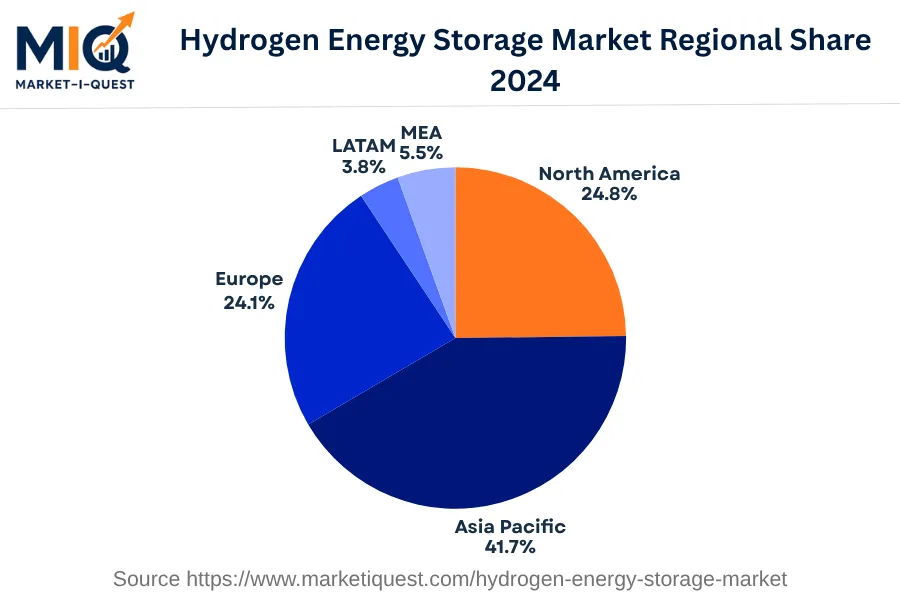
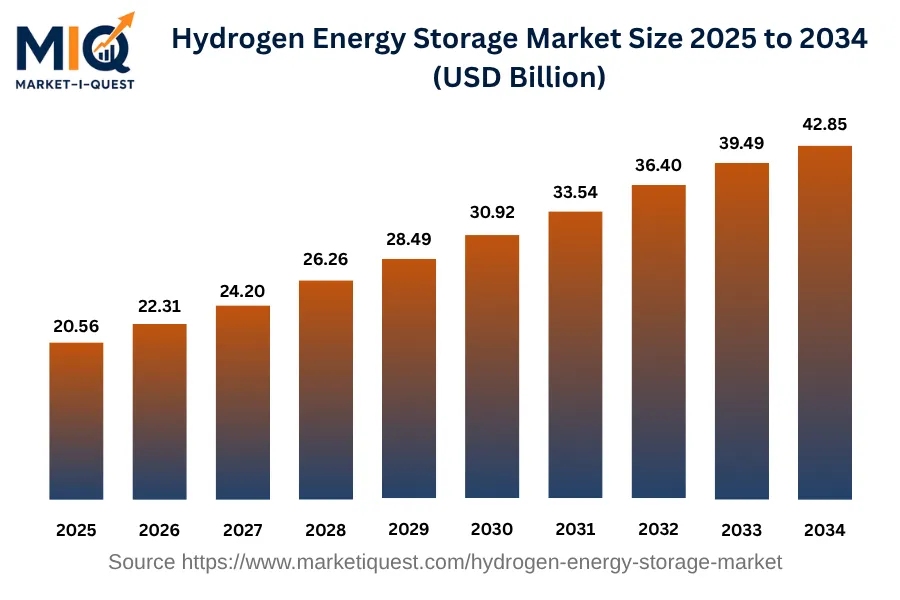
The Hydrogen Energy Storage Market was valued at USD 20.56 billion in 2025 and is projected to increase to USD 42.85 billion by 2034. This represents a compound annual growth rate (CAGR) of 8.5% between these years. The market experienced steady growth from USD 18.95 billion in 2024 to this 2025 value. This growth rate suggests that the development of hydrogen energy storage technologies and the growing deployment across regions are major factors contributing to the market size expansion. Looking at regional shares for 2024, data showed that the Hydrogen Energy Storage market was primarily concentrated in North America equating to 24.81 percent, Asia-Pacific at 41.74%, and Europe, closely following North America, at 24.13%. Meanwhile, the shares were less significant but not negligible in Latin America and Middle East & Africa which represented 3.82% and 5.5% respectively.

Key Takeaways

  • By Technology - Metal Hydrides held an impressive leadership accounting for the majority share in 2024.
  • By End Use - Power Generation emerged as the top segment leading the market by a significant margin in 2024.
hydrogen-energy-storage-market market size

Key Driving Factors

Transition towards Decarbonization

Global efforts to mitigate climate change are driving a transition from fossil fuel-based energy sources to renewable alternatives. Hydrogen, as a clean and sustainable energy carrier, fits into this strategy. In this context, hydrogen energy storage provides a means to store surplus renewable energy for use when needed, thereby addressing an important limitation of intermittent renewable energy sources like solar and wind. Consequently, regulators and energy stakeholders worldwide are strengthening their support for hydrogen energy storage technologies, fostering an optimistic growth environment for the hydrogen energy storage market.

Energy Resilience and Security

The need for energy security and resilience is pushing utilities and governments to invest in diverse energy storage solutions. Hydrogen has the potential to store energy for long durations without losing its potential, favourable for ensuring consistent energy supply, even during periods of high demand or shortages. In addition, hydrogen can be produced domestically, making it an attractive option for countries seeking to reduce their dependence on imported energy sources. As these advantages are increasingly recognized, the hydrogen energy storage market is expected to benefit.

Market Evolution by Timeline

2019-2023
During this period, Europe, led by Germany, was the primary buyer of hydrogen energy storage systems. Main reasons included the transition from fossil fuels to renewable energy and the need to store excessive solar and wind energy. Supply-wise, many manufacturers, like AIR LIQUIDE and LINDE, focused on developing integrated hydrogen storage solutions. Government policies such as the EU Hydrogen Strategy boosted hydrogen storage adoption. Prices dropped due to technological improvements and increased production volumes. Yet, the slow pace of infrastructure development and relative immaturity of the market posed certain challenges.
2024
In 2024, the Asia Pacific region, particularly Japan and South Korea, became major players due to their robust hydrogen economies. They started importing hydrogen energy storage technologies from Europe. Technological advancements allowed for more seamless integration of storage systems with renewable energy sources. The governments provided incentives and subsidies to promote the use of hydrogen energy, driving market growth. However, safety concerns regarding hydrogen storage prevented more widespread adoption.
2025-2029
From 2025 to 2029, the demand for hydrogen energy storage systems spread into energy-intensive industries such as steel production, providing a new and significant buyer segment. Technology providers focused on improving system efficiency and reducing carbon footprint. Government programs like the Clean Energy Ministerial's Hydrogen Initiative facilitated the industry's growth. The adoption of power purchase agreements became commonplace, helping companies reduce their initial investment costs. Despite growing acceptance, market risks remained like the cost and safety of transporting hydrogen.
2030-2034
By 2030, the hydrogen energy storage market appeared matured due to increased global uptake, especially in the United States. Improved and varied hydrogen storage technologies such as solid-state storage were shipped, addressing earlier safety concerns. Government initiatives, like the U.S. Department of Energy's H2@Scale program, significantly influenced market growth. Contracts mainly shifted towards leasing arrangements, easing financial burdens for buyers. Challenges persist, including how to integrate hydrogen energy on a massive scale into the existing grid structure.

Future Market Outlook

Future Opportunities

Future opportunities in the hydrogen energy storage market are closely linked to current technological advancements and regulatory support. In 2022, China's National Energy Administration included hydrogen in its energy strategies, indicating a commitment to expanding hydrogen infrastructure. Such government backing presents avenues for companies, particularly those specializing in hydrogen transport and storage solutions, to advance their offerings. Developments like codification of standards for hydrogen blending in natural gas networks by the American Gas Association in 2023 increase the potential for integrating hydrogen into existing energy systems. Simultaneously, the European Hydrogen Backbone initiative, launched in 2020, is paving the way for extensive hydrogen transport networks, fostering regional collaborations among EU member states. Additionally, firms such as Air Liquide are actively investing in hydrogen production projects in various regions, including North America and Europe, catalyzing growth in supply chains crucial for hydrogen distribution. Moreover, public-private partnerships, exemplified by the collaboration between government entities and private companies for large-scale hydrogen pilot projects in Australia, indicate a future-centric approach combining research, infrastructure, and public policy. This alignment of efforts across sectors reveals an opportunity-rich landscape, making hydrogen storage technologies integral to global decarbonization strategies going forward.

Segmentation Analysis

By Technology

The market is divided into subsegments including Liquid Hydrogen, Metal Hydrides, Carbon Absorption, and Underground Salt Caverns. Metal Hydrides accounted for the largest revenue share while Liquid Hydrogen is expected to grow at the fastest CAGR during the forecast period.

Largest Revenue Share

Metal Hydrides

Market Share Leader

Metal Hydrides lead the Technology segment in terms of revenue due to their unique capabilities in energy storage and their crucial role in fuel cell technology. Right now, Metal Hydrides are favored over other technologies because they offer low-cost storage and high energy density, making them the preferred choice for long-term and large capacity energy storage needs. Additionally, the versatility of Metal Hydrides and their ability to endure a range of conditions push their demand higher in the global market, thus accounting for their leading position in revenue generation. Geographically, their uptake has been significant in both developed and developing countries, driven by the increasing focus on renewable energy. The preference for Metal Hydrides is further amplified by regulatory policies that are encouraging energy efficiency and sustainability. The investment in infrastructure and the relative ease of switching to Metal Hydrides compared to other Hydrogen technologies make it a more viable choice, thereby driving its revenue.

Fastest CAGR

Liquid Hydrogen

Forecast Period Growth Leader

Projected to grow at the fastest CAGR during the forecast period, Liquid Hydrogen owes its growth momentum to several key factors. Firstly, the increasing global focus on clean energy is drawing significant attention to Liquid Hydrogen, due to its potential in reducing carbon emissions drastically. However, barriers to adoption include higher initial investments and complexities in storage and handling. On the other hand, emerging technological advancements are acting as catalysts, progressively overcoming these barriers. Promising innovations in cryogenic storage options, and advancements in insulation technologies, are making liquid hydrogen storage more cost-effective and safe. Also, public-private partnerships are accelerating the development and adoption of Liquid Hydrogen Technology. Although future fuel price volatility may pose a risk in the near term, the undeniable environmental benefits and efficiency of Liquid Hydrogen make it a strong contender for the fastest growth in this segment.

By End Use

The market is divided into subsegments including Power Generation, Transportation, Chemicals, Metal Working, Others. In 2024, Power Generation accounted for the largest revenue share while Transportation is expected to grow at the fastest CAGR during the forecast period.

Largest Revenue Share

Power Generation

Market Share Leader

Power Generation holds the largest revenue share in 2024. This dominance can be attributed to several factors. Firstly, the relentless global energy demand fosters a heavy reliance on diverse power generation methods, ensuring a sustained demand for this subsegment. Its universal necessity across all industries and households further drives its large revenue share. Secondly, investors view power generation as a safe bet, given the promising returns and steady cash flows, which can lead to increased capital and thus higher revenues. Regulatory policies also favor continued growth and investment in power generation. For example, numerous countries prioritize reducing carbon emissions, spurring the growth of cleaner and more sustainable power generation methods. Another reason lies in the high cost associated with power infrastructure, making entry into this segment quite expensive, thereby limiting the competition and promoting higher revenues for existing players.

Fastest CAGR

Transportation

Forecast Period Growth Leader

The Transportation subsegment is projected to grow at the fastest rate. The main driver for its growth is the upsurge in global trade and urbanization, requiring efficient transportation systems for people and goods. Additionally, recent years have seen advances in transportation technology, ranging from electric and autonomous vehicles to innovative fuel efficiency methods. These breakthroughs stimulate fresh market interest, thus fostering quick growth. Governments worldwide are investing in infrastructure development, including transportation, further fueling its growth. However, potential risks could include fluctuations in fuel prices, unpredictable maintenance costs, and regulatory changes. Rising concerns over environmental impacts can also affect growth rate. Despite these potential hurdles, the transportation subsegment is expected to overcome them through technological advances, widespread adoption, and government initiatives.

Competitive Analysis: Hydrogen Energy Storage Market

Key Market Players

Manufacturers / OEMs

Linde Plc
Ireland
Air Liquide
France
Plug Power Inc.
US

Key Suppliers & Raw Materials

H2V INDUSTRY
France
NEL ASA
Norway
HyGear
Netherlands

Distributors, Integrators & Channel Partners

ABB
Switzerland
ENGIE
France
Siemens
Germany

Porter’s Five Forces Analysis

An analysis of the competitive forces within the Hydrogen Energy Storage market.

Supplier Bargaining Power

Medium

Large suppliers dominate, but the supply chain is dependent on volatile raw material prices.

Buyer Bargaining Power

Medium

Buyers are mainly industries and governments with significant bargaining power, but lack of direct substitutes limits choice.

Threat of Substitutes

Low

Energy storage alternatives exist, but hydrogen stands out for its high energy content and environmental advantages.

Threat of New Entrants

Medium

High setup costs and stringent regulations pose challenges, but increasing interest in renewable energy encourages entrants.

Competitive Rivalry

High

Market sees fierce competition with several established and emerging players vying for market share.

Regional Analysis

Geographic market dynamics and growth opportunities across key regions

Global Market Outlook

hydrogen-energy-storage-market market regional share

North America

In 2024, the Hydrogen Energy Storage Market in North America has garnered significant attention due to renewable energy transition strategies. The driving factors include increasing demand by utilities for clean energy storage alternatives to conventional systems, and government incentives, such as the U.S Energy Department's H2@Scale initiative, encouraging hydrogen technology adoption. Canadian investment into hydrogen solutions has also been a key driver, alongside Mexico's price competitiveness due to its natural gas reserves.

Several key trends have emerged on the back of these drivers. Buyer behavior has shifted towards a preference for low-carbon energy sources, necessitating the development of hydrogen technology. Also, partnerships have increased, with big tech companies like Microsoft entering into alliances with energy companies for using hydrogen storage in their facilities. Additionally, stricter enforcement of environmental standards by regulatory bodies necessitated the reduction of greenhouse gas emissions, further driving the market. Hydrogen energy storage use is primarily seen in the enterprise and utility sectors, primarily due to their intense electricity demand. Moreover, some traction has been observed in the manufacturing and retail sectors, influenced by the pressure to achieve digital transformation and sustainability targets. Hence, the Hydrogen Energy Storage market has witnessed significant growth in North America in 2024 due to various strategic drivers and emerging trends.

Asia Pacific

In the base year 2024, the Hydrogen Energy Storage Market in Asia Pacific was marked by distinct growth influencers and a dynamic market landscape. Significant drivers included robust demand for renewable energy sources across countries like China and India due to their aggressive clean energy goals, rising investments in green hydrogen projects in Japan and South Korea, and increased adoption of advanced hydrogen storage technologies in Australia and key ASEAN markets. Regulatory measures stimulating the hydrogen economy, specifically in India, added traction to the market, while improved supply dynamics and reduced hydrogen production costs accelerated industry growth.

Notable trends encompassed shifts in buyer behavior, with enterprises and utilities showing a preference for hydrogen-based storage options due to their efficiency and sustainability. Major product advancements drove the market forward, marked by South Korea's technological strides in advanced hydrogen capture and storage. An uptick in partnerships led to accelerated market consolidation, with Asian utilities and manufacturing companies collaborating to boost hydrogen infrastructure development. Furthermore, stricter adherence to sustainable energy policies affected the market significantly, especially in China, where active government enforcement of hydrogen energy standards sparked considerable industry growth. These factors made 2024 a pivotal year in Asia Pacific's Hydrogen Energy Storage Market progression.

Europe

In 2024, the Hydrogen Energy Storage Market in Europe underscored the region's pivot towards cleaner, sustainable energy solutions. Drivers behind this shift include robust demand from industrial sectors such as utilities and manufacturing, leveraging hydrogen as a low-carbon energy carrier. Stringent environmental regulations in countries like Germany and the UK compelled organizations to adopt renewable energy sources, making hydrogen a viable option. Technological advancements across Europe, notably in France and Italy, led to increased storage efficiency, further driving market growth. Moreover, the European Union’s commitment to energy transition spurred investments in hydrogen energy storage, particularly in Spain and Benelux.

Trends observed in 2024 reflected strategic shifts towards hydrogen energy. Enterprises across the European market showed a higher inclination towards green hydrogen, backed by governmental policies promoting its production and usage, particularly noticeable in the Nordics. Technological advancements brought about a change in hydrogen storage methods, with noticeable traction towards advanced physical solutions. Concurrently, an uptick in partnerships and M&As in Central and Eastern Europe testified to the industry's consolidating nature. Finally, strict enforcement of renewable energy standards across the region empowered hydrogen’s role in Europe's energy mix, firmly placing hydrogen energy storage at the heart of Europe's energy transition endeavors.

Latin America

In 2024, Latin America's Hydrogen Energy Storage Market experienced significant expansion, driven by multifaceted factors. Demand surged due to increased reliance on reliable and sustainable power sources among key sectors such as utilities, manufacturing, and government entities. Regulatory impetus strengthened the market, notably through Brazil's Renewable Energy Source Policy and Argentina's Bioenergy Act, encouraging low-carbon energy solutions. Broad investments spanning from Mexico to Chile powered developments in infrastructure and technology, thus amplifying supply dynamics. Trends exemplifying market shifts included an increased emphasis on green hydrogen, reflecting a growing commitment to clean energy in the LATAM region. This was particularly evident in Brazil and Chile, with a notable increase in green hydrogen projects. Collaborations bloomed, such as Argentina and Mexico's joint ventures in hydrogen production and storage technologies for utilities. Chilean companies played active roles in regional mergers and acquisitions, often geared towards hydrogen energy storage. Regulatory enforcement varied, with Colombia stepping up policy enforcement and Peru prioritizing energy standards.

The significant market growth mirrored hydrogen energy storage uptake, particularly among government sectors. These entities, managing large-scale projects, swayed supply and demand dynamics. Firms in utilities and manufacturing also adopted this energy-storage form, seeking cost savings and operational efficiencies. Mexico’s manufacturing sector notably shifted towards hydrogen-based systems, while utilities in Colombia have been particularly inspired by Argentina's developments in green hydrogen. Overall, the LATAM region’s hydrogen energy storage landscape evolved remarkably in base year 2024.

Middle East & Africa

In 2024, the Hydrogen Energy Storage Market in the Middle East and Africa was shaped by diverse drivers. Rising demand for clean energy sources, coupled with regulatory frameworks promoting the use of hydrogen energy storage in countries like Saudi Arabia and the United Arab Emirates, steered market growth. Investments in hydrogen storage technologies, especially from oil-dependent nations like Qatar and Nigeria, also bolstered the market. High technology adoption rates in nations like Israel and South Africa facilitated further expansion. Simultaneously, distinct trends surfaced. A shift towards hydrogen-as-energy storage technology was particularly evident in the oil and gas sector, exemplified by Saudi-based Aramco's initiatives. Mergers and acquisitions activities also picked up pace, as seen in Egypt's focus on public-private partnerships. The enforcement of government policies, such as South Africa's Integrated Resource Plan, was heavily noticeable.

In terms of buyer behavior, the utilities and oil and gas sectors became leading customers, in a drive to diversify and ensure energy security. Companies in the healthcare sector within nations like the United Arab Emirates and Israel began to recognize the importance of hydrogen energy storage, echoing its potential applications beyond energy sectors. Furthermore, the manufacturing sector, prominently in Nigeria and Kenya, showed an increased interest in this technology, paving the path towards a more sustainable future.

Recent Industry Developments

Latest market innovations, product launches, and strategic initiatives

June 2026

Sungrow showcased its latest integrated energy solutions at Intersolar Europe 2026, highlighting significant advancements in hydrogen-storage integration. The company unveiled its latest "S+ Energy Storage" framework, which shifts from standardized products to scenario-based solutions. This includes advanced power-to-hydrogen (P2H2) systems that integrate natively with solar-plus-storage utility projects to better manage energy intermittency and grid-forming stability.

January 2026

The Government of India introduced the Draft National Electricity Policy 2026, which explicitly integrates the National Green Hydrogen Mission into the broader power sector framework. This policy provides a statutory roadmap for "Energy Storage Systems" (ESS) that includes hydrogen-based storage as a qualified asset for meeting grid-balancing requirements. It creates a regulatory pathway for utilities to treat hydrogen storage as a critical component for maintaining 24x7 reliable power, setting the stage for standardized tariff approvals and grid connectivity for hydrogen-ready storage projects.

Frequently Asked Questions