Healthcare Predictive Analytics Market Snapshot

Key Players

  • IBM (US)
  • Cerner Corporation (US)
  • MedeAnalytics Inc. (US)
  • Oracle Corporation (US)
  • Allscripts Healthcare Solutions Inc. (US)
  • Optum Inc. (United States)
  • McKesson Corporation (US)
  • Verisk Analytics (US)
  • Elsevier (Netherlands)
  • AiCure (US)

Market Size

Base Year 2024
$18.53 Bn
CAGR
22.84%
Forecast 2034
$144.97 Bn

Market Segments

By Component
Software, Hardware, Services
By Deployment Mode
On-Premise, Cloud-Based, Hybrid
By Application
Patient Risk Prediction, Operational Efficiency, Population Health Management, Clinical Decision Support, Fraud Detection, Others
By End User
Healthcare Providers, Healthcare Payers, Pharmaceutical Companies, Research Organizations

Market Dynamics

Drivers
  • Rising healthcare costs
  • Increasing digital data volume
Restraints
  • High implementation costs
  • Privacy & security concerns
Opportunities
  • Rising chronic disease prevalence
  • Increased digitization of healthcare records

Market Size

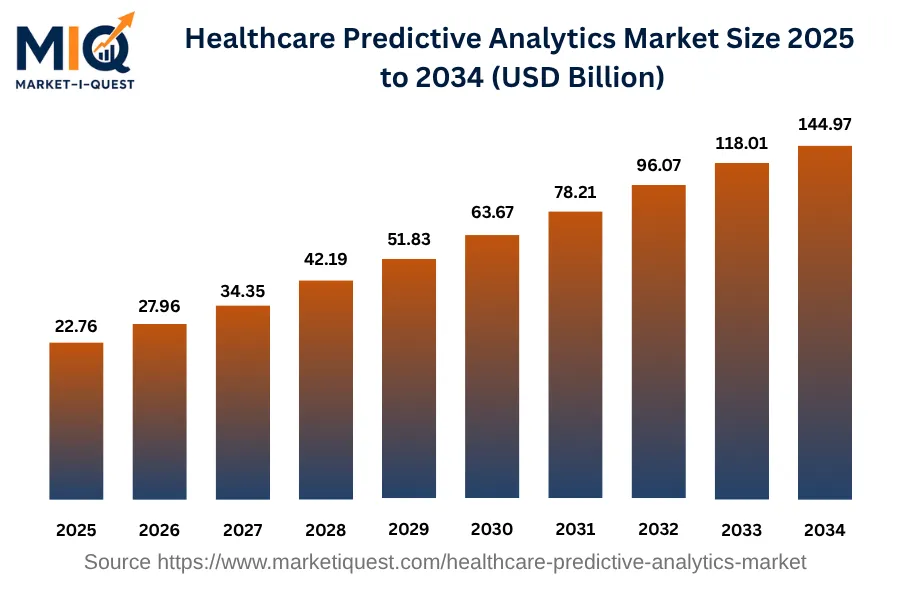
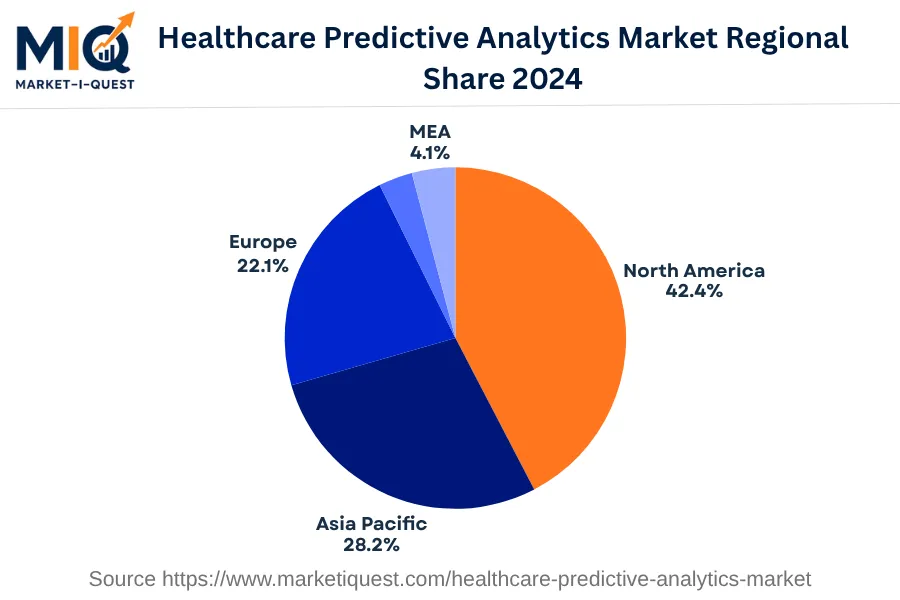
The Healthcare Predictive Analytics Market was valued at 22.76 billion USD in 2025, and it is projected to reach 144.97 billion USD by 2034, with a CAGR of 22.84%. The significant increase is due to advancements and widespread implementation of healthcare predictive analytics over this forecast period from 2025 to 2034. In terms of regional share during the starting year of 2024, North America held the majority with 42.4%, closely followed by Asia Pacific at 28.2%. Meanwhile, Europe contributed 22.1%, with LATAM and MEA making up the rest with 3.2% and 4.1% respectively.

Key Takeaways

  • By Component - Hardware led the Healthcare Predictive Analytics Market rendering the highest market share in 2025.
  • By Deployment Mode - On-Premise took a notable position showing the most rapid growth in Market.
  • By Application - Operational Efficiency held dominance resulting in the largest part of the market in 2025.
  • By End User - Pharmaceutical Companies were the leading segment holding the majority share in Market.
healthcare-predictive-analytics-market market size

Key Driving Factors

Adoption of Electronic Health Records

The consistent adoption of Electronic Health Records (EHR) across hospitals and healthcare facilities is serving as a substantial driving factor for the Healthcare Predictive Analytics Market. EHRs provide a substantial data resource that healthcare institutions and organizations can draw from to improve their predictive analytics capabilities. Adherence to the Meaningful Use Program outlined by the Centers for Medicare & Medicaid Services (CMS) in the United States, which incentivizes healthcare organizations to use EHRs, has resulted in a large pool of digital health data. Healthcare organizations in turn are increasingly relying on predictive analytics to reduce hospital readmissions, manage population health, and improve preventative care, all of which hinge upon insights drawn from EHRs.
Value-Based Healthcare Delivery

The adoption of value-based healthcare delivery models over traditional volume-based models is propelling interest in predictive analytics solutions in healthcare. As healthcare providers are increasingly held accountable for health outcomes, quality of care, and patient satisfaction, predictive analytics becomes paramount in aiding clinical decision-making. A key healthcare policy pushing this shift is the Affordable Care Act (ACA) in the United States which introduced healthcare payment models dependent on care quality and patient health outcomes, placing an emphasis on preventative, personalized, and cost-effective care. Harnessing predictive analytics by leveraging patient data allows providers to forecast health risks, stratify patients, and tailor interventions, thereby enhancing value-based care delivery.

Market Evolution by Timeline

2019-2023
In the period 2019–2023, hospitals were the key buyer segment in North America and Europe, driven by a focus on improving patient outcomes and optimizing operations. Technology providers began to offer predictive models utilizing machine learning and AI techniques. However, data privacy concerns were a significant constraint hampering deployment of solutions, made more complex due to variations in data protection regulations across countries. U.S. providers often referenced the Health Insurance Portability and Accountability Act (HIPAA) standards in their services. Pricing models based on service subscriptions became common. Practical blockers included technical skill shortage and reluctance in sharing sensitive health data among institutions.
2024
In 2024, increased adoption was seen in Asia, particularly in India and China, driven by expanding healthcare infrastructure and a growing emphasis on data-driven decision-making. There was a steady increase in cloud-based solutions enabling easier integration with existing health infrastructure. The global GDPR law significantly impacted policies and procedures around data handling and security. Vendors started to offer value-based pricing models, where costs depend on tangible outcomes achieved. Barriers to adoption continued to be interoperability challenges and skepticism about the effectiveness of predictive analytics.
2025-2029
During the period 2025–2029, predictive analytics expanded to insurance companies and government healthcare agencies in the established markets. AI-powered solutions matured with progress in machine learning algorithms, though technical talent to manage these tools remained scarce. Consumer privacy remained a focal point, with COPRA in the U.S. and similar standards elsewhere guiding practices. More vendors offered 'pay-as-you-go' pricing models. Cybersecurity emerged as a new risk, as the volume of sensitive health data in transit or in the cloud increased.
2030-2034
In 2030–2034, emerging markets showed increased demand due to advancements in healthcare infrastructure. Machine learning and AI tools became mainstream, but implementation roadblocks persisted due to outdated healthcare systems. Adherence to regulations like the California Consumer Privacy Act (CCPA) for data privacy was widespread, shaping policies around predictive analytics in healthcare. The shift in pricing models leaned towards performance-based contracts where vendors bundled technology with services and charged based on achieved outcomes. However, data integrity and validity posed a significant risk as more healthcare providers adopted these technologies.

Future Market Outlook

Future Opportunities

The evolving landscape of healthcare predictive analytics presents various opportunities resulting from recent technological implementations and regulatory changes. One notable opportunity arose in 2023 when the U.S. Food and Drug Administration prioritized digital health technology regulation, encouraging developers to create tools that enhance patient care through evidence-based analytics. Subsequently, the rising emphasis on personalized medicine is prompting healthcare providers to adopt predictive models to tailor treatment plans for individual patients. Countries such as Germany are actively promoting the integration of artificial intelligence into medical practices to improve patient monitoring and outcome predictions. The rise of telemedicine, particularly accelerated during the COVID-19 pandemic, has driven demand for predictive analytics to assess patient risk remotely. In 2022, the telehealth adoption rate reached over 30% among healthcare providers in the United States, stimulating the need for analytics to optimize virtual visit outcomes. Furthermore, healthcare institutions are increasingly recognizing the importance of applying predictive analytics for operational efficiency and resource allocation, especially in outpatient services and emergency departments. Upcoming partnerships, like those formed between pharmaceutical companies and tech firms, are poised to facilitate the sharing of large datasets, ultimately enhancing drug development and real-world evidence generation. By continuing to adapt to consumer needs and regulatory environments, the healthcare predictive analytics sector is well-positioned to unlock new value across its service offerings.

Segmentation Analysis

By Component

The market is divided into subsegments including software, hardware, and services. Of these, hardware accounted for the largest revenue share, while services are expected to grow at the fastest CAGR during the forecast period.

Largest Revenue Share

Hardware

Market Share Leader

In a digitally interconnected world, the central role of hardware is undisputed, as it translates to the tangible components of the technology ecosystem. The hardware subsegment generates the most revenue, driven by a combination of both its indispensability and high unit costs. Its performance is backed by brisk sales of computing devices, data storage equipment, and networking infrastructure that accommodate burgeoning data-intensive operations across many industries. From everyday consumer electronics, corporate data centers, to advanced manufacturing and governmental functions, hardware is a prerequisite. Additionally, stringent regulation in tech-forward economies mandates high standards of hardware excellence, indirectly stimulating spending. Furthermore, hardware purchases are usually large-scale, contributing to significant switching costs and thereby providing a natural protection against market volatility. The significant upfront capital expenditure creates a lengthy refresh cycle, ensuring robust demand in the long term. The market conditions, regulatory climate, and purchasing behaviors convergently secure hardware's pole position in the revenue share.

Fastest CAGR

Services

Forecast Period Growth Leader

Despite the technological and financial superiority of hardware, the services subsegment is poised to register the fastest growth rate. This is substantially informed by the evolving role of technology, from merely being an operational tool to becoming a strategic business driver. As such, organizations are increasingly seeking expertise in software maximization, IT integration, and digital transformation, for which they turn to service providers. Moreover, the rapid advent of cloud technology provides the scalability and flexibility needed by businesses, further fueling the demand for managed services. Additionally, technological breakthroughs and the resultant implementation complexities create an urgent need for consulting, support, and maintenance services. However, barriers such as reluctance to outsource and security concerns may challenge rapid adoption. Currently, collaborations between service providers and firms, capacity building, and policy advancements are key catalysts propelling the growth of the services subsegment. However, potential near-term risks include stringent regulation, data privacy concerns, and geopolitical disruptions.

By Deployment Mode

The market is divided into subsegments including On-Premise, Cloud-Based, and Hybrid with On-Premise accounting for the largest revenue share while Cloud-Based is expected to grow at the fastest CAGR during the forecast period.

Largest Revenue Share

On-Premise

Market Share Leader

The On-Premise deployment mode has been the dominant market player in the base year 2024 due to primary factors such as greater control and customization, data security, and the need for robust computing infrastructure in several industries. Customers with high-security requirements such as the government and banking sectors often prefer on-premise solutions. There are also lower chances of data mobility and security threats, making enterprises prefer on-premise solutions. Additionally, successful on-premise deployment requires just once significant initial investment, leading to limited recurring expenses, which makes it a favorable option for many companies. Geographies where data regulations are strict, and organizations have the infrastructure to manage large volumes of data also contribute significantly to the largest revenue share.

Fastest CAGR

Cloud-Based

Forecast Period Growth Leader

Cloud-Based deployment mode is set to experience the fastest growth during the forecast period. Primary reasons for this estimation include cost-effectiveness, flexibility, scalability, and ease of deployment. Small and medium-sized enterprises, primarily those in emerging markets, strongly prefer cloud-based solutions due to their affordability and lack of need for upfront investments in IT infrastructure. Further advancements in cloud technology and the added layer of data security have removed adoption barriers, acting as a catalyst for growth. Partnerships between cloud providers and other tech firms have made this option more accessible and efficient, offsetting the risks associated with data privacy and management. However, near-term risks in capacity management, cloud service reliability, and security may hinder growth to some extent.

By Application

The market is divided into subsegments including Patient Risk Prediction, Operational Efficiency, Population Health Management, Clinical Decision Support, Fraud Detection, and Others. Of these, Operational Efficiency accounted for the largest revenue share while Population Health Management is expected to grow at the fastest CAGR during the forecast period.

Largest Revenue Share

Operational Efficiency

Market Share Leader

The Operational Efficiency subsegment has garnered the highest revenue in 2024, driven by the increasing need for healthcare organizations to optimize their operations and cut down on costs. With tight budgets and the ever-growing demand for healthcare services, providers are seeking ways to streamline their processes through advanced technologies and data analytics. Operational efficiency can improve patient satisfaction, reduce waiting times, lower costs, and even improve quality of care. The global focus on healthcare spending also drives demand for operational efficiency solutions. Providers are constantly under pressure from policymakers to deliver more for less, with reimbursement increasingly linked to efficiency rather than volume of service. This pressure is reinforced by the increasing patient demand for faster and more efficient service. Moreover, emerging markets are investing heavily in healthcare infrastructure, providing further growth opportunities for this subsegment.

Fastest CAGR

Population Health Management

Forecast Period Growth Leader

Population Health Management is anticipated to experience the fastest growth over the forecast period, driven by the rising recognition of the role of preventive health in managing healthcare costs and improving population health outcomes. The shift towards value-based healthcare delivery, the rising burden of chronic diseases, and the aging population are other factors contributed to the growth of this subsegment. Effective management of population health also reduces hospital admissions and readmissions, contributing to the healthcare system's overall efficiency and cost-effectiveness. However, potential roadblocks to this growth include reluctance in sharing patient data across organizations due to privacy concerns, limited patient engagement, and integration issues with existing medical systems. Technological advancements and strategic collaborations between key players are expected to overcome these hurdles, spurring growth in the near term.

By End User

The market is divided into subsegments including Healthcare Providers, Healthcare Payers, Pharmaceutical Companies, and Research Organizations. In 2024, Pharmaceutical Companies accounted for the largest revenue share while Healthcare Providers is expected to grow at the fastest CAGR during the forecast period.

Largest Revenue Share

Pharmaceutical Companies

Market Share Leader

Pharmaceutical Companies led the market in 2024 in terms of revenue. This trend can be traced back to several elements. First, a surging global demand for medicines is driving pharmaceutical firms' revenues. This is primarily due to the aging population and an increase in chronic conditions prevalence. On top of this, pharmaceutical companies are also exploiting advancements in science and technology to create new medicines and therapies for unmet medical needs, further driving their growth. Wide-ranging geographic presence coupled with strong research and development capabilities have also contributed to high revenues. These companies depend on regulation and supply and invest heavily to ensure their products comply with international standards. Their purchasing decisions are primarily driven by the need to provide quality and cost-effective solutions to their benefitting customers. Switching costs are high in this industry due to the long-standing relationships these companies have with their customers and providers.

Fastest CAGR

Healthcare Providers

Forecast Period Growth Leader

Healthcare Providers are expected to witness the fastest growth. The principal driver of this is the increasing patient population requiring medical care, coupled with growing awareness about the importance of early disease diagnosis and treatment. This segment's growth is also fueled by 'value-based care' models that have led to a significant shift towards more outpatient care and home health. Technological innovations are another catalyst. From the rise of telemedicine to AI-infused predictive diagnostics, tech adoptions are poised to revolutionize healthcare provision. A challenge this subsegment could face is the ongoing reimbursement pressure from insurance providers causing revenue uncertainties. Though latest policy reforms aimed at ensuring affordable health care for all are likely to offer potential growth opportunities, near-term capex concerns towards the adoption of expensive technologically advanced systems pose a hindrance. However, in the long-run, the partnerships between healthcare providers, tech companies, and equipment manufacturers are expected to lower costs, thereby spurring the growth rate.

Competitive Analysis

Key Market Players

Manufacturers / OEMs

IBM
US
Optum Inc.
US
Cerner Corporation
US

Key Suppliers & Raw Materials

Hortonworks Inc.
US
Cloudera Inc.
US
Microsoft Corporation
US

Distributors, Integrators & Channel Partners

EPIC Systems Corporation
US
Allscripts Healthcare Solutions Inc.
US
Tibco Software Inc.
US

Porter’s Five Forces Analysis

Analysis of the intrinsic competitive position within the Healthcare Predictive Analytics Market.

Supplier Bargaining Power

Low

Suppliers lack control due to the presence of various data analysis software suppliers.

Buyer Bargaining Power

Medium

Buyers can shift among similar predictive analytical software solutions.

Threat of Substitutes

High

Potential substitutes like standard data analytics tools pose a constant threat.

Threat of New Entrants

Medium

Entry hurdles are moderate due to necessary technical expertise and stringent industry regulations.

Competitive Rivalry

High

Competition is fierce with numerous established players and constant technological evolution.

Regional Analysis

Geographic market dynamics and growth opportunities across key regions

Global Market Outlook

healthcare-predictive-analytics-market market regional share

North America

In 2024, the North American Healthcare Predictive Analytics market thrived, bolstered by U.S., Canada, and Mexico's intensified digitization of health records. Driving the market were factors such as the push for cost-effective patient care, stringent healthcare regulations like the U.S. Affordable Care Act, and heightened demand for specialized software due to increasing chronic diseases. Technology adoption significantly impacted the market, particularly in the U.S., where healthcare providers exhibited considerable interest in predictive analytic tools. Additionally, the capital flow from investment entities reinforced the healthcare predictive analytics market strength. Trends observed in 2024 revealed an emphasis on personalized patient care resulting in the adoption of predictive analytics by healthcare providers. A key shift towards privacy-compliant data handling was noticeable in Canada due to recently enforced patient confidentiality laws.

Notably, collaborations flourished, particularly in the U.S., as healthtech start-ups partnered with major healthcare institutions to integrate predictive analytics in their systems. Policy enforcement trends centered around stringent data management and privacy rules, spurring the need for advanced predictive tools capable of navigating regulatory nuances. Customers driving this demand spread across several sectors including large hospitals, healthcare IT companies, and even government health departments. Notably, enterprise-level healthcare establishments in the U.S. spearheaded the demand for robust predictive analytics capabilities due to the scale of their operations and patient interactions.

Asia Pacific

In 2024, the Asia Pacific healthcare predictive analytics market fueled outstanding industry growth, buoyed primarily by China, India, Japan, South Korea, Australia, and ASEAN leaders. Key catalysts were burgeoning demand for effective healthcare management systems, regulatory support for innovation adoption, and escalating investment in healthcare digitalization. For instance, Chinese enterprises, motivated by their government's Healthcare 2025 initiative, took robust measures towards implementing advanced diagnostic tools. Innovative technology provided predictive insights in endemic disease management, patient monitoring, and preventive care, significantly enhancing health outcomes.

Market trends reflected a significant shift towards collaborations and strategic alliances. In Japan, major hospitals partnered with tech exploitation units to develop prediction models for patient re-admission. In India, technology providers formed alliances with local healthcare institutions, promoting tech adoption in rural areas. The ASEAN region demonstrated an expansive openness to cloud-based analytics solutions, and in Australia, healthcare providers embraced integrated analytics for streamlined data interoperability. Notably, policy enforcement in South Korea led to the standardization of data security protocols across the sector, ensuring safer analytics implementation. Remarkably, these interplays ultimately propelled the enterprise and government sectors to the forefront as the most significant consumers of healthcare predictive analytics in 2024.

Europe

In 2024, the European Healthcare Predictive Analytics Market was propelled by various industry drivers and beheld distinct trends. The market significantly leveraged demand factors such as investments in technological advancements, increased adoption of predictive analytics in healthcare, and the evolving regulatory landscape. For instance, Germany prioritized digitizing healthcare services, creating a surge in data that needed analysis. Simultaneously, the UK's regulation on data security in healthcare sharpened the prospective value of analytical solutions to mitigate adverse events. A sweeping trend was the shift to cloud-based predictive analytics tools, affording real-time patient data analysis. Throughout Europe, hospitals were accommodating this transformation in healthcare IT infrastructure. The Nordics example is striking; embarking on a digital transformation journey which fostered cooperation between tech companies and healthcare providers. Mergers and acquisitions were prevalent, with relationships, such as that between France's Atos and Google Cloud, setting the market trend.

Across sectors, government bodies and healthcare providers mainly employed predictive analytics. In Spain, public health authorities used these tools to manage resources effectively. Furthermore, the retail sector incorporated predictive analytics for healthcare product recommendations. Overall, Europe's Healthcare Predictive Analytics Market in 2024 was maturing, propelled by investments and technology adoption, and shaped by data-driven regulations and cloud technology expansion.

Latin America

In 2024, the healthcare predictive analytics market in Latin America (LATAM) saw significant growth, exhibiting the increasing reliance on data-driven decision making in the medical sector. Key drivers for this market included the adoption of advanced technologies by healthcare providers in Brazil and Mexico, driven by increased governmental investment in digital health infrastructure. In Argentina, the implementation of stringent patient privacy regulations boosted the demand for predictive analytics to ensure data security. The integration of AI and machine learning in healthcare analytics systems has also driven the market, responding to a rising demand for accurate predictive insights.

Trends in 2024 demonstrated a shift towards cloud-based predictive analytics solutions in Colombia for their scalability and cost-effectiveness. LATAM countries witnessed a surge in partnerships and mergers between health-tech companies and traditional healthcare providers, as seen prominently in Chile and Peru. These collaborations aimed to enhance prediction accuracy, improve patient outcomes, and reduce healthcare costs. The increasing government enforcement of interoperability standards in electronic health records is stimulating the application of predictive analytics. The main customers for these services included enterprises in the healthcare insurance sector, governmental health organizations, and hospitals, with an increased uptake by retail pharmacies for better inventory management.

Middle East & Africa

In 2024, Healthcare Predictive Analytics was a rapidly evolving market in the Middle East and Africa, driven largely by increasing digitalization, regulatory policies and heightened investment in healthcare. Crucial market drivers included governmental efforts in countries like Saudi Arabia, UAE and South Africa to modernize healthcare infrastructures and the mounting need for efficient patient care. Regulatory advancements pushed for integrated care delivery, bolstering the adoption of predictive analytics. Concurrently, significant investment in healthcare technology by countries such as Israel, Qatar and UAE established a conducive environment for market growth. Strong market trends unfolded with the shift towards personalized patient care, emphasizing the need for predictive analysis. Credit to digital transformation and adoption of advanced diagnosis tools in countries like Egypt and Kenya.

Another notable trend was the surge of partnerships and M & A activities among technology and healthcare companies to deliver innovative solutions. For instance, cross-industry partnerships between telecom and healthcare providers to scale telemedicine capabilities fostered the utilization of data analytics. Key adopters of healthcare predictive analytics included government health departments, private healthcare providers, and to a lesser degree, the oil and gas sector, primarily in the UAE and Saudi Arabia. The exponential growth of patient data and increasing complexity of healthcare services marked this sector's progress, rendering predictive analytics an indispensable tool for these regions.

Recent Industry Developments

Latest market innovations, product launches, and strategic initiatives

June 2026

Star Health and Allied Insurance Company, India's largest standalone health insurer, entered a three-year partnership with Amplify Health to deploy AI-led claims intelligence and healthcare analytics across its health insurance operations. The partnership aims to strengthen claims governance, enhance detection of wasteful claims, and support real-time decision-making.

August 2026

The EU AI Act's provisions for high-risk systems—including healthcare AI and predictive analytics applications—took effect on August 1, 2026. Healthcare devices are classified as high-risk and must meet transparency, safety, accountability, human oversight, and documentation requirements. The Act marks a transition of AI from experimental deployment to embedded clinical and operational infrastructure.

Frequently Asked Questions