Geothermal Power Market Snapshot

Key Players

  • Ormat Technologies (US)
  • Enel Green Power (Italy)
  • Calpine Corporation (US)
  • Chevron Corporation (US)
  • Toshiba Corporation (Japan)
  • Mitsubishi Heavy Industries Ltd (Japan)
  • SM Prime Holdings (Philippines)
  • Pertamina Geothermal Energy (Indonesia)
  • Contact Energy (New Zealand)
  • Geothermal Resources Pty Limited (Australia)

Market Size

Base Year 2024
$6.84 Bn
CAGR
5.2%
Forecast 2034
$11.36 Bn

Market Segments

By Technology
Flash Steam, Binary Cycle, Dry Steam, Geothermal Heat Pumps
By Resource Type
Hydrothermal, Enhanced Geothermal Systems, Hot Dry Rock
By Application
Electricity Generation, Direct Use Applications, District Heating, Others
By End Use
Residential, Commercial, Industrial

Market Dynamics

Drivers
  • Rising environmental awareness
  • Increasing demand for renewable energy
Restraints
  • High upfront costs
  • Regulatory hurdles
Opportunities
  • Growing environmental awareness
  • Government renewable energy initiatives

Market Size

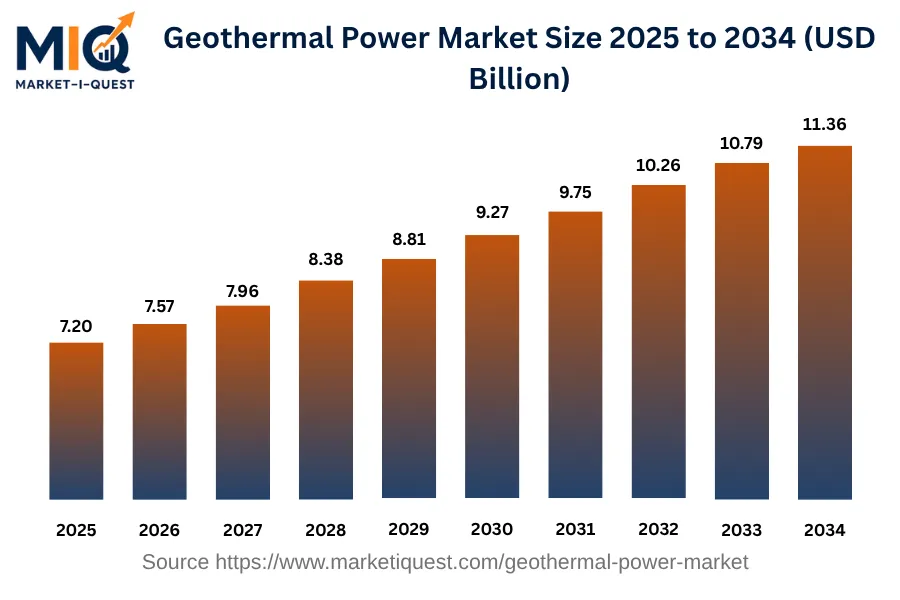
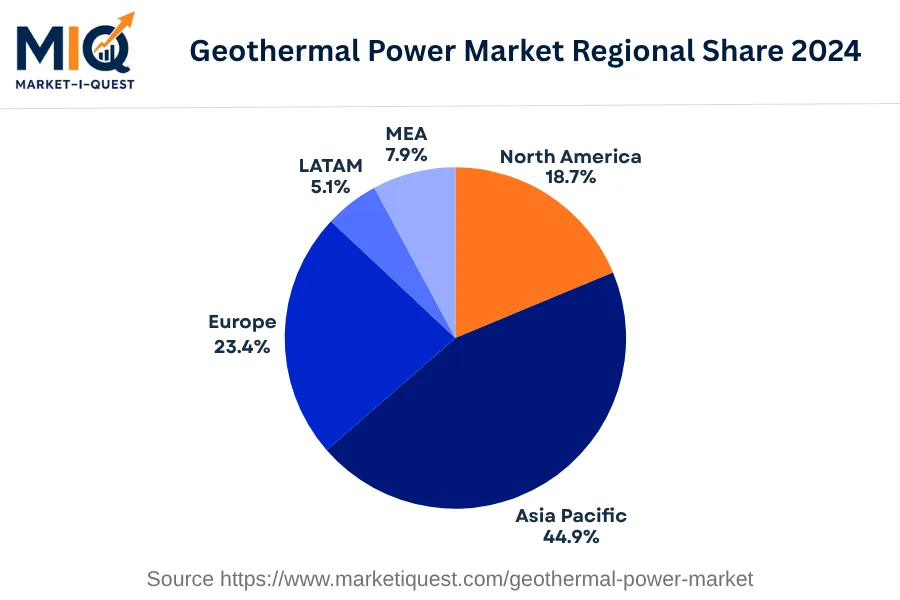
The Geothermal Power Market was valued at USD 7.20 billion in 2025, and it projected to increase to USD 11.36 billion by the year 2034, with a CAGR of 5.2%. The market value slightly jumped from USD 6.84 billion in 2024 to USD 7.20 billion in 2025, marking the beginning of the consistent growth observed through the decade. Reasons for this growth include technological advancements in geothermal energy extraction and utilization, increased governmental support for sustainable, renewable energy solutions, and escalating demands for electricity in various sectors. In 2024, the regional shares were as follows: Asia Pacific held the leading share with 44.9%, followed by Europe at 23.4%, and North America had the third-largest share at 18.7%. Both LATAM and MEA held smaller shares, at 5.1% and 7.9% respectively.

Key Takeaways

  • By Technology - Flash Steam held the leading position in the global market.
  • By Resource Type - Hydrothermal held the most significant share.
  • By Application - Electricity Generation stood as the predominant sub-segment.
  • By End Use - Commercial held a prominent share in the market.
geothermal-power-market market size

Key Driving Factors

Stricter Emission Regulations

In recent years, governments worldwide have been enacting more stringent regulations to combat air pollution and climate change, notably by capping greenhouse gas emissions from power generation operations. This has made traditional sources of power, such as coal and natural gas, less appealing due to the costs associated with complying with these regulations. In contrast, geothermal energy, which has a minimal carbon footprint, is becoming increasingly attractive. It provides a reliable, continuous source of power that conforms to these new governmental standards, making it a cost-effective solution for energy firms. Because of its environmental friendliness, geothermal power plants are often more palatable to local communities, further driving acceptance and development in the market.
Increasing Focus on Energy Independence

Countries are actively seeking to reduce their dependence on foreign energy sources for political and economic stability. Geothermal power, which relies on the earth's internal heat, can be harnessed locally and is independent of geopolitical disruptions. This makes it a more stable and predictable energy source compared to fossil fuels, which are heavily influenced by global politics and market fluctuations. As such, nations rich in geothermal resources, such as Iceland and the Philippines, are investing in the technology to boost their energy security. This rising emphasis on energy independence significantly contributes to the growth of the geothermal power market.

Market Evolution by Timeline

2019-2023
In the 2019-2023 period, the energy-demanding markets in parts of Europe and Asia were observing an increased adoption of geothermal power. The mature geothermal facilities in Iceland, Italy, and the Philippines provided consistent power production. This period witnessed the major reliance on Enhanced Geothermal Systems (EGS). The industry faced some constraints including site-specific geological requirements. Regulations such as Renewable Portfolio Standards in the US and Renewable Energy Directive in the EU supported the adoption of geothermal energy. The cost per kilowatt-hour of geothermal energy was comparable to other renewable power sources. Power Purchase agreements were common contracts, and development partnerships between energy companies and governments were typical. High up-front costs and long project timelines were the major risks for developers.
2024
In 2024, heat demand drove the growth of geothermal energy in both residential and industrial sectors in Nordic countries. Binary cycle power plants, which provide greater resource efficiency, were widely adopted. Policy framework such as the California 100% Clean Energy Act spurred the expansion of geothermal power. Countries like Kenya, which has significant geothermal potential, saw increased government and industry collaborations. While the overall costs of setting up a geothermal plant remained high, energy tariffs for geothermal power were increasingly competitive. Risks include potential environmental implications, specifically concerning thermal pollution and induced seismicity.
2025-2029
During 2025-2029, emerging markets like Turkey and East Africa exhibited a substantial increase in geothermal installations. In this period, emphasis was placed on groundwater heat pumps, demonstrating an advanced level of technology integration. International projects like UN's Geothermal Development Facility funding played a significant role in fostering geothermal energy buy-in. The procurement model shifted towards consortium-led projects, where a group of companies would share risks and returns. Fluctuating commodity prices, coupled with economic uncertainties, remained a perennial challenge for the geothermal power market.
2030-2034
In 2030-2034, demand for cleaner energy sources led to a rapid uptake of underground hot dry rocks (HDR) geothermal power across the globe, with China, USA and EU being the leading adopters. The initiative 'Geothermal Energy - Heating up the UK', highlights the country's commitment to transitioning to geothermal power. The use of artificial intelligence in the potential detection and feasibility studies of geothermal sources was embraced. Geothermal Risk Mitigation Facility (GRMF) in Africa proved significant in reducing project risks. Non regime-specific contracts became prominent, where payments were independent of the actual energy production. Environmental risks, including greenhouse gas leaks and land usage, and their mitigation defined the policy landscape during this phase.

Future Market Outlook

Future Opportunities

As geothermal power continues to gain attention amid the global transition towards renewable energy, several opportunities are emerging for stakeholders. In 2022, the European Union underscored its commitment to geothermal energy by including it in its Renewable Energy Directive, opening avenues for funding and support mechanisms in member states. Moreover, countries with significant geothermal potential, such as Australia and Mexico, are exploring regulatory frameworks that ease access to geothermal resources and funding for exploration. In 2023, several start-up companies are focusing on scalable geothermal technologies, targeting urban areas where space constraints limit traditional methods. Partnerships between utility companies and research institutions, like the collaboration between the Geothermal Resources Council and various universities, are fostering innovation in resource utilization. Enhanced awareness of geothermal energy’s predictability and low environmental impact is encouraging policy makers in countries like Turkey to strengthen regulatory incentives for geothermal projects. The growing interest in hybrid systems that integrate geothermal with other renewable sources, particularly in regions like California, is expanding the market’s scope. Additionally, outreach programs aimed at educating potential investors and developers about geothermal technology's benefits are gaining momentum, fostered by industry associations. These dynamics suggest that the geothermal sector has a fertile landscape for developing diverse business models and technologies, further capturing the interest of governments, private investors, and stakeholders globally.

Segmentation Analysis

By Technology

The market is divided into subsegments including Flash Steam, Binary Cycle, Dry Steam, and Geothermal Heat Pumps. Among these, Flash Steam technology accounted for the largest revenue share, while Geothermal Heat Pumps are projected to grow at the fastest CAGR during the forecast period.

Largest Revenue Share

Flash Steam

Market Share Leader

Flash Steam geothermal technology is currently dominant in the market resulting from its maturity and relative simplicity compared to other technologies. These systems take advantage of geothermal reservoirs’ high pressure and temperatures, leading to high energy output. Such capabilities draw major interest from large-scale energy producers, industries, and government institutions that require significant power inputs. Geographies with high geothermal activity like North America and Asia Pacific have further contributed to the upsurge in revenue for this subsegment. This is attributed to favorable regulation and supply ease, making flash steam an attractive and feasible option. Compared to binary cycle and dry steam technologies, flash steam shows less complex operational and maintenance requirements, which aids in customer preference, and purchasing decisions. The required capital cost, relative performance, and lock-in effect due to geographical constraints add as further factors driving revenue growth within this segment.

Fastest CAGR

Geothermal Heat Pumps

Forecast Period Growth Leader

Although they generate less power than others, Geothermal Heat Pumps (GHP) hold the most remarkable growth potential. GHP systems are becoming increasingly popular in the residential, commercial, and small-scale industrial sectors as a viable solution to reduce energy expenditure and increase energy security. The adoption of GHP systems in these sectors faces certain barriers, including higher upfront costs and complex installation. However, advancements in technology are reducing these barriers, making them more affordable and simpler to install. Thus, technology acts as a significant catalyst for market growth. Additionally, policies promoting energy efficiency and low GHG emissions are contributing to their rise in popularity. Key catalysts such as increased investments, partnerships amongst key players, and capital expenditure are expected to further stimulate GHP's growth rate. However, near-term risks include the economic downturn and health crises that could lead to lowered construction activities and, consequently, reduced GHP installations.

By Resource Type

The market is divided into subsegments including Hydrothermal, Enhanced Geothermal Systems, and Hot Dry Rock. Hydrothermal accounted for the largest revenue share while Enhanced Geothermal Systems is expected to grow at the fastest CAGR during the forecast period.

Largest Revenue Share

Hydrothermal

Market Share Leader

Hydrothermal resources lead the market in revenue owing to their well-established nature in the geothermal segment. They are the most matured and traditionally used geothermal technologies, extracting heat stored in the form of hot water or steam from depths of up to 3 km. Their prevalence is due to the relative ease of tapping into these resources, compared to other types, and their availability in most geothermal regions, primarily on the continental plate boundaries. The geothermal plants operating with hydrothermal resources do not involve the high cost associated with drilling deep into the ground, unlike other geothermal resources. The technology does not require high upfront investment, influencing the buying decision of cost-conscious buyers. This has led to a wider acceptance of hydrothermal systems, contributing significantly to its substantial market share. However, even with the dominance of hydrothermal systems, it's worth noting the rise of Enhanced Geothermal Systems.

Fastest CAGR

Enhanced Geothermal Systems

Forecast Period Growth Leader

While Hydrothermal systems dominate in terms of present revenue, Enhanced Geothermal Systems (EGS) are poised for significant growth and is expected to be the fastest-growing segment. Unlike the conventional geothermal systems that derive power from existing natural hot water reservoirs, EGS involves drilling into hot dry rocks and then pumping in water at high pressure to create steam. This technology allows for more widespread geothermal applications, breaking free from locational constraints. The main drivers of EGS are continuing technological advancements, policy support from governments, increased environmental awareness, and partnerships in the industry for research and development. However, there are challenges to overcome, such as the capital intensity of the drilling operations and the slight risk of induced seismicity. Despite these risks, the benefits of EGS offer a promising future, spurring fast-paced growth within the segment.

By Application

This market is divided into subsegments including Electricity Generation, Direct Use Applications, District Heating, and Others. In the base year 2024, Electricity Generation accounted for the sizeable revenue share, while Direct Use Applications is expected to grow at the fastest CAGR throughout the forecast period.

Largest Revenue Share

Electricity Generation

Market Share Leader

In 2024, Electricity Generation emerged as the largest revenue-generating subsegment due to several key factors. The increasing global energy demand and the shift towards renewable and sustainable sources of energy to curb carbon emissions have prominently driven the Electricity Generation sector. Geothermal energy for electricity generation is appreciated for its reliability and round-the-clock availability, providing a steady flow of electric power. Nations with rich geothermal resources have set ambitious plans to utilize it optimally. Developed geographies with extensive geothermal energy production, like the United States, Indonesia, and the Philippines, contribute significantly to this segment's revenue. Further, favorable government policies promoting renewable energy, specifically geothermal, added with financial incentives, play a crucial role. High capital cost is a significant purchasing criteria for this subsegment; thereby, we see companies making strategic partnerships for combined capital investments.

Fastest CAGR

Direct Use Applications

Forecast Period Growth Leader

The 'Direct Use Applications' subsegment has shown a robust CAGR outlook due to burgeoning interest in environmentally-friendly energy solutions. Geothermal energy, owing to its consistent supply and minimal carbon footprint, is increasingly preferred for direct use applications like heating and cooling facilities, spas, agriculture, and aquaculture. The regulatory push towards sustainable energy use is propelling its adoption, particularly in regions with abundant geothermal sources. The growth of geothermal district heating systems in Europe and China is a commendable example of this tread. Technological advancements making the energy extraction process more efficient further act as growth drivers. Potential barriers to adoption include the need for significant initial investments and the risk of resource depletion. However, evolving financing models and partnerships can offset these challenges. Geopolitical disturbances and changes in regulatory guidelines pose near-term risks.

By End Use

The market is divided into subsegments including Residential, Commercial, and Industrial; with the Commercial subsegment accounting for the largest revenue share, while the Residential subsegment is projected to grow at the fastest CAGR during the forecast period.

Largest Revenue Share

Commercial

Market Share Leader

Commercial subsegment holds the largest market share in the base year of 2024 owing to several factors. It benefits from the continuous expansion of commercial establishments such as offices, shopping malls, and other business hubs. The increasing need for essential services and amenities in such settings plays a significant role in driving revenue growth. Geographically, dense commercial areas often contribute a high proportion of total market revenues. Regular regulatory updates frequently mandate the use of certain products or services, giving a substantial lift to the growth of commercial segment. Another contributing factor is the predominance of bulk purchase business-to-business sales channels in this subsegment, which typically have larger transaction sizes than customer-focused channels. The high switching costs associated with suppliers also contribute to maintaining the segment's leading position. These factors together, offer the commercial segment a high revenue base and an essential position in the market.

Fastest CAGR

Residential

Forecast Period Growth Leader

Residential subsegment is set for the fastest growth, propelled by several catalysts. Key among them is a rapid rise in new residential constructions that drives demand for various products and services. Technological advances, particularly in home automation and green living trends, encourage widespread adoption despite their barriers, namely the high initial investment costs. Regulatory revisions in property sectors and strategic partnerships between property developers and service providers also act as catalysts, promoting the growth of the residential subsegment. There's also an increased willingness amongst homeowners to spend on products and services that improve their living standards. However, near-term risks such as economic downturns or housing market fluctuations can potentially affect the growth rate. Nevertheless, the residential market's relative agility compared to other subsegments enables it to adapt and quickly recover from industry fluctuations, positioning it in the vanguard of growth.

Competitive Analysis

Key Market Players

Manufacturers / OEMs

Ormat Technologies
US
Enel Green Power
Italy
Toshiba Energy Systems & Solutions Corp
Japan

Key Suppliers & Raw Materials

Mitsubishi Power, Ltd.
Japan
Fuji Electric Co., Ltd.
Japan
GE Power
US

Distributors, Integrators & Channel Partners

Turboden S.p.A.
Italy
TAS Energy
US
POWER Engineers
US

Porter’s Five Forces Analysis

This analysis assesses the competitiveness and strategic options within the Geothermal Power Market.

Supplier Bargaining Power

Medium

Much depends on natural resources, their location, and drilling technology suppliers.

Buyer Bargaining Power

Low

Limited options available due to scarcity of geothermal resources, leading to low buyer power.

Threat of Substitutes

High

Alternatives such as solar, wind, and fossil fuels present high substitution threat.

Threat of New Entrants

Medium

High initial costs and technical expertise are main barriers, but increasing environmental concerns are driving entry.

Competitive Rivalry

High

Fierce competition due to limited resources and profits, alongside high demand for renewable energy.

Regional Analysis

Geographic market dynamics and growth opportunities across key regions

Global Market Outlook

geothermal-power-market market regional share

North America

In 2024, North America's geothermal power market saw considerable growth due to several influential factors. Increased investment in renewable energy to combat climate change, particularly from the U.S. government, spurred demand for geothermal power. This was catalyzed by the Clean Energy Act, which provided favorable financial incentives for green energy adoption. Moreover, significant technological advancements, including the development of more efficient heat extraction procedures, increased geothermal power supply capacity across the region.

Strategic collaboration between energy companies and tech firms, such as Chevron's partnership with Google to improve geothermal extraction, became a prevailing industry trend. Policies aiming at sustainable energy use, such as Canada's Pan-Canadian Framework, reinforced the adoption of geothermal power among utilities sector. Mexico saw increased pressure from the Green Energy Standards policy, which obligates utilities companies to source a portion of their energy renewably, indirectly expanding the geothermal market. As environmental consciousness rose among consumers, enterprise and retail sectors, primarily in the U.S, also showed a growing interest in energy sourced from geothermal power. This shift in buyer behavior marked a significant trend in North America's geothermal power market in 2024, strengthening the role of geothermal energy in the region's power mix.

Asia Pacific

In 2024, the Asia Pacific Geothermal Power Market witnessed a significant uptick predominantly attributed to a sharp increase in renewable energy initiatives and environmental regulation enforcement in nations such as China, India, Japan, South Korea, Australia, and key ASEAN markets. Advances in technology catalyzed the adoption of geothermal power in utilities and manufacturing sectors while favorable government policies fostered substantial investment in geothermal infrastructure. Moreover, demand for clean and constant power supply, driven by inexorable urbanization and industrialization necessitated an expansion of the geothermal energy base across the region.

The evolving market trends demonstrated a heightened buyer preference towards green energy sources, precipitating a shift in energy utilization from conventional to geothermal means. Significant partnerships and mergers & acquisitions unfolded within the leading energy providers, noticeably enhancing the geothermal operational efficiency and supply dynamics. Furthermore, strict policy enforcement propelled the standardization of geothermal power infrastructure, placing an emphasis on energy conservation and emission reduction. Resultantly, the market benefitted from an increasing customer base spanning from enterprise to government sectors. In particular, the utility sector emerged as a key customer, due to the imperative need for a stable power supply. Thus, the year 2024 marked a transformative phase in the Asia Pacific Geothermal Power Market, underscored by regulatory changes, technological advancements, and an understood necessity for a sustainable future.

Europe

In 2024, Europe's geothermal power market is energized by sustainability goals and technological advancements. Ireland's Renewable Electricity Support Scheme (RESS) encourages increased adoptions of geothermal energy while Germany's energy transition (Energiewende) propels the supply dynamics. Spain's efforts in revising their renewable energy directives have facilitated favorable regulations that drive market growth. Accelerated by investments from Benelux countries primarily in heat pump technologies, there is a surge in tech adoption.

An emerging trend in Europe's geothermal power market is the shift in buyer behavior, as enterprises and governments demonstrate a growing preference for renewable energy sources. Italy, possessor of world's third largest geothermal power capacity, witnessed an uptick in geothermal power-based heating systems in residential buildings. In France, utilities firms have centered their focus on geothermal district heating networks, and notably EDF's partnership with the Icelandic firm Landsvirkjun gaining momentum. Meanwhile, the Nordics continued to produce geothermal power technologies, impacting the wider market landscape. Effective enforcement of European Union's renewable energy policies, stringent carbon emission standards across the member states, and ongoing collaborations within the geothermal power sectors are other significant trends. As a result, Central and Eastern Europe distinctively heed towards geothermal power to meet their energy needs, exemplifying this dynamic market's evolving trajectory.

Latin America

In 2024, the Geothermal Power Market in Latin America (LATAM) witnessed significant dynamism driven by various factors spanning across demand dynamics, regulatory terrain, and technological advancements. Emphasized energy security initiatives led countries like Mexico and Chile to invest heavily in geothermal exploration, aiding market growth. Brazil increased its uptake of convergent technologies accelerating the utilization of geothermal resources. Additionally, the implementation of Argentina's Geothermal Resource Conservation Law fueled market buoyancy by incentivizing private sector investment.

Market trends in 2024 followed a similar trajectory. In Brazil and Colombia, the resilience of power grids predominantly catalyzed the uptick in geothermal adoption in the utilities sector, whereas in Peru, concerns over sustainable energy led retail sectors to opt for geothermal power solutions. Technology paradigm shifts were witnessed in Mexico and Chile as small-scale, ground-based geothermal systems became more prevalent over traditional drilling systems. Furthermore, policy enforcement pivoted around enhancing standards for geothermal installations, and the merger of Chile's Enel Green Power with a local geothermal power company strongly signaled sector consolidation. Overall, the penetration of geothermal power within key sectors such as enterprise, government, utilities, and retail markets in the LATAM region markedly increased, backed by reinforcing regulatory policies, technological advances, and focused investment efforts. The 2024 LATAM Geothermal Power Market demonstrated substantial momentum, propelled predominantly by the collective ambitions of Brazil, Mexico, Argentina, Colombia, Chile, and Peru.

Middle East & Africa

In 2024, the Middle East and Africa showed a greater disposition towards sustainable energy production, with geothermal power playing a critical role. Drivers for this trend included escalating concerns about environmental conservation and government regulations favoring renewable energy. In countries like Kenya and Israel, abundant geothermal resources prompted increased investment, leading to a surge in technology adoption among utility companies. In Saudi Arabia, the government's backing of renewable energy projects spurred the growth of geothermal power.

The market trends indicated an expanding interest in geothermal power. A significant shift was noticed in buyer behavior, with industries such as oil and gas, utilities, and manufacturing investing in geothermal technology. In Egypt, the government introduced supportive policy measures and sought strategic partnerships to advance its geothermal power development. Importantly, the United Arab Emirates implemented the Green Energy policy, pushing for broader adoption of renewable energy. In Africa, particularly South Africa and Nigeria, there was a noticeable increase in geothermal power usage. Standards for electricity generation were revised to accommodate this change, reflecting a broader regional policy enforcement towards sustainable energy forms. Thus, in 2024, the rise in geothermal power in the Middle East and Africa was driven by an amalgamation of regulatory moves, investments, industry adoption, and a growing public consciousness about environmental sustainability.

Recent Industry Developments

Latest market innovations, product launches, and strategic initiatives

June 2026

EDF Power Solutions signed a series of strategic agreements with Omani entities—including ONEIC and OQ Alternative Energy—to advance large-scale energy projects. While the primary focus includes pumped hydro and solar, the cooperation framework significantly bolsters EDF’s regional footprint and technical collaboration capabilities in the Middle East, establishing a foundation for integrated renewable energy portfolios that include geothermal resource potential in the Arabian Peninsula.

July 2026

RGREEN INVEST finalized a €52.4 million investment in GEOGREEN, the holding company for the French geothermal leader Arverne. The deal includes a commitment of €37 million toward Arverne’s upcoming "ORANE" bond issuance. This strategic capital injection is aimed at scaling up Arverne’s "Dual Flow" growth plan, which integrates geothermal heat production with the extraction of lithium—a critical raw material for the battery and electric vehicle value chain.

Frequently Asked Questions