Genotyping Market Snapshot

Key Players

  • Illumina Inc. (US)
  • Thermo Fisher Scientific Inc. (US)
  • QIAGEN N.V. (Netherlands)
  • Agilent Technologies (US)
  • Beckman Coulter Inc. (US)
  • Bio-Rad Laboratories Inc. (US)
  • Fluidigm Corporation (US)
  • Affymetrix Inc. (US)
  • Sequenom Inc. (US)

Market Size

Base Year 2024
$25.96 Bn
CAGR
16.95%
Forecast 2034
$124.25 Bn

Market Segments

By Product
  • Reagents & Kits
  • Instruments
  • Services
By Technology
  • Sequencing
  • Capillary Electrophoresis
  • PCR
  • Others
By Application
  • Diagnostics
  • Drug Discovery & Development
  • Academic Research
  • Research & Development Centers
  • Others

Market Dynamics

Drivers
  • Technological advancements in genotyping
  • Increased demand for personalized medicine
Restraints
  • High equipment costs
  • Strict regulatory frameworks
Opportunities
  • Advancements in precision medicine
  • Increasing research in genomics

Market Size

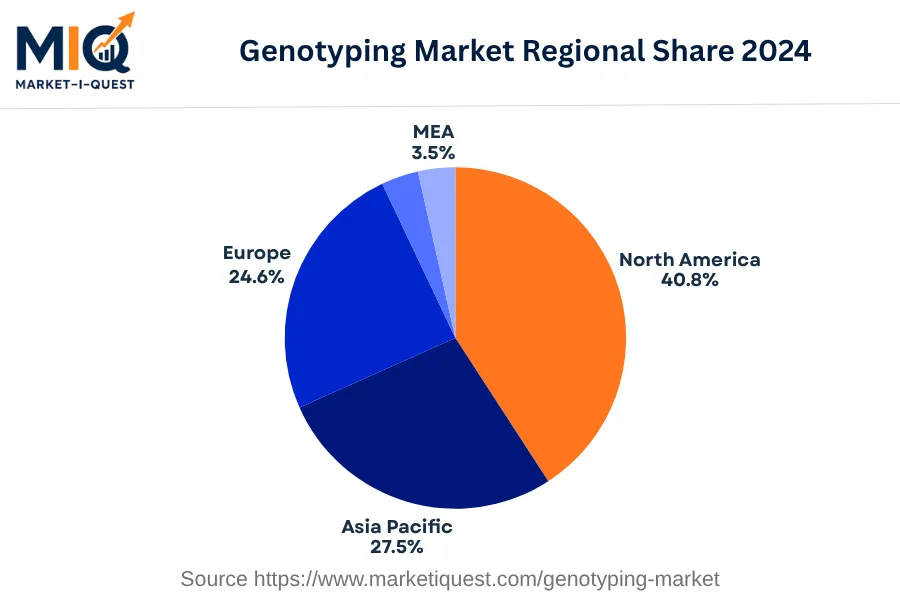
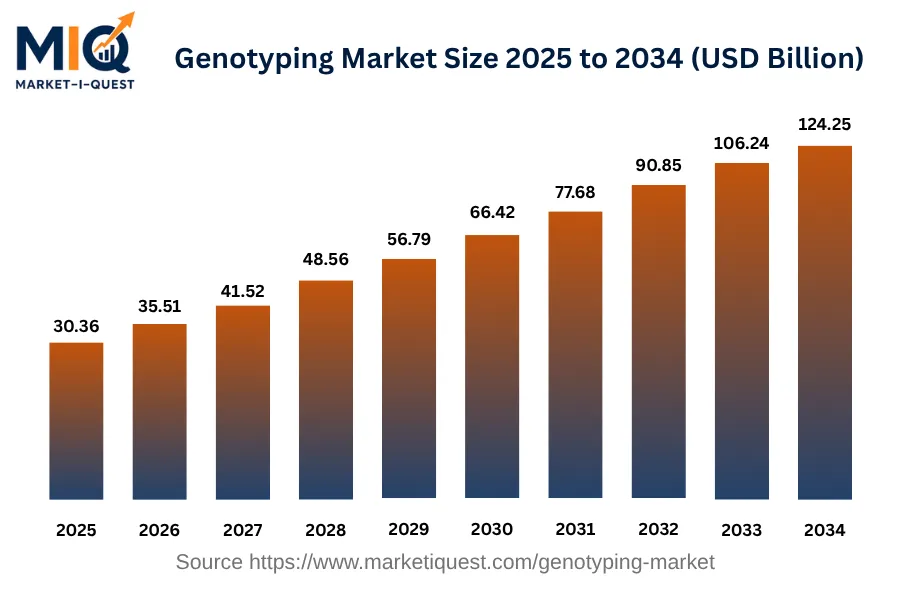
The Genotyping Market size is projected to grow from USD 30.36 billion in 2025 to USD 124.25 billion in 2034 at a Compound Annual Growth Rate (CAGR) of 16.95%. This ten-fold increase within approximately a decade is substantial. Specifically, the market size is expected to ascend from USD 25.96 billion in 2024 to over USD 30 billion in 2025 alone, reflecting a substantial increase in a single year. The steady growth over the decade indicates a persistently strong demand for genotyping services, affirming their integral role in various research and applied sectors. In 2024, the regional distribution of the Genotyping Market was split among various regions. Specifically, North America held a share of 40.8%, which was the largest. The Asia Pacific followed closely, accounting for 27.4% of the market share. Europe stood third with a 24.6% market share, whereas both Latin America and the Middle East and Africa had comparably smaller shares, each with approximately 3.5% of the market.

Key Takeaways

  • By Product
  • Reagents & Kits led the Genotyping Market
  • holding a significant market share in 2024.
  • By Technology
  • Sequencing emerged as the leading subsegment in the Genotyping Market for the base year 2024.
  • By Application
  • Diagnostics dominated the Genotyping Market recording substantial growth in 2024.
  • In terms of Application
  • Drug Discovery & Development is the fastest-growing segment in the forecast period of 2025-2034.
  • By Application
  • significant market growth was observed in Academic Research during 2024.
  • Research & Development Centers under Application demonstrated strong growth in the Genotyping Market during 2024.
genotyping-market market size

Key Driving Factors

Precision Medicine Initiatives

The rise of precision medicine initiatives is a specific driver for the genotyping market. Precision medicine involves tailoring treatments to individual patients based on their genetic makeup. This move towards personalized treatments necessitates a greater understanding of an individual's genetic profile, propelling the need for genotyping technologies. Governmental health organizations, including the National Institutes for Health (NIH) in the United States, are endorsing these initiatives, further accelerating market growth. For instance, the Precision Medicine Initiative by NIH stresses the utilization of genotyping for disease prevention and treatment. Consequently, pharmaceutical and biotech companies are capitalizing on these endorsements and investing to upgrade capacities and capabilities for genotyping.

Robust Plant and Animal Breeding Programs

Robust plant and animal breeding programs, primarily in the agriculture and livestock sectors, are another specific driver. Breeding programs aim to enhance yield, disease resistance, and other desired traits by manipulating the genetic composition of organisms. The knowledge of genetic variance due to genotyping is crucial for such programs. As food security and sustainability become pressing issues globally, government entities and agricultural businesses are turning to genotyping for selective breeding strategies. This technology is increasingly viewed as a tool to improve crop yield and livestock productivity, strengthening the genotyping market and its technologies.

Market Evolution by Timeline

2019-2023
The demand for genotyping services in 2019-2023 was mainly driven by healthcare facilities and research institutions in countries like the U.S., Germany, and the UK seeking genetic diagnosis and research in oncology and personalized medicine. The supplies included integrated genotyping services and technology advancements such as high-speed Next-Generation Sequencing. Regulatory bodies like the US-FDA and EMA facilitated the market by issuing guidelines for genotyping applications in clinical practices. Commercial models were commonly exclusive partnerships with established biotech firms and pricing based on the complexity and volume of samples. The main market risk was the high cost of genotyping technologies making them less accessible to emerging and low-income markets.
2024
In 2024, demand for genotyping was fuelled by growing usage in agriculture and livestock breeding, especially in North America and the Asia Pacific region. The Agricultural Genomics Programme by China's Ministry of Agriculture and Rural Affairs played a notable role in market expansion. The technologies shipped included multi-omics analysis platforms, but coupled with limited integration maturity. High-throughput genotyping was still expensive, and prices tended to rise due to the technical challenges involved. The perpetual licensing of genotyping softwares brought additional costs. The main risk here was the misuse of genetic data, leading to concerns about data privacy and security.
2025-2029
Throughout 2025-2029, demand rose with the extensive application of genotyping in forensic science and pharmacogenomics across Europe and North America. Technological advances made room for third-generation sequencing techniques with superior accuracy and capacity. However, these technologies often faced supply-chain constraints mainly related to chip and reagent shortages. Regulatory debates led to stricter protocols ensuring patient's data privacy, affecting the commercial models, shifting towards value-based pricing. Data security issues posed considerable market risks, necessitating adequate encryption solutions and policy modifications. Additionally, inadequate skilled professionals for genotyping data analysis became a significant concern.
2030-2034
The period of 2030-2034 saw expanded genotyping market demand in developing countries with governments investing substantially in infrastructural developments for genomics research. The genotyping technologies became more mature and efficient, offering possible solutions for endemic diseases like malaria and tuberculosis. However, economic instability might act as a deterrent to entry into these markets. Regulations tended to become stringent, especially in data handling and confidentiality matters. The commercial aspect saw a typical pattern of flexible licensing models for software and strategic alliances between key players for enhanced market reach. Technology theft and cloning emerged as notable risks in these years.

Future Market Outlook

Future Opportunities

The potential for personalized medicine is a key driving force behind increasing investments in the genotyping market. Recent collaborations, such as the one established in 2021 between the National Institutes of Health and several biotech firms, aim to utilize genomic data for individualized treatment plans. Countries like the United Kingdom are championing initiatives like the 100,000 Genomes Project, which seeks to integrate genomic medicine into routine healthcare, presenting opportunities for industry players to develop tailored therapies. Furthermore, advancements in single-cell sequencing technology, highlighted by the developments of companies like 10x Genomics and their pivotal 2019 product launches, provide unique insights into cellular heterogeneity, unlocking new research pathways in cancer and other diseases. Intellectual property developments related to CRISPR and other genome editing technologies are also shaping competitive dynamics, with regulatory agencies such as the European Patent Office adjusting guidelines to promote safe and effective innovation. Additionally, the global emphasis on precision agriculture, driven by both environmental and health considerations, creates opportunities for genotyping applications in crop management and livestock improvement. These ongoing efforts highlight the importance of collaboration between academia, industries, and regulatory bodies to harness the power of genotyping for advancements in healthcare and agriculture on a global scale.

Segmentation Analysis

By Product

The market is divided into subsegments including Reagents & Kits, Instruments, and Services. Instruments accounted for the largest revenue share while Services are expected to grow at the fastest CAGR during the forecast period.

Largest Revenue Share

Instruments

Market Share Leader

The Instruments subsegment currently leads the market in revenue, driven by a high demand across a broad array of industries and applications. Key customers including scientific research institutions, hospitals, and commercial laboratories all require reliable, accurate, and efficient instruments for various testing and diagnostic purposes. Geographically, we are noticing a strong demand in developed regions like North America and Western Europe, mainly due to the sophisticated research facilities and mature healthcare systems in these regions. However, the demand is also growing in emerging economies as they invest more in healthcare and research infrastructures. On the regulatory front, standards and guidelines from authorities like the FDA and the European Medicines Agency have emphasised the need for quality control, pushing companies to invest in higher-quality instruments. Purchasing criteria generally revolve around reliability, efficiency, and accurate readouts, making quality instruments a top priority. Switching costs in this segment are fairly high due to the intensive training required for operating new instruments, thereby prompting long-term investments. Lastly, a segregated supplier base characterised by specialty-specific retailers for different instruments supports the revenue stream of this subsegment.

Fastest CAGR

Services

Forecast Period Growth Leader

The Services subsegment is projected to grow at the fastest rate in the coming years, driven by the increasingly complex nature of studies and tests that require specific expertise. One barrier to adoption is the need for customers to trust the service providers with their valuable samples and depend on them for reliable results. However, technological advancements such as digital diagnostic platforms and AI analytics are enabling service providers to offer faster, more reliable results, serving as a catalyst for growth. Potential policy changes around lab regulations could represent both an opportunity and risk - stricter regulations may drive more customers to outsource testing, but also might impose additional costs. As for capital investments, partnerships with universities or research institutions can provide the necessary funding and credibility to service providers. In terms of imminent risks, any changes to data privacy laws or any significant cybersecurity breaches could hamper the market growth of this subsegment.

By Technology

The market is divided into subsegments including Sequencing, Capillary Electrophoresis, PCR, and Others. In 2024, the PCR subsegment accounted for the largest revenue share while Capillary Electrophoresis is expected to grow at the fastest CAGR during the forecast period.

Largest Revenue Share

PCR

Market Share Leader

The dominance of PCR in market revenue share can be attributed to a variety of factors. To begin with, PCR is one of the most commonly utilized techniques in molecular biology, with a broad array of applications that include clinical diagnostics, forensic science, and biological research, to name a few. This widespread usage is driven by the technique’s exceptional specificity and sensitivity, with the capacity to detect and quantify even minimal amounts of nucleic acid. Geographically, its usage is diversified, with labs around the world using PCR as a fundamental research tool. This omnipresence is backed by a robust supply chain, ensuring the widespread availability of both devices and reagents. Additionally, PCR faces little regulation, and its cost-effectiveness and fast turnaround times make it a popular choice, faring well versus purchasing criteria. Finally, switching costs are relatively high in this sector, as changing to a different technology would entail considerable re-validation work, dissuading most users from making the switch.

Fastest CAGR

Capillary Electrophoresis

Forecast Period Growth Leader

Capillary Electrophoresis is projected to show the fastest CAGR in the forecast period. Although still emerging in some respects, several growth drivers support this trend. Its high resolution, efficiency, and potential for automation endow it a competitive edge. Furthermore, as the industry shifts towards the identification and measurement of smaller and more complex biomolecules, adoption barriers are being broken down rapidly. It has wide-scale applications in forensic science and rare mutation detection. Moreover, policy tailwinds, such as stringent regulations on forensic testing standards, act as catalysts for this technology. However, the initial capex required and the need for high precision can potentially slow down its growth in the short term. Collaborations with tech firms to improve software automation and accuracy could be a game-changer, significantly reducing these near-term barriers. Nevertheless, caution should still be exercised with regards to supply uncertainty and technical difficulties in method development.

By Application

In terms of application, the market is divided into various subsegments including Diagnostics, Drug Discovery & Development, Academic Research, Research & Development Centers, and Others. The Diagnostics subsegment accounts for the largest revenue share, while Academic Research is expected to be the fastest growing during the forecast period.

Largest Revenue Share

Diagnostics

Market Share Leader

Diagnostics emerged as the key revenue-generating segment in 2024. This can be attributed to the high demand for effective diagnostic procedures for various diseases. Moreover, an increased emphasis on early and accurate detection has been a driving factor for its leading position in terms of revenue source in the market. Disease prevalence is on the rise, necessitating the development and usage of effective diagnostic tools. The segment is further buoyed by technological advancements that continue to emerge in diagnostic procedures coupled with the extensive application of these procedures in healthcare institutions. Geographically, densely populated regions with high disease prevalence are expected to be the hotspots for this segment. However, high costs and large capital investments required for diagnostic equipment could pose a challenge for growth in the segment over time.

Fastest CAGR

Academic Research

Forecast Period Growth Leader

The Academic Research subsegment exhibits the most robust growth in the market and is estimated to grow at the fastest CAGR in the forecast period. Key factors behind this surge include the mounting pressure in academia for publishing research articles, leading to increased research activities. Also, increasing partnerships between universities and industry players to accelerate research efforts represent an important growth catalyst. Plenty of grants and funding availability from government and non-governmental institutions fundamentally support this subsegment's growth. However, there are certain hindrances to this growth, such as regulatory complexities concerning research activities, lack of adequate infrastructure, and incomplete accessibility to all the latest research tools and technologies, which might slow down the pace. Despite these potential obstacles, the subsegment is poised for noteworthy expansion, buoyed by technological advancements and evolving research paradigms.

Competitive Analysis

Key Market Players

Manufacturers / OEMs

Thermo Fisher Scientific Inc.
US
Illumina, Inc.
US
Agilent Technologies
US

Key Suppliers & Raw Materials

Fluidigm Corporation
US
Bio-Rad Laboratories
US
Pacific Biosciences
US

Distributors, Integrators & Channel Partners

Genewiz
US
Eurofins Scientific
Luxembourg
F. Hoffmann-La Roche Ltd
Switzerland

Porter’s Five Forces Analysis

This analysis provides an evaluation of the competitive forces within the genotyping market.

Supplier Bargaining Power

Medium

Limited number of quality raw material suppliers leads to moderate power.

Buyer Bargaining Power

High

Many alternative products and large institutional buyers drive high bargaining power.

Threat of Substitutes

Low

High differentiation and specialist application hinder substitute products.

Threat of New Entrants

Medium

High initial investment and technical expertise limit market entry.

Competitive Rivalry

High

Intense competition as several established firms dominate the market.

Regional Analysis

Geographic market dynamics and growth opportunities across key regions

Global Market Outlook

genotyping-market market regional share

North America

In 2024, the North American genotyping market was distinctly defined by technological advancements, increased investment, and government regulations. Rapid technology adoption, particularly in the U.S., led to enhanced genotyping procedure efficiency and accuracy, driving up demand. Sustained investment into genetics research, especially in Canada’s healthcare sector, not only enabled the development of cutting-edge genotyping technology but also catalyzed market expansion. Meanwhile, strict food safety standards imposed by the U.S. and Mexican governments necessitated genotyping for genetically modified organisms, thus intensifying the market truck.

Trends within this market were also characterized by significant shifts. In all three countries, there was a palpable increase in buyer preference for personalized medicine, leading pharmaceutical companies to seek genotyping services for drug development. Technological changes witnessed a move towards high-throughput genotyping platforms with quicker turnaround times. The market also saw an upswing in collaborations, with biotechnological and pharmaceutical firms entering into partnerships for expansive genotyping research projects. Finally, regulatory scrutiny in genotyping-based data usage was heightened due to privacy concerns, instigating stricter policy enforcement particularly in the healthcare and pharmaceutical sectors. This oversight trend not only drove companies to manage genotypic data more judiciously but also reinforced consumer trust in genotyping services.

Asia Pacific

In 2024, the Asia Pacific genotyping market played a significant role in streamlining personalized medical services. One critical driver was the increased funding in countries like China and India towards genomic research, spurring the demand for genotyping. Technology adoption was visible as laboratories in South Korea and Australia integrated high-throughput genotyping systems, enhancing accuracy and output. Tightening regulations in Japan demanded precision in genetic testing, bolstering the need for efficient genotyping methods. Supply of affordable genotyping kits in the key ASEAN markets also fostered market expansion.

A prevailing trend was the shift towards non-invasive genotyping methods as consumer preference leaned towards convenience and safety. Disease-based genotyping also emerged as prominent in healthcare sectors across China and India due to an alarming increase in genetic disorders in the population. Digitization in genotyping information storage emerged, evident in the partnerships between genotyping companies and digital platforms across Japan and South Korea. Furthermore, rigorous policy enforcement took center stage in Australia to ensure the privacy of genetic data, dictating the operations in genotyping. Hospitals in the Asia Pacific region increasingly adopted genotyping, shifting the market dynamics from research institutions and pharmaceutical companies towards healthcare providers.

Europe

In 2024, Europe’s genotyping market was characterized by significant growth across the biotechnology and healthcare sectors. Rapid technological innovation fostered an uptick in the adoption of genotyping within hospitals and research institutions, driven by its ability to support personalized medicine and disease risk prediction. Regulatory acceptance of genetic testing, notably in Germany and the UK, complemented this demand surge. Investment rose notably in Central & Eastern Europe, catalysed by an increasing interest in genetic research. Shifting buyer behaviour witnessed a preference for comprehensive genetic testing solutions such as Next Generation Sequencing (NGS), primarily in France, Spain, and Italy. Moreover, manufacturers endeavoured to offer technologically advanced genotyping products, resulting in significant partnerships and M&A activity. Noteworthy was the German healthcare sector's gravitation towards cloud-based genotyping data analysis solutions to streamline operations.

In the Benelux region and the Nordics, a sharp focus on the enforcement of genotyping-related policies was observed, with governments and healthcare bodies actively monitoring the quality and ethical aspects of genetic tests. Despite this, the genotyping market in these territories thrived, dovetailing with the Europe-wide trends of technology acceptance, demand, and regulatory compliance in 2024. Thus, the European genotyping landscape was dominated by a synthesis of market responsiveness, scientific innovation, and policy necessity.

Latin America

In 2024, the Genotyping Market in Latin America had consolidated and has grown significantly. Three main drivers primarily led to this growth: technological adoption, investments, and prevailing health conditions in the region. Latin American countries, especially Brazil and Mexico, have shown increased adoption of advanced genotyping technologies, such as next-generation sequencing, impacting the market positively. With investments and government funding on the rise in the healthcare sector, these countries have been able to attain progressive genotyping research and product launches. Additionally, high prevalence of diseases, like cancer in Argentina, and infectious diseases in Colombia, boosted the need for genotyping to develop specialized treatments.

The market witnessed few major trends throughout 2024. Firstly, a surge in collaborations and partnerships among key industry players and research institutes, like in Chile, to exploit genotyping's potential in disease diagnostics and personalized medicine. Secondly, policy changes in some countries, like Peru, fostered market growth by implementing regulations supporting progress in molecular diagnostics. Finally, there was a shift in the buyer's behavior towards understanding the benefits of predictive and personalized healthcare. The primary customer sectors included healthcare, pharmaceuticals, academic research institutes, and biotechnological entities. The market growth also got impacted by changing channel dynamics, with online platforms having a vital role in the genotyping product distribution.

Middle East & Africa

In 2024, the genotyping market in the Middle East and Africa significantly advanced, driven by several key factors. Investment in biotechnology primarily from wealthier nations like Saudi Arabia, UAE, and Israel, coupled with government regulations promoting genomic research, propelled market growth. Adoption of new digital genotyping technologies like Next-Generation Sequencing (NGS) in larger-scale operations, including those of Nigeria and South Africa, provided a supply dynamic shift. Moreover, gradual price reductions for genotyping assays further stimulated market demand. Buyer behaviour showed a trend toward personalized healthcare services, a sector that greatly benefitted from genotyping market growth. Emerging partnerships within healthcare, particularly in Qatar and Egypt, saw the integration of genotyping data into clinical practice, enhancing precision medicine.

Updates in policy enforcement and data privacy regulations influenced the market, leading to increased security for genotyping customers. A noticeable shift occurred in manufacturing, more specifically in agriculture and food production, where genotyping helped ensure crop and animal quality and diversity. The incorporation of genotyping technologies in the telecom sector enabled genetic data storage that accelerated genomic research across the region. In the base year 2024, enriched by significant scientific, technological, and regulatory growth, the genotyping market in the Middle East and Africa ensured genomics-related benefits reached numerous sectors, from healthcare and manufacturing to telecoms.

Recent Industry Developments

Latest market innovations, product launches, and strategic initiatives

June 2026

AGTC Genomics launched its DPYD Genotyping Test, utilizing next-generation sequencing (NGS) technology to comprehensively evaluate clinically relevant DPYD variants associated with fluoropyrimidine metabolism, enabling personalized dosing decisions for cancer patients.

April 2026

CareDx launched AlloSeq Nano at the European Federation for Immunogenetics (EFI) Conference 2026, a nanopore-based HLA and ABO genotyping solution delivering high-resolution HLA genotyping in under three hours with a streamlined long-read workflow designed for transplant and donor typing laboratories.

Frequently Asked Questions