
Wound Care Sealants Market Snapshot

Key Players

  • 3M (US)
  • Smith & Nephew (UK)
  • B. Braun Melsungen AG (Germany)
  • Ethicon Inc. (US)
  • Baxter International (US)
  • Takeda Pharmaceutical Company Limited (Japan)
  • Adhesys Medical GmbH (Germany)
  • Cohera Medical Inc. (US)
  • CryoLife Inc (US)
  • Baxter Australasia Pty Limited (Australia)

Market Size

Base Year 2024
$2.85 Bn
CAGR
8.47%
Forecast 2034
$6.43 Bn

Market Segments

By Product
  • Non-Synthetic
  • Collagen-Based
  • Synthetic
By Wound Type
  • Acute Wounds
  • Chronic Wounds
By End Use
  • Hospitals
  • Specialty Clinics
  • Home Care Settings

Market Dynamics

Drivers
  • Increasing incidences of wounds
  • Rising geriatric population
Restraints
  • High product costs
  • Regulatory compliance barriers
Opportunities
  • Rising chronic diseases prevalence
  • Advancements in biomedical technology

Market Size

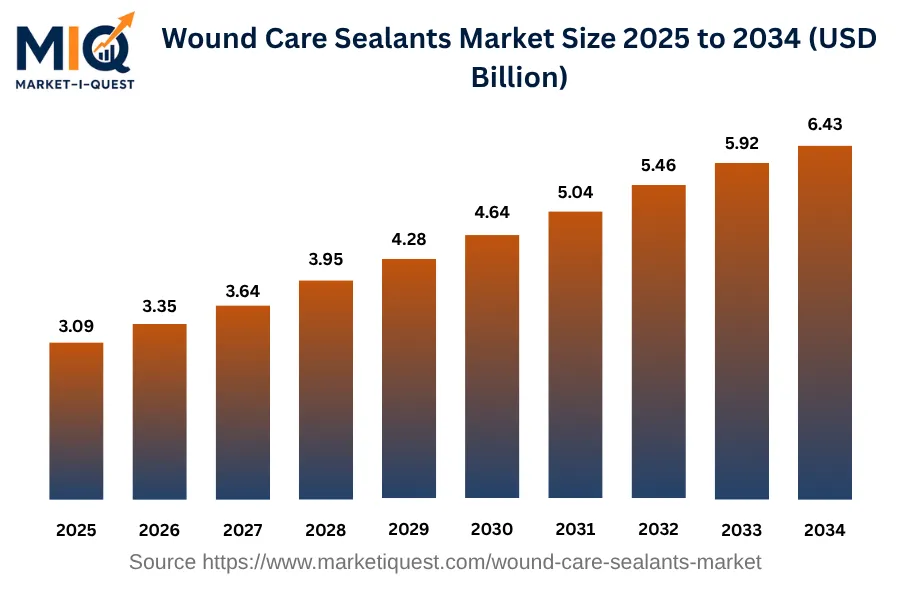
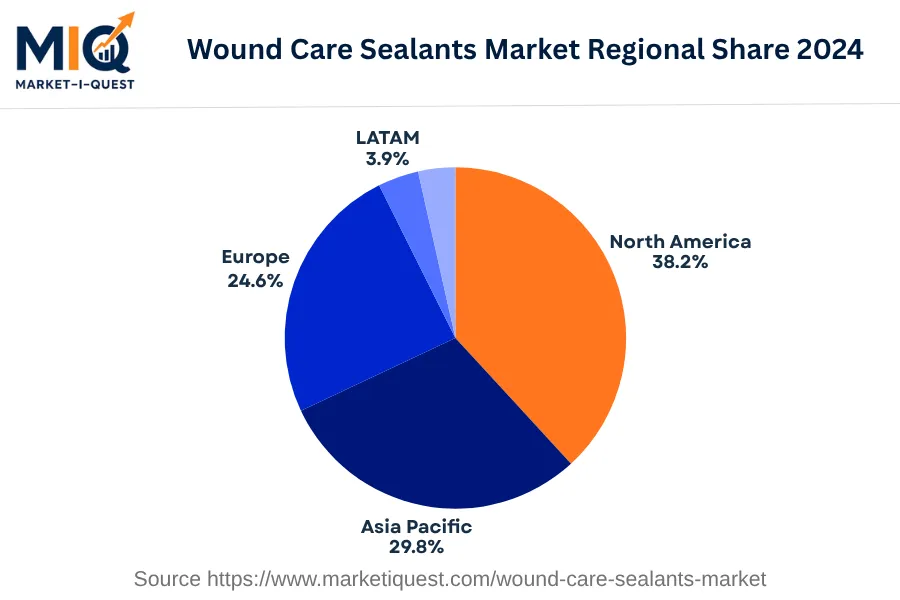
The Wound Care Sealants market, evaluated at 2.85 billion USD in 2024, is set to grow to 3.09 billion USD by 2025. By the end of 2034, the market is projected to reach 6.43 billion USD, progressing at a CAGR of 8.47%. This steady increase is due to the consistent rise in demand for wound care sealants year after year. The high rate of injuries requiring surgeries and the prevalence of chronic diseases requiring long-term wound management have been key factors causing this sustained growth in demand. In 2024, North America held the largest share of the Wound Care Sealants market with 38.16%, followed by Asia Pacific with 29.84%, Europe held 24.62%, while LATAM and MEA accounted for a smaller piece of the pie at 3.87% and 3.51% respectively.

Key Takeaways

  • By Product - Non-Synthetic led the Wound Care Sealants Market with a dominant share in 2025.
  • By Wound Type - Chronic Wounds held the leading position owing to the high prevalence of chronic diseases.
  • By End Use - Home Care Settings were the fastest-growing accounting subsegment within the market in 2025.
wound-care-sealants-market market size

Key Driving Factors

Shift Toward Surgical Procedures using Advanced Sealants

Changes in surgical practices are having a significant impact on the wound care sealants market. Surgeons are progressively adopting the use of wound care sealants over traditional sutures due to the benefits they provide, including reduced recovery time, minimized scarring, and less blood loss. Further, these advanced wound care sealants offer improved hemostasis, adhesion, sealing, and healing compared to traditional methods. In high-risk patients such as the elderly or those with comorbidities, these benefits are particularly valuable. The recognition of these benefits by surgeons worldwide and their incorporation into regular surgical practice are proving to be a strong driving factor for the wound care sealants market.
Stringent Regulatory Guidelines for Product Safety and Efficiency

The wound care sealants market is also influenced by regulatory policies. Organizations such as the U.S. Food and Drug Administration (FDA) and the European Medicines Agency (EMA) routinely enforce strict safety, quality, and performance standards for medical devices and consumables, including wound care sealants. These standards necessitate ongoing research and development by manufacturers to ensure their products meet the evolving benchmarks. Companies are now investing more in innovations to meet these regulatory requirements and get their products approved. On another note, the need for approval also reassures healthcare professionals of the safety and effectiveness of these sealants, hence driving increased adoption and fueling the growth of the wound care sealants market.

Market Evolution by Timeline

2019-2023
In this period, the primary buyers of wound care sealants were hospitals, clinics, and nursing homes, particularly in developed regions like North America and Europe. The market was primarily driven by the increasing prevalence of chronic wounds and surgical procedures. The supply side was dominated by traditional wound care products like fibrin sealants and cyanoacrylates, but bioengineered products started making an appearance. The FDA issued guidelines for wound care sealant products, influencing the formulation and approval of such products. Value-based pricing models were adopted, favouring products with proven efficacy. The main risk was the slow adoption of advanced sealants due to their high cost and lack of reimbursement.
2024
In 2024, demand was observed from emerging economies, such as India and China, but developed countries continued to dominate the market. The advancement in technology led to the introduction of synthetic and semi-synthetic sealants, such as polyethylene glycol-based sealants. Regulatory bodies continued to play a crucial role, with stricter guidelines regarding safety and efficacy. Manufacturers focused on affordable, value-based pricing, taking into account the rising cost of healthcare. Further, significant risks existed, such as bio-compatibility issues of synthetic sealants and patent expiry of several major brands.
2025-2029
In this timeframe, the demand for wound care sealants broadened to encompass home care settings along with clinical ones. The industry saw technological advancements with the emergence of nanotechnology-based sealants and the improvement of bio-engineered products. Regulatory bodies worldwide launched specific programs to ensure stringent quality and safety checks for these emerging products. The pricing model moved towards competitive pricing due to increased market competition. Consumer perception of biosynthetic sealants as risky due to possibility of allergic reactions became a significant obstacle to overcome.
2030-2034
By this period, the patient-driven demand for efficient and painless wound treatment options encouraged innovation in wound sealant technology. The supply was dominated by biodegradable and bioactive sealants, such as collagen-based and gelatin-based sealants. Regulatory bodies established clear-cut guidelines pertaining to the use and production of biosynthetic sealants, impacting adoption and market dynamics. The trend of partnerships between market players for technology sharing and joint marketing became prominent, changing the commercial model. However, the risk of adverse reactions and high costs continued to be the potential hurdles for widespread adoption of these advanced versions of wound sealants.

Future Market Outlook

Future Opportunities

The wound care sealants market is poised for growth as a result of expanding applications driven by current healthcare policies. In 2023, healthcare authorities in the United Kingdom emphasized the need for advanced wound management techniques, propelling investigations into sealants that can address chronic wounds more effectively. Collaborations between technology firms and healthcare providers are becoming increasingly common, with companies like 3M partnering with universities to expedite research on next-generation sealants that integrate bioactive components. The rising prevalence of diabetic ulcers globally has necessitated scalable solutions, which in 2021 led to the formation of initiatives aimed at minimizing treatment delays through improved wound care protocols. Moreover, microencapsulation technologies are gaining traction, allowing for the controlled release of therapeutic agents within sealants, which is being explored by firms such as Acelity. Emphasis on reducing hospital stays and associated costs is driving interest in sealants that provide faster healing times, a trend mirrored by the adoption of outpatient wound care services in countries like Canada. Regulatory frameworks are now encouraging the exploration of personalized wound care products, prompting firms to innovate based on genetic or local healing patterns. As patient-centric approaches become more prevalent, aligning sealant development with the ongoing expansion of digital health solutions offers promising prospects for the market's future landscape.

Segmentation Analysis

By Product

The market is divided into subsegments including Non-Synthetic, Collagen-Based, and Synthetic products. Non-Synthetic products accounted for the largest revenue share while Collagen-Based products are expected to grow at the fastest CAGR during the forecast period.

Largest Revenue Share

Non-Synthetic

Market Share Leader

Currently leading the market in revenue, Non-Synthetic products maintain their dominance due to a variety of factors. Primary among them is consumer preference, with many customers sampling the products and valuing the genuine, natural ingredients they retain. This preference is further supported by regulations that encourage the use of non-synthetic ingredients, creating a positive environment that drives growth in this subsegment. Furthermore, these products enjoy high purchasing frequency as they have become a staple in multiple consumer segments, including health-conscious individuals and those with sensitive skin. Geographically, the demand for Non-Synthetic products is strong across all regions with particularly strong consumption in developed countries where consumers are willing to pay a premium for natural ingredients. A lack of substantial switching costs also contributes to this subsegment's strength, allowing consumers to easily substitute synthetic products for non-synthetic variants.

Fastest CAGR

Collagen-Based

Forecast Period Growth Leader

Acquisition growth is expected to substantially increase for the Collagen-Based products subsegment. Driving this acceleration are technological advancements improving the quality of collagen products, resulting in superior performance and benefits. These improvements are increasing the appeal of collagen-based products for a new wave of consumers, boosting market penetration. Additionally, the growth is supported by an increase in capital expenditure from key players in the market focused on developing and promoting collagen-based products, alongside strategic partnerships to increase their market share. However, the adoption of these products faces barriers including relatively higher prices and lack of consumer awareness about their benefits. To circumvent these potential roadblocks, industry players are investing in marketing campaigns aimed at educating consumers about the advantages of collagen-based offerings, which, alongside further technological advancements, foresights a robust growth trajectory for this subsegment in the near future.

By Wound Type

The market is divided into subsegments including Acute Wounds and Chronic Wounds. In the base year of 2024, Chronic Wounds accounted for the largest revenue share, whereas Acute Wounds are projected to experience the fastest growth rate.

Largest Revenue Share

Chronic Wounds

Market Share Leader

Chronic Wounds emerged as the largest revenue generating segment in 2024 due to various factors. First and foremost being the increasingly aging population which is more prone to conditions resulting in chronic wounds, such as, venous leg ulcers, pressure ulcers, and diabetic foot ulcers. Coupled with this is the prevalance of diabetes, obesity and vascular disorders which ups the risk for chronic wound development. Furthermore, advancements in bioengineered skin and skin substitutes have enhanced the healing rates of chronic wounds, leading to broader adoption of these treatments. This has also contributed to the surge of revenue from this segment. The demand is also bolstered through government initiatives aiming at wound care management.

Fastest CAGR

Acute Wounds

Forecast Period Growth Leader

Contrastingly, the Acute Wounds segment is expected to grow at the fastest CAGR. The growth is attributed to escalating number of surgeries and the constant need for wound dressing after surgical procedures. The influx of technological advancements such as innovative wound closure and debridement products are aiding quicker wound healing and this is set to augment the sector's growth. Additionally, there's a pronounced move towards rapid treatments and effective wound management solutions, as healthcare providers aim to enhance patient turnover rates in a bid to reduce overall costs. The custody of this segment still lies with traditional wound dressings, but this is likely to change over time as advanced solutions continue to make an infiltration.

By End Use

The market is segmented by end use into Hospitals, Specialty Clinics, and Home Care Settings with Hospitals accounting for the largest revenue share and Home Care Settings expected to grow at the fastest CAGR during the forecast period.

Largest Revenue Share

Hospitals

Market Share Leader

Hospitals, as a subsegment, lead in revenue generation due to several factors. Hospitals are typically the primary point of contact for patients, leading to a higher patient influx compared to Specialty Clinics or Home Care Settings. Moreover, the wide variety of services offered by hospitals, encompassing many medical specialties, results in more frequent usage of products and equipment. The high number of patients, coupled with diverse services, support substantial budgets dedicated to procurement, positioning hospitals at the top when it comes to revenue generation. In addition, hospitals are geographically spread and accessible to a larger population, further enhancing their market share. Policies and regulations demanding advanced care procedures and them being typically conducted in hospitals also play a significant role in the revenue contribution. Overall, while both Specialty Clinics and Home Care Settings are integral parts of the market, Hospitals stand out due to their substantial scale and scope.

Fastest CAGR

Home Care Settings

Forecast Period Growth Leader

While the Hospital subsegment holds the lion's share of the market, Home Care Settings is expected to grow at the fastest CAGR. The prominent growth drivers for this segment are the increasing preference for home-based treatments and the advancements in remote healthcare technology. Due to the convenience and cost-effectiveness, many prefer outpatient and home-based care over hospital stays. This trend, coupled with the rise in chronic conditions requiring long term care, such as diabetes and cardiovascular diseases, is fueling the growth of this segment. Furthermore, the technological advancements in telemedicine have given home care a new dimension, enabling healthcare professionals to monitor patients and provide real-time feedback without physical interaction. The recent pandemic has accelerated this shift towards home care, and the adoption barriers, such as lack of technology access or tech-savviness, are gradually diminishing. However, strict regulations and need for proper training in handling certain equipment could pose potential risks in the near term.

Competitive Analysis

Key Market Players

Manufacturers / OEMs

3M Group
US
Johnson & Johnson
US
Baxter International Inc.
US

Key Suppliers & Raw Materials

Ashland Inc.
US
Jowat AG
Germany
Bostik SA
France

Distributors, Integrators & Channel Partners

Henry Schein Inc.
US
Cardinal Health
US
Medline Industries Inc.
US

Porter’s Five Forces Analysis

Analysis of the competitive forces in the Wound Care Sealants Market.

Supplier Bargaining Power

Medium

Raw materials availability and cost can influence supplier power.

Buyer Bargaining Power

High

Buyers include large healthcare providers and institutions with significant purchasing power.

Threat of Substitutes

Medium

Potential substitution by novel treatments or technologies.

Threat of New Entrants

Low

High entry barriers due to stringent regulations, R&D and high capital expenditure.

Competitive Rivalry

High

Presence of significant competitors, intense price competition and product differentiation.

Regional Analysis

Geographic market dynamics and growth opportunities across key regions

Global Market Outlook

wound-care-sealants-market market regional share

North America

In 2024, the North American Wound Care Sealants Market experienced significant growth due to key drivers and emerging trends in the healthcare sector. Increased demand was spurred by advanced wound care needs in the aging population, improved healthcare infrastructure across the U.S., Canada, and Mexico, and stringent regulatory norms fostering safe and effective wound care management. Moreover, adoption of advanced adhesive technologies by healthcare providers, specifically bio-adhesive and hydrogel sealant products, likely contributed to market growth.

Conversely, supply-side dynamics were characterized by growing R&D investments from both private and public entities, working to harness technology for innovative wound sealant solutions. In the same vein, pricing trends significantly influenced market dynamics, with a slight inclination towards premium-sealing solutions. Buyer behavior trended towards advanced wound care solutions in 2024, with a marked increase in preference for non-invasive, pre-packaged sealant products in the retail sector. Technological shifts, particularly in sectors utilising nanotechnology and biotechnology for wound care, signaled a transfiguring market. Meanwhile, strategic partnerships and mergers amongst major players significantly reshaped market dynamics. Specific policy enforcements, such as the FDA’s enhanced focus on wound care product efficacy and safety, directed standards adherence in manufacturing and product launch cycles. This highlights the deeply intertwined relationship between regulatory compliance, technology adoption, and market growth in the North American Wound Care Sealants Market for 2024.

Asia Pacific

In 2024, the Wound Care Sealants Market in Asia Pacific experienced a competitive landscape due to surging demand and expansion across the healthcare sectors. Industry drivers included rising prevalence of chronic wounds and healthcare concerns particularly in countries such as China, India, and Japan stimulating demand for more effective wound care solutions. Regulatory compliance to high-quality standards bolstered confidence in the market while investment in advanced medical technology, particularly in South Korea and Australia, accelerated market growth. Competitive pricing further stimulated market movement, especially within key ASEAN markets.

Transformations in buyer behavior, with a gravitation towards easy-to-apply sealants, dictated product development and sales dynamics. Emerging partnerships and M&A activities, particularly those involving Chinese and Japanese companies instilled vibrancy into the market. Tech-based product advancements, inherent in new-age sealants, offered growth opportunities. A shift in distribution channels, driven by burgeoning e-pharmacy networks, also impacted the market. In terms of sectors, hospitals and retail pharmacies acted as primary end-users due to convenient availability and higher patient traffic. Additionally, standards and stringent policy enforcement on product quality and safety were crucial factors, marking the market's robust nature across the Asia Pacific.

Europe

In 2024, the European Wound Care Sealants market witnessed robust growth, driven by an aging population, increased chronic diseases, and technological advancements. The demand for wound care sealants rose significantly due to an upsurge in incidents of diabetes, obesity, and cardiovascular diseases, coupled with the growth of the elderly population in key markets like Germany, the United Kingdom, and France. Governments and healthcare institutions across Europe increased their investment in advanced wound care technologies, reinforcing the market’s expansion. The implementation of stringent regulations pertaining to wound care management and patient safety further stimulated the market growth.

Changing consumer trends underscored the shift towards bio-based and synthetic wound care sealants, especially in the markets of Italy, Spain, and the Nordics. This shift was also fueled by increasing collaboration, mergers, and acquisitions among key players in the healthcare sector. New product developments and technological advancements became the cornerstone of market strategies, providing a more effective and faster wound healing process. Furthermore, enforcement of strict standards for wound care management by the European Commission greatly influenced buyer behavior and product choices. Key customers included hospitals, clinics, ambulatory surgical centers, home healthcare setups, and trauma centers. Enterprise sectors, such as manufacturing and retail, also significantly contributed to the market growth.

Latin America

In 2024, the Wound Care Sealants Market in Latin America showed strong growth dynamics, particularly driven by increasing healthcare investments and patient awareness. The amplified presence of chronic diseases in countries such as Mexico and Brazil magnified the demand for advanced wound care products. Stricter regulatory frameworks implemented in Argentina and Chile mandated superior quality of wound care, escalating product standards and driving market growth. Higher adoption of technological advancements in wound care, especially in Colombia and Peru, also contributed to market growth.

Emerging trends observed included a shift towards biological and synthetic sealants, driven largely by Brazil's sophisticated healthcare sector and Mexico's growing medical tourism market. Changes in patient behavior focused on faster recovery also fueled this shift. In Argentina, preferential use of sealants in surgeries and trauma cases reflected a change in healthcare delivery standards, while in Colombia and Chile, procurement policies promoted the use of cost-efficient products. As a result, manufacturer partnerships and M&A activities increased as market players sought to broaden their product portfolio and strengthen their competitive stance. Critical sectors fueling demand included healthcare providers such as hospitals and clinics, government health institutions, and retail pharmacies. Thus, the market context in 2024 showed a driven growth trend owing to increased technological adoption, stringent regulatory policies, and changing patient behavior.

Middle East & Africa

In 2024, the Wound Care Sealants Market in the Middle East and Africa showed a strong propensity for growth due to various influential factors. Demand rose significantly due to increased cases of traumatic injuries and surgical procedures in countries like Saudi Arabia, the United Arab Emirates, and South Africa owing to their robust healthcare systems and growing population. Investments rose, particularly in private healthcare sectors across Saudi Arabia and the United Arab Emirates, bolstering market expansion. The adoption of new technology also saw an upswing, with medical facilities in Israel, South Africa, and Egypt integrating latest wound care sealant products into their treatment strategies.

Moreover, there were significant trends shaping the market landscape. Customer behavior demonstrated a heightened preference for advanced wound care solutions, reflecting a cultural shift towards proactive healthcare measures. The healthcare sector in Nigeria and Kenya experienced product shifts emphasizing sealants with antibacterial properties. In terms of policy and regulation, most manufacturing standards were seen tightening, with a similar emphasis on antibacterial efficacy. The retail sector in Qatar and Israel witnessed partnerships, engagements, and occasional M&As between local and international wound care product manufacturers, consolidating the market's structure and competitiveness. However, pricing dynamics veered towards the higher end, indicating that cost could be a determining factor in the scalability and inclusivity of advanced wound care in forthcoming years within the region.

Recent Industry Developments

Latest market innovations, product launches, and strategic initiatives

September 2025

Tissium, a privately held life sciences company specializing in biomorphic programmable polymers for tissue reconstruction, expanded its industrial scaling efforts by finalizing an operational integration with contract manufacturing networks. This move centers on transitioning its high-elasticity, bio-resorbable internal sealants into high-volume pilot production to meet global clinical trial demand.

April 2025

Baxter International Inc. officially announced the European commercial launch of its Hemopatch Sealing Hemostat featuring a new room-temperature storage configuration. This development updates the structural usability of the biological matrix, allowing clinical teams to store the rapid-deploy sealing patches in standard surgical suites without relying on continuous refrigeration networks.

Frequently Asked Questions