
Wound Care Market Snapshot

Key Players

  • Smith & Nephew (UK)
  • 3M (US)
  • Hollister Incorporated (US)
  • Mölnlycke Health Care (Sweden)
  • ConvaTec (UK)
  • Coloplast (Denmark)
  • Integra Lifesciences (US)
  • Paul Hartmann AG (Germany)
  • Cardinal Health (US)
  • Derma Sciences (Canada)

Market Size

Base Year 2024
$26.58 Bn
CAGR
6.15%
Forecast 2034
$48.28 Bn

Market Segments

By Product
  • Moist Wound Care
  • Antimicrobial Wound Care
  • Surgical Wound Care
By Mode of Purchase
  • Prescribed
  • Non-Prescribed (OTC)
By Application
  • Chronic Wounds
  • Acute Wounds

Market Dynamics

Drivers
  • Increasing prevalence of chronic wounds
  • Rising geriatric population
Restraints
  • High treatment costs
  • Lack of reimbursement policies
Opportunities
  • Rising chronic diseases prevalence
  • Improved healthcare facilities

Market Size

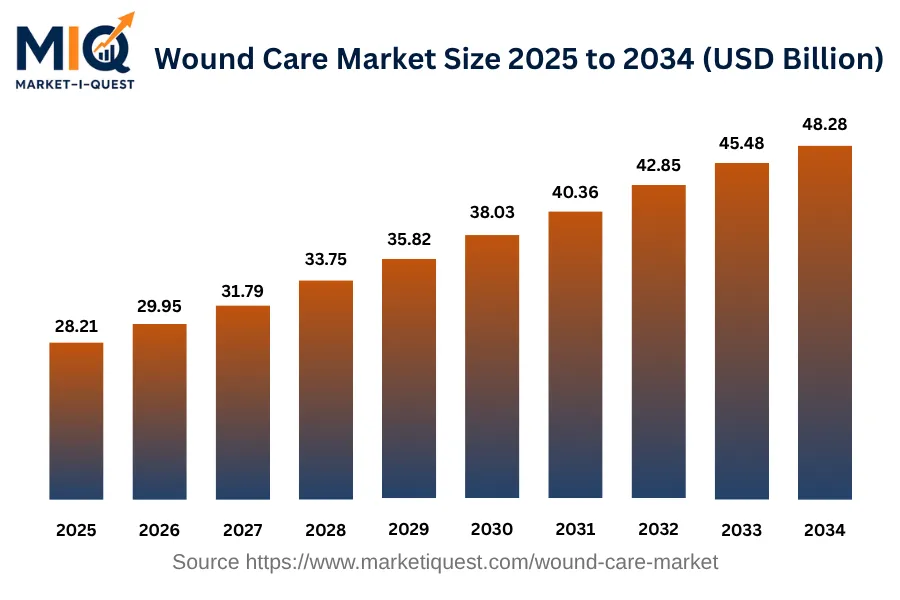
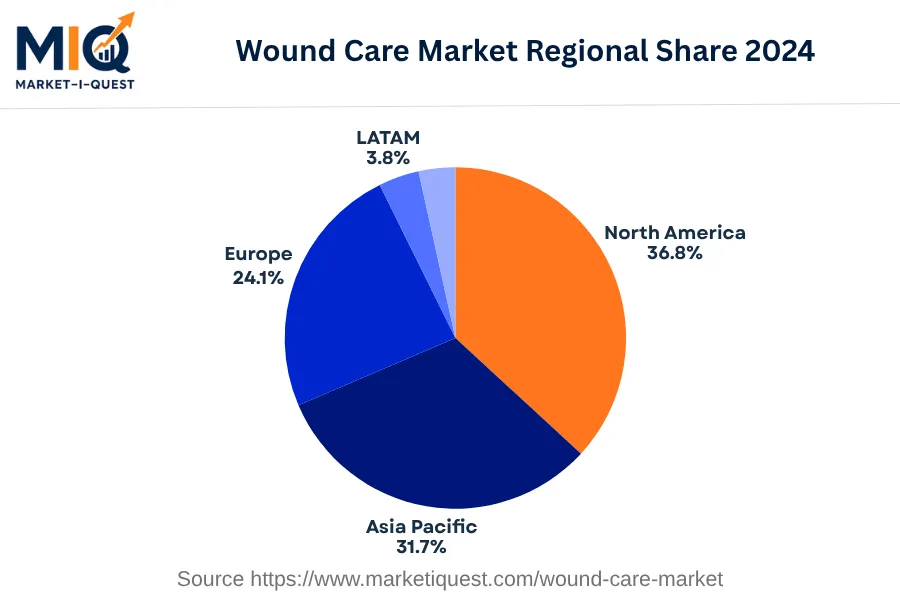
The Wound Care Market was sized at 28.21 billion USD in 2025, and it is forecasted to surge to 48.28 billion USD by 2034, manifesting a Compound Annual Growth Rate (CAGR) of 6.15%. This steadfast enlargement over the one-decade period reflects a consistent progression in the market's value. Accelerating from 26.58 billion USD in 2024 to 28.21 billion USD the following year and continuing to evolve over the proceeding years, this surge exemplifies the market's continual improvement. The geographical metrics from 2024 indicate North America accounted for 36.8% of the market, followed by Asia Pacific holding a 31.7% share. Europe had a robust stake in the market, with 24.1%, while Latin America and the Middle East and Africa claimed smaller portions, comprising 3.8% and 3.5% respectively. These proportions illustrate a diversified market penetration with a heavier concentration in the North American, Asia Pacific, and European sectors.

Key Takeaways

  • By Product - Surgical Wound Care held the most significant market share.
  • By Mode of Purchase - Prescribed products led the Wound Care Market in terms of sales.
  • By Application - Chronic Wounds accounted for the highest demand in the market.
wound-care-market market size

Key Driving Factors

Shift Towards Advanced Wound Care Modalities

Arguably, one of the most influential drivers for the wound care market is the shift towards advanced wound care modalities, specifically in developed regions such as North America and Western Europe. Modern wound care methods, ranging from bioengineered skin and skin substitutes to therapy devices, overcome the limitations of traditional wound management. They are not only effective but also efficient, ensuring faster healing and hence, improving patient quality of life. Furthermore, new reimbursement policies from health insurance companies, favoring these modern techniques over traditional ones, are incentivizing both healthcare providers and patients. This, in turn, is pushing adoption and stimulating expenditure in the wound care market.
Prevalence of Diabetes and Associated Complications

The high prevalence of diabetes worldwide, and the associated high incidence of diabetic foot ulcers, is also driving growth in the wound care market. Diabetes can often lead to peripheral neuropathy, meaning patients may not feel a wound or ulcer developing on their feet until it becomes significantly serious. These conditions necessitate robust and effective wound care management to prevent amputation. As healthcare practitioners endeavor to improve and manage wound care in diabetes patients, the demand and spend in the wound care market are experiencing a significant push. Additionally, it's notable that the increasing awareness of diabetes and the importance of foot care amongst such patients is further cementing this trend.

Market Evolution by Timeline

2019-2023
During this period, the wound care market witnessed a significant increase in adoption by acute care settings across North America, driven by a rise in chronic and surgical wounds. New technologies like bio-engineered skin substitutes hit the market and were integrated into standard wound care procedures with varying success due to cost constraints. The U.S. FDA regulation supporting over-the-counter wound care products aided market growth. A typical commercial model involved partnerships with local distributors and hospitals with pricing based on product capabilities and regional economic conditions. Logistical challenges in emerging regions like Africa posed a risk to market expansion.
2024
In 2024, the demand for wound care products in Asia, particularly China and India, surged due to increasing incidence of diabetes-related foot ulcers. The market saw the introduction of advanced wound dressings laced with antibiotics. The integration of these dressings into wound care procedures was still maturing. Regulations tightened in many regions, forcing providers to adhere strictly to international medical standards. The use of online platforms for procurement became popular with pricing models leaning more toward subscription services. Risks included uncertainty over healthcare reforms.
2025-2029
This period witnessed the adoption of wound care solutions in homecare settings worldwide as aging populations rose. More suppliers ventured into biomaterials, producing collagen and alginate dressings. However, there was hesitation in adoption due to a lack of clarity on regulatory compliance. New funding programs like the German Innovation Fund impacted adoption positively. Procurement shifted heavily to digital channels, with many suppliers offering volume-based pricing and contract models. One key risk was the inconsistent quality of products due to varied global manufacturing standards.
2030-2034
As telemedicine became more common across the globe, remote wound care management became more widespread. Firms increasingly focused on bioactive wound care products, involving living organisms or active biological agents in wound treatment, although there were supply constraints due to biocompatibility issues. Policies like WHO's safe surgery checklist advocated fewer surgical complications, indirectly promoting the wound care market. Sales commonly occurred through a direct-to-customer model, moving away from third-party distributorships and hospital partnerships. Market risks were largely around productivity disruption from pandemics.

Future Market Outlook

Future Opportunities

Future opportunities in the wound care market will largely revolve around addressing unmet clinical needs and improving patient outcomes. The rising prevalence of chronic wounds due to aging populations in developed regions like North America will likely drive demand for sophisticated treatment options. In 2023, the WHO reported that diabetic foot ulcers affect approximately 15% of diabetic patients, underscoring the need for specialized wound care solutions. As patient awareness of wound management rises, companies that focus on education and home care products will gain traction. Partnerships between technology firms and healthcare providers can enhance this shift; for example, a 2022 collaboration between Medtronic and the University of California aimed to integrate smart wound dressings with continuous glucose monitoring technologies. Additionally, emerging markets in Asia, particularly in India and China, present significant expansion opportunities as healthcare infrastructure improves. Regulatory pathways for innovative products, such as the 2022 introduction of FDA Breakthrough Devices Designation for advanced wound therapies, signal that rapid approval processes may expedite market entry for effective solutions. The integration of telehealth platforms with wound care management provides a fertile ground for development, allowing for real-time patient monitoring and enhanced access to healthcare professionals, which can ultimately lead to better healing processes and improved quality of care.

Segmentation Analysis

By Product

The market is divided into subsegments including Moist Wound Care, Antimicrobial Wound Care, and Surgical Wound Care. Surgical Wound Care accounted for the largest revenue share while Moist Wound Care is expected to grow at the fastest CAGR during the forecast period.

Largest Revenue Share

Surgical Wound Care

Market Share Leader

The surgical wound care segment captures the largest revenue share, driven largely by the increasing frequency of surgical procedures worldwide and the need for comprehensive wound care post-operation. This segment witnesses strong demand due to factors such as the aging population, increase in incidence of chronic conditions which often require surgical intervention, and advancements in healthcare technology enabling more complex surgical procedures. Given the crucial nature of proper wound care post-surgery to avoid complications such as infections or prolonged healing, there is a high willingness among healthcare providers to invest in high-quality surgical wound care products. Adoption is particularly strong in developed markets due to higher healthcare expenditure capacities, but emerging markets also contribute due to the rise in healthcare facilities and services. Regulations also support the segment as they stipulate strict standards for post-surgical care and wound management.

Fastest CAGR

Moist Wound Care

Forecast Period Growth Leader

Moist Wound Care holds promising growth potential and is expected to register the fastest CAGR during the forecasted period. The principal growth drivers include its higher efficacy in promoting wound healing and reducing patient discomfort compared to traditional dry wound care methods. Moist wound care also poses less risk of scarring and infection. Notably, the adoption of moist wound care is supported by increasing awareness of its benefits among healthcare providers and patients alike. However, significant barriers remain, including its higher cost and the need for skilled application, which may limit adoption in lower-income and resource-poor settings. Looking forward, technological advancements to improve ease-of-use, along with potential policy initiatives and partnerships aimed at increasing the accessibility of moist wound care, could help overcome these barriers and support market growth. Notwithstanding, near-term risks include budget constraints in healthcare systems due to the economic impact of the COVID-19 pandemic and potential supply chain vulnerabilities.

By Mode of Purchase

The market is divided into subsegments including Prescribed and Non-Prescribed (OTC), wherein the Prescribed segment accounted for the largest revenue share while Non-Prescribed (OTC) is expected to grow at the fastest CAGR during the forecast period.

Largest Revenue Share

Prescribed

Market Share Leader

The Prescribed subsegment leads in revenue generation due to its inherent nature of being mandatory for specific personal or health conditions, thereby ensuring a more or less captured audience. This factor couples with the more significant cost of prescribed items, which are typically higher than their non-prescribed counterparts, reflecting in greater revenue accumulation. The segment is underpinned by the robust healthcare infrastructure in developed regions where patients have better access to physicians who prescribe these products. Increased health awareness and more reliable patient-physician relationships also contribute towards high revenue generation. Moreover, insurance coverage generally leans in favor of prescribed products, reducing the out-of-pocket cost for consumers and indirectly pushing sales volumes.

Fastest CAGR

Non-Prescribed (OTC)

Forecast Period Growth Leader

Despite the Prescribed segment leading in terms of revenue, the Non-prescribed (OTC) segment is poised to grow at an impressive pace. The growth is catalyzed by the convenience and accessibility these products offer, independent of a healthcare provider's prescription. Technological advancements in telehealth services and online sales platforms have bolstered this convenience, providing easy access to these products. Consumer health awareness and self-medication trends are further driving the demand for OTC products. Amid these factors, potential risks include regulatory changes and product misuse or abuse. The growth also hinges on effective marketing and partnerships with retail chains for better shelf visibility. Capital expenditure in technological enablers would be crucial in navigating the competitive landscape.

By Application

The market is divided into subsegments including Chronic Wounds and Acute Wounds, with Chronic Wounds accounting for the largest revenue share, while Acute Wounds is expected to grow at the fastest CAGR during the forecast period.

Largest Revenue Share

Chronic Wounds

Market Share Leader

Chronic Wounds, as an application segment, derives its massive revenue due to several compelling factors. The increasing prevalence of chronic diseases such as diabetes and obesity, which often lead to complex wounds that require specialized treatment, is the main driver. Additionally, an aging global population - a demographic more susceptible to non-healing wounds - bolsters this subsegment. The general increase in awareness regarding wound care management, alongside superior healthcare infrastructure and a rise in healthcare expenditure in developed regions, further amplify the revenue generated by this segment. Regulations also come into play as health institutions worldwide increasingly adhere to guidelines for treating chronic wounds effectively, thereby stimulating the market demand. Additionally, the cost-driven purchasing criteria amid healthcare providers, driven by the pressure to provide quality care without escalating the cost burden, has significantly influenced this subsegment. Lastly, advanced wound care products' efficient distribution through various channels adds to its market dominance.

Fastest CAGR

Acute Wounds

Forecast Period Growth Leader

The Acute Wounds subsegment is anticipated to witness the fastest growth. This can be attributed to several factors, including the advent and rising adoption of technologically advanced products designed to expedite the healing process, lower costs, and maximize patient comfort. The increasing incidence of trauma injuries, surgeries, and burns is a primary growth catalyst. Additionally, partnerships between wound care product manufacturers and healthcare providers aid in speeding up this adoption. However, there are barriers. High capital expenditures in advanced wound care products and limited medical reimbursements are notable constraints. Policy reforms aimed at widening insurance coverage of these products could mitigate such factors. Furthermore, potential risks related to limited awareness and the availability of advanced wound care products in emerging regions could restrict its growth prospects in the immediate future.

Competitive Analysis

Key Market Players

Manufacturers / OEMs

3M Company
US
Johnson & Johnson
US
Smith & Nephew
UK

Key Suppliers & Raw Materials

Medtronic
Ireland
ConvaTec Group
UK
Cardinal Health
US

Distributors, Integrators & Channel Partners

Medline Industries
US
Mölnlycke Health Care
Sweden
B. Braun Melsungen
Germany

Porter’s Five Forces Analysis

This analysis studies the competitiveness and attractiveness of the wound care market.

Supplier Bargaining Power

Medium

Limited suppliers for advanced wound care products increase their bargaining power.

Buyer Bargaining Power

High

Buyers have high bargaining power due to varied product alternatives and competitive pricing.

Threat of Substitutes

Low

Low threat from substitutes due to the necessity of specialized wound care products.

Threat of New Entrants

Low

High entry barriers due to regulatory compliance, high R&D costs, and brand loyalty.

Competitive Rivalry

High

Intense competition from established firms, innovation, and differentiating factors play a key role in competitive rivalry.

Regional Analysis

Geographic market dynamics and growth opportunities across key regions

Global Market Outlook

wound-care-market market regional share

North America

In 2024, the Wound Care Market in North America demonstrated significant expansion due to several influential factors. An increase in chronic conditions such as diabetes and obesity, along with an aging population spurred heightened demand. Legislative initiatives like the Affordable Care Act increased accessibility to wound care products, instigating further market growth. Simultaneously, substantial investment in healthcare technology spurred the adoption of advanced wound care solutions.

Broad trends defined this market dynamic in 2024. Patient preference pivoted towards innovative wound care products, driven by a growing inclination for painless treatment options. New therapies featuring biomaterials became increasingly popularized. Telehealth solutions grew in prominence, enabling effective remote wound management. Furthermore, considerable market consolidation occurred, marked by significant partnerships and mergers and acquisitions among key players to increase their offerings and extend market reach. Regulatory oversight remained stringent, with agencies like the FDA overseeing product standards and policy enforcement. Key sectors tapped into this growing market included hospitals, clinics, and home healthcare providers. In addition, retail pharmacies played a significant role in distributing over-the-counter wound care products to consumers. Key regional markets included the U.S, Canada, and Mexico, with the U.S leading in technology adoption and Canada noted for its regulatory inclusivity.

Asia Pacific

In 2024, the Wound Care Market was a vital segment of the healthcare industry in the Asia Pacific region. A catalyst for its growth was the high incidence of chronic diseases like diabetes and obesity, particularly in China and India, leading to an increase in chronic wounds. Regulatory policies advocating for sophisticated wound care in Japan and South Korea further propelled market demand. The large-scale adoption of advanced wound care technologies and the influx of investment in biotech sectors by leading economies was also a significant driving factor.

Consumer preferences leaned towards cost-effective and immediate care options, prompting a surge in the use of home care wound management products. Shifts in product technology are exemplified in Australia's embrace of bioengineered skin substitutes. The distribution of these products was majorly through e-commerce platforms, aligning with the prevalent digital era in the region. Partnerships with local companies were commonplace, as seen in the ASEAN market where overseas wound care companies collaborated to cater to the extensive local demand. Governments enforced policies supporting wound care product standardization, ensuring patient safety. Client bases spanned across sectors such as government health departments, hospitals, and nursing homes. For instance, burn patients in India government hospitals were a significant recipient of these products.

Europe

In 2024, the wound care market in Europe showcased significant dynamism. Driving factors included emerging demand for advanced wound care products, increased investment in healthcare infrastructure in countries like Germany and the UK, and eased regulatory environments facilitated growth. The adoption of modern technology like wound bioengineering and nanoparticle therapy, especially in France and Italy, played a significant role in market expansion. Spain and the Nordics saw an increase in the supply of wound care commodities due to favorable pricing policies.

Trends observed reflected changes in customer preferences and market landscapes. There was a noticeable shift towards bioactive wound care products among healthcare providers in Germany and the UK. The surge in self-care practices led to increased use of homecare wound dressings in Italy and Spain. A rise in mergers and acquisitions was observed, particularly in the healthcare sectors of Central & Eastern Europe, indicating a competitive market landscape. The Benelux region saw the rigorous enforcement of wound management standards, thereby elevating the overall quality of care. A growing emphasis was also noted in the retail sector across Europe to augment the availability of wound care products to consumers. In 2024, the wound care market in Europe was hence marked by diversified demand, technological advancements, and dynamic market trends.

Latin America

In 2024, the Wound Care Market in Latin America experienced significant growth due to multiple external and internal factors. Investors' increased interest in healthcare sector induced fresh capital into the market, enabling technological additions and upgrades in wound care services especially in countries like Brazil and Mexico. Regulatory changes in Argentina which allowed faster product approvals served as an acceleration factor in the supply chain dynamics. Changes in healthcare policies across Brazil and Argentina focused on promoting advanced wound care services which led to increased pricing sustainability, contributing to overall market growth. On the demand side, an aging society in Chile and Peru resulted in a rise in chronic conditions like diabetes, pushing the need for advanced wound care services.

In terms of trends, a user preference shift towards homecare solutions drove product changes, as manufacturers in Mexico and Peru began prioritizing portable and easy-to-use equipment. The Colombian market experienced a rise in technological adaptations like telemedicine services for wound care. Partnerships and M&A activities were prevalent among healthcare providers in Brazil, seeking to expand their global footprint and expertise in advanced wound therapies. Overall, the key sectors driving the Wound Care Market in LATAM in 2024 were healthcare facilities, homecare solutions, and government initiatives focusing on improving the quality of life of the aging population.

Middle East & Africa

In 2024, the Wound Care Market in the Middle East and Africa demonstrated a significant potential for growth. This growth was largely driven by an increase in chronic diseases like diabetes and obesity especially in countries such as Saudi Arabia, United Arab Emirates, Egypt and South Africa, thus leading to a higher incidence of wounds requiring advanced care. Government initiatives to upgrade healthcare infrastructure, particularly in Qatari and Israeli hospitals, further propelled the demand for wound care products. Technological innovations in wound therapy devices and dressings were widely adopted in these regions, enhancing the market dynamics.

Shifts were noted in buyer behavior, with a higher preference for minimally invasive wound management solutions for faster recovery. This has been observed particularly in the healthcare sector in nations such as Nigeria and Kenya. Increasing partnerships between governments and private players in wound care management, saw stronger policy enforcement and adoption of global wound care standards across the region. Another noticeable trend was the growing reliance on telemedicine platforms in wound management in response to hospital capacities limitations in Egypt and South Africa during the period. Regulation for wound care management was particularly prioritized in health policy by nations such as Saudi Arabia and Qatar, directly impacting the market in the base year.

Recent Industry Developments

Latest market innovations, product launches, and strategic initiatives

May 2026

Convatec officially introduced ConvaMatrix at the European Wound Management Association (EWMA) conference. The product is a single-use biological wound matrix manufactured from porcine placental-derived tissue, designed to structurally stabilize the body's natural cellular healing response in complex venous leg ulcers (VLUs) and diabetic foot ulcers (DFUs).

May 2025

Mölnlycke Health Care expanded its geopolitical footprint in the Middle East by increasing its equity stake in the Tamer Mölnlycke Care joint venture from 33.3% to 60%, becoming the majority shareholder. This corporate restructuring directly consolidates manufacturing and advanced wound care distribution pipelines inside the Kingdom of Saudi Arabia.

Frequently Asked Questions