Wound Dressings Market Snapshot

Key Players

  • Smith & Nephew (United Kingdom)
  • Mölnlycke Health Care (Sweden)
  • 3M (United States)
  • Coloplast (Denmark)
  • ConvaTec Group (United Kingdom)
  • Johnson & Johnson (United States)
  • Paul Hartmann AG (Germany)
  • Medtronic (Ireland)
  • Cardinal Health (United States)
  • B. Braun (Germany)

Market Size

Base Year 2024
$15.97 Bn
CAGR
5.85%
Forecast 2034
$28.20 Bn

Market Segments

By Type
  • Traditional
  • Advanced
By Wound Type
  • Traumatic
  • Surgical
  • Diabetic Foot
  • Venous Leg Ulcers
  • Burns
By End User
  • Hospitals
  • Ambulatory Surgical Centers (ASCs)
  • Homecare

Market Dynamics

Drivers
  • Increasing chronic diseases prevalence
  • Growing wound care awareness
Restraints
  • High production costs
  • Regulatory challenges
Opportunities
  • Growing aging population
  • Increasing chronic disease rates

Market Size

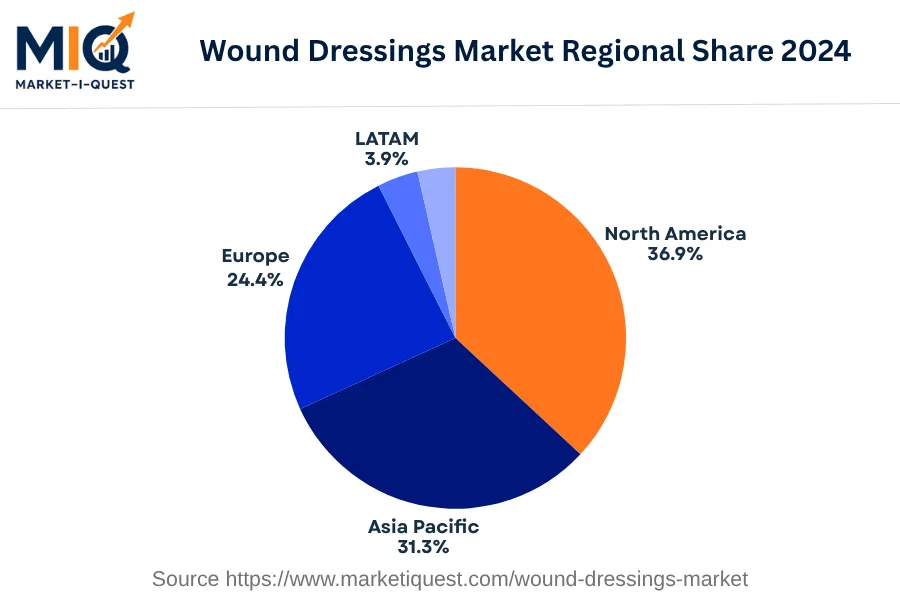
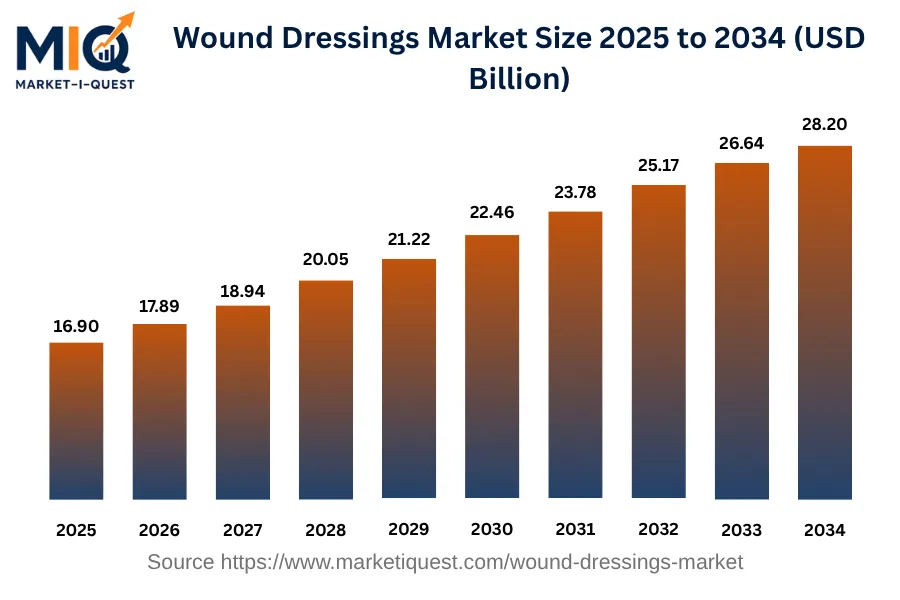
The Wound Dressings market size was valued at $16.90 billion in 2025, and it is expected to reach $28.20 billion by 2034, demonstrating a compound annual growth rate (CAGR) of 5.85%. This steady increase shows a consistent expansion in the market over nine years following 2025. The market expansion is influenced primarily by the gradual yearly growth observed from the initial value of $15.97 billion in 2024. In 2024, the distribution of this market's regional share was as follows: North America held 36.92%, followed by Asia Pacific at 31.26%, Europe with 24.38%, Latin America with 3.86%, and Middle East and Africa (MEA) at 3.58%. This data reflects a concentrated market predominance in North America, Asia Pacific, and Europe, with other regions such as Latin America and MEA holding minor shares.

Key Takeaways

  • By Type - Traditional wound dressings held a notable position.
  • By Wound Type - Surgical wounds led in prevalence taking a leading share.
  • By End User - Hospitals remained the dominant segment accounting for a significant portion of market share.
wound-dressings-market market size

Key Driving Factors

Increase in Diabetic Population

One key driving factor for the wound dressings market is the increase in the diabetic population globally. People living with diabetes are more prone to developing chronic wounds, especially foot ulcers, due to poor blood circulation and nerve damage. Therefore, they require advanced wound dressings for effective wound management and faster healing. The rise in diabetic cases necessitates a higher demand for advanced dressings, which directly influences the growth of the wound dressings market. Health organizations' efforts to manage diabetes-related complications also contribute to the market expansion.

Shift Towards Advanced Wound Dressings

Another distinctive driving factor is the shift of healthcare professionals and organizations towards advanced wound dressings from traditional ones. Unlike traditional dressings, advanced wound dressings such as film, foam, hydrogel, and alginate dressings promote a moist wound healing environment, which accelerates the healing process and reduces the risk of infection. These types of dressings are especially useful for managing complex wounds like burns and ulcers. The shift towards these dressings is driven by growing knowledge about wound management among healthcare providers and the availability of clinical evidence supporting the benefits of advanced dressings over traditional ones.

Market Evolution by Timeline

2019-2023
During 2019–2023, North America and Europe were the largest buyers of wound dressings due to higher incidents of chronic wounds and surgeries. High absorptive dressings and foam-based alternatives were in demand. There was a significant uptake in hydrogel dressings due to better patient outcomes. Manufacturers such as 3M and ConvaTec expanded their wound dressings product offerings. Regulatory constraints revolved around Product Standard EN 13726 that defined the requirements for primary dressings. Pricing was often volume-based with contracts favoring key hospital networks, allowing for discounted rates. Production trials in Asia-Pacific identified stable supply chains, but lacked in quality assurance. Quality issues emerged as a potential risk, demanding a proactive response.
2024
In 2024, Asia-Pacific witnessed increased demand for wound dressings due to rising aging population and diabetic cases. Studies indicating lower infection rates from silver dressings spurred its demand. Honey-based dressings gained attention for burn wounds. Products like Aquacel (ConvaTec) and Mepilex (Mölnlycke) were commonly sourced. Regulatory bodies emphasized compliance with ISO 10993-10, testing irritation and skin sensitization. Bulk-buying marked the procurement model, coupled with long-term agreements with providers. Open price negotiations were typical. The requirement for high manufacturing standards emerged as a challenge. Counterfeit versions were a risk that companies mitigated by securing supply chains and enhancing product traceability.
2025-2029
During 2025–2029, hospitals and clinics continued as primary buyers of wound dressings. Demand shifted towards dressings with antimicrobial agents as they offered quicker healing. Biologics like allografts gained popularity. Companies responded by integrating these requirements into their offerings; Smith & Nephew introduced REGRANEX Gel. The EN 13726 standards continued to be pivotal in guiding production and quality. A bundled pricing approach became more common, integrating wound dressings and wound care services. However, shortages in raw materials like silver and honey stressed the supply chain. Companies addressed this by exploring alternatives and furthering synthetic material research.
2030-2034
From 2030–2034, the demand for personalized and custom dressings became prevalent. The growth in demand was higher in countries with larger elderly populations such as Japan. Smart dressings with sensors for remote monitoring were introduced to market. Regulatory bodies enforced stricter compliance with EN 13726, and ISO 10993-10. The movement towards outcome-based pricing models was a noticeable trend among commercial models. Manufacturers strove to reduce costs by optimizing supply chain and investing in automation. However, timely delivery became a challenge due to raw material transportation delays, prompting companies to hold higher inventory as a mitigation strategy.

Future Market Outlook

Future Opportunities

As the wound dressings market evolves, several future opportunities are becoming apparent for industry players. The increased prevalence of chronic conditions such as diabetes, reported to affect over 34 million people in the United States as of 2020, necessitates the development of specialized wound care solutions. Companies like Medtronic are actively pursuing advanced technologies, such as bioengineered tissues, indicated as promising products for managing diabetic ulcers. Additionally, the aging global population, projected to surpass 1.5 billion individuals aged 65 and older by 2050, signals a rising demand for effective wound management solutions. Regulatory bodies are responding to these needs; for instance, the FDA’s recent guidance on the use of non-fungal biopolymers in wound dressings is likely to encourage innovation. Furthermore, in 2023, several healthcare institutions in Europe began pilot programs on telehealth strategies for wound care management, indicating an avenue for further integration of digital solutions into traditional wound care practices. Collaborations between companies, such as the partnership announced in early 2023 between Coloplast and a digital health platform, reflect a strategic alignment towards comprehensive wound care. This synergy between innovative technologies and evolving healthcare demands positions the wound dressings market for significant development over the coming years.

Segmentation Analysis

By Type

The market is divided into subsegments including Traditional and Advanced, with the Traditional subsegment accounting for the largest revenue share while the Advanced is expected to grow at the fastest CAGR during the forecast period.

Largest Revenue Share

Traditional

Market Share Leader

Traditional market forms the biggest revenue segment driven by its mature product offerings and established customer base. This segment caters to a wide demographic that finds solace in tried-and-true methods, especially in areas where high value is placed on quality and reliability. Often, these traditional products or services are deeply embedded in daily routines, creating high switching costs that sustain a consistent revenue stream. Furthermore, these traditional offerings often have strong distribution channels, whether through digital platforms or brick-and-mortar establishments. Their existing footprint and familiarity in the market make growth less of an immediate priority compared to retaining market share. From a geographic standpoint, the traditional segment continues to generate significant income in developed regions, where such products have been part of the societal fabric for longer. Although the regulatory framework varies across regions, the industry's foundation often lends it the stability needed to deal with changes in legislation or supply chain.

Fastest CAGR

Advanced

Forecast Period Growth Leader

In contrast to the traditional subsegment, the Advanced subsegment is seen as the growth engine for the market. This growth is driven by technology advancements and innovative solutions that align with evolving consumer needs. While the adoption rate is not yet at the level of its traditional counterpart, the advanced segment shows promise in catalyzing future growth. Some barriers to adoption include high initial investment costs, lack of consumer understanding, and regulatory uncertainties. However, improvements in technology, capital investment, and fostering strategic partnerships could significantly boost this segment. Governmental and organizational policies that favor greener and more efficient solutions could stimulate growth in this market as well. Near-term risks could hinge on technological failures or financial volatility. It's worth noting that our assumptions are based on common market structure; the actual outcome may differ depending on multiple unpredictable variables.

By Wound Type

The market is divided into subsegments including Traumatic, Surgical, Diabetic Foot, Venous Leg Ulcers, and Burns, with the Surgical subsegment accounting for the largest revenue share while the Diabetic Foot subsegment is expected to grow at the fastest CAGR during the forecast period.

Largest Revenue Share

Surgical

Market Share Leader

The Surgical subsegment is leading in revenue in the year 2024 due to several reasons. The high prevalence of surgeries worldwide is obviously the main driver for this subsegment. An increasing number of surgical procedures are due to a rise in chronic diseases such as cardiovascular diseases, cancer, and diabetes. Additionally, the aging population contributes significantly to the surgical market as elderly people typically need more surgical interventions. The regulation environment also influences the demand. For example, healthcare policies globally encourage speedy recoveries and early discharge from hospitals to minimize potential infection risks, which has increased the adoption of more efficient wound care post-surgery. Lastly, the purchasing decisions for surgical wound care products are mainly based on product effectiveness and cost, which benefits larger, well-established companies that can offer high-quality products at competitive prices.

Fastest CAGR

Diabetic Foot

Forecast Period Growth Leader

The Diabetic Foot subsegment is predicted to grow at the fastest rate. This is attributed to the increasing prevalence of diabetes worldwide, which often leads to foot ulcers if not properly managed. Enhanced public awareness and understanding about the risks associated with diabetic foot ulcers are also driving the growth of this subsegment. Furthermore, advancements in technology have improved the effectiveness of diabetic foot ulcer treatments, encouraging more widespread adoption. However, barriers to this subsegment's growth include the high cost of advanced wound care products and limited access to them in developing regions. Potential near-term risks include any regulatory changes that might limit product availability or increase costs. Despite these challenges, the outlook for the diabetic foot subsegment remains strong as investment in research and development continues and as partnerships between wound care companies and healthcare providers increase.

By End User

The market is divided into subsegments including Hospitals, Ambulatory Surgical Centers (ASCs), and Homecare. In 2024, the Hospitals subsegment accounted for the largest revenue share while the ASCs is expected to grow at the fastest CAGR during the forecast period.

Largest Revenue Share

Hospitals

Market Share Leader

Hospitals form the subsegment with the most revenue in the base year of 2024. This is attributed to various factors. Hospitals typically have larger capital for acquiring market products, and being primary healthcare providers, they have a high patient influx, subsequently driving demand and revenue. The complexity and diversity of procedures in hospitals dictate a broad range of equipment and services usage, which additionally fuel revenue in this subsegment. Some regulations, especially in developed economies, mandate the presence of certain equipment in hospitals, thereby ensuring a steady revenue stream. Regional factors also come into play with dense urban populations significantly contributing to this revenue due to easy access to hospital services. Finally, hospitals often engage in bulk purchasing through group purchasing organizations (GPOs) which can boost sales volume significantly.

Fastest CAGR

Ambulatory Surgical Centers (ASCs)

Forecast Period Growth Leader

The ASCs subsegment is anticipated to record the quickest CAGR in the projected timeframe. That is driven in large part by changing healthcare regulations and policies promoting outpatient care in several economies. As a cost-effective alternative to hospital admission, ASCs have seen enhanced adoption rates. Technology advancements, especially minimally invasive surgical technologies, have opened up a multitude of procedures that can be performed at ASCs, further advancing their growth. Partnerships with hospitals and acquisition by healthcare networks also catalyze ASCs' expansion. However, the initial capital expenditure required for equipping an ASC could hamper growth speed, and thus, is a short-term risk in this subsegment.

Competitive Analysis

Key Market Players

Manufacturers / OEMs

3M Healthcare
US
Hollister Incorporated
US
Smith & Nephew
UK

Key Suppliers & Raw Materials

Medline Industries
US
Deroyal
US
Cardinal Health
US

Distributors, Integrators & Channel Partners

Henry Schein
US
Medtronic
Ireland
Convatec Group
UK

Porter’s Five Forces Analysis

This analysis provides insights into the competitive dynamics within the Wound Dressings Market.

Supplier Bargaining Power

Medium

Suppliers have power due to the specialized materials required to produce wound dressings.

Buyer Bargaining Power

High

Buyers have high bargaining power due to the wide variety of wound dressing options available.

Threat of Substitutes

Medium

Potential substitutes like home remedies pose a medium threat.

Threat of New Entrants

Low

Market entry barriers such as stringent regulations and high R&D costs minimize the threat from new entrants.

Competitive Rivalry

High

Fierce competition exists among established companies making similar products.

Regional Analysis

Geographic market dynamics and growth opportunities across key regions

Global Market Outlook

wound-dressings-market market regional share

North America

In 2024, North America's Wound Dressings Market was characterized by a concentration of demand in healthcare (hospitals, clinics, and other first-aid centers), manufacturing industries, and retail sectors. Key drivers included an increasing emphasis on infection control measures in healthcare settings across the U.S., Canada, and Mexico: a rise in chronic wounds due to prevalent diseases like diabetes led to increased demand for high-quality wound dressings, while regulatory mandates prioritized patient safety and infection prevention. Increased investment in research and development of innovative wound dressings, coupled with the adoption of advanced technologies like hydrocolloids and alginate dressings also shaped this market.

Trends observed included a shift in buyer behavior towards antimicrobial and active wound dressings, reflecting a renewed focus on active healing and prevention of nosocomial infections. The broader adoption of e-commerce platforms also influenced distribution, with online channels accounting for a significant proportion of retail sales. Strategic partnerships and mergers & acquisitions were seen amongst key market players, aimed at portfolio expansion and geographic footprint enhancement. Finally, the enforcement of stringent regulatory standards influenced the packing and sterility of wound dressings, underscoring the industry's commitment to safety and quality control.

Asia Pacific

In 2024, the Asia Pacific wound dressings market experienced significant growth due to demand patterns, investment behaviors, regulatory movements, adoption of advanced technology, and supply-market changes. Rising prevalence of chronic diseases in highly populous nations like China and India, which in turn has increased the number of surgeries, stimulated the demand. Dietary changes leading to diabetes and other lifestyle diseases also contributed to market expansion. Meanwhile, governments' heavy investment in healthcare infrastructure, especially in developing countries, facilitated market growth. In Japan and South Korea, swift adoption of innovative technologies such as smart bioactive wound dressings played a crucial role.

Market trends mirrored these drivers. In response to increased patient awareness, there was a shift towards advanced dressings over traditional products. Online platforms emerged as key sales channels, particularly in China and Australia, fueled by increasing internet penetration and buyer preference for e-commerce. The year also saw strategic partnerships between local and international companies, largely to leverage the latter's technology prowess. Strict policy enforcement on healthcare standards further steered the market, notably in major ASEAN countries like Singapore and Malaysia. Overall, the wound dressings sector in 2024 in the Asia Pacific region was marked by dynamic shifts, yet remained steadfast in its progression.

Europe

In 2024, Europe's wound dressings market was influenced by several key drivers and trends. The market saw a surge in demand due to Europe's aging population and the rise in incidences of chronic wounds, particularly in countries like Germany and the United Kingdom. Regulatory policies like the European Union's Medical Device Regulation (MDR) intensified focus on patient safety and increased scrutiny on product quality, pushing manufacturers to refine their offerings. Innovation played a significant role, with healthcare facilities in France, Italy, and Spain rapidly adopting advanced bioactive and antimicrobial dressings.

Trends witnessed included a pronounced shift towards homecare settings, especially in the Nordics and Benelux region, propelled by demand for convenience and cost-effectiveness. There was a notable inclination towards moisture-retentive dressings, resulting from enhanced patient comfort and faster healing capabilities. Channel dynamics evolved with e-commerce platforms playing a major role in product distribution across Central & Eastern Europe due to greater accessibility. Furthermore, a wave of collaborations was seen, as manufacturers targeted enhanced market presence and diversified product portfolio. Enforcement of standardization policies, such as the ISO 13485:2016, for medical device quality management also dictated market trends, ensuring manufacturers adhered to higher quality standards.

Latin America

In 2024, the wound dressings market in Latin America experienced substantial growth due to numerous factors. Rising incidence of chronic wounds, owing to increasing prevalence of diabetes and obesity, especially in Mexico and Brazil, spurred demand for advanced wound dressing solutions. Governments across the region, notably Argentina and Colombia, invested in healthcare infrastructure while endorsing policies to ensure access to quality wound care products in public health facilities. The adoption of innovative dressings, such as hydrogel and foam dressings, was notable because of their effectiveness in managing complex wounds.

Several key trends shaped the industry in 2024. A shift towards homecare settings for wound treatment, particularly in Chile and Peru where healthcare delivery systems were under strain, resulted in a surge in retail purchases of wound dressings. Product advancements in the form of antimicrobial dressings to curb wound infections emerged as a vital trend. Also significant was the growing consolidation in the wound care sector, with large healthcare companies from Brazil and Mexico striking strategic deals to expand their market footprint. Finally, implementation of stringent regulatory standards for wound dressings, positioned to ensure patient safety and product efficacy, underpinned the interactions between manufacturers, healthcare providers, and patients in the market.

Middle East & Africa

In 2024, the Middle East and Africa's wound dressings market witnessed significant activity. Drivers for growth included increased investment in healthcare infrastructure notably in Saudi Arabia, UAE, and South Africa. Furthermore, high incidences of diabetes and related wounds, particularly in Egypt and Saudi Arabia, amplified demand for advanced wound care products. The acceptance of modern technology in wound care, especially in Qatar and Israel, also contributed to this market development.

Notable trends shaping this market comprised a shift towards bioactive and antimicrobial dressings, particularly prevalent in South Africa and Israel's healthcare sectors. Moreover, countries like the UAE and Qatar showcased increased preference for foam dressings due to their high absorbency and comfort. There were also noticeable collaborations between healthcare and manufacturing sectors, for example in Nigeria and Egypt, aiming to localize the production of wound dressings to reduce costs and better accommodate market needs. Lastly, enforcement of stringent healthcare standards in Kenya and UAE led to heightened demand for high-quality products in the wound-care space. Overall, factors such as healthcare investment, technological adoption, and market-specific needs influenced the wound dressings market across the Middle East and Africa in the year 2024.

Recent Industry Developments

Latest market innovations, product launches, and strategic initiatives

November 2025

The Indian Department of Atomic Energy (DAE) executed a strategic commercialization alliance with Cologenesis Pvt. Ltd. to formally launch ColoNoX. This collaboration introduced India's first nitric oxide (NOx)-releasing wound dressing, utilizing a collagen hydrogel matrix developed directly through Bhabha Atomic Research Centre (BARC) clinical trials for targeted diabetic foot ulcer management.

August 2025

Imbed Biosciences officially launched SAM PainGuard with Lidocaine in the United States. The product introduces a specialized dual-action antimicrobial wound matrix designed to simultaneously manage clinical bioburden and provide localized pain relief, specifically targeting severe traumatic and burn wound dressings.

Frequently Asked Questions