Thermoformed Plastics Market Snapshot

Key Players

  • Pactiv LLC (United States)
  • D&W Fine Pack (United States)
  • Sonoco Products Company (United States)
  • Genpak LLC (United States)
  • Placon Corporation (United States)
  • Silgan Plastics Corporation (United States)
  • Anchor Packaging (United States)
  • Brentwood Industries Inc. (United States)
  • Tegrant Corporation (United States)
  • Greiner Packaging International GmbH (Austria)

Market Size

Base Year 2024
$18.27 Bn
CAGR
5.72%
Forecast 2034
$31.86 Bn

Market Segments

By Product
  • Polyethylene Terephthalate (PET)
  • Polymethyl Methacrylate (PMMA)
  • Polyethylene (PE)
  • Polypropylene (PP)
  • Polystyrene (PS)
  • Acrylonitrile Butadiene Styrene (ABS)
  • Polyvinyl Chloride (PVC)
  • High Impact Polystyrene (HIPS)
  • Biodegradable Polymer
By Process
  • Vacuum Forming
  • Pressure Forming
  • Mechanical Forming
By Application
  • Packaging
  • Construction
  • Electrical & Electronics
  • Automotive Packaging
  • Consumer Goods
  • Others

Market Dynamics

Drivers
  • Rising environmental awareness
  • Increased packaging industry demand
Restraints
  • Regulatory compliance costs
  • Petroleum price volatility
Opportunities
  • Growing sustainability concerns
  • Increased product demand in packaging industry

Market Size

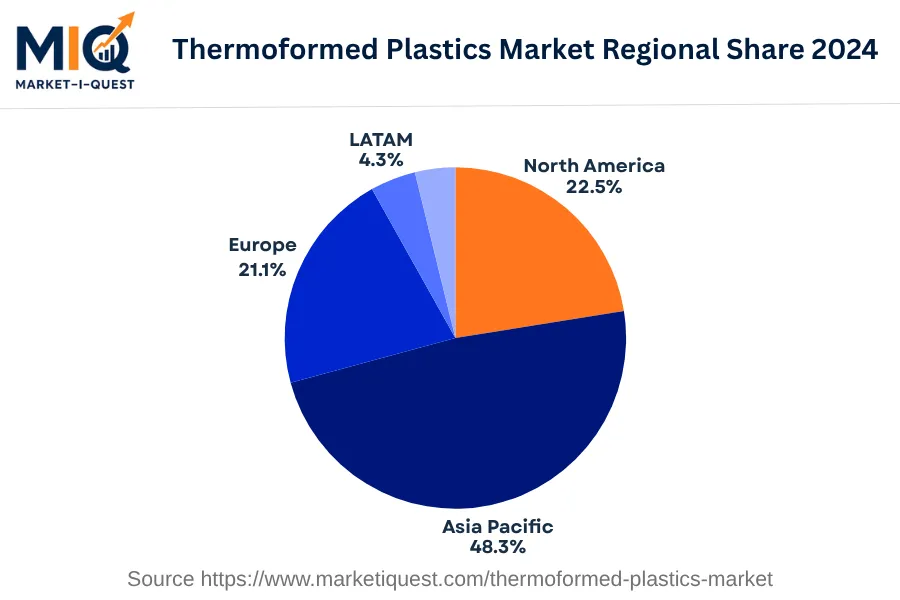
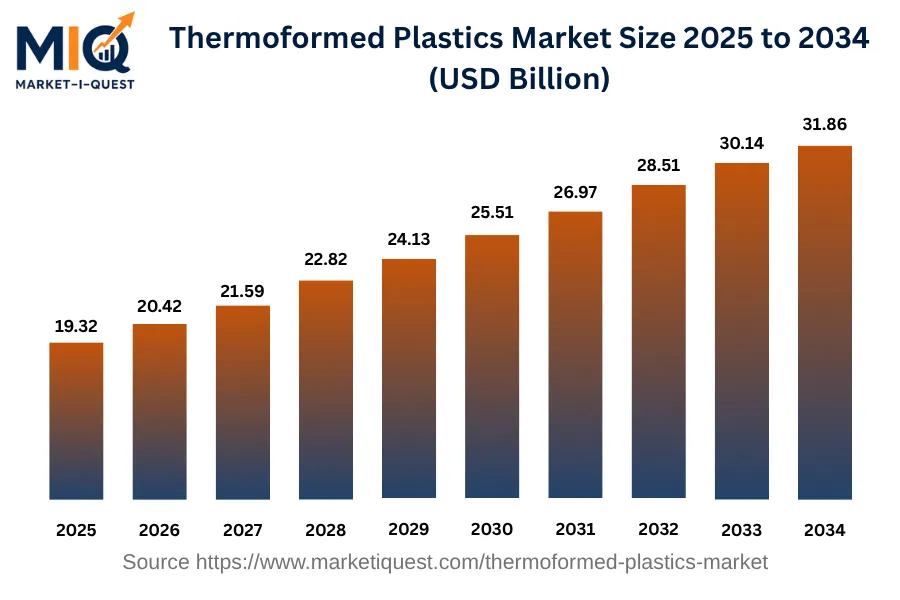
The thermoformed plastics market was valued at $19.32 billion in 2025 and is projected to grow to a size of $31.86 billion by 2034, representing a CAGR of 5.72% over the 2025-2034 period. The value of the market in the beginning year of this period, 2024, was $18.27 billion. The factors underpinning this growth are an increase in the consumer base, development of new materials, advances in thermoforming technology, and regulatory support for recyclable materials. During this period, the market exhibits a steady growth curve with an increasing rate of annual revenue accruals. In terms of regional shares in 2024, Asia Pacific accounted for the largest share of 48.3%, followed by North America and Europe with shares of 22.5% and 21.1% respectively. The LATAM region contributed 4.3% while MEA region held a percentage of 3.8% in the thermoformed plastics market.

Key Takeaways

  • By Product - Polyethylene (PE) enjoys the largest share of market revenue.
  • By Process - Mechanical Forming sub-segment dominated the market.
  • By Application - The construction segment has historically held the highest revenue in 2024.
thermoformed-plastics-market market size

Key Driving Factors

Versatility in Packaging Applications

One of the primary driving factors for the thermoformed plastics market is their widespread use in packaging solutions, specifically in the food and pharmaceutical sectors. Thermoformed plastics offer high-profile design flexibility, lightweight, recyclability, and low-cost manufacturing, making them a preferred choice for packaging solutions. In the food industry, the use of such plastics reduces contamination risks and increases shelf life. In the pharmaceutical sector, the material's clarity enables easy identification of medicines, while its durability ensures products' safe transportation and storage. As these industries continue to grow, the demand for thermoformed plastics for packaging purposes is expected to drive the market forward.

Increased Use in Automotive and Construction Industries

Thermoformed plastics are increasingly being used in the automotive and construction industries. In the automotive sector, they offer a lightweight yet durable solution for making various components, such as door panels and bumpers. By implementing these materials, automakers can enhance vehicle fuel efficiency without sacrificing safety. Similarly, in the construction industry, the integration of thermoformed plastics for roofing, pipelines, and insulation contributes to improved safety and cost efficiency. As sustainability and efficiency continue to be the focus for these industries, the demand for thermoformed plastics as a versatile, durable, and lightweight material is likely to grow, giving a major boost to the market.

Market Evolution by Timeline

2019-2023
The rise in the use of thermoformed plastics in packaging and healthcare industries were significant during 2019–2023. North America observed a high demand, particularly in the food packaging sector, due to health and safety regulations. Europe innovated with bio-degradable thermoformed plastics to address environmental concerns. Asian producers with less stringent environmental regulations ramped up production capacities shaping pricing dynamics. Policies such as the Single-Use Plastics Directive by the EU influenced the market. Intense competition brought about lower pricing and innovative contract structures such as pay-per-use models. Risks during this period included political instability impacting import/export regulations and disrupted supply chains.
2024
In 2024, a shift towards sustainable practices stood out. The automotive sector in the US saw a surge in demand due to its lightweight property aiding fuel efficiency. Technological advancements in China made production cost-effective providing a competitive edge in the global market. European compliance with EN 13432 standard for compostable products pressured suppliers to adapt. Lower costs from Asia affected global pricing models. Shifts in global trade agreements posed uncertainties in delivery schedules and cost volatility impacting procurement models.
2025-2029
The period 2025–2029 saw heightened interest in thermoformed plastics in the electronics industry, particularly in India and Southeast Asia. Advances in material science led to durable and heat resistant products. Policy reform was evident in the Restriction of Hazardous Substances Directive in Europe affecting market participation. Pricing stabilized with the maturity of production practices. Contractual partnerships flourished with industry clusters to optimize supply chains. Key risk factors included fluctuating crude oil prices significantly affecting production costs.
2030-2034
From 2030–2034, renewable energy sectors worldwide made extensive use of thermoformed plastics in manufacturing and structural components. Technological maturity delivered high quality, durable products escalating market influence. Stricter international regulations on carbon emissions and waste disposal challenged the industry to meet standards. The onset of 3D printing technology revolutionized the supply models. Pricing experienced marginal declines due to advancement in manufacturing processes. Extended producer responsibility programs became typical, retaining product responsibility post-consumption. The challenge of managing waste disposal was a clear risk.

Future Market Outlook

Future Opportunities

Future opportunities in the thermoformed plastics market are strongly influenced by growing consumer preferences for sustainable packaging solutions. As per a study conducted by the World Economic Forum in 2021, around 70% of consumers expressed willingness to pay more for environmentally friendly packaging. In response, manufacturers are increasingly exploring bio-based and recycled raw materials for thermoforming applications. For example, in 2023, Amcor launched its first recyclable thermoformed packaging line designed specifically for food applications, aligning with the European Union's Circular Economy Action Plan. Driven by technological advances, the shift towards automation and Industry 4.0 in the manufacturing process is also significant. In 2022, companies such as Sealed Air invested in smart manufacturing initiatives aimed at enhancing production efficiency and minimizing waste. Regulatory pressures such as those from the U.S. Environmental Protection Agency’s emphasis on waste reduction create further impetus for innovation in material usage and recycling processes. Furthermore, expanded applications in the healthcare sector, evidenced by the successful use of thermoformed trays in medical device packaging by companies like Medline in 2021, present a growing market segment. These developments suggest that the intersection of sustainability and innovation will shape the future landscape for thermoformed plastics, creating substantial opportunities for companies that can adapt to these evolving market needs.

Segmentation Analysis

By Product

The market is divided into subsegments including Polyethylene Terephthalate (PET), Polymethyl Methacrylate (PMMA), Polyethylene (PE), Polypropylene (PP), Polystyrene (PS), Acrylonitrile Butadiene Styrene (ABS), Polyvinyl Chloride (PVC), High Impact Polystyrene (HIPS), and Biodegradable Polymer. Polyethylene (PE) accounted for the largest revenue share while Biodegradable Polymer is expected to grow at the fastest CAGR during the forecast period.

Largest Revenue Share

Polyethylene (PE)

Market Share Leader

Polyethylene (PE) enjoys the largest share of market revenue, largely driven by its extensive range of applications across diverse industries. From packaging in the food and beverage sector to insulation in the electrical industry and liners in the construction sector, PE's demand remains high and constant. Its inherent strengths such as durability, light-weight, and resistance to moisture and chemicals give it an edge over competitors, making it a preferred choice for numerous applications. Geography-wise, the Asia-Pacific region, particularly countries like China and India, contribute significantly to the large revenue share due to their booming industrial sectors and increasing consumerism. Also, PE's production is highly favored by the existing supply chain and regulatory conditions, with manufacturers enjoying easy access to raw materials and popular distribution channels. Customer purchasing decisions are swayed by PE's cost-effectiveness and performance, setting high switching costs for alternatives and ensuring a sustained majority market share.

Fastest CAGR

Biodegradable Polymer

Forecast Period Growth Leader

The Biodegradable Polymer subsegment is anticipated to register the fastest growth in the forecast period. With growing environmental concerns and tighter policy regulations, businesses in various sectors are adopting sustainable, biodegradable alternatives. Biodegradable polymers are emerging as the ideal replacement due to their environmentally friendly properties, leading to increased demand. However, barriers such as higher costs compared to non-degradable counterparts and technical challenges in processing and performance may slow down the pace of adoption. Nevertheless, innovations in technology, extensive research, and development coupled with strategic partnerships between manufacturers and end-user industries are poised to overcome these growth inhibitors. It's important to note the risk of fluctuating capital expenditure requirements in this rapidly evolving sector, which could impact this growth trajectory short-term.

By Process

The market is divided into subsegments including Vacuum Forming, Pressure Forming, and Mechanical Forming. Mechanical Forming accounted for the largest revenue share while Vacuum Forming is expected to grow at the fastest CAGR during the forecast period.

Largest Revenue Share

Mechanical Forming

Market Share Leader

In 2024, the Mechanical Forming sub-segment dominated the market, primarily due to its vast range of applications across various industries. This process offers a cost-effective and efficient way to form a wide variety of materials, thereby making it the preferred choice for manufacturers. The key drivers for the mechanical forming subsegment are the robust growth in construction, automotive, and aerospace industries, where this process is extensively employed. Moreover, developing economies' rapid industrialization has significantly increased the demand for mechanically formed products. Regulatory requirements also favor mechanical forming as it is usually more eco-friendly than other methods. This, coupled with its broad compatibility with various materials, contributes to its large revenue share. Additionally, the long life span and durability of mechanically formed units reduce the need for frequent replacement, creating persistent demand.

Fastest CAGR

Vacuum Forming

Forecast Period Growth Leader

Despite not holding the largest market share, Vacuum Forming shows promise as the fastest-growing subsegment. Vacuum Forming's growth drivers stem from the sector's advancements in technology that facilitate quicker production times and reduced costs. The process is becoming more accurately controlled, thanks to technological advancements, resulting in higher-quality output. Furthermore, the belt of transition economies has demonstrated an increasing appetite for vacuum-formed products, mostly due to their competitive price-point and the improving quality of locally sourced raw materials. However, adoption barriers such as the initial high capital requirement and unawareness about the technology's potential benefits stunt its growth. The market's common concerns include the risk of quality inconsistency and the need for continued investment in technology. The facilitation of strategic partnerships and increased spending on R&D should stimulate vacuum forming's breakneck growth in the near future.

By Application

The market is divided into subsegments including packaging, construction, electrical and electronics, automotive packaging, consumer goods, and others. In 2024, the construction subsegment accounted for the largest revenue share while the electrical & electronics subsegment is expected to grow at the fastest CAGR during the forecast period.

Largest Revenue Share

Construction

Market Share Leader

The construction segment has historically held the highest revenue in 2024 due to several decisive contributing factors. The upswing in the global construction industry, especially the residential and commercial building sector, has driven the significant growth in demand. Infrastructure development programs initiated by governments worldwide are also a key driver. Construction materials are purchased in vast quantities due to the massive scale of these projects. Further, construction is an evergreen industry, being an integral part of both developing and developed economies. Its essential nature implies a steady revenue stream, largely unaffected by periodic market instability. Increased preference for eco-friendly and sustainable building materials has also steered revenue. However, even though the segment continues to grow, market saturation and competition remain significant challenges.

Fastest CAGR

Electrical & Electronics

Forecast Period Growth Leader

The electrical & electronics segment is forecasted to register the fastest growth rate in the forthcoming period. Major growth drivers for this segment include technological advancements, increased consumer spending on electronics, and the emergence of innovative electronics products in the market. Rapid urbanization paired with a surge in demand for automation solutions across industries further catapults this segment's growth. Partnerships between electronics manufacturers and raw material suppliers can also optimize resources and fast-track production, thus boosting growth. However, the market faces potential short-term risks, including geopolitical disruptions, supply chain volatility, and raw material price fluctuations. Despite these challenges, the segment's outlook remains robust due to the relentless evolution in technology and the electronics sector's ubiquitous nature.

Competitive Analysis

Key Market Players

Manufacturers / OEMs

Pactiv LLC
US
D&W Fine Pack LLC
US
Sonoco Products Company
US

Key Suppliers & Raw Materials

Dow Chemical Company
US
Eastman Chemical Company
US
BASF SE
Germany

Distributors, Integrators & Channel Partners

Berlin Packaging
US
Grainger Industrial Supply
US
MSC Industrial Direct
US

Porter’s Five Forces Analysis

This is a comprehensive Porter's Five Forces analysis of the thermoformed plastics market.

Supplier Bargaining Power

Medium

Limited suppliers and increasing raw material costs contribute to moderate supplier power.

Buyer Bargaining Power

High

Numerous alternative products and low switching costs increase buyer bargaining power.

Threat of Substitutes

High

Eco-friendly alternatives to thermoformed plastics pose a significant threat.

Threat of New Entrants

Medium

High initial investment and regulatory challenges pose barriers to entry.

Competitive Rivalry

High

The market is highly competitive, marked by the presence of numerous key players.

Regional Analysis

Geographic market dynamics and growth opportunities across key regions

Global Market Outlook

thermoformed-plastics-market market regional share

North America

In 2024, the Thermoformed Plastics market in North America showed significant growth, majorly driven by industry demand, technology adoption, and regulatory parameters across the U.S., Canada, and Mexico. Demand in sectors such as healthcare (with single-use applications), food and beverage (for lightweight packaging), and automotive (for lightweight components) catalyzed the market. Investments in advanced technologies pushed for the creation of diverse, high-quality products while reducing overall production costs—a compelling factor for increased adoption. In parallel, tightening environmental regulations, such as Canada’s Zero Plastic Waste initiative and Mexico’s General Law for Prevention and Comprehensive Waste Management, spurred demand for alternatives to traditional plastic, fueling the penetration of thermoformed plastics in these countries.

Contemporary trends saw consumers gravitating towards sustainable packaging and products. The shift from rigid to flexible packaging was a notable trend, driven by evolving consumer preferences and benefits such as ease of use and transportation. Technological advancements in terms of recyclability and bioplastics gained traction. Additionally, M&As activity grew among manufacturers aiming to expand reach, exemplified by Sonoco's acquisition of Thermoform Engineered Quality, marking a strategic vision to support the burgeoning demand. Enforcement of stringent manufacturing standards by the U.S. Food and Drug Administration (FDA) also continued to shape the market dynamics.

Asia Pacific

In 2024, the Thermoformed Plastics Market in the Asia Pacific had significant dynamism, buoyed by a mix of demand, regulatory changes, and technological adoption. Shifts in consumption and industrialization, particularly in China and India, spurred demand for packaging, automotive, healthcare, and electronics applications, with cost-effectiveness and lightweight properties of thermoformed plastics driving adoption. New regulations in Japan and South Korea around reduced plastic waste also incentivized a market lean toward recyclable thermoformed plastics. Investment flows also intensified in advanced thermoform manufacturing technologies within China and key ASEAN markets initiating competitive supply dynamics.

Consumer behavior in 2024 exhibited a preference for eco-friendly packaging, particularly in Australia and China, where plastic consumption awareness movements were prominent. Technological shifts were mainly marked by the gradual adoption of bio-based thermoformed plastics across major manufacturing sectors in India and Japan. Distribution channels saw a pivot towards e-commerce platforms across the region, paralleling the rise in digital trade. Focused M&A activities, often with sustainability at the forefront, were observed within large business entities, especially in China, India, and Japan, specifically enhancing their thermoformed plastics capacity. Australia, Japan, and South Korea, in particular, saw stringent policy enforcement around plastic recycling standards and the promotion of green thermoplastic products within retail and governmental procurement.

Europe

In 2024, the thermoformed plastics market in Europe exhibited dynamic performance. The market surge was driven by increasing investment in packaging technologies among manufacturing and retail sectors, particularly in Germany and the UK. Demand for thermoformed plastics for medical packaging further accelerated due to stringent EU regulations on clinical waste handling. Sustainable production methods and widespread adoption of biodegradable thermoformed plastics drove market growth in Italy, Spain, and France. However, volatile pricing of raw materials, prominently in Eastern & Central Europe, restricted growth.

Key trends transforming the market included increased focus on environmental sustainability and waste management, steering industries towards eco-friendly packaging options. The online retail, food and beverage sectors, notably in the UK and Nordics, witnessed a shift towards thermoformed plastics, owing to their durability and customization capabilities. Partnerships and M&As became common, as companies in Benelux strived to enhance their production capacities and portfolio. In Germany and France, enhanced policy enforcement for waste minimization and recycling stimulated the use of thermoformed plastics. Consumer preference for aesthetic, lightweight, and durable packaging further accentuated these trends, propelling comprehensive market growth. Notwithstanding stiff competition, the European thermoformed plastics market evolved dynamically in 2024.

Latin America

In 2024, the Thermoformed Plastics Market in Latin America (LATAM) experienced dynamic shifts amid the convergence of demand, regulation, and technology. Drivers of market activity included increasing demand for thermoformed plastics in packaging for consumer goods, particularly in Brazil and Mexico, due to their advantages of cost-effectiveness and design flexibility. Stringent environmental regulations in Argentina and Chile enforced the use of thermoformed plastics as an eco-friendly solution, thus amplifying their adoption. Colombia and Peru witnessed significant investment in technology facilitating the production of high-performance thermoformed plastics, improving the market's supply dynamics.

Trends that shaped the market included a rising preference for lightweight and durable packaging in retail sectors, notably in Mexico and Brazil, resulting in an increased use of thermoformed plastics. In enterprise sectors across LATAM, product innovation - particularly in the healthcare and utilities industries - created a demand for high-precision thermoformed plastic components. The LATAM market also observed partnerships and mergers among local and international manufacturers, strengthening the supply chain and broadening the product range. In Argentina and Chile, the enforcement of policies to encourage recycling and reduce carbon footprint further propelled the adoption of recyclable thermoformed plastics. As a result, 2024 was a landmark year for the thermoformed plastics market in LATAM.

Middle East & Africa

In 2024, the thermoformed plastics market in the Middle East and Africa demonstrated notable growth. On the drivers' side, increased demand for lightweight and cost-effective materials, particularly in Saudi Arabia’s burgeoning consumer goods sector, and the UAE’s expanding automotive industry, propelled the market. Regulatory shifts, such as Egypt's environmental initiatives favoring recyclable materials, further invigorated uptake. Advances in technology improved production efficiency, evidenced by broad adoption in South African and Israeli manufacturers. Lastly, the softening of petrochemical prices across the region, particularly in petroleum-rich nations Nigeria and Qatar, catalyzed supply dynamics.

As for trends, changing buyer behavior in Kenya and South Africa leaned towards eco-friendly plastic solutions, prompting alignment in product development. In Israel and the UAE, increased integration of automation in manufacturing steered a shift towards high-performing thermoformed plastics in various sectors including healthcare and telecommunications. Channelling dynamics saw traditional retail slowly ceding ground to digital platforms, particularly in regions like Saudi Arabia and Nigeria driven by their robust digital infrastructure investments. Mergers and acquisitions consistently surfaced, primarily within the oil and gas sector, triggered by an evolving policy environment. Lastly, regulatory bodies in Egypt and Qatar heightened policy enforcement for quality standards, refining the region’s market parameters and product expectations.

Recent Industry Developments

Latest market innovations, product launches, and strategic initiatives

February 2026

Amcor unveiled an enhanced portfolio of thermoformed solutions designed to capitalize on the rapidly growing ready-meal and dairy sectors. The portfolio focused on three core pillars: shelf-life extension, recyclability, and brand impact. Amcor introduced recycle-ready mono-material containers with EVOH barrier layers that extended product shelf life by up to 50% while maintaining recyclability, alongside thermoformed in-mold labeling technology for high-definition decoration during the forming stage.

January 2025

Italian private equity company Koinos Capital acquired a majority stake in Lapiplast, a specialist in vacuum thermoforming with three plants and 80 employees. Koinos Capital planned to expand Lapiplast's production capacities and strengthen its international market position through further acquisitions, with a focus on Spain, France, and the US. The thermoforming market was estimated at €1.5 billion and expected to grow by an average of 4% over the next five years.

Frequently Asked Questions