Polymeric Nanoparticles Market Snapshot

Key Players

  • Nanotech Industrial Solutions Inc. (United States)
  • Nanocyl SA (Belgium)
  • EPRUI Nanoparticles & Microspheres Co. Ltd (China)
  • Nanophase Technologies Corporation (United States)
  • Seashell Technology (United States)
  • Nanocs Inc. (United States)
  • nanoComposix (United States)
  • PlasmaChem GmbH (Germany)
  • Nanograde LLC (Switzerland)
  • SkySpring Nanomaterials Inc. (United States)

Market Size

Base Year 2024
$0.639 Bn
CAGR
9.3%
Forecast 2034
$1.55 Bn

Market Segments

By Polymeric Material
  • Polylactic Acid (PLA)
  • Polyglycolic Acid (PGA)
  • Polyethylene Glycol (PEG)
  • Poly(Lactic-co-Glycolic Acid) (PLGA)
  • Polystyrene
  • Polyurethane
By Application
  • Drug Delivery
  • Diagnostics
  • Imaging
  • Cosmetics
  • Industrial Coatings
  • Electronics
  • Others

Market Dynamics

Drivers
  • Increased demand for drug delivery systems
  • Nanotechnology advancements in healthcare sector
Restraints
  • High production costs
  • Regulatory hurdles
Opportunities
  • Expanding drug delivery applications
  • Novel cancer treatment methodologies

Market Size

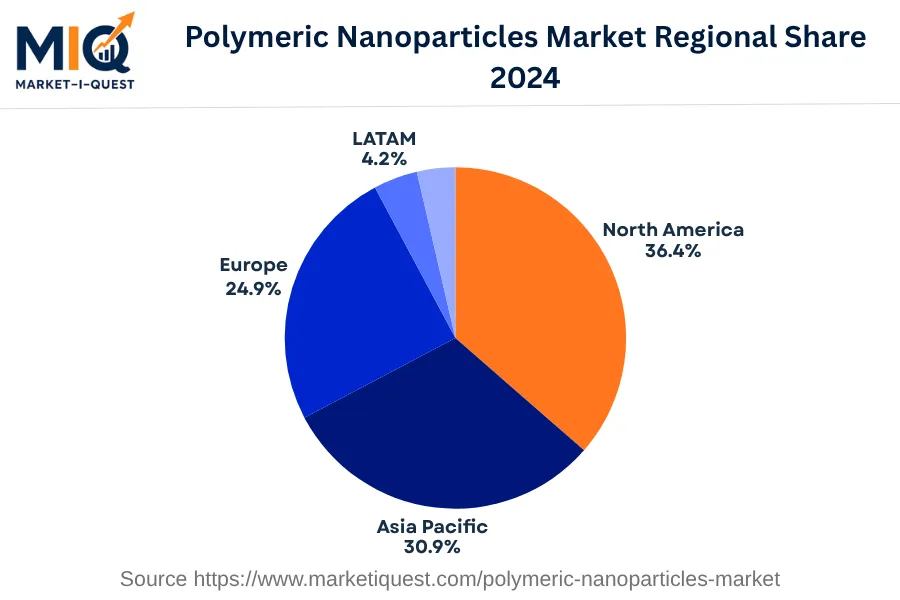
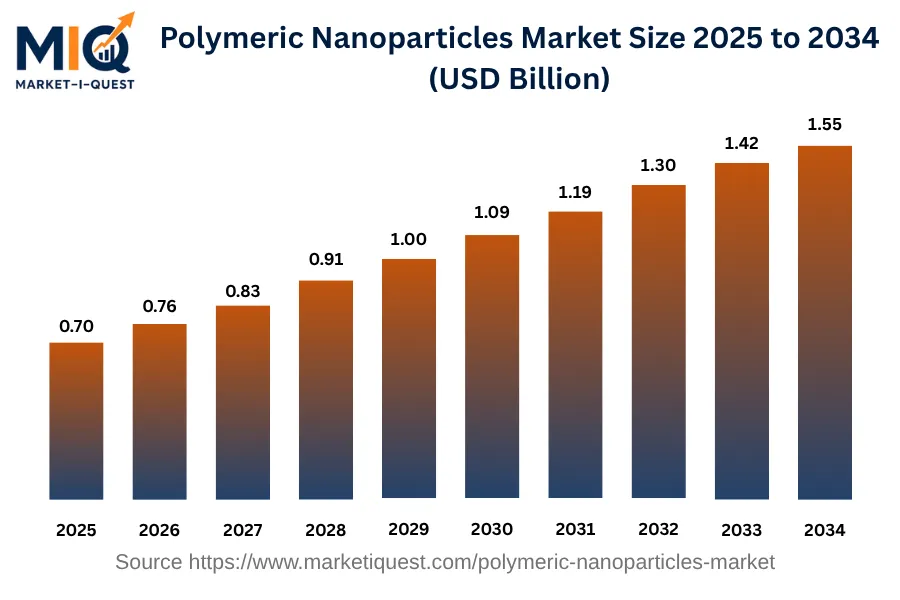
The Polymeric Nanoparticles Market was valued at USD 0.64 billion in 2024 and grew to USD 0.70 billion in 2025. Over a period of nine years, the market is anticipated to reach USD 1.55 billion by 2034, at a CAGR of 9.3%. This substantial growth over a decade period was primarily due to technological advancements and increasing demand for high-performance polymers in various applications. Enhancements in polymeric nanoparticle synthesis processes also contributed to the market grow. As of 2024, the market share was distributed among different regions—North America held the largest share (36.42%), followed by the Asia Pacific (30.86%), Europe (24.91%), LATAM (4.18%), and MEA (3.63%) regions respectively. These percentages underline the dominant influence of North America in this market, while also representing considerable growth opportunities in the Asia Pacific and Europe.

Key Takeaways

  • By Polymeric Material - Polyurethane led the market accounting for a significant share in 2024.
  • By Application - Diagnostics dominated the segment accounting for a major share.
polymeric-nanoparticles-market market size

Key Driving Factors

Increasing Application in Drug Delivery

One major driving force for the polymeric nanoparticles market is their heightened application in the realm of drug delivery. Due to their compatibility with different drugs and ability to deliver them in a targeted and controlled manner, polymeric nanoparticles have become favored components in improved therapeutic strategies. They are particularly utilized in areas dealing with chronic diseases, like cancer, who require advanced mechanisms for drug delivery to minimize side effects and enhance effectiveness. Pharmaceutical companies and medical institutions are therefore increasingly investing in and employing polymeric nanoparticles in their research and treatments, which in turn spurs the market's growth.

Shift towards Environment-Friendly Materials in Industries

A significant impetus pushing the polymeric nanoparticles market is the ongoing shift towards the use of environment-friendly materials across various industries, including cosmetics and personal care, and packaging. These nanoparticles, being made from polymers, are often perceived as eco-friendly alternatives to more conventional materials. This trait has led to their increased adoption in production chains, where they often serve to enhance product characteristics like durability, shelf-life, and functionality while minimizing environmental impact. Companies are increasingly revamping their manufacturing processes to incorporate these nanoparticles, responding to corporate social responsibility strategies and changing consumer demands for green products.

Market Evolution by Timeline

2019-2023
The polymeric nanoparticles market experienced an increase in demand from the pharmaceutical and healthcare industry for drug delivery applications in North America. However, supply was constrained due to immature integration processes. The US Food and Drug Administration imposed stringent regulations defining the manufacturing practices for polymeric nanoparticles. Fixed pricing models were common, with many businesses entering into long-term contracts with suppliers. There was a risk of nanoparticles not delivering the desired performance in complex biological systems.
2024
In 2024, the demand for polymeric nanoparticles expanded to the cosmetics industry, mainly in Europe. Higher adoption was primarily due to biocompatibility features. Technologically, more efficient production methods were piloted but mass-scale production still remained a hurdle. The EU introduced guidelines aiming at standardizing the safety assessments of nanoparticles in cosmetic products. Per-unit pricing was widely practiced as firms sought partnerships driving cost-effective nanoparticle generation. The lack of widespread technological capacity for large-scale production was a major risk.
2025-2029
From 2025 to 2029, Asia-Pacific markets embraced polymeric nanoparticles, with highest demand emerging from India and China's medical sector. There was a gradual shift in technology towards more environmentally friendly manufacturing processes improving the supply. More guidelines and standards were implemented by regional bodies to ensure the safety of nanoparticles in healthcare. The pricing model evolved, allowing for cost-sharing partnerships between suppliers and manufacturers. However, concerns over the potential toxicity of nanoparticles remained a risk.
2030-2034
By 2030–2034, Latin American markets also showed interest in polymeric nanoparticles, particularly in Brazil's pharmaceutical industry. Technological advancements led to the development of more reliable and efficient production processes, overcoming previous constraints. Further safety and quality standards were established by the World Health Organization, stimulating adoption. A shift occurred in the commercial model to performance-based contracts, fostering long-term partnerships and shared responsibilities. The potential regulatory backlash due to unforeseen health issues remained a risk.

Future Market Outlook

Future Opportunities

Current trends in polymeric nanoparticles reveal potential pathways for growth across multiple sectors. In 2023, collaborations between universities and private companies, such as the partnership between Harvard University and Pfizer, have enhanced research into advanced drug delivery systems utilizing polymeric nanoparticles. This partnership is poised to create new opportunities for addressing unmet medical needs, particularly in oncology and chronic diseases. Furthermore, increasing environmental regulations in regions like the European Union require innovative solutions for biodegradability and sustainability, offering polymeric nanoparticles as a compelling option for companies seeking compliance with environmental standards. In 2022, the International Organization for Standardization published guidelines on the safe use of nanomaterials, prompting industries to rethink their approaches to product development. Additionally, ongoing research into the application of polymeric nanoparticles in areas like food packaging and cosmetics suggests an expanding market footprint. For instance, companies like BASF are investing in research to leverage these nanoparticles for improved product performance and safety in consumer goods. With diverse applications and regulatory support encouraging innovation, the integration of polymeric nanoparticles in products may increase significantly. Markets could see advancements focused on multifunctional properties, such as antimicrobial efficacy and enhanced delivery mechanisms, resulting in broader industrial adoption. Overall, the interplay of research, regulation, and industry partnerships is set to unlock substantial opportunities in the polymeric nanoparticles market over the coming years.

Segmentation Analysis

By Polymeric Material

The market is divided into subsegments including Polylactic Acid (PLA), Polyglycolic Acid (PGA), Polyethylene Glycol (PEG), Poly(Lactic-co-Glycolic Acid) (PLGA), Polystyrene, and Polyurethane, of which Polyurethane accounted for the largest revenue share while Polyglycolic Acid (PGA) is expected to grow at the fastest CAGR during the forecast period.

Largest Revenue Share

Polyurethane

Market Share Leader

Polyurethane is the highest revenue-generating subsegment in the polymeric materials market as of base year 2024. Polyurethane's versatility and cost-effectiveness make it an attractive option across various industries such as construction, furniture, automotive, footwear, and electronics. In the construction industry, for instance, the material is used extensively in insulation, flooring and roofing due to its superior insulation properties and durability. In the automotive sector, polyurethane is adopted as a lightweight alternative to metal parts, enhancing fuel efficiency without compromising vehicle safety. On the demand side, robust economic growth, notably in developing regions, has catalyzed construction and automotive activities, leading to an increase in polyurethane consumption. It's worth noting that the polymeric material's dominance can also be traced to regulatory support in terms of safety norms and building codes which favor the use of insulation materials such as polyurethane. Finally, established supply chains and production capabilities in major economies have further consolidated this subsegment's revenue leadership in the market.

Fastest CAGR

Polyglycolic Acid (PGA)

Forecast Period Growth Leader

Polyglycolic Acid (PGA) is projected to have the fastest compound annual growth rate (CAGR) in the forecast period. The major growth drivers for this polymer stem from its expanding application in the healthcare industry, where it's used as a raw material for absorbable sutures and tissue engineering scaffolds. Additionally, the rising demand for sustainable and biodegradable materials in various sectors, like packaging, is creating lucrative growth opportunities for PGA. However, certain factors such as cost and technical barriers associated with the production and processing of PGA could potentially hamper its growth pace. Technological advancements and increasing R&D investments are expected to overcome these barriers and enable the more widespread adoption of this polymer. Regulatory support encouraging the use of biodegradable substances is another catalyst pushing forward PGA's growth. However, on the flip side, the volatility in raw material prices poses a near-term risk to the expanding growth trajectory of this subsegment.

By Application

The Application segment of the market is bifurcated into different sub-segments including Drug Delivery, Diagnostics, Imaging, Cosmetics, Industrial Coatings, Electronics, and Others. Among these, Diagnostics accounted for the largest revenue share while Industrial Coatings is anticipated to post the fastest CAGR during the forecast period.

Largest Revenue Share

Diagnostics

Market Share Leader

Diagnostics has been the leading sub-segment of the application segment based on revenue in the base year 2024. The primary reasons driving this growth can be attributed to increased global health awareness, technological advancements, and rising incidence of diseases requiring diagnostic procedures. Diagnostics, particularly in developing countries, has significantly escalated due to an overall improvement in healthcare infrastructure, enhanced services, and the availability of advanced analytical technologies. Moreover, strong regulatory support promoting early disease diagnosis has augmented the growth of this sub-segment. Higher adoption rate of diagnostics among healthcare providers, due to its importance in the provision of patient care, has sustained its revenue generation. In essence, the increasing proclivity for early disease detection and the consequent rise in diagnostic procedures lead the Diagnostics sub-segment.

Fastest CAGR

Industrial Coatings

Forecast Period Growth Leader

Industrial Coatings, although not the biggest revenue generator in base year 2024, is expected to grow at an impressive rate. The driving factors for this sub-segment stem primarily from the growing industries such as automotive, aerospace, and construction, wherein industrial coatings play a crucial role. The need for durable and efficient coating solutions that can protect industrial equipment from wear and tear, corrosion, and environmental impacts is compelling industries to adopt these coatings. Additionally, technological advancements are allowing manufactures to engineer high-quality coatings tailored for industrial applications, encouraging higher adoption. The increasing emphasis on sustainability is expected to lead to the development of eco-friendly industrial coatings, fostering market growth. Despite this, adoption barriers such as higher costs and stringent regulations can pose challenges. However, the increasing industrialization particularly in emerging economies is predicted to pave the way for growth opportunities in the near future.

Competitive Analysis

Key Market Players

Manufacturers / OEMs

Sigma-Aldrich Co. LLC
US
Nanocs
US
Merck KGaA
Germany

Key Suppliers & Raw Materials

BASF SE
Germany
Evonik Industries AG
Germany
Dow Inc.
US

Distributors, Integrators & Channel Partners

Thermo Fisher Scientific
US
Avantor, Inc.
US
Polymer Factory
Sweden

Porter’s Five Forces Analysis

Examines the competitive structure and viability of the Polymeric Nanoparticles Market.

Supplier Bargaining Power

Medium

Constrained by limited number of raw material suppliers for specific nanoparticles.

Buyer Bargaining Power

High

Buyers possess power due to numerous vendors and potential of switching to alternate nanoparticle types.

Threat of Substitutes

High

Potential threat from organic and inorganic nanoparticles or other nanotechnologies.

Threat of New Entrants

Low

Entry barriers include high R&D costs, strict regulations, and technical know-how.

Competitive Rivalry

Medium

Intense competition among existing companies with diversified product portfolios.

Regional Analysis

Geographic market dynamics and growth opportunities across key regions

Global Market Outlook

polymeric-nanoparticles-market market regional share

North America

In 2024, the Polymeric Nanoparticles Market in North America emerged as a significant sector, mainly driven by growing demand in fields like healthcare, industrial manufacturing, and retail.

Key drivers stimulating market growth included enhanced adoption of the cutting-edge technology by healthcare and manufacturing sectors. Investment in research and development also amplified, primarily within the United States, adding to the growth impetus. Regulatory policy enforcement in Canada and Mexico encouraging sustainable yet advanced industrial practices substantially influenced supply dynamics and pricing.

Notable trends within the market unfolded around altering buyer behaviors, largely dominated by an increasing inclination towards polymeric nanoparticles in drug delivery systems utilized by the healthcare sector. Seismic shifts in product technologies started shaping the market, with atypical forms of polymeric nanoparticles, such as nanocapsules and nanospheres, gaining traction in pharmaceutical industries across North America. Channel dynamics started evolving with partnerships and mergers & acquisitions burgeoning, facilitating consolidation and increased market reach. An example was a rise in industry standards, ensuring product quality and safety across sectors utilizing polymeric nanoparticles.

The accelerating growth of the Polymeric Nanoparticles Market in 2024 paints a vibrant picture for its significance in shaping North America's industrial landscape.

Asia Pacific

In 2024, the Polymeric Nanoparticles Market in the Asia Pacific region was primarily driven by dynamic factors in industries such as healthcare, cosmetics, and manufacturing. Demand surges resulted from technological advancements in drug delivery systems, particularly in China and Japan where robust pharmaceutical sectors adopted these innovations rapidly. Investment flows also increased, especially in India with its thriving startup ecosystem focusing on polymeric nanoparticles R&D. Regulation-wise, Australia's Therapeutic Goods Administration's endorsement of Nanotechnology Products amplified market growth.

Trends in this year were equally significant. Customer inclination towards green and sustainable products enhanced market adoption in ASEAN countries like Thailand and Indonesia, where local cosmetic companies started incorporating polymeric nanoparticles for product improvement. In parallel, tech shifts were notable in South Korea, where manufacturing sectors leveraged these nanoparticles for the fabrication of advanced materials. Australia observed a surge in partner integrations, especially between academic institutions and commercial entities for nanoparticle development. A key event was China's enforcement of the national standard GB/T 33820-2017, governing polymer nanomaterials, mandating quality and safety practices.

In sum, 2024 witnessed considerable growth in the Asia Pacific polymeric nanoparticles market due to a synergy of demand escalation, technological proliferation, and regulatory supports, further moulded by socio-environmental trends and policy enforceability.

Europe

In 2024, the European market for polymeric nanoparticles demonstrated robust development across several key regions including Germany, the UK, France, Italy, Spain, Benelux, and Central and Eastern Europe. The market was driven by a strong demand from industries such as healthcare, manufacturing, and retail due to their application in drug delivery, advanced coatings and nanocomposites. Favorable government regulations promoting nanotechnology research and investment in advanced manufacturing technology fueled this growth while competitive pricing strategies further enhanced market appeal.

Emerging trends in 2024 comprised a shift towards bio-based and stimuli-responsive polymeric nanoparticles, driven by environmentally conscious manufacturing policies across Europe. Online channels played a significant role in product distribution, while strategic partnerships aimed at research and technology advancements became a common phenomenon, underlining the importance of collaboration in the industry. In healthcare, nano-drug delivery systems gained popularity due to their precise targeting and minimized side effects, reflecting the focus on personalized medicine. The regulatory environment emphasized the adoption of standards for safety, quality, and compliance, impacting manufacturing processes and final product quality across the region. Despite the challenges, inherent market dynamics demonstrate a favorable ecosystem for the growth of the polymeric nanoparticles market in Europe.

Latin America

In 2024, the polymeric nanoparticles market in Latin America has seen increased prominence aligning with the global shift towards nanotechnology. Major factors driving its progress include enhanced investments in nanotech research, particularly within Argentina and Mexico. Additionally, regulatory push from governments, including the Brazilian government’s support for nanotechnology in its industrial policy, has spurred market growth significantly. Moreover, wide-scale adoption of advanced healthcare applications across LATAM countries, primarily in Chile and Peru, is accelerating demands for polymeric nanoparticles.

As for trends, increased utilization in the biomedical field is evident, with Colombia’s healthcare sector deploying polymeric nanoparticles in targeted drug delivery methods to mitigate systemic side-effects. Brazil's cosmetic industry is also witnessing a surge, with polymeric nanoparticles becoming a cornerstone in creating advanced skincare products. Further, numerous partnerships and mergers in LATAM, concentrated in Argentina and Mexico, are enabling technology transfers and research collaborations fostering the evolution of this domain.

Regulatory enforcement in LATAM, essentially in the waste management sector, has pushed companies to utilize polymeric nanoparticles for waste treatment processes. However, noticeable is the trend of environmental concern rising in Latin American countries regarding nanomaterial waste disposal; this is yet another factor influencing the progress of the polymeric nanoparticles market in this region.
Overall, the market’s expansion is significantly aided by advancements in the healthcare, cosmetic, research sectors, and waste management regulations in LATAM.

Middle East & Africa

In 2024, the Polymeric Nanoparticles Market in the Middle East and Africa gained traction owing largely to technological advances and growing demand in vital sectors.

Key drivers included increasing investments in nanotechnology research by governments particularly in South Africa and Qatar, with Saudi Arabia establishing new regulatory standards to encourage market growth. Additionally, the burgeoning healthcare sector in UAE and Israel look to polymeric nanoparticles for drug delivery systems, while the oil and gas industry in Nigeria and Egypt have been exploring their usage in enhanced oil recovery. Rising demand, complemented by the availability of cost-effective production methods, further bolstered the market in 2024.

Emerging trends within the market featured a shift toward environmentally conscious manufacturing processes, particularly in Kenya, aligning with global sustainability goals. The Middle East, led by Israel, witnessed a surge in technology-based partnerships; this, combined with a broader policy enforcement on nanotechnology across the region, have become key factors for the market advancement. Another transformative trend seen was the advent of online retail channels that expanded market reach across geographic boundaries.

Overall, the 2024 Polymeric Nanoparticles Market in the Middle East and Africa was significantly influenced by stringent regulations, heightened technological adoption, sustainable practices, and a shift in channel dynamics.

Recent Industry Developments

Latest market innovations, product launches, and strategic initiatives

June 2026

NanoViricides shipped its NV-387 oral medication to the Democratic Republic of Congo for a Phase II clinical trial. This marks a significant real-world application for the market, as the drug relies on proprietary polymer-based nanomaterials designed to physically trap and destroy viruses like Mpox and Ebola.

May 2025

PCI Pharma Services officially acquired the contract manufacturing firm Ajinomoto Althea. This move drastically expanded PCI’s physical production capacity, establishing a massive U.S. facility specifically equipped to manufacture and scale complex drug delivery systems, including polymeric nanoparticles.

Frequently Asked Questions