Drug Delivery Systems Market Snapshot

Key Players

  • Becton Dickinson and Company (United States)
  • Gerresheimer AG (Germany)
  • West Pharmaceutical Services Inc. (United States)
  • SHL Medical AG (Switzerland)
  • Ypsomed Holding AG (Switzerland)
  • 3M Company (United States)
  • Otsuka Pharmaceutical Co.
  • Ltd. (Japan)
  • Insulet Corporation (United States)
  • Medtronic plc (Ireland)
  • Stevanato Group S.p.A. (Ialy)

Market Size

Base Year 2024
$ 42.85 Bn
CAGR
4.9%
Forecast 2034
$ 69.14 Bn

Market Segments

By Type
  • Inhalation
  • Transdermal
  • Injectable
  • Others
By Delivery System Type
  • Controlled Release Systems
  • Delayed Release Systems
  • Immediate Release Systems
  • Sustained Release Systems
  • Targeted Delivery Systems
By Distribution Channel
  • Hospital Pharmacies
  • Retail Pharmacies
  • Online Pharmacies

Market Dynamics

Drivers
  • Technological advancements in delivery methods
  • Rising prevalence of chronic diseases
Restraints
  • Regulatory compliance complexities
  • High development and production costs
Opportunities
  • Growing demand for targeted therapies
  • Advancements in nanoparticle technologies

Market Size

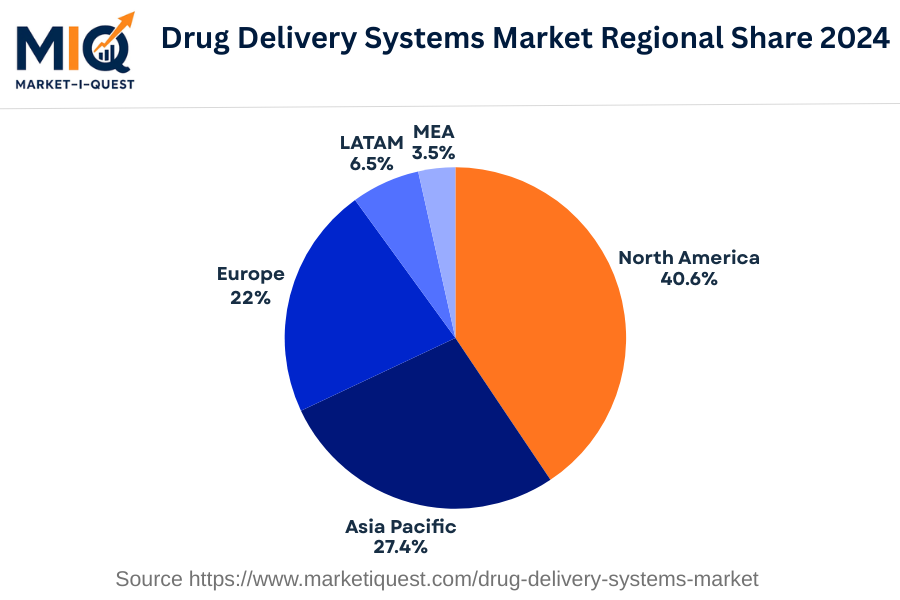
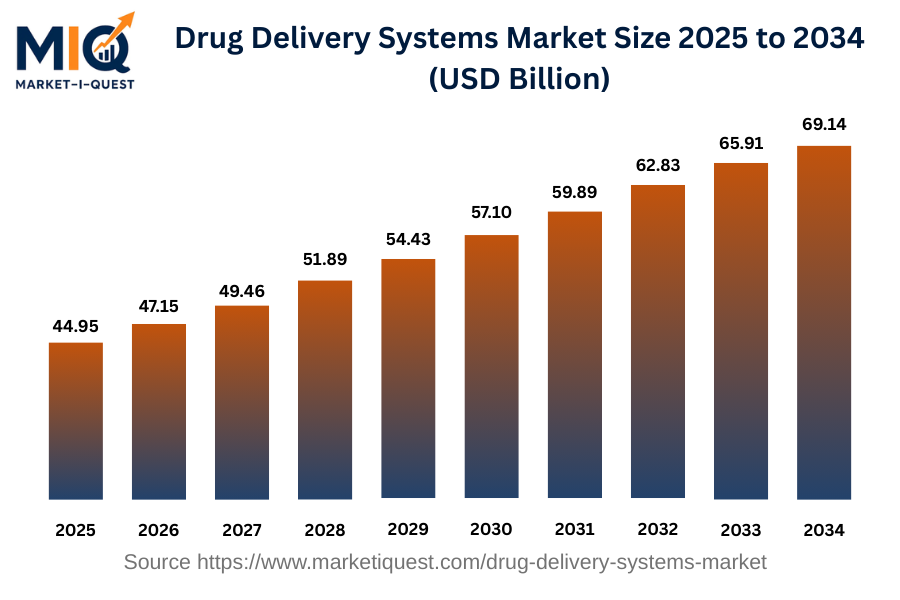
The Drug Delivery Systems Market size is 44.95 billion USD in 2025 and 69.14 billion USD in 2034, with a CAGR of 4.9%. The market is valued at 42.85 billion USD in 2024 and shows steady growth toward 2025 and beyond. The expansion of healthcare infrastructure and technological advancements in drug delivery methods contribute to the market's growth. Additionally, increasing demand for targeted therapies and personalized medicine aligns with the increasing investment in research and development. The regional share in 2024 consists of North America at 40.6%, Asia Pacific at 27.4%, Europe at 22.0%, LATAM at 6.5%, and MEA at 3.5%.

Key Takeaways

  • By Type - Injectable led the market accounting for a significant share in 2024.
  • By Delivery System Type - Targeted Delivery Systems grew fastest with a notable position in addressing specific patient needs.
  • By Distribution Channel - Online Pharmacies expanded rapidly reflecting changing consumer behavior and preferences in 2024.
drug-delivery-systems-market market size

Key Driving Factors

Adoption of Nanotechnology in Drug Delivery

The adoption of nanotechnology in drug delivery systems is driving the market. Nanotechnology allows for precise targeting, which reduces side effects and improves the efficiency of treatments. The use of nanocarriers, such as liposomes and nanoparticles, carry drugs directly to the affected cells, allowing for high concentration delivery. This precise delivery method lessens the risks associated with therapeutic drugs, a critical factor in the treatment of diseases like cancer. The increased efficiency and decreased risk necessitate the continuous research into and development of nanotechnology-based drug delivery systems. This influences stakeholders, thus boosting the drug delivery systems market growth.

Implementation of Personalized Medicine

Personalized medicine, the tailoring of medical treatment to individual differences in patients' genetic make-up, is transforming the drug delivery systems market. Personalized medicine requires precise delivery mechanisms to manage the tailored treatment doses accurately. Advanced drug delivery systems control the release rate, manage the drug at the desired location, and respond to biological triggers. With pharmaceutical companies and healthcare providers leaning towards personalized treatments for patients, the need for complex, intricate drug delivery systems is more prevalent, directly impacting the drug delivery services market expansion.

Market Evolution by Timeline

2019-2023
During this period, the drug delivery systems market experienced pronounced requirement primarily from pharmaceutical and biotechnology companies, notably across North America and Europe. The rise in chronic diseases, such as diabetes and cancer, drove the need for specialized delivery options. Notable products included needle-free injectors and smart inhalers. The adoption of these systems was influenced by regulatory bodies, including the FDA's guidance on combination products. In terms of supply, companies like Baxter and Medtronic launched advanced infusion systems that integrated digital health capabilities. Pricing strategies were generally based on value-based pricing models, often seen in agreements with large hospital networks. Partnerships between technology firms and pharmaceutical companies flourished, yielding joint ventures focused on research and development. However, challenges persisted, including regulatory approvals that are often lengthy and complex, leading to a slowdown in some product launches. Additionally, supply chain disruptions during the COVID-19 pandemic affected component availability, prompting companies to diversify suppliers to mitigate risks.
2024
In 2024, surge in the drug delivery systems market is expected to be influenced by a gradual shift towards personalized medicine, particularly in oncology. The focus will be on creating systems that serves to individual patient profiles, enhancing efficacy and minimizing side effects. Regions such as Asia-Pacific, especially India and China, are projected to witness increased investment due to growing healthcare infrastructure and rising R&D expenditures. Regulatory frameworks will evolve, with the European Medicines Agency implementing the new Medical Device Regulation, tightening compliance requirements. On the technology front, new products like biodegradable microneedles are gaining traction, driven by sustainability concerns. Pricing pressure from investors may lead to consolidated purchasing agreements among hospitals and insurance providers, emphasizing cost-effectiveness. Collaborative models will frequently include partnerships with academic institutions for clinical trials. Risks in 2024 will center it around cyber threats to supply chains, prompting companies to implement stronger cybersecurity measures in their operations.
2025-2029
From 2025 to 2029, advancements in drug delivery technologies will lead to increased automation and connectivity. The use of AI in drug formulation and patient monitoring will gain prevalence, along with the introduction of nanotechnology-driven delivery systems. Buyers will include both hospitals and outpatient care centers, particularly in Europe and North America, leveraging these innovations to provide better treatment options. Regulatory bodies will continue to define clearer pathways for digital health integration into drug delivery systems, with the FDA issuing guidance on software as a medical device. Commercial contracts may evolve to include subscription models, allowing for ongoing updates or supplies. Notable partnerships are expected between major pharmaceutical companies and tech startups in Silicon Valley to explore innovative delivery methods. However, challenges will include addressing data privacy concerns associated with connected devices and overcoming inertia within traditional healthcare settings resistant to change. Additionally, geographic disparities in technology access could create uneven adoption rates across different regions.
2030-2034
In the 2030 to 2034 period, the drug delivery systems market will likely see a shift towards fully integrated healthcare solutions. Patients will use wearable devices that track health metrics and deliver medication as needed. The focus on preventive care will drive need for on-demand delivery systems that integrate with personal health data. Key regions for surge will include Sub-Saharan Africa and South America, where healthcare systems are evolving rapidly. Regulatory agencies will develop specific guidelines for connected drug delivery devices, emphasizing safety and effectiveness. Market players will likely adopt a mix of pricing strategies, including performance-based payment options tied to health outcomes. Partnerships among pharmaceutical companies, technology providers, and health insurers will become necessary to create cohesive solutions. Risks will include potential regulatory backlash against technology failures and increased scrutiny on data governance as connectivity expands. Ethical considerations around dystopian scenarios of surveillance may also influence public acceptance of these emerging systems.

Future Market Outlook

Future Opportunities

The global drug delivery systems market is poised for transformative opportunities in several key areas, notably in biologics, nanotechnology, and personalized medicine. Since the approval of the first monoclonal antibody for clinical use in 1994, there has been growing interest in the pharmaceutical industry to develop more sophisticated delivery systems for biologics. Pharmaceutical companies like Amgen and Genentech are focusing on enhanced delivery systems that would facilitate the administration of complex biologics. Furthermore, the rise of nanotechnology applications in medicine has been underscored by case studies, such as the use of nanocarriers to deliver doxorubicin effectively, as seen in recent publications from 2023. In addition, the growing shift towards personalized medication, driven by genetic profiling advancements, creates opportunities for tailored drug delivery solutions that serves to individual patient profiles. The U.S. Food and Drug Administration, through its 2021 Drug Development Framework, has encouraged innovation in personalized drug formulations. Additionally, partnership initiatives, such as the collaboration between the University of California and various biotech firms, are aiming to push the boundaries of innovative delivery systems that improve therapeutic outcomes. Stakeholders in the drug delivery field are expected to explore new geographical markets, particularly in regions like Asia-Pacific, where regulatory frameworks are evolving to accommodate these advancements. All these factors collectively indicate a future rich with possibilities for drug delivery systems, fueled by ongoing scientific research and regulatory support.

Segmentation Analysis

The drug delivery systems market is segmented by Type (Inhalation, Transdermal, Injectable, Others), by Delivery System Type (Controlled Release Systems, Delayed Release Systems, Immediate Release Systems, Sustained Release Systems, Targeted Delivery Systems), and by Distribution Channel (Hospital Pharmacies, Retail Pharmacies, Online Pharmacies).

By Type

The market is divided into subsegments including Inhalation, Transdermal, Injectable, and Others. Injectable accounted for the largest revenue share while Inhalation is expected to grow at the fastest CAGR during the forecast period.

Largest Revenue Share

Injectable

Market Share Leader

Injectable delivery systems dominate the market primarily due to their widespread application in various therapeutic areas, including immunology, oncology, and diabetes management. The preference for injectables stems from their ability to provide quick bioavailability and precise dosing, which is crucial for patient outcomes. This subsegment benefits from robust market dynamics, driven by an increasing incidence of chronic diseases and a growing geriatric population, necessitating long-term management strategies. Geographically, North America holds a significant segment, bolstered by a strong presence of established pharmaceutical companies and advanced healthcare infrastructure. Regulatory frameworks, such as streamlined approval processes for biologics, also enhance market access for new injectable therapies. Customers typically favor injectables for their reliability and effectiveness, which translates to lower switching costs from oral form. Additionally, distribution channels, including retail pharmacies and specialized clinics, ensure product availability, further driving the market. Overall, the unique advantages and operational efficiencies of injectable systems solidify their position as the leading subsegment in this market.

Fastest CAGR

Inhalation

Forecast Period Growth Leader

The Inhalation subsegment is poised for rapid growth due to the increasing prevalence of respiratory diseases such as asthma and COPD, coupled with a rise in awareness about self-administered therapy options. Technological advancements in inhalation devices and formulations are significant catalysts, providing improved drug delivery and patient compliance. The shift towards personalized medicine and the development of targeted therapies also drive scaling in this area. However, challenges exist, such as variations in patient technique and device usability that can hinder adoption. Regulatory hurdles remain, with a focus on ensuring the safety and efficacy of new inhalable products. Partnerships between pharmaceutical companies and device manufacturers are emerging as a strategy to overcome these barriers and to push innovative solutions onto the market. Near-term risks include fluctuations in raw material availability and potential supply chain disruptions, which could impact production timelines. Despite these challenges, the Inhalation subsegment has the potential to capitalize on expanding healthcare investments and favorable regulatory trends, positioning itself as a key player in the therapeutic landscape.

By Delivery System Type

The market is divided into subsegments including Controlled Release Systems, Delayed Release Systems, Immediate Release Systems, Sustained Release Systems, and Targeted Delivery Systems. Controlled Release Systems accounted for the largest revenue share while Targeted Delivery Systems is expected to grow at the fastest CAGR during the forecast period.

Largest Revenue Share

Controlled Release Systems

Market Share Leader

Controlled Release Systems currently lead the market due to robust demand in the pharmaceutical and biotechnology sectors. Their ability to enhance drug bioavailability and lower dosing frequency appeals greatly to both healthcare providers and patients. This subsegment serves a diverse wide range of therapeutic areas, including chronic diseases such as diabetes and hypertension, where managing patient compliance is critical. Geographically, North America dominates the market, driven by advanced healthcare infrastructure and significant investment in drug development. Regulatory support for extended-release formulations further underpins the surge of Controlled Release Systems, encouraging pharmaceutical companies to invest in R&D for innovative therapies. Furthermore, the preference among clinicians for controlled delivery methods, which minimize side effects and improve efficacy, has solidified the position of this subsegment. Adoption is facilitated through established distribution channels, including hospitals and specialty pharmacies, which maintain long-term relationships with healthcare professionals. The relatively low switching costs also enable a seamless transition for manufacturers looking to adapt their product offerings to market demands.

Fastest CAGR

Targeted Delivery Systems

Forecast Period Growth Leader

Targeted Delivery Systems are projected to exhibit the fastest growth due to notable advancements in nanotechnology and biopharmaceutical innovations. The increasing focus on personalized medicine has led to a rising demand for drug delivery systems that specifically target affected tissues or cells. This precision reduces side effects and enhances treatment efficacy, making it highly attractive to both patients and providers. However, adoption barriers include the complexities involved in development and regulatory challenges associated with new technologies. The sector benefits from public and private partnerships aimed at advancing research and overcoming these hurdles. Moreover, strategic collaborations between pharmaceutical companies and technology developers have catalyzed significant innovations within this subsegment. Yet, potential risks such as fluctuating investment climates and evolving regulatory environments could impact upscaling trajectories. Despite these challenges, the overall trend leans towards greater acceptance and integration of Targeted Delivery Systems, as ongoing clinical trials continue to demonstrate their value in improving patient outcomes across various therapeutic areas.

By Distribution Channel

The market is divided into subsegments including Hospital Pharmacies, Retail Pharmacies, and Online Pharmacies. Retail Pharmacies accounted for the largest revenue share while Online Pharmacies are expected to grow at the fastest CAGR during the forecast period.

Largest Revenue Share

Retail Pharmacies

Market Share Leader

Retail Pharmacies lead the market in revenue due to their widespread accessibility and established trust among consumers. These pharmacies often serve as the first point of contact for patients requiring pharmaceutical care, equipped with knowledgeable staff who provide counseling and personalized service. The geographical distribution of retail pharmacies is significant, with urban areas benefiting from higher foot traffic and more competitive pricing strategies. Regulation also plays a part, as retail pharmacies complaint to strict government guidelines, assuring consumers of quality and safety in medications. Their ability to stock a wide range of medications and over-the-counter products, coupled with promotions and loyalty programs, further drives customer retention. Additionally, retail pharmacies often have partnerships with healthcare providers, enhancing their service offerings and patient education efforts, which fortifies consumer trust. This accessibility and the point-of-care services provided by retail pharmacies make them the preferred choice for many customers, solidifying their market position and revenue dominance.

Fastest CAGR

Online Pharmacies

Forecast Period Growth Leader

Online Pharmacies are projected to experience the fastest growth due to the increasing consumer shift towards digital solutions for purchasing medications, significantly accelerated during and following the pandemic. Convenience, cost-effectiveness, and the ability to deliver medicines directly to consumers, households are primary drivers. The expansion of telehealth services is a crucial catalyst that facilitates online pharmacy use by allowing patients to receive prescriptions digitally, making the process seamless. However, barriers such as concerns over prescription authenticity and regulatory barriers may pose challenges. Online pharmacies must ensure compliance with regulations governing the sale of pharmaceuticals, which can differ significantly across regions. Partnerships with healthcare providers and strong cybersecurity measures are essential to building consumer trust and overcoming adoption barriers. Despite these challenges, the trend towards increased digital shopping, alongside policy advancements favoring online health services, is expected to propel the adoption and surge of online pharmacies. Companies that effectively leverage technology and customer service will be positioned to capture a larger segment of the market, but they will need to remain well-informed about potential regulatory changes and competitive threats.

Competitive Analysis

Key Market Players

The Drug Delivery Systems Market is competitive, with a mix of large established companies and smaller regional players. Most companies focus on improving their products/services, keeping prices attractive, and strengthening relationships with key customers. They also use partnerships, acquisitions, and new launches to expand their presence in existing and new markets. Overall, players compete on quality, reliability, and value, and competition is expected to remain strong over the forecast period.

Manufacturers / OEMs

AbbVie Inc.
US
Baxter International Inc.
US
Johnson & Johnson
US

Key Suppliers & Raw Materials

West Pharmaceutical Services, Inc.
US
Gerresheimer AG
Germany
Medtronic plc
Ireland

Distributors, Integrators & Channel Partners

McKesson Corporation
US
Cardinal Health, Inc.
US
AmerisourceBergen Corporation
US

Porter’s Five Forces Analysis

The Drug Delivery Systems Market is characterized by strong competition and significant supplier influence. Analyzing the forces unveils critical market dynamics.

Supplier Bargaining Power

High

Suppliers exert high power due to limited raw material sources and stringent quality regulations.

Buyer Bargaining Power

Medium

Buyers have moderate power influenced by the availability of alternative therapies and rising healthcare costs.

Threat of Substitutes

High

Numerous alternative treatment options and emerging technologies present a high threat to traditional delivery systems.

Threat of New Entrants

Medium

Barriers include high R&D costs and regulatory approvals, limiting new entrants into the market.

Competitive Rivalry

High

Intense competition exists due to rapid technological advances and a growing number of market players.

Regional Analysis

Geographic market dynamics and growth opportunities across key regions

Global Market Outlook

drug-delivery-systems-market market regional share

North America

In 2024, the Drug Delivery Systems market in North America is driven by increased demand for innovative therapeutic solutions, facilitated by advancements in biotechnology and pharmaceutical formulation techniques. Regulatory bodies, including the FDA in the U.S., have streamlined approval processes for unique drug delivery devices, encouraging investment from biotechnology firms. The growing prevalence of chronic diseases has heightened the need for more effective delivery mechanisms, thereby increasing attraction towards market. Additionally, the adoption of smart drug delivery systems, which integrate digital health technologies, has revolutionized patient compliance and monitoring.

Trends in 2024 show a shift towards patient-centric delivery methods, with healthcare providers increasingly prioritizing personalized medicine approaches. This shift is also reflected in the rising adoption of microneedle patches and implantable devices, serving to a more technologically skilled consumer base. Furthermore, strategic partnerships and M&A activities are becoming prevalent as companies seek to enhance their service offerings and expand their technological capabilities. The pharmaceutical sector, in particular, is focusing on integrated solutions that streamline the supply chain, ensuring timely access to medications while complying with stringent regulatory standards. Overall, the drug delivery systems market in North America is evolving towards more innovative and efficient solutions, driven by both patient needs and technological advancements.

Asia Pacific

In 2024, the drug delivery systems market in the Asia Pacific is characterized by rapid innovation driven by increasing healthcare demands and technological advancements. The rising prevalence of chronic diseases in countries like China and India is fueling demand for sophisticated delivery systems, while government initiatives, including China's "Healthy China 2030" policy, promote advancements in healthcare technologies. Regulatory frameworks are becoming more favorable, facilitating faster approvals for new drug delivery methods, thereby enhancing admission in market. Significant investments in research and development by pharmaceutical companies reflect a commitment to innovative solutions, with a notable focus on biopharmaceuticals and personalized medicine.

Trends indicate a shift toward integrated delivery systems, as healthcare providers increasingly prefer combination therapies that improve patient compliance. The rise of e-commerce platforms in countries like Japan and Australia is altering distribution channels, allowing quicker access to drug delivery products. Partnerships between pharmaceutical companies and technology firms are increasing, as seen in South Korea, where collaborations focus on developing smart delivery devices. Additionally, adherence to stringent quality standards and regulatory compliance is becoming critical, as seen with agencies such as Japan's Pharmaceuticals and Medical Devices Agency enforcing tighter controls on new drug delivery technologies.

Europe

In 2024, the Drug Delivery Systems market in Europe is characterized by a growing demand for innovative solutions that enhance patient compliance and therapeutic efficacy. Key drivers include the increasing prevalence of chronic diseases, prompting heightened investment in advanced drug delivery technologies. Regulatory frameworks, such as the European Medicines Agency's accelerated approval pathways, further facilitate market growth by streamlining the introduction of novel delivery systems. The rapid adoption of biopharmaceuticals necessitates advanced drug formulation techniques, which in turn drive technological advancements in the sector. Additionally, supply chain dynamics are influenced by stringent quality standards and competitive pricing strategies among manufacturers.

Trends in buyer behavior show a shift toward personalized medicine, compelling healthcare providers to seek tailored drug delivery methods that cater to individual patient needs. The rise of eHealth platforms has transformed distribution channels, enabling greater accessibility to drug delivery solutions. Partnerships and mergers within the pharmaceutical and biotechnology sectors have intensified, fostering innovation and expanding product portfolios. Furthermore, policy enforcement around drug safety and efficacy, particularly in countries like Germany and France, underscores the industry's focus on high-quality standards and patient safety, thereby shaping investment strategies and market offerings across the region.

Latin America

In 2024, the Drug Delivery Systems Market in Latin America is characterized by ongoing advancements in technology and heightened healthcare requirements. Key drivers include the rising prevalence of chronic diseases, which necessitates innovative drug delivery methods, particularly in Brazil and Mexico; regulatory frameworks are also evolving, as seen with Brazil's National Health Surveillance Agency (ANVISA) expediting approval processes for new delivery systems, thereby facilitating market entry. Increased investment from both local and international pharmaceutical companies is observed, enhancing research and development capabilities across the region.

Trends shaping the market include a shift toward personalized medicine, with healthcare providers increasingly favoring tailored drug delivery solutions to improve patient outcomes. E-commerce is gaining traction in the pharmaceutical sector, impacting distribution channels by enabling patients to acquire medications more conveniently. Collaborative partnerships among biopharmaceutical firms and technology providers are prevalent, fostering innovation in drug delivery modalities. In Argentina and Colombia, policy enforcement promoting better healthcare access is resulting in increased utilization of advanced drug delivery systems. As patients become more informed, their preferences for alternative administration routes and digital health solutions drive pharmaceutical companies to adapt their offerings.

Middle East & Africa

In 2024, the Drug Delivery Systems market in the Middle East and Africa is characterized by rising interest driven by an increase in chronic disease prevalence and a growing elderly population. The surge in health expenditure, particularly in Saudi Arabia and the United Arab Emirates, supports investments in advanced delivery systems, fostering innovation. Regulatory frameworks in these nations, particularly the Saudi Food and Drug Authority and the UAE's Ministry of Health, are streamlining approval processes for novel drug delivery technologies, enhancing market entry. Furthermore, the adoption of digital health solutions is facilitating improved patient adherence and monitoring.

Market trends indicate a shift towards personalized medicine and the increasing use of micro-needle and inhalation technologies. This shift is driven by patient preference for less invasive options, particularly in healthcare sectors across Israel and South Africa. Strategic partnerships between pharmaceutical firms and biotech companies are intensifying, especially within Egypt and Nigeria, to co-develop targeted therapies and efficient delivery mechanisms. The emergence of telehealth services is reshaping distribution channels, allowing patients greater flexibility in accessing medications. Overall, the Drug Delivery Systems market is evolving rapidly, influenced by regulatory, technological, and consumer behavior shifts across key countries in the region.

Recent Industry Developments

Latest market innovations, product launches, and strategic initiatives

July 2025

Merck & Co. agreed to acquire Verona Pharma for $10 billion, adding Ohtuvayre (ensifentrine), a first‑in‑class inhaled PDE3/4 inhibitor for COPD, via nebulized delivery to Merck's cardio‑pulmonary pipeline.

March 2025

Mallinckrodt Pharmaceuticals merged with Endo Pharmaceuticals in a $6.7 billion deal, combining portfolios of branded/generic pharmaceuticals and sterile injectables to strengthen drug delivery capabilities, especially in controlled-release and injectable systems.

March 2025

Ypsomed announced integration of BD's Neopak XtraFlow short, ultra‑thin needle system into its autoinjectors for high‑viscosity subcutaneous delivery, expanding applications beyond weight‑management drugs.

Frequently Asked Questions