
Orthopedic Bone Cement and Casting Materials Market Snapshot

Key Players

  • Zimmer Biomet (US)
  • Stryker Corporation (US)
  • Johnson & Johnson (US)
  • Smith & Nephew (UK)
  • 3M Company (US)
  • B. Braun Melsungen AG (Germany)
  • Heraeus Holding GmbH (Germany)
  • DJO Global Inc. (US)
  • Teknimed (France)
  • Ossur HF (Iceland)

Market Size

Base Year 2024
$2.19 Bn
CAGR
5.82%
Forecast 2034
$3.86 Bn

Market Segments

By Material Type
Polymethyl Methacrylate (PMMA), Calcium Phosphate, Other Bioresorbable Materials
By Product Form
Injectable, Pre-packaged, Injectable Bone Substitutes
By Application
Trauma Surgery, Joint Replacement, Spinal Surgery, Others
By End Use Sector
Hospitals & Clinics, Ambulatory Surgical Centres (ASCs), Others

Market Dynamics

Drivers
  • Increasing prevalence of osteoporosis
  • Advancements in orthopedic surgery materials
Restraints
  • High procedure costs
  • Limited reimbursements
Opportunities
  • Growing elderly population
  • Increasing orthopedic surgeries

Market Size

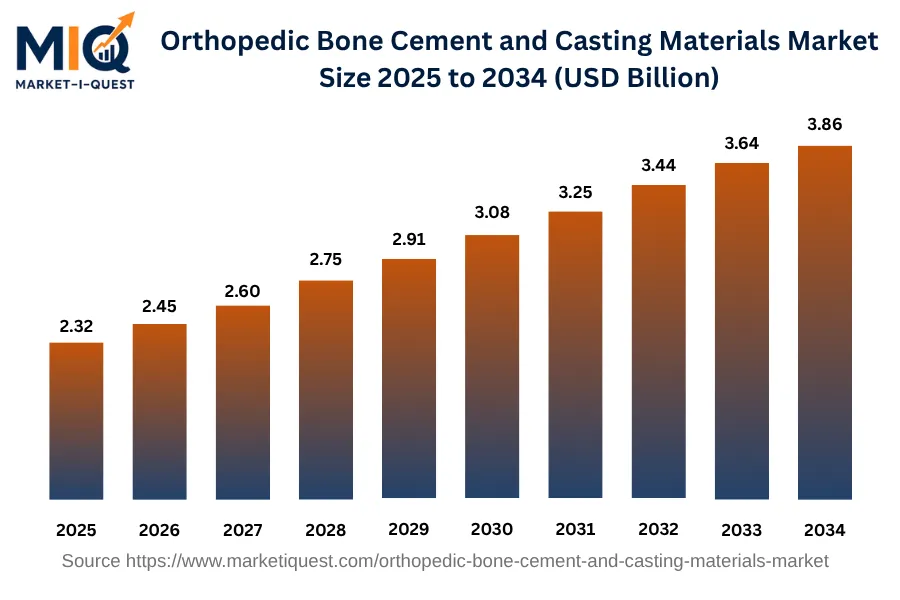
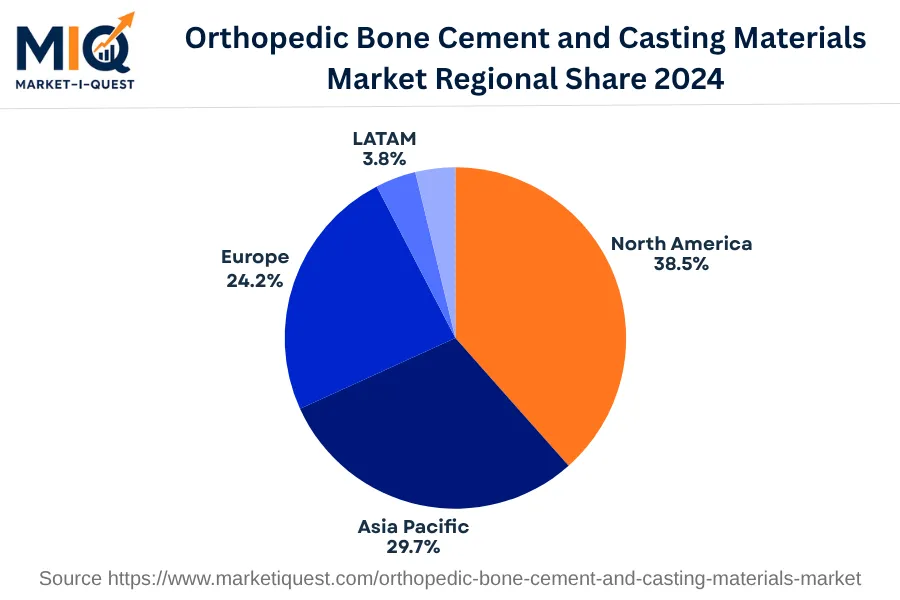
The Orthopedic Bone Cement and Casting Materials Market was valued at 2.32 billion USD in 2025, and it is estimated to reach a value of 3.86 billion USD by 2034, showing a CAGR of 5.82%. This market size demonstrates an upturn from 2.19 billion USD in 2024, showing distinct growth in one year. Further progressing along this trajectory, the market valuation is projected to follow a steady increase over the subsequent years. The growth can primarily be attributed to the increasing demand for these materials in orthopedic surgeries worldwide. In the regional market share distribution in 2024, North America has been the prominent shareholder with 38.5%, followed by Asia Pacific with 29.7%, Europe with 24.2%, LATAM with 3.8%, and MEA with 3.8%. This proportion provides a clear view of the geographical breakdown of the market presence, with a concentration in North America and Asia Pacific regions. The data reflects a substantial market share within these areas, contributing to the majority of the global Orthopedic Bone Cement and Casting Materials Market value.

Key Takeaways

  • By Material Type - Polymethyl Methacrylate (PMMA) held the significant share in the Orthopedic Bone Cement and Casting Materials Market.
  • By Product Form - Injectable Bone Substitutes is the fastest-growing segment presenting significant expansion opportunities.
  • By Application - Joint Replacement dominated the market showcasing the highest demand for Orthopedic Bone Cement and Casting Materials.
  • By End Use - Hospitals & Clinics lead the market providing a significant boost to Orthopedic Bone Cement and Casting Materials usage.
orthopedic-bone-cement-and-casting-materials-market market size

Key Driving Factors

Escalating Prevalence of Osteoporosis

An enormous disruption in the orthopedic bone cement and casting materials market in the present and near future is the climbing prevalence of osteoporosis worldwide. The World Health Organization predicts that osteoporosis will increase as a serious global health concern as the population's age elevates. As osteoporosis leads to an increased risk of bone fractures, the need for orthopedic interventions using bone cement and cast materials is experiencing a surge. Consequently, medical manufacturers and healthcare professionals concentrate on improving and enhancing these materials to provide better patient care and outcomes. The surge in osteoporosis cases is enforcing the demand for improved orthopedic materials, substantially bolstering the market for bone cement and casting materials.
Government Initiatives for Orthopedic Procedures

Government policies and initiatives supporting orthopedic surgeries act as a significant driver for the orthopedic bone cement and casting materials market. Governments worldwide are implementing guidelines and initiatives focusing on reducing the burden of orthopedic disorders by improving surgical outcomes. For instance, the Centers for Medicare & Medicaid Services in the US grant reimbursements for orthopedic surgeries, encouraging patients to opt for these procedures. These initiatives often extend to ensure the quality and affordability of materials used, such as bone cement and casts. Consequently, manufacturers are motivated to produce higher quality products to meet this demand, thereby driving the market's growth.

Market Evolution by Timeline

2019-2023
During this period, there was an increase in orthopaedic surgeries in the US, Asia and the Middle East due to an aging population and rise in sports injuries. This led to a growing need for bone cement and casting materials. DePuy Synthes and Stryker were key suppliers, with a tendency towards bioabsorbable materials. The US FDA's regulatory environment supported the use of premixed antibiotic-loaded bone cement. Commercially, fixed pricing models and long-term contracts were common with healthcare providers. Similar agreements were made with pharmacies. However, supply chain disruptions were a common risk due to geopolitical factors and the increase in global demand.
2024
In 2024, the buyer demographic for orthopedic bone cement and casting materials expanded to home healthcare providers, who started offering post-operative care at home. Cementless procedures became popular in Europe, leading to drop in bone cement demand in that area. Regenerative medicine began to influence the market, with organizations like Bone Therapeutics introducing solution like JTA-004. Policy emphasis revolved around patients' safety with specific FDA guidelines about allergic reactions and complications. Risk factors included potential recalls due to non-compliance with rigorous safety standards.
2025-2029
During this period, the market saw an increased demand in Asia due to rising disposable income and awareness about orthopaedic health. Advances in biological bone cement technology brought players like Bonesupport to the forefront. Patients, turning more towards minimally invasive surgeries, affected the demand for traditional casting materials. The EU's Medical Device Regulation (MDR) influenced adoption, with strict clinical evaluation required for product approval. Cost-per-procedure contracts became a popular commercial model to aid hospitals in controlling costs. The market faced risks due to the high prices of advanced materials.
2030-2034
The demand majorly came from aging populations in countries like Japan and Germany. Companies like Heraeus Medical started to ship advanced bone cements with reduced revision rates. The implementation of ISO 5833 changed the regulation scenario, as it set requirements for bone cement. Value-based pricing models emerged nationally to ensure cost-effectiveness. Risks included possible reimbursement cuts from insurance companies, making advanced products less accessible for patients.

Future Market Outlook

Future Opportunities

The orthopedic bone cement and casting materials market presents several future opportunities driven by current regulatory standards and technological advancements. With the increasing emphasis on patient safety and product efficacy, companies must adapt to the enhanced scrutiny imposed by the FDA and European MDR, which necessitates the development of safer, more effective products. Collaborations between academic institutions and industry players, such as the partnership between the University of Cambridge and Smith & Nephew, aim to innovate around bioresorbable cements that naturally dissolve in the body, reducing the risk of complications associated with traditional materials. The demand for minimally invasive surgical techniques will likely drive the creation of specialized bone cements adaptable for these procedures, thereby improving recovery times. Furthermore, as advancements in 3D printing technologies continue to evolve, customized bone cement formulations may become a reality, enabling tailored solutions for individual patient needs. Companies investing in smart materials that respond to environmental conditions and enhance bone healing will likely gain a competitive advantage; a notable example is the research collaboration between Boston University and a leading orthopedic firm focused on developing resorbable structural materials. The ongoing global rise in orthopedic surgeries, particularly in aging populations across North America and Europe, serves as a substantial catalyst for the innovative developments within this market, shaping future opportunities for growth and strategic partnerships in the coming years.

Segmentation Analysis

By Material Type

The material type market is divided into subsegments including Polymethyl Methacrylate (PMMA), Calcium Phosphate, and Other Bioresorbable Materials, with Polymethyl Methacrylate (PMMA) accounting for the largest revenue share, and Other Bioresorbable Materials are expected to grow at the fastest CAGR during the forecast period.

Largest Revenue Share

Polymethyl Methacrylate (PMMA)

Market Share Leader

Polymethyl Methacrylate compromises the largest revenue share, driven by its diverse utility and applicability across multiple industrial sectors. PMMA is widely used in various applications including automotive, construction, signs and displays, electronics, and healthcare due to its excellent weatherability and sunlight resistance. In healthcare, it's frequently used in eye implants, dentures, and bone cement because of its biocompatibility and durability. The increasing global demand for these products fuels the growth of this subsegment. Its superior physical properties such as transparency, durability, and resistance to UV light and weathering have given it the edge over other materials. Therefore, PMMA with its versatile properties and its application in rapidly growing industries, appears to contribute most to the revenue in the materials type market.

Fastest CAGR

Other Bioresorbable Materials

Forecast Period Growth Leader

Other Bioresorbable Materials are identified as having the fastest CAGR outlook within this market segment. This growth is driven by their broad adoption in the healthcare sector due to the evolving medical technology scene. Bioresorbable materials are in demand for surgical applications as these materials get absorbed or dissolve in the body post-surgery, reducing the need for a second surgery and lowering the risk of complications. The recent emphasis on improving patient comfort and quick recovery, has increased the adoption of these materials. Primary barriers to adoption include high costs, regulatory hurdles in some regions and the need for further clinical trials to assert their biocompatibility and safety. Despite these challenges, continuous improvement in material technology and rising partnership with healthcare providers forecast high growth for this subsegment.

By Product Form

The market is divided into subsegments including Injectable, Pre-packaged, and Injectable Bone Substitutes. Pre-packaged products accounted for the largest revenue share while Injectable Bone Substitutes is expected to grow at the fastest CAGR during the forecast period.

Largest Revenue Share

Pre-packaged

Market Share Leader

Pre-packaged products dominate the market with the largest revenue share. This performance can be attributed to their major advantages, including the ease of use, the greater hygiene they offer, and their ability to streamline the process in high-volume medical procedures. Their straightforward application reduces direct patient interaction, lowering potential infection risks while speeding up patient turnaround. Consumer preference is also clearly tilting towards pre-packaged products given their reliability and cost-effectiveness. Pre-packaged products also offer a high level of standardization, which is a sought-after quality in the medical industry, ensuring reliability of results and conformity to regulatory and industry standards. Geographically, their dominance is observed in developed markets with regulated healthcare systems that lean heavily towards efficiency of service delivery.

Fastest CAGR

Injectable Bone Substitutes

Forecast Period Growth Leader

Injectable Bone Substitutes are projected to grow fastest among all subsegments. Their rising popularity is driven primarily by advancements in health tech products and their application in a variety of bone-related medical procedures. Key factors driving their growth include an increasingly ageing population, and a corresponding rise in bone disorders. Furthermore, injectable bone substitutes circumvent issues associated with traditional bone grafts, such as donor supply shortages and potential disease transmission, making them a preferred choice for both patients and the medical professionals. However, the relatively higher cost of these substitutes compared to traditional bone grafts could act as a barrier affecting their rapid adoption. Therefore, partnerships with insurance service providers and affordability initiatives will be pivotal in catalyzing the wide-scale adoption. Potential technological advancements and regulatory approvals are set to further facilitate the segment's rapid growth.

By Application

The market is divided into subsegments including Trauma Surgery, Joint Replacement, Spinal Surgery, and Others. Joint Replacement accounted for the largest revenue share, while Spinal Surgery is expected to grow at the fastest CAGR during the forecast period.

Largest Revenue Share

Joint Replacement

Market Share Leader

The joint replacement subsegment leads the market in revenue generation primarily due to the increasing prevalence of osteoarthritis and rheumatoid arthritis among the aging population. Trauma to joints, obesity, and sedentary lifestyle are other factors attributing to a rise in joint disorders, thus boosting demand for joint replacements. With the ever-evolving advancements in surgical technologies and implant materials, the success rate and efficacy of joint replacement surgeries have improved noticeably, translating into patient preference for these procedures as a long-term solution for joint disorders over drug therapies. Additionally, North America and Europe being the major revenue-generating geographies, owing to their advanced healthcare systems, patient affordability, and surging geriatric populations are contributing significantly to the revenue of this segment. Despite attempts at regulation, a steady supply of certified joint prosthetics keeps the market solvent, and omnipresent direct to consumer advertising reassures patients that these procedures are not only routine but could improve their quality of life.

Fastest CAGR

Spinal Surgery

Forecast Period Growth Leader

The Spinal Surgery subsegment is anticipated to yield the fastest CAGR. Drivers for this growth include an upward trend in spinal ailments due to aging, degenerative disc disease, and an increase in spine-related sports injuries and accidents. Technological innovations, like the introduction of minimally invasive surgical techniques, robotic-assisted surgery, and prodigious advancements in spinal devices and implant technologies are playing an essential role in propelling the growth rate in this field. This segment's growth is also amplified by the rising number of regulatory approvals for novel technologies and devices, leading to an increase in investment by both private bodies and government institutions. However, high-cost procedures and inadequate reimbursement policies for spinal surgeries could pose as barriers to the adoption rate. Establishing partnerships with insurance providers and offering financing options to counter these costs could be effective growth strategies to accelerate adoption rates. The potential risks in the near term revolve around regulatory changes impacting device approvals and reimbursement methodologies.

By End Use Sector

The market is divided into subsegments including Hospitals & Clinics, Ambulatory Surgical Centres (ASCs), and Others. From these, Hospitals & Clinics accounted for the largest revenue share while Ambulatory Surgical Centres are expected to grow at the fastest CAGR during the forecast period.

Largest Revenue Share

Hospitals & Clinics

Market Share Leader

Hospitals & Clinics are recognized as the significant end-use sector in the market due to their considerable influence on the overall revenue generation. This can be attributed to the higher patient footfall and extensive range of medical services offered by these establishments. Furthermore, hospitals typically have substantial budgets that enable them to purchase a wider array of equipment and technologies, therefore driving larger revenue streams. In addition, stringent health regulations often direct patients to hospitals over other healthcare providers, strengthening the segment's market position. This is especially true in geographies where public hospitals monopolize healthcare provision. Public sector investment and private sector expansion in developing countries also contribute to this subsegment's robust performance, underpinned by growing populations and rising healthcare needs.

Fastest CAGR

Ambulatory Surgical Centres (ASCs)

Forecast Period Growth Leader

Ambulatory Surgical Centres (ASCs) represent the fastest-growing subsegment in the market. Significant drivers of growth include the rising demand for outpatient surgeries and the increasing adoption of minimally invasive procedures. Favorable reimbursement policies in developed economies for ASCs are actually stimulating the market growth. As healthcare systems worldwide look for ways to reduce costs while improving the quality of care, ASCs offer a practical and cost-effective solution. Furthermore, technological advancements and successful partnerships with larger hospital networks will catalyze the CAGR outlook. This subsegment, though, may face some adoption barriers in the near term, particularly in geographies where healthcare infrastructure or policy support is not fully developed. However, the long-term growth prospect remains undeniably promising.

Competitive Analysis

Key Market Players

Manufacturers / OEMs

Zimmer Biomet
US
Stryker Corporation
US
DePuy Synthes
US

Key Suppliers & Raw Materials

DJO Global
US
Smith & Nephew
UK
Biomet
US

Distributors, Integrators & Channel Partners

Medtronic
Ireland
B. Braun Melsungen
Germany
Arthrex
US

Porter’s Five Forces Analysis

This analysis explores the competitive dynamics within the Orthopedic Bone Cement and Casting Materials Market.

Supplier Bargaining Power

High

Key inputs are proprietary and sourced from a limited number of suppliers.

Buyer Bargaining Power

Medium

Healthcare providers can choose from various suppliers, yet patient health often dictates choice.

Threat of Substitutes

Low

Few alternatives exist for these specialized orthopedic materials within medical procedures.

Threat of New Entrants

Low

High entry barriers due to stringent regulations, capital investment and technical expertise required.

Competitive Rivalry

Medium

Competition is moderate with several dominant firms and potential for differentiation.

Regional Analysis

Geographic market dynamics and growth opportunities across key regions

Global Market Outlook

orthopedic-bone-cement-and-casting-materials-market market regional share

North America

In 2024, North America's orthopedic bone cement and casting materials market saw a notable increase in demand due to a variety of factors. Aging populations in the United States and Canada heightened the need for orthopedic procedures and treatments, resulting in more consumption of bone cement and casting materials. Emphasis on healthcare exerted by the Trudeau and Biden administrations helped foster an environment conducive for market growth. Technological advancements, like biocompatible bone cement, drove up usage in hospitals and clinics across North America.

Trends in North America showed consumers favoring improved materials for castings and cement, leading manufacturers to innovate efficiently. The pervasive adoption of 3D printing technology in the U.S facilitated the production of customized casting materials. In Canada, amalgamation activities increased as large enterprises sought to bolster their market standing by acquiring specialist manufacturing firms. Notably, the enforcement of stricter healthcare regulations in Mexico propelled manufacturers to ensure compliance, prioritizing high-quality, safe materials.

The main customer sectors for these materials were healthcare providers including large hospitals, private clinics, and government health institutions. Overall, the North American orthopedic bone cement and casting materials market was driven by an aging population, government focus on healthcare, and technology adoption, whilst significant trends encompassed consumer preference, 3D printing adoption, and strict policy enforcement.

Asia Pacific

In 2024, the Orthopedic Bone Cement and Casting Materials Market witnessed significant growth in the Asia-Pacific region.

The key drivers include an aging population and increasing incidence of orthopedic diseases in countries like India, China, and Japan, leading to a higher demand for bone cement and casting materials. Additionally, governments such as in Australia and key ASEAN markets promoted preventive healthcare and enhanced medical infrastructure, favoring market growth. Rapid technology adoption, especially in South Korea and Japan, introduced innovative biocompatible materials to the market, enhancing the quality and effectiveness of orthopedic procedures.

On the trend front, a shift towards less invasive surgeries and adoption of high-tech casting materials resonated with consumer preferences, especially in technologically advanced markets like Japan and Australia. Notably, partnerships amongst global and local players to expand distribution networks were prevalent, as seen with the strategic alliance of Stryker and Hyundai Pharmaceuticals in South Korea. In China and ASEAN markets, enforcement of stringent standards for product approval ensured the availability of quality materials.

Overall, in 2024, driven by demand from healthcare institutions and elderly population, the Orthopedic Bone Cement and Casting Materials market in Asia-Pacific experienced robust growth integrating advanced technologies, policy support, and market dynamics.

Europe

In 2024, the Orthopedic Bone Cement and Casting Materials Market in Europe showcased a robust landscape driven by multiple factors. Stringent EU regulations had ensured the availability of high-quality, reliable products, fostering trust among consumers and healthcare professionals. Investments, particularly in Germany, U.K., and France, encouraged technology adoption and improved supply dynamics throughout the region. Moreover, the adoption of state-of-the-art manufacturing processes by key players helped maintain consistent pricing, contributing to the market stability.

Simultaneously, several trends influenced the dynamic of the market. Predominantly, there was an evident shift towards bio-absorbable casting materials, particularly among healthcare providers in Spain, Italy, the Nordics, and Benelux. Channel partnerships between local distributors and global manufacturers, such as in Central & Eastern Europe, escalated product accessibility and penetration. Continued adherence to EU's stringent policy guidelines also ensured the maintenance of high product standards.

Orthopedic bone cement and casting materials were primarily procured by healthcare sector customers, including hospitals, orthopedic clinics, and rehabilitation centers. Notably, governmental bodies had a significant contribution, especially in the U.K. and France, where state-funded healthcare systems backed the provision and adoption of these products. Furthermore, the manufacturing sector, specifically those producing orthopedic equipment and devices, heavily utilized these materials, thereby supporting the overall market growth across Europe.

Latin America

In 2024, the Orthopedic Bone Cement and Casting Materials market in Latin America marked a pervasive expansion, strongly influenced by pressing health factors, industry regulations, and the adoption of advanced medical technologies.

Driving this growth were an aging population and an increase in orthopedic surgeries in countries like Brazil, Mexico, and Argentina. These, coupled with government regulations stipulating the use of high-quality bio-materials in orthopedic procedures, catapulted the demand for bone cement and casting materials. Additionally, the adoption of innovative technology, such as ready-to-mix bone cement in Colombia, considerably enhanced the user-friendliness and efficiency in orthopedic surgeries.

A noticeable trend in the LATAM market was the increased inclination of healthcare providers towards the use of bio-based casting materials. Greater awareness of the potential adverse effects of synthetic materials made bio-based products a popular choice among patients and practitioners alike. The market also saw strategic partnerships, particularly in Chile and Peru, between local manufacturers and international companies to enhance the production and distribution of these materials.

Government sectors, mainly health departments, in the LATAM region played crucial roles in regulating the market dynamics. They instituted standards and policies related to material safety and efficacy, which considerably influenced both the supply side and the purchasing behavior of customers. This significantly tailored the orthopedic bone cement and casting materials market throughout the base year.

Middle East & Africa

In 2024, the Orthopedic Bone Cement and Casting Materials Market in the Middle East and Africa saw significant advancements. Drivers of this growth primarily included the escalating demand for orthopedic surgeries owing to the increasing prevalence of osteoporosis and arthritis, particularly in countries like Egypt, South Africa, and Nigeria. Governments' initiatives for healthcare infrastructure development and the adoption of advanced orthopedic solutions, notably in Saudi Arabia and UAE, led to increased investment in this sector. Additionally, technological advancements in casting materials, coupled with attractive pricing, fueled supply dynamics across the region.

Changing trends were evident in shifting buyer behavior, predominantly in private healthcare institutions and government-funded hospitals, with an increased preference for biocompatible bone cement. An uptick in partnerships and mergers & acquisitions were observed in the healthcare manufacturing sector, mainly in Israel and the United Arab Emirates, driving technology shifts towards absorbable, natural, and medical-grade casting materials. Furthermore, stringent policy enforcements in many African countries, like Kenya and South Africa, have maintained the standardization of orthopedic casting materials, prompting a significant move towards improved patient safety and outcomes within the healthcare sector.

Recent Industry Developments

Latest market innovations, product launches, and strategic initiatives

March 2025

Zimmer Biomet launched its Tekcem 1G and Tekcem 3G antibiotic-loaded bone cements across emerging regional markets. The radiopaque Polymethyl Methacrylate (PMMA) formulations release targeted aminoglycoside antibiotics directly at the bone-implant interface during primary and revision joint arthroplasty to reduce post-operative infection risks.

Frequently Asked Questions