
Calcium Phosphate Market Snapshot

Key Players

  • Nitta Gelatin Inc. (Japan)
  • Mosaic Company (United States)
  • Potash Corporation of Saskatchewan Inc. (Canada)
  • Advance Inorganics (India)
  • Sigma Aldrich (United States)
  • Chemische Fabrik Budenheim (Germany)
  • Merck KGaA (Germany)
  • EuroChem Group AG (Switzerland)
  • Innophos Holdings
  • Inc. (United States)
  • OCP Group (Morocco)

Market Size

Base Year 2024
$1.48 Bn
CAGR
5.4%
Forecast 2034
$2.50 Bn

Market Segments

By Product Type
Mono Calcium Phosphate, Di-Calcium Phosphate, Tri-Calcium Phosphate
By Form
Crystalline, Amorphous
By Application
Acidity Regulator, Leavening Agent, Flour Treatment Agent, Antioxidant, Forming Agent
By End Use Industry
Pharmaceutical, Food & Beverages, Chemical, Others

Market Dynamics

Drivers
  • Rising demand in fertilizer industry
  • Increasing use in food additives
Restraints
  • Regulatory compliance issues
  • Price fluctuations
Opportunities
  • Rising demand in fertilizers
  • Increasing adoption in food industry

Market Size

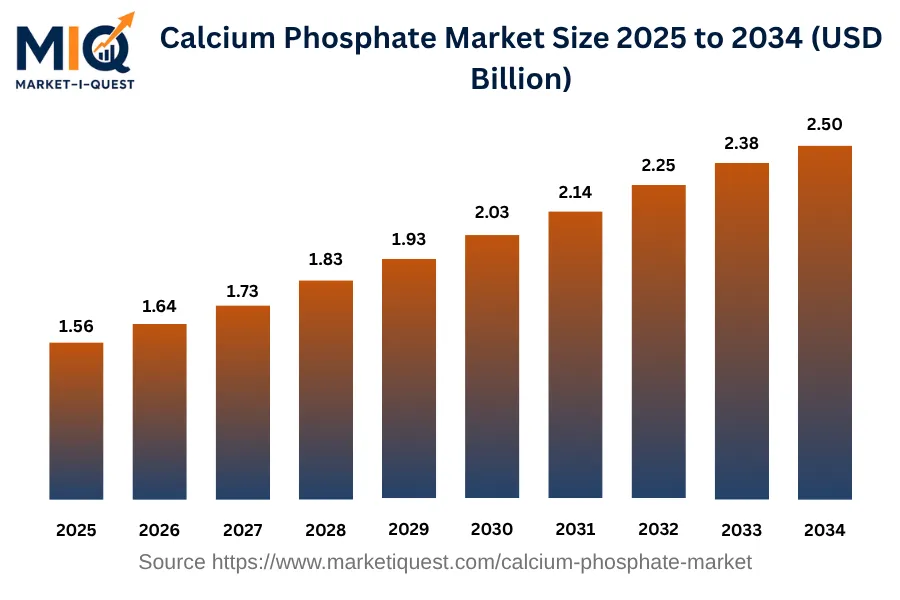
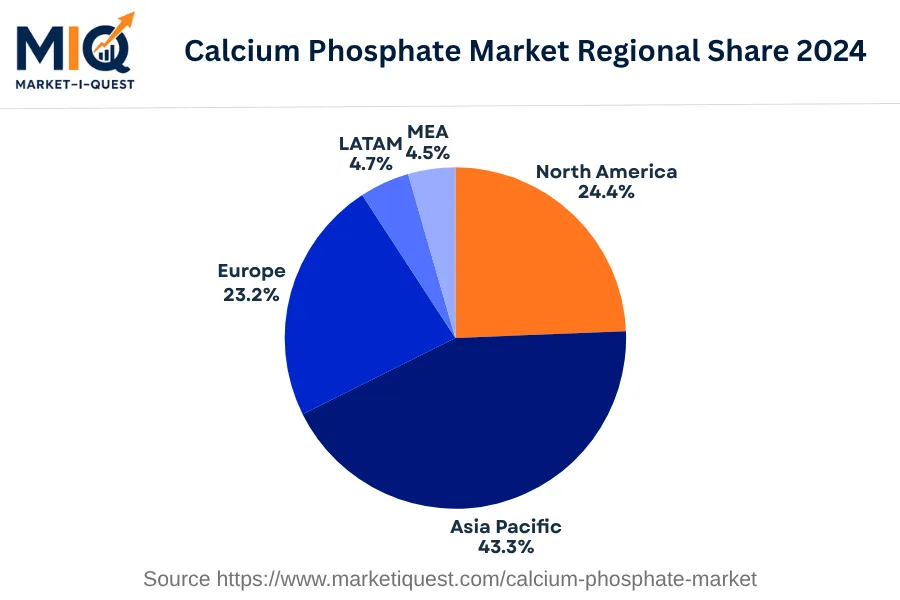
The Calcium Phosphate Market reached a size of $1.56 billion in 2025, up slightly from $1.48 billion in 2024. By 2034, the value of this market is projected to increase to $2.50 billion, representing a CAGR of 5.4% during this period. This percentage points to considered growth across the ten-year span. Delving into the regional share mix for the base year of 2024, Asia Pacific constituted the majority share, accounting for 43.3% of the total market. North America and Europe followed with market shares of 24.4% and 23.2% respectively. The remaining portions of the market were held by LATAM and MEA, with a market share of 4.7% and 4.5% respectively.

Key Takeaways

  • By Product Type - Di-Calcium Phosphate led accounting for a major share in 2024.
  • By Form - Crystalline held a leading position in 2024.
  • By Application - Leavening Agent grew fastest in the Calcium Phosphate Market.
  • By End User - Pharmaceutical held a significant share in the recent years.
calcium-phosphate-market market size

Key Driving Factors

Increased Utilization in Food Industry

The calcium phosphate market is seeing a substantial drive from the food industry which utilizes it heavily as a food additive. Calcium phosphate is not only a nutritional supplement that boosts the calcium content in foodstuffs like tofu and cheese but also acts as a leavening agent in the baking industry, improving the texture and appearance of baked goods. With people prioritizing health and wellness in recent years, the demand for these fortifying additives is increasing, providing a distinct propellant to the calcium phosphate market. This shift gives food companies a crucial role in shaping market trends, as their procurement decisions and product formulations dictate how much calcium phosphate will be needed.
Strict Regulations on Synthetic Fertilizers

The global trend of deploying eco-friendly practices in agriculture, followed by regulations like the EU's restriction on synthetic phosphorous fertilizers, is another distinct force boosting the calcium phosphate market. As calcium phosphate is a natural mineral, it's being endorsed as a 'green' alternative to the criticized synthetic phosphates. This is compelling the fertilizer industry, among others, to recalibrate their procurement strategies and opt for calcium phosphate. As natural phosphate reserves are not inexhaustible, this trend is likely to put steady pressure on the calcium phosphate market in the years to come.

Market Evolution by Timeline

2019-2023
During this period, calcium phosphate demand rose from the food and beverage industry, especially in American and Asian countries where food fortification gained traction. Manufacturers shipped enhanced tricalcium phosphate to fortify cereals and bakery products. Integration was immature; most operations remained standalone, limiting scale efficiencies. Regulatory agencies, including the US FDA and EFSA in Europe, acknowledged calcium phosphate as safe food additives, easing market expansion. Commonly used commercial models had a spot-market orientation with contracts typically lasting one year. A significant risk was the environmental concern due to the use of non-renewable phosphorus resources in production, which prompted some manufacturers to research recirculation methods.
2024
In 2024, there was a wider adoption of calcium phosphate in plant-based diets, particularly in Europe, due to growing vegan trends. Biomedical applications also rose since calcium phosphate was considered viable in bone graft procedures. Supplies became more streamlined, with improved integration between mining, processing, and end-product manufacturing, especially in China. Regulatory approval for calcium phosphate in orthopaedic surgery under the US Medicare program spurred demand. Typical commercial contracts saw more long-term engagements, with more manufacturers and buyers locking prices for two to three years. The key risk continued to be resource sustainability, with greater scrutiny on resource extraction practices.
2025-2029
The trend of increasing calcium phosphate use in pet food, especially in North America and parts of Europe, characterized these years. Supplies continued to improve, some manufacturers began employing closed-loop models to address sustainability concerns. Calcium phosphate in dental applications grew, supported by FDA's endorsement. This accelerated the demand in the US. Pricing was more dynamic, often reflecting phosphorus market conditions. Manufacturers would incorporate price adjustment clauses in their contracts. A 'likely' risk was potential consumer backlash against chemically enhanced foods. To mitigate this, corporations started more transparency campaigns about their products.
2030-2034
Towards this period, the demand for calcium phosphate was robust, primarily driven by aquaculture in Southeast Asian countries like Vietnam and Thailand. There was extensive use of calcium phosphate in feed to promote healthy aquatic species growth. Technological advances enabled more efficient phosphorus mining and processing—increasingly automated and less labor-intensive. More comprehensive regulations, such as the United Nations' Code for Responsible Fisheries, governed the use of feed additives, including calcium phosphate in aquaculture. The commercial model continued to evolve with increasing use of fixed-price contracts with longer durations, up to five years. One visible risk was regulatory compliance, as harsher penalties for non-compliance were introduced globally.

Future Market Outlook

Future Opportunities

As the demand for biocompatible materials escalates, the calcium phosphate market presents substantial future opportunities linked to ongoing research and regulatory advancements. Ongoing discussions at international forums, such as the World Health Organization's initiatives on bioethics related to medical devices, underline the growing importance of utilizing calcium phosphates in regenerative medicine. As academics and professionals emphasize their unique properties, calcium phosphates are expected to play a crucial role in developing next-generation bone graft substitutes. Industry leaders like Straumann have already begun exploring innovative calcium phosphate products tailored for dental and orthopedic procedures, showcasing a trend towards personalized medicine rooted in biocompatibility. Moreover, emerging markets in Asia-Pacific, specifically China and India, are witnessing an increase in the production of calcium phosphate fertilizers due to government incentives promoting sustainable agriculture. The Ministry of Agriculture and Rural Affairs of China has set policies in 2023 to enhance the use of natural inputs, fostering production methodologies that leverage calcium phosphate. As global awareness of sustainable practices grows, companies may pivot towards ecological applications of calcium phosphate, creating novel solutions for environmental remediation. This confluence of regulatory backing and technological advancement positions calcium phosphate as a crucial component for future opportunities in multiple industries.

Segmentation Analysis

By Product Type

The market is divided into subsegments including Mono Calcium Phosphate, Di-Calcium Phosphate, and Tri-Calcium Phosphate. Di-Calcium Phosphate accounted for the largest revenue share while Mono Calcium Phosphate is expected to grow at the fastest CAGR during the forecast period.

Largest Revenue Share

Di-Calcium Phosphate

Market Share Leader

Di-Calcium Phosphate leads in revenue as it has a higher consumption rate in the animal feed industry and pharmaceuticals. This phosphate is preferred due to its high nutritional content and added benefits of easy digestion for animals. More countries are realizing the potential benefits of Di-Calcium Phosphate with their booming animal husbandry sector and stringent regulations for healthy meat procurement creating a surge in demand. Its usage in the pharmaceutical industry is increasing mainly in developing economies where the consumer healthcare market is witnessing an upswing fuelled by increasing purchasing power. Additionally, its availability and affordability compared to substitutes give it a competitive edge, driving its sales up. However, it’s imperative to note that the reliance on non-renewable raw materials for production could pose challenges to market growth in the long term.

Fastest CAGR

Mono Calcium Phosphate

Forecast Period Growth Leader

Mono Calcium Phosphate projects the fastest CAGR, propelled by a number of factors. Its properties such as a fast dissolution rate and high solubility make it a prime ingredient in the baking industry as a leavening agent. A rise in urbanization and a shift in consumer preference towards convenience food, packaged food and baked goods are major catalysts of this growth. Increasing partnerships between manufacturers and end-use industries would further contribute, strengthening the supply chain. Apart from the food industry, it is also used to feed livestock in the form of mineral phosphorus, for which demand is on the rise owing to an increase in global meat consumption. However, the growth of this sector may be challenged by the stringent regulations and guidelines implemented by regulatory authorities regarding food safety.

By Form

The market is divided into subsegments including Crystalline and Amorphous, with Crystalline accounting for the largest revenue share while Amorphous is expected to grow at the fastest CAGR during the forecast period.

Largest Revenue Share

Crystalline

Market Share Leader

In the base year of 2024, the Crystalline form has been observed to command the largest share of revenue in the market. This dominance is attributable to its superior physical properties such as high melting and boiling points, solubility, and mechanical strength, making it desirable across a range of industries including pharmaceuticals, chemicals, and materials processing. Its peculiar geometry, featuring a highly ordered, repeating pattern is advantageous for specific applications requiring consistency and precision. Additionally, regulations and standards necessitate the use of Crystalline forms in certain areas, further cementing its dominant position. The higher cost of procurement and processing compared to amorphous forms has contributed to its significant share in the revenue. Furthermore, established distribution channels and a degree of customer loyalty based on familiarity and historical usage give the Crystalline form a competitive edge in terms of market revenue.

Fastest CAGR

Amorphous

Forecast Period Growth Leader

Though it does not command the largest share of the market revenue, the Amorphous form is poised to register the fastest growth rate in the coming period. This can be attributed to the advantages offered by Amorphous forms over Crystalline forms such as increased solubility and bioavailability. These benefits are driving adoption in industries such as pharmaceuticals and food and beverage among others. Though the adoption is hindered by factors such as higher costs of production and a lack of understanding of its properties, increased research in the field and advancements in technology are anticipated to drive adoption. Rapid acceptance by pharmaceutical companies and a favorable regulatory environment in several geographies are other factors that are expected to contribute to the expansion of this subsegment. However, potential risks include supply chain disruptions and shifts in regulatory policies.

By Application

The market is diversified into subsegments including Acidity Regulator, Leavening Agent, Flour Treatment Agent, Antioxidant, and Forming Agent. In 2024, the Leavening Agent subsegment accounted for the largest revenue share, while the Antioxidant subsegment is expected to escalate at the fastest CAGR during the forthcoming period.

Largest Revenue Share

Leavening Agent

Market Share Leader

The Leavening Agent subsegment's top standing in the revenue share can be attributed to its essential use in the food industry, particularly in baking. These agents help dough to rise and provide a specific lightness to the baked products. The wide usage of leavening agents in an array of products like cakes, pastries, bread, and cookies enhances its market position. The extremely competitive food industry, with their continual introduction of novel bakery products, is bolstering the revenue of this subsegment. Geographically, regions endowed with a developed baking industry primarily contribute to its success. Moreover, regulatory allowances on using these agents and their elemental role in defining baking product quality dictate their purchase by manufacturers. The overall minimal switching costs for these agents and the usual supply channels via food ingredient providers aid in its dominant market positioning.

Fastest CAGR

Antioxidant

Forecast Period Growth Leader

The Antioxidant subsegment is projected to be the fastest growing sector owing to the increasing consumer awareness about health and well-being. Antioxidants play a crucial role in preserving food products, extending their shelf life, and protecting them from spoilage. The escalating demand for natural antioxidants due to their health benefits acts as an active growth catalyst. Despite their slightly high price compared to artificial alternatives, their ability to prevent oxidative rancidity in foods and thus, reduce food waste justifies their adoption rates, particularly in developed geographies. Additionally, these benefits are being recognized in developing countries and this increasing market penetration further promotes the subsegment growth. However, technological developments making these additives more accessible and objections against potentially harmful artificial antioxidants may pose a near-term risk. The market adoption is primarily driven via partnerships between food producers and antioxidant suppliers.

By End Use Industry

The market is subdivided into the Pharmaceutical, Food & Beverages, Chemical, and Others sectors. In terms of revenue, the Pharmaceutical sector holds the largest share, while the Food & Beverages sector is predicted to grow at the highest CAGR.

Largest Revenue Share

Pharmaceutical

Market Share Leader

In the base year 2024, the Pharmaceutical sector held the largest share of the market. There are several reasons for this dominance. The constant growth in the healthcare sector has been driven by an increase in the global concern for early disease detection and prevention. Furthermore, stringent regulation by authorities like the Food and Drug Administration and the European Medical Agency has enforced better quality control, raising the demand for high-quality pharmaceutical production. Additionally, the number of patented novel drug launches and the broad range of applications in fields such as gene therapy, regenerative medicine, and anti-aging treatments contribute to this segment's leading position. Lastly, the robust growth in the generic market due to patent cliffs further strengthens the Pharmaceutical sector's market position. While the other segments also have their market niches, none currently can surpass the sheer market volume generated by the Pharmaceutical sector.

Fastest CAGR

Food & Beverages

Forecast Period Growth Leader

Despite the Pharmaceutical sector presently dominating in revenue, the Food & Beverages sector is projected to be the fastest-growing segment. The core catalyst for this growth is technology advancement and innovation in the food industry which are responsible for escalating consumer demand for new and varied food experiences. Further influencing this growth are the rising global population and the subsequent increased demand for food and drink. This demand is compounded by increasing urbanization and changing lifestyles as more consumers opt for convenience in food options. Moreover, strict safety and quality regulations for food & beverage products have enhanced the need for advanced technologies and thus, industry growth. And finally, escalations in disposable incomes are leading to increased spending on premium and processed foods and drinks. However, challenges such as contrasts in global dietary preferences and potential supply chain disruptions may pose risks to the steady growth of this sector.

Competitive Analysis

Key Market Players

Manufacturers / OEMs

Nitta Gelatin Inc.
Japan
Mosaic Company
US
Omya AG
Switzerland

Key Suppliers & Raw Materials

Innophos
US
Lomon Billions
China
ICL Group Ltd
Israel

Distributors, Integrators & Channel Partners

Advance Inorganics
India
American Elements
US
Sigma-Aldrich Co. LLC
US

Porter’s Five Forces Analysis

This analysis explores the competitive intensity and attractiveness within the Calcium Phosphate Market.

Supplier Bargaining Power

Medium

Suppliers' influence is moderated by the presence of several raw material providers.

Buyer Bargaining Power

High

Buyers have high power due to the availability of multiple manufacturers and versatile applications of calcium phosphate.

Threat of Substitutes

Low

The threat of substitutes is low due to the unique properties and numerous applications of calcium phosphate.

Threat of New Entrants

Medium

New entrants face moderate barriers, including compliance with quality standards and investment in manufacturing facilities.

Competitive Rivalry

High

High competitive rivalry driven by the presence of numerous global and regional manufacturers.

Regional Analysis

Geographic market dynamics and growth opportunities across key regions

Global Market Outlook

calcium-phosphate-market market regional share

North America

In 2024, North America's Calcium Phosphate market witnessed significant growth due to various demand and regulatory factors. A major driver was the rising demand in healthcare, utilities, and manufacturing sectors; particularly, production of dental care products, fertilizers, and utilization in water treatment processes. Regulatory standards, such as the Clean Water Act in the U.S., encouraged the procurement of Calcium Phosphate for waste management. Increased investment in technology adoption, especially in the U.S. and Canada, facilitated more efficient production and supply of the product, impacting the market positively.

In terms of trends, there was a noticeable shift in buyer behavior as industries aimed for materials minimizing environmental impact, steering interest towards calcium phosphate due to its non-toxic nature. The digitalization of retail channels also made product accessibility and distribution more efficient. Notably, partnerships and M&As were prevalent as companies sought to expand their production capacities and regional foothold. One clear example was the collaboration between U.S-based Innophos and Canada's Nutra Canada to enhance production. Regulatory policies regarding waste treatment and healthcare standards led to rigid enforcement of Calcium Phosphate usage, particularly in the U.S and Mexico. These factors all contributed to the market development in North America in 2024.

Asia Pacific

In 2024, the Asia Pacific calcium phosphate market manifested a substantial growth due to several compelling drivers. Rapid urbanization and increased purchasing power led to a surge in demand from the food & beverage industry, notably in China and India where calcium phosphate is popular as a food additive. Additionally, accelerated uptake of advanced technology and massive investments in R&D propelled the market significantly. This was especially evident in Japan and South Korea, known for their robust healthcare sectors that use calcium phosphate for dental and orthopedic applications. Furthermore, favorable governmental policies fueled the market momentum, such as China's new chemical regulations which stimulated domestic calcium phosphate production.

Reflecting on trends, there was a marked shift towards vegan and organic food products, bolstering the calcium phosphate market due to its vital role in plant-based diets. In addition, rising health consciousness and the growing prevalence of dental issues were observed across Australia and key ASEAN markets, prompting an upswing in demand. Furthermore, the competitive landscape saw significant moves, with new partnerships forming and M&A activities occuring to secure supply chains and amplify production capacities. Lastly, tighter regulations in the Asia Pacific region for product standards were enforced, influencing market elements and ensuring the production of high-quality calcium phosphate substances.

Europe

In 2024, the European Calcium Phosphate market manifested active dynamics due to various demand drivers and market trends. Key demand drivers included government regulations fortified food products consumption, growing investments in biomedical engineering, especially related to prosthetics and implants, where calcium phosphate is used for improved biocompatibility, and increased adoption of hydroxyapatite, a type of calcium phosphate, in the dental sector. Primary demand was observed in sectors such as food & beverage manufacturing, largely driven by regulatory standards mandating nutrient fortification. For instance, regulations in the United Kingdom and France necessitated the use of calcium phosphate in cereal and bread manufacturing. Also, healthcare sector demonstrated increased usage of calcium phosphate products.

Monitoring market trends, there was a marked shift towards plant-based dietary supplements in the retail sector across the Nordics and Benelux countries, driving demand for calcium phosphate. Collaborations and M&As activity swept the market in Germany and Central & Eastern Europe, with companies like Evonik and Alfa Aesar bolstering their positions. In Spain and Italy, stricter enforcement of food fortification policies was observed advocating the use of calcium phosphate. However, price dynamics considerably impacted the supply chain with raw material cost fluctuation influencing the market stability in the region.

Latin America

In 2024, the Calcium Phosphate Market in Latin America (LATAM) experienced notable evolution due to various drivers and trends within countries like Brazil, Mexico, Argentina, among others. The market was primarily driven by increased demand from sectors such as healthcare and animal feed industries. Higher incidences of bone health issues fueled the demand for calcium phosphate in healthcare. Likewise, a surge in poultry and swine farming in Argentina and Brazil propelled the demand in the animal feed industry. Regulatory approvals, such as Brazil ANVISA's clearance, also drove the market owing to improved product access. Also, the adoption of advanced technologies in Chile's manufacturing sector optimized the extraction and processing of calcium phosphate, enhancing the supply dynamics.

Market trends exhibited a shift towards plant-based sources of calcium phosphate, inspired by sustainability and health considerations. In Peru and Colombia, increasing consumer awareness about bone health triggered the demand for fortified food products. The enforcement of stricter quality standards compelled manufacturers to prioritize product quality, impacting the market's interactive dynamics. A visible trend in LATAM was the intensified collaborations and strategic partnerships. For instance, companies in Mexico entered into acquisitions to expand their market presence and product portfolio. Overall, 2024 marked a period of significant growth and transformation for the LATAM Calcium Phosphate Market.

Middle East & Africa

In 2024, the Calcium Phosphate Market in the Middle East and Africa was notably dynamic, owing to numerous factors. Key drivers included increasing health consciousness in countries like Saudi Arabia and United Arab Emirates, intense demand for dietary supplements and a rise in pharmaceutical investments in Egypt and South Africa. The emphasis of healthcare systems on preventive measures boosted demand for Calcium Phosphate, while in the realm of agriculture, Nigerian and Kenyan farmers used it as a soil supplement. The increased adoption of advanced technology, particularly in Israel, further solidified market positions.

Meanwile, important trends were realized as consumers shifted towards organic and natural food products, with Calcium Phosphate being a vital ingredient. Consumer behavior reflected an uptick in purchasing products enriched in calcium and phosphates and manufacturers responded by implementing strategic partnerships across the Emirates and Qatar, catering for the increasing demand. The tightening of food safety regulations enforced by government bodies across the region, specifically in Nigeria and Israel, emphasized the use of approved additives like Calcium Phosphate. Additionally, a growing emphasis on R&D in the medical sector, especially in South Africa, saw Calcium Phosphate being used in bio-medical applications like dental fillings and bone grafts. Overall, the Calcium Phosphate Market displayed significant dynamism in 2024.

Recent Industry Developments

Latest market innovations, product launches, and strategic initiatives

October 2025

Paradeep Phosphates Ltd merged with Mangalore Chemicals & Fertilizers Ltd (MCFL). The consolidation unifies their manufacturing capabilities, expanding Paradeep's phosphate-based production footprint and distribution reach directly into the southern Indian market.

October 2025

Global Feed established a new warehouse facility in Elbląg, Poland, capable of storing over 4,000 tons of inventory. The logistics hub optimizes supply chains and secures localized delivery timelines for feed-grade calcium phosphates across Polish and Baltic agricultural markets.

February 2025

OCP Group acquired an additional 25% stake in Spanish manufacturer GlobalFeed S.L., raising its total ownership to 75%. The transaction scales OCP's European production capacity and distribution network for specialty feed-grade monocalcium and dicalcium phosphate compounds.

Frequently Asked Questions