Orthopedic Biomaterial Market Snapshot

Key Players

  • Johnson & Johnson (US)
  • Stryker Corporation (US)
  • Zimmer Biomet Holdings Inc. (US)
  • Smith & Nephew Plc (UK)
  • Medtronic Plc (Ireland)
  • Koninklijke DSM N.V. (Netherlands)
  • Wright Medical Group N.V. (Netherlands)
  • Invibio Ltd. (UK)
  • Globus Medical Inc. (US)
  • Invibio Ltd. (UK)

Market Size

Base Year 2024
$21.68 Bn
CAGR
7.36%
Forecast 2034
$44.10 Bn

Market Segments

By Type of Material
  • Metal
  • Non-Metal
By Application
  • Joint Replacement
  • Fracture Fixation Devices
  • Tissue Fixation
  • Spine Implants
  • Viscosupplementation
  • Others

Market Dynamics

Drivers
  • Rising orthopedic disorders prevalence
  • Advancements in biomaterial technology
Restraints
  • High product cost
  • Stringent regulatory policies
Opportunities
  • Increasing geriatric population
  • Advancements in biomaterials technology

Market Size

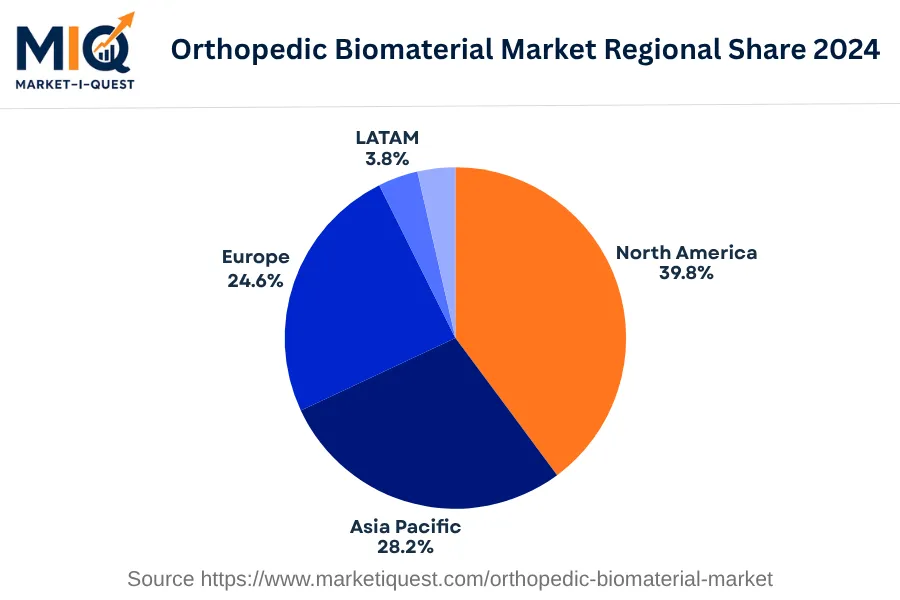
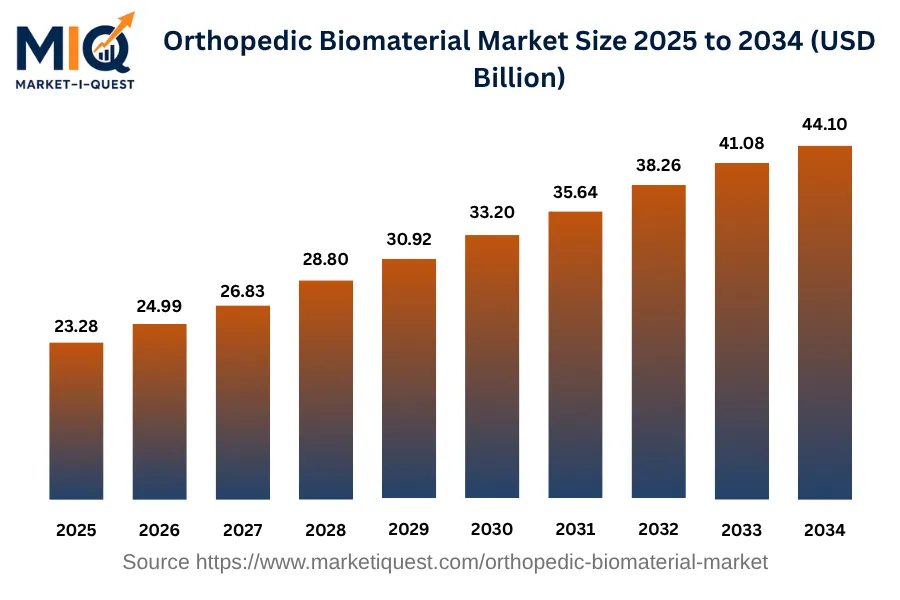
The Orthopedic Biomaterial Market size in 2025 is estimated to be $23.28 billion, growing from $21.68 billion in 2024. By the year 2034, the market is projected to reach $44.10 billion, demonstrating a CAGR of 7.36%. A continuous increase is observed in the market size year-on-year from 2025 to 2034, nearly doubling over the course of the decade, indicating the growing demand for orthopedic biomaterial in the healthcare industry. The regional share of this market in 2024 comprises North America holding the majority stake at 39.8%, followed by the Asia Pacific at 28.2%, and Europe at 24.6%. Further contribution is observed from LATAM at 3.8%, and MEA at 3.6%, reflecting the global distribution and adoption of orthopedic biomaterial.

Key Takeaways

  • By Type of Material - Metals led the market accounting for the largest market share in 2024.
  • By Application - Tissue Fixation are projected as the fastest-growing segment with a high CAGR anticipated from 2025 to 2034.
orthopedic-biomaterial-market market size

Key Driving Factors

Adoption of 3D-Printing Technologies

In recent times, we can observe an increased adoption of 3D-printing technologies within the Orthopedic Biomaterial Market. 3D-printing can fabricate customized orthopedic biomaterials that conform to the specific anatomical shapes of individual patients. This level of customization can significantly enhance patient recovery and enable more precise surgical procedures. The healthcare institutions are thereby increasingly adopting these technologies, as they enable personalized treatment, and can also reduce surgical complications and hospitalization periods. As more healthcare providers turn towards 3D-printed orthopedic biomaterials, the market can experience a substantial surge in demand.

Prevalence of Orthopedic Conditions due to Aging Population

The growing aging population is another major driver for the Orthopedic Biomaterial Market. Aging is linked to an increased prevalence of orthopedic conditions such as osteoporosis and arthritis, which often necessitate the use of orthopedic biomaterials in treatment. This is therefore propelling the healthcare industry to focus more on the development and use of orthopedic biomaterials. Moreover, the surge for minimally invasive procedures among the older population, considering their fragility, has indirectly accentuated the necessity for advanced orthopedic biomaterials. Hence, as the global population continues to age, we can anticipate a steady growth in the demand for innovative and high-quality orthopedic biomaterial products.

Market Evolution by Timeline

2019-2023
The demand for orthopedic biomaterials was fueled by an aging population primarily in North America and Europe, who needed joint reconstructions and dental implants. Popular orthopedic biomaterials included calcium phosphate and bioresorbable polymers. The integration of these materials into the healthcare system was still immature, with few manufacturers able to meet the demand. Channel constraints affected the efficient procurement of raw materials. Pricing models favoured bulk purchases to offset high initial R&D costs. The FDA introduced regulation 21 CFR Part 820, which brought challenges in material compliance. The high cost of these materials posed a tangible risk, alongside reliance on outsourced manufacturing.
2024
In 2024, the orthopedic biomaterial market experienced a diversification in its buyer base. Beyond the elderly population, younger age groups showed interest in procedures such as sports-related surgeries, driving demand in the Asia-Pacific region. The industry faced a supply shift as the popularity of hybrid materials grew, though integration with existing healthcare practices was slow. The adoption of International Organization for Standardization (ISO) 10993-18:2020 saw an increase, regulating biomaterial testing methods. Contracts tended to be fragmented and region-specific, and price fluctuations caused by inconsistent raw material availability posed a significant risk.
2025-2029
This period saw a shift towards personalized orthopedic biomaterials for patient-specific solutions, primarily targeted in the affluent regions of North America and Europe. The supply was constrained by the high technicality of manufacturing these customized products, making procurement challenging. The heavy impact of EU Regulation 2020/561 on the clinical evaluation of medical devices shaped industry practice. Manufacturers adopted value-based pricing models in response to the growing demand for premium, tailored products. Risks during this period included technology compatibility issues with current orthopedic procedures and associated high costs.
2030-2034
Bio-absorbable stents was the leading demand in global market, specially on the rise in underdeveloped regions striving to improve their healthcare infrastructure. The major challenge was in balancing supply as the manufacturing process of these implants require high standards for biocompatibility and sterilization. The introduction of ISO 13485:2030 standard, an upgraded version of the medical device quality management system, impacted the market considerably. Partnership agreements dominated as major contract type to ensure smooth supply-lines. Currency value shifts posed risks in international trade, offset by risk-management strategies for exchange rates.

Future Market Outlook

Future Opportunities

As the orthopedic biomaterial market evolves, future opportunities are emerging primarily driven by trends in personalized medicine and technological integration. The push for customized orthopedic solutions is evident from several partnerships; for instance, a 2022 collaboration between Johnson & Johnson and 3D Systems led to the development of patient-specific orthopedic implants designed using advanced imaging technologies. This reflects a broader industry trend towards tailoring medical solutions to fit individual patient anatomies. Additionally, the increasing prevalence of sports-related injuries, reported in 2023 by the National Institute of Health, is prompting a surge in demand for innovative and effective orthopedic products. With advancements in nanotechnology, companies like Stryker are exploring nanoparticle-infused biomaterials that could enhance healing capabilities. Moreover, regulatory bodies like the FDA are updating frameworks to facilitate faster approvals for advanced biomaterials, which opens avenues for new entrants aiming to capitalize on this dynamic environment. On the global stage, emerging markets such as India are experiencing infrastructure growth in healthcare, presenting significant opportunities for orthopedic biomaterial companies looking to expand their reach. The integration of artificial intelligence in pre-operative planning and post-operative care could further streamline the process, enabling real-time adjustments during surgeries, as affirmed by a 2023 study from George Washington University. These trends highlight a promising trajectory for the orthopedic biomaterial market as it aligns with healthcare's evolving landscape.

Segmentation Analysis

By Type of Material

The market is divided into subsegments including Metal and Non-Metal types of material. In 2024, the Metal subsegment accounted for the largest revenue share while Non-Metal is expected to grow at the fastest CAGR during the forecast period.

Largest Revenue Share

Metal

Market Share Leader

The Metal subsegment has been leading in the base year 2024, based on robust demand from various end-use industries such as construction, machinery and equipment, automotive, and consumer electronics. As an essential component, metals offer high strength, durability, and heat resistance, which are vital characteristics for products used within these sectors. Moreover, in certain geographies like China, the U.S., and Germany known for heavy industries, the reliance on metals is even higher. Regulatory norms do not pose significant challenges to the metal industry at present, with the focus majorly on sustainable mining and recycling. Customers, majorly B2B entities, prioritize the consistency in quality, supply and competitive pricing. Conversion or switching costs from metal to an alternative material would be high, given the need for reconfiguring manufacturing processes, investment in new machinery, and the time taken for validation and approvals. Therefore, given these dynamics, the metal subsegment is likely to retain a substantial share of the market.

Fastest CAGR

Non-Metal

Forecast Period Growth Leader

The Non-Metal subsegment is expected to demonstrate a high CAGR, marking the fastest-growing portion of the market. This is driven by an increasing eco-conscious consumer base and advancements in technology that have enhanced the quality and performance of non-metal materials. Environmental regulations encouraging less reliance on certain metals, due to concerns related to mining and disposal, are acting as catalysts for the rapid growth of non-metal materials. Continued investments in R&D, along with strategic partnerships between manufacturers and end-use industries, are projected to provide a boost to the segment. However, there are certain adoption barriers to overcome. These include the perceived inferior quality and durability of non-metals compared to traditional metals in certain applications. Near-term risks include volatility in prices of non-metal raw materials, and the necessity to educate and convince the markets about the advantages of adopting non-metal materials. Still, the overall trajectory for the non-metal subsegment remains upward.

By Application

The market is categorized into several subsegments including Joint Replacement, Fracture Fixation Devices, Tissue Fixation, Spine Implants, Viscosupplementation, and Others. Within these, the Joint Replacement subsegment accounted for the largest revenue share, while the Tissue Fixation segment is anticipated to grow at the fastest CAGR during the forecast period.

Largest Revenue Share

Joint Replacement

Market Share Leader

The Joint Replacement segment emerged as a market leader in base year 2024 owing to several factors. Firstly, an ageing population worldwide is increasingly requiring joint replacement surgeries, particularly knee and hip replacements. This is driven by growing health issues such as arthritis and osteoporosis, common in older people, intensifying the demand for joint replacements. Additionally, advancements in medical technology have improved surgical outcomes, making these procedures safer and more effective, contributing to volume growth in this segment. Customers in developed economies are more inclined towards these procedures due to higher disposable income and superior healthcare infrastructure. This segment is further buoyed by favourable regulatory environments in these regions that support the approval and adoption of new joint replacement devices. The purchase decision is primarily based on the quality and reliability of the product which in turn is influenced by brand reputation. High switching costs associated with changing device manufacturers also contributes to a significant market share in this segment.

Fastest CAGR

Tissue Fixation

Forecast Period Growth Leader

The Tissue Fixation subsegment displays the highest potential for growth in the coming years due to numerous catalysts. Technological innovations in tissue fixation methods --- comprising development of bioresorbable and knotless tissue anchors --- have made procedures less invasive, more efficient and quicker to heal. These innovations have reduced adoption barriers among healthcare providers. Furthermore, strategic collaborations and partnerships amongst key players for technology sharing and co-development are expected to drive product advancement, thereby stimulating growth. Increased capital expenditure in R&D activities further bolsters this segment. However, the high costs of these innovative products could potentially hinder wide adoption, particularly in resource-limited settings. Regulatory complexities could also pose near-term risks and delays in product approval and market launch. Despite these challenges, investment in training medical personnel about the advantages and utilization techniques of novel products could expedite adoption rates, thereby driving market growth.

Orthopedic Biomaterial Market Competitive Analysis

Key Market Players

Manufacturers / OEMs

Stryker Corporation
US
Zimmer Biomet Holdings
US
Medtronic plc
Ireland

Key Suppliers & Raw Materials

DePuy Synthes
US
Royal DSM
Netherlands
Invibio
UK

Distributors, Integrators & Channel Partners

OrthoPediatrics Corp.
US
MicroPort Orthopedics
China
ConforMIS
US

Porter’s Five Forces Analysis

This analysis assesses the competition intensity and market attractiveness of the Orthopedic Biomaterial Market.

Supplier Bargaining Power

High

Due to the specialized nature and high capital requirement for biomaterial production, suppliers possess a significant power.

Buyer Bargaining Power

Medium

Various options are available, but the medical industry's strict standards limit the bargaining power of buyers.

Threat of Substitutes

Low

Existent high switching costs, and a lack of alternate viable products, limit the threat of substitutes.

Threat of New Entrants

Low

The need for high capital investment and strict regulatory barriers serve as obstacles for new entrants.

Competitive Rivalry

Medium

Competitive rivalry is moderate due to presence of established firms, but innovation and technological advances in the field may intensify competition.

Regional Analysis

Geographic market dynamics and growth opportunities across key regions

Global Market Outlook

orthopedic-biomaterial-market market regional share

North America

In 2024, North America's orthopedic biomaterial market demonstrated substantial growth, reflecting advancements in biocompatible substances for orthopedic implants. An aging population increased the demand for innovative orthopedic solutions, government support for biomaterial research spurred investment, and novel supply dynamics, such as domestic production of bioresorbable polymers, created favorable conditions for market expansion. Yet, despite higher prices, North American healthcare providers continued to adopt these specialized materials due to superior patient outcomes.

Industrial trends further evolved in response to this demand. The healthcare sector's focus shifted towards personalized implants, which leverage advancements in 3D printing and biomimetic materials. This shift led to increased consolidation, as larger firms acquired startups specializing in these technologies to ensure their market competitiveness in the United States, Canada, and Mexico. Public-private partnerships, in particular, were a notable trend, with government entities teaming up with manufacturers to standardized biomaterial testing procedures. This facilitated product innovation and regulatory compliance.

This market was primarily driven by the healthcare sector, specifically hospitals and orthopedic clinics, which formed the main consumer base for orthopedic biomaterials. The trend towards personalized patient care and the prevailing policy environment supported the adoption of advanced biomaterials in these healthcare settings throughout North America in 2024, setting a robust tone for the orthopedic biomaterial market.

Asia Pacific

In 2024, the Orthopedic Biomaterial Market in Asia Pacific experienced a significant growth surge due to a variety of regional drivers and trends. Market expansion was primarily powered by an increase in orthopedic surgeries, a rise in the prevalence of musculoskeletal disorders, and progressive healthcare reforms like China's accelerated healthcare insurance coverage.

High-tech innovation also fueled growth, with countries like Japan and South Korea pushing for the adoption of advanced biomaterial technologies in orthopedic care sectors. Investment poured into healthcare tech, with notable support from governments and private equity focused on medical technology.

Market trends were centered around evolving consumer practices and technological shifts. Chronic disease management saw a shift towards home healthcare, influencing demand for out-patient biomaterials. Technologies like biocompatibility testing became more mainstream, underpinned by regulatory reinforcement in China and India.

There were notable partnerships between regional healthcare entities and research institutions, aimed at refining biomaterial standards. Additionally, policy enforcement such as India’s “Ayushman Bharat” health insurance initiative led to increased accessibility of orthopedic services in rural areas, further propelling the market within the region.

Healthcare providers and the manufacturing industry, comprising of both global and local players, served as the primary users of orthopedic biomaterials while enterprise collaboration shaped the supply dynamics, all coalescing to contribute to the expansion of the market in the base year.

Europe

In 2024, the European orthopedic biomaterial market was characterized by robust growth and industry-wide investment. Government regulations enhancing support for biomaterial research, coupled with increased investment in technological innovation, drove market growth. Demand drivers were anchored by an ageing population, leading to an increased prevalence of orthopedic conditions such as Osteoporosis and Rheumatoid Arthritis. Furthermore, escalating healthcare expenditures across key markets, notably Germany, United Kingdom, France, and Italy, expanded the market capacity for orthopedic biomaterials. The adoption of 3D printing technologies in Spain and the Nordics facilitated supply dynamics, aiding in personalized implant production and cost reduction.

The 2024 market trends showcased consumer preference shift towards biodegradable and bioabsorbable materials due to their reduction in post-operative complications. Advances in nanotechnology-enhanced biomaterials, particularly in Germany and Eastern Europe, influenced product development trends. Moreover, a widespread policy enforcement for biocompatibility standards in the United Kingdom and Benelux strengthened the operational integrity of the market. In the corporate lane, strategic partnerships surfaced as a popular route to expansion, as evidenced by collaborations between industry players and healthcare institutions across Europe. Lastly, demand from healthcare and manufacturing sectors primarily drove the establishment and growth of direct and indirect distribution channels. Consequently, this set the European orthopedic biomaterial market on a progressive trajectory in 2024.

Latin America

In 2024, the Orthopedic Biomaterial market in Latin America, particularly in Brazil, Mexico, Argentina, Colombia, Chile, and Peru, witnessed significant progression, accounting for diverse opportunities and challenges.

Evolving healthcare infrastructure, heavy investment in medical technology and enhanced government policies propelled market growth. Brazil, leading in healthcare expenditure, saw a surge in the demand for orthopedic biomaterials due to the growing burden of musculoskeletal conditions. On the other hand, Mexico's regulatory approval of biomechanical prosthetics increased market penetration. Considerable investments in Argentina's healthcare technology facilitated the adoption of cost-efficient orthopedic implants, positively influencing the market.

Among dominant market trends, a noticeable shift towards patient-specific implants was observed across the region, specifically in Colombia, where imports for personalized orthopedic biomaterials increased. Another significant trend involved the adoption of advanced hydrogel technology in Chile's orthopedic biomaterial sector, marking a notable technological shift. In Peru, policy reinforcement aimed at enhancing orthopedic practices triggered a rise in the demand for innovative bone graft substitutes, thus impacting market dynamics.

Demand from healthcare and the manufacturing sector significantly increased, driven by the need for advanced orthopedic solutions in trauma cases and joint replacements. Additionally, enterprise investment in research and development activities encouraged further advancements in the orthopedic biomaterial market in LATAM in 2024.

Middle East & Africa

In 2024, the Orthopedic Biomaterial Market in the Middle East and Africa witnessed significant growth driven by a combination of demand dynamics, technological innovation, and regulatory environments. Proliferating demand happened due to a rise in orthopedic ailments, notably in the aging population in countries like Saudi Arabia and South Africa. Advances in material science and widespread adoption of these innovations enhanced the operational efficiency of orthopedic surgeries, fostering market growth. Strong government-backed healthcare initiatives in countries such as Israel and the UAE led to increased investment into the sector.

Trends shaping this sector encompassed shifts in buyer behavior and technological advancements. Enhanced consumer awareness led to a growing preference for biocompatible and bioactive materials in orthopedic procedures in nations like Nigeria and Kenya. Technological evolution in ceramic biomaterials and polymer-based biomaterials further propelled the market demand. Regulatory enforcement of medical standards in countries like Qatar coupled with significant partnerships and M&A activities as seen between leading healthcare enterprises and biomaterial manufacturers further consolidated the market structure. The healthcare sector, particularly in Saudi Arabia and the UAE, played a crucial role in this market, boosted by strong support from financial services through the funding of pertinent initiatives.

Recent Industry Developments

Latest market innovations, product launches, and strategic initiatives

February 2026

MedTech startup Nivalon Medical presented first-in-human data for EvoFlex, a motion-preserving, metal-free 3D-printed spinal implant. The device combines zirconia-toughened alumina ceramic endplates with a flexible elastomeric core designed directly from patient CT scans to eliminate metal ion release, imaging artifacts, and stress-shielding stiffness mismatches.

June 2025

Regenerative device developer ReGelTec secured European CE Mark approval for HYDRAFIL, a percutaneously injectable hydrogel biomaterial for degenerative disc disease. Once injected into the nucleus pulposus, the material solidifies into a load-bearing matrix to preserve motion and delay invasive spinal fusion surgeries.

Frequently Asked Questions