
Organic Edible Oil Market Snapshot

Key Players

  • Cargill Inc. (United States)
  • Cootamundra Oilseeds (Australia)
  • NOW Foods (United States)
  • Bunge Limited (United States)
  • Williamson Group (India)
  • Freshmill Oils (India)
  • Clearspring Ltd. (United Kingdom)
  • Campo Rico (Spain)
  • Bio Planète (Germany)
  • AarhusKarlshamn (Sweden)

Market Size

Base Year 2024
$15.82 Bn
CAGR
7.24%
Forecast 2034
$31.83 Bn

Market Segments

By Type
Virgin Organic Oils, Extra Virgin Organic Oils, Refined Organic Oils, Blended Organic Oils
By Source
Vegetable Oils, Seed Oils, Nut Oils
By Packaging Format
Bottles, Jars, Pouches, Cans
By Application
Cooking, Baking, Salad Dressings, Sauces & Dips, Personal Care Products

Market Dynamics

Drivers
  • Increasing health consciousness
  • Rising demand for natural products
Restraints
  • High production costs
  • Stringent regulations
Opportunities
  • Increasing health consciousness
  • Growing demand for chemical-free oils

Market Size

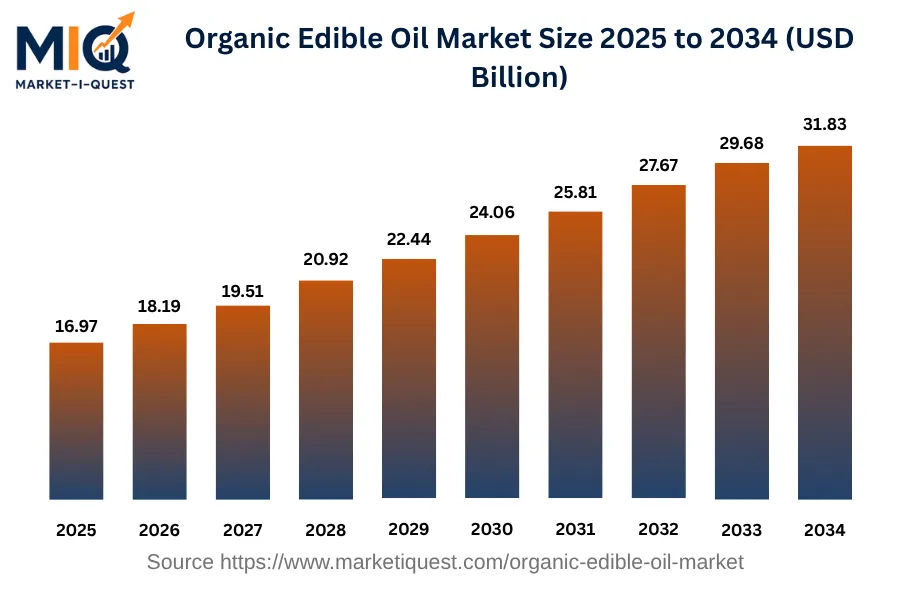
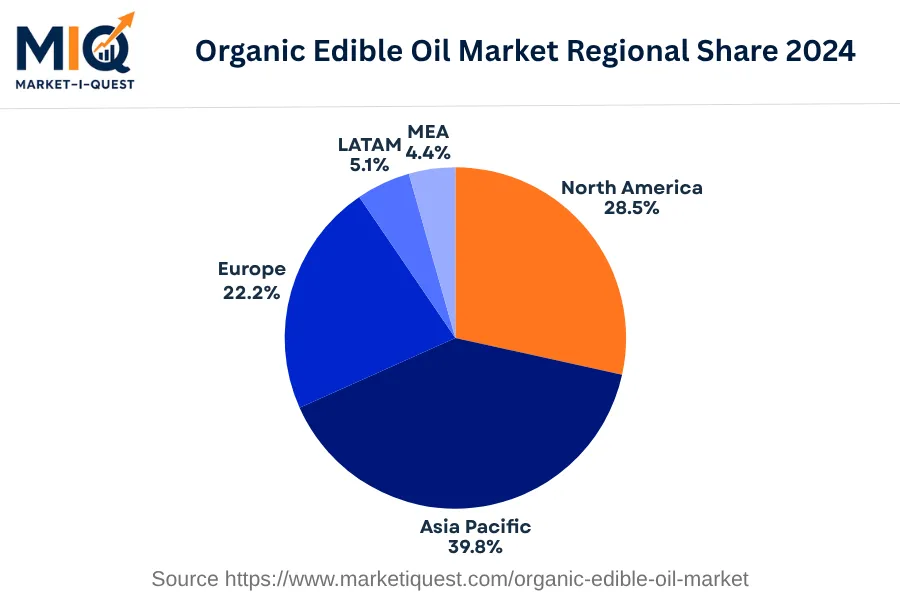
The Organic Edible Oil Market, valued at USD 15.82 billion in 2024 and projecting to reach USD 16.97 billion in 2025, is expected to increase to USD 31.83 billion by 2034, exhibiting a CAGR of 7.24%. This growth is primarily due to an upsurge in the demand for organic edible oils across the globe. Consumers' shifting preference from conventional to organic products, as well as increased awareness on health benefits and safer usage of organic products, have been driving this market. As of 2024, the regional market share shows Asia Pacific dominating with 39.8%, followed by North America at 28.5%, Europe at 22.2%, Latin America (LATAM) at 5.1%, and Middle East and Africa (MEA) at 4.4%.

Key Takeaways

  • By Type - Virgin Organic Oils led the market accounting for a significant share in the base year.
  • By Source - Seed Oils held the dominant position contributing to the majority market share in the specified year.
  • By Packaging Format - Bottles has been the top choice holding a substantial share in the Organic Edible Oil Market.
  • By Application - Cooking ranked as the leading subsegment in the application category pointing towards a high consumption trend.
organic-edible-oil-market market size

Key Driving Factors

Increasing Consumer Health Awareness

The organic edible oil market is being driven, in part, by a marked upturn in consumer health awareness. A significant segment of individuals around the globe is becoming more informed about the dietary implications of different types of oils on their cardiovascular health, especially regarding cholesterol levels and heart disease risk. Traditional edible oils have been closely tied to these health concerns, prompting consumers to seek healthier alternatives. Organic oils, made without pesticides or chemicals, pose much lower associated health risks and are thus gaining popularity. This, in turn, is fueling the organic edible oil market with several manufacturers now releasing and promoting organic alternatives to traditional edible oils.
Stricter Food and Safety Regulations

Alterations in food safety policies are also directing the expansion of the organic edible oil market. Numerous international bodies and local government agencies have been strengthening food safety regulations. They've been particularly focused on reducing the use of synthetic additives and chemicals in food products, including edible oils. These stricter regulations are coercing manufacturers to turn towards organic sources for their products, as non-compliant items face the risk of being banned or penalized. The outcome of these policy amendments is an increase in demand for organic edible oils, directly influencing the market's growth trajectory.

Market Evolution by Timeline

2019-2023
During 2019-2023, health-conscious consumers in North America and Europe drove the demand for organic edible oils. Major providers such as AAK AB and Cargill Incorporated responded by releasing organic variants of canola, sunflower, and soybean oils. Some product launch constraints included increased extraction costs and lower yield. The European Union's regulation EC 834/2007 supported the uptake of organic oils by setting strict production standards. Common pricing strategies included premium pricing in line with the higher cost and perceived value of organic products. Supplier-consumer partnerships surfaced in superfood trends, with consumers seeking chia and flaxseed oils. The risk of low organic crop yield was typically mitigated by blending organic and conventional oils.
2024
In 2024, India emerged as a significant consumer market for organic edible oils due to its rising middle class and increased awareness of organic products. The supply was led by both local providers and global enterprises such as Bunge Limited. Additionally, palm oil witnessed growth as an organic alternative to hydrogenated oils, catalyzed by sustainable production efforts in Malaysia and Indonesia. EU's amendment to EC 834/2007 regulated post-production practices, further setting the standard for product integrity and quality. Pricing saw a slight decline due to increased market competition. Palm oil producers were faced with risks such as deforestation accusations and their response included implementing Roundtable on Sustainable Palm Oil (RSPO) practices.
2025-2029
During 2025-2029, buyer interest spread to emerging economies in Africa and South America, supported by economic growth and health education. Major suppliers like Archer Daniels Midland Company expanded their reach to target these new markets. Technology evolved to emphasize cold-press extraction methods that preserve vitamins and essential fatty acids. The USDA's organic agriculture standard from 2025 promoted organic oil adoption in the US market. Major contract structures typically included fixed-volume long-term contracts. Corporations responded to increased regulatory scrutiny and consumer demand for sustainability by securing supply chains and acquiring bio-based certifications for their products. Price volatility remained a risk due to fluctuating crop yields.
2030-2034
By 2030-2034, focus on sustainability increased demand among environmentally aware consumers. Large-scale suppliers such as Wilmar International Limited maximized use of bio-waste in their oil extraction processes, thereby attracting eco-conscious buyers. Rapid integration with blockchain allowed for complete traceability of organic crops, vouched for by the International Organization for Standardization's ISO 3410:2032 standard in data transparency. Companies typically adopted a direct-to-consumer commercial model with flexible contracts. Prices reached a steadier state due to increased investment in organic farming practices, reducing crop yield uncertainties. Risks involved maintaining product quality to meet stringent organic standards amid rising demand.

Future Market Outlook

Future Opportunities

The prospective evolution of the organic edible oil market is closely tied to various prevailing factors. A rising consumer preference for health-oriented products provides fertile ground for companies to explore new organic oil variants. For instance, in early 2023, the American Heart Association updated its dietary guidelines, spotlighting the importance of choosing oils rich in unsaturated fats. As a response, brands like Spectrum Organics are likely to expand their offerings of heart-healthy oils, meeting consumer demands for better nutrition. The legal emphasis on sustainability is another significant driver; the European Union has proposed stringent regulations to limit the environmental impact of agricultural practices, set to take effect by 2025. This regulatory environment may stimulate investments in environmentally friendly production methods among oil manufacturers, including soil regeneration techniques. Seasonal variations in crop yields will also impact availability, signaling opportunities for producers to pivot towards less common oil sources such as walnut or pumpkin seed oils. In 2023, several startups, such as Fresh Pressed Olive Oil, have begun capitalizing on niche markets by offering subscription services for specialized oils. The increasing awareness of the health benefits associated with organic, non-GMO oils will likely prompt further interest from consumers and retailers alike. These evolving preferences and regulatory frameworks collectively position the organic edible oil market for dynamic changes in the coming years.

Segmentation Analysis

By Type

The market is divided into subsegments including Virgin Organic Oils, Extra Virgin Organic Oils, Refined Organic Oils, and Blended Organic Oils. Virgin Organic Oils accounted for the largest revenue share while Refined Organic Oils is expected to grow at the fastest CAGR during the forecast period.

Largest Revenue Share

Virgin Organic Oils

Market Share Leader

Virgin Organic Oils as the dominant subsegment in this market can be attributed to multiple factors driven by consumer preferences, health and wellness trends, and regulatory environment. Consumers are increasingly seeking out organic products due to perceived health benefits and concerns over harmful pesticide residues. Virgin organic oils, being unrefined and cold-pressed, retain more nutrients and beneficial compounds as compared to their refined counterparts. This subsegment's growth is benefitted by the rise of health-conscious consumers with a higher willingness to pay for quality products. The immense popularity of the Mediterranean diet, noted for its health benefits, is also driving the demand for virgin organic oils, especially in mature markets like Europe and North America. The tough regulatory stance against genetically modified organisms in many regions also favor the segment, as consumers associate 'organic' with 'non-GMO'. The increasing penetration of e-commerce and changes in consumer shopping habits have made it far easier for consumers to find and purchase niche products such as virgin organic oils.

Fastest CAGR

Refined Organic Oils

Forecast Period Growth Leader

The Refined Organic Oils subsegment is projected to grow at the fastest rate due to its wide range of applications and affordability relative to virgin or extra virgin oils. They are commonly used in food processing and preparation, as their lesser flavor intensity does not interfere with the taste of the overall dish. Besides, refined organic oils have a higher smoke point, making them suitable for frying and high-temperature cooking, enabling broad usage in the culinary world. The global trend toward organic farming, owing to environmental and health concerns, provides a strong groundwork for the subsegment's growth. Following a rigorous refinement process, these oils are free from impurities, which makes them appealing to health-conscious consumers. Despite the growth drivers, there are near-term risks associated with fluctuating raw material prices and supply chain disruptions due to geopolitical tensions and climate change. Notwithstanding these challenges, the subsegment's comprehensive usage and the growing organic trend are likely to fuel its growth.

By Source

The market is divided into subsegments including Vegetable Oils, Seed Oils, and Nut Oils. Seed Oils accounted for the largest revenue share while Nut Oils are expected to grow at the fastest CAGR during the forecast period.

Largest Revenue Share

Seed Oils

Market Share Leader

Seed oils, including popular variants such as sunflower oil, canola oil, and soybean oil, hold a significant portion of the market share due to their widespread use in the global food industry. Their versatility allows them to be used in a range of cuisines and food products, from bakery items to sauces and dressings. The high demand for these types of oils is down to their affordability and availability. Consumers often opt for seed oils due to their lower costs compared to other categories like nut oils. Additionally, optimization in the cultivation and processing of oilseeds like soybeans has boosted production, keeping prices competitive and supply stable. Moreover, large-scale seed oil producers have well-established relationships with retail and food industry buyers, strengthening its position. While health-conscious consumers are exploring other oil alternatives, the market size for seed oils, for now, remains steady and substantial.

Fastest CAGR

Nut Oils

Forecast Period Growth Leader

Despite trailing seed oils in revenue share, it is the Nut Oils category that shows the most promising growth prospects. This can be attributed to demographic shifts towards a health-conscious society. Nut oils, such as almond oil and walnut oil, are increasingly perceived as healthier, higher-quality alternatives to traditional vegetable and seed oils. They are rich in beneficial nutritional components like omega-3 fatty acids, and are heavily marketed for their potential health benefits. This consumer trend is driving nut oil sales, especially in developed markets consuming premium products. The growth can also be linked to the expansion of portfolio offerings by market players, who are exploring and producing a wider range of nut oil variants. However, it must be noted that higher production costs and premium pricing could be potential growth deterrents. Despite this, the trend towards healthier choices and the premiumization of everyday products present a positive outlook for this segment.

By Packaging Format

The market is segmented by packaging format including bottles, jars, pouches, and cans. In 2024, bottles hold the most significant revenue share while pouches are forecasted to exhibit the fastest growth.

Largest Revenue Share

Bottles

Market Share Leader

Bottles, as a packaging format, command the largest share in the current market due to various factors. In commercial operations, especially in the beverage industry, bottles are preferred due to their robust nature and easy handling. Bottles, being airtight and impermeable to moisture, elongate the shelf life of the product, providing a significant advantage to manufacturers. It's also noticeable that consumer preference leans towards the convenience, reusability and recyclability of bottles. This trend is centrally prevalent in both developed and developing countries. Moreover, regulatory authorities in many geographies promote the use of glass bottles due to their eco-friendly nature over plastic alternatives. Lastly, the established production, filling, and distribution channels for bottles also contribute to its dominance in the market.

Fastest CAGR

Pouches

Forecast Period Growth Leader

Despite bottles' dominance, pouches are the fastest growing subsegment. Their flexible packaging allows for ease of transportation, mitigating the risk of product damage during transit. They also offer cost advantages in terms of less material usage and reduced transportation costs due to their lighter weight. A surge in e-commerce, particularly in the convenience food and beverage industry, fuels the adoption of pouches. Increasing consumer demand for portable and lightweight packaging supports their popularity. Furthermore, advancements in packaging technologies have led to improved barrier properties of pouches, preserving the product freshness for a longer period. However, there are potential challenges such as recycling issues and perceived lower premium feel compared to the traditional hard packaging formats.

By Application

The market is divided into subsegments including Cooking, Baking, Salad Dressings, Sauces & Dips, and Personal Care Products. Cooking accounted for the largest revenue share while Personal Care Products is expected to grow at the fastest CAGR during the forecast period.

Largest Revenue Share

Cooking

Market Share Leader

The Cooking subsegment holds the largest revenue share in 2024. This is primarily because cooking is a daily routine in households across the world and these products are integral for meal preparation. Moreover, with the rise in the number of home-cooks and food enthusiasts, the use of the products for cooking purposes has increased significantly. The emergence of various cooking methods has also encouraged the use of diverse products in the process. In addition, commercial sectors such as restaurants, cafes, and food processing industries also contribute to the high sales volume for the cooking category. Geographically, populous countries with robust culinary cultures, such as India and China, contribute significantly to the revenue. At this juncture, it is important to consider the impact of regulations on this subsegment. Health and safety standards in different territories influence the selection and use of products that comply with these regulations.

Fastest CAGR

Personal Care Products

Forecast Period Growth Leader

Despite not holding the largest share in the current revenue, the Personal Care Products subsegment is expected to grow at the fastest CAGR during the forecast period. This growth can be attributed to the increasing awareness about the benefits of natural and organic products among consumers. This awareness serves as a catalyst, encouraging manufacturers to innovate and offer a wider range of nature-based products suitable for personal care. On the other hand, adoption barriers include consumers' reluctance to switch from well-established synthetic products to natural ones, coupled with the higher costs of these natural alternatives. In terms of tech-based catalysts, advancements in formulation technology have played a substantial role in boosting this subsegment. So, while the initial capital expenditure may be high, partnerships with local producers can mitigate supply chain risks, bolstering this subsegment's growth momentum in the near term.

Competitive Analysis

Key Market Players

Manufacturers / OEMs

Cargill, Incorporated
US
The Archer Daniels Midland Company
US
Bunge Limited
US

Key Suppliers & Raw Materials

New Britain Palm Oil Limited
Papua New Guinea
Wilmar International Ltd
Singapore
IOI Group
Malaysia

Distributors, Integrators & Channel Partners

Musim Mas Group
Singapore
Pacific Oils & Fats Industries Sdn Bhd
Malaysia
Mewah Group
Singapore

Porter’s Five Forces Analysis

This analysis assesses the competitive position of the Organic Edible Oil Market.

Supplier Bargaining Power

Medium

Power influenced by availability of raw materials and their price volatility.

Buyer Bargaining Power

High

Numerous sellers and increased awareness about organic products enhance buyer's negotiation power.

Threat of Substitutes

Low

Non-organic oils are cheaper but health conscious consumers prefer organic oils.

Threat of New Entrants

Medium

Entry barriers are moderate due to certification needs and investment in organic sourcing.

Competitive Rivalry

High

Numerous brands compete on price, quality, and distribution channels.

Regional Analysis

Geographic market dynamics and growth opportunities across key regions

Global Market Outlook

organic-edible-oil-market market regional share

North America

In 2024, the Organic Edible Oil Market in North America was characterized by dynamic drivers and emerging trends. Demand was primarily fueled by increased consumer preference for healthier and eco-friendly products. Regulations, such as the USDA's National Organic Program (NOP) and Canada's Organic Products Regulations, compelled manufacturers to fortify supply chains with certified organic producers. Investment in research and technology had served to improve organic oil extraction processes, leading to better efficiency and product quality.

Buyer behavior further reflected the rising health consciousness and demand for organic edible oil. Consumers' willingness to pay premium prices for organic oils had encouraged retailers and supermarket chains, like Walmart and Whole Foods, to expand their organic products range. The market witnessed the use of advanced technologies like cold-press extraction gaining momentum, enhancing the nutritional profile of the oil. A surge in M&A activities was observed as major stakeholders, like Cargill and Archer Daniels Midland Company, strived to assimilate smaller, niche organic firms to diversify their product portfolios and increase market share. Regulatory bodies played a key role in standard enforcement and policy implementation to safeguard consumers and sustain market health. The primary customers of organic edible oil in 2024 spanned across home cooking, restaurants, food processing enterprises, and specialty stores.

Asia Pacific

In 2024, the Asia Pacific organic edible oil market was experiencing a significant surge. Key drivers included escalating health consciousness among consumers, mainly in China, India, and Australia, prompting higher demand for chemical-free food products. Regulatory initiatives, such as India's National Programme for Organic Production, incentivized organic oil production by providing subsidies and technical guidance. Digitalization and e-commerce platforms, particularly in China and South Korea, facilitated widespread accessibility to these organic oil products, reshaping supply dynamics.

The market trends saw a shift towards coconut and palm oil, particularly in ASEAN markets, due to their health benefits and versatile applications in food processing and cosmetics. There was a tidal wave of direct partnerships between organic edible oil manufacturers and retail chains, leading to an increased presence in supermarkets across the Asia Pacific region. Japan set a trend by rigorously enforcing the JAS Standards for Organic Plants and Organic Processed Foods, ensuring product quality and bolstering consumer trust. Demand was particularly strong from the retail sector, which capitalized on the growing consumer preference for organic products, and the healthcare sector, where organic oils were prominently used in pharmaceuticals and wellness products. Typically, these sectors were able to tap into the burgeoning middle-class demographic which largely drove the market in 2024.

Europe

In 2024, the European Organic Edible Oil Market was primarily driven by increasing consumer preference for health-conscious food choices. Rising awareness about harmful effects of synthetic and genetically modified oil products, along with growing European Union advocacy and regulations for organic farming, have fueled the demand for organic edible oils. Moreover, investments in technological innovations and improved supply chain management have ensured greater market accessibility, consequently boosting market growth.

Shifting consumer trends towards sustainable and eco-friendly farming processes have reshaped purchasing behavior, leading to growth within the organic edible oil market. Particularly in Germany, UK, and France, the demand for cold-pressed and unrefined oils has seen a substantial increase due to their perceived health benefits. A noticeable trend in Italy and Spain is the growing popularity of organic olive oil, driven largely by traditional dietary preferences. A strategic alliance between retail giants and organic oil producers, mainly noticeable in the Benelux region and Central & Eastern Europe, has further spurred the market. Moreover, stringent enforcement of organic certification standards has strengthened consumer trust and is a key factor driving the growth in the Nordics. Demand from various sectors, namely healthcare, catering and retail, has also been pivotal in shaping the 2024 Organic Edible Oil Market in Europe.

Latin America

In 2024, the Latin American Organic Edible Oil Market experienced substantial development, driven by increasing health consciousness among the population, stringent governmental regulations, and technological advancements in oil extraction.

Consumer demand for organic products, particularly in Brazil and Mexico, stimulated market growth. Government regulations that promote organic farming, such as Argentina's National Program for Organic Production (PRONAO), positively influenced supply dynamics. Meanwhile, investment in advanced oil extraction technologies enhanced production efficiency in Colombia, leading to a substantial increase in export volume.

Emerging trends sought to shape the market outlook as well; an increasing preference for online shopping, prompted by the pandemic, led to changes in distribution channels, especially in digitally advanced regions like Chile. Trends towards healthier eating and fitness awareness in Peru also contributed to a more conscious buyer behavior towards organic oil consumption in the region. Additionally, numerous local manufacturers entered into partnerships or mergers to consolidate their market position and expand their product portfolio, obeying the increased consumer demand for diverse organic oil options. Policy enforcement for product labeling and specifications improved buyer trust and market transparency.

The market's main consumers included households, restaurants, and food manufacturers, primarily those producing health and wellness products. Additionally, retailers and e-commerce companies played a crucial role in the distribution and sales of organic edible oils in Latin America during 2024.

Middle East & Africa

In 2024, the Organic Edible Oil Market in the Middle East and Africa maintained a robust pace influenced by several factors. The enactment of rigorous governmental regulations, like Saudi Arabia’s SFDA guidelines on organic certifications, fostered market growth. Increased investment in technological innovations in the United Arab Emirates resulted in superior oil extraction methods, contributing to production efficiency. Heightened health consciousness in populous countries such as Egypt and Nigeria stimulated demand, while resilient supply dynamics in Israel and South Africa stabilized pricing.

Market trends emerged, primarily driven by shifts in consumer behavior, towards healthier alternatives and premium products. In South Africa, there was an increased preference for locally sourced organic oils, boosting small-scale producers and reshaping distribution channels. Concurrently, several agri-businesses and oil manufacturers engaged in strategic partnerships and M&A, evident in Kenya’s edible oil sector, aiming to increase organic oil product lines. Furthermore, stricter policy enforcement on organic standards in countries like Qatar resulted in greater market integrity.

This market's beneficiaries spanned various sectors, including health, retail, manufacturing, and financial services. The oil and gas industry also significantly contributed to the market due to increased biolubricant applications. Overall, the Organic Edible Oil Market's driving forces and trends shaped the commercial landscape in the Middle East and Africa in 2024.

Recent Industry Developments

Latest market innovations, product launches, and strategic initiatives

February 2026

The Indian Vegetable Oil Producers' Association (IVPA) reported that India's domestic edible oil production is projected at 9.6 million tonnes against an import demand of 16.7 million tonnes. The supply-demand gap has triggered increased domestic policy shifts toward localized organic oilseed cultivation and cold-pressed extraction initiatives.

September 2025

Agribusiness leader Cargill introduced a next-generation line of 100% recyclable, circular-economy packaging for its commercial and retail organic edible oil lines. The initiative optimizes shelf-life barrier retention against light and oxygen while reducing post-consumer plastic footprint across global supply networks.

Frequently Asked Questions