Natural Gas Fired Electricity Generation Market Snapshot

Key Players

  • Duke Energy (United States)
  • Enel (Italy)
  • E.ON (Germany)
  • Gazprom (Russia)
  • ENGIE (France)
  • AES Corporation (United States)
  • Centrica (United Kingdom)
  • Suez (France)
  • Alinta Energy (Australia)
  • Petronas (Malaysia)

Market Size

Base Year 2024
$104.38 Bn
CAGR
4.92%
Forecast 2034
$168.73 Bn

Market Segments

By Technology
Combined Cycle, Open Cycle, Cogeneration
By Power Output
Less than 100 MW, 100–500 MW, 500–1000 MW, Above 1000 MW
By Fuel Source
Sweet Natural Gas, Sour Natural Gas, Liquefied Natural Gas (LNG)
By End Use
Residential, Commercial, Industrial

Market Dynamics

Drivers
  • Increasing demand for electricity
  • Environmental regulation compliance
Restraints
  • Regulatory emissions restrictions
  • Cost volatility of natural gas
Opportunities
  • Increasing demand for clean energy
  • Technological advancements in gas turbines

Market Size

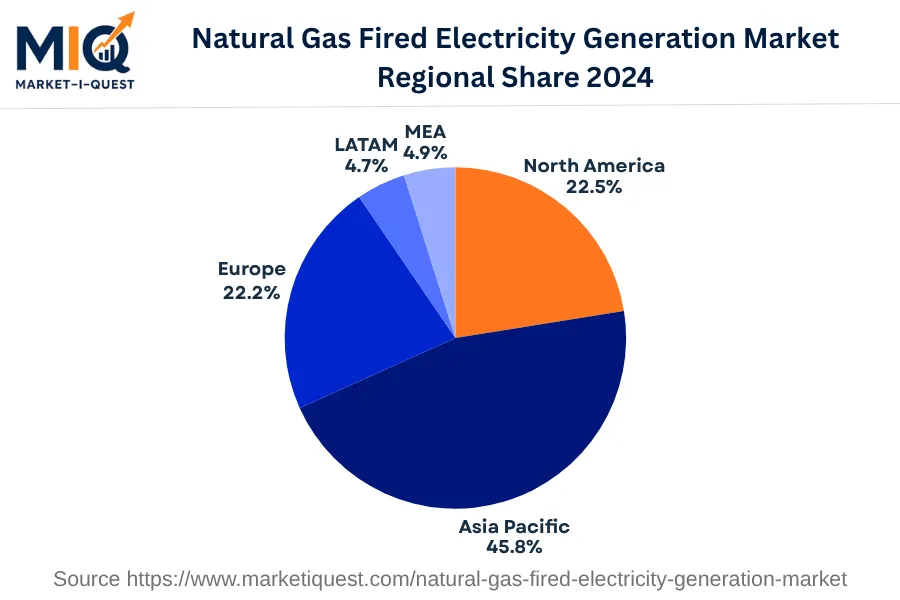
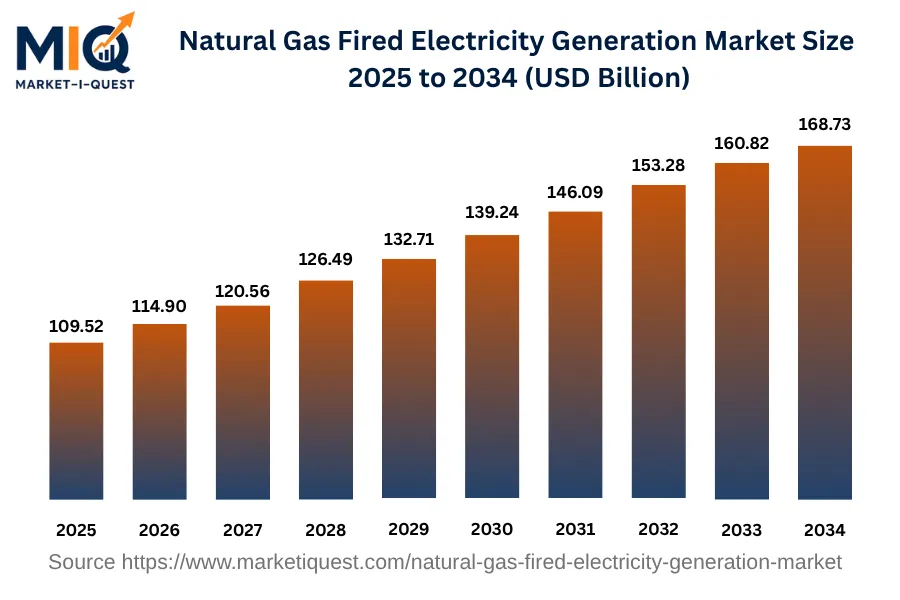
The Natural Gas Fired Electricity Generation Market was valued at $109.52 billion in 2025 and is expected to reach $168.73 billion by 2034, growing at a CAGR of 4.92%. This increase is based on a growth pattern observed from 2024, when the market was valued at $104.38 billion, indicating a continuous and steady rise over a ten-year period. This consistent growth is likely attributable to the tangible shift towards cleaner energy sources, with Natural Gas Fired Electricity offering a more environmentally friendly alternative in the energy sector. Geographically in 2024, the largest share of this market was in the Asia Pacific region at 45.82%, followed by North America and Europe with a nearly equal share of 22.46% and 22.18% respectively. The remaining shares were held by LATAM and MEA at 4.67% and 4.87%.

Key Takeaways

  • By Technology - Combined Cycle held the majority share in 2024.
  • By Power Output - 100–500 MW segment was predominant contributing effectively towards natural gas electricity generation.
  • By Fuel Source -Sweet Natural Gas led the market accounting for substantial share of power generation in 2024.
  • By End Use - Industrial sector stood out as the leading consumer of Natural Gas Fired Electricity in 2024.
natural-gas-fired-electricity-generation-market market size

Key Driving Factors

Implementation of Carbon Emission Regulations

In the ongoing climate change fight, many nations are implementing stringent carbon emission regulations. Natural gas, due to its low carbon emissions compared to coal or oil, is preferred for generating electricity. This shift is especially noticeable in developed countries like the U.S., where power plants previously reliant on coal are now converting to natural gas. These regulations spur the expansion of the natural gas fired electricity generation market as power producers must align their operations with environmental goals.

Cost-efficiency of Combined-Cycle Gas Turbine (CCGT) Plants

The growing prominence of Combined-Cycle Gas Turbine (CCGT) plants is another significant driver. These plants use both a gas and steam turbine together to produce up to 50% more electricity from the same fuel than a traditional simple-cycle plant. As a result, they offer efficient power generation with a lower fuel cost per kilowatt hour compared to other sources. Power producers, seeking to deliver reliable electricity at a competitive cost, favor natural gas-fired CCGT plants, which augments the expansion of the natural gas fired electricity generation market.

Market Evolution by Timeline

2019-2023
During 2019-2023, the electricity sector primarily leveraged natural gas-fired power generation, mostly in North America and the Middle East. High accessibility and low costs positioned natural gas as a preferred fuel source. Combined-cycle power plants saw increased usage due to their efficiency at converting fuel into electricity. Regulation patterns underscored a shift towards cleaner burning fuels, shown when the U.S. Energy Information Administration forecasted a 40% rise in natural gas-fired capacity. Commercially, most energy contracts were long-term supply arrangements, with few instances of consortium-based procurements. The biggest risk during this period was price volatility, often mitigated via contractual hedging mechanisms.
2024
In 2024, the market saw slight demand contraction in certain regions due to the global trend of renewable energy sources. European countries and China noticeably shifted towards wind and solar technology. Despite this, natural gas still remained a key power source in the Middle East and North America. Technology did not significantly change, but advanced turbine models showed a moderate uptake. Regulation favored cleaner technology, motivating a moderate transition. Commercial models did not change significantly, and long-term contracts remain common. The risks increased due to pressure to adopt greener fuels.
2025-2029
Between 2025 and 2029, global trends turned towards hybrid energy plants to improve performance—combining gas-fired generators with renewable technology. This allowed continued demand for natural gas, while also adhering to regulations requiring lower emissions. Countries weaning off coal, like India, further bolstered demand. Bright spots were seen with grid optimization and 'peaker' plants, assisting in supply management during peak demand hours. Policy initiatives, like the Green New Deal, drove market direction on a regulatory level. Risks became elevated with increasing interest in fully renewable solutions, driving many providers towards hybrid solutions.
2030-2034
During 2030-2034, carbon capture, utilization, and storage (CCUS) techniques became prominent. These technologies allowed cleaner use of natural gas, keeping it relevant in the shifting energy market. Countries such as Canada, the U.S., and Japan made efforts in this direction. Commercial models began reflecting carbon sequestration costs. Policy, especially in the European Union and the U.S., further pushed emissions limits, making CCUS essential for market survival. Demand remained globally consistent, bolstered by CCUS's usage. The risk therefore remained dependent on technological advances and regulatory responses to carbon emissions.

Future Market Outlook

Future Opportunities

Opportunities in the natural gas fired electricity generation market are becoming increasingly apparent as countries navigate energy transitions. The 2023 energy strategy published by the government of Germany emphasizes the need for natural gas to support the nation's phase-out of coal and enable the integration of renewable energies. As renewable capabilities grow, natural gas plants serve as a necessary balancing resource, particularly in regions like Texas, where high wind energy production requires backup generation. Market players are capitalizing on this trend, exemplified by the partnership between Shell and Gas Natural Fenosa in Spain, focusing on the development of flexible gas-fired plants that can quickly ramp up to meet fluctuating demand. Coupled with advancements in carbon capture utilization and storage (CCUS) technologies, such as those being developed by Carbon Clean Solutions, the sector can enhance its sustainability profile while facilitating a gradual transition to hydrogen-blended fuels. Additionally, the potential for developing regional gas hubs, particularly in Southeast Asia, opens avenues for collaboration and investments in infrastructure. As the geopolitical landscape evolves, especially following the disruptions in energy supply caused by Russia's actions in Ukraine, diversifying natural gas sources remains critical, providing a viable pathway for energy security while supporting decarbonization goals across various nations.

Segmentation Analysis

By Technology

The market is divided into subsegments including combined cycle, open cycle, and cogeneration technologies. The combined cycle leads the market with the largest revenue share, while the open cycle indicates the fastest outlook for growth.

Largest Revenue Share

Combined Cycle

Market Share Leader

In the technology-based market, the combined cycle subsegment is observed to have the major revenue share as of the base year 2024. This dominancy can be attributed to several key factors. The foremost driving factor is the high efficiency level of combined cycle technology. The ability to use two forms of energy from a single fuel source significantly accentuates its attractiveness resulting in higher adoptions. It also gives power plants the capability to generate nearly twice the amount of electricity from the same quantity of fuel when compared to traditional generation methods. Besides, these stations offer lower carbon emissions, making them a favorable choice amongst power generating organizations amid growing stringent environmental regulations globally. Additionally, the burgeoning demand from industrial and residential customers, coupled with supportive government policies in emerging economies, is driving the market. The constraints and strengthened emission regulations on coal-fired stations are also serving as a driving catalyst for the combined cycle subsegment. Finally, entrenched supply chains and well-established infrastructure also contribute to its largest market share.

Fastest CAGR

Open Cycle

Forecast Period Growth Leader

Despite not being the largest in terms of revenue, the open cycle technology is posed to grow at the fastest pace. This is primarily due to its distinct advantages and growing acceptance. One of the primary advantages of open cycle systems is their ability to be started quickly, making them highly suitable for peak load conditions. Moreover, they require less capital investment compared to combined cycles which can be attractive to emerging economies. As the world moves towards distributed generation, open cycle systems can fit into the grid easily, providing back-up power during outages or other system emergencies. Catalysts for growth include technological advancements that allow these plants to be more efficient and cheaper to operate, and regulatory support for cleaner burning fuels. However, their adoption may be hindered by their lower efficiency compared to combined cycle systems, and the volatility in the cost of natural gas, which is a common fuel for these plants. The faster growth outlook for open cycle systems is based on the assumption that the relative importance of peak-load generation capacity and lower capital investment will outweigh the higher operation costs.

By Power Output

The market is divided into subsegments including less than 100 MW, 100–500 MW, 500–1000 MW, and above 1000 MW. The 100–500 MW sector accounted for the largest revenue share while the over 1000 MW segment is expected to grow at the fastest CAGR during the forecast period.

Largest Revenue Share

100–500 MW

Market Share Leader

The 100-500 MW range segment leads the market in revenue due to its versatility across a variety of applications. This power range supports a broad spectrum of industries including manufacturing, construction, and data centers, among other sectors. These engines are not only cost-effective but also adaptable, ensuring an efficient power solution for most enterprises. As industrialization continues to advance in emerging economies, the demand and consequently the revenue of this segment is expected to grow steadily. Regulatory factors further boost this segment, as governments often encourage the use of energy-efficient generators. These middle-range power systems meet multiple purchase criteria such as cost, scalability, and efficiency, making them the favorable choice for many industries. Customer loyalty and reluctance to switch to alternatives due to related costs additionally strengthen this segment's leading position in the market.

Fastest CAGR

Above 1000 MW

Forecast Period Growth Leader

Above 1000 MW segment is projected to be the fastest growing subsegment of the market. This expected surge is driven by the expanding energy demands of heavy industries and fast-growing cities around the world. Large-scale projects involving intense power usage are turning their attention towards high capacity generators, thus providing a growth catalyst for this subsegment. Expansive technological developments also contribute to powering this growth. Advancements in technology have improved overall machine efficiency and lower the need for capital expenditure on maintenance, making the over 1000 MW appealing for businesses. Despite the higher initial costs, partnerships are addressing financing concerns by sharing these costs, thereby lowering the entry barriers. However, fluctuations in fuel prices and stringent emission norms pose near-term risks for this segment's growth prospects.

By Fuel Source

The market is divided into subsegments including Sweet Natural Gas, Sour Natural Gas, and Liquefied Natural Gas (LNG). Sweet Natural Gas accounted for the largest revenue share while Liquefied Natural Gas is expected to grow at the fastest CAGR during the forecast period.

Largest Revenue Share

Sweet Natural Gas

Market Share Leader

The dominance of Sweet Natural Gas subsegment is driven by several factors. Primarily, Sweet Natural Gas is preferred due to its fewer corrosive properties and less intensive processing needs compared to Sour Natural Gas, which contains higher levels of sulfur. Lower processing requirements translate into lesser capital and operational expenditure for extraction and purification, making it more cost-effective. Sweet Natural Gas also possesses higher calorific value, making it ideal for residential heating and power generation, two of the biggest consumers of natural gas. Geographically, regions like North America and Western Europe with large natural gas reserves are primarily consumers, driving demand and hence, revenue. Further, the regulatory landscape in these regions encourages the use of cleaner fuels, enhancing the prospects for Sweet Natural Gas.

Fastest CAGR

Liquefied Natural Gas (LNG)

Forecast Period Growth Leader

The Liquefied Natural Gas (LNG) subsegment is poised to grow at the fastest rate. The key growth drivers for this subsegment are its superior storage and transport capabilities compared to its counterparts. By converting gas to a liquid state, its volume is significantly reduced, making transportation economically feasible, even for long distances. This advantage is particularly critical in regions where gas pipelines are not readily available or feasible. Moreover, the increasing emphasis on clean energy sources to combat climate change is pushing governments and corporations to shift towards natural gas, with LNG as a preferred option. However, the high capital costs associated with setting up liquefaction plants and the need for specialized storage and transport infrastructure are barriers to adoption. Strong policy support, strategic partnerships for infrastructure development, and advancements in technology are critical catalysts to overcome these barriers and tap into the high growth potential of this subsegment.

By End Use

The market for segment_4 is diversified into Residential, Commercial, and Industrial segments. The Industrial subsegment brings in the highest revenue, while the Commercial segment anticipates the fastest growth rate during the forecast period.

Largest Revenue Share

Industrial

Market Share Leader

The Industrial subsegment is responsible for the majority of the revenue in the segment_4 market primarily because of the scale of operations and continuous demand for the market's products and services within this sector. High-performance industrial processes, sophisticated equipment, and the growing adoption of automated solutions amplify the demand. Factors contributing to the success of this subsegment are the continuous technological advancements and expanding manufacturing operations due to globalization. Industrial firms are also able to purchase and engage these products and services in volume, which significantly boosts the segment's revenue. The concentration of industries in developed regions of the globe, such as North America and Europe, further strengthens the subsegment’s revenue generation capacity. Lastly, regulatory requirements mandating the use of certain market products also plays a significant role in the revenue generation of the industrial subsegment.

Fastest CAGR

Commercial

Forecast Period Growth Leader

The Commercial subsegment is expected to expand at the fastest rate in the coming years. This growth is primarily fueled by increasing business activities, rising demand for high-quality services, and an ongoing shift towards innovative and efficient solutions. Adopting these solutions enable businesses to optimize operational efficiency, reduce costs, and maintain competitive advantage. The transformation of the commercial sector through digitalization and the adoption of advanced technologies play a crucial role in the growth of this subsegment. Growth barriers include high initial cost and technical complexities of deployment. However, progressive policies encouraging innovative solutions and technology implementation, plus strategic partnerships, are expected to overcome these barriers and expedite adoption. It's essential to consider the potential near-term risks associated with regulatory changes and geopolitical uncertainties that may impact the subsegment's rapid growth.

Competitive Analysis - Natural Gas Fired Electricity Generation

Key Market Players

Manufacturers / OEMs

GE Power
US
Siemens Energy
Germany
Mitsubishi Heavy Industries
Japan

Key Suppliers & Raw Materials

ExxonMobil
US
Royal Dutch Shell
Netherlands
Gazprom
Russia

Distributors, Integrators & Channel Partners

ABB
Switzerland
Schneider Electric
France
Emerson Electric Co
US

Porter’s Five Forces Analysis

This analysis evaluates powers influencing the natural gas-fired electricity generation market.

Supplier Bargaining Power

Medium

Suppliers possess moderate influence due to the availability of other energy generation methods.

Buyer Bargaining Power

High

Buyers hold high power due to the diverse range of alternative, renewable energy sources.

Threat of Substitutes

High

Threat is high due to emergence of renewable energy sources like solar and wind power.

Threat of New Entrants

Medium

Entry is moderately difficult due to regulatory requirements but feasible with adequate capital.

Competitive Rivalry

High

Intense rivalry caused by high fragmentation and increasing competition from renewables.

Regional Analysis

Geographic market dynamics and growth opportunities across key regions

Global Market Outlook

natural-gas-fired-electricity-generation-market market regional share

North America

In 2024, the Natural Gas Fired Electricity Generation Market in North America stood as a critical energy source, notably within the United States, Canada, and Mexico. Inclining demand from industrial and residential consumers primarily drove the market, triggered by the prioritization of clean energy alternatives to traditional coal-based power. Robust investments in technology upgradation brought in modern high-efficiency, low-emission (HELE) gas-fired power plants, hailing a new era of cleaner electricity generation. Regulatory introductions such as the Clean Power Plan in the U.S. further fueled the shift towards gas-fired electricity, encouraging utilities, manufacturing units, and significant commercial players to adopt this cleaner source of energy. However, the market experienced constraints by volatile natural gas prices and the pace of pipeline infrastructure development, impacting overall supply dynamics.

On the trends front, strategic partnerships and M&As became increasingly common to harness the vast potential of the market and mitigate risk posed by investment intense gas power-plant projects. There was a discernible shift towards combined-cycle power plants, favored for their higher efficiency and lower emissions. Consequently, policy enforcement around emission standards grew more stringent, necessitating innovation and adaptation. Moreover, available natural gas reserves accelerated decarbonization initiatives, notably in energy-intensive sectors like manufacturing and utilities, turning the spotlight on the industry's sustainability prospects.

Asia Pacific

In 2024, the Natural Gas Fired Electricity Generation Market in Asia Pacific displayed robust activity, predominantly driven by increasing energy demands, policy shifts, and technological advancements. Key factors propelling the market included escalating energy needs in manufacturing and other industrial sectors across China and India, and a decisive shift towards cleaner energy sources championed by the governments. Initiatives towards climate resilience, like Japan’s Strategic Energy Plan, catalyzed an investment surge in natural gas power infrastructure, benefiting the wider utilities sector. An emerging driver was the adoption of advanced gas turbine technologies in key ASEAN markets, which improved efficiency and reduced operational cost.

Simultaneously, the market faced interesting trends. There was a growing inclination among enterprises and government bodies to harness natural gas as a bridging fuel for transitioning to a low-carbon future. Technological changes such as modular gas-fired power plants gained traction in markets like Australia, offering greater scalability. In terms of strategic moves, partnerships were formed between local utilities and international firms dominating South Korea. Policy enforcement became stringent, with regulations such as India’s Environment Protection Act that aimed for tighter emission standards. Lastly, an observed uprising in gas pricing, especially in China, underscored the market unpredictability. These multifaceted drivers and trends shaped the dynamics of the Natural Gas Fired Electricity Generation Market in the Asia Pacific for 2024.

Europe

In 2024, the European natural gas-fired electricity generation market established a firm grip, propelled by various demand factors, regulatory frameworks and supply dynamics. A significant surge in demand was observed due to the shift towards low-carbon technologies and a desire for energy security. Across Germany and the UK, regulations such as the Large Combustion Plants Directive and Industrial Emissions Directive significantly encouraged the transition towards gas-fired plants. Notably, investments in pipeline infrastructure across Spain and Italy aided the secure supply of natural gas. Similarly, technology adoption was robust, particularly within Central and Eastern Europe, where modern gas turbines gained traction in the utilities sector, offering higher efficiency rates. The pricing landscape was largely driven by the diversification of gas supply sources, including domestic production in the Netherlands and imports from Norway and Russia.

Trends shaping the market in 2024 included a gradual shift towards digitalisation in the energy sector, witnessed in the rise of data analytics applications for improving plant efficiency. The Nordics and Benelux regions saw a significant increase in public-private partnerships for infrastructure development. Policy enforcement, especially the emphasis on reducing greenhouse gas emissions, continued to shape the market dynamics, driving a shift from coal-fired power plants to natural gas-fired plants, most notably in sectors such as manufacturing, government, and healthcare.

Latin America

In 2024, the Latin American (LATAM) Natural Gas Fired Electricity Generation Market navigated progressive economic and environmental landscapes with Brazil, Mexico, Argentina, Colombia, Chile, and Peru at the forefront. Drivers of this trend included the rising demand for clean and efficient energy, increasing natural gas reserves and favorable government policies. Brazil's pre-salt natural gas extraction boosted supply, while Mexico's energy reform initiative sustained investment in the sector. Moreover, Argentina's Matías Kranevitter gas-fired plant exemplified emerging technology adoption for improved efficiency. However, fluctuating gas prices created market volatility.

Accompanying these drivers were notable market trends. A shift towards renewable energy saw the gas-fired power generation as a stable, complementary supply to unpredictable solar and wind generation across utilities and manufacturing sectors. This caused enterprises to increasingly invest in gas-fired power plants. Similarly, enhanced technology resulted in a significant increase in the use of Combined Cycle Gas Turbine (CCGT) generators in countries like Chile and Peru. Governments enforced strict environmental policies and standards, pushing industries to adopt gas-fired power. Furthermore, strategic partnerships and mergers increased among gas distributors, power companies, and manufacturers, bolstering the market's resilience and expanding its reach across LATAM.

Middle East & Africa

In 2024, the Natural Gas Fired Electricity Generation Market in the Middle East and Africa witnessed significant developments. Driven by factors such as growing power demand, regulatory support, investment influx, technological advancements, robust supply dynamics, and competitive pricing, the market saw a surge in both value and volume. Key countries such as Saudi Arabia, Qatar, and UAE leveraged their rich gas reserves, while South Africa and Kenya heavily invested in infrastructure development. Market trends included a shift toward cleaner energy sources spurring natural gas use, bolstered by digitalization in utilities for more efficient gas-fired power plants. Countries like Egypt and Israel widely adopted natural gas as a transition fuel, contributing to unprecedented market growth. Large-scale commitments such as Saudi Arabia's Vision 2030 and UAE's Energy Strategy 2050 played instrumental roles in shaping the policy landscape, enhancing natural gas demand.

The market experienced significant activity across key sectors such as oil and gas, utilities, and manufacturing, led by government purchases. Simultaneously, companies were active in forming strategic partnerships while focusing on mergers and acquisitions as a mode of expansion. The absence of standardized regulations across the region posed a challenge, leading to a variance in market characteristics. Despite this, the greater adoption of natural gas still underscored a promising market trajectory in 2024.

Recent Industry Developments

Latest market innovations, product launches, and strategic initiatives

June 2026

Japan's JERA announced the successful commissioning of the world's first large-scale gas turbine co-firing 50% hydrogen at its Taketoyo thermal power station, a milestone for the role of hydrogen in decarbonizing gas-fired electricity generation. The facility is expected to transition to 100% hydrogen by 2035.

January 2026

The U.S. Environmental Protection Agency (EPA) published the final version of its greenhouse gas emission standards for existing gas-fired power plants, establishing compliance deadlines and emission reduction targets that will require significant investments in efficiency upgrades and carbon capture technologies.

Frequently Asked Questions