Nasal Drug Delivery Technology Market Snapshot

Key Players

  • AptarGroup Inc. (USA)
  • GlaxoSmithKline plc (UK)
  • Novartis AG (Switzerland)
  • Pfizer Inc. (USA)
  • Johnson & Johnson Services Inc. (USA)
  • Merck & Co. Inc. (USA)
  • Becton Dickinson and Company (USA)
  • Aegis Therapeutics LLC (USA)
  • AstraZeneca Plc (UK)
  • Teleflex Incorporated (USA)

Market Size

Base Year 2024
$74.63 Bn
CAGR
6.92%
Forecast 2034
$145.71 Bn

Market Segments

By Dosage Form
Nasal Spray, Nasal Drop, Nasal Gel, Nasal Powder
By Container Type
Pressurized Containers, Non-Pressurized Containers
By Therapeutic Application
Nasal Congestion, Rhinitis, Asthma, Others
By Distribution Channel
Hospital Pharmacies, Retail Pharmacies, Online Pharmacies

Market Dynamics

Drivers
  • Rising prevalence of chronic diseases
  • Advancements in nasal drug delivery technology
Restraints
  • Regulatory restrictions
  • Technological complexities
Opportunities
  • Increased patient preference for nasal drug delivery
  • Advancements in drug formulation technologies

Market Size

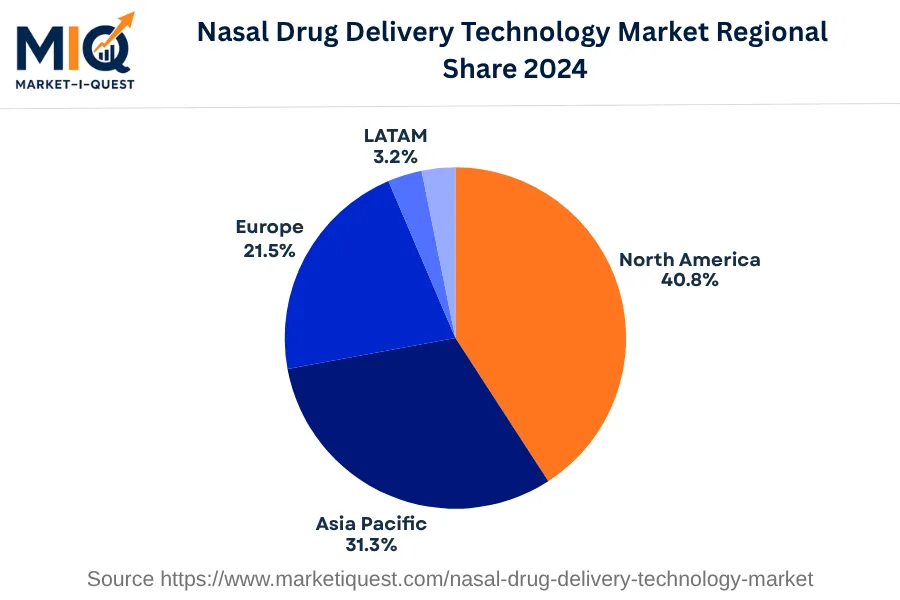
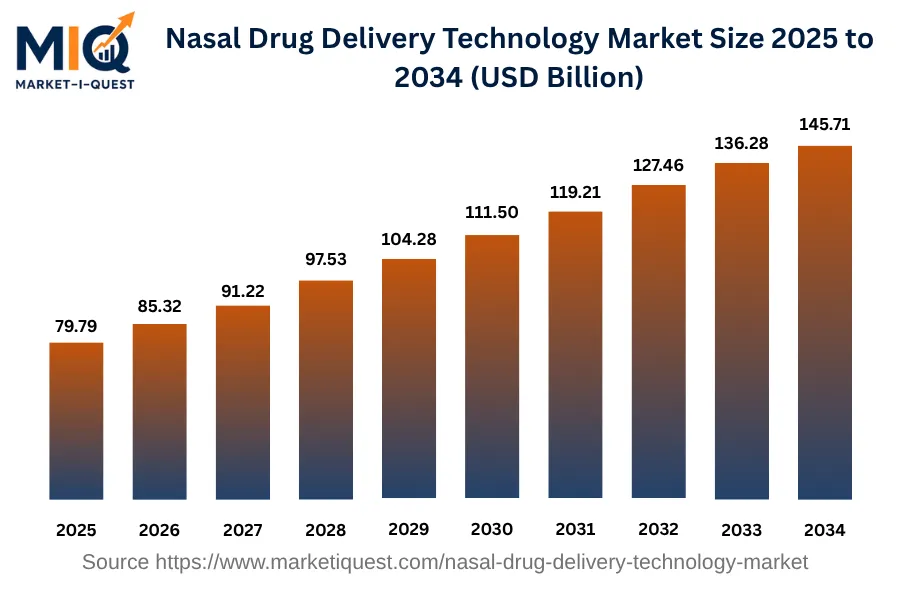
The Nasal Drug Delivery Technology Market, valued at 79.79 billion USD in 2025, is projected to grow to approximately 145.71 billion USD by the end of 2034, recording a compound annual growth rate (CAGR) of 6.92%. The market witnessed stable growth from 2024, when it was sized at 74.63 billion USD, to 2025. This steady growth trend is predicted to continue throughout the forecast period until 2034. Analyzing the regional market share for the year 2024, North America is reported to have the largest contribution with 40.8% of the global market share, followed by Asia Pacific with a share of 31.3%. Europe represents 21.5% of the market. The remaining portions are distributed among Latin America and the Middle East and Africa, which accounted for around 3.2% and 3.2% respectively.

Key Takeaways

  • By Dosage Form - Nasal Spray led the market accounting for the largest share registered in the base year.
  • By Container Type - Pressurized Containers emerged as leaders holding significant share in market presence.
  • By Therapeutic Application - Asthma showed strong dominance accounting for the most substantial sector coverage in market.
  • By Distribution Channel - Hospital Pharmacies generate the most revenue in our distribution channel analysis.
nasal-drug-delivery-technology-market market size

Key Driving Factors

Increasing Prevalence of Nasal-Related Health Conditions

The nasal drug delivery technology market is experiencing a surge mainly due to the increasing prevalence of nasal health conditions like rhinitis and sinusitis. In such conditions, nasal drug delivery provides a non-invasive and direct route for medication, thereby eliminating the risks attached with intravenous drug administration. This is especially important for patients with chronic diseases requiring long-term treatment. Moreover, this route of drug administration offers superior patient compliance in comparison to other methods like injections. Health organizations and hospitals, currently act as the primary procurers of nasal drug delivery technologies, leading to a substantial push in the market adoption rate.

Adoption of Patient-Centric Drug Delivery Designs

The nasal drug delivery technology market is also spurred by the growing trend of patient-centric drug delivery designs. More research and development efforts are being channeled towards ease of use and minimizing discomfort associated with drug administration. Aerosol nasal sprays and innovative devices such as nasal nebulizers are being designed to provide dosing accuracy, portability, and usability. The trend is driven by pharmaceutical companies seeking to enhance consumer experience and compliance. This emphasis on patient-centric designs creates a substantial, near-term market uptake for nasal drug delivery technologies and will continue to be a driving factor in the immediate future.

Market Evolution by Timeline

2019-2023
Between 2019 and 2023, the nasal drug delivery market saw increased interest from the pharmaceutical industry, with companies such as Pfizer and Novartis investing in this technology. This is due to the effectiveness of nasal delivery in providing fast absorption and action of drugs, especially for treatments related to the central nervous system. Commonly piloted products included intranasal sprays for migraine or rhinitis treatment. Despite the potential, there were limitations in formulating certain drugs for nasal administration due to concerns related to absorption, bioavailability, and stability. Regulatory bodies like the FDA took initiatives to standardize manufacturing practices and product quality. The commercial model experienced a shift towards innovative pricing strategies such as 'pay-for-performance'. Risks during this period included potential side effects and variability in drug absorption, which were strategically managed via continued research and development.
2024
In 2024, there was a noticeable shift in demand regions with Asia-Pacific, including countries like India and China, emerging as significant markets due to growing investment in pharmaceutical research. The year witnessed an increase in the development and shipping of intranasal vaccines such as Influenza, primarily driven by its non-invasive administration advantage. State-level regulations were introduced to ensure safe application methods and correct dosage delivery. Variations in contract types were seen where suppliers started offering bundled services, including education and support to their clients. During this time, the major risk was related to patients' adherence to this delivery system which was addressed through patient education programs.
2025-2029
From 2025 to 2029, the advancements in nasal drug delivery technology were marked by biocompatible and non-irritant nanoparticle-based drug delivery systems, showcasing significant integration maturity. The demand from the elderly population experienced a surge due to the ease of administration with this painless method. North America emerged as a leading region, owing to regulatory approvals and the high prevalence of chronic diseases. Supplier management policies moved towards increased transparency, and partnerships between biotech firms and pharmaceutical companies became common. The primary risk was that of bioequivalence issues for generic nasal products, managed by adopting stringent control measures and regulatory scrutiny.
2030-2034
In the period from 2030 to 2034, an increased trend was noticed in the demand for self-administered nasal drug delivery systems, particularly from diabetes and osteoporosis patients. The technology saw developments for targeted drug delivery to the brain for the treatment of neurodegenerative diseases. A constrained environment marked by high R&D costs, stricter regulations and intellectual property rights affected the supply side. Regulations required efficacy, safety and consistency in quality, further fortified with guidelines around personalized medication. Performance-based contracts became the norm, with suppliers offering value-added services. The ongoing risk was that of patient acceptance and potential issues with long-term use of these systems, which was typically addressed with well-planned awareness drives.

Future Market Outlook

Future Opportunities

The future of nasal drug delivery technology presents numerous opportunities shaped significantly by current advancements and regulatory changes. The expansion of clinical applications for chronic diseases, including asthma and allergic rhinitis, highlights the potential as various pharmaceutical leaders explore nasal formulations. For instance, in 2023, the National Institutes of Health initiated trials on nasal delivery of insulin, indicating a strategic shift toward alternative administration routes. As countries like the United States and those in the European Union update their regulatory frameworks to accommodate novel drug delivery systems, the market is likely to see increased acceptance and investment. Additionally, the rise in biologics and peptides is driving interest in improving delivery mechanisms, as companies seek effective ways to enhance systemic bioavailability. Collaborations among biotechnology firms and device manufacturers, such as the partnership between Vaxart and Entera Bio, signal strategic moves toward developing oral and nasal delivery alternatives for vaccines. The growing trend of personalized medicine, observed in the recent focus on individualized healthcare solutions, may also incentivize innovation in nasal drug design to meet specific patient needs. Furthermore, advancements in computing technology, particularly artificial intelligence and machine learning, are set to facilitate personalized treatment paradigms. By transforming how therapies are developed and administered, these technologies are likely to catalyze a more adaptive approach to patient care within nasal drug delivery.

Segmentation Analysis

By Dosage Form

The market is divided into subsegments including Nasal Spray, Nasal Drop, Nasal Gel, and Nasal Powder. Nasal Spray accounted for the largest revenue share while Nasal Powder is expected to grow at the fastest CAGR during the forecast period.

Largest Revenue Share

Nasal Spray

Market Share Leader

Nasal Sprays have emerged as the segment leader in terms of revenue in the nasal dosage form market. This can be attributed to a number of factors. One of the primary drivers is the ease of use and convenience that nasal sprays offer, making them the preferred choice for patients suffering from common cold, allergies and sinusitis. Secondly, there has been increasing acceptance and demand for self-administered treatments which have further spiked the sales of nasal sprays. Furthermore, key market players have strategically focused on the development and marketing of nasal sprays, fueling their consumer reach and strengthening supply chains. Geographically, higher revenue generation from developed regions such as North America and Europe, where consumer awareness and willingness to spend on healthcare is higher, has served as a boost. While these markets remain dominant, emerging markets are also exhibiting promising growth due to increase in healthcare expenditure and awareness. Note: these assumptions are made based on typical market trends and structure.

Fastest CAGR

Nasal Powder

Forecast Period Growth Leader

Projected to grow at the fastest CAGR, the Nasal Powder subsegment is showing dynamic potential. The growth of this subsegment is fueled by the increasing focus on innovation and advancement in drug delivery systems. While Nasal Powder is a relatively new entrant, it offers significant advantages over traditional forms such as enhanced drug absorption and effectiveness. However, there are some barriers to adoption, chiefly around patient apprehension for trying new forms and the need for regulatory approvals. Technological advancements in creating patient-friendly nasal powder devices are expected to serve as a catalyst for growth. Potential risks include competitive intensity from other dosage forms and possible side effects leading to product recalls. As the market evolves, partnerships between pharmaceutical companies and device manufacturers can expedite growth in this subsegment. Note: this is inferred from general market trends and does not rely on specific data points.

By Container Type

In the container type market, the two main subsegments are pressurized and non-pressurized containers. While pressurized containers hold the largest revenue share, non-pressurized containers are witnessing the fastest growth rate.

Largest Revenue Share

Pressurized Containers

Market Share Leader

Pressurized containers are dominating the market primarily due to their wide-ranging applications across various industries, including food & beverages, pharmaceuticals, and chemicals. These containers are ideal for storing and transporting volatile, reactive, and highly pressurized substances, making them indispensable in these industries. In the base year 2024, they've emerged as the largest revenue contributing segment due to their demand in developing and developed economies alike. The robust demand can be attributed to regulatory norms stressing the importance of proper containment of reactive materials to ensure transport and occupational safety. Moreover, end-users prefer these containers due to their durability, permeation resistance, and long shelf-life characteristics. The switching costs associated with pressurized containers are high, further solidifying customer retention. These factors have collectively led to the revenue dominance of this subsegment in the container type market.

Fastest CAGR

Non-Pressurized Containers

Forecast Period Growth Leader

In contrast, non-pressurized containers exhibit the fastest Compound Annual Growth Rate (CAGR). Several factors contribute to this rapid growth. Primarily, it is their versatility and lower initial investment cost that make them attractive to a wide range of industries, including agriculture, construction, food storage, and retail. Additionally, advancements in technology have resulted in improved materials and designs, allowing these containers to handle a variety of conditions and products. Furthermore, partnerships are driving innovation and adoption in this segment as players, through collaborations, are able to access new markets and consumers. However, potential risks include fluctuations in raw material prices and increasing regulatory scrutiny over environmental concerns. Despite these challenges, the adoption rate of non-pressurized containers is expected to rise, fuelled by their benefits and potential cost savings for businesses.

By Therapeutic Application

The market by therapeutic application is divided into subsegments including Nasal Congestion, Rhinitis, Asthma and Others. Asthma accounted for the largest revenue share while Rhinitis is expected to grow at the fastest CAGR during the forecast period.

Largest Revenue Share

Asthma

Market Share Leader

The Asthma subsegment leads the market in revenue largely due to the chronic nature of the disease. Asthma is a global health issue, affecting millions of individuals worldwide, making it a significant driver of market demand. Increased adoption of innovative therapies driven by growing healthcare awareness and advancements in drug delivery technologies also contribute to the leading position of this segment. Its global prevalence, coupled with government initiatives promoting public awareness about the severity and management of asthma, drive up demand for asthma-related treatments, creating a consistent revenue stream. Increased investment and research in this area promise the introduction of new therapeutic options, potentially providing more effective or additional treatment options for patients. The advancements in healthcare infrastructure and improved diagnostic approaches are facilitating earlier and more accurate diagnoses, thus contributing to the market revenue.

Fastest CAGR

Rhinitis

Forecast Period Growth Leader

The Rhinitis subsegment is projected to exhibit the fastest CAGR during the forecast period. This growth is expected to be propelled by the increasing incidence of both allergic and non-allergic rhinitis, changes in lifestyle, and increased pollution levels. Furthermore, advancements in the field of immunotherapy and targeted therapy are likely to offer promising growth opportunities. Many novel therapies for rhinitis are under development and are expected to enter the market soon, creating a positive impact on the market's growth. However, barriers to growth include lack of awareness about the disease in certain regions and the high cost of certain drug therapies. Collaborations between companies for drug development and governments' initiatives for boosting the healthcare sector can act as potential catalysts. In the near term, uncertainties related to regulatory approvals and pricing pressures could pose risks to the pace of growth.

By Distribution Channel

The market is divided into subsegments including Hospital Pharmacies, Retail Pharmacies, and Online Pharmacies. Hospital Pharmacies accounted for the largest revenue share while Online Pharmacies are expected to grow at the fastest CAGR during the forecast period.

Largest Revenue Share

Hospital Pharmacies

Market Share Leader

Hospital Pharmacies generate the most revenue in our distribution channel analysis. This dominance is attributable to a number of factors. Firstly, hospital pharmacies act as the primary channel for dispensing drugs to inpatients and outpatients, with a volume that is robust and less cyclical. Secondly, given the complex medical conditions treated in hospitals, many specialty drugs and breakthrough therapies are first released in this setting. These drugs typically carry high cost and thus contribute significantly to the revenue. Geography-wise, developed regions with a dense network of well-funded hospitals drive this segment's revenue. Regulatory barriers also often limit the distribution of certain drugs to hospital settings, sustaining the critical role they play in medication supply chain. Lastly, customer loyalty derived from the trust in hospital-prescribed medicines as well as the convenience in purchasing directly from the hospital all play a part in securing this subsegment's leading position.

Fastest CAGR

Online Pharmacies

Forecast Period Growth Leader

Although currently trailing behind in overall revenue, Online Pharmacies are expected to witness the fastest CAGR in upcoming years. A number of catalysts are converging to spark this wave of growth. On a technological level, improved digital infrastructure and the proliferation of e-commerce are paving the way for online network of medicine distribution. In terms of policy, regulators are gradually warming up to the idea of digital pharmacies, breaking barriers that previously curtailed growth. Digitization of prescriptions and health records is another facilitating factor. However, this growth may not happen uniformly across all regions and products. Geographies with strong digital infrastructure and progressive policies will likely see the briskest rise in online pharmacy adoption while traditional channels may retain their hold on certain products due to regulation or customer preferences. It will be crucial for stakeholders to navigate these growth pockets and obstacles as online pharmacies start to play a bigger role in medicine distribution.

Competitive Analysis for Nasal Drug Delivery Technology Market

Key Market Players

Manufacturers / OEMs

GlaxoSmithKline Plc
UK
Merck & Co., Inc.
US
Novartis AG
Switzerland

Key Suppliers & Raw Materials

BASF SE
Germany
Lonza
Switzerland
Ashland
US

Distributors, Integrators & Channel Partners

McKesson Corporation
US
Cardinal Health
US
AmerisourceBergen Corporation
US

Porter’s Five Forces Analysis

This analysis identifies the competitiveness and attractiveness of the Nasal Drug Delivery Technology market.

Supplier Bargaining Power

Medium

Suppliers hold medium power due to the distinct nature of nasal drug delivery formulations and necessary medical devices.

Buyer Bargaining Power

High

Buyers can choose from a variety of types and brands of nasal drug delivery devices, granting them high bargaining power.

Threat of Substitutes

Low

The specificity of nasal drug delivery use-cases and effectiveness limit the availability of substitute products.

Threat of New Entrants

Medium

R&D costs and regulatory requirements moderate new entrants, but increased healthcare investment levels the field.

Competitive Rivalry

High

Competition is fierce with many firms offering various nasal drug delivery technologies andFDA-approved products.

Regional Analysis

Geographic market dynamics and growth opportunities across key regions

Global Market Outlook

nasal-drug-delivery-technology-market market regional share

North America

In 2024, the North American Nasal Drug Delivery Technology market underwent significant growth amidst the demand to attain swift and non-invasive drug administration. This rise was chiefly driven by a growing preference for targeted drug delivery mechanisms, escalating healthcare expenses, regulatory backing, and extensive research and development investments. For instance, the FDA's streamline regulations regarding the approval of nasal drug formats have encouraged producers to invest in more efficient and safe technologies. The adoption of advanced nasal drug delivery technologies such as aerosol nasal sprays and high bioavailability nasal drops has infused momentum in the market.

Trends shifting the nasal drug delivery market included an amplified adoption of self-administration practices due to increasing chronic diseases. Technology advancements in the nasal drug delivery mechanisms have catalyzed this shift. Another major trend encompassed partnerships and mergers amongst nasal drug delivery technology manufacturers for diversified and innovative product creation. Regulatory enforcement, such as stringent FDA guidelines for ensuring drug safety and efficiency, has also fundamentally shaped the market trajectory. The primary sectors involved in the deployment of these technologies encapsulate healthcare, pharmaceuticals, and retail. Key beneficiaries remain patients seeking non-invasive and efficient drug administration, especially those under long-term medication for chronic diseases. Against this backdrop, the North American nasal drug delivery technology market has affirmed a robust standing in 2024.

Asia Pacific

In 2024, the Nasal Drug Delivery Technology Market in the Asia Pacific showed substantial growth. Increasing prevalence of respiratory diseases in countries such as China and India drove demand, while robust investment in pharmaceutical research in Japan and South Korea bolstered supply dynamics. Moreover, regulatory support from healthcare departments, notably in Australia, benefited the technology's adoption. Shifting buyer behavior has been a significant trend in this market, especially as consumers in key ASEAN markets became more health-conscious and aware of self-administered treatments. The widespread penetration of internet usage in India and China led to a shift in channel dynamics with a surge in the online sale of healthcare products.

There was a noticeable increase in local and international partnerships and M&A activities, specifically in Korea, to capture a larger consumer base, thus increasing their market footprint. More stringent standards and enforcement of policies were also observed, particularly in the manufacturing sector as governments pushed for higher-quality respiratory drug solutions. For instance, both China and Japan initiate actions to ensure the safety, efficacy, and quality of the nasal drug delivery devices. This market growth has seen an increased demand from healthcare and retail sectors, predominantly driven by the consumer's need for convenient and efficient drug delivery methods.

Europe

In 2024, the European Nasal Drug Delivery Technology market epitomized a fiercely competitive landscape primarily driven by technological advancements and investment dynamics. Dominated by Germany, followed by the United Kingdom and France, it represented a critical intersection between healthcare, technology and pharmaceutical sectors.
Key demand-side drivers included a growing middle-aged and geriatric population necessitating non-invasive drug administration methods, progressive regulations from agencies like European Medicines Agency (EMA) encouraging nasal drug delivery innovation, and financial investments infusing research and development. Nasal spray vaccines and antihistamines adoption in countries like Italy, Spain and the Nordics soared due to increased public health awareness and accessibility to high-end clinical services.

On the supply front, industry collaboration bolstered the technology dissemination in these regions. Notably, Franco-German partnerships resulted in several breakthrough nasal formulations witnessing a commendable market reach particularly in the Central & Eastern Europe. Moving towards patient-centric models, brands prioritised convenient, efficient drug delivery systems resulting in several nasal aerosol therapies. Retail sectors recorded a higher sale of over-the-counter nasal drugs as consumers preferred self-care, paralleled by growth in the hospitals and clinics segment. Stringent policy enforcement around nasal drug efficacy and nascent area of bioequivalence studies also emerged as noticeable market trends. Overall, the Nasal Drug Delivery Technology market in Europe saw robust growth underlined by strategic alliances and a shift towards patient convenience in 2024.

Latin America

The Nasal Drug Delivery Technology Market in Latin America saw dynamic growth in 2024, heavily influenced by diverse drivers and trends across countries like Brazil, Mexico, Argentina, Colombia, Chile, and Peru. Significant investment in healthcare infrastructure and a need for efficient drug administration methods drove market expansion in these regions. The local manufacturing industry's push for cost-effective solutions to minimize import reliance further spurred technology adoption. Regulatory support patricularly in Argentina and Peru, amplified the expansion. Novel product launches dominated the market trends, highlighting buyers' preference for innovative, convenient solutions over traditional drug delivery methods. Tech shifts were also apparent, as healthcare providers in Brazil and Mexico gravitated towards digital connectivity for enhancing patient compliance and therapy monitoring. Significant partnerships were formed, for instance, between local pharmaceutical companies and global tech firms, fostering knowledge exchange and technology transfer.

Robust policy enforcement from healthcare authorities ensured compliance with safety and quality standards in drug delivery. Notable customers included government healthcare agencies, large private hospitals, and retail pharmacies. Furthermore, government bodies from Mexico and Colombia undertook initiatives to facilitate wider access to this technology in rural areas, thereby widening the customer base. In line with the observed 2024 market behavior, the LATAM Nasal Drug Delivery Technology market experienced a transformative year, fueled by rapid healthcare advancements and a highly receptive consumer base.

Middle East & Africa

The Nasal Drug Delivery Technology Market in the Middle East and Africa, specifically in Saudi Arabia, United Arab Emirates, Qatar, Egypt, South Africa, Nigeria, Kenya, and Israel, displayed dynamic changes in 2024. The market's growth primarily hinged on increased investment in healthcare infrastructure, adoption of advanced medical technologies, and favourable governmental regulations. The rise of chronic diseases and allergies was a significant driver for market expansion, leading to an upsurge in consumer demand for effective, efficient, and easily administrable medication options. Increased government spending and private investment in healthcare stimulated market growth, particularly in Saudi Arabia and the United Arab Emirates, that have robust healthcare sectors. Furthermore, enhanced administrative regulations encouraging improved drug delivery solutions expedited the technology's adoption across the region.

The shift in consumer preferences towards non-invasive drug delivery methods manifested as a critical trend in 2024. The growing acceptance of nasal sprays for vaccines, including those concerning seasonal flu, was prevalent, specifically in Egypt and South Africa. The pharmaceutical industry's focus on partnerships and strategic alliances aimed at better drug delivery and availability underlined the year's trends. In markets like Israel and Kenya, the demand influenced the adoption of international standards and policy enforcement styles. Overall, 2024 acted as a pivotal year for the Nasal Drug Delivery Technology Market in the Middle East and Africa, driven by growing demand, improved healthcare infrastructure, and evolving consumer preferences.

Recent Industry Developments

Latest market innovations, product launches, and strategic initiatives

June 2026

France-based APTAR Pharma acquired a U.S.-based medical device company specializing in nasal delivery systems for central nervous system (CNS) and pain management therapies, gaining proprietary device technology for precise dose delivery and expanded drug formulation capabilities.

January 2025

The U.S. FDA approved Opvee (nalmefene hydrochloride nasal spray), developed by Orexo, for the emergency treatment of known or suspected opioid overdose in adults and pediatric patients aged 12 years and older. Orexo previously announced positive Phase I results for its reformulated Orexo AB's OX219 nasal spray for opioid overdose, which demonstrated a 50% reduction in required dose compared to existing nasal spray formulations.

Frequently Asked Questions