
Medical Plastics Market Snapshot

Key Players

  • Solvay SA (Belgium)
  • BASF SE (Germany)
  • Celanese Corporation (United States)
  • Trinseo (United States)
  • DuPont (United States)
  • Röchling (Germany)
  • SABIC (Saudi Arabia)
  • LG Chem (South Korea)
  • Polyone (United States)
  • Evonik Industries AG (Germany)

Market Size

Base Year 2024
$38.76 Bn
CAGR
7.54%
Forecast 2034
$80.18 Bn

Market Segments

By Product
  • Polyethylene (PE)
  • Polypropylene (PP)
  • Polycarbonate (PC)
  • Liquid Crystal Polymer (LCP)
  • Polyphenylsulfone (PPSU)
  • Polyethersulfone (PES)
  • Polyethylenimine (PEI)
  • Polymethyl Methacrylate (PMMA)
  • Others
By Application
  • Medical Device Packaging
  • Medical Components
  • Orthopedic Implant Packaging
  • Orthopedic Soft Goods
  • Wound Care
  • Cleanroom Supplies
  • BioPharm Devices
  • Mobility Aids
  • Sterilization and Infection Prevention
  • Tooth Implants
  • Denture Base Material
  • Other Implan

Market Dynamics

Drivers
  • Increasing healthcare expenditures
  • Rapid technological advancements
Restraints
  • Stringent Regulatory Policies
  • Recycling & Sustainability Issues
Opportunities
  • Rising healthcare expenditure
  • Increased demand for sanitary plastics

Market Size

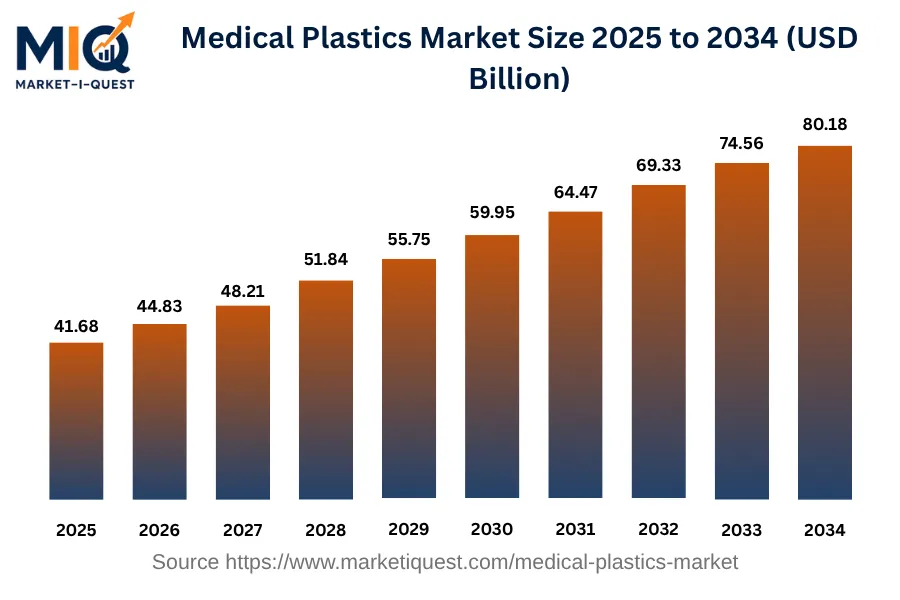
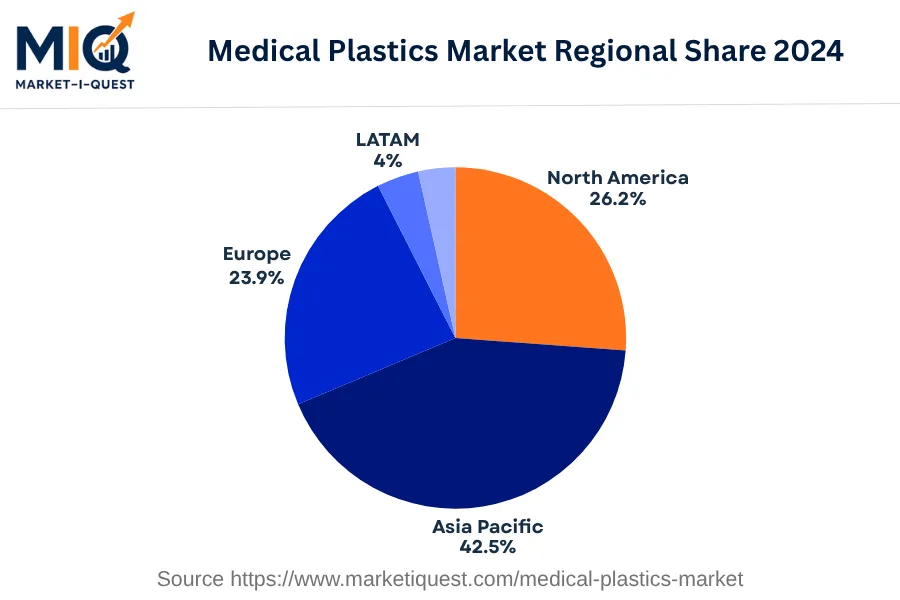
The Medical Plastics Market, valued at 41.68 billion USD in 2025, is expected to grow over the subsequent nine years, reaching a considerable size of 80.18 billion USD in 2034. The growth is demonstrated by a Compound Annual Growth Rate (CAGR) of 7.54%, indicating a rising demand and subsequent augmentations in supply for medical plastics during this period. This rise is driven by continuous advancements in the healthcare industry and the growing need for high-quality, durable, and sanitary plastic materials in various medical applications. Structured data from 2024 allows for understanding of global regional share in the Medical Plastics Market. North America accounted for 26.17% of the total market share, whereas the Asia Pacific had a more significant stake with 42.48%. Europe was close behind North America, holding 23.86% of the market. The regions with the smallest shares in 2024 were Latin America and the Middle East & Africa, with 3.98% and 3.51% respectively.

Key Takeaways

  • By Product- Polyethylene (PE) held the leading position in 2024 highlighting a substantial market share.
  • By Application - Medical Device Packaging emerged as the largest sub-segment in 2024.
medical-plastics-market market size

Key Driving Factors

Strict Regulatory Standards for Medical Devices

With increased medical device regulations, such as those instigated by the Food and Drug Administration (FDA) in the United States, there is a distinct push towards utilizing more medical plastics in healthcare applications. These regulations frequently call for the design and manufacture of medical devices that are more patient-friendly, highly reliable, and capable of sustaining sterile conditions, which most metals cannot suffice completely. Medical-grade plastics, on the other hand, are non-corrosive, lightweight, and can be engineered to specific needs, making them an ideal choice. Hence, these regulatory pressures are a significant driver for the increase in adoption of plastics in medical devices and equipment, propelling growth in the medical plastics market.
Shift towards Home-based Healthcare & Remote Patient Monitoring

Over the last few years, there has been a notable shift towards home-based healthcare and remote patient monitoring. This is due to the increasing need to ensure patient comfort, favoring at-home treatments over hospital stays, and a focus on reducing healthcare costs. It requires portable and lightweight medical devices, which is where medical plastics come into play. Given their versatile and customizable characteristics, plastics are being extensively used in the manufacture of home-based medical devices and remote patient equipment. They allow for the production of cost-effective, durable, and lightweight devices, thus facilitating the shift towards home healthcare and driving the growth of the medical plastics market.

Market Evolution by Timeline

2019-2023
During this period, medical device manufacturers, particularly those located in North America and Asia Pacific were the primary buyers of medical plastics. Daily usage items such as syringes and intravenous bags chiefly employed plastic components. A frequently cited reasoning for the procurement of medical plastics was their adaptability, and cost-efficiency. Major suppliers mainly shipped PVC, PP, and PE type plastics. Commercially, deals were mostly structured around volume pricing. Certain hindrances encountered were the possible human health effects of phthalates typically used as plasticizers in PVC. An important regulation influencing the market in this period was the reduction of DEHP use in Europe under REACH regulations.
2024
The market in 2024 saw a surge in the demand for medical plastics among pharmaceutical packaging companies due to COVID-19 vaccines. North America held a strong position within this market due to the high demand for vaccines. The common plastic types used for vaccine vials were COP and COC. Vial pricing was mainly influenced by the type of plastic and volume required. By this point, integration of medical plastic production with other processes was quite mature. Strict regulations from FDA regulated the type and quality of plastics used for pharmaceutical packing. Tendency towards green and reusable plastics also emerged during this time.
2025-2029
The market observed a change in buyer segments in this period as organizations involved in producing orthotic devices started requiring medical plastics on a large scale mainly in Europe. Polymers were emphasized due to their mechanical strength. Higher requests for personalized medical devices brought about an increase in price of medical plastics. Environmental concerns led to regulations leaning towards the use of bio-based plastics, with the introduction of ASTM D6400 in the United States. However, scalability of bio-based plastics production continued to be a restraint.
2030-2034
Growing demand from prosthetics and implants manufacturers was noted in this era, particularly from countries such as Germany, the United States and Japan. Supply shifted towards high performance plastics like PEEK and UHMWPE. The prevalent procurement model was the use of long-term contracts. Commercialization of 3D printing led to an increase in unit price of medical plastics. Standards, such as ISO 13485, got stricter with the growing complexity of medical devices. Sourcing difficulties for raw materials created a supply risk.

Future Market Outlook

Future Opportunities

As the medical plastics market evolves, new opportunities are rapidly emerging, particularly in the realm of sustainability. The 2022 European Union Plastics Strategy has prompted significant changes, encouraging manufacturers to explore biodegradable polymer options to reduce environmental impact. Companies such as Johnson & Johnson are currently investigating the incorporation of natural-fiber composites in the development of surgical instruments as part of their sustainability initiatives. Furthermore, the rising prevalence of chronic diseases is expected to drive demand for durable and lightweight materials in device manufacturing, as noted by the World Health Organization's reports in 2023. Leveraging innovations in biopolymer technology, firms have the potential to create products that meet both performance and environmental standards. In 2024, the FDA’s National Medical Device Evaluation System aims to enhance post-market surveillance practices, creating a more robust framework for evaluating medical plastics' safety and performance. Additionally, increased collaboration between health systems and technology firms is projected, focusing on innovative device solutions; for instance, the partnership between Siemens Healthineers and a leading polymer supplier aims to fast-track the development of patient-centric devices. Therefore, by adapting to these regulatory landscapes and consumer expectations, businesses can capitalize on opportunities that arise from team-based approaches to healthcare delivery, ultimately fostering advancements that align with both industry needs and societal values.

Segmentation Analysis

By Product

The market is categorized into subsegments including Polyethylene (PE), Polypropylene (PP), Polycarbonate (PC), Liquid Crystal Polymer (LCP), Polyphenylsulfone (PPSU), Polyethersulfone (PES), Polyethylenimine (PEI), Polymethyl Methacrylate (PMMA), and others. Polyethylene (PE) leads in terms of revenue, whereas Polyphenylsulfone (PPSU) shows the most significant potential growth rate.

Largest Revenue Share

Polyethylene (PE)

Market Share Leader

In the base year of 2024, Polyethylene (PE) was the leader in revenue generation among plastic product types. Polyethylene's (PE) dominance can be attested to its wide range of applications in diverse industries such as packaging, construction, electrical and electronics and many more. It is widely preferred due to its flexibility, durability, and cost-efficiency. Furthermore, it is available in several types such as high-density polyethylene and low-density polyethylene, adding to its versatility and subsequently boosting its demand. The material is also known for its recyclability, thereby addressing increasing environmental concerns and regulations relating to plastic waste. Moreover, being a high-volume product, PE's cost advantages are significant, resulting in it claiming a higher share of the market revenue.

Fastest CAGR

Polyphenylsulfone (PPSU)

Forecast Period Growth Leader

Polyphenylsulfone (PPSU) holds the leading position when it comes to the fastest growing subsegment. PPSU is known for its outstanding toughness and stability, as well as its ability to withstand high temperatures, which make it perfectly suitable for numerous applications in sectors like healthcare, aerospace, automotive, and more. The rising demand for high-performance polymers capable of withstanding extreme conditions is acting as a catalyst for the growth of PPSU market. Furthermore, advancements in technology coupled with the need for materials that meet stringent safety regulations are projected to spur PPSU adoption. However, the high-cost and complex manufacturing process of PPSU remains a significant barrier to adoption, potentially slowing the growth pace. Overcoming this barrier could significantly boost its market proliferation in the coming years.

By Application

The application market, segment_2, is divided into various subsegments including Medical Device Packaging, Medical Components, Orthopedic Implant Packaging, Orthopedic Soft Goods, Wound Care, Cleanroom Supplies, BioPharm Devices, Mobility Aids, Sterilization and Infection Prevention, Tooth Implants, Denture Base Material, Other Implants, and Others. In the base year of 2024, the subsegment with the largest revenue share is Medical Device Packaging, while the Wound Care subsegment is expected to grow at the fastest CAGR during the forecast period.

Largest Revenue Share

Medical Device Packaging

Market Share Leader

Medical Device Packaging has been identified as the subsegment with the most revenue in 2024. A combination of favorable regulatory frameworks, rapid advancements in medical technologies, and an increase in the development and adoption of medical devices globally drive the considerable market share of this subsegment. As healthcare systems around the world continue to demand high-quality, safe, and long-lasting packaging for a wide variety of medical devices, suppliers cater to these needs by offering innovative packaging solutions. Furthermore, the rising prevalence of diseases and the growing geriatric population, both demanding high quality healthcare solutions, contribute to this subsegment's significant revenue. The industry also benefits from the increasing demand in developing countries, such as India and China, and the subsequent expansion of healthcare infrastructure in these regions. This further escalates the demand for efficient and reliable medical device packaging, adding to the top-line growth of this subsegment.

Fastest CAGR

Wound Care

Forecast Period Growth Leader

The Wound Care subsegment is predicted to present a rapidly growing CAGR during the forecast period. The increase in chronic conditions such as diabetes, obesity, and peripheral artery disease, coupled with rising incidences of traumatic wounds and burns, is driving the growth of the wound care market. Growing healthcare expenditures and a focus on reducing the duration of hospital stays are increasing the adoption of advanced wound care products. The technological advancement in wound care products such as the advent of smart bandages and wound measurement devices, as well as increased awareness, are acting as catalysts for the market's growth. However, the high cost of advanced wound care products and reimbursement issues might pose as potential threats to the market. Nonetheless, strategic partnerships and heavy investments in R&D could further influence positive market growth.

Competitive Analysis

Key Market Players

Manufacturers / OEMs

BASF SE
Germany
DuPont de Nemours, Inc.
US
Royal DSM
Netherlands

Key Suppliers & Raw Materials

Covestro AG
Germany
Solvay SA
Belgium
Celanese Corporation
US

Distributors, Integrators & Channel Partners

Alibaba Group
China
Amazon.com, Inc.
US
McMaster-Carr Supply Company
US

Porter’s Five Forces Analysis

This analysis provides insights into the competitive dynamics within the Medical Plastics Market.

Supplier Bargaining Power

Medium

Controlled by few large industry players limiting product availability.

Buyer Bargaining Power

High

Large number of buyers with increasing demand for quality and affordable medical plastics.

Threat of Substitutes

Low

Strong regulatory and quality barriers restrict substitutes for medical plastics.

Threat of New Entrants

Medium

High capital investment and regulatory hurdles form a sizable barrier.

Competitive Rivalry

High

Presence of international and local manufacturers intensifies competitive rivalry.

Regional Analysis

Geographic market dynamics and growth opportunities across key regions

Global Market Outlook

medical-plastics-market market regional share

North America

In 2024, North America’s Medical Plastics Market experienced substantial growth due to several key drivers and trends. Demand surged due to the aging population's increased need for medical devices and the healthcare industry's shift to outpatient care, leading to an increased utilization of disposable medical supplies. Additionally, regulatory support for recycling to reduce medical waste positively affected supply dynamics, encouraging investment into recycling technology. However, volatile oil prices influenced plastic manufacturing costs, impacting pricing structures within the market.

In terms of trends, technology adoption was evident as companies embraced biodegradable plastics, contributing to sustainable healthcare practices. Clear shifts in buyer behavior were observed too, with hospitals opting for plastic over traditional materials like metal due to the cost efficiency and convenience. Furthermore, channel dynamics shifted as online sales gained prominence, driven by the continuous growth of e-commerce in the U.S., Canada, and Mexico. Significant enforcement of policies like the U.S. Food and Drug Administration's regulations on medical-grade plastics standards also shaped the market. Ranked by relevance, key customer sectors included healthcare, manufacturing, and enterprise. The healthcare sector led, driven by demand from hospitals, outpatient centers, and clinics. Within the manufacturing sector, medical devices and disposable supplies manufacturers contributed to significant demand, while enterprises showcased demand in their efforts to adopt sustainable practices.

Asia Pacific

In 2024, the Asia Pacific Medical Plastics Market witnessed significant growth driven by increased healthcare investment, stringent regulations, and technology adoption. Government-backed healthcare projects, particularly from China, India, and Australia, spurred demand for medical plastics due to their cost-effectiveness and durability. China's stringent policy enforcing the usage of medical-grade plastics in healthcare facilities triggered expansion of local production capacities. Meanwhile, Japan and South Korea experienced a surge in demand for medical plastics from the manufacturing sector, owing to rapid technology adoption and industrial automation.

Major trends included a shift towards eco-friendly, recyclable medical plastics, particularly in Japan and key ASEAN markets, driven by increased sustainability consciousness and local regulatory enforcement. In India, a substantial shift to online procurement of medical plastics was observed, disrupting traditional supply chain dynamics. Australia witnessed several partnerships and M&As in the medical plastics market, aiming to leverage technology for product innovation. Consumer preference for high-quality, medical-grade plastics in China led to stricter compliance checks and policy enforcement. Last but not least, utility companies in South Korea diversified into medical plastics due to growing potentials in the healthcare sector, marking new synergy in these sectors.

Europe

In 2024, Europe's medical plastics market saw significant growth driven by high demand in sectors such as healthcare and manufacturing. Increases in health awareness and an aging population contributed to a growing need for high-performance medical devices and equipment, fostering demand for medical plastics, notably in Germany and the United Kingdom. Technological advancements promoting plastics' sustainability and safety use, coupled with favorable government policies, further fueled market growth. Notably, France's initiatives towards greener and recyclable plastics used in medical applications played a significant role in driving continental trends.

Key trends in the market centred around product innovations, with significant shifts noticed towards bio-resorbable and thermoformable plastics. The demand for these products was pronounced in Italy and Spain due to the surge in minimally invasive surgeries and increased use of implantable devices. There was a palpable move among manufacturers towards consolidation to foster innovation and ensure the steady supply of quality medical plastics. Multiple manufacturers in Nordics and Benelux region embraced these strategic partnerships and mergers. Strengthened policy enforcement on medical device standards in the Central and Eastern Europe also shaped the market, driving the need for medical plastics that met stringent safety and quality stipulations.

Latin America

In 2024, a growth surge characterized the Medical Plastics Market in Latin America with key areas being Brazil, Mexico, Argentina, Colombia, Chile, and Peru. Several demand factors were identified as drivers of the market acceleration. Firstly, an increase in health awareness and improved healthcare infrastructure boosted demand for medical plastics. Secondly, governments’ favorable policies and regulations encouraging local manufacturing and use of medical plastics further catalyzed this growth. Lastly, widespread acceptance and adoption of innovative technologies by manufacturers facilitated increased production of high-quality medical plastics.

Moving to trends, buyer behavior witnessed a distinctive shift towards products designed with medical-grade plastics, largely influenced by its advantages of safety, durability and cost-effectiveness. There were major technological advancements in manufacturing processes, specifically the adoption of 3D-printing technology for creating complex medical plastic parts. A rise in strategic partnerships and mergers and acquisitions also became a significant trend, serving as a catalyst for market growth. Stricter enforcement of medical standards and quality control policies shaped the production and supply chains. Significant customers for the year included healthcare facilities, medical device manufacturers, pharmaceutical companies, and government agencies, all increasingly recognizing the benefits of medical plastics over traditional materials.

Middle East & Africa

In 2024, the Medical Plastics Market in the Middle East and Africa witnessed significant growth due to a range of factors. The surge in demand for advanced healthcare infrastructure, particularly in UAE, Saudi Arabia, and South Africa, drove an upward trend in medical plastics utilization. Government investments in healthcare development in Nigeria and Kenya further stimulated the market. Additionally, the adoption of new polymer technologies like absorbable plastics in regions such as Israel and Egypt led to a progressive shift in supply dynamics.

Several discernible trends were observed in the Medical Plastics Market during this year. An increasing preference for disposable plastic medical products was evident across healthcare facilities in the region, highlighting a shift in buyer behavior. Technological advancements led to the evolution of high-performance plastic materials, contributing to product-shifts in countries like Saudi Arabia and UAE. Partnership activities were also prevalent, as seen with Qatari manufacturers aligning with African plastic companies. Moreover, a reinforced commitment to international sterilization standards was seen in the healthcare sector, with stringent policy enforcement especially visible in South Africa and Egypt. Thus, the medical plastics market in 2024, was shaped by distinctive market drivers and evolving trends, reflecting the unique dynamics of the Middle East and Africa.

Recent Industry Developments

Latest market innovations, product launches, and strategic initiatives

July 2026

Kimball Electronics acquired Helvoet Polymer Technologies B.V., a European medical CDMO specializing in highly automated micro-molding and precision injection molding for microfluidics, diagnostics, and drug delivery, for €90 million ($103 million), expanding its medical manufacturing footprint in Europe and adding production facilities in India.

June 2026

Husky Technologies collaborated with SEM Plastik to deploy an integrated medical injection molding system for high-volume blood collection tube manufacturing.

Frequently Asked Questions