
Low Profile Additives Market Snapshot

Key Players

  • BASF SE (Germany)
  • Dow Inc. (United States)
  • Clariant AG (Switzerland)
  • AkzoNobel NV (Netherlands)
  • Evonik Industries AG (Germany)
  • Kane International Corporation (Japan)
  • Croda International Plc (UK)
  • Elementis Plc (UK)

Market Size

Base Year 2024
$0.730 Bn
CAGR
5.54%
Forecast 2034
$1.25 Bn

Market Segments

By Type
  • Polyvinyl Acetate (PVA)
  • Polystyrene
  • Polymethyl Methacrylate (PMMA)
  • Others
By Application
  • SMC/BMC
  • Resin Transfer Molding (RTM)
  • Pultrusion
  • Others

Market Dynamics

Drivers
  • Increasing demand in automotive industry
  • Technological advancements in manufacturing processes
Restraints
  • Regulatory constraints
  • Formulation complexities
Opportunities
  • Emerging industrial applications
  • Eco-friendly manufacturing processes

Market Size

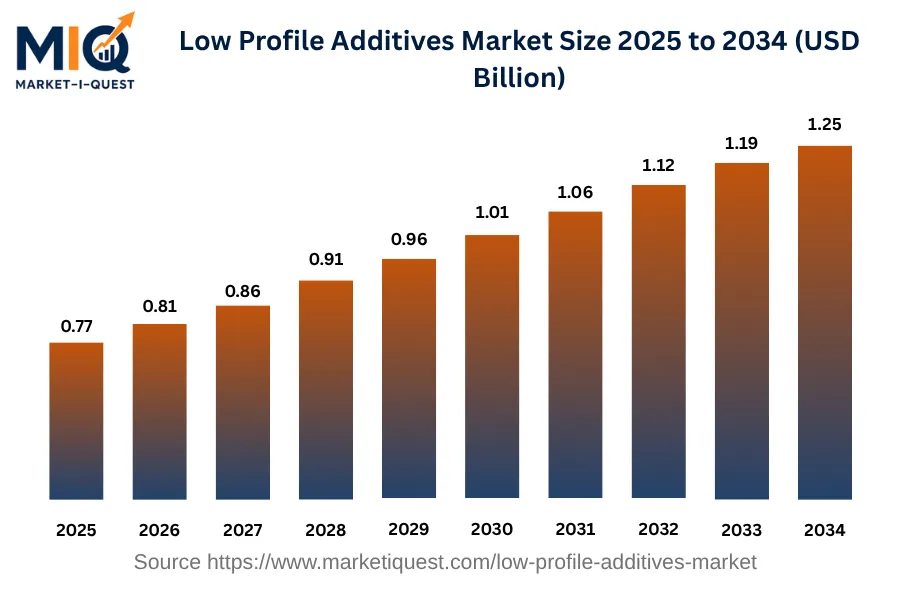
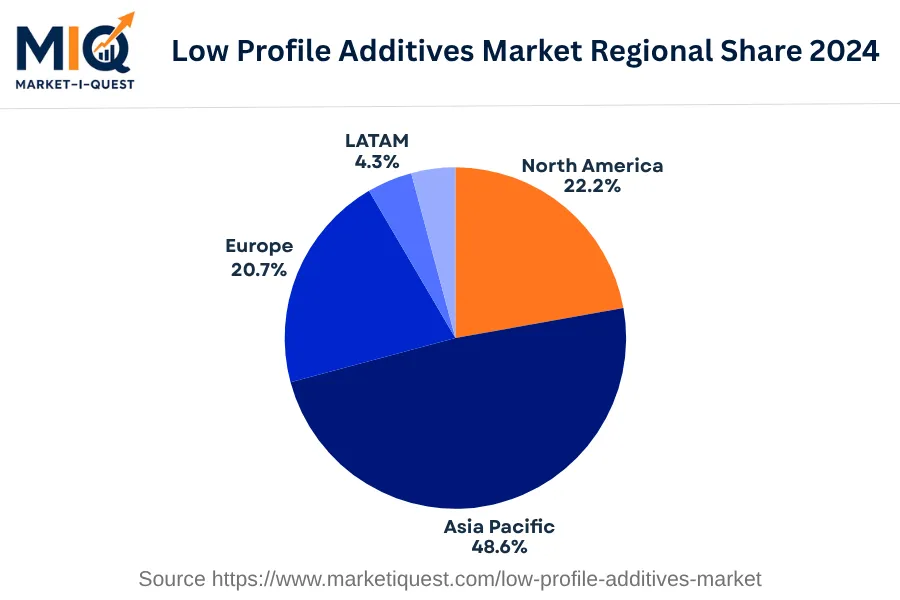
The Low Profile Additives Market is expected to increase in value from USD 0.77 billion in 2025 to USD 1.25 billion by 2034, growing at an annual rate of 5.5%. The market value at the beginning of this period, in 2024, is USD 0.73 billion. This consistent market expansion over a decade is a sign of steady growth. As per the region specific data of 2024, the Asia Pacific region led the Low Profile Additives Market with a 48.6% share. This was followed by North America, which accounted for 22.2% of the market. Europe was close behind with a 20.7% market share. Less substantial market shares were recorded in LATAM and MEA with 4.3% and 4.2% respectively.

Key Takeaways

  • By Type - Polystyrene led in the Low Profile Additives market maintaining a dominant position over the years.
  • By Application - SMC/BMC proved to be the leading sector driving the growth of the Low Profile Additives market.
low-profile-additives-market market size

Key Driving Factors

Stringent Emissions Standards for Automotive Industries

Many governments around the world have implemented strict emission regulations to manage environmental pollution, urging the automotive industry to produce environmentally friendly vehicles. This industry is heavily reliant on materials that help in weight reduction and carbon footprint reduction such as Sheet Moulding Compound (SMC) and Bulk Moulding Compound (BMC), where Low Profile Additives play a vital role. Low Profile Additives that are often used in both SMC and BMC applications, help to lower their shrinkage and increase the surface smoothness, making them ideal for auto part manufacturing. These factors have led to the automotive industry increasingly adopting Low Profile Additives to comply with emission regulations while maintaining vehicle quality.
Construction Sector's Increasing Usage of Advanced Composite Materials

The building and construction industry, particularly in developing nations, is witnessing a shift toward the use of advanced composite materials. These materials have remarkable properties such as high strength, lightweight, and corrosion resistance, which are beneficial for the construction of various infrastructure projects. Low Profile Additives are used in polyester resins—commonly employed in the manufacturing of such composites—to reduce the shrinkage during the curing process, yielding a smooth and attractive finish. This increasing usage of advanced composite materials in the construction sector is propelling the demand for Low Profile Additives in the market.

Market Evolution by Timeline

2019-2023
During this period, the low profile additives market was noted for its increased use in sectors such as automotive, wind energy, and marine applications worldwide. The Asia-Pacific region, particularly China and India, leads the demand, attributed to the growing industrialization and urbanization. Companies like Reichhold LLC and Ashland Global were significant suppliers, but production integration faced difficulties due to inconsistent quality of raw materials. No significant policy changes occurred. Commercial models included long-term contracts with fixed pricing, frequently renewed due to volatility in raw material prices. Risks in this period included unstable supply of raw materials, often causing production halts. Companies mitigated this by sourcing from multiple suppliers.
2024
In 2024, electric vehicle manufacturers became prominent buyers of low profile additives, especially in the European market due to supportive policies like the EU Emissions Standards. However, supply constraints continued due to raw material shortages, and importing low profile additives became common. The constraints were especially severe because of strict environmental regulations that hindered the extraction and processing of key raw materials. Adjustments in pricing models occurred, with manufacturers passing increased costs to consumers. Capacity planning and timely procurement became critical for manufacturers to manage risks and keep up with the increasing demand.
2025-2029
Low profile additives postal widespread adoption in the US defense sector, primarily for manufacturing lightweight and corrosion-resistant combat vehicles. Suppliers like Polynt-Reichhold and Interplastic Corporation dominated the region. Emphasis on advanced technological integration, using AI and IoT for quality testing and optimization, became dominant. The U.S. Department of Defense's regulations for lightweight and efficient equipment boosted the market. Pricing leaned towards dynamic pricing tied to market occurrences. The major risk was dependence on import due to limited domestic production, typically mitigated through strategic stockpiling.
2030-2034
Construction and aerospace sectors across developing economies like Brazil and South Africa started using low profile additives massively. More suppliers entered the market, fostering competition and innovation. Advanced technologies like machine learning become commonplace for predicting material performance. Stringent environmental standards influenced the industry significantly, like the Paris Agreement's decarbonization goals. Companies compensated for the high costs of adhering to these standards by entering partnerships and shelling out joint tenders. Risks included fluctuating raw material prices due to geopolitical instabilities, typically countervailed through multi-sourcing strategies.

Future Market Outlook

Future Opportunities

The low profile additives market presents various future opportunities linked to ongoing technological advancements and regulatory changes. In response to the increasing electric vehicle production in 2021, manufacturers are exploring low-profile additives that enhance lightweight composite materials. Tesla's roadmaps indicate a projected increase in the use of advanced composites in their vehicles, which may boost demand for low-profile additives tailored for automotive applications. Furthermore, as the global construction industry rebounds post-COVID-19, the need for materials that improve durability and performance is expected to grow. In December 2022, the International Energy Agency outlined plans to support sustainable building practices, driving the usage of eco-friendly low-profile additives. Collaboration between composite manufacturers and leading research institutions has already begun, focusing on developing bio-based low-profile additives, aligning with the rising global trend toward sustainability. Additionally, advancements in 3D printing technology provide unique opportunities for manufacturers to tailor low-profile additives specifically for additive manufacturing applications. Companies like Stratasys announced intentions to integrate advanced additives into their materials for improved print fidelity in February 2023. Furthermore, the rising demand in the packaging sector, largely propelled by regulations against single-use plastics, creates opportunities for low-profile additives that enhance packaging performance and functionality. The aforementioned developments underscore a conducive environment for growth as industries seek innovative solutions to diverse challenges while emphasizing sustainability and efficiency.

Segmentation Analysis

By Type

The market is divided into subsegments including Polyvinyl Acetate (PVA), Polystyrene, Polymethyl Methacrylate (PMMA), and others. Polystyrene accounted for the largest revenue share while Polyvinyl Acetate (PVA) is expected to grow at the fastest CAGR during the forecast period.

Largest Revenue Share

Polystyrene

Market Share Leader

Polystyrene commands the largest share of the market revenue chiefly due to its ubiquitous use across a plethora of industries. It is widely utilized for its versatility, affordability, and ease of manufacture, which makes it a popular choice among industries such as packaging, electronics, and construction. Geographically, the demand for polystyrene is more pronounced in industrializing economies where rapid infrastructural development is in place; thus fuelling its market dominance. Additionally, its recyclability makes it a preferred choice amid rising environmental consciousness and stringent regulations mandating the use of recyclable materials. When considering purchasing criteria, polystyrene's resistance to moisture, heat, and chemicals enhance its demand in food service and medical device sectors. Lastly, low switching costs also contribute to its leading position, stemming from the numerous channels through which it is accessible

Fastest CAGR

Polyvinyl Acetate (PVA)

Forecast Period Growth Leader

Polyvinyl Acetate (PVA) is projected to exhibit the fastest growth rate in the coming years. Acting as the primary catalyst for this trend is the growing demand in the adhesives industry, where PVA's exceptional bonding strength and flexibility are highly valued. Furthermore, the proliferation of DIY crafts and home renovations has amplified the need for PVA-based adhesives. PVA's non-toxicity makes it favorable for use in food packaging and children's products further increasing adoption. However, high capital expenditures could pose as adoption barriers, especially for smaller scale manufacturers. Policymaking trends leaning towards sustainable practices may also bolster PVA's growth, with its biodegradable nature meeting regulatory compliances and societal favor. Moreover, the emerging partnerships and alliances across the supply chain aiming to expand PVA production capabilities will further stimulate this growth trend. However, price volatility of raw materials and potential health implications associated with prolonged exposure may pose near-term risks for the PVA segment.

By Application

The market is segmented by application into SMC/BMC, Resin Transfer Molding (RTM), Pultrusion, and Others, with SMC/BMC accounting for the largest revenue share and Pultrusion predicted to exhibit the fastest growth.

Largest Revenue Share

SMC/BMC

Market Share Leader

In the base year of 2024, SMC/BMC dominated the market due to its extensive applications across various industries. The primary drivers for this subsegment's large revenue include its high demand in the automotive industry, where it is used extensively due to its lightweight properties and better aesthetics. Additionally, the use of SMC/BMC in the electrical and electronics sector for components like insulators, circuit breakers, and connectors also contribute to its dominant position. Certain characteristics of SMC/BMC, such as heat resistance and durability, make it ideal for usage in demanding applications. It's also widely preferred because of its pricing strategies and regulatory acceptance making it suitable for numerous applications. Proximity to raw material providers and lower switching costs also contribute to the large revenue share of SMC/BMC in the market.

Fastest CAGR

Pultrusion

Forecast Period Growth Leader

Pultrusion is anticipated to be the fastest-growing subsegment, given its unique properties and significant adoption in critical applications. Pultrusion is being rapidly adopted in the construction sector due to its corrosion resistance, high strength-to-weight ratio, and long lifespan. Furthermore, technological advancements and the evolution of high-performance materials are potential catalysts for the future growth of Pultrusion. However, barriers such as higher initial investment and process complexity can pose challenges to its adoption. To overcome these challenges, partnerships with technology providers and strategic capex allocation in research and development can be anticipated. Near-term risks include volatile raw material prices and stringent regulations pertaining to volatile organic compounds in certain geographies that could disrupt the growth of this subsegment.

Competitive Analysis

Key Market Players

Manufacturers / OEMs

Polynt-Reichhold
Italy
Ashland Inc
US
LyondellBasell
Netherlands

Key Suppliers & Raw Materials

ExxonMobil
US
Shell Chemicals
Netherlands
INEOS Oligomers
UK

Distributors, Integrators & Channel Partners

Brenntag Specialties, Inc
Germany
Univar Solutions
US
Nexeo Plastics
US

Porter’s Five Forces Analysis

This analysis assesses the competitive landscape for the Low Profile Additives Market.

Supplier Bargaining Power

Medium

Specialized production limits the number of suppliers, creating a moderate power balance.

Buyer Bargaining Power

High

Large, well-funded OEMs have high power due to strong demand and cost pressures.

Threat of Substitutes

Medium

Technological advancements can develop possible material substitutes, leading to a medium substitute threat.

Threat of New Entrants

Low

High capex and regulatory barriers deter new market entrants.

Competitive Rivalry

High

Numerous competitors vying for market dominance spurs intense rivalry.

Regional Analysis

Geographic market dynamics and growth opportunities across key regions

Global Market Outlook

low-profile-additives-market market regional share

North America

In 2024, the North American low profile additives market showcased substantial growth largely driven by regulatory standards and increasing demand from end-use industries. Drivers observed in the market included a growing demand from the automotive sector primarily in the U.S. due to technological upgrades of manufacturing processes aimed at reducing vehicle weight. Stricter environmental regulations in Canada and Mexico catalyzed the adoption of these additives in the production of eco-friendly composite materials. Additionally, heavy investment in infrastructure projects, particularly in the U.S., stimulated the demand for low profile additives for use in mould materials as a measure to ensure strength and durability.

In terms of trends, the market witnessed a shift towards the adoption of alternative raw materials like Bio-based resins to reduce carbon emission, particularly evident in the manufacturing sector. Consumer preference for improved surface finish and dimensional stability in finished goods was another key trend dictating product specifications. Partnerships were seen between Canadian additive manufacturers and American plastic brands to cater to the increased demand for premium quality composite materials. Lastly, enforcement of policies like the U.S. Federal Renewable Fuel Standard, which promotes bio-based production, significantly influenced market dynamics. The sectors driving demand were majorly automotive, manufacturing, and infrastructure, each enhancing their focus on quality, durability, and environmental impact.

Asia Pacific

In the base year 2024, the Low Profile Additives Market in Asia Pacific experienced significant growth. Key drivers include China's major investments in manufacturing sectors, especially in automotive and electronic industries, which spurred significant demand for these additives. Additionally, Japan's regulatory standards encouraging the use of eco-friendly materials resulted in an increased adoption of low profile additives in its manufacturing sector. Technology adoption in India's burgeoning economic sectors, such as healthcare and retail, was another boosting factor, influenced by the country's supportive policies on innovation and digitization.

Market trends revolved around strong customer preference towards high quality and durable products. This was especially evident in China's automotive sector where superior quality composites were increasingly sought after. Product shifts were noted in Australia, with higher demand for unsaturated polyester resins over vinyl ester resins in the utilities sector. Partnerships and M&As in South Korea propelled a sharper focus on R&D strategies, adding impetus to the market momentum. Lastly, stringent policy enforcement on environmental standards across key ASEAN markets shaped the supply dynamics, setting the stage for a resilient low profile additives market in 2024.

Europe

In 2024, the European market for low profile additives showed a significant shift due to the growing implementation in various industries. One clear driver was the increased demand in the automotive sector, particularly in Germany and the UK, where lightweight vehicles became a priority, enhancing fuel efficiency and reducing environmental impact. Similarly, investments in advanced technologies in France and Italy encouraged further adoption, pioneers moving towards more sustainable production methods. Simultaneously, positive pricing dynamics led to broad accessibility across Central and Eastern Europe, allowing emerging markets to tap into high-performance, value-adding solutions.

Regarding market trends, consumer preference for recyclable and eco-friendly products significantly affected buyer behavior in the Nordics, resulting in increased consumer demand for low profile additives in manufacturing. Rapid expansion of e-commerce in Spain further mirrored the shift in channel dynamics, offering easy access and distribution of diverse additive kinds. Notably, several M&A activities occurred in the Benelux region, indicating a strategic move to expand market presence and harness advanced technologies. In addition, stringent enforcement of EU policies promoting green industries and sustainable practices drove standards and regulation alignment, especially influential in governmental bodies, utilities, manufacturing, and retail sectors. The 2024 European market for low profile additives thus revealed important adjustments, steered by key investments, technology integrations, and policy enforcement.

Latin America

In 2024, the Low Profile Additives (LPA) market in Latin America majors chiefly in Brazil, Mexico, Argentina, Colombia, Chile, and Peru. Boosted by increased industrial activities, the demand for LPA has significantly grown. Infrastructure development, specifically in Brazil and Mexico, has substantially necessitated LPA use in composites for construction. Additionally, the enhancement of processing industries in Argentina has driven the need for LPAs in curing applications. The market has undergone considerable technology adoption, particularly in Mexico and Chile, where manufacturers integrate LPAs in the production of surface-smooth and void-free composites. Thermal expansion fluctuations in Peru have acted as a supply factor prompting LPA use to maintain composite dimensional stability. The lack of restrictive regulations in the region has promoted competitive pricing, further driving the market demand.

Buyer behavior in 2024 centered on sourcing environmentally friendly LPAs, evidenced by the increased consumption of non-hazardous, low-styrene emission additives in Colombia. Brazil hosted a paradigm shift towards LPAs offering uniform dispersion to avoid composite part rejections. Partnerships and M&A were prevalent, especially in Argentina, to guarantee a steady supply of LPAs. Lastly, policy enforcement in the region favoured the LPA market, with Chile applying guidelines necessitating the use of LPAs in construction projects to increase structure durability. The major sectors implicated include construction, processing industries, utilities, and manufacturing.

Middle East & Africa

In 2024, the Low Profile Additives (LPA) market in the Middle East and Africa experienced solid growth. Market drivers included increasing demand in key sectors, local investment in advanced materials, and the adoption of new technology. For example, the escalating requirements of LPAs in the oil and gas sector, particularly in Saudi Arabia and the United Arab Emirates, served as a central demand factor. In countries such as South Africa and Israel, investment was funneled into the development of advanced composites, further driving the LPA market. Moreover, in Nigeria and Kenya, increased adoption of cutting-edge technologies requiring LPAs, such as high-performance plastics, stimulated growth.

Several trends defined the market in 2024. The shifting preference of manufacturing industries towards lightweight and better-performing materials was noticeable across the region. In Saudi Arabia, Qatar, and the UAE, manufacturers were pushing for greater use of LPAs in end products. Israel saw particularly marked growth in customer preference for high-quality, durable, and environmentally friendly products, increasing demand for superior LPA-based composites. Lastly, Egypt witnessed significant consolidation among local suppliers, as partnerships and mergers promoted operational efficiencies and enhanced market competitiveness. Across Middle East and Africa, policy enforcement around material quality standards appeared to be tightening, effectively steering the LPA market to higher standards and increased demand.

Recent Industry Developments

Latest market innovations, product launches, and strategic initiatives

May 2026

The U.S. Low Profile Additives market was estimated at USD 140.6 million in 2025, while China—the world's second-largest economy—was forecast to reach a projected market size of USD 238.8 million by 2032, trailing a CAGR of 15.6%.

Frequently Asked Questions