Liver Diseases Therapeutics Market Snapshot

Key Players

  • Gilead Sciences Inc. (United States)
  • Pfizer Inc. (United States)
  • Merck & Co. Inc. (United States)
  • Novo Nordisk A/S (Denmark)
  • Johnson & Johnson (United States)
  • AstraZeneca PLC (United Kingdom)
  • Takeda Pharmaceutical Company Limited (Japan)
  • Sanofi S.A. (France)
  • Novartis International AG (Switzerland)
  • Roche Holding AG (Switzerland)

Market Size

Base Year 2024
$24.56 Bn
CAGR
7.96%
Forecast 2034
$52.83 Bn

Market Segments

By Treatment Type
Anti-Viral Drugs, Immunosuppressants, Targeted Therapy & Small Molecules, Chemotherapy Drugs, Antifibrotic/Antisteatotic Agents, Vaccines, Immunoglobulins, Other Treatment Types
By Disease Type
Viral Hepatitis (A–E), Metabolic Dysfunction-Associated Steatotic Liver Disease (MASLD), Metabolic Dysfunction-Associated Steatohepatitis (MASH), Alcohol-Related Liver Disease, Autoimmune Liver Disease, Cholestatic Liver Disease, Cirrhosis, Hepatocellul
By Drug Class
Small-Molecule Orals, Biologics, RNA-Based Therapeutics, Immunotherapies, Cell & Gene Therapies, Others
By Route of Administration
Oral, Injectable
By End User
Hospitals, Specialty Clinics, Ambulatory Surgery Centers, Others

Market Dynamics

Drivers
  • Rising prevalence of liver diseases
  • Enhancements in treatment methods
Restraints
  • High treatment costs
  • Lack of awareness
Opportunities
  • Rising Liver Disease Prevalence
  • Advanced Treatment Innovations

Market Size

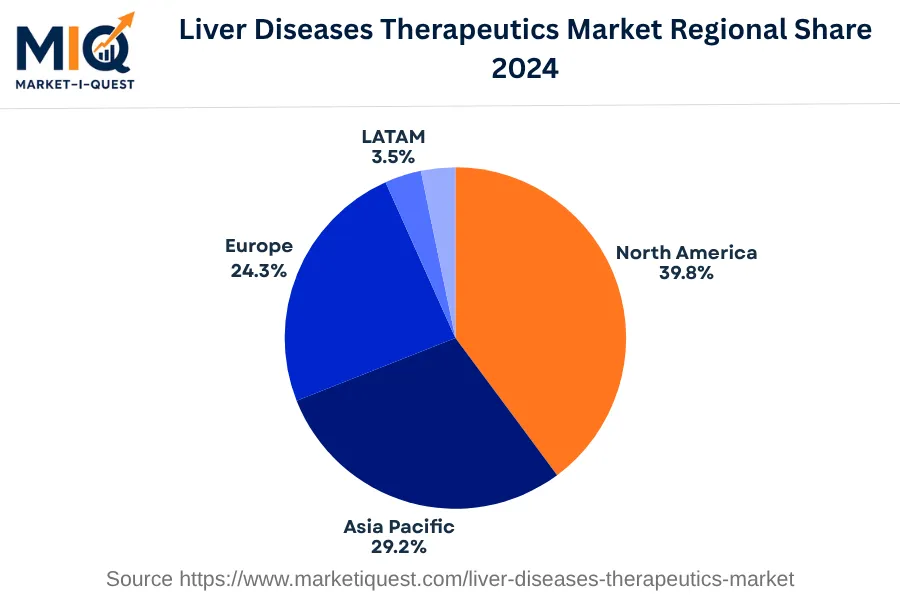
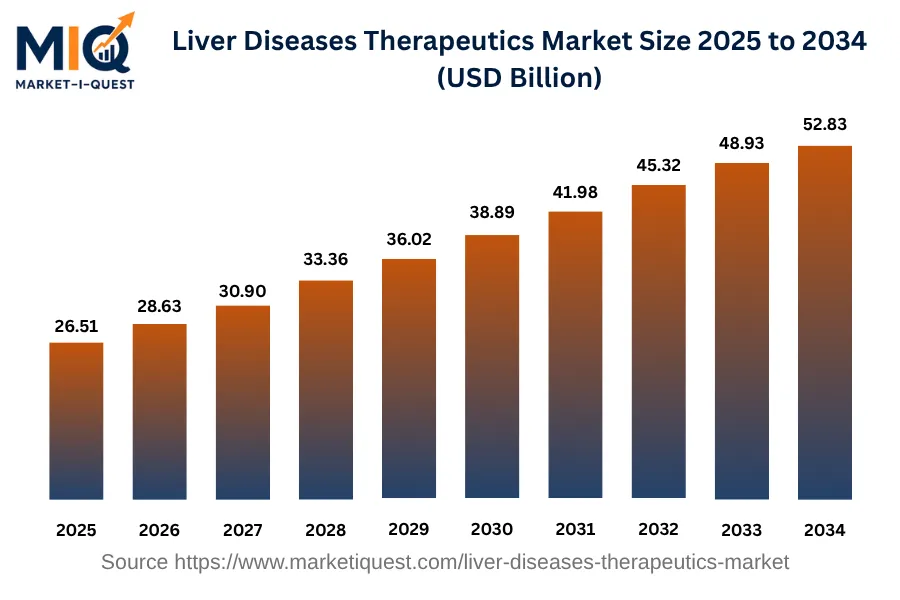
The Liver Diseases Therapeutics Market was valued at $26.51 billion in 2025 and is anticipated to reach $52.83 billion by 2034, with a CAGR of 7.96%. The market displayed a steady increase in value with a starting valuation of $24.56 billion in 2024 and notable accretion reaching $26.51 billion by 2025. The ten-year period from 2025 to 2034 witnessed a consistent growth, culminating in a nearly doubling of the market size by 2034. Several factors contributed to this growth. Primarily, the growing incidence of liver diseases and the subsequent heightened demand for effective therapeutics provided impetus to the market. Moreover, continuous advancement in medical technologies as well as pharmaceutical research and development efforts fueled the expansion of the Liver Diseases Therapeutics Market. In terms of regional shares as of 2024, North America held the lion's share with 39.8% of the market, followed by Asia Pacific with 29.2% and Europe with 24.3%. The remaining market share was made up of LATAM and MEA accounting for 3.5% and 3.3% respectively.

Key Takeaways

  • By Treatment Type - Anti-Viral Drugs led as the dominant therapeutic solution for liver diseases.
  • By Disease Type - Hepatocellular Carcinoma accounted for a significant proportion in the global market.
  • By Drug Class - Biologics held the leading position for prescription drugs in the liver diseases therapeutics market.
  • By Route of Administration - Oral usage outweighed as the preferred administration method for liver disease treatment
  • By End User - Hospitals reigned as the leading facilities providing liver disease therapies.
liver-diseases-therapeutics-market market size

Key Driving Factors

Increased Prevalence of Liver Diseases

In recent years, increasing incidence of liver diseases such as liver cirrhosis, hepatocellular carcinoma, and nonalcoholic fatty liver disease (NAFLD) is propelling the Liver Diseases Therapeutics Market. Lifestyle changes and unhealthy eating habits have contributed significantly to the rise in liver-related issues, leading to a surge in the demand for liver disease treatment. Many healthcare systems are focusing more resources on managing and treating liver diseases, thus accelerating the growth of the market. Pharmaceutical companies are responding by developing specialized, targeted therapeutics, escalating the market's expansion.

Evolution of Combination Therapies

The evolution and advancement of combination therapies for liver diseases are driving growth in the Liver Diseases Therapeutics Market. As the complexity of liver diseases continues to challenge the medical community, combination therapies emerge as potential solutions, mixing two or more medicinal drugs to increase efficacy and reduce harmful side effects. This has catalyzed research initiations and clinical trials on such therapies, resulting in the proliferation of innovative liver disease therapeutics in the market. Moreover, recognition of the potential of combination therapies by regulatory bodies like the Food and Drug Administration (FDA) of the United States further fuels the growth of this market segment.

Market Evolution by Timeline

2019-2023
During this period, North America dominated the Liver Diseases Therapeutics Market due to high awareness about liver diseases and robust insurance coverage. European countries like France and Germany saw increased demand due to amplified alcohol consumption. Key suppliers included pharmaceutical giants like Gilead Sciences, Pfizer, and Merck who provided FDA approved drugs such as Harvoni and Zepatier. Regulations like Drug Price Competition and Patent Term Restoration Act influenced market pricing. The common commercial model was traditional B2B transactions with health institutes and government bodies. A major risk was patent expiration, leading suppliers to invest in R&D to develop new drugs.
2024
The market witnessed expansion into Asia due to rising healthcare awareness, with a major demand surge in China, India, and Japan. Major suppliers included Novartis and Bayer along with local Asian drug manufacturers. New drugs complying with the established FDA/EMA standards brought changes in supply dynamics. Government health initiatives like India's Ayushman Bharat influenced the market uptake in the region. B2B transactions remained the dominant commercial model, with slight shifts towards PPP (Public-Private Partnership) models. The threat of counterfeit medicine remained a prevalent risk.
2025-2029
By this time, a notable rise in liver disease cases led to increased demand worldwide. Major suppliers continued product innovation to keep pace. Medgenome Labs developed a diagnostic test for early, non-invasive detection of liver cancer. Regulations like the 21st Century Cures Act pushed forward new drug development. Commercial models evolved as genetic testing companies started collaborating with pharmaceutical companies, opening up new revenue streams. Cost-effectiveness of treatments remained a substantial concern, despite government support.
2030-2034
This period saw the advent of gene therapy as a potent tool in liver disease treatment, revolutionizing the supply dynamics. Companies like Sangamo Therapeutics started clinical trials for gene therapies. Regulations remained stringent with FDA closely monitoring gene therapy trials. Commercial models expanded to include more partnerships between genetic testing companies and pharma for developing personalized medicine. The complex nature of gene therapy, however, presented a significant risk of therapeutic failure.

Future Market Outlook

Future Opportunities

As the liver diseases therapeutics market evolves, numerous opportunities are emerging that are tightly linked to current trends and regulatory landscapes. With the FDA's endorsement of the liver transplant strategy in 2022, there is clear momentum for therapies that can potentially mitigate the need for transplantation in liver disease patients. Companies like Novartis and AbbVie are focusing on developing combination therapies that target multiple pathways, which is especially pertinent given the complexities of liver diseases such as hepatitis and cirrhosis. Research initiatives led by institutions such as the World Health Organization underscore the rising global burden of liver diseases, indicating increasing demand for innovative treatment solutions. Additionally, in recent years, collaboration between biotechnology firms and academia has fostered clinical trials focusing on specific genetic markers related to liver diseases, opening avenues for precision medicine. The advancements in biomarkers for non-invasive liver disease diagnosis, showcased by companies such as Echosens with their FibroScan technology, are paving the way for broader adoption in clinical practices. Furthermore, the growing emphasis on awareness programs and patient education provided by local health authorities is expected to enhance early diagnosis and treatment rates. As these trends interact with patient needs and the regulatory landscape, the potential for new therapeutic innovations and comprehensive treatment strategies will expand, benefiting patients globally.

Segmentation Analysis

By Treatment Type

The market is divided into subsegments including Anti-Viral Drugs, Immunosuppressants, Targeted Therapy & Small Molecules, Chemotherapy Drugs, Antifibrotic/Antisteatotic Agents, Vaccines, Immunoglobulins, and Other Treatment Types. Among these, the Anti-Viral Drugs subsegment is the predominant revenue generator, while Targeted Therapy & Small Molecules subsegment is projected to have the highest growth rate in the coming years.

Largest Revenue Share

Anti-Viral Drugs

Market Share Leader

Absent more detailed data, based on market patterns, Anti-Viral Drugs likely represents the highest revenue. This assumption is made considering the increasing demand for Anti-Viral Drugs due to the rise in Viral infections, propagated by several factors such as growing population density, increased international travel, and climate change. Increased application in treating diseases like HIV/AIDS, Hepatitis, and Influenza has fueled their market growth. Raising awareness and early detection programs have further pushed the need for Anti-Viral Drugs, expanding their customer base. From a regulatory perspective, approval of such drugs is usually prioritized due to the high stakes associated with pandemic situations, stimulating the supply. Lastly, constant innovation and advancements maintain the brand loyalty of consumers, establishing a form of switching costs in the Anti-Viral Drugs market.

Fastest CAGR

Targeted Therapy & Small Molecules

Forecast Period Growth Leader

Assuming general industry trends, the Targeted Therapy & Small Molecules subsegment is probably the fastest growing. The driving force behind this expected rapid expansion is the shift towards personalized medicine, which leverages the advantages of Targeted Therapy & Small Molecules over traditional treatment methods. This new treatment paradigm recognizes that each patient's disease is unique at a biological level, necessitating a more refined approach to counter diseases at a molecular or 'target' level. Technological advancements and increased funding have served as catalysts for research and development, leading to innovative therapies. Despite the higher initial cost of treatment, reduced side effects compared to traditional therapy increase the overall cost-effectiveness, overcoming adoption barriers in the long run. However, challenges facing this high growth subsegment include stringent regulatory barriers and the need for robust healthcare infrastructure for the beneficial administration of such therapies.

By Disease Type

The market is divided into subsegments including Viral Hepatitis (A–E), Metabolic Dysfunction-Associated Steatotic Liver Disease (MASLD), Metabolic Dysfunction-Associated Steatohepatitis (MASH), Alcohol-Related Liver Disease, Autoimmune Liver Disease, Cholestatic Liver Disease, Cirrhosis, Hepatocellular Carcinoma, and Other Disease Types. In 2024, Hepatocellular Carcinoma accounted for the largest revenue share while Viral Hepatitis (A–E) is expected to grow at the fastest CAGR during the forecast period.

Largest Revenue Share

Hepatocellular Carcinoma

Market Share Leader

Hepatocellular Carcinoma leads in revenue in 2024 primarily due to its high prevalence globally. It is the most common form of liver cancer and typically develops as a complication of chronic liver diseases such as cirrhosis or viral hepatitis. The treatment of Hepatocellular Carcinoma often involves expensive processes such as chemotherapy, liver transplant, or surgery, contributing to its high revenue. The commercial landscape for Hepatocellular Carcinoma is also shaped by increasing demand for novel, targeted therapeutics for liver cancer that often comes with a higher price tag relative to other liver diseases, bolstering revenue. Geographic concentration of the disease in regions with high healthcare expenditure also contributes to this subsegment's dominance in revenue share.

Fastest CAGR

Viral Hepatitis (A–E)

Forecast Period Growth Leader

Viral Hepatitis (A–E) is expected to be the fastest-growing subsegment due, in part, to the widespread global prevalence of these diseases. Rapid urbanization, unsafe water supply, poor sanitation, and the increased global movement of people contribute to the spread of the disease, indirectly driving its market growth. Pathbreaking therapeutics and high-impact vaccination programs, coupled with increased government initiatives and funding, serve as catalysts for the subsegment's growth. However, the global burden of viral hepatitis, particularly in low and middle-income countries, presents a potential risk due to lack of adequate healthcare infrastructure and accessibility issues.

By Drug Class

The market is divided into subsegments including Small-Molecule Orals, Biologics, RNA-Based Therapeutics, Immunotherapies, Cell & Gene Therapies and Others. Among these, Biologics accounted for the largest revenue share, while RNA-Based Therapeutics is expected to grow at the fastest CAGR during the forecast period.

Largest Revenue Share

Biologics

Market Share Leader

The Biologics segment leads the market in terms of revenue, primarily due to its high demand in treating chronic diseases such as cancer, cardiovascular diseases, and autoimmune diseases. The surge in biologics is also driven by the increase in global disease prevalence coupled with the rising geriatric population. Furthermore, advancements in biotechnological research and high adoption rate of these products because of their efficacy and high specificity are fuelling the segment growth. Regulatory assistance and favorable reimbursement policies in developed economies, such as the US and Europe, also bolster the large revenue stream for Biologics. However, the high cost of biologics and the complexity of producing these drugs remain considerable challenges, albeit mitigated by their competitive efficiency and effectiveness. Therefore, based on the above market conditions, Biologics takes the largest revenue share in the market.

Fastest CAGR

RNA-Based Therapeutics

Forecast Period Growth Leader

RNA-Based Therapeutics is anticipated to experience the fastest growth in the forecast period. The growth will primarily be driven by several key factors. Firstly, the cutting-edge technology utilized in RNA-Based Therapeutics allows for targeted and personalized treatment, thus providing higher efficacy compared to traditional therapies. Secondly, significant investment in research and development is being allocated towards discovering novel RNA-based drugs. Furthermore, strategic collaborations between emerging biotech companies and reputed pharmaceutical industry leaders are accelerating the clinical development and commercial launch of new RNA-Based Therapeutics. Although the adoption rate is restrained by high development costs and regulatory hurdles, breakthroughs like the mRNA COVID-19 vaccines have given this subsegment a significant boost in recognition and acceptance, positioning it for impressive future growth.

By Route of Administration

The market is divided into subsegments including Oral and Injectable routes of administration. In 2024, the Oral segment accounted for the largest revenue share while the Injectable segment is expected to grow at the fastest CAGR during the forecast period.

Largest Revenue Share

Oral

Market Share Leader

The Oral route of administration emerged as the leading revenue contributor in 2024, and this can be attributed to several drivers including ease of self-administration, extensive product portfolio, and patient comfort compared to intravenous or injectable medicines. The large-scale usage of oral drugs across various indication such as chronic and acute diseases also drives the revenue. More so, the widespread geographic usage, fueled by the presence of various dosage forms such as tablets, capsules, syrups, among others, caters to a wide demographic, therefore increasing its market penetration. Furthermore, oral drugs are generally the first line of therapy recommended due to their safety profile, cost-effectiveness, and non-invasiveness, which further contributes to their high revenue generation.

Fastest CAGR

Injectable

Forecast Period Growth Leader

Despite the Oral segment leading in terms of revenue, the Injectable segment is projected to grow at the fastest CAGR. The key catalysts for this growth are the ongoing technological advancements, increasing partnerships for the creation of advanced injectable platforms, and significant capital investment in R&D. Furthermore, while Oral drugs hold a larger market share, the growing need for immediate drug action and high bioavailability are boosting the adoption of Injectable drugs, specifically for chronic and critical care diseases. Another factor contributing to the growth of this subsegment are the drugs that cannot be administered orally due to theirability to withstand stomach acids. However, perceived risks associated with needle stick injuries and infections, and the need for skilled healthcare professionals for administration, could potentially slow down the growth rate.

By End User

The end-user market is subdivided into Hospitals, Specialty Clinics, Ambulatory Surgery Centers, and Others. In the base year of 2024, Hospitals hold the majority of revenue share, while Specialty Clinics are anticipated to witness the highest compound annual growth rate.

Largest Revenue Share

Hospitals

Market Share Leader

In 2024, Hospitals account for the largest portion of the end-user market revenue. This predominance can be attributed to a variety of factors. Most notable is their extensive and diverse patient base which ensures a steady demand for products. Moreover, hospitals often have access to larger budgets compared to other health care providers, enabling them to make major purchases and continually update their equipment and services. Furthermore, government regulations, often necessitate that certain procedures and treatments be conducted only in hospital settings. This mandates a consistent need for advanced and novel medical instruments, further driving up their revenue contribution. Lastly, geographically, hospitals are more widespread and accessible than other specialized health centers, which paves the way for a sustained demand and revenue generation.

Fastest CAGR

Specialty Clinics

Forecast Period Growth Leader

Expected to chart the highest growth rates are Specialty Clinics. The rapid progress of these facilities can be attributed to several influencing factors. First, we see an increase in the prevalence of chronic diseases requiring specialized attention and treatment. This funds the expanding patient pool, triggering growth. Second, technological advances allow for improved treatment outcomes, fostering greater acceptance, demand, and adoption of specialized clinics. Third, partnerships are increasingly being forged with hospitals to provide specialized services, further driving their expansion. However, near-term risks involve potential regulatory changes affecting operation, services, or reimbursement, and any economic downturn affecting disposable income and therefore, elective procedures. Despite these challenges, the overall outlook for Specialty Clinics remains positive, and their growth trajectory is expected to accelerate during the forecast period.

Competitive Analysis

Key Market Players

Manufacturers / OEMs

Gilead Sciences, Inc.
US
Merck & Co., Inc.
US
Johnson & Johnson
US

Key Suppliers & Raw Materials

BASF SE
Germany
Lonza Group Ltd
Switzerland
Sigma-Aldrich Corporation
US

Distributors, Integrators & Channel Partners

McKesson Corporation
US
AmerisourceBergen Corporation
US
Cardinal Health, Inc.
US

Porter’s Five Forces Analysis

This analysis evaluates the competitive intensity and attractiveness of the Liver Diseases Therapeutics Market.

Supplier Bargaining Power

Medium

Dependent on proprietary drugs production and patent ownership, but competition among suppliers mitigates power.

Buyer Bargaining Power

Low

Hospitals and healthcare providers lack alternative options due to specialization and necessity of therapeutics.

Threat of Substitutes

Low

Substitution not viable due to the life-saving and unique nature of liver disease therapeutics.

Threat of New Entrants

Low

Entry barriers include high R&D costs, strict regulatory compliances, and complex patent procedures.

Competitive Rivalry

High

Fierce competition between existing players due to continual innovation and investment in R&D.

Regional Analysis

Geographic market dynamics and growth opportunities across key regions

Global Market Outlook

liver-diseases-therapeutics-market market regional share

North America

In 2024, the North American Liver Diseases Therapeutics Market experienced significant dynamism due to various drivers and emerging trends. The increased demand for advanced treatments for liver diseases in the region, particularly in the U.S., Canada, and Mexico, was largely due to the rising prevalence of liver diseases such as Hepatitis B and Cirrhosis. This was coupled with intensified investment prioritize the development of innovative therapeutics by key healthcare players. Regulatory bodies, such as the FDA, enforced stringent policies, thereby prompt Quickened technology adoption to foster more effective diagnosis and treatment modalities for liver diseases.

On the trends' front, noticeable behavioral shifts were observed among buyers opting for minimally invasive procedures over traditional methods. There was a significant rise in strategic partnerships and M&As among pharmaceutical and biotech firms, aiming to augment their capabilities in liver disease therapeutics. Changes in policy enforcement led to increased awareness and greater importance placed on liver disease prevention, particularly in U.S. healthcare settings. There was also a noticeable shift from consuming alcohol-based products to non-alcoholic wellness-focused goods, reducing the risk of liver diseases. In sectors like enterprise and healthcare, robust disease prevention policies and wellness initiatives stood out as crucial proponents of the market's dynamics.

Asia Pacific

In the base year of 2024, the Liver Diseases Therapeutics Market in Asia Pacific demonstrated significant activity, driven by a combination of increased prevalence of liver diseases, advancing biomedical technology, and robust investment in healthcare infrastructure. China held the largest market share, due to its vast population and government-initiatives for disease prevention like the National Hepatitis Program, while India, Japan, South Korea, Australia, and selected ASEAN markets followed suit. The market was predominantly influenced by demand factors such as the significant rise in alcohol consumption and unhealthy lifestyle choices leading to heightened incidences of liver diseases. Regulatory support, as demonstrated by China's National Hepatitis Program, encouraged early diagnosis and treatment. Further the adoption of latest biotechnological advances and increased investment in healthcare facilities drove the market landscape.

Trends encompassed buyer behavior towards early detection and preventive treatment due to growing health awareness. A shift towards bio-artificial liver (BAL) devices signified a groundbreaking product innovation. Channel dynamics saw healthcare providers and pharmacies ideally positioned to distribute therapeutics. Additionally, strategic partnerships and mergers among pharmaceutical companies - for instance, between Takeda Pharmaceutical and Asia's leading liver clinics - intensified therapy development. Policy enforcement in the guise of quality checks and standardization of therapeutics further guided market activity across all sectors, primarily encompassing the healthcare, government, and retail sectors. The buyer behavior and product shifts shaped the Asian liver diseases therapeutics market in 2024.

Europe

In 2024, the Liver Diseases Therapeutics Market in Europe exhibited a dynamic landscape characterized by numerous drivers and trends. Regulatory incentives meant to promote research and development, coupled with rising incidences of liver diseases, led to increased demand for therapeutics. Additionally, investment in biotechnology companies fueled innovation, contributing to the market's growth. Furthermore, the rapid adoption of advanced technologies like gene therapy in countries such as Germany and the UK streamlined liver disease treatment, incentivizing supply dynamics positively. Noteworthy trends included a shift towards personalized treatment in Spain and Italy, reflecting changes in buyer behavior as patients sought more tailored healthcare solutions.

Meanwhile, various mergers and acquisitions expanded distribution channels, as seen with Benelux-based pharmaceutical companies aligning with Central and Eastern Europe enterprises. Lastly, stricter enforcement of health policies in the Nordics aimed at minimizing alcohol consumption indirectly affected the Liver Diseases Therapeutics Market by influencing public health trends. Key sectors impacted included healthcare providers, primarily in the government and private sectors across all these regions. In summary, 2024 posed a year of significant developments for the European Liver Diseases Therapeutics Market, driven by advancements in technology, policy shifts, and consumer preferences.

Latin America

In the year 2024, the treatment of liver diseases across the Latin American (LATAM) market exhibited a progressive landscape shaped by a range of influencing factors and trends. Various drivers propelled the market in 2024. Among them, rising incidences of liver diseases, such as Hepatitis B and C, and liver cancer in countries like Brazil, Mexico, and Argentina, constituted a primary demand factor. LATAM governments implemented stringent regulations regarding healthcare access and disease prevention, enhancing investment in liver disease therapeutics. Technology adoption grew, particularly in Peru and Columbia, supporting diagnostic advancements and improved treatment options.

There were several notable trends in 2024. Patients showed increased interest in targeted therapy and advanced liver cancer therapeutics given the shifting disease profile. Technology-driven patient care, like telehealth services, gained popularity in markets like Chile due to the COVID-19 pandemic. Mergers and acquisitions, particularly in Mexico and Argentina, solidified market competition and diversified the product portfolio in liver therapeutics. Compliance with global health standards ensured the quality and efficacy of treatment in the market. The healthcare sector was the principal customer for liver disease therapeutics, with pharmaceutical manufacturers and national governments as key stakeholders. Overall, the 2024 landscape of the LATAM liver disease therapeutics market was multifaceted, influenced by demand, regulatory environments, and novel healthcare trends.

Middle East & Africa

In 2024, the Liver Diseases Therapeutics Market across the Middle East and Africa witnessed significant dynamism, majorly influenced by increasing prevalence of liver diseases and improved healthcare infrastructure. Market growth was driven by several factors. First, escalating demand for novel therapeutics due to the rising liver disease incidents, especially in countries like Saudi Arabia, Egypt, and South Africa. Second, robust investments in healthcare infrastructure in the United Arab Emirates and Qatar led to better access and adoption of advanced liver disease treatments. Lastly, government policies like Nigeria's Universal Health Coverage promoting accessibility of treatments effected market expansion. These driving elements coupled with improved diagnosis technologies and increasing affordability of treatments molded supply dynamics that ultimately favored the market.

On the trends front, a behavioral shift among patients towards minimally invasive treatments was observed. The tech-shift towards AI-based predictive diagnostics was also prominent, notably in Israel's healthcare sector, enhancing early detection of liver diseases. Furthermore, strategic partnerships, as seen between major healthcare providers and pharmaceutical firms, aimed at developing innovative therapeutics were prevalent. This emphasis on collaboration indicated a trend towards integrated health solutions. Lastly, enforcement of quality standard policies as a fundamental shift enhanced treatment efficacy, thus trending positively in the market. Overall, these driving factors and trends influenced the Liver Diseases Therapeutics Market across the region during 2024.

Recent Industry Developments

Latest market innovations, product launches, and strategic initiatives

February 2026

Madrigal Pharmaceuticals entered an exclusive global licensing agreement with Suzhou Ribo Life Science for six preclinical siRNA programs, paying $60 million upfront with up to $4.4 billion in milestones.

August 2025

The U.S. FDA approved semaglutide (Wegovy) for the treatment of adults with noncirrhotic MASH with moderate to advanced liver fibrosis, making it the second FDA-approved MASH therapeutic.

Frequently Asked Questions