
Gene Therapy Market Snapshot

Key Players

  • Spark Therapeutics (United States)
  • Novartis AG (Switzerland)
  • BioMarin Pharmaceutical Inc. (United States)
  • Oxford Biomedica (United Kingdom)
  • bluebird bio (United States)
  • Amgen Inc. (United States)
  • Gilead Sciences Inc. (United States)
  • Sangamo Therapeutics (United States)
  • CRISPR Therapeutics (Switzerland)
  • UniQure N.V. (Netherlands)

Market Size

Base Year 2024
$9.18 Bn
CAGR
18.6%
Forecast 2034
$50.55 Bn

Market Segments

By Vector Type
Viral Vector, Non-Viral Vector
By Gene Type
Antigen, Cytokine, Tumor Suppressor, Suicide, Deficiency, Growth Factors, Receptors, Others
By Delivery Method
In Vivo Gene Therapy, Ex Vivo Gene Therapy
By Application
Oncological Disorders, Rare Diseases, Cardiovascular Diseases, Neurological Disorders, Infectious Diseases, Others

Market Dynamics

Drivers
  • Increasing prevalence of chronic diseases
  • Technological advancements in biotechnology
Restraints
  • High treatment costs
  • Regulatory challenges
Opportunities
  • Rising prevalence of genetic disorders
  • Technological advancements in biotechnology

Market Size

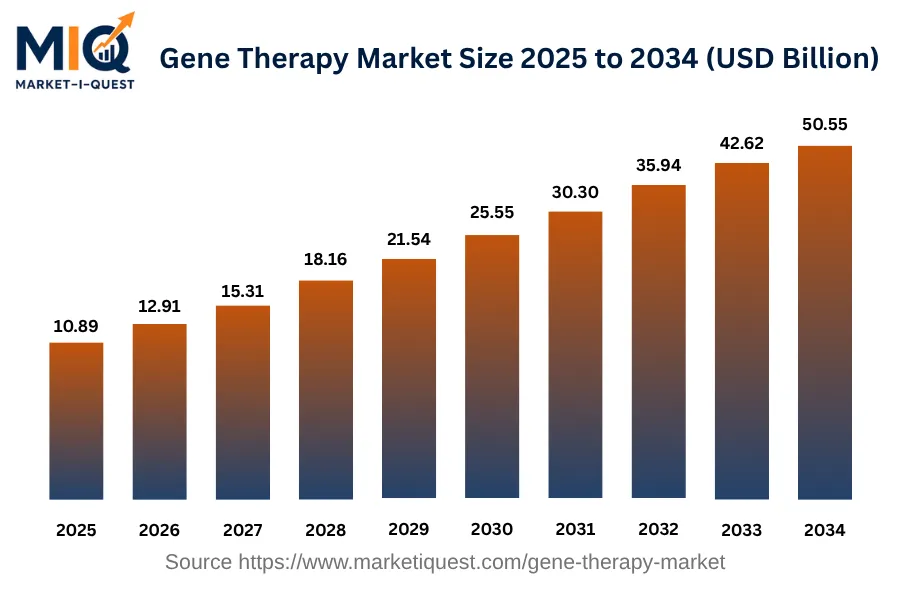
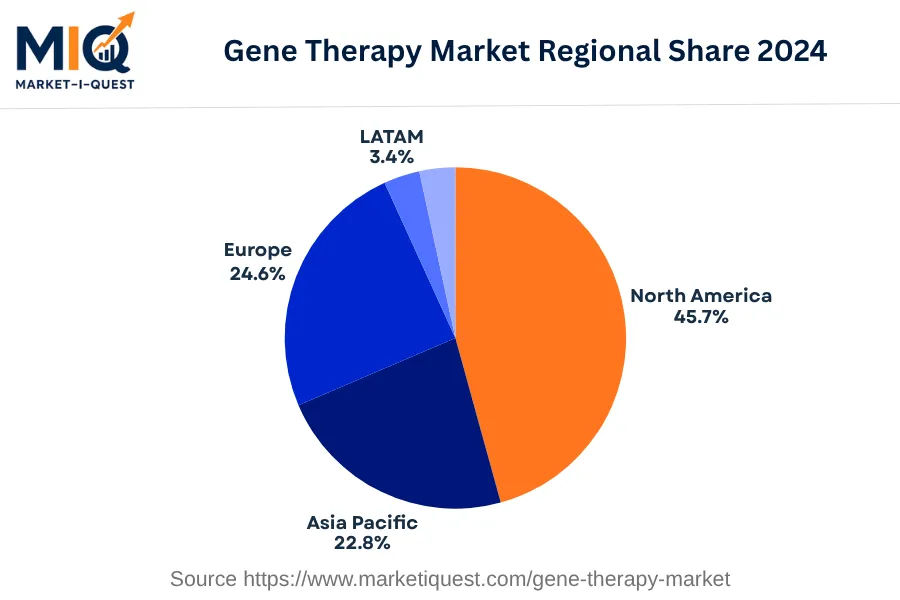
The Gene Therapy Market was valued at USD 10.89 billion in 2025 and is projected to reach USD 50.55 billion by 2034, growing at a CAGR of 18.6%. The steady increase over the nine year period is primarily attributed to the growing acceptance and advancements in gene therapy techniques over these years. Beginning with a market size of USD 9.18 billion in 2024, the gene therapy market witnessed a substantial rise by 2025 and is anticipated to maintain the rising trend through the forecast period till 2034. Region-wise, in 2024, North America held the largest share of the market at 45.7%, followed closely by Europe at 24.6% and Asia Pacific at 22.8%. The remaining portions of the market share were occupied by LATAM and MEA, each accounting for around 3.4%.

Key Takeaways

  • By Vector Type - Viral Vector dominated contributing to the major market share in 2024.
  • By Gene Type - Tumor Suppressor showed the fastest growth with the highest CAGR forecasted from 2025 to 2034.
  • By Delivery Method - Ex Vivo Gene Therapy accounted for the largest market share in 2024.
  • By Application - Oncological Disorders is rapidly growing offering promising prospects for the forecast period of 2025-2034.
gene-therapy-market market size

Key Driving Factors

Increased Awareness And Acceptance Of Personalized Medicines

In recent years, there's been an increasing shift towards personalized medicines, as patients and healthcare providers acknowledge their benefits. Personalized medicine, which includes gene therapy, focuses on developing treatments tailored to an individual's genetic make-up. These treatments can offer better results and fewer side effects compared to conventional therapies. Gene therapy in particular, is viewed as a powerful tool in this realm by enabling the correction of flawed genes causing diseases. This growing acceptance of personalized medicines dovetails with a heightened public awareness about genetic diseases and the potential role of gene therapy in managing these disorders. As more people and organizations recognize these benefits, they're likely to prioritize gene therapies, stimulating demand within the market.
Stricter Regulatory Requirements Encouraging Robust Clinical Trials

Regulations by agencies such as the US Food and Drug Administration (FDA) and its global counterparts play a significant role in shaping the gene therapy market. These regulators have stringent safety and efficacy requirements for gene therapies, leading to comprehensive and well-designed clinical trials. As an example, the FDA's policies led to the approval of Luxturna, the first gene therapy for inherited retinal disease. These rigorous clinical trials can provide substantial evidence that these therapies work, which in turn can generate trust among healthcare providers and patients. Furthermore, a strong regulatory framework can attract investments from pharmaceutical and biotechnology companies that are keen to tap into the promise of gene therapy, thereby driving market growth.

Market Evolution by Timeline

2019-2023
This period saw regulatory agencies loosening restrictions on gene therapies, enabling its increased adoption. Consequently, scientific research organizations and academic institutions turned primary buyers for exploring therapeutic applications, particularly in regions with advanced medical research infrastructure like North America and Europe. Majorly, therapies for inherited genetic disorders and cancers were prioritized. In terms of technology, first-generation vectors were commonly used, while companies started piloting intricate designs. Limited production capacity was a constraint. The commercial model prevalently involved high-priced therapies funded through payer-or-provider contracts. A significant risk experienced was related to the safety and efficacy of these therapies, resulting in a focus on comprehensive clinical trials.
2024
2024 marked an increased involvement of larger pharmaceutical companies in the Gene Therapy Market. Moreover, hospitals began more routinely using gene therapies, creating a demand shift towards clinical applications, with a focus still on North America and Europe. Technology witnessed a shift towards second-generation vectors, while production began to scale. Regulatory requirement for general-purpose technology platforms led to diversified partnerships. The pricing model still saw high-cost therapies, but pay-for-performance contracts emerged as a solution to address affordability concerns. Potential long-term side effects of these therapies remained a source of apprehension.
2025-2029
During this period, the market expanded into Asia, driven by favorable policies and advancements in medical research. Demand came from diverse buyers, including pharmaceuticals, hospitals, and research organizations. The introduction of third-generation vectors increased therapy efficacy. This phase also saw the introduction of industry standards for clinical trials and manufacturing processes. Newer commercial models emerged, including risk-sharing agreements and volume-based contracts. However, with scale, the market confronted challenges related to infrastructure and scaling of quality control procedures.
2030-2034
The gene therapy market started stabilizing during this period. A broader range of therapeutic applications were established, and there was a shift in buyer demographics as gene therapy became commonplace in hospitals worldwide. Scalable and mass-production technology matured, reducing delivery constraints. There was an implementation of global standards on dosage, administration, and safety. The market recorded innovative quantitative pricing models and bundling contracts for treatments for common genetic conditions. The primary risk became managing market saturation and fluctuating demand.

Future Market Outlook

Future Opportunities

The ongoing development of gene therapies indicates substantial future opportunities across various therapeutic areas, especially as regulatory landscapes evolve. The National Institutes of Health (NIH) issued guidelines in January 2023 encouraging the use of adeno-associated virus (AAV) vectors in gene therapy, paving the way for further research and potential product development in this arena. Companies engaged in gene therapy, like Regenxbio, are likely to capitalize on the advances in AAV vectors to expand their treatment offerings in inherited retinal diseases. Moreover, the rise of combination therapies is anticipated to foster synergy between gene therapies and established treatment modalities, exemplified by collaborations such as that of Sangamo Therapeutics and Biogen, initiated in late 2022. Such partnerships suggest a trend toward integrating gene therapy into more comprehensive treatment regimens. Additionally, with increasing investment in research and development fueled by government grants, as seen in the U.S. in 2023, the landscape is ripe for new entrants and innovators to emerge. The potential for gene therapies to address aging-related conditions, supported by recent findings from the Broad Institute in 2023, signals a growing interest in expanding therapeutic applications. As regulatory bodies continue to streamline approval processes, market readiness for new gene therapies is likely to enhance over the coming years.

Segmentation Analysis

By Vector Type

The market by vector type is bifurcated into subsegments such as viral vectors and non-viral vectors, with viral vector accounting for the largest revenue share and non-viral vector expected to grow at the fastest CAGR during the forecast period.

Largest Revenue Share

Viral Vector

Market Share Leader

The viral vector subsegment currently dominates the market by vector type due to its extensive utility in gene therapies and vaccines, its high efficiency in delivering genetic material to cells, and its compatibility with different cell types. Its usefulness in targeted therapies for various diseases, including genetic disorders and cancers, drives demand within the pharmaceutical and biotech industry. The vast potential of viral vectors is most prominent in regions with strong healthcare sectors like North America and Europe, supported by the prevalent regulatory landscape encouraging advancements in gene therapy and immunotherapy. Key purchasing criteria for these vectors include their biological safety, efficiency, and stability for expressing binding genes. On the supply side, substantial investments in R&D for improving vector design and expanding applications creates high switching costs, solidifying the position of viral vectors in the market. The main channels through which viral vectors reach the end-users are direct procurement in research institutes and hospitals and through commercial suppliers and manufacturers.

Fastest CAGR

Non-Viral Vector

Forecast Period Growth Leader

The non-viral vector segment, while currently smaller in size, is forecasted to grow at a faster pace. Growth drivers include increasing interest in these vectors due to their perceived safety and reduced immunogenicity compared to viral vectors. They are seen as a potential solution to the area of gene delivery where viruses may pose limitations. A rise in strategic partnerships and collaborative research among biotech companies aim at advancing non-viral vector technology to better address markets like gene therapy and therapeutic protein delivery. The adoption of non-viral vectors, however, faces barriers such as lower transfection efficiency and transgene expression. Such obstacles are anticipated to overcome by improving modification strategies and formulation techniques, which present as near-term growth catalysts in the market. There are also near-term risks, such as regulatory challenges and technical hurdles, which need to be addressed for the future growth of this segment.

By Gene Type

The market divides gene types into various subsegments including Antigen, Cytokine, Tumor Suppressor, Suicide, Deficiency, Growth Factors, Receptors, and Others. In the base year of 2024, the Tumor Suppressor subsegment accounted for the largest revenue while the Growth Factors subsegment is projected to have the fastest CAGR during the forecast period.

Largest Revenue Share

Tumor Suppressor

Market Share Leader

Tumor Suppressor gene segment leads in revenue, significantly influenced by the global rise in cancer cases and the subsequent demand for effective therapies. These genes are vital in the development of new cancer drugs, as they play a critical role in controlling cell growth and preventing cancer onset. With growing awareness and technological advances, there's a surge in cancer detection rates, leading to a higher demand for Tumor Suppressor genes for therapeutic applications. Geographic regions with a high prevalence of cancer, such as North America and Europe, contribute heavily to this subsegment's revenue. Regulatory bodies' support of cancer research also serves as a significant driver. In terms of purchasing criteria, cost-effectiveness, quality, and the clinical benefit of therapies involving Tumor Suppressor genes are critical factors.

Fastest CAGR

Growth Factors

Forecast Period Growth Leader

While not currently the largest in revenue, the Growth Factors subsegment is projected to grow at the fastest rate. This outlook is expected because of the vast potential and utilization of growth factors in various therapeutic areas beyond cancer, including wound healing, cardiovascular diseases, and neurology. Advancements in biotechnology and an increasing understanding of various growth factors' roles serve as catalysts for this rapid growth. Partnerships among biotech firms and pharmaceutical companies for the development of novel therapies involving growth factors can also propel this growth. However, factors like high product development costs, stringent regulations, and potential side effects of therapies could pose as adoption barriers and near-term risks. The continuous investment in R&D and increasing support from healthcare policies will be crucial in overcoming these challenges.

By Delivery Method

The market is divided into subsegments including In Vivo Gene Therapy and Ex Vivo Gene Therapy. Of the two, Ex Vivo Gene Therapy accounted for the largest revenue share while In Vivo Gene Therapy is expected to grow at the fastest CAGR during the forecast period.

Largest Revenue Share

Ex Vivo Gene Therapy

Market Share Leader

Ex Vivo Gene Therapy has emerged as the dominant subsegment in terms of revenue generation, driven by several key factors. Primarily, this therapy offers a more controlled environment for gene modification, enabling enhanced precision and efficacy. Moreover, the process's reduced invasive nature compared to its counterpart, In Vivo Gene Therapy, is advantageous for patient acceptance and outcome. Additionally, advancements in biotechnology tools for cell manipulation have boosted the efficiency of Ex Vivo Gene Therapy, contributing to its significant revenue generation. Geographically, affluent regions with strong healthcare infrastructures and high genetic disorder prevalence have been key revenue drivers. Regulatory support for gene therapy development and application across various medical fields, including oncology, rare diseases, and other genetic disorders, has also played a pivotal role. However, high treatment costs, which often fall on the patient, represent a key purchasing criterion affecting this subsegment.

Fastest CAGR

In Vivo Gene Therapy

Forecast Period Growth Leader

In contrast, the In Vivo Gene Therapy subsegment shows the most promise for rapid growth, powered by technological advancements and growing adoption. It involves direct delivery into the patient's body, paving the way for less invasive and more targeted treatments. The technology has demonstrated great potential in a wide range of diseases, particularly those that are unreachable with traditional therapy methods. These potential applications provide plentiful opportunities for growth. However, the therapy faces several challenges, such as the risk of immune responses and the difficulty of controlling gene integration sites within the genome, which are yet to be fully addressed. Partnerships between biotechnological firms and academic institutions are crucial for overcoming these challenges and accelerating the adoption of In Vivo Gene Therapy. The rising investments in the field, spurred by promising preclinical and clinical results, also suggest an optimistic outlook for this subsegment, albeit with near-term risks due to regulatory complexities and scaling-up challenges.

By Application

The market is divided into subsegments including Oncological Disorders, Rare Diseases, Cardiovascular Diseases, Neurological Disorders, Infectious Diseases, and others. Oncological Disorders accounts for the largest revenue share while Rare Diseases is expected to grow at the fastest CAGR during the forecast period.

Largest Revenue Share

Oncological Disorders

Market Share Leader

Typical industry logic and common market structure suggest that Oncological Disorders represents the subsegment with the highest revenue. Societal factors drive this trend, as the prevalence of cancer-related diseases remains high and continues to increase, supported by lifestyle changes and aging population demographics. The demand for treatments to combat cancer is growing accordingly, increasing revenue in this subsegment. Regulations, particularly in developed economies, have also pushed the rise in access to cancer treatments, driving up sales. The purchasing criteria within this subsegment often prioritize the effectiveness of the treatment due to the severity of most oncological disorders, which drives the consumption of premium-priced products. The channels through which these treatments are disseminated, chiefly healthcare institutions, provide a steady customer base, with switching costs being relatively high due to the specialized nature of these treatments.

Fastest CAGR

Rare Diseases

Forecast Period Growth Leader

The Rare Diseases subsegment is poised for the fastest growth during the forecast period. Market structure suggests this is due to technological advancements and medical innovation, resulting in better understanding and effective treatments for a myriad of previously untreatable conditions. In many markets, policies favoring orphan drugs and treatments for rare diseases also play a crucial role. This encourages investment for R&D in the area, spurring product development. Capital investment in advanced diagnostic technologies has increased, improving disease detection rates which sequentially increase treatment demand. Partnerships between pharmaceutical companies and research institutions have also been a catalyst for growth. However, high treatment cost and lack of awareness in certain geographies can act as potential barriers for growth in the near term, and should be watched carefully.

Competitive Analysis

Key Market Players

Manufacturers / OEMs

Novartis AG
Switzerland
Gilead Sciences, Inc.
US
Spark Therapeutics
US

Key Suppliers & Raw Materials

Thermo Fisher Scientific Inc.
US
Merck KGaA
Germany
Bio-Techne
US

Distributors, Integrators & Channel Partners

Amgen Inc.
US
Roche Holding AG
Switzerland
Pfizer Inc.
US

Porter’s Five Forces Analysis

This analysis evaluates the competitive forces in the Gene Therapy Market.

Supplier Bargaining Power

Medium

Suppliers can influence the price and quality due to the specificity of raw materials for gene therapy.

Buyer Bargaining Power

Low

Buyers have limited power due to the specialized nature and limited availability of gene therapies.

Threat of Substitutes

Low

Few alternatives exist for gene therapies, reducing substitute threat.

Threat of New Entrants

Medium

High R&D costs and regulatory barriers restrict entry, but innovative disruption is feasible.

Competitive Rivalry

High

Incumbents compete intensely on innovation, patent protection and speed-to-market.

Regional Analysis

Geographic market dynamics and growth opportunities across key regions

Global Market Outlook

gene-therapy-market market regional share

North America

In the base year 2024, the North American gene therapy market continued to expand due to rising technological advancements, increasing investment, and favorable regulations. Drivers of the market growth included rising demand owing to the prevalence of chronic disease and steady investment from both public and private sectors, spurred on by the success of curative therapies like Luxturna and Zolgensma. Regulatory support, particularly from the U.S. Food and Drug Administration (FDA), encouraged the commercialization of innovative therapies. Additionally, advanced technology adoption in healthcare, especially in the U.S and Canada, facilitated the development and distribution of gene therapies.

The market trends of 2024 highlighted a shift in buyer behavior with a growing preference for personalized medicine. Increased partnerships and merger activities among major players, such as Biogen and Novartis, bolstered this shift further, helping to advance clinical trials and fast-track approvals. Revolutionary gene-editing techniques like CRISPR-Cas9 gained further traction, with healthcare sector increasingly adopting this technology. Policy enforcement was noticeable, with agencies such as Health Canada implementing policies relating to the regulation of gene therapies. In 2024, the gene therapy market impacted multiple sectors but was most notable within healthcare, with service provider organizations like hospitals and nursing homes being key customers, alongside pharmaceutical and biotech companies involved in the development and distribution of these therapies.

Asia Pacific

In 2024, the Asia Pacific gene therapy market showcases robust development driven by key factors and significant market trends. The accelerating adoption of this advanced therapeutic approach, particularly in nations like China, Japan, Australia, and South Korea, rests on advanced healthcare infrastructures and growing investments in biotechnology. Policies such as China's Biotechnology Megaproject demonstrate a governmental push toward the advancement of genetic medicine. Consumer demand surged with increasing genetic disorder prevalence and improved patient awareness. In India, public-private partnerships play a crucial role, increasing the reach of gene therapy solutions to a broad population. Supply dynamics indicate a keen interest from global players, witnessing a rise in cross-border collaborations and M&A activities.

On the trend front, personalized medicine gains traction, where therapies customized to individual genetic structures are preferred in tackling genetic disorders. The rise of direct-to-consumer genetic testing companies and their partnerships with healthcare entities in Japan and Australia bolsters this trend. Meanwhile, stringent regulatory standards on gene editing, such as Japan’s Clinical Research Act, have induced rigorous clinical trials and quality assurances, ensuring effective market offerings. The crux of these developments lies in the healthcare sector, significantly impacting pharmaceutical manufacturers, biotechnology firms, and research institutes. The Asia Pacific gene therapy market in 2024 is characterized by regulatory support, technological advancements, and evolving consumer preferences.

Europe

In 2024, the European gene therapy market experienced profound expansion due to technological advancements and increased investment. Drivers for growth included government funding, improved therapies, and heightened public awareness. Countries such as Germany and the UK invested strongly in gene therapy research, attracting biotech firms and ensuring a robust supply chain. Meanwhile, public awareness programs in France and other countries increased understanding of gene therapy benefits, boosting demand. Technological advancements, particularly within the healthcare and biotech sectors, propelled the market. Widespread adoption of CRISPR-Cas9 and other gene-editing technologies streamlined processes, making treatments more accessible and affordable. The increased prevalence of monogenic diseases also boosted patient enrollment in gene-therapy trials, particularly in Spain and Italy.

Simultaneously, the trend of partnerships and mergers among biotech firms, pharmaceutical companies, and research institutions was prevalent, accelerating the development and distribution of gene therapies. Examples include Benelux-based Uniqure's partnership with CSL Behring and the acquisition of German firm Asklepios BioPharmaceutical by Bayer. Policy enforcement played a crucial role in market dynamics, with the European Medicines Agency (EMA) granting approvals to various gene therapies. Regulatory support, particularly from central and eastern European nations, for gene therapy trials was also significant. In the context of buyers, the healthcare sector proved instrumental, with utilities and manufacturing sectors following suit due to their involvement in the development and distribution of gene therapy products.

Latin America

In 2024, the Gene Therapy Market in Latin America was characterized by burgeoning interest and advancements in genetic treatments in various health sectors. The primary drivers were the growing prevalence of genetic diseases, heightened investment in research and development, and the widespread adoption of advanced technologies in countries like Brazil, Mexico, and Argentina. Government regulations supporting gene therapy research significantly influenced the market. For instance, Brazil’s Genetic Heritage Management Council encouraged genetic research, fueling the market growth. Simultaneously, the increasing affordability of gene therapies owing to economies of scale and competitive pricing among the providers shaped the market dynamics. Demand from healthcare industries in Colombia, Chile, and Peru additionally bolstered market expansion.

In terms of trends, there was a noticeable shift towards personalized treatments and targeted therapies, substantially impacting patient demand. The advent of CRISPR and other gene-editing technologies gained traction for their potential in treating inherited disorders. Partnerships and mergers among academic institutions, research laboratories, and biotech companies became prominent to accelerate gene therapy development and commercialization, with a focus on mitigating the high failure rates of genetic treatments. There was increased enforcement of strict quality control standards to address safety concerns associated with gene therapy, influencing industries' approach towards these solutions.

Middle East & Africa

In 2024, the gene therapy market in the Middle East and Africa experienced a considerable shift, backed by a unique confluence of factors. Regulatory support from governments like Saudi Arabia and the United Arab Emirates increased, driving investments in innovative technologies. Demand for personalized healthcare solutions also ascended, notably in nations such as South Africa, Nigeria, and Kenya, empowering local health systems to adopt genomics-based therapeutic approaches. Additionally, dynamic pricing strategies by suppliers tailored to individual markets, especially in Israel, intensified gene therapy accessibility.

Notable trends were equally instrumental in shaping the gene therapy landscape. A significant shift was discerned in buying behavior amongst healthcare providers, leaning towards customized gene therapy solutions that offered more efficacious patient outcomes. Technological advancements in genomics also became prevalent, with Egypt and Qatar emerging as hotspots for cutting-edge development. Channel dynamics evolved, too, with a growing preference for partnerships amongst healthcare, pharmaceutical manufacturers, and biotechnology firms for knowledge sharing and resource optimization. Notably, the implementation of the Saudi Vision 2030 policy also propelled gene therapy, sparking a wave of transformations in the country’s healthcare sector. The gene therapy landscape in 2024 in the Middle East and Africa was therefore a reflection of both progressive policy decisions and evolving market dynamics.

Recent Industry Developments

Latest market innovations, product launches, and strategic initiatives

June 2026

ProBio a global contract development and manufacturing organization (CDMO), inaugurated its flagship Cell and Gene Therapy Center of Excellence at the Princeton West Innovation Campus in Hopewell, New Jersey. This facility expansion is specifically designed to address the manufacturing bottlenecks currently hindering the commercial scale-up of viral vector-based gene therapies, providing modular, high-capacity bioprocessing for industry partners.

January 2026

Cellectis announced key clinical milestones for its allogeneic CAR-T (chimeric antigen receptor T-cell) portfolio, specifically detailing the ongoing pivotal Phase II BALLI-01 trial for lasme-cel in patients with relapsed/refractory acute lymphoblastic leukemia. This progress marks a significant step for "off-the-shelf" gene-modified cell therapies, which aim to reduce the manufacturing wait times and costs associated with traditional autologous (patient-specific) gene therapies.

Frequently Asked Questions