Liver Cancer Diagnostics Market Snapshot

Key Players

  • Siemens Healthineers (Germany)
  • Abbott Laboratories (US)
  • Becton Dickinson and Company (US)
  • GE Healthcare (US)
  • Danaher Corporation (US)
  • Qiagen (Netherlands)
  • Biomerieux (France)
  • Thermo Fisher Scientific Inc. (US)

Market Size

Base Year 2024
$12.28 Bn
CAGR
8.18%
Forecast 2034
$26.96 Bn

Market Segments

By Test Type
  • Laboratory Tests
  • Imaging
  • Endoscopy
  • Biopsy
By End Use
  • Hospitals & Diagnostic Laboratories
  • Academic & Research Institutes

Market Dynamics

Drivers
  • Rising hepatocellular carcinoma cases
  • Increasing demand for early detection
Restraints
  • High diagnostic costs
  • Limited awareness in low-income regions
Opportunities
  • Rising prevalence of liver cancer
  • Advancements in diagnostic technologies

Market Size

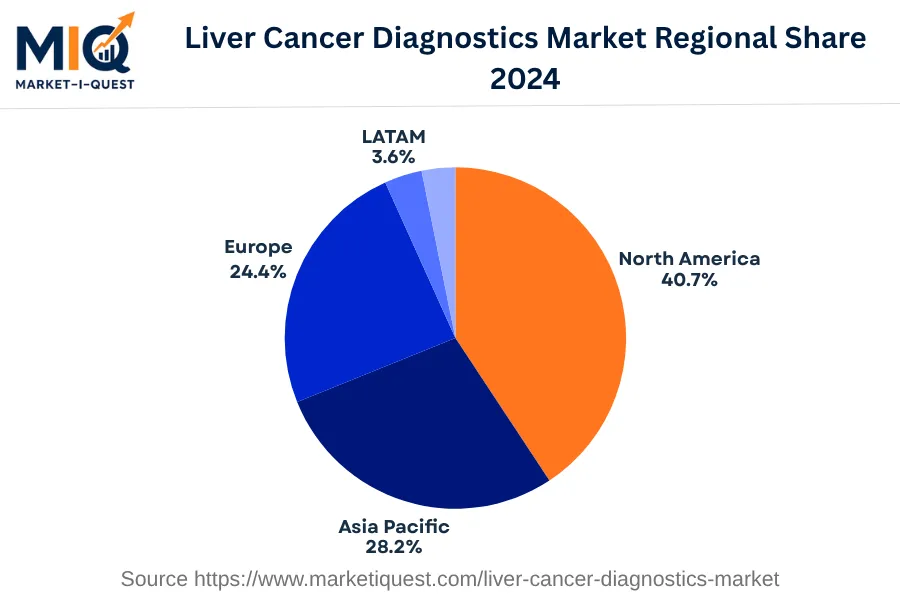
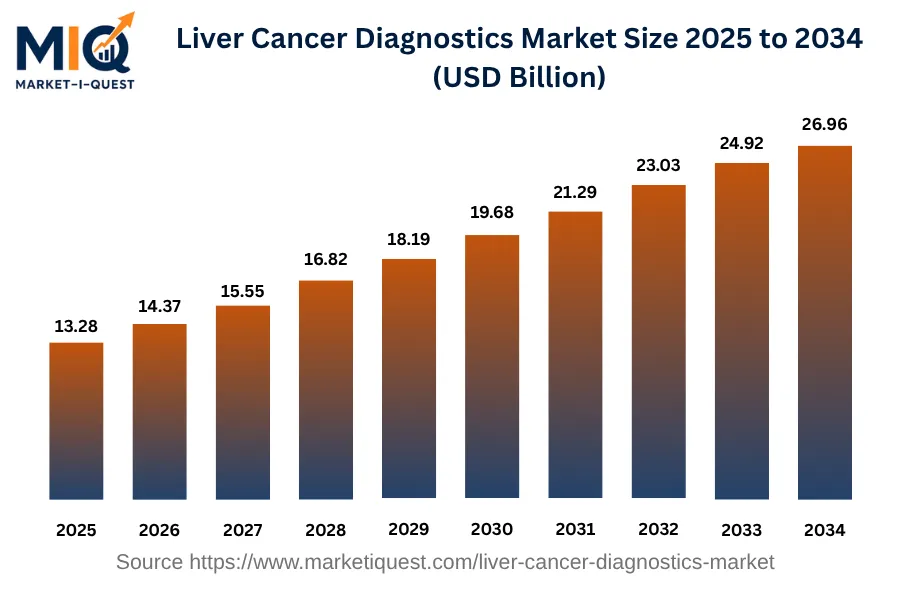
The Liver Cancer Diagnostics Market was valued at 13.28 Billion USD in 2025 and is expected to reach a size of 26.96 Billion USD by 2034. This translates to a compounded annual growth rate (CAGR) of 8.2% through the period from 2025 to 2034. The sharp growth trajectory from 2025 to 2034 is largely attributed to an increased prevalence of the disease, a rise in the aging population, and innovative advancements in diagnostic technologies. Year 2024, considered a base for this study, registered a market size of 12.28 Billion USD, indicating significant activity and demand in the sector prior to the study period. It's noted that the market distribution in 2024 showed a wide geographic dispersal. North America had the largest share with 40.7%, followed by Asia Pacific at 28.2%, and Europe with a close 24.4%. Latin America and the Middle East & Africa had more modest shares, at 3.6% and 3.2% respectively. The distribution of shares underscores the global relevance of liver cancer diagnostic solutions.

Key Takeaways

  • By Test Type - Laboratory Tests held a notable position in the Liver Cancer Diagnostics Market in 2024.
  • By End Use - Hospitals & Diagnostic Laboratories dominated in 2024 with the highest market share.
liver-cancer-diagnostics-market market size

Key Driving Factors

Increasing Incidence of Obesity and Alcohol Consumption

Obesity and excessive alcohol consumption have been consistently linked to liver cancer, particularly hepatocellular carcinoma (HCC). According to reputable health organizations, obese individuals have up to twice the risk of developing HCC, while the risk associated with alcohol abuse is even higher. The increasing prevalence of obesity and alcohol-related disorders in various regions is contributing to a higher number of liver cancer cases, subsequently driving the demand for liver cancer diagnostic tests. The liver cancer diagnostics market is, therefore, experiencing growth due to the rising need to diagnose, stage, and track these new cases and recurrences. Additionally, high-risk groups such as obese individuals and chronic heavy drinkers have become key targets for preventive screenings, further influencing this market.

Influence of Government Regulations Supporting Early Detection

Government bodies worldwide are implementing stringent regulations and guidelines promoting early detection of cancers, including liver cancer. For instance, the America Society of Clinical Oncology and American Cancer Society have guidelines promoting periodical cancer screenings for certain at-risk populations. Such directives are particularly influential in countries with national healthcare systems, where the government agencies' guidelines significantly impact diagnostic protocols and practices, driving demand for diagnostic services. Key to these guidelines is the requirement for diagnostic tests to ascertain the presence and stage of liver cancer in patients, pushing the healthcare providers to embrace and utilize liver cancer diagnostic tools comprehensively. These enforced practices result in stable demand and consistent growth in the liver cancer diagnostics market.

Market Evolution by Timeline

2019-2023
During this period, hospitals have been the major buyers of liver cancer diagnostic systems worldwide, especially in the North American and European markets where healthcare facilities are well established. The main drivers for adoption include a higher awareness of liver cancer and earlier detection rates. Regulatory approvals were granted to innovative non-invasive liver diagnostic tests during this period such as the Alpha Fetoprotein (AFP) test by the FDA. However, high equipment costs and long procurement cycles persisted as challenges. To make procurement easier, many suppliers adopted flexible payment structures. Despite innovative technologies, adoption was hindered by reluctance to shift from traditional diagnostic systems, lack of skilled personnel and insufficient healthcare infrastructure in developing countries.
2024
The year 2024 saw a surge in demand from Asia-Pacific regions like China, Japan, and India primarily due to the high prevalence of liver diseases and increasing healthcare expenditure. This has led to an increased supply of diagnostic tools, predominantly, immunoassays and molecular diagnostic tests. However, the lack of healthcare infrastructure still existed in several underdeveloped regions which posed a constraint on widespread accessibility. Regulatory bodies like Japan's PMDA and India's Central Drugs Standard Control Organisation (CDSCO) showed supportive policies, guiding the market's evolution.
2025-2029
In these years, a healthy competition arose among diagnostic tool producers, leading to innovations and an influx of next-gen technologies with greater accuracy. Liver point-of-care testing gained popularity due to their quick results, driving up demand further. The integration of AI and Machine Learning with diagnostic tools became a trend enhancing the precision of diagnostics. But these technologies were often seen as financially out-of-reach for most of the developing world. In terms of regulation, stringent policies imposed by the European Union's In Vitro Diagnostic Regulation (IVDR) impacted the market dynamics.
2030-2034
The diagnostic market shifted towards personalized care and precision medicine in this period. Demand increased from not only hospitals but also stand-alone diagnostic labs and research centers worldwide, especially in Africa and Latin America. New diagnostic technologies based on genomics and proteomics prevailed. However, these techniques typically required specific equipment and well-trained personnel, which remained a constraint especially in less developed regions. In order to maintain a competitive edge and expedite the adoption of advanced technologies, manufacturers often partnered with healthcare providers and offered training programs.

Future Market Outlook

Future Opportunities

Amid the evolving liver cancer diagnostics landscape, several opportunities arise for industry stakeholders. The increasing prevalence of liver cancer in regions like sub-Saharan Africa, where access to early diagnostics remains limited, presents a potential market for scalable and cost-effective solutions. Initiatives such as the Global Health Initiative launched in 2022 aim to increase screening awareness in these underserved areas, encouraging partnerships with local healthcare providers. Furthermore, the rise of telehealth solutions, as evidenced by the successful implementation in Australia since 2020, offers a platform for conducting virtual screenings and consultations, expanding access to specialists. Companies that develop robust data analytics platforms, such as IBM Watson Health, are positioned to leverage artificial intelligence for predicting liver cancer risk based on demographic and clinical data. Regulatory trends also favor innovations, as seen with the FDA's ongoing efforts to facilitate the review of novel diagnostics, hinting at more streamlined pathways for new entrants. The amalgamation of biomarker identification technologies and precision medicine represents a rich ground for development in personalized diagnostics, maximizing treatment effectiveness. As public awareness grows, highlighted by campaigns from organizations like the World Health Organization in 2023, there is a shift toward preventive approaches, cultivating opportunities for early intervention strategies in liver cancer care. Hence, the convergence of healthcare advancements and regulatory support indicates promising trajectories for market players moving forward.

Segmentation Analysis

By Test Type

The market is divided into subsegments including Laboratory Tests, Imaging, Endoscopy, and Biopsy. Of these, Laboratory Tests accounted for the largest revenue share while Endoscopy is anticipated to grow at the fastest rate during the forecast period.

Largest Revenue Share

Laboratory Tests

Market Share Leader

Laboratory Tests account for the highest revenue share in this market segment owing to their necessity in almost all kinds of medical procedures, high frequency of usage, and relatively low costs making them a viable option for routine checks. Additionally, the large spectrum of tests available, catering to numerous diseases, further enhances their popularity. They are the primary form of diagnostic procedure, making them indispensable in healthcare. Additionally, high-income countries where healthcare expenditure is high, contribute significantly to the revenue of this subsegment. The substantial influence of regulatory bodies such as the FDA also favours laboratory testing, as approval processes are streamlined for these tests. Purchasing criteria strongly favour laboratory tests due to their reliability, affordability, and extensive range of permissible tests. The fixed nature of these tests also plays a role in their adoption because the lack of alternative options and difficulty in switching further solidify their market position.

Fastest CAGR

Endoscopy

Forecast Period Growth Leader

Despite not holding the largest revenue share, the Endoscopy subsegment demonstrates the fastest growth. This can be attributed to several factors such as technological advancements, growing incidences of diseases requiring endoscopic procedures, and increased investment in health infrastructure. Modern endoscopic devices, aided by AI and robotics, offer higher precision, leading to improved outcomes and rapid patient recovery. These technological achievements have minimized the adoption barriers for endoscopy procedures. Furthermore, the increasing prevalence of diseases such as gastrointestinal disorders, cancers, and other tissue-related ailments demand more invasive diagnostic procedures, enhancing the adoption of endoscopy. Strategic partnerships between biotech companies and public health institutions are acting as catalysts in this growth. However, high costs and lack of skilled professionals pose challenges to this subsegment. Nonetheless, the forecast suggests majority growth potential in this market subsegment.

By End Use

The market is divided into subsegments including Hospitals & Diagnostic Laboratories, and Academic & Research Institutes. In 2024, Hospitals & Diagnostic Laboratories accounted for the largest revenue share while Academic & Research Institutes are expected to experience the fastest growth.

Largest Revenue Share

Hospitals & Diagnostic Laboratories

Market Share Leader

The subsegment leading the market in terms of revenue in 2024 was Hospitals & Diagnostic Laboratories. This can be attributed to several factors. First, hospitals and diagnostic labs form the backbone of healthcare systems and are thus pivotal in every aspect of service delivery. They possess the necessary facilities and equipment for diagnosing and treating a wide array of illnesses and medical cases. Moreover, they serve a significantly large customer base as they provide essential services. They additionally operate both in dense urban areas and remote regions, extending their service delivery, and consequently, market reach. Coupled with a well-established regulatory framework governing their operation, these facilities have higher purchasing power for state-of-the-art devices and technologies. This coupled with the increasing demand for advanced diagnostic options due to the rising prevalence of chronic diseases, the hospitals & diagnostic laboratories subsegment has managed to generate the largest revenue share.

Fastest CAGR

Academic & Research Institutes

Forecast Period Growth Leader

Despite not leading in terms of revenue, Academic & Research Institutes are projected to grow at the fastest pace. The primary reasons for this include the constant need for advanced and efficient diagnostic and treatment methodologies, propelling continuous research and study. Innovation, a key mandate for these institutes, often leads to the development of cutting-edge, patentable technologies, which in return catapults their growth. Further, these institutes stand to benefit from government and private sector funding geared towards research and development in the medical field. Partnerships with the pharmaceutical industry, for instance, offer a significant capital expenditure which propels growth. However, adoption barriers related to cost and complex implementation processes might pose a risk in the short run. Yet, with prioritized resources and backed by potential breakthroughs and policy support, these institutes are bound to experience the most rapid growth.

Competitive Analysis for Liver Cancer Diagnostics Market

Key Market Players

Manufacturers / OEM

Abbott Laboratories
US
Roche Diagnostics
Switzerland
Thermo Fisher Scientific
US

Key Suppliers & Raw Materials

Merck KGaA
Germany
Eurofins Scientific
Luxembourg
Agilent Technologies
US

Distributors, Integrators & Channel Partners

Cardinal Health
US
McKesson Corporation
US
Medline Industries
US

Porter’s Five Forces Analysis

This analysis evaluates the competitive intensity and attractiveness of the Liver Cancer Diagnostics Market.

Supplier Bargaining Power

Medium

Potential influence from suppliers manifests in costs, quality, and availability of diagnostic equipment and reagents.

Buyer Bargaining Power

Low

Differentiated diagnostic services and critical nature of liver cancer diagnosis limit buyer bargaining power.

Threat of Substitutes

Low

Few substitutes exist for accurate liver cancer diagnostics, reducing the threat level.

Threat of New Entrants

Medium

High R&D costs serve as barriers to entry, but advancing technology may bring new players.

Competitive Rivalry

High

Established entities compete intensively on advancing diagnostic technology and increasing reliability.

Regional Analysis

Geographic market dynamics and growth opportunities across key regions

Global Market Outlook

liver-cancer-diagnostics-market market regional share

North America

In 2024, the Liver Cancer Diagnostics Market in North America marked a substantial growth, buoyed by factors such as the increasing prevalence of liver cancer, evolving medical technology, and amplified healthcare investment. Regulatory policies geared towards early diagnosis and treatment of cancer in countries like the U.S, Canada, and Mexico was a key propellant. Adoption of innovative diagnostic technologies, backed by substantial healthcare investment in these nations, boosted the market growth. Additionally, the pricing dynamics, specifically in the U.S., spurred by health insurance policies supporting scanning procedures, also drove the market growth. Changes in buyer behaviour, predominantly in healthcare sectors, paved the way for noteworthy trends. There was a significant shift towards comparatively non-invasive diagnostic technology due to its high efficiency and minimal risks. Also, a surge in partnerships and acquisitions occurred among leading market players to expand their portfolio and geographic footprint while ensuring alignment to policy enforcement.

The increasing implementation of standardized cancer diagnostic protocols across healthcare facilities further shaped the market landscape. In sectors such as healthcare and utilities, there was a rise in the demand for precision diagnostics, fueling market expansion. In conclusion, the North America Liver Cancer Diagnostics Market in 2024 teetered on the advancement of technology, regulations, market collaborations, and the endorsing of standardized protocols across sectors.

Asia Pacific

In 2024, the Liver Cancer Diagnostics Market in the Asia Pacific region exhibited substantial growth underscored by dynamic factors and trends. Drivers included heightened demand for early detection of liver cancer, primarily in populous countries like China and India due to growing aging population and risk of hepatitis. Regulatory frameworks promoting diagnostic screening and advancements in imaging technologies were embraced by Asia Pacific markets, most notably Japan, South Korea and Australia, thus triggering market expansion. Also, hefty investments in healthcare were made by governments to augment supply dynamics and stabilize pricing. Emergent trends in this year demonstrated specific shifts in buyer behaviour favoring innovative diagnostic procedures such as liquid biopsy and Next-Generation Sequencing (NGS).

The ongoing adoption of Artificial Intelligence in liver cancer diagnostics reshaped product technologies across the region. Emerging partnerships and M&As, particularly in key ASEAN markets, increased the accessibility to sophisticated testings, thereby driving usage. Governments' stringent enforcement of quality standards in this sector also served as a pivotal factor determining market direction. Most prominent customers who utilized these diagnostic tools were the healthcare sector and governmental agencies. Digital health platforms in the region, a growing sector, leveraged these diagnostic advancements to better cater to their patient's needs, reflecting a key shift in the health services landscape in the Asia Pacific region in 2024.

Europe

In 2024, the European Liver Cancer Diagnostics Market experienced significant dynamics. Drivers included an increased demand for advanced diagnosis techniques in countries such as the United Kingdom, Germany, and France due to rising cases. Revised regulations saw more insistence on early diagnosis as the best countermeasure against the disease, instigating governments to invest more in cancer diagnostic tools. Technology adoption became critical, especially in the Nordics and Benelux countries known for their tech-oriented healthcare ecosystems. Supply dynamics in Italy and Spain deeply affected the market due to the high prevalence of liver cancer, while pricing strategies across Europe influenced market growth.

Market trends observed included a preference for non-invasive diagnostic methodologies by healthcare customers. A shift towards precision medicine in countries like Germany and the United Kingdom spurring the development of innovative diagnostic technologies became evident. New partnerships and mergers between healthcare providers, especially in Central & Eastern Europe, increased to confront the rising threat of the disease. The implementation of policies enforcing standards for liver cancer diagnosis dominated the scene in France and Italy. Furthermore, increased dependence on digital health technology integrated into cancer diagnostic management systems was remarkable in Spain, the Nordics, and Benelux.

Latin America

In 2024, the Latin American market for liver cancer diagnostics delineated growing demand and adoption of novel diagnostic technologies. A steady increase in the prevalence of liver cancer, primarily in Brazil and Mexico, drove demand and led to government investments in healthcare infrastructure and machinery upgrades. Argentina showed high adoption of imaging techniques and liquid biopsies for quick, non-invasive diagnoses. This was propelled by new healthcare regulations requiring improved early detection of liver cancer. Technology adoption was marked by the emergence of advanced diagnostic devices and AI integrated solutions, most notably seen in Chile and Colombia.

Consumer behavior shifted towards preventative screenings and regular liver health assessments, fueled by governmental and non-governmental health campaigns across LATAM. This sparked the growth of home-based diagnostic kits in retail spaces in urbanized regions of Brazil and Peru. Changes in product technology were highlighted by an increased preference for non-invasive diagnosis methods in healthcare institutions across Argentina and Chile. The trend of strategic partnerships marked the LATAM liver cancer diagnostics market, with medical device manufacturers collaborating with tech firms for innovation. In Peru and Colombia, government policy to integrate liver cancer early detection in routine health check-ups in public hospitals became instrumental in the broad-based market growth. These drivers and trends shaped a dynamic and advancing liver cancer diagnostics market in LATAM in 2024.

Middle East & Africa

In 2024, the Liver Cancer Diagnostics market in the Middle East and Africa showcased significant dynamics. A surge in liver cancer cases, particularly in Egypt, South Africa, and Nigeria, stimulated demand, whilst public health efforts in Saudi Arabia, Qatar, and the UAE increased the adoption of advanced diagnostic technologies. Moreover, increased government and private sector investment in healthcare in countries like Israel and Kenya, coupled with favorable pricing policies, boosted market growth. Trends observed in buyer behavior revealed a shift towards non-invasive diagnostic procedures, reflecting patient preferences for non-intrusive methods and high-accuracy results. Broadening access to such procedures through retail health clinics and telemedicine proliferated, largely due to the increased government emphasis on e-health in nations like Israel and Qatar.

Furthermore, partnerships between regional hospitals and international diagnostic tech providers, emphasizing collaboration around AI-based diagnostic tools, became more prevalent. The engagement of key sectors was evident: the oil and gas industry in Saudi Arabia and the UAE sponsored screenings as a part of their worker health programs; government-funded initiatives to improve diagnostic services were strong in South Africa and Egypt, while healthcare providers actively sought new, efficient diagnostic options. Telecom companies played a role by enabling telemedicine infrastructure, particularly in less urbanized parts of Kenya and Nigeria.

Recent Industry Developments

Latest market innovations, product launches, and strategic initiatives

July 2026

Apollo Cancer Centres launched Shield™ Multi-Cancer Detection (MCD), a blood-based multi-cancer test capable of detecting cancer signals including liver cancer. Zydus Lifesciences signed an MoU with Apollo Hospitals to launch the test nationwide across India.

December 2025

Helio Genomics entered into a strategic partnership with liver disease telehealth company LiverRight to integrate its HelioLiver blood test (based on cfDNA methylation patterns and serum protein analysis) with LiverRight's network of liver disease specialists across all 50 U.S. states, creating a seamless pathway from early detection to specialized care.

Frequently Asked Questions