Healthcare Specialty Enzymes Market Snapshot

Key Players

  • Novozymes A/S (Denmark)
  • Roche Holding AG (Switzerland)
  • Thermo Fisher Scientific Inc. (United States)
  • Amano Enzyme Inc. (Japan)
  • BASF SE (Germany)
  • Advanced Enzymes Technologies Limited (India)
  • Merck KGaA (Germany)
  • Codexis Inc. (United States)
  • Sanofi S.A. (France)
  • Koninklijke DSM N.V (Netherlands)

Market Size

Base Year 2024
$3.75 Bn
CAGR
7.53%
Forecast 2034
$7.75 Bn

Market Segments

By Product
Carbohydrases, Polymerases & Nucleases, Proteases, Lipases, Phosphatases/Phytases, Others
By Technique
Clinical Chemistry, Immunodiagnostics/Immunoassays, Molecular Diagnostics, Hematology, Microbiology
By Source
Micro-organisms, Animals, Plants
By Application
Infectious Disease, Diabetes, Oncology, Cardiology, Nephrology, Autoimmune Diseases, Others
By End Use
Hospitals, Laboratory, Others

Market Dynamics

Drivers
  • Growing health-conscious population
  • Increasing diagnostic applications
Restraints
  • Stringent regulatory policies
  • High manufacturing costs
Opportunities
  • Growing biotechnology sector
  • Increasing pharmaceutical applications

Market Size

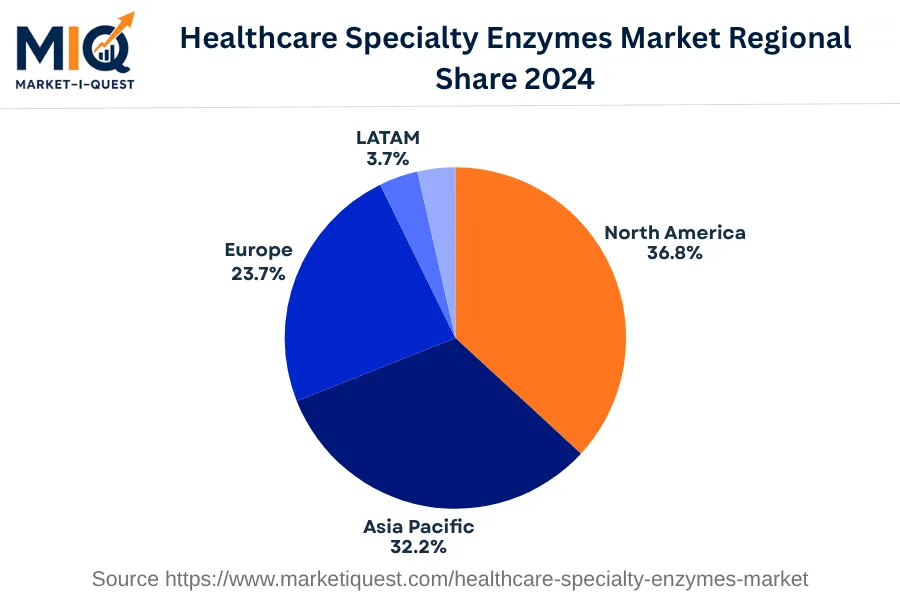
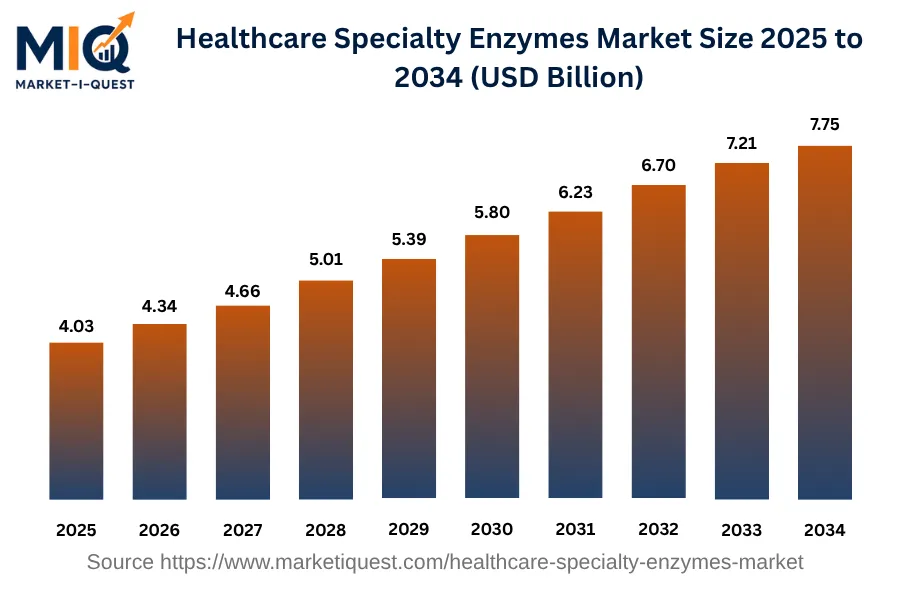
The Healthcare Specialty Enzymes Market, estimated at USD 4.03 billion in 2025, is projected to grow to USD 7.75 billion by 2034, charting a compound annual growth rate of 7.53%. This increasing market size over the nine-year period reflects consistent growth in the sector. Such growth is a result of advancements in biotechnology and persistent R&D efforts which have expanded the application of specialty enzymes in the healthcare sector. In 2024, the market was valued at USD 3.75 billion, indicating a considerable jump to the forecasted 2025 value. Regional market shares in 2024 were task-distributed with North America commanding 36.84%, followed by Asia Pacific with 32.16%. Europe accounted for 23.74% whereas LATAM and MEA held minimal shares with 3.68% and 3.58% respectively. These figures underscore the geographical distribution details of the Healthcare Specialty Enzymes Market within that year.

Key Takeaways

  • By Product - Proteases held a prominent position in the Healthcare Specialty Enzymes Market.
  • By Technique - Clinical Chemistry was the leading category in the market.
  • By Source - Micro-organisms dominated the Healthcare Specialty Enzymes Market.
  • By Application - Oncology had a significant share in the market.
  • By End Use - Hospitals stood as the top-consuming sector in the Healthcare Specialty Enzymes Market.
healthcare-specialty-enzymes-market market size

Key Driving Factors

Increasingly Stringent Pharmaceutical Manufacturing Regulations

Healthcare specialty enzymes are essential substances used in the production of various pharmaceutical products. In recent years, regulatory bodies around the world, such as the U.S. Food and Drug Administration (FDA) and the European Medicines Agency (EMA), have imposed strict quality control standards on drug manufacturing processes. These regulations require pharmaceutical companies to use high-quality enzymes to ensure the efficacy and safety of their products. This is one of the key factors driving the demand for specialty enzymes in the healthcare sector, as companies strive to meet these regulatory standards.

Growing precision medicine market

Precision medicine, which involves tailoring medical treatment to the individual characteristics of each patient, is a fast-growing segment of the healthcare market. It depends heavily on advanced biochemistry, including the use of specialty enzymes. These enzymes are used to study disease biomarkers and drug metabolites, playing a crucial role in the development of targeted therapies. As the precision medicine market expands, it is fueling a rise in demand for specialty enzymes. Individualized treatments require the effective use of specialty enzymes to study and understand patients' unique biological compositions.

Market Evolution by Timeline

2019-2023
Pharmaceutical manufacturers were key buyers in the Healthcare Specialty Enzymes Market. The demand was driven by applications in drug synthesis and diagnostic solutions. Primary regions of interest included North America and Western Europe. Suppliers introduced enzymatic solutions designed specifically for disease-targeted diagnosis and treatment. However, slow integration maturity influenced supply efficiency. The United States Food and Drug Administration's (FDA's) regulations on Bioengineered Enzymes usage defined adoption rates. The commercial model featured fixed-pricing contracts, with partnerships between enzyme developers and pharmaceutical companies. Operational risks included limited knowledge on enzyme characteristics and potential supply chain disruptions due to complexities in enzyme production.
2024
In 2024, demand from pharmaceutical firms remained high while biotechnology firms emerged as new buyers. The use of specialty enzymes in genomics and proteomics surged. Suppliers pursued improvements in enzyme stability and specificity, amidst constraints of high-cost production methodologies. Regulatory considerations, like European Union's guidelines on Genetically Modified Organisms, shaped the market dynamics. Negotiable long-term contracts took precedence as a dominant commercial model, and alliances were formed between suppliers and biotech labs. The risk of volatile enzyme quality and delayed outputs due to the complexity of bioengineering processes became prominent.
2025-2029
The period saw a surge in demand from diagnostic service providers. Adoption of enzymes for molecular diagnostics and next-generation sequencing technologies accelerated. Asia-Pacific region showed substantial growth. Technological developments led to protein-engineered enzymes being shipped. Financial constraints imposed barriers for market entrants. Policy programs such as China's Biotechnological Innovation Guidance Program impacted the market. A shift towards performance-based pricing was observed. Strategic collaborations between global suppliers and regional distributors became common. Risks included bioethical issues associated with genetically engineered enzymes and potential intellectual property conflicts.
2030-2034
Increasing demand from personalized medicine providers marked this period. Application of enzymes in theranostics significantly arose. Commercially available enzyme products diversified with high stability and reusability. However, risk trends shifted towards data management and privacy issues due to advanced diagnostics. Regulatory guidance from the International Organization for Standardization (ISO) in In-vitro diagnostic test system specifics played a key role. The commercial model saw a trend towards subscription-based pricing for enzyme supply. Partnerships between key providers and academic research institutions became prevalent. The challenge of balancing enzyme efficacy with patient safety remained.

Future Market Outlook

Future Opportunities

Future opportunities in the healthcare specialty enzymes market are closely tied to the ongoing trends in personalized medicine and therapeutic enzyme replacement. As of 2023, more pharmaceutical companies, such as Amgen and Biogen, are focusing on precision medicine, incorporating enzymes tailored to individual genetic profiles. This strategic pivot is supported by the National Institutes of Health's initiatives to promote the integration of genetics into clinical practice, creating a conducive environment for enzyme development. In addition, the recent shift towards sustainability in healthcare is indicative of rising demand for environmentally friendly enzyme solutions, as underscored by the 2022 revisions to the ISO 14001 standard concerning environmental management systems. The continuous exploration of enzymes as potential treatments for rare diseases is another key opportunity; in 2021, the FDA approved the first enzyme replacement therapy for a rare lysosomal storage disorder, expanding the market potential. Furthermore, regulatory frameworks like the EU's Green Deal, enacted in 2020, promote biobased substances, which includes specialty enzymes, hence opening up avenues for new applications. Finally, the intersection of technology, such as artificial intelligence, with enzyme discovery processes is leading to innovative research approaches; entities like Insilico Medicine are already employing AI for drug discovery involving enzyme candidates. These dynamics illustrate a promising future replete with enhanced applications and increasing regulatory support central to the growth of the healthcare specialty enzymes market.

Segmentation Analysis

By Product

The market is divided into subsegments including Carbohydrases, Polymerases & Nucleases, Proteases, Lipases, Phosphatases/Phytases, and Others. Proteases accounted for the largest revenue share while Lipases are expected to grow at the fastest Compound Annual Growth Rate during the forecast period.

Largest Revenue Share

Proteases

Market Share Leader

Proteases dominate the market in terms of revenue generation. This can primarily be attributed to their widespread applications across numerous industries like food and beverages, detergents, and pharmaceuticals. Proteases find extensive usage in baking and brewing applications, enhancing the texture and flavor of products. In the detergent industry, their use in stain removal further boosts their demand. The pharmaceutical sector also employs proteases for drug formulation and disease diagnosis. Additionally, geographically, the Asia-Pacific region stands as a major customer for proteases, with its expanding processed food industry. Regulatory norms also favor the utilization of enzyme-based solutions, thus propelling the market for proteases. The high purchasing criteria associated with specialized applications, alongside the lack of feasible alternatives, impose switching costs, capturing customers into the proteases market. Manufacturers generally lean towards direct sales, though a good number also make use of distribution channels, contributing to a more extensive presence, and therefore, larger revenue.

Fastest CAGR

Lipases

Forecast Period Growth Leader

Of all subsegments, Lipases are expected to register the fastest growth. The growth of Lipases can be linked to their increasing applications in the dairy, bakery, and confectionery industries for flavor development, accelerated ripening, and improved texture. An increase in health-conscious consumers has also seen a shift towards low-fat diet options, triggering demand for fat replacers such as lipases. The ongoing research and technological advancements in enzyme technology have further been major growth catalysts. For instance, partnerships, between enzyme suppliers and dairy companies to develop novel enzyme solutions, are paving the way for the expansion of lipases. On the downside, adoption barriers include the high cost of enzymes and stringent regulations associated with genetically modified enzymes. Although lipases pose higher initial investment costs due to advanced production techniques, the long-term cost benefits and better productivity offer a positive outlook for the subsegment's growth.

By Technique

The market is subdivided into clinical chemistry, immunodiagnostics/immunoassays, molecular diagnostics, hematology, and microbiology techniques. Among these, Clinical Chemistry technique dominated the revenue generation in 2024 while Molecular Diagnostics is forecasted to be the fastest growing subsegment.

Largest Revenue Share

Clinical Chemistry

Market Share Leader

Clinical Chemistry holds the largest market share in 2024, due to its high adoption rate and extensive usage in diagnosing various diseases. It is largely applied in screening for metabolic disorders that consist of electrolyte balance, blood glucose levels, kidney functions, liver functions, and others. The prevalence of chronic diseases worldwide and growing geriatric population have been key drivers, demanding more clinical chemistry tests for early detection and monitoring of diseases. Notably, the increase in automation trend has triggered the volume of clinical chemistry tests due to its efficiency and accuracy. Simplicity, quick turnaround time, ease of performance as well as in interpretation, comparatively lower costs, and established reimbursement models play an essential role in its leadership for market revenue contribution.

Fastest CAGR

Molecular Diagnostics

Forecast Period Growth Leader

Molecular Diagnostics, although not the largest in revenue generation, is set to be the fastest growing subsegment. This can attributed to the increasing incidence of infectious diseases and cancers, coupled with advanced technologies for easy, accurate and rapid diagnosis, which is driving its demand upwards. Advances such as PCR, NGS, and in-situ hybridization are transforming the way pathogen detection and cancer prognosis are being conducted, enhancing sensitivity, specificity and turnaround time. Moreover, integration of AI and ML technologies boosted its growth due to its potential in precision medicine. However, high capital expenditure and lack of skilled workforce could hinder its growth in the near term. Regulatory reforms promoting the adoption of precision medicine are expected to catalyze this segment's growth trajectory.

By Source

The market is divided into subsegments including Micro-organisms, Animals, and Plants. Among them, Micro-organisms accounted for the largest revenue share while Animals are expected to grow at the fastest CAGR during the forecast period.

Largest Revenue Share

Micro-organisms

Market Share Leader

Micro-organisms took the lead in 2024 primarily because of their widespread application and the ease of their cultivation. Biotechnological industries find their usages manifold in the production of a variety of goods like biofuels, medications, and other organic substances. This popularity has led to a surge in the demand for micro-organisms, thus making them the subsegment with the highest revenue. Additionally, geographies with a rich biotech industry, such as North America and parts of Europe, have seen an upsurge in the demand for these organisms. Government regulations that encourage the use of more environmentally friendly alternatives in various industries have also played a huge part in the phenomenal revenue generated from this subsegment. Moreover, being able to purchase these organisms at a reasonable price has facilitated their widespread use, consequently leading to an increase in revenue generation.

Fastest CAGR

Animals

Forecast Period Growth Leader

On the other hand, the Animals subsegment is expected to witness the fastest growth in the coming years. Despite being a seemingly unexpected pick, the rise is precipitated by the emerging animal biotechnology sector which focuses on enhancing animal health and productivity. Regulatory authorities' increased interest in ensuring higher animal welfare standards should act as the primary catalyst in advancing this subsegment. However, steep research and development costs associated with animal biotechnology, along with ethical issues revolving around animal exploitation, might pose barriers to the rapid growth of this segment. Cooperation between government bodies, research institutions and private players in the form of partnerships and grants will be decisive in overcoming these challenges and ensuring sustained growth of the Animals subsegment.

By Application

The market is divided into subsegments including Infectious Disease, Diabetes, Oncology, Cardiology, Nephrology, Autoimmune Diseases, and Others, among which the Oncology subsegment accounted for the largest revenue share while Diabetes is expected to grow at the fastest CAGR during the forecast period.

Largest Revenue Share

Oncology

Market Share Leader

Oncology as a segment holds the largest revenue share due to multiple factors, primarily due to the increasing prevalence of cancer worldwide. The rise in patient pool is further augmented by factors such as aging population, and growing exposure to risk factors such as smoking, diet, and sedentary lifestyles. In addition, there has been significant technological advancement in recent years in cancer diagnosis and treatment. High-cost therapies and treatments such as targeted therapy, immunotherapy, and personalized medicine contribute to higher revenue generation within this segment. Geographically, North America, owing to its advanced healthcare system and high healthcare expenditure, contributes significantly to the global oncology revenue share. Regulatory bodies like the FDA facilitate faster approval process for new and effective oncology drugs, providing another boost to the segment. Although oncology has a high total cost of treatment, the cost benefit in terms of prolonged survival and improved quality of life justify the expenditure, maintaining its demand.

Fastest CAGR

Diabetes

Forecast Period Growth Leader

Diabetes is anticipated to be the fastest growing subsegment. This could be attributed to the alarming rise in the global diabetes occurrence propelled by factors like sedentary lifestyle, poor diet, and obesity. Emerging markets present significant growth opportunity due to increasing disposable incomes, gradual lifestyle adaptation to Western norms and under-diagnosed and under-treated patient population. Technological advancements are another primary driver for this growth. The increasing adoption of technologies like continuous glucose monitoring systems, advanced insulin delivery devices, and the promise of artificial pancreas systems are expected to positively impact this growth. However, barriers such as high cost of these advanced devices and issues related to reimbursement might hamper rapid growth. In terms of immediate risk, COVID-19 pandemic briefly disrupted supply chain and resource allocation for diabetes care, but the increasing recognition of diabetes as an underlying factor for severe COVID-19 has reaffirmed the need for robust diabetes management.

By End Use

The market is divided into subsegments including Hospitals, Laboratory, and Others, with Hospitals accounting for the largest revenue share and Laboratories expected to grow at the fastest CAGR during the forecast period.

Largest Revenue Share

Hospitals

Market Share Leader

Hospitals represented the largest revenue share in the base year 2024. This economic muscle can be attributed to the multidimensional role they play in a city's health infrastructure. Accountability towards a large patient footfall is a primary driver for their dominant market position. Their edge lies in the extensive array of services provided, which makes them a standpoint for patients seeking varying remedies. Their consolidated revenue flow from acute to chronic treatments pins them as a stable segment. Furthermore, insurance convergence with hospital packages also bolsters its position. Regional coverage, location in populous cities, political stability, and healthcare policies also aid in their revenue growth. Accessibility and intensive care units further cements this spot. However, rising healthcare costs and availability of resources might pose as challenges in maintaining this lead.

Fastest CAGR

Laboratory

Forecast Period Growth Leader

Laboratories are anticipated to demonstrate the fastest CAGR growth in the foreseeable future. The ability to deliver quick and accurate information underlies the growth of this sector. Technological advancements introduce automated and integrated systems, increasing the efficiency and accuracy of diagnostic processing. This, coupled with an increase in healthcare expenditure towards disease diagnosis, is expected to fuel the market growth. Policy initiatives endorsing preventive checks, public-private partnerships in diagnostics, and the incline towards precision medicine boost the subsegment's prospects. However, the high price of technologically advanced equipment and dearth of skilled personnel create barriers to adoption. Relatively high switching costs also pose a challenge. Early adoption and capital investments provide market potential for this subsegment in the upcoming years.

Competitive Analysis

Key Market Players

Manufacturers/OEMs

Sanofi
France
Novozymes
Denmark
Roche Diagnostics
Switzerland

Key Suppliers & Raw Materials

BASF
Germany
DuPont
US
Sigma Aldrich
US

Distributors, Integrators & Channel Partners

Thermo Fisher Scientific
US
Bio-Rad Laboratories
US
VWR International
US

Porter’s Five Forces Analysis

Analysis of the structures and dynamics that shape the Healthcare Specialty Enzymes market competition.

Supplier Bargaining Power

Medium

Procurement and supply of raw materials, such as microbial cultures, is essential but moderately competitive.

Buyer Bargaining Power

Low

Buyer power is low due to the technical specificity and high usage of specialty enzymes in healthcare.

Threat of Substitutes

Low

There are very few substitutes for specialty enzymes in healthcare due to their unique biochemical properties.

Threat of New Entrants

High

Healthcare is a high-growth sector, and breakthroughs in biotechnology are lowering entry barriers.

Competitive Rivalry

High

Rivalry in the specialty enzymes market is high due to innovation, pricing pressures and patent competition.

Regional Analysis

Geographic market dynamics and growth opportunities across key regions

Global Market Outlook

healthcare-specialty-enzymes-market market regional share

North America

In 2024, the North American healthcare specialty enzymes market was characterized by a strong demand for novel therapeutics. Propelling the markets were increasing cases of genetic, metabolic, and gastrointestinal diseases across the U.S., Canada, and Mexico. Stringent regulations by health authorities, like the U.S FDA and Health Canada, enhanced the quality of enzymes, ensuring safety and efficacy. High investments in biotechnology R&D resulted in advanced production methods, such as microbial fermentation, boosting quantity and quality of supply. Rapid adoption of enzyme-based diagnostics and therapeutics in healthcare institutions also drove demand. Dominant trends involved a shift towards personalized medicine, rendering heightened demand for specialty enzymes in diagnostics and genomics. Patient preference for non-invasive procedures funneled adoption towards enzyme-based diagnostics.

Technological advancements led to the rise of pre-filled syringes and enzyme replacement therapies, transforming delivery modes. Various partnerships between pharmaceutical companies and biotech firms, as witnessed between Pfizer and Codexis, facilitated collaborative innovation and expansion of product portfolios. Regulatory bodies reinforced standards ensuring enzyme quality, shifting the market towards more refined and specialized proteins. Key sectors purchasing these specialty enzymes were primarily the healthcare providers, including hospitals, laboratories, and diagnostic centers. Pharma-biotech companies emerged as major customers due to the use of these enzymes in drug formulation and therapeutic applications.

Asia Pacific

In 2024, the healthcare specialty enzymes market in the Asia Pacific region showed considerable dynamism, prompted by diverse factors. Growth in this market was driven by increased demand in pharmaceuticals and biotechnology sectors across key regional markets like China, India, and Japan. Furthermore, heightened investment in healthcare research and development by governments and private entities, particularly in South Korea and Australia, stimulated market dynamics. Additionally, progressive technological adoption in enzyme production and processing techniques spurred the market supply.

Market trends in 2024 were influenced dominantly by buyer behavior, specifically their heightened inclination towards personalized medicine, contributing to a greater demand for specialty enzymes in diagnostics. There were substantial shifts in products and technologies, with higher adoption of Next-Generation Sequencing (NGS) in key ASEAN markets leading to increased use of enzymes. In terms of channel dynamics, we noticed a surge in e-commerce platforms catering specifically to enzyme distribution. Furthermore, partnerships and mergers were frequent occurrences, with Japan's leading pharmaceutical companies making strategic acquisitions in the regional sector. Policies, such as China's healthcare reform and India's push for locally produced enzymes to reduce import dependency, also became apparent factors influencing the healthcare specialty enzymes market in the Asia Pacific region in 2024.

Europe

In 2024, the European healthcare specialty enzymes market demonstrated a robust growth trajectory. Market drivers encapsulated amplified diagnostic testing, buoyed by improved healthcare infrastructure in countries such as Germany and France, and a heightened focus on genetic research in the United Kingdom, opening fresh avenues of application for specialty enzymes. The surge in biopharmaceutical companies' investments notably invigorated the supply chain, consequently propelling enzyme availability. Simultaneously, adherence to stringent European Union environmental regulations stimulated the adoption of enzymatic solutions in industrial contexts, such as manufacturing, because of their green credentials. Marginal cost fluctuations influenced purchase behavior, with more affordable specialty enzymes gaining preference.

Trends observed in the sector demonstrated shift in buyer preference towards enzyme-based medications, underpinned mainly by the wellness movement advocating natural remedies. The advent of recombinant technology amplified enzyme production and quality, leading to broadened adoption. The Nordics revealed an evident trend towards partnering with local biotech firms to satiate regional enzyme demands. Meanwhile, the Central and Eastern Europe regions exhibited a marked preference for enzymes in biofuel production as part of their sustainability agenda. Benelux countries stood out for their enforcement of EU directives supporting biologics, thus amplifying the consumption of specialty enzymes in biopharmaceutical development. In Italy and Spain, the proliferation of enzyme-based detergents gained due to retail collaborations.

Latin America

In 2024, the Healthcare Specialty Enzymes Market in Latin America observed a robust growth trajectory driven by multiple factors. Increased demand for advanced medical solutions boosted the market, particularly in countries like Brazil, Mexico, and Argentina, with increased investment in healthcare sector to adapt novel enzyme technologies. Regulatory measures endorsing safe and efficient healthcare infrastructures also propelled the market growth. Furthermore, the expanding biotech industry in LATAM region, especially in Chile and Colombia, significantly drove the supply dynamics and leveraged the industrial production of enzymes. In terms of trends, a shift towards personalized medicine led to remarkable developments in the production of specialty enzymes for targeted treatment, setting new industry standards. Partnerships and M&As among key players revamped the market landscape, optimizing implementation of enzyme technologies across various healthcare channels.

Further, the enforcement of stringent quality control policies in the biopharmaceutical sector heightened the focus on the application of specialty enzymes in drug development and diagnostics. In the base year, the primary customer sectors of the LATAM Healthcare Specialty Enzymes Market included healthcare divisions, biotech firms, and pharmaceutical manufacturers, followed by the diagnostic industry. The rise in enzyme use within these sectors reflects the widespread adoption of advanced medical solutions and the growing demand within LATAM economies to match international health standards.

Middle East & Africa

In 2024, the healthcare specialty enzymes market in the Middle East and Africa exhibited significant growth, supported by several influential drivers and emerging trends. The surge in demand for biopharmaceuticals and the implementation of advanced biotechnology in healthcare acted as main driving factors for market expansion. Further, governments in countries like Saudi Arabia and UAE initiated regulations supporting biotechnology's adoption which fostered an enabling environment for growth. In addition, the sharp increase in healthcare investment from regions such as Qatar and Nigeria intensified market activity.

Concurrently, discernable trends contributed to direction and pace of the market. Purchasing behaviours in the healthcare sector turned towards innovative and more efficient enzymatic products. The adoption of Proteolytic enzymes rose notably in countries like South Africa and Israel due to the shift towards advanced healthcare solutions. Furthermore, a rise in strategic partnerships and acquisitions were observed as companies aimed to consolidate their market presence, for instance, in Saudi Arabia and Kenya's healthcare sectors. Compliance with stringent quality standards also received emphasis, reinforcing the adoption of specialty enzymes. Consequently, the landscape of the healthcare specialty enzymes market in the Middle East and Africa in 2024 was shaped by these pivotal drivers and trends.

Recent Industry Developments

Latest market innovations, product launches, and strategic initiatives

March 2026

SK pharmteco partnered with Prozomix for biocatalysis drug manufacturing, gaining access to Prozomix's "Biocatalysis Enzyme Toolkit" containing over 6,000 native biocatalysts. The partnership aims to provide an alternative to traditional chemical synthesis methods for producing active pharmaceutical ingredients.

February 2025

Novonesis announced its agreement to acquire dsm-firmenich's stake in their Feed Enzyme Alliance for €1.5 billion. The acquisition was completed on June 2, 2025, consolidating R&D and commercial feed enzyme operations under a unified structure.

Frequently Asked Questions