Gene Expression Analysis Market Snapshot

Key Players

  • Thermo Fisher Scientific (US)
  • Illumina (US)
  • Agilent Technologies (US)
  • QIAGEN (Germany)
  • Bio-Rad Laboratories (US)
  • F. Hoffmann-La Roche (Switzerland)
  • PerkinElmer (US)
  • Becton Dickinson and Company (US)
  • Oxford Gene Technology (UK)
  • Dana-Farber Cancer Institute (US)

Market Size

Base Year 2024
$4.07 Bn
CAGR
6.8%
Forecast 2034
$7.86 Bn

Market Segments

By Product
  • Consumables
  • Instruments
By Service
  • Gene Expression Profiling Services
  • Sequencing Services
  • Bioinformatics Solutions
  • Others
By End User
  • Pharmaceutical & Biotechnology Companies
  • Academic & Research Institutes
  • Contract Research Organizations
  • Others

Market Dynamics

Drivers
  • Increasing Genomic Research Activities
  • Technological Advancements in Gene Expression Analysis
Restraints
  • High cost of instruments
  • Lack of skilled professionals
Opportunities
  • Technological advancements in genomics
  • Increasing prevalence of cancer

Market Size

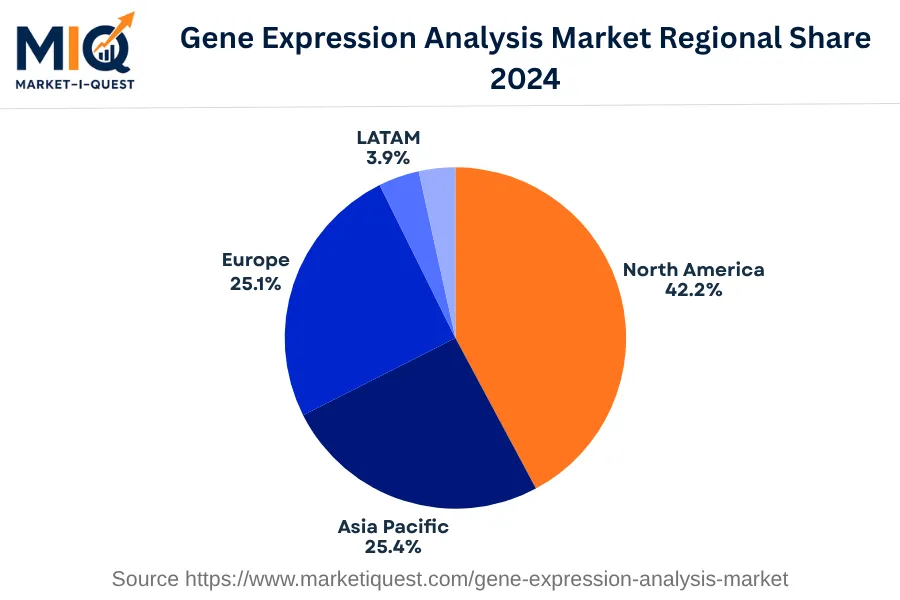
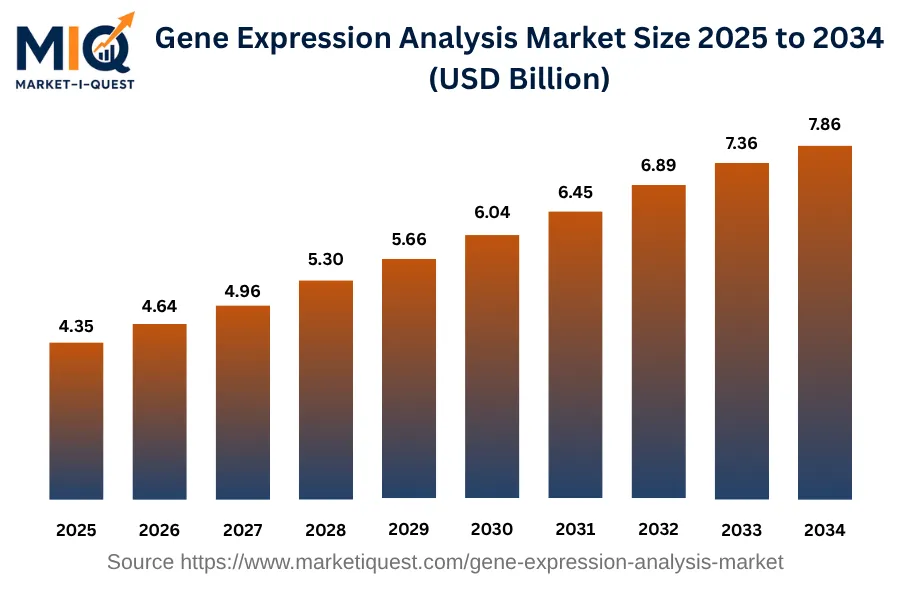
The Gene Expression Analysis Market was valued at $4.35 billion in 2025 and it is expected to reach $7.86 billion by 2034, growing at a compound annual growth rate of 6.8%. The increase in market size from 2024's $4.07 billion to 2025's $4.35 billion highlights the consistent growth path that the market is projected to follow in the coming years. This growth is primarily due to continuous advancements in technology as well as an increasing demand for personalized medicines, which boost the utilization of gene expression studies. On the regional front, in 2024, North America held the highest market share at 42.2%, followed closely by Asia Pacific and Europe at 25.4% and 25.1% respectively. Meanwhile, Latin America and the Middle East and Africa contributed 3.9% and 3.5% each to the market share. These figures underscore the influence of geographic factors on the market dynamics of the Gene Expression Analysis Market.

Key Takeaways

  • By Product - Instruments led the Gene Expression Analysis Market accounting for a significant share in 2024.
  • By Service -Sequencing Services were the leading sub-segment in the base year.
  • By End User - Pharmaceutical & Biotechnology Companies grew fastest with a significant expansion rate during the forecast period.
gene-expression-analysis-market market size

Key Driving Factors

Adoption of Precision and Personalized Medicine

There has been a significant shift in the healthcare industry towards precision and personalized medicine, which hinge on understanding the genetic makeup and gene expression patterns of individuals. Gene expression analysis is at the heart of this approach as it can reveal how different genes interact and contribute to specific disease states. This information can then be used to design highly personalized treatment plans. Consequently, as more healthcare providers adopt precision and personalized medicine strategies, the demand for gene expression analysis services and technologies increases, driving growth in this market.

Heightened Research in Oncology

Cancer continues to be a major global health concern, leading to a surge in oncological research. Analyzing gene expression is a crucial aspect of such studies as it aids in understanding the molecular basis of different types of cancer. It can help identify signature genes that can be targets for novel drug development, leading to more effective treatment strategies. Consequently, the intensified focus on cancer research has led to an increased demand for gene expression analysis, directly influencing market growth.

Market Evolution by Timeline

2019-2023
During this period, the primary demand for gene expression analysis came from pharmaceutical sectors, for drug discovery, and academic research institutions. North America, buoyed by plentiful research funds, was the dominant region. The period saw the emergence of RNA-Seq as a popular technology, but encountered challenges with integrating diverse datasets. Regulatory influences included the 'Genomics in Medicine' initiative from NIST in the USA that pushed for standards in this field. Pricing generally followed a per-analysis model but strategic partnerships, e.g., between Major Pharmaceutical Company A and Biotech Firm B, also led to bundled deals. Some risk was observed due to the interpretation and management of large-scale gene expression data, creating demand for more advanced analytic tools.
2024
In 2024, demand arose from the growing personal genomics market as the direct-to-consumer model picked up. Therapeutic areas like oncology also showed interest. Europe was picking pace driven by public funding for personalized medicine research. Single cell RNA-Seq turned mainstream, but integration of heterogenous data remained a challenge. The EU launched the 'Horizon Europe' programme, funding genomics research and development. Pricing saw a shift due to emerging usage-based models, moving away from the traditional per-study pricing. Significant risks came from the handling of sensitive human genomic data, necessitating robust data protection strategies.
2025-2029
In this period, demand came from precision medicine and personalized treatments, especially in areas such as oncology. Asia-Pacific saw rising needs due to increased public and private investments in genomics. RNA-seq techniques were well-cemented, but meaningful extraction of data became the bottleneck issue. Regulatory action was seen with China's 'Genome Medicine Programme-2030' pushing for standardization. Commercial models leaned toward subscription-based pricing due to continuous nature of genomic data generation. Risks were of two types: Technological, dealing with complexity of genomic data, and Ethical, concerning consent, privacy, and potential misuse of gene expression data.
2030-2034
By 2030, demand was stimulated mostly by the public health sector aiming for disease surveillance and personalized healthcare, with a special focus in countries like India and China. Cloud-based gene expression analysis platforms were shipped that addressed data management and interpretation challenges. Policies were guided by WHO's 'Human Genomics in Global Health' strategy emphasizing on ethical genomic data use. Companies introduced flexible pricing models with options for both one-time payment and subscription. Major risks involved balancing the expansion of cloud-based platforms with maintaining the security, privacy and ethical use of genomic data.

Future Market Outlook

Future Opportunities

With the current trajectory of gene expression analysis technology, several future opportunities are emerging. The growing emphasis on personalized medicine, evidenced by initiatives such as the UK Biobank project launched in 2017, opens pathways for tailored gene therapies fueled by gene expression insights. Collaboration between biotech companies and research institutions, exemplified by the partnership between Roche and the University of Cambridge, allows for shared knowledge that can expedite drug development processes. The rising trend of biomarker discovery offers additional avenues, with the FDA recently approving a companion diagnostic test for determining patient eligibility based on gene expression profiles in 2022. Moreover, there is an increasing focus on solid tumor profiling, particularly with the development of targeted therapies by companies like AstraZeneca, suggesting an expanding market for gene expression analysis within oncology. As regulatory guidelines continue to adapt, such as the European Medicines Agency’s recent frameworks addressing advanced therapy medicinal products, opportunities are likely to arise in the EU market for innovative gene expression applications. Additionally, educational initiatives to enhance workforce skills in bioinformatics can further propel the field forward. Capitalizing on these opportunities will require agile responses from industry players to leverage enhanced technologies and collaborative efforts effectively.

Segmentation Analysis

By Product

The market is divided into subsegments including Consumables and Instruments, with Instruments accounting for the largest revenue share, while Consumables is expected to grow at the fastest CAGR during the forecast period.

Largest Revenue Share

Instruments

Market Share Leader

Instruments in the product market have always been on the lead when it comes to revenue, and this trend is expected to continue into 2024. The primary reason why instruments take the lead in the market revenue is due to their critical role in the effectiveness of processes in various industries, making them a necessity. For instance, in the medical field, these instruments play a significant role in diagnosis and treatment, commanding high purchase rates. Additionally, regulation policies also favor the instruments subsegment. Most industries are governed by strict regulations that require the use of certain instruments to maintain quality and safety standards, thereby driving the demand for these products. Furthermore, the cost of switching from using instruments to other alternatives is significantly high in most industries, making them stick to instruments. Lastly, geographical elements also contribute to the high revenue from instruments. Developed regions have a high demand for high-quality and technologically advanced instruments, boosting the subsegment's sales.

Fastest CAGR

Consumables

Forecast Period Growth Leader

While instruments hold the record for high revenue, consumables are the fastest-growing subsegment in the forecast period. The rapid growth in this subsegment can be attributed to a combination of factors. First, the introduction of innovative technology in the production of consumables has substantially reduced production costs, attracting more customers. This cost reduction equates to lower prices for customers, promoting the demand and growth of the consumables subsegment. Also, the simplicity of consumables and the lack of need for sophisticated training for their use promote their uptake in less developed regions, further driving growth. Must mention regulations don’t favor consumables as much, acting as a near-term risk. But, crucially, partnerships between consumable manufacturers and other firms have seen increased capital influx and improved product distribution, further fueling growth. To efficiently navigate this market, market players should focus on strategies that leverage these growth drivers and the emerging market trends.

By Service

The market is divided into subsegments including Gene Expression Profiling Services, Sequencing Services, Bioinformatics Solutions, and Others. Among these, Sequencing Services accounted for the largest revenue share while Bioinformatics Solutions is expected to grow at the fastest CAGR during the forecast period.

Largest Revenue Share

Sequencing Services

Market Share Leader

Sequencing Services takes the crown for the most revenue-generating sub-segment in this market. The heightened dominion of sequencing services is credited to its pivotal role in genomics research. From genome assembly to mutation detection, sequencing services play an indispensable role. Additionally, the increasing prevalence of genetic disorders accentuates the demand for these services. These services are often procured by biotech and pharmaceutical companies, clinical research organizations, and academic and government research institutes, expanding their market penetration. Moreover, the adoption of sequencing services is high in developed regions due to the presence of advanced healthcare infrastructure, robust R&D activities, and higher public consciousness about genetic disorders. The cost stability of these services due to improved sequencing techniques also adds to the demand.

Fastest CAGR

Bioinformatics Solutions

Forecast Period Growth Leader

Bioinformatics Solutions are predicted to register the fastest growth rate. The key reasons for this are the massive data generation from sequencing technologies and the consequent need for data management and analysis. Complexities pertaining to the biological data demand robust bioinformatics solutions, hence propelling the sub-segment growth. As the volume of genomic data continues to surge, so does the need for efficient data integration, storage, and manipulation solutions, laying a fertile ground for the Bioinformatics Solutions sub-segment. Technological advancements and increased investment in R&D activities will act as major catalysts for growth. However, a dearth of trained professionals and hefty operational costs pose significant challenges to growth. That said, the advent of cloud-based solutions and strategic alliances among key players may attenuate these barriers.

By End User

The market can be divided into key subsegments encompassing Pharmaceutical & Biotechnology Companies, Academic & Research Institutes, Contract Research Organizations and Others. In 2024, Pharmaceutical & Biotechnology Companies dominated in terms of revenue generation, while Academic & Research Institutes are expected to experience the fastest CAGR during the forecast period.

Largest Revenue Share

Pharmaceutical & Biotechnology Companies

Market Share Leader

With an increase in the development of new drugs and therapies, pharmaceutical and biotechnology firms have exhibited substantial demands for Proteomics technologies. Such companies have strong profits and cash flow, allowing for significant investment in R&D. They also benefit from scale in purchasing and production, enabling them to become the leading revenue contributor to the market. Moreover, constant demand for new drug discovery, therapeutic proteins, genetic manipulation techniques and diagnostic tools in these companies underpin such large expenditure. Geographically, firms in North America and Europe, thanks to robust healthcare infrastructure and high spending on healthcare, contribute largely. Regulation or supply has also contributed to this revenue stream, with FDA approvals, patents issuance, and drug pipelines steering the way for continuous growth. The higher the switching costs and sophisticated analytic capabilities they provide, also fortify their claim to high revenue share.

Fastest CAGR

Academic & Research Institutes

Forecast Period Growth Leader

Academic and Research Institutes is forecasted to be the fastest growing segment in the market. An escalating awareness of proteomics and its applications in drug discovery, disease diagnosis, and various research purposes fuels this growth. Many institutes are embracing advanced proteomic technologies due to growing partnerships with industry players providing proteomics services, escalating research funding in proteomics and genomics, and emerging new programs in proteomic research. Further technological improvements, the initiation of projects to map the human proteome, and capital expenditure in advanced instruments for detailed protein analysis expedite adoption. Near-term risks can include funding disruptions and regulatory roadblocks that potentially slow down research activities. However, a growing interest in personalized medicine and continuous evolvement of proteomic technology certainly put this market segment on the fast track.

Competitive Analysis

Key Market Players

Manufacturers / OEMs

Illumina, Inc.
US
Agilent Technologies, Inc.
US
Thermo Fisher Scientific Inc.
US

Key Suppliers & Raw Materials

F. Hoffmann-La Roche
Switzerland
Qiagen NV
Netherlands
Bio-Rad Laboratories, Inc.
US

Distributors, Integrators & Channel Partners

PerkinElmer, Inc.
US
Danaher Corporation
US
BD (Becton, Dickinson and Company)
US

Porter’s Five Forces Analysis

This analysis provides insights into the competitive landscape and market dynamics of the Gene Expression Analysis Market.

Supplier Bargaining Power

Medium

Most suppliers are biotech firms with specific expertise, creating a balance in power.

Buyer Bargaining Power

High

Many service providers exist, giving clients options and greater bargaining power.

Threat of Substitutes

Low

Lack of alternative solutions makes substitute products less threatening.

Threat of New Entrants

Medium

High development cost and expertise requirements moderate the threat of new entrants.

Competitive Rivalry

High

Market has several large, established biotech companies causing intensive rivalry.

Regional Analysis

Geographic market dynamics and growth opportunities across key regions

Global Market Outlook

gene-expression-analysis-market market regional share

North America

In 2024, the North American gene expression analysis market displayed robust growth due to diverse factors. Technological breakthroughs in molecular biology and genetic engineering spurred the demand for advanced gene expression analysis, particularly in the healthcare sector. This market's progression was heavily driven by investment from healthcare enterprises, enhancing research and development of gene therapies and precision medicine. Regulatory policies such as the U.S. FDA's framework for Individualized Genomic Assessment fueled the market by fostering a supportive environment for gene-based diagnostics and treatments.

The key trends shaping the industry comprised shifting consumer preference towards personalized medicine, resulting in an uptick in the requirement for gene expression diagnostic tests. The adoption of cloud-based storage and analysis platforms drove a shift in data handling practices, enabling rapid, comparative gene expression studies. There was a notable increase in partnerships and collaborations within the region, especially between research institutions and biopharmaceutical companies, such as the alliance between Bionano Genomics and the University of California. This, in turn, accelerated the introduction of innovative gene expression products into the market. Active enforcement of GMP (Good Manufacturing Practice) standards by regulatory bodies, such as Health Canada, also fostered quality assurance in the manufacturing and supply of gene expression analysis products.

Asia Pacific

In 2024, the Asia Pacific Gene Expression Analysis Market exhibited vibrant dynamics driven by scientific advancements and surging healthcare demands. Favorable governmental policies across China, India, and ASEAN countries played a pivotal role in driving the market, stimulating biotechnological research and applications of gene expression analysis. For instance, China's "Double First Class" initiative supported advancements in genomics studies, promoting demand for sophisticated gene expression products.

Sustained investment inflows in biotechnology sectors further accelerated growth dynamics. Technological adoption gained momentum, especially in Japan and South Korea, with rapid integration of Next Generation Sequencing (NGS) methodologies in gene expression studies. Furthermore, increased focus on personalized medicine in Australia stimulated demand for gene expression analysis in diagnostics, driving the market. Conversely, the trend of strategic alliances, such as the collaboration between Cancer Therapeutics CRC (CTx), Australia, and Evotec SE, demonstrated the market's inclination towards consolidation for better expertise and resource pooling. With a growing focus on channel partnerships, the outsourcing model became increasingly popular, allowing for cost-effective and efficient gene expression analysis. Lastly, the enforcement of stringent regulatory protocols ensured high-quality standards, driving market competitiveness and credibility. Key customers spanned across sectors including healthcare, pharmaceutical research, along with government-backed research institutions.

Europe

In 2024, the Gene Expression Analysis Market in Europe demonstrated robust growth due to multiple integral factors. Strong drivers of demand included technological advancements in gene expression studies and the rising prevalence of chronic diseases necessitating molecular diagnosis. Further driving forces were increased government funding in genomics research, primarily among academic institutions, and a keen interest in personalized medicine, primarily in the healthcare sector. Robust biotechnology industries, especially in Germany and the UK, also catapulted the demand for gene expression analysis services.

Simultaneously, notable market trends were the growing usage of gene expression analysis in drug discovery and development, it's rise as a novel tool for precision medicine an advancement gaining popularity within enterprises. Additionally, a surge in strategic alliances and M&A activities were observed in the biopharmaceutical sector, focusing on gene expression-based therapies. There was a marked inclination towards cloud-based gene expression data analysis tools, a critical trend most pronounced in developed markets of the UK, Germany, and France. Regulatory policies enforcing stringent diagnostic standards acted as a crucial stimulant for gene expression studies, further intensifying the market trend. Sectors such as healthcare, pharmaceuticals, and academic research were major customers, especially in leading markets like Germany, the United Kingdom, and France.

Latin America

In 2024, the gene expression analysis market in Latin America, particularly in Brazil, Mexico, Argentina, Colombia, Chile, and Peru, shapes up as a dynamic area due to its potential in diagnosing and treating various diseases. Driving this market is the increasing prevalence of cancer, driving demand for gene expression studies to improve diagnosis and treatment plans. Regulatory policies, such as Brazil's National Biosafety Law, are promoting research into genetically modified organisms, boosting market demand. The governments of countries like Argentina and Mexico invest heavily in genomics research and biotechnology, further stimulating the market. Technological advancements in next-generation sequencing technologies are becoming increasingly available in the region, enhancing market growth. High drug discovery and development costs also drive the demand for gene-expression analysis, valuable in reducing these costs by identifying potential drug candidates early in the drug development process.

Trends influencing this market include a growing interest in personalized medicine, prompting the need for gene expression studies to understand individual genetic profiles. Additionally, partnerships and M&A activities among key players like Illumina and Thermo Fisher Scientific are shaping the market's landscape. Increased enforcement of policies related to genomics research is influencing market growth. The primary sectors tapping into the gene expression analysis market are healthcare, pharmaceutical, and research organizations due to the importance of genomics in disease diagnosis and treatment, drug discovery, and personalized medicine.

Middle East & Africa

In 2024, the Middle East and Africa market for Gene Expression Analysis remained critically involved in the advancement of personalized medicine. Driving the market were the increase in chronic illnesses such as cancer, rising acceptance of advanced technologies including next-generation sequencing, and greater healthcare investments in countries like Saudi Arabia, UAE, and Qatar. Government regulations further fostered the market by promoting the adoption of personalized therapies especially in healthcare sectors of Egypt and South Africa.

Market trends were primarily dictated by buyer behavior focusing on accurate, speedy diagnostics, followed by shifts towards non-invasive technologies. Confluence of healthcare and information technology sectors in Israel drove advancements in gene analytics. Also influential were partnerships and M&As among pharmaceutical companies and academic institutions, fostering technology transfers especially in South Africa, Nigeria, and Kenya. In Saudi Arabia and the UAE, the oil and gas sector utilized gene expression analysis for bio-leaching techniques. Telecom sectors in Nigeria and Kenya used this technology for bio-computation. In terms of retail, gene expression kits were seen more commonly due to increased public awareness of genetics. On the policy front, standards were stringently enforced for this technology's use in all sectors, right from oil and gas to healthcare due to its widespread applicability and potential implications.

Recent Industry Developments

Latest market innovations, product launches, and strategic initiatives

June 2026

Standard BioTools announced a definitive agreement to merge with drug developer Treeline Biosciences. This strategic move is designed to integrate Treeline’s proprietary drug discovery platform with Standard BioTools’ high-throughput mass cytometry and gene expression analysis workflows, creating an end-to-end ecosystem for identifying and validating therapeutic targets in oncology.

April 2026

CareDx announced a definitive agreement to acquire oncology diagnostics firm Naveris for up to $260 million. This acquisition is focused on bolstering CareDx’s capabilities in clinical genomic testing; it specifically leverages Naveris’s expertise in viral-associated cancer diagnostics and molecular monitoring, which relies heavily on transcriptomic and gene expression data for treatment response tracking.

Frequently Asked Questions