Gastrointestinal Therapeutics Market Snapshot

Key Players

  • AbbVie Inc. (United States)
  • Takeda Pharmaceutical Company (Japan)
  • Allergan Plc. (Ireland)
  • AstraZeneca Plc. (United Kingdom)
  • Johnson & Johnson (United States)
  • Bayer AG (Germany)
  • Boehringer Ingelheim (Germany)
  • Janssen Biotech Inc. (United States)
  • Pfizer Inc. (United States)
  • GlaxoSmithKline plc. (United Kingdom)

Market Size

Base Year 2024
$53.85 Bn
CAGR
5.48%
Forecast 2034
$91.81 Bn

Market Segments

By Drug Class
Proton Pump Inhibitors, H2 Receptor Antagonists, Antacids & Alginates, Prokinetics, Laxatives, Anti-Emetics, Antispasmodics, Biologics & Biosimilars, Antibiotics, GLP-2 & GLP-1 Analogues, Microbiome-Based Therapeutics, Others
By Disease Indication
GERD, Peptic Ulcer, Inflammatory Bowel Disease (IBD), Irritable Bowel Syndrome (IBS), Gastrointestinal Cancers, Gastrointestinal Infections, Others
By Route of Administration
Oral, Injectable, Rectal, Transdermal, Others
By Distribution Channel
Hospital Pharmacies, Retail Pharmacies, Online Pharmacies, Others

Market Dynamics

Drivers
  • Increasing prevalence of GI disorders
  • Advancements in GI therapies
Restraints
  • High treatment costs
  • Patent expiration issues
Opportunities
  • Rising gastrointestinal disease incidence
  • Aging global population

Market Size

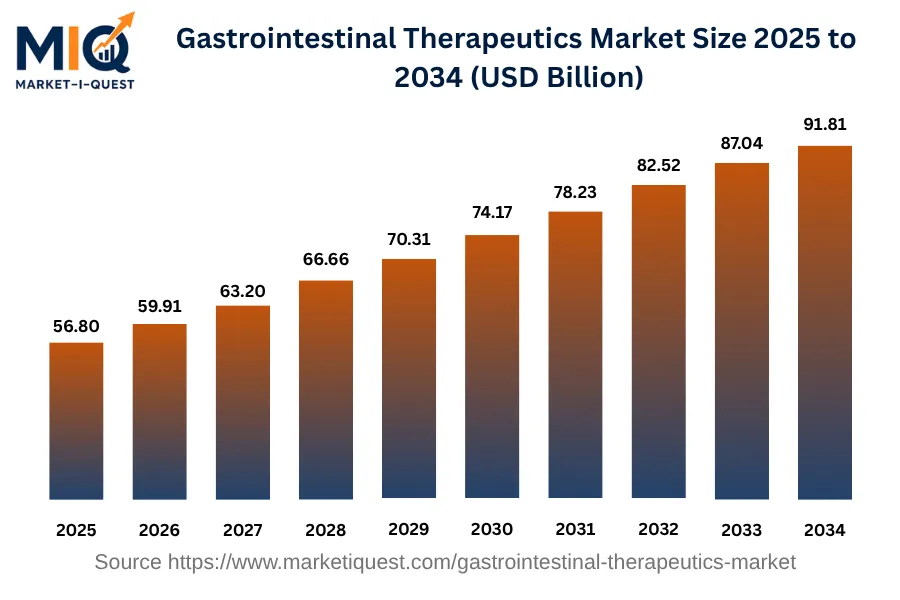
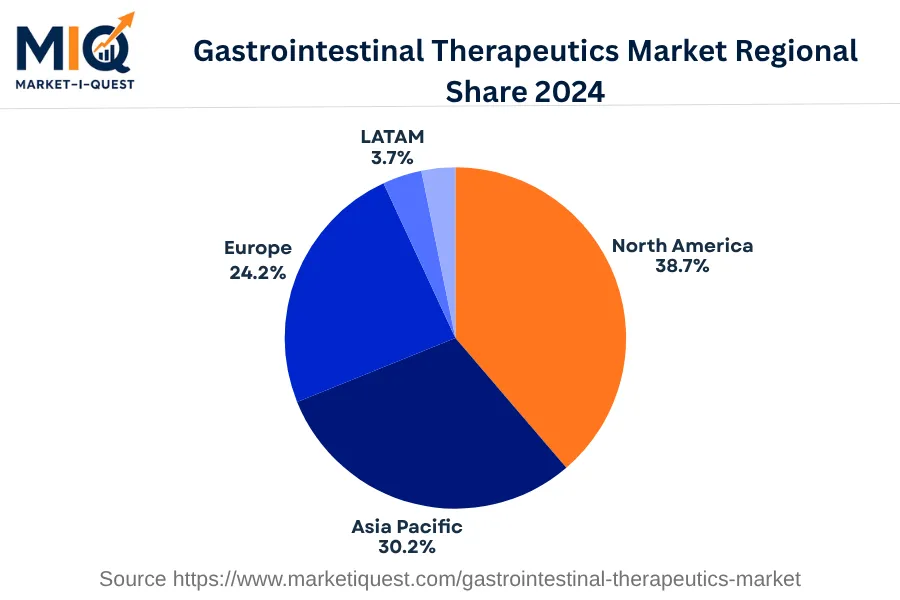
The Gastrointestinal Therapeutics Market was at 56.80 billion USD in 2025 and it grew consistently to reach 91.81 billion USD in 2034, at a compound annual growth rate (CAGR) of 5.48%. This market has shown steady and consistent growth throughout the years. For instance, the market size was 53.85 billion USD in 2024 before escalating to 56.80 billion USD in 2025 and then to 91.81 billion USD in 2034. The increase in the market size is due to the higher demand for gastrointestinal therapeutics that were observed during this period. Regionally in 2024, the market was predominantly shared by North America with 38.7%, followed by the Asia Pacific and Europe with 30.2% and 24.2% respectively. The remaining shares were occupied by LATAM and MEA with 3.7% and 3.2% respectively.

Key Takeaways

  • By Drug Class - Proton Pump Inhibitors led the Gastrointestinal Therapeutics Market in terms of share in base year.
  • By Disease Indication - Gastrointestinal Cancers held the most significant market share in the base year.
  • By Route of Administration - Oral route led the market accounting for the highest share in market.
  • By Distribution Channel - Retail Pharmacies held a dominant presence in base year featuring the highest market share.
gastrointestinal-therapeutics-market market size

Key Driving Factors

Shift Towards Personalized Medicine in Treatment

The emerging popularity of personalized medicine among clinicians and patients in the healthcare sector is directly impacting the growth of the gastrointestinal therapeutics market. Personalized medicine refers to a healthcare model where therapies are tailored to the needs of individual patients, based on their unique genetic, clinical, environmental, and lifestyle factors. Especially in gastrointestinal disorders such as inflammatory bowel disease and gastroesophageal reflux disease, personalized medicine predicts risk and treatment response more accurately. This has pushed healthcare providers and investors towards therapies tailored to individual patients' needs, bolstering the demand for advanced gastrointestinal therapeutics. Moreover, it reduces trial-and-error prescribing, helps avoid adverse medication reactions, and increases the overall effectiveness of treatment, contributing to market growth.
Prevalence of Lifestyle-related Gastrointestinal Disorders

The prevalence of lifestyle-related gastrointestinal disorders is another significant driver for the gastrointestinal therapeutics market. Modern lifestyle changes, including diets high in processed foods and low in fiber, as well as sedentary behaviors and high-stress levels, contribute to the rise in gastrointestinal disorders such as irritable bowel syndrome and constipation. Particularly in highly urbanized regions where such lifestyles are prevalent, the incidence of these disorders is increasing. Consequently, the demand for effective therapeutics to manage these conditions has been growing steadily. For pharmaceutical companies, this presents a substantial opportunity to invest in research and development of new therapeutic agents, thus driving market expansion.

Market Evolution by Timeline

2019-2023
Gastrointestinal diseases experienced a surge in prevalence during this period, driven primarily by changing dietary habits and rising geriatric populations globally, especially in developed economies like the United States and Western Europe. In response to increasing demand, gastrointestinal drug manufacturers focused on the production of proton pump inhibitors, laxatives, and antidiarrheals. Limitations in drug absorption culminated in the preliminary research of nano-drug delivery systems for enhanced efficacy. Pricing was typically based on patent life-cycle, with generic drug availability acting as a downward pressure. Policies such as the Affordable Care Act in the United States sought to increase access to prescription drugs. Commercial partnerships were prevalent between large pharmaceutical companies and smaller biotech firms for research and development.
2024
In 2024, overviews showed improvements in nanotechnology-based drug delivery mechanisms, expected to address previous absorption challenges. Asia, led by China and India, emerged as high-potential markets due to increasing healthcare expenditure and incidences of gastrointestinal diseases. The Global Gastroenterology Consortium launched guidelines for better diagnosis and treatment. Pricing faced significant scrutiny, prompting a shift towards performance-based drug pricing in regions like Europe. The risk of antimicrobial resistance led to stricter regulations for antibiotics use in gastrointestinal therapeutics.
2025-2029
In these years, growth was propelled primarily by emerging economies with evolving healthcare infrastructure. Adoption of biologics significantly increased due to their superior efficacy in treating complex illnesses. Gradual integration with AI-based diagnostic tools became common, paving the way for predictive modeling of gastrointestinal diseases. Regulatory actions like the FDA's Biosimilars Action Plan encouraged further use of biologics. The commercial model saw a shift towards customized therapies alongside a rise in strategic partnerships between traditional pharmaceuticals and tech companies exploring AI and Big Data. Uncertainties surrounding the regulatory approval process for new therapies posed a risk, typically addressed by initiating early dialogues with regulatory bodies.
2030-2034
By 2030-34, the market was revolutionized by precision medicine and digital therapeutics gaining prominence. AI-optimized treatments, gene therapies, and personalized drug regimens were adopted, while preventive care became a significant focus in regions with widespread access to healthcare like Sweden and the UK. The digital revolution influenced regulation, with authorities like the FDA implementing newer guidelines for digital health solutions. The commercial landscape leaned towards value-based pricing models, aiming at better aligning treatment cost with outcomes. Market risks included supply-side constraints due to dependence on precision medicine and advanced tech, addressed typically by diversifying the manufacturing bases.

Future Market Outlook

Future Opportunities

By 2023, there are significant opportunities for growth in the gastrointestinal therapeutics market as stakeholders are increasingly focusing on unmet medical needs. For instance, the ongoing research into inflammatory bowel diseases has prompted entities like the Crohn's & Colitis Foundation to advocate for novel therapeutic development. The integration of advanced genomics has led companies like Regeneron Pharmaceuticals to explore targeted therapies based on patient genetics. Collaborations between academic institutions and biotech firms are becoming commonplace, as seen with the 2023 partnership between Stanford University and Gilead Sciences aimed at innovating treatments for gut dysbiosis. The rise of telehealth represents additional transformative potential in facilitating access to gastrointestinal care, particularly in regions with limited healthcare infrastructure. Regulatory bodies, such as the FDA, continue to evolve their framework to support faster approvals for groundbreaking treatments, which opens avenues for quicker market access for successful candidates. Moreover, the increasing patient awareness surrounding gastrointestinal health is encouraging lifestyle interventions and preventative therapies, creating new spaces for product introduction. As companies succeed in demonstrating real-world efficacy through post-marketing studies, stakeholder confidence will grow, leading to expanded market participation. The likely expansion of reimbursement policies for emerging treatments also holds promise, as payers begin acknowledging the long-term benefits associated with innovative therapies. These factors collectively suggest that the market landscape is becoming increasingly favorable for both established players and new entrants.

Segmentation Analysis

By Drug Class

The market is divided into subsegments including Proton Pump Inhibitors, H2 Receptor Antagonists, Antacids & Alginates, Prokinetics, Laxatives, Anti-Emetics, Antispasmodics, Biologics & Biosimilars, Antibiotics, GLP-2 & GLP-1 Analogues, Microbiome-Based Therapeutics, and Others. Proton Pump Inhibitors accounted for the largest revenue share, while Microbiome-Based Therapeutics is expected to grow at the fastest CAGR during the forecast period.

Largest Revenue Share

Proton Pump Inhibitors

Market Share Leader

Proton Pump Inhibitors (PPIs) occupy the largest revenue chunk in the drug class section of the market due to its high usage prevalence. PPIs are the first resort for gastrointestinal disorders, mainly due to their excellent safety profile, superior efficacy, and affordability. They are extensively prescribed by healthcare professionals for treating prevalent diseases like GERD, ulcers, and other stomach acid-related problems. The therapeutic convenience of these drugs in terms of dosage makes them desirable for both patients and healthcare providers. It is important to note that the increasing incidence of stress, lifestyle-related diseases, and the escalating geriatric population significantly add to the demand. Geography-wise, developed regions primarily drive this segment's growth because of their high patient-awareness levels, healthcare spending, and strong commercial infrastructure for pharmaceutical products. In the realm of regulation and supply, PPIs benefit from fairly steady regulation without significant supply chain disruptions.

Fastest CAGR

Microbiome-Based Therapeutics

Forecast Period Growth Leader

Microbiome-based therapeutics are projected to witness the fastest growth due to their novelty, high potential, and emerging status. These therapeutics are relatively new to the industry, having only jumped into the spotlight recently due to breakthroughs in genomic technology and heightened focus on personalized healthcare. Their potential to restore disrupted microbiomes and improve overall patient health shows promise in treating a wide variety of conditions, from autoimmune diseases to lifestyle diseases. This subsegment is currently in a high capex phase as large amounts of funding are redirected towards microbiome R&D efforts, with many therapeutics still in clinical testing stages. Regulatory hurdles may present some adoption barriers, however, the overall interest from both patients and pharmaceutical companies may act as a catalyst for its speedy adoption. Partnerships between smaller start-ups and larger companies will likely amplify the development and marketing of these therapeutics. Risk lies in the sleek and hard-to-predict nature of regulatory approvals and the inherent risks associated with clinical trials.

By Disease Indication

The market is divided into subsegments including GERD, Peptic Ulcer, Inflammatory Bowel Disease (IBD), Irritable Bowel Syndrome (IBS), Gastrointestinal Cancers, Gastrointestinal Infections, and Others. Among these, Gastrointestinal Cancers accounted for the largest revenue share, while the Inflammatory Bowel Disease (IBD) segment is expected to grow at the fastest CAGR during the forecast period.

Largest Revenue Share

Gastrointestinal Cancers

Market Share Leader

Gastrointestinal Cancers encompass various types of cancers that occur in the digestive system, including the stomach, pancreas, liver, and esophagus. The prevalence of these cancers, especially in the elder population and those with dietary and lifestyle risk factors, has significantly driven revenue generation in this subsegment. Key markets such as North America and Europe, due to their aging population and improved diagnostic capabilities, contribute significantly to the sales of therapeutics for these cancers. The industry's economic drive is also powered by the development of innovative drugs by biopharmaceutical companies and their premium pricing strategies. Regulatory bodies' approvals of novel drugs and therapies for gastrointestinal cancers have additionally propelled the market growth in this subsegment. Consequently, the purchasing criteria primarily revolve around the drug’s efficacy, the side-effect profile, and insurance support. Finally, a robust distribution network through hospitals and specialty clinics has provided an efficient sales channel for these drugs.

Fastest CAGR

Inflammatory Bowel Disease (IBD)

Forecast Period Growth Leader

The subsegment for Inflammatory Bowel Diseases (IBD) - a term primarily referring to Crohn's disease and ulcerative colitis - is projected to witness the fastest CAGR over the forecast period. The primary growth drivers for this subsegment are the globally spiraling prevalence of IBD due to changing diet patterns, increasing stress levels, and rising awareness. In terms of catalysts, the advancement in IBD therapeutics, such as the development of biologics and personalized medicine, has lowered the entry barrier and expedited the adoption of these advanced treatments. Additionally, the public and private sector's increasing investments in IBD research partnerships are augmenting the capacity for ground-breaking discoveries. However, near-term risks include the high cost of novel IBD therapies that might slow down the growth in low-income countries. Despite the hurdles, the positive outlook for IBD therapeutics, underpinned by clinically urgent unmet needs, dictates an aggressive upward trajectory for this market subsegment.

By Route of Administration

The market is divided into subsegments including Oral, Injectable, Rectal, Transdermal, and Others. In the base year of 2024, the Oral subsegment accounted for the largest revenue share while the Transdermal subsegment is expected to grow at the fastest CAGR during the forecast period.

Largest Revenue Share

Oral

Market Share Leader

The Oral route of administration dominates the market in terms of revenue, primarily due to its universal acceptance and ease of administration. Oral medications traditionally have greater patient compliance compared to other routes, as they eliminate the discomfort of injections and bypass complex procedural administration. With a wide range of drugs available for oral administration - from pain relievers to cardiovascular medications - this subsegment spans across a broad spectrum of the pharmaceutical industry. Influential factors such as demographics, especially the rapidly aging population globally, result in higher pharmaceutical consumption, which drives significant revenue towards this subsegment. Furthermore, advancements in drug formulation to enhance drug bioavailability and reduce dosage frequency, such as extended-release and targeted delivery systems, reinforce the dominance of oral medication in the market.

Fastest CAGR

Transdermal

Forecast Period Growth Leader

The Transdermal subsegment, though not the revenue leader in 2024, projects a rapid growth rate in the following years. Transdermal patches offer numerous advantages over traditional drug delivery methods. These include sustained, controlled release of medication, avoidance of first-pass metabolism, improved patient compliance due to non-invasive nature, and the capability to terminate drug delivery when required, all of which promote its swift market growth. Innovations and partnerships for developing advanced technologies in transdermal drug delivery systems act as catalysts to this growth trend. However, there are some barriers to its adoption, including limitation to only smaller, lipophilic, and low-dose drugs and potential skin irritation caused by the patches. The overcoming of these barriers through continued research and development signposts even healthier growth prospects for this subsegment.

By Distribution Channel

The market is divided into subsegments including Hospital Pharmacies, Retail Pharmacies, Online Pharmacies, and Others. Retail Pharmacies accounted for the largest revenue share while Online Pharmacies are expected to grow at the fastest CAGR during the forecast period.

Largest Revenue Share

Retail Pharmacies

Market Share Leader

In the base year of 2024, Retail Pharmacies has emerged as the sub-segment with the highest revenue. This is primarily due to their widespread presence especially in urban and semi-urban areas boosting accessibility for consumers. Furthermore, the variety of drugs offered in retail pharmacies, coupled with over-the-counter advice provided by pharmacists, make them a preferred choice for customers. While online platforms are gaining popularity, direct interaction with healthcare professionals is still highly valued, resulting in steady footfall in retail pharmacies. Moreover, emergency needs for medication, which allow no window for delivery time, also contribute to their dominant position in the market. Regulatory support in various regions has permitted the operation of retail pharmacies even during lockdown scenarios, ensuring their availability to serve immediate medicinal needs. Additionally, the credibility linked with seeing physical products before purchase reinforces consumers' trust in retail pharmacies, further driving their market share.

Fastest CAGR

Online Pharmacies

Forecast Period Growth Leader

Online Pharmacies are projected to grow at the fastest CAGR during the forecast period. Although this subsegment is not the largest in terms of revenue, it shows great promise due to increasing digital literacy and internet penetration even in remote areas. Enhanced convenience, privacy of purchase, and often competitive pricing provided by online platforms are driving consumer transition to e-pharmacies. Additionally, the recent global health crisis has only amplified the necessity of online services, fueling the adoption of online pharmacies further. This shift towards digital platforms and home delivery services is further reinforced by collaborations between e-pharmacies and logistics companies, enabling faster and more efficient delivery processes. Despite the rapid pace of growth, potential barriers include regulatory uncertainties, concerns over counterfeit medicines, and the challenge of handling prescription drugs. However, with strategic partnerships and stringent regulatory frameworks, online pharmacies can overcome these hurdles and continue their uptrend.

Competitive Analysis

Key Market Players

Manufacturers / OEMs

AstraZeneca
UK
Takeda Pharmaceutical
Japan
Allergan
US

Key Suppliers & Raw Materials

Johnson & Johnson
US
Roche Holding
Switzerland
Amgen
US

Distributors, Integrators & Channel Partners

McKesson Corporation
US
AmerisourceBergen Corporation
US
Cardinal Health
US

Porter’s Five Forces Analysis

An assessment of the competitive dynamics in the Gastrointestinal Therapeutics Market.

Supplier Bargaining Power

Medium

Dependent on pharmaceutical supply chains and patented raw materials, creating a balanced power dynamic.

Buyer Bargaining Power

Low

High specificity of certain drugs and lack of alternatives limits buyer power.

Threat of Substitutes

Low

Specialized nature of gastrointestinal drugs and slow approval process for new drugs lower substitute threat.

Threat of New Entrants

Low

High regulatory barriers, extensive clinical trials, and substantial capital requirement deter new entrants.

Competitive Rivalry

High

Several strong competitors and constant innovation lead to intense rivalry.

Regional Analysis

Geographic market dynamics and growth opportunities across key regions

Global Market Outlook

gastrointestinal-therapeutics-market market regional share

North America

In 2024, the North American gastrointestinal therapeutics market was primarily influenced by factors such as increasing prevalence of gastrointestinal diseases, advancements in biotechnological processes, and expanding healthcare expenditure. High incidence of gastrointestinal disorders like irritable bowel syndrome, constipation, and gastroesophageal reflux in the United States, Canada, and Mexico spurred demand for effective therapeutics. Adoption of innovative biotechnological processes stimulated the production of more targeted therapies, improving patient outcomes and driving market growth. Lastly, an upsurge in healthcare expenditure, particularly in gastroenterological speciality services across the three countries, also contributed to market dynamism.

Notable market trends encompassed a shift towards personalized medicine, heightened focus on research and development, and increased collaboration between key market players. A significant rise was observed in personalized therapies tailored for individual patient's genetic makeup, aiming to enhance treatment efficacy and minimize adverse effects. Additionally, increased investments were noted in research and development initiatives, largely driven by pharmaceutical and biotech firms striving to expand their portfolio of gastrointestinal drugs. Inter-firm partnerships and merger activities gained momentum, facilitating resource-sharing, and expediting the development and commercialization process of new therapeutic solutions. Adoption of these strategies allowed companies to maintain a competitive edge while meeting the escalating demand for diverse effective gastrointestinal therapeutics.

Asia Pacific

In 2024, the Gastrointestinal Therapeutics Market in Asia Pacific displayed robust growth, driven by a diverse range of factors. Heightened health awareness and a rise in chronic gastrointestinal conditions triggered an increased demand for advanced therapeutics. Larger investments in health infrastructure, particularly in India and China, enabled broader access to these treatments. Regulatory bodies, like China's National Medical Products Administration, streamlined approval of novel therapies, further boosting market growth. The adoption of new-age biologics and gene therapies, especially in technologically advanced regions like Japan and South Korea, amplified this development.

Concerning trends, a significant shift towards self-medication and preventive healthcare was observed, led by a growing middle-class in China and ASEAN markets. There was a perceptible shift towards personalized therapy approaches, evident in the thriving precision medicine industry in Australia. Online pharmaceutical sales also surged, as e-commerce platforms partnered with pharmaceutical manufacturers to deliver medication even in remote areas. Meanwhile, market consolidation was apparent, with increased M&A activities, as seen in Takeda's acquisition of Shire. The market also adapted to stricter enforcement of biosimilar policies in South Korea and Japan, driving competition in the biopharmaceutical sector. Key customers focused on hospitals, healthcare providers and individual consumers across the region.

Europe

In 2024, the European Gastrointestinal Therapeutics Market was characterized by robust growth, driven by several factors. The rise in gastrointestinal disorders among the population notably in the United Kingdom, Spain, and Italy increased demand for innovative therapeutics. Regulatory support was evident in Germany and Nordics countries, where legislation promoted research and development investments in the healthcare sector, resulting in new gastrointestinal therapies. Additionally, advanced technology adoption, such as AI in diagnostics, enhanced the efficiency of treatment methodologies in France and Central & Eastern Europe, further stimulating market growth.

Key market trends included a shift in buyer behavior, with patients in the United Kingdom, Benelux, and Spain favoring personalized medicine for enhanced treatment efficiency. The surge in partnerships and mergers and acquisitions, particularly in Germany and the Nordics, enhanced cooperation and led to innovative medicinal solutions. Channel dynamics shifted significantly within this year, with Italy and France seeing increased online sales of therapeutics due to improved e-commerce infrastructure. Concerning policies, France and the United Kingdom enforced stricter guidelines for drug approval to ensure medical safety and quality, shaping the gastrointestinal therapeutics market in these regions. Therefore, the market in 2024 was marked by increased demand, regulatory changes, technological advancements, and shifts in the sales landscape.

Latin America

In 2024, the Latin American Gastrointestinal Therapeutics market underwent significant changes due to increased disease prevalence, improved healthcare access, and rising awareness. The rise in digestive disorders across Brazil, Mexico, Argentina, Colombia, Chile, and Peru drove demand for effective therapeutics, supported by government initiatives to strengthen healthcare infrastructure. Technological advancements also emerged as a game-changer, with Argentina and Brazil leading in the adoption of novel drug discovery and diagnostic techniques, reshaping supply dynamics. Emerging trends included altered consumer preferences and shifts in healthcare policies. An observable shift towards preventive healthcare and self-medication was prevalent in Brazil and Argentina, influenced by increased health consciousness and access to over-the-counter drugs. In Mexico, Chile, and Peru, partnerships expanded between pharmaceutical companies and local distributors, bolstering the market's growth.

Advancements led to policy enforcements that prioritized quality assurance across the region. In Colombia, a marked preference for generic drugs was seen, guided by government measures to reduce healthcare costs. Meanwhile, in Brazil and Argentina, rigorous quality checks in pharmaceutical manufacturing and a significant emphasis on research and development activities set new standards, reshaping the gastroenterological therapeutics market in Latin America in 2024. These transformations were primarily attributed to the healthcare sector but reflected an extended impact on retail, raising the level of competition and pushing for better customer-centric offerings.

Middle East & Africa

In 2024, the Gastrointestinal Therapeutics Market witnessed substantial growth in the Middle East and Africa. The drivers supporting this market expansion include increased cases of gastrointestinal diseases such as gastroesophageal reflux disease and peptic ulcer disease, significant investment in healthcare infrastructures, and technological advancements in diagnostic methods. Expanding healthcare institutions across Saudi Arabia, the United Arab Emirates, and Egypt significantly contributed to therapy accessibility, while government initiatives in Israel, South Africa, and Nigeria enhanced preventive measures.

Market trends depicted a burgeoning concern for advanced treatment procedures and medications. The increase in patient awareness and demand for efficacious treatment notably shifted behaviour towards modern therapeutics. Moreover, pharmaceutical companies in Egypt and Israel continued to expand their efforts towards effective drug development. Meanwhile, an emerging trend of strategic partnerships across nations, such as between Kenyan and Qatari healthcare providers, aimed to enhance distribution channels for these therapeutics. Lastly, policy enforcement has grown stringent to ensure the best healthcare standards, as seen in measures taken by South African authorities. The primary customer base consisted of healthcare providers, including several hospitals and clinics in Saudi Arabia, the United Arab Emirates, and Qatar, and pharmaceutical manufacturers extensively catering to the retail sector, thereby making these therapeutics readily available.

Recent Industry Developments

Latest market innovations, product launches, and strategic initiatives

May 2026

FDA expanded approval of Linzess (linaclotide) to include pediatric patients 2 years of age and older with functional constipation (FC), addressing an important gap in care for this historically underserved population.

November 2025

QOL Medical acquired Evoke Pharma for $11.00 per share in cash, with the transaction closing on December 17, 2025. Evoke is a specialty pharmaceutical company focused on gastrointestinal (GI) disorders, with its commercial product GIMOTI® (metoclopramide) nasal spray being the first and only FDA-approved nasal spray formulation for the treatment of acute and recurrent diabetic gastroparesis in adults.

Frequently Asked Questions