Transdermal Drug Delivery System Market Snapshot

Key Players

  • Alza Corporation (United States)
  • Luye Pharma Group (China)
  • Novartis AG (Switzerland)
  • GlaxoSmithKline plc (United Kingdom)
  • Hisamitsu Pharmaceutical Co.
  • Inc. (Japan)
  • Noven Pharmaceuticals
  • Inc. (United States)
  • Teva Pharmaceutical Industries Ltd. (Israel)
  • Boehringer Ingelheim GmbH (Germany)
  • Tapemark (United States)
  • Avery Dennison Corporation (United States)

Market Size

Base Year 2024
$ 7.56 Bn
CAGR
4.65%
Forecast 2034
$ 11.91 Bn

Market Segments

By Type
  • Active
  • Passive
By Technology
  • Electroporation
  • Radio Frequency
  • Iontophoresis
  • Microporation
  • Thermal
By Application
  • Pain Management
  • Central Nervous System Disorders
  • Hormonal Applications
  • Cardiovascular Diseases
  • and Others

Market Dynamics

Drivers
  • Growing demand for pain management
  • Rising prevalence of chronic diseases
Restraints
  • High manufacturing and development costs
  • Skin irritation and allergic reactions
Opportunities
  • Growing preference for non-invasive therapies
  • Expansion in chronic disease management

Market Size

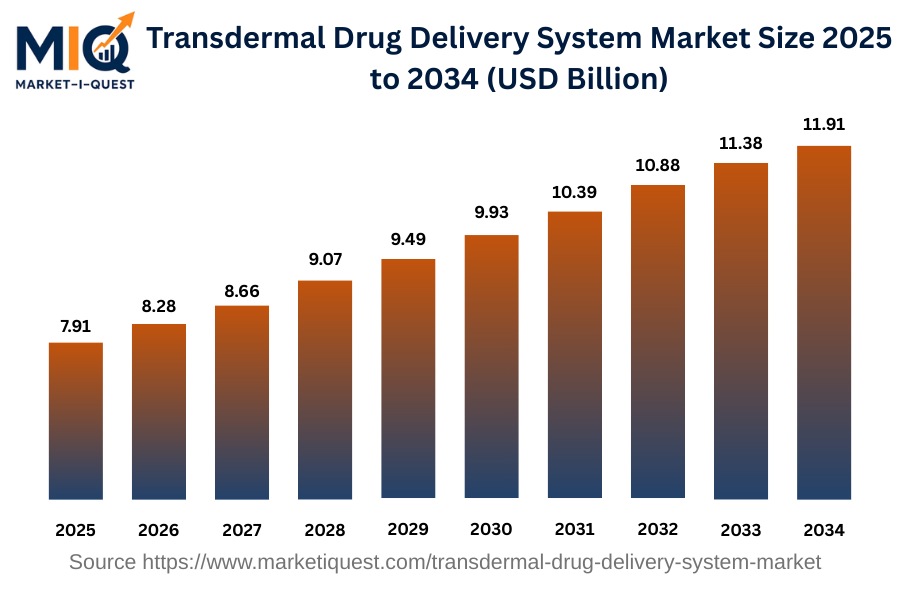
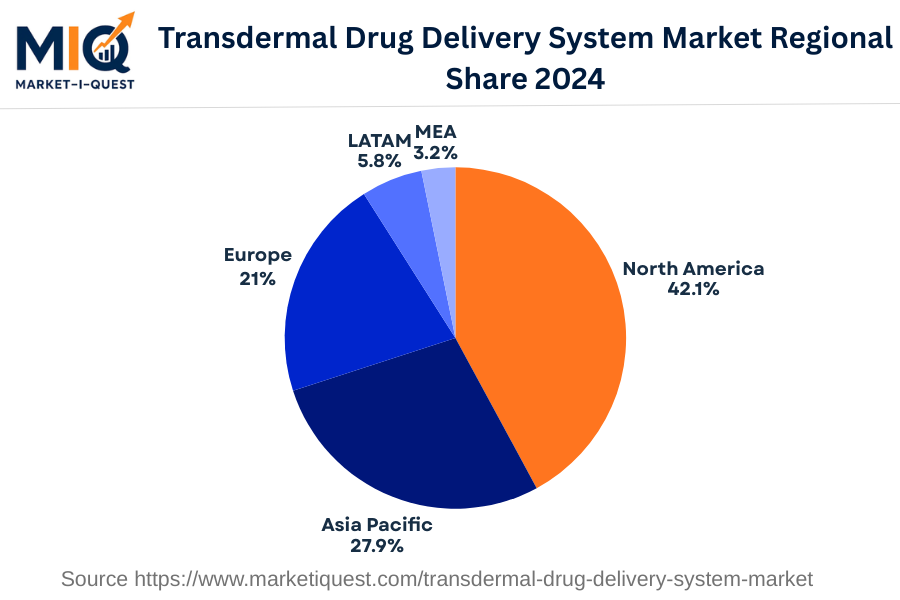
The Transdermal Drug Delivery System Market is valued at 7.91 billion USD in 2025 and is projected to reach 11.91 billion USD by 2034, with a CAGR of 4.7%. The market starts at 7.56 billion USD in 2024 and shows growth through the period. The increase in market size is driven by advancements in technology, the rising demand for painless drug administration methods, and the improving efficacy of transdermal delivery systems. In 2024, the regional share mix is 42.1% for North America, 27.9% for Asia Pacific, 21.0% for Europe, 5.8% for LATAM, and 3.2% for MEA.

Key Takeaways

  • By Type - Passive held a notable position in the market due to its widespread adoption in various applications.
  • By Technology - Iontophoresis grew fastest reflecting increasing interest in efficient drug delivery mechanisms.
  • By Application - Pain Management dominated the space highlighting ongoing demand for effective therapeutic solutions.
transdermal-drug-delivery-system-market market size

Key Driving Factors

Growing Incidence of Chronic Illnesses

The escalating numbers of chronic diseases such as cardiovascular disorders, diabetes, and central nervous system disorders, among others, is a major driver for the Transdermal Drug Delivery System Market. People fighting these conditions often require continuous medication which can result in inconvenience and possible complications with oral or injectable drug administration. Transdermal drug delivery provides an alternative, non-invasive route for medication, reducing the challenges linked with other methods. It allows for controlled and sustained release of medication, improving patient compliance to treatment regimes. This method of drug delivery is proving particularly beneficial for elderly patients who are typically on multiple medications and potentially face problems with manual dexterity.
Post-surgical Pain Management

Another key driver for the Transdermal Drug Delivery System Market is its application in post-surgical pain management. There is a high-risk factor associated with opioid-induced complications following surgery, so doctors look for alternative pain management solutions. Transdermal drug delivery systems, such as fentanyl patches, have been shown to offer effective and safe control for moderate to severe pain. In comparison to traditional pain relief methods, these systems offer consistent and controlled pain relief, reducing the risk of drug abuse and overdose. As surgical procedures continue to rise globally, owing to ageing populations and improved surgical techniques, the transdermal drug delivery system is poised to meet this vital healthcare need.

Market Evolution by Timeline

2019-2023
During 2019 to 2023, the transdermal drug delivery system market saw significant developments. In the United States, patches for managing chronic pain and hormone replacement therapy gained traction, particularly in urban centers like New York and Los Angeles. The supply side experienced innovations with products like fentanyl and nicotine transdermal patches, supported by firms such as Purdue Pharma and McNeil Consumer Healthcare. Integration maturity varied, as many manufacturers struggled with product stability and skin irritation issues. Key regulatory programs such as the FDA's 505(b)(2) application process allowed faster approval paths for transdermal products. Commercial models generally included value-based pricing, with some pay-for-performance contracts emerging. However, market entrants faced risks from competition and changing regulations, which required robust compliance strategies to navigate. The COVID-19 pandemic created both challenges and opportunities, as the demand for non-invasive drug delivery systems rose, leading to increased investment in research and development.
2024
In 2024, the transdermal drug delivery system market continued to evolve with new player entries and pharmaceutical robust offerings. Notably, the launch of a novel patch delivery for migraine relief was introduced in Europe, particularly in Germany and France. The supply chain stabilized with enhanced manufacturing processes and partnerships with logistics firms for quicker distribution. Regulatory bodies, including the European Medicines Agency, established clearer guidelines for patch testing, helping to soothe consumer concerns about efficacy. Pricing trends leaned towards competitive models, as manufacturers sought to penetrate expanding markets in Asia-Pacific regions, notably in India and China. The typical contract structure shifted towards long-term supply agreements as firms recognized the value of collaboration in improving patient adherence and outcomes. However, risks remained concerning counterfeit products entering markets, prompting companies to invest in authentication technologies to ensure product integrity.
2025-2029
Between 2025 and 2029, the transdermal drug delivery system market became more diversified, responding to specific therapeutic needs. The introduction of transdermal systems for psychiatric conditions and diabetes management gained traction in North America. Companies like Johnson & Johnson and Teva Pharmaceuticals expanded their product pipelines significantly. Technological integration saw advances in microneedle patches, reducing administration pain and improving patient adherence. Standardization organizations began to establish benchmarks, such as the ISO 13485 quality management standard for medical devices, enhancing product reliability. The commercial model evolved into a subscription-based approach, offering patients regular patch supplies in exchange for a monthly fee. This period also witnessed a rise in insurance coverage for transdermal systems, lowering patient out-of-pocket costs. Nonetheless, concerns about the long-term effectiveness of newer formulations posed a challenge, leading to increased clinical trials aimed at demonstrating efficacy and safety.
2030-2034
From 2030 to 2034, advancements in the transdermal drug delivery system market focused mainly on personalized medicine and technology integration. Increased use of digital health tools, such as mobile apps for monitoring medication adherence, became common alongside transdermal applications. In countries like Japan and Sweden, personalized patches for cancer treatment entered clinical usage. Supply chain dynamics transformed as 3D printing technology enabled on-demand manufacturing, reducing inventory costs. Regulatory frameworks began incorporating digital health standards, further influencing adoption and integration. Commercial models shifted toward value-based health care contracts, with pharmaceutical companies sharing data to prove patient outcomes. However, challenges regarding data security and privacy raised concerns among stakeholders, necessitating stronger protocols for safeguard measures. As a response, companies formed alliances with cybersecurity firms to enhance protection of patient information. In this period, a focus on sustainable packaging and environmentally friendly materials gained importance, addressing growing environmental concerns from consumers.

Future Market Outlook

Future Opportunities

The increasing demand for patient-friendly drug delivery options presents numerous future opportunities for the transdermal drug delivery system market. In 2023, major pharmaceutical companies such as Johnson & Johnson announced partnerships focused on developing new patches for pain management, indicating a clear market interest driven by patient preferences. The ongoing efforts by the Food and Drug Administration to establish a regulatory framework for wearables, outlined in the Digital Health Innovation Action Plan, will likely speed up the approval process for transdermal systems. This regulatory push paves the way for further investment in R&D, particularly from firms like 3M and BD, which are actively researching novel adhesive technologies. Additionally, as obesity rates rise globally, the potential for transdermal solutions in metabolic condition treatments becomes increasingly pronounced, with studies from 2022 illustrating promising results for hormone delivery systems. Companies are also exploring transdermal delivery for vaccines, especially after the COVID-19 pandemic shifted focus towards rapid immunization strategies. Moreover, growing interest in personalized medicine provides significant room for bespoke transdermal systems tailored to individual patient needs, thereby fostering innovation and development within this sector. This amplified interest, coupled with advancements in materials and design, positions the market for substantive growth as the healthcare landscape evolves.

Segmentation Analysis

The transdermal drug delivery system market is segmented by Type (Active, Passive), by Technology (Electroporation, Radio Frequency, Iontophoresis, Microporation, Thermal), and by Application (Pain Management, Central Nervous System Disorders, Hormonal Applications, Cardiovascular Diseases, and Others).

By Type

The market is divided into subsegments including Active and Passive. Active accounted for the largest revenue share while Passive is expected to grow at the fastest CAGR during the forecast period.

Largest Revenue Share

Active

Market Share Leader

The Active subsegment leads in revenue primarily due to its ability to meet the increasing demand for customized solutions that enhance user engagement. The shift towards more dynamic and performance-driven products has also influenced customer preferences significantly. Players in this subsegment benefit from a diverse clientele, including businesses that prioritize efficiency and responsiveness in their operations. Geographically, regions with robust technological infrastructure and a high adoption rate of innovations, such as North America and parts of Europe, are major contributors to this revenue stream. Additionally, regulatory frameworks that encourage active participation and development in the market have further reinforced the prominence of this subsegment. In terms of purchasing criteria, customers are inclined to choose Active offerings for their adaptability and ability to integrate with existing systems. Switching costs are relatively low, enabling organizations to pivot towards Active solutions seamlessly, thus fueling consistent growth. Key channels driving Active's revenue include direct sales and partnerships with technology providers that facilitate faster deployment and better customer support.

Fastest CAGR

Passive

Forecast Period Growth Leader

The Passive subsegment is poised for the fastest growth due to rising awareness of low-maintenance options that deliver necessary functions without intensive resource commitments. As businesses increasingly seek to streamline operations, the demand for Passive offerings that simplify processes without sacrificing essential services is surging. Adoption barriers primarily revolve around legacy systems that resist change, yet advancements in integration technologies are helping alleviate these concerns. Catalysts for growth within this subsegment include favorable policy shifts that advocate for sustainable and easy-to-use solutions, along with decreasing capital expenditure through partnership models that make initial investments more manageable. Moreover, as more companies embrace digital transformation, the appeal of Passive solutions, which often require minimal additional training or adjustment, becomes stronger. However, near-term risks include market saturation and potential economic slowdowns affecting overall technology investments. Organizations aiming to harness the benefits of Passive solutions must remain vigilant in assessing competitive dynamics and ensuring they are providing differentiated value to capture emerging opportunities.

By Technology

The market is divided into subsegments including Electroporation, Radio Frequency, Iontophoresis, Microporation, and Thermal. Radio Frequency accounted for the largest revenue share while Electroporation is expected to grow at the fastest CAGR during the forecast period.

Largest Revenue Share

Radio Frequency

Market Share Leader

Radio Frequency (RF) currently leads the market due to its widespread application in various therapeutic areas such as dermatology and aesthetic treatments. Its effectiveness in skin tightening and body contouring has made it a preferred choice among consumers seeking non-invasive solutions. Additionally, RF technology benefits from established distribution channels, running the gamut from specialized clinics to broader wellness centers, ensuring accessibility for both providers and patients. The regulatory environment is favorable, with RF devices being generally well-accepted by health authorities, allowing manufacturers to bring products to market more efficiently. In terms of customer demographics, the growing aging population and the increasing trend towards beauty treatments among younger consumers are driving demand. The high degree of patient satisfaction and lower switching costs associated with RF treatments further bolster its market position. Consequently, the ability of RF technology to deliver immediate results and minimal recovery time empowers practitioners to adopt it rapidly, sustaining its revenue leadership in the market.

Fastest CAGR

Electroporation

Forecast Period Growth Leader

Electroporation is poised for the fastest growth in the coming years due to its innovative approach of enhancing drug delivery and vaccine efficacy. This technology's unique ability to temporarily permeabilize the cell membrane allows for efficient intracellular delivery of therapeutic agents, making it particularly appealing in both medical and cosmetic applications. Factors contributing to its rapid adoption include technological advancements that minimize procedural risks and improve patient comfort. Moreover, the increasing emphasis on personalized medicine and the rise of biologics are pushing the demand for more effective drug delivery systems, accelerating the market for electroporation. Partnerships between tech firms and pharmaceutical companies are evident, creating synergies that boost research and development efforts, leading to new applications. However, challenges such as high initial capital expenditures for equipment and the need for skilled practitioners may serve as adoption barriers. The dynamic landscape, combined with evolving regulatory frameworks that may either support or complicate the deployment of such technologies, introduces a layer of risk for stakeholders. Nevertheless, the long-term outlook remains optimistic, driven by ongoing innovation and increasing healthcare demands.

By Application

The market is divided into subsegments including Pain Management, Central Nervous System Disorders, Hormonal Applications, Cardiovascular Diseases, and Others. Pain Management accounted for the largest revenue share while Central Nervous System Disorders is expected to grow at the fastest CAGR during the forecast period.

Largest Revenue Share

Pain Management

Market Share Leader

The Pain Management subsegment leads the market due to a significant increase in the prevalence of chronic pain conditions, which affect a substantial portion of the global population. Key drivers include a growing aging demographic, with older individuals more likely to suffer from conditions requiring effective pain management solutions. Furthermore, advancements in technology facilitating innovative treatment methods, as well as heightened awareness among healthcare providers and patients regarding pain management options, are bolstering revenue growth. This subsegment also benefits from a diverse range of treatment options, including pharmaceuticals, medical devices, and alternative therapies, catering to various patient preferences. Geographically, regions with higher healthcare spending, such as North America and Europe, show a marked emphasis on pain management solutions, further augmenting revenue. Stringent regulations are increasingly transitioning toward a more favorable climate for pain management products, as governments recognize the urgent need for effective pain control. Ultimately, the combination of rising demand from patients, increasing focus on effective treatment modalities from providers, and supportive regulations positions the Pain Management subsegment as the dominant revenue generator in the market.

Fastest CAGR

Central Nervous System Disorders

Forecast Period Growth Leader

Central Nervous System Disorders is poised for rapid growth, driven by several factors, including increased awareness and diagnosis of neurological conditions. Ongoing research and development efforts are catalyzing the introduction of novel therapies that promise better efficacy and target specific disorders, which is attracting substantial investments from both public and private sectors. However, challenges like the complexity of CNS disorders and stringent clinical trial requirements can impede adoption rates. The rise of digital health solutions, such as telemedicine, is facilitating access to specialized care for patients, particularly in underserved regions, thus expanding the market reach. Regulatory incentives for faster drug approval, especially for promising therapies in early-stage trials, further act as growth catalysts. Partnerships between biopharmaceutical companies and technology firms are also emerging, aimed at accelerating the development of innovative solutions. Near-term risks include potential setbacks in clinical trials and market access hurdles; however, these can be mitigated through strategic collaborations and a focus on evidence-based treatment approaches. Overall, the confluence of increased disease incidence, technological advancements, and supportive policies positions the Central Nervous System Disorders subsegment for significant expansion in the upcoming years.

Competitive Analysis

Key Market Players

The transdermal drug delivery system industry is competitive, with a mix of large established companies and smaller regional players. Most companies focus on improving their products/services, keeping prices attractive, and strengthening relationships with key customers. They also use partnerships, acquisitions, and new launches to expand their presence in existing and new markets. Overall, players compete on quality, reliability, and value, and competition is expected to remain strong over the forecast period.

Manufacturers / OEMs

Boehringer Ingelheim
Germany
MediWound Ltd.
Israel
Antares Pharma, Inc.
US

Key Suppliers & Raw Materials

DOW Chemical Company
US
BASF SE
Germany
Johnson & Johnson
US

Distributors, Integrators & Channel Partners

McKesson Corporation
US
Cardinal Health, Inc.
US
Fresenius Kabi AG
Germany

Porter’s Five Forces Analysis

This analysis evaluates the competitive forces within the Transdermal Drug Delivery System market. It highlights the impacts of suppliers, buyers, substitutes, new entrants, and industry rivalry.

Supplier Bargaining Power

Medium

Suppliers have moderate power due to specialized materials required for drug formulations and technology.

Buyer Bargaining Power

High

Buyers have high power as they can choose between various delivery methods and demand cost-effective solutions.

Threat of Substitutes

High

The threat of substitutes is high due to alternative drug delivery methods like oral and injectable routes.

Threat of New Entrants

Medium

Moderate entry barriers exist, including regulatory challenges and significant capital investment for technology development.

Competitive Rivalry

High

Competition is intense due to numerous players and ongoing innovation in transdermal technologies.

Regional Analysis

Geographic market dynamics and growth opportunities across key regions

Global Market Outlook

transdermal-drug-delivery-system-market market regional share

North America

In 2024, the Transdermal Drug Delivery System (TDDS) market size in North America is characterized by a significant increase in the adoption of innovative drug delivery technologies. Key drivers include rising patient demand for non-invasive drug administration methods, leading to increased investments by pharmaceutical companies in TDDS development. The regulatory environment is supportive, with the FDA streamlining approval processes for transdermal products, thus encouraging manufacturers to bring novel solutions to market. Additionally, advancements in polymer technology enhance the efficacy and stability of transdermal patches, making them more appealing to healthcare providers.

Trends indicate a shift in buyer behavior, with healthcare professionals increasingly favoring TDDS for chronic disease management, particularly in diabetes and pain alleviation. The retail sector is seeing a change in distribution channels, with pharmacies expanding their offerings of TDDS products to meet growing consumer demand. Strategic partnerships between pharmaceutical companies and technology firms are becoming more common, facilitating the integration of digital health solutions with transdermal systems. Furthermore, policy enforcement related to drug delivery standards is intensifying, ensuring higher safety and efficacy in TDDS applications. This dynamic landscape presents opportunities and challenges for stakeholders across the North American healthcare system, specifically in the U.S., Canada, and Mexico.

Asia Pacific

The Transdermal Drug Delivery System (TDDS) market growth in the Asia Pacific region in 2024 is characterized by significant growth driven by increasing demand for non-invasive therapeutic options and advancements in drug formulation technologies. The rise of chronic conditions, particularly in China and India, has intensified the need for effective pain management solutions, propelling the adoption of TDDS. Regulatory bodies such as China’s National Medical Products Administration have streamlined approval processes, fostering rapid market entry for innovative products. Investment in research and development by Indian pharmaceutical companies enhances their capacity to create competitive transdermal solutions, while advances in microneedle technology are enabling greater bioavailability and patient compliance.

Trends reflect evolving buyer behavior as healthcare providers and patients favor transdermal systems over oral medications due to reduced side effects and improved dosing accuracy. The use of digital health technologies in Australia helps monitor patient adherence to transdermal therapies, influencing sales channels toward integrated healthcare platforms. In Japan, strategic partnerships among biotechnology firms and research institutions focus on developing novel transdermal systems, streamlining supply chains. Regulatory standards are increasingly enforced across ASEAN markets to ensure safety and efficacy, promoting consumer confidence in TDDS products. These market dynamics underscore the region's pivotal role in the evolution of transdermal drug delivery systems.

Europe

In 2024, the Transdermal Drug Delivery System market share in Europe is characterized by significant demand from healthcare sectors driven by the need for patient compliance and less invasive administration methods. Growing prevalence of chronic diseases, particularly in Germany and the United Kingdom, bolsters market dynamics as healthcare providers and patients increasingly favor transdermal solutions over traditional oral medications. Regulatory support, especially through the European Medicines Agency's streamlined approval processes for innovative drug delivery methods, further stimulates investment and adoption in this sector.

Technological advancements in patch design, increasing the efficiency and range of drug types that can be delivered transdermally, mark a critical trend in the market landscape. The rise of combined therapies, integrating drug delivery with wearable technology, is also influencing buyer behavior, especially within the chronic pain and hormone replacement therapy segments. Furthermore, partnerships between pharmaceutical companies and technology firms are emerging to advance research and development in transdermal systems. In Central and Eastern Europe, awareness and acceptance of these systems are rising, while in the Nordics and Benelux, regulatory frameworks are tightening, prompting manufacturers to adapt to new standards. These shifts reflect a responsive industry aligning with evolving healthcare demands across the region.

Latin America

In 2024, the Transdermal Drug Delivery System (TDDS) Market in Latin America is characterized by increasing demand for non-invasive drug administration methods. A primary driver is the rising prevalence of chronic diseases, with Brazil and Mexico reporting significant incidences of diabetes and hypertension, propelling the need for efficient medication delivery. Regulatory changes, such as Brazil’s ongoing reforms to streamline product approvals, support market entry and innovation. Investment in research and development by local pharmaceutical companies is enhancing the technology landscape, facilitating the adoption of advanced transdermal patches.

Consumer behavior is shifting towards favoring self-administration and convenience, with an emphasis on patient-centric products that enhance compliance. Digital health trends are fostering partnerships between pharmaceutical firms and technology providers to develop smart delivery systems. Moreover, the integration of transdermal systems in healthcare settings is rapidly growing, as hospitals and clinics in Argentina and Colombia increasingly adopt these methods for pain management and hormone therapy. Regulatory enforcement, particularly regarding product safety and efficacy standards in Chile and Peru, is critical for market players. This dynamic environment positions the LATAM TDDS market for broader acceptance and utilization, driven by evolving patient needs and healthcare delivery models.

Middle East & Africa

In 2024, the Transdermal Drug Delivery System market expansion in the Middle East and Africa is characterized by increasing adoption due to its convenience and efficacy in drug administration. Key drivers include rising demand for minimally invasive drug delivery methods among consumers and healthcare providers, particularly in countries like Saudi Arabia and the United Arab Emirates, where advanced healthcare infrastructure exists. Regulatory support, exemplified by initiatives from health authorities aiming to approve and standardize transdermal systems, has spurred market growth. Additionally, technological advancements, such as microneedle systems and enhanced permeation technologies, are shaping product development, while investments from pharmaceutical companies in research and development drive innovation.

Trends reflect shifting buyer behavior, with healthcare professionals increasingly favoring transdermal systems for chronic disease management and pain relief, particularly in Egypt and South Africa. Retail pharmacies are expanding their offerings of transdermal patches, driven by consumer preferences for convenience in medication. Partnerships between pharmaceutical companies and healthcare providers are becoming more prevalent, particularly in Nigeria and Kenya, facilitating broader market access. Furthermore, stricter enforcement of regulatory standards related to drug safety and efficacy in Israel and Qatar is enhancing market reliability and consumer trust in these delivery systems.

Recent Industry Developments

Latest market innovations, product launches, and strategic initiatives

Oct 2025

LTS Lohmann Therapie‑Systeme AG acquired Renaissance, enhancing its contract development and manufacturing organization (CDMO) services for transdermal drug delivery systems, including production scaling and innovation in patch technologies.

Apr 2025

Luye Pharma Group launched Rotigotine Luye, the first generic rotigotine transdermal patch bioequivalent to Neupro, for treating early/advanced Parkinson's disease and moderate‑to‑severe restless legs syndrome in adults.

May 2025

AptarGroup completed the acquisition of CSP Technologies, a specialist in transdermal and topical drug delivery systems, to strengthen its manufacturing and development capabilities for advanced transdermal patches and related devices.

Frequently Asked Questions