Generic Drugs Market Snapshot

Key Players

  • Teva Pharmaceutical Industries Ltd. (Israel)
  • Mylan N.V. (United States)
  • Sandoz International GmbH (Germany)
  • Allergan Plc (Ireland)
  • Sun Pharmaceutical Industries Ltd. (India)
  • Pfizer Inc. (United States)
  • Fresenius Kabi AG (Germany)
  • Dr. Reddy's Laboratories Ltd. (India)

Market Size

Base Year 2024
$428.75 Bn
CAGR
6.38%
Forecast 2034
$795.80 Bn

Market Segments

By Drug Type
  • Simple Generics
  • Specialty Generics
  • Biosimilars
  • Complex Generics
By Route of Administration
  • Oral
  • Injectable
  • Others
By Distribution Channel
  • Retail Pharmacies
  • Online Pharmacies
  • Hospital Pharmacies

Market Dynamics

Drivers
  • Expanding healthcare access
  • Rising patent expirations
Restraints
  • Patent litigation risks
  • Regulatory approval complexities
Opportunities
  • Increased patent expirations
  • Emerging markets potential

Market Size

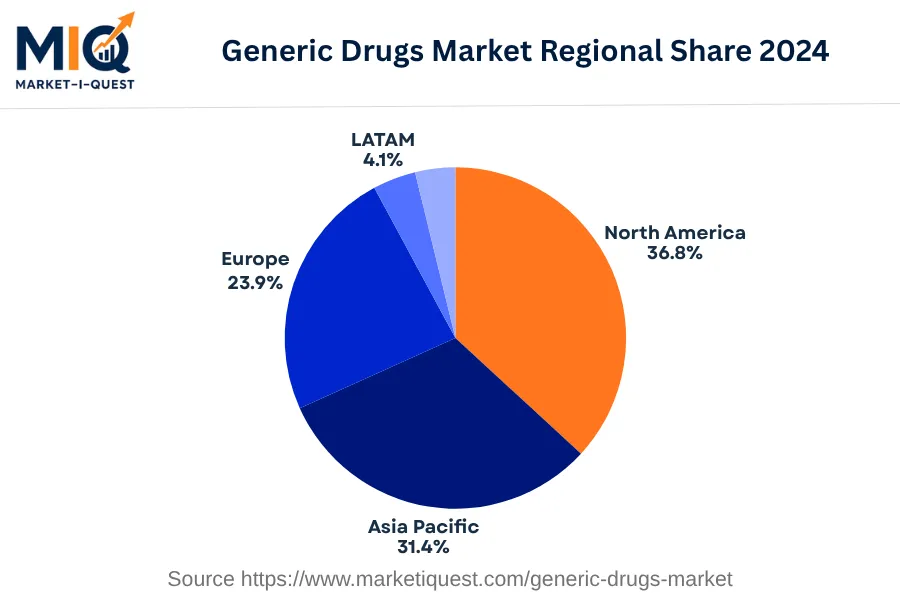
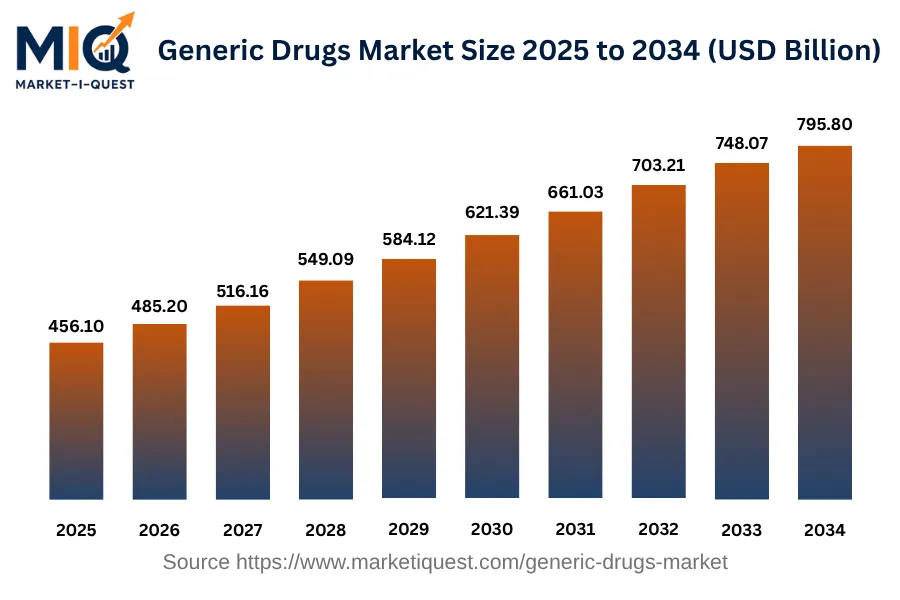
The Generic Drugs Market is projected to experience growth from a valuation of $456.10 billion in 2025 to $795.80 billion in 2034, with a compound annual growth rate (CAGR) of 6.38%. This signifies a substantial increase over the decade, powered by major global health trends and an increasing demand for more affordable treatment options. Stability and gradual increase are observed in the market, with key years showing sustained growth. Delving into regional market shares in 2024, North America holds the largest share at 36.84%, followed by Asia Pacific at 31.42%. Europe comes in third with a 23.86% share in the market. The remainder is shared by LATAM and MEA, with market shares of 4.08% and 3.8% respectively.

Key Takeaways

  • By Drug Type - Specialty Generics held the leading position accounting for the highest share in the Generic Drugs Market in 2024.
  • By Route of Administration - Oral remained predominant holding the majority share in the Generic Drugs Market in 2024.
  • By Distribution Channel - Retail Pharmacies led the market accounting for the lion's share in 2024.
generic-drugs-market market size

Key Driving Factors

Regulatory Approvals for Biosimilars

A key catalyst driving the generic drugs market is the increased activity by regulatory bodies, like the US FDA and EMA, granting approvals for biosimilars. Biosimilars are substitutes for expensive biopharmaceuticals, providing a more affordable option for patients. For years, the high cost of biologics led to an access gap. Now, with more biosimilars getting approval due to a streamlined process adopted by agencies, the affordability spectrum is widening. Besides, these authorities have implemented stringent guidelines for the clinical development and production of biosimilars, boosting trust in these drugs. This scenario is leading drug manufacturers to focus more on developing and commercializing generic biological products, propelling the generic drugs market.

Patent Expiry of Blockbuster Drugs

Another major force propelling the generic drugs market is the expiration of patents on blockbuster drugs. Once these patents expire, other pharmaceutical companies seize the opportunity to produce and sell generic versions at a much lower price. This not only boosts market competitiveness, but also helps to drive down overall healthcare costs by providing patients with cost-effective therapeutic options. Given the number of high-revenue drugs slated to go 'off-patent' in the near future, opportunities for generic manufacturers are significant, as they can introduce their versions without infringing on intellectual property rights.

Market Evolution by Timeline

2019-2023
In this period, the demand for generic drugs was elevated by buyers primarily due to their cost-effectiveness. North America, particularly the United States, was the most significant marketplace. Generic drugs became an integral part of treatment plans. Due to Health Canada's similar bioequivalence rules, Canada held a substantial share as well. Suppliers were primarily based in India, China, and Israel, catering to the demand for cost-effective alternatives. The integration of supply chain management was immature, often prone to disruptions. Federal Drug Administration's (FDA) rules for generic drug approval which required bioequivalence studies played a pivotal role in driving industry standards. Common pricing models were market penetration and economy pricing, with significant part of contracts via tendering. The main risks were quality control and inventory management.
2024
In 2024, initiatives like the Affordable Care Act in the United States bolstered the generic drugs demand. European countries such as Germany and France saw an increase in demand due to heightened awareness about generic drugs. Indian suppliers were dominant in the market, exporting to over 200 countries. Issues of data integrity in manufacturing stood as a barrier in the supply chain. The WHO prequalification program provided a yardstick for the quality of drugs. Market skimming and economy pricing were typical pricing strategies employed. Partnerships between manufacturers and wholesalers were common. The risk of counterfeit drugs seemed to rise due to increased online sales.
2025-2029
During this phase, the demand for generic drugs expanded to developing economies, particularly in South East Asia and Africa. These regions were attracted by affordable prices and increased access to essential drugs. The pharmaceutical market in India and China saw expansion in their local production capabilities. However, stringent regulations in these countries challenged market growth. Europe's Falsified Medicines Directive and EU's approach towards healthcare reinforced demand. Dynamic pricing models were prevalent. Risks in this period included potential price hikes due to shortage or monopolization of certain drugs.
2030-2034
In this timeframe, demand further increases in Africa due to efforts from NGOs and governments to ensure greater access to quality healthcare. Countries such as Brazil and Indonesia emerge as key suppliers alongside China and India. Generic Drugs Market faced challenges related to patent litigations. Regulations from regional healthcare authorities like the European Medicines Agency (EMA) and the U.S. FDA continue to impact the market standards. Outcome-based pricing saw an increase, and long-term agreements became typically ironclad. Manufacturing disruptions due to environmental calamities posed an ongoing risk while the industry saw focus shifting towards green production methods.

Future Market Outlook

Future Opportunities

The landscape of the global generic drugs market is poised for expansion through the ongoing shifts in healthcare policies and consumer needs. Following the COVID-19 pandemic, governments around the world are reassessing their healthcare frameworks, with many countries, including Canada, advocating for more robust policies supporting the development of generic medications. The European Commission's commitment in early 2023 to bolster the Generic Medicines Strategy presents a clear opportunity for manufacturers to expand their portfolios. Companies like Mylan are already exploring opportunities within the biosimilar segment, where demand is expected to rise due to patent expirations of key biologics. The upcoming amendments to the Hatch-Waxman Act, currently under discussion in the U.S. Congress as of mid-2023, could further simplify pathways for generic entrants into the market. Additionally, as global demographics shift toward aging populations, particularly in Japan and Germany, there will be a heightened demand for affordable pharmaceuticals, prompting generic companies to focus on therapeutic areas such as oncology and cardiovascular health. Collaborations between generics manufacturers and technology firms to develop smart packaging solutions are emerging opportunities, enhancing patient compliance and safety. This synergy is evidenced by the partnership between Hikma Pharmaceuticals and a tech company announced in 2023, aimed at developing monitoring systems for chronic illness medications. Overall, these factors, interconnected with regulatory trends, position generic drugs as a vital aspect of future healthcare provisioning.

Segmentation Analysis

By Drug Type

The Drug Type market is divided into subsegments including Simple Generics, Specialty Generics, Biosimilars, and Complex Generics. Specialty Generics accounted for the largest revenue share while Biosimilars is expected to grow at the fastest CAGR during the forecast period.

Largest Revenue Share

Specialty Generics

Market Share Leader

The Specialty Generic segment is leading the market based on revenue primarily due to its wide application spectrum and demand. Specialty generics are more complex to develop and manufacture than simple generics, hence usually carry a higher price tag and profitability. Their use across various therapeutic areas, such as oncology, immunology, and neurology, among others, aids in larger demand and sales volume. Additionally, an increase in patents expiration of branded specialty drugs acts as a driver for the specialty generics market. Specialty generics also have a huge customer base, provided by the aging population and increase in chronic diseases. In terms of geography, North America and Europe continue to be the largest markets due to high adoption of specialty generic drugs driven by a well-established healthcare setup and regulatory support. A unique feature of the specialty generics market is it often leverages direct-to-patient pharmacy models and distribution, bypassing conventional retail channels.

Fastest CAGR

Biosimilars

Forecast Period Growth Leader

The Biosimilars segment is the fastest growing in the drug type market. Biosimilars, over time, are expected to be widely adopted due to their lower cost relative to biologics. However, the high cost of research & development, manufacturing complexities and stringent regulatory pathways may pose as barriers to manufacturers. Technological advancements and strategic partnerships can serve as catalysts to overcome these barriers. Key metrics to look for would be evolving governmental policy and technological transformations leading to more streamlined manufacturing processes, and partnership announcements that can provide production or commercialization scale. For instance, policies promoting usage of biosimilars over patented drugs in government-funded health programs would largely help. However, the near-term risk lies in the high competition faced by the Biosimilar manufacturers as the market is becoming heavily crowded and competitive. To conclude, the growth of the Biosimilar market is likely to be driven by policy and partnership catalysts despite the challenges of competition and manufacturing complexity.

By Route of Administration

The market is divided into subsegments including oral, injectable and others, with the oral segment accounting for the largest revenue share while the injectable segment is expected to grow at the fastest CAGR during the forecast period.

Largest Revenue Share

Oral

Market Share Leader

The oral subsegment is leading in revenue generation, driven by several factors. Prominently, oral administration offers higher convenience and lower costs, thereby making it a preferred choice for the majority of the population. It also reduces the need for professional administration, contributing to its popularity. More importantly, the broad range of drugs available for oral administration is significant, catering to common diseases like diabetes, cardiovascular issues, and others, fueling the segment's prominence in the market. Geographically, the demand for oral drugs is particularly high in regions with a higher incidence of chronic diseases. Regulatory bodies also support the shift towards more cost-effective oral medication, especially in the case of drugs with an acceptable safety profile. In terms of sales channels, both online and offline pharmacies contribute substantially to the accessibility and distribution of such drugs.

Fastest CAGR

Injectable

Forecast Period Growth Leader

The injectable subsegment is projected to flourish at the fastest CAGR in the coming years due to several growth drivers. Technological advancements enhancing the needle design and drug delivery methods are likely to ease the administration, thereby promoting acceptance of injectables. Furthermore, it's vital in diseases requiring immediate drug action, critical care, and in treatments where oral administration is ineffective, making it indispensable in certain healthcare scenarios. Historically, the broader adoption of injectables has been significantly hindered due to the barriers, such as pain and fear of needles. However, the advent of less painful and user-friendly devices and delivery systems has radically reduced these adoption barriers. Meanwhile, the adoption rate could be potentially affected by risks such as product recalls and stringent regulatory norms for approval. A balanced view on these factors and their implications on growth appears essential to drive strategic investments and partnership in this sphere.

By Distribution Channel

The market is divided into subsegments including Retail Pharmacies, Online Pharmacies, and Hospital Pharmacies. Of these segments, Retail Pharmacies accounted for the largest revenue share while Online Pharmacies are expected to grow at the fastest CAGR during the forecast period.

Largest Revenue Share

Retail Pharmacies

Market Share Leader

The Retail Pharmacies subsegment holds the largest market share due to several factors. The most prominent of these is the sheer prevalence and accessibility of retail pharmacy outlets. Most communities around the world have local or chain pharmacies, making them the easiest option for most to acquire prescribed medications. Also, pharmacies often offer immediate access to over-the-counter products and personal advice from onsite pharmacists, making them an appealing option for the consumers. Additionally, beyond medication, many retail pharmacies offer other health and wellness products, allowing them to capture a wider customer base. The prevailing model of health insurance in many regions also factors into the dominance of retail pharmacies over online and hospital pharmacies. These retail outlets have partnerships with insurance companies that online pharmacies often lack, making medications more affordable when purchased from a retail pharmacy. By providing medication access to a wide range of customers with varying needs, retail pharmacies continue to dominate when it comes to revenue generation.

Fastest CAGR

Online Pharmacies

Forecast Period Growth Leader

While Retail Pharmacies currently lead in terms of revenue, Online Pharmacies subsegment is poised to grow at the fastest rate. The rise in Internet penetration coupled with the rapid expansion of e-commerce has shifted the dynamics of many industries, including pharmaceuticals. Online pharmacies offer several advantages over traditional physical outlets. For instance, they provide privacy to those customers who might be uncomfortable purchasing certain medications in person and convenience as medications are delivered right to the consumer’s doorstep. These services are particularly attractive to older demographics and those in remote areas who might otherwise have difficulty accessing necessary medications. Furthermore, advancements in technology have helped to improve trust in online pharmacies, with many now offering virtual consultations with pharmacists and doctors to mimic the 'face-to-face' medical consultation of traditional pharmacies. However, it’s not all smooth sailing. Regulation of online pharmacies remains a challenge and a potential risk to the expected CAGR. Nevertheless, ongoing digitization across all sectors and increasing consumer demand for convenience are likely to continue pushing the growth of this segment.

Competitive Analysis

Key Market Players

Manufacturers / OEMs

Teva Pharmaceuticals
Israel
Sandoz International GmbH
Germany
Mylan N.V.
US

Key Suppliers & Raw Materials

BASF SE
Germany
Excipients Solutions, Inc.
US
China National Pharmaceutical Group Corporation
China

Distributors, Integrators & Channel Partners

Henry Schein, Inc.
US
McKesson Corporation
US
Walgreens Boots Alliance
US

Porter’s Five Forces Analysis

This analysis determines the competitive intensity and attractiveness of the Generic Drugs Market.

Supplier Bargaining Power

Medium

Dependence on few suppliers for the drug formulations enhances their bargaining power.

Buyer Bargaining Power

High

Strong negotiation power of bulk purchasers such as hospitals and government agencies.

Threat of Substitutes

Low

Limited availability of substitute products due to strict patent laws.

Threat of New Entrants

Medium

Entry barriers like high R&D costs, regulatory approvals, and established competition.

Competitive Rivalry

High

Intense competition among established players aim to keep prices down and increase market share.

Regional Analysis

Geographic market dynamics and growth opportunities across key regions

Global Market Outlook

generic-drugs-market market regional share

North America

In 2024, North America's generic drugs market demonstrated robust growth, driven by a variety of factors. Demand soared due to the aging population, increasingly prevalent chronic diseases, and mounting pressure to reduce skyrocketing healthcare costs. Regulatory support, particularly in the U.S., with its emphasis on promoting the availability of low-cost alternatives, amplified this trend. Simultaneously, the rise of technology-fueled production and supply chain efficiencies enhanced the profitability of generic drug manufacturing, attracting more investment into the market. In terms of buyer behavior, the observed trend moved towards greater acceptance and even preference for generic over branded drugs among consumers. Parallelly, a growing number of healthcare providers and insurance companies exhibited a similar shift, owing to the cost-insensitivity. Technological advances led to seamless development and quicker approval of generics, while channel dynamics saw a surge in online pharmacies and retail partnerships.

The year also witnessed strategic mergers and acquisitions among generics producers, further consolidating the market. Regulatory bodies tightened their enforcement, insisting on stringent compliance with manufacturing and quality standards. In summary, the market dynamics in 2024 could be characterized by the triumvirate of growing demand, regulatory support, and technological advancements. These drivers, coupled with shifting attitudes towards generics, intensified competition and standards enforcement, shaped the North American generics market landscape, with particular impact on healthcare, manufacturing, and retail sectors.

Asia Pacific

In 2024, the Generic Drugs market in Asia Pacific emerged with renewed vigour. Driving the market was rising healthcare expenditures in key economies like China, India, and Japan whilst aging demography particularly in Japan and Australia necessitated cost-effective healthcare solutions. Changes in regulations, for instance India’s ‘Jan Aushadhi’ generic drug scheme and China’s generics quality-consistency evaluation, also fueled market growth. Technological advancements played a role as well with Australia adopting generics in telehealth sessions and South Korea investing in bio-generics production.

The market noticed evolving trends. A noticeable shift towards online pharmacies was observable, especially in India and China, influenced by the pandemic-stricken backdrop. The market saw a rise in M&A activity as firms strived to consolidate resources, with Takeda’s sale of its select portfolio to South Korea’s Celltrion being an example. Inter-regional standardization efforts like ASEAN’s harmonization of pharmaceutical regulations impacted generics accessibility. Governments across the region enforced stricter quality control, highlighted by China’s aforementioned evaluation scheme. This impacted the customer base, spanning healthcare centers, enterprises, and retail, with government healthcare bodies playing a particular role in generics adoption.

Europe

In 2024, the generic drugs market in Europe was taut with robust growth, largely driven by increasing pressure on healthcare systems to reduce costs while treating an aging population. Aging demographics in Germany, the United Kingdom, France, Italy, Spain, the Nordics, Benelux, and Central & Eastern Europe augmented demand for generic drugs. Governments adopted favorable policies to promote their use, reducing dependency on costlier patented drugs. Investments aggressively poured in, especially in manufacturing sectors in Germany and France. Technological advancements in pharmaceuticals further facilitated the market's expansion by reducing drug production costs and increasing efficiency. Supply dynamics were particularly impacted by the Brexit fallout in the UK, causing a temporary disruption in the supply chain. Pricing dynamics remained competitive throughout, driving affordability.

On the trends front, European healthcare customers were increasingly opting for generic drugs over branded ones due to cost-effectiveness and easier access. This shift was significant in Germany, Spain, and the UK. Moreover, there were noticeable channel shifts, with a growing preference for online pharmacies. Collaborations became common, with a significant number of M&As reported, especially involving German and French companies aiming to consolidate the generic drugs market. Regulatory bodies tightened policies, enforcing stringent standards to ensure generic drugs' quality and safety, prominently in the UK following Brexit.

Latin America

In 2024, the generic drugs market in Latin America was characterized by growing demand and widespread acceptance due to their cost-effectiveness. Mainly driven by increased health expenditure in countries including Brazil, Mexico, Argentina, Colombia, Chile, and Peru, generic drugs saw an uptake in utilization across various sectors such as healthcare, retail, and government. Regulatory changes, such as Mexico's mandatory bioequivalence law, also helped to increase the market reach. Supply dynamics were affected by foreign investments, notably in Brazil and Mexico, enhancing local production capacity and technology adoption. Furthermore, aggressive pricing strategies by competitors lead to an intertwined market competition, pushing for quick turnarounds and lean manufacturing.

In terms of trends, consumers were increasingly shifting towards buying generic drugs as awareness about their equivalence to branded drugs rose. This was exacerbated by many governments, including Chile and Argentina, implementing health policies emphasizing affordable access to medicine, thereby bolstering the demand for generic drugs. Pharmaceutical firms also started exploring partnerships and M&A to enhance their supply chain and distribution capabilities. The digitalization of healthcare, as seen in Peru and Colombia, further pushed online and big-box retail channels as a primary distribution platform for generic drugs. Comprising technology adaptation, competition, health policies, and growing awareness, 2024 will forever be acknowledged as a year of significant growth for the LATAM generic drugs market.
Middle East & Africa

In 2024, the generic drugs market in the Middle East and Africa showed significant activity, primarily driven by increased demand resulting from heightened health awareness and population growth. Region-specific regulatory policies, like Saudi Arabia's Vision 2030, incentivized the manufacturing of generic drugs and promoted the establishment of pharmaceutical industries. Technological advancements in Nigeria and South Africa further bolstered production capabilities, leading to efficient supply dynamics. Notably, the market witnessed shifts in buyer behavior, as patients in countries such as Egypt, Israel, and UAE showed an increased preference for generic drugs due to their affordability. Kenya and Qatar saw pharmaceutical companies engaging in strategic partnerships to bolster their standing in the market. There was a discernible shift towards e-pharmacies, prevalent in urban areas of these countries, driving a drastic change in channel dynamics.

The market’s growth was further motivated by government sectors across these regions, looking to reduce healthcare costs while ensuring access to essential medicines. In sectors such as healthcare and retail, the demand for generic drugs was amplified, particularly amid ongoing efforts to enhance public health infrastructure. The market was also influenced by policies aimed at enforcing standardization within the generic drugs industry, ensuring product safety, and quality — a key factor in the growing consumer trust.

Recent Industry Developments

Latest market innovations, product launches, and strategic initiatives

April 2026

Amneal Pharmaceuticals announced it would acquire biosimilar-focused Kashiv BioSciences for approximately $1.1 billion, marking a strategic move away from a generic-centered business structure toward biosimilars as a core growth pillar.

July 2025

Servier and BC Partners entered exclusive negotiations for the acquisition of Biogaran, one of France's largest generic drug companies. Biogaran offers treatments across the full spectrum of therapeutic areas and supplies a wide range of medicines including antibiotics, antidiabetics, and anticancer drugs.

Frequently Asked Questions