Energy Harvesting System Market Snapshot

Key Players

  • EnOcean GmbH (Germany)
  • Linear Technology (US)
  • Microchip Technology Inc. (US)
  • LORD MicroStrain (US)
  • Cymbet Corporation (US)
  • Mide Technology Corporation (US)
  • Infinite Power Solutions Inc. (US)
  • Seiko Epson Corporation (Japan)
  • SolarPrint (Ireland)
  • Ferro Solutions Inc (US)

Market Size

Base Year 2024
$0.962 Bn
CAGR
10.38%
Forecast 2034
$2.58 Bn

Market Segments

By Component
  • Controller
  • Transistor
  • Capacitor
  • Battery
By Sensor
  • IR
  • Temperature
  • Pressure
  • Humidity
By Application
  • Industrial
  • Automation
  • Transportation
  • Consumer Electronics
  • Others

Market Dynamics

Drivers
  • Increasing energy consumption
  • Technological advancements in energy harvesting
Restraints
  • High implementation costs
  • Technological complexities
Opportunities
  • Rising IoT applications
  • Increasing energy consumption needs

Market Size

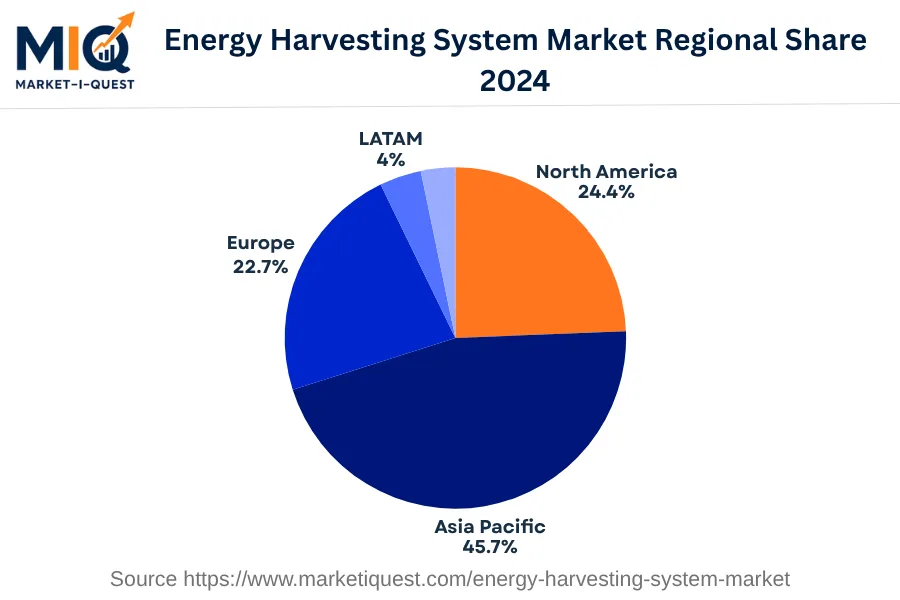
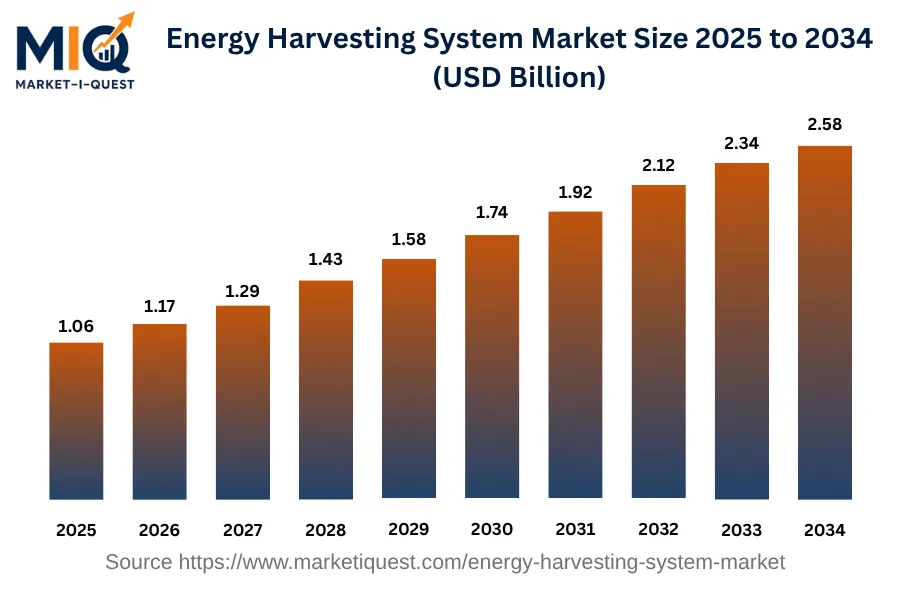
The Energy Harvesting System Market was valued at $1.06 billion in 2025, an increase from $0.96 billion in 2024. By 2034, the market size is expected to reach $2.58 billion, indicating a Compound Annual Growth Rate (CAGR) of 10.38% over the time period. This notable growth can be attributed to advancements in energy harvesting technologies and the escalating demand for power-efficient and durable systems that require minimum or no maintenance. The on-going. technological innovations and increasing adoption of energy harvesting systems across various sectors are also contributing to the rise in the market value. Looking at the regional market shares in 2024, Asia Pacific had the leading share at 45.74%. North America followed with 24.36%, then Europe with 22.68%. The smaller shares were held by Latin America at 3.96% and the Middle East and Africa at 3.26%.

Key Takeaways

  • By Component - Transistor led the Energy Harvesting System Market claiming the most significant share in the baseline year.
  • By Sensor - Pressure Sensor recorded the fastest growth indicating a high potential area within the Energy Harvesting System Market.
  • By Application
  • the Industrial sector held the dominant market share in the Energy Harvesting System Market
  • reflecting its substantial demand.
  • In the Energy Harvesting System Market
  • the Automation application showed the most robust expansion rate
  • playing a vital role in fueling the overall market growth.
  • For Energy Harvesting System
  • Transportation stood out as a rapidly rising application contributing to the market's overall advancement.
  • The Consumer Electronics application demonstrated a significant growth rate within the Energy Harvesting System Market
  • indicating a noteworthy development trend.
energy-harvesting-system-market market size

Key Driving Factors

Implementation of Stringent Environmental Regulations

The implementation of stringent environmental regulations is a significant driving factor for the Energy Harvesting System Market. Around the world, many government bodies are promoting and pushing for greener technology. Regulations such as the European Union's 2020 Climate and Energy Package enforce the reduction of Green House Gases (GHG) emissions and boost energy efficiency. Energy Harvesting Systems, which can convert ambient energy into usable electricity, provide a great solution in this context. They do not produce GHG and can help businesses comply with these regulations. As such, this regulatory pressure for environmental conservation is driving the adoption of energy harvesting systems.

Prevalence of IoT and Need for Power-Efficient Systems

The growing prevalence of the Internet of Things (IoT) and the demand for power-efficient systems is another influential factor. IoT applications commonly use batteries for their power source, which have limitations in life-span and can be challenging to replace in a large-scale deployment. Energy Harvesting Systems can offer a solution to this issue by providing a renewable power source for IoT applications, promoting longer device lifespan and reducing maintenance costs associated with battery replacements. As the IoT expands, the use of energy harvesting systems is likely to increase.

Market Evolution by Timeline

2019-2023
In this period, buyers primarily included wearable devices manufacturers and wireless sensor networks in fields such as automotive, industrial and home automation industries. High costs of batteries in these applications led to a surge in demand for remote, self-powering energy solutions. North America, notably United States, emerged dominant with significant investment in energy efficient technologies. Key technologies included solar, thermal, and vibration harvesters. However, integration of these systems faced difficulties concerning size, capacity and cost-efficiency. The United States Department of Energy influenced adoption by setting standards such as the 'Buildings-to-Grid' program. On the commercial front, there was a shift towards service-based contracts, with companies offering complete solutions including installation, monitoring and maintenance. Risks in this period involved efficiency issues amidst different environments and applications.
2024
In 2024, a growth in the number of buyers from the Internet of Things industry was observed, as energy harvesting systems became a key component of IoT devices. The primary supplier regions expanded to include China and South Korea, further stimulated by residential, commercial and infrastructural development. Nanogenerator technology became prominent, although variability in efficiency remained a challenge. Policies like the 'Green Energy Act' in Canada induced further deployment of energy harvesting systems. However, the high initial costs and stringent regulations regarding energy harvesting imposed challenges for the market. Significant collaborations between hardware and software companies marked the commercial landscape, aiming to enhance output efficiency.
2025-2029
By 2025–2029, demand from the telecommunication industry was notable due to the replacement of traditional power sources with renewable energy alternatives. Solar energy remained the most popular technologic method, followed by Radio Frequency. Europe, particularly Germany and UK, witnessed significant growth due to governmental incentives. The UN 'Sustainable Energy for All (SE4All)' initiative was instrumental in influencing policy decisions regarding renewable energy. Industry-wide, 'pay-as-you-go' models became popular, providing flexibility in terms of costs and usage. High development costs and interoperability concerns among different energy harvesting systems became more evident during this period.
2030-2034
From 2030 to 2034, the use of energy harvesting systems in space technology and defense sectors expanded. This caused an increase in demand for highly efficient, durable and low-maintenance energy solutions. Japan and India observed a surge in market share, propelled by technological advancements and broad-scale implementation. Electrodynamic and human energy harvesting technologies gained traction. This period saw international cooperation to formulate regulations benefiting the global energy crisis, with NASA's 'Space-Based Solar Power (SBSP)' program being a key initiative. Pricing models incorporated consolidated annual rates demonstrating the customers' willingness for long-term investment. High infrastructural cost and lack of skilled workforce presented resilient challenges.

Future Market Outlook

Future Opportunities

With increasing global emphasis on sustainability, energy harvesting systems present a range of opportunities for future growth. The ongoing EU Green Deal, aimed at reducing carbon emissions by 2030, encourages the integration of renewable energy sources, including energy harvesting technologies in urban environments. This is evident in initiatives like the Smart Cities Mission in India, which promotes the use of energy-efficient technologies that could leverage energy harvesting systems. Furthermore, the U.S. Department of Energy’s commitment to supporting advanced manufacturing in clean energy offers a pathway for companies like GE Renewable Energy to enhance their energy harvesting product lines. With smart home technologies on the rise, collaboration between energy harvesting system manufacturers and home automation companies will likely become crucial. Samsung announced in 2023 the introduction of smart appliances that integrate energy harvesting capabilities for sustainable energy use. Additionally, the rise in electric vehicle adoption, particularly in countries like China, creates demand for wireless energy harvesting systems to reduce dependency on traditional charging methods, as seen in Tesla's evolving charging solutions. By focusing on these sectors and aligning with regulatory initiatives, manufacturers can tap into various sectors, including healthcare, transportation, and smart agriculture, driving the next wave of energy harvesting system innovations. The momentum generated could lead to broader adoption and improved technological advancements across continents.

Segmentation Analysis

By Component

The market is divided into subsegments including Controller, Transistor, Capacitor, and Battery. The Battery subsegment accounted for the largest revenue share while the Capacitor subsegment is expected to grow at the fastest CAGR during the forecast period.

Largest Revenue Share

Battery

Market Share Leader

In 2024, the Battery subsegment emerged as the leading revenue generator due to several crucial factors. The dominance of this subsegment is primarily driven by the widespread use of batteries in various electronic devices, including smartphones, laptops, and other portable electronics, among others. Additionally, batteries are indispensable to several sectors including automotive, industrial, and energy, which have continued to bolster their demands. Furthermore, the transition towards renewable energy solutions and electric vehicles has propagated the surge in demand for high-capacity batteries. Geographically, large markets such as North America and Asia-Pacific with a higher concentration of industrial and consumer electronics manufacturers contribute significantly to the revenue of the Battery subsegment. However, it should be noted that any significant regulatory interventions in key markets can potentially impact this subsegment's performance, as battery disposal and recycling are environmental concerns.

Fastest CAGR

Capacitor

Forecast Period Growth Leader

Although the Capacitor subsegment does not lead in terms of revenue, it represents the fastest growth potential within the market. Technological advancements and evolving electronic circuit designs are amplifying the need for capacitors. They play a crucial role in energy storage and release, filtering out unwanted frequencies and noise, and compensating for reactive power, making them an integral component in many electronic devices. Their rapid adoption can be attributed to the growing demand for consumer electronics, telecommunications equipment, and energy harvesting applications, all of which have high capacitor usage. Despite promising growth, some barriers persist, such as the high capital expenditure required to keep up with significant tech developments. The risks in the near term include competition from other component subsegments and price volatility of raw materials. Nonetheless, advancements in technology and increased partnership opportunities within the electronics industry can indeed offset these challenges and catalyze the growth of the Capacitor subsegment.

By Sensor

The market is divided into subsegments including IR, Temperature, Pressure, and Humidity, out of which, the Temperature sensor accounted for the largest revenue share while the IR is expected to grow at the fastest CAGR during the forecast period.

Largest Revenue Share

Temperature

Market Share Leader

Temperature sensors hold the largest market share due to their extensive use across different sectors such as consumer electronics and healthcare. These sensors are widely employed in HVAC systems, cooking devices, and medical instruments which requires precise temperature monitoring. The dominant role of the temperature sensor in revenue generation arises from the essential requirement of temperature regulation and control in most systems. Availability, affordability, and the ability to deliver excellent performance in extreme conditions favor the widespread acceptance of temperature sensors. They are also critical in industrial applications where even a small deviation in temperature can lead to irreversible damages or inefficient functioning. The compatibility of temperature sensors with a wide range of devices further broadens their consumer base. These sensors' requirements in areas experiencing harsh weather conditions for adequate safety and operational efficiency influence a steady revenue stream for this segment.

Fastest CAGR

IR

Forecast Period Growth Leader

The IR sensor market is expected to exhibit the fastest growth due to the increasing adoption in the healthcare and automotive industry. These sensors have a vital role in contactless temperature measurement, night vision equipment, and gesture recognition, all of which equal high growth prospects. Added to that, a paradigm shift towards automation in various sectors and the rising popularity of IoT devices has amplified the demand for IR sensors. Governments globally are investing in infrastructural development and promoting energy-efficient systems, providing suitable conditions for IR sensors' growth. The sudden surge in the demand for contactless operation due to the pandemic scenario forms a catalyst for their growth. It should be noted that barriers for growth could involve high costs of production and maintenance, along with the need for high efficiency in unfavorable conditions. However, partnerships between key players and continuing technological advancements are expected to overcome these barriers and bolster significant growth in the IR sensor segment.

By Application

The market is divided into subsegments including Industrial, Automation, Transportation, Consumer Electronics, and Others. In 2024, the Consumer Electronics had the largest revenue share, whereas Industrial is projected to grow at the fastest CAGR during the forecast period.

Largest Revenue Share

Consumer Electronics

Market Share Leader

In the base year of 2024, Consumer Electronics emerged as the segment yielding the highest revenue in the market. The proliferation of advanced technologies such as AI, IoT, and cloud computing has exponentially propelled the demand in the sector. The vast user-base, driven by the everyday use of electronic devices such as smartphones, laptops, and other intelligent appliances, swept in considerable revenue for the segment. Geographically, APAC demonstrated outstanding performance owing to the presence of major electronic manufacturers and increasing disposable income. Regulatory landscapes also favored the segment's growth as governments globally foster digitalization. Consumers' purchase criteria typically revolve around the advanced features, brand, quality, and price of electronics. Meanwhile, significant switching costs and customer loyalty serve as barriers to entry to other competitors. The standard distribution channels are online platforms and retail stores.

Fastest CAGR

Industrial

Forecast Period Growth Leader

Contrasted with other sectors, the Industrial category is anticipated to observe the highest growth rate. The accelerated adoption of smart factory concepts and Industry 4.0 underpins this evolution. The proliferation of IoT and automation technologies in the manufacturing sector has been instrumental in improving production efficiency, promoting the segment’s rapid expansion. Policymakers have played a pivotal role in aiding growth through incentives and capacity-building measures in the industrial sector, primarily in emergent economies. Besides, capital investments in industrial digitalization have accelerated, fueling robust segment growth. On the flip side, technological complexity and cyber-security risks could potentially decelerate adoption rate. It will be crucial for companies to form strategic partnerships to harness growth by overcoming adoption barriers and successfully capitalizing on this swift expansion of the industrial sector.

Competitive Analysis

Key Market Players

Manufacturers / OEMs

EnOcean GmbH
Germany
Texas Instruments Incorporated
US
Laird CONNECT
UK

Key Suppliers & Raw Materials

Vishay Intertechnology, Inc
US
STMicroelectronics
Switzerland
Murata Manufacturing Co., Ltd.
Japan

Distributors, Integrators & Channel Partners

Avnet, Inc.
US
Digi-Key Electronics
US
RS Components
UK

Porter’s Five Forces Analysis

This analysis elucidates the competitive intensity of the Energy Harvesting System Market.

Supplier Bargaining Power

Medium

Suppliers can set prices due to the specialized component nature of energy harvesting systems.

Buyer Bargaining Power

Low

High capex and specialized solutions limit buyers' negotiation leverage.

Threat of Substitutes

Medium

Alternatives like traditional energy sources keep moderate threat of substitutions.

Threat of New Entrants

High

Low barriers for software, rising demand and increasing environmental concerns fuel potential new entrants.

Competitive Rivalry

High

Numerous established players and varying technologies intensify market competition.

Regional Analysis

Geographic market dynamics and growth opportunities across key regions

Global Market Outlook

energy-harvesting-system-market market regional share

North America

In 2024, North America's Energy Harvesting System Market was primarily driven by the heavy adoption of renewable energy sources, stringent environmental regulations, and technology advancements. First, an increased demand for sustainable energy sources in the United States brought about by environmental awareness led to significant investment in energy harvesting systems. Second, Canada's robust environmental regulations encouraged its industries to harness renewable energy, fueling the market. Lastly, technology adoption, especially in the US and Mexico, boosted this market as more efficient energy harvesting systems were developed and deployed. Several trends characteristically shaped the market in 2024. There was an undeniable shift towards energy harvesting systems in industries such as healthcare, utilities, and manufacturing due to their efficiency and cost-saving benefits.

Additionally, strategic partnerships and M&A activity were noted, with enterprises focusing on developing and launching innovative technologies. Government policies across North America, particularly in the United States, also enforced the utilization of renewable energy sources, further driving the adoption of energy harvesting systems. The base sectors driving this demand were primarily government, healthcare, utilities, and manufacturing sectors. These sectors aim to reduce their carbon footprint and save costs, thereby utilizing energy harvesting systems as an essential part of their operations. The retail sector also showed an uptake in the use of these efficient energy equipment due to the desire for sustainability and cost savings.

Asia Pacific

In 2024, the Energy Harvesting System (EHS) Market in Asia Pacific was characterized by substantial growth, particularly in China, India, Japan, South Korea, and Australia, and across key ASEAN countries. With the push towards green energy, governments and private entities initiated regulations and incentives promoting EHS adoption. For instance, China's government mandated energy-saving guidelines, fuelling domestic demand for energy-efficient solutions. Furthermore, technology advances stimulated the market's expansion, as more efficient, compact energy harvesters emerged, attracting significant investment. Consumer demand spiked as well due to increasing awareness about sustainable energy consumption, especially in countries like India and Japan. High energy costs, especially in Australia and South Korea, accelerated the uptake of EHS in utilities and manufacturing sectors to offset energy expenses.

Trends in 2024 indicated a shift towards IoT-enabled energy-harvesting systems, with industries looking to reduce dependency on traditional power sources. This technological shift led to strategic partnerships and mergers to facilitate R&D and commercialization of advanced EHS. Notably, policy enforcement across ASEAN contributed to uniform EHS standards, explicitly manifesting in sectors like retail and enterprise. Overall, the drivers and trends of 2024 reflect a dynamic EHS market in the Asia Pacific, shaped by a blend of economic, technological, and regulatory factors.

Europe

In 2024, the Energy Harvesting System Market in Europe demonstrated a significant evolution. Key drivers propelling this market included the escalating need for energy conservation, stringent emission norms, and the significant increase in investment directed towards renewable energy projects. Technology adoption was apparent in sectors such as manufacturing, utilities and healthcare, with increased reliance on systems capturing ambient energy. Furthermore, the availability and reduced cost of energy-efficient materials fueled a steady supply dynamic. Key trends exhibited in this market involved altered buyer behaviour, as customers opted for green energy solutions for long-term financial and environmental benefits. Technological shifts were apparent with advancements in micro energy harvesting.

Digital channels became integral for information dissemination and product delivery, especially noticeable in the Nordics and Benelux. There was an upswing in partnerships and M&A activities, with pertinent examples like German enterprises tying up with UK firms for enhanced tech application. Stricter policy enforcement was witnessed across Europe, particularly in Germany, the United Kingdom, France, and Italy, pushing businesses to adopt these systems. In conclusion, the Energy Harvesting System Market in 2024 Europe exhibited robust growth, fuelled by drivers of demand, investment, technology adoption, supply dynamics, and pricing, and steered by trends in buyer behaviour, technology, channel dynamics, and policy enforcement.

Latin America

In 2024, the Energy Harvesting System Market in Latin America evidenced significant growth, propelled by various drivers and trends across countries including Brazil, Mexico, Argentina, Colombia, Chile, and Peru. Demand surged with efforts to reduce reliance on conventional energy resources, alongside a push for cleaner, sustainable alternatives. Regulatory frameworks encouraging renewable energy adoption spurred investment in this sector, particularly evident in Brazil and Mexico. New energy harvesting technologies were adopted at an accelerated pace, affecting supply dynamics and pricing. Trends in 2024 showed a shift in buyer behavior, with enterprises, utilities, and manufacturing sectors seeking energy-efficient solutions. Novel technologies like thermoelectric energy harvesting gained traction in Argentina and Chile due to their extensive mining operations.

Channel dynamics evolved with partnerships between local companies and foreign energy firms, as seen in the alliance between Colombia's Ecopetrol and Canada's Enerkem. Increased policy enforcement highlighted the push for standards, instigating improved energy harvesting systems. Government initiatives aimed at integrating energy harvesting systems into public healthcare facilities in Peru marked a notable consumer trend in 2024. Retail industries too showed interest, particularly in Brazil and Mexico, where city-wide smart grid projects employed energy harvesting systems for efficient power management. Ultimately, these drivers and trends shaped an aggressive Latin American Energy Harvesting System Market landscape in 2024. 

Middle East & Africa

In 2024, the Energy Harvesting System Market in the Middle East and Africa was primarily driven by the demand for sustainable power solutions and the adoption of IoT technology. Adoption rates were particularly noticeable in the United Arab Emirates and Saudi Arabia due to increased government investment in smart city projects, which made use of IoT technology to optimize energy usage. Renewable energy policies in these nations also presented opportunities for market growth. Key trends shaping the market included an increase in partnerships between local utilities and international renewable energy firms, particularly in Israel and South Africa. There was also a major shift towards remote and wireless power management systems across multiple sectors, such as telecom, healthcare, and manufacturing. For example, South African telecom companies increasingly adopted energy harvesting systems to power remote telecom towers.

Government regulations supporting renewable energy usage were starting to have a significant impact on market trends. In Nigeria, for example, the National Renewable Energy Policy was influencing the demand for energy harvesting systems in both the public and private sectors. Further, a lower price for renewable technology in the market, as seen in Kenya and Egypt, also amplified the trend of adopting energy harvesting systems.

Recent Industry Developments

Latest market innovations, product launches, and strategic initiatives

June 2026

Alpha Technologies, a US-based company, acquired Bangalore-based NavSemi Energy for an undisclosed amount. NavSemi designs and manufactures cleantech solutions including energy harvesting systems.

January 2026

SMK Electronics Corporation, USA announced it will feature a new family of sensor-based technologies and products at CES 2026, including energy harvesting, home automation, mobility, and interconnect solutions.

Frequently Asked Questions