Dental X-Ray Market Snapshot

Key Players

  • Danaher Corporation (United States)
  • Planmeca Oy (Finland)
  • Dentsply Sirona (United States)
  • Carestream Health Inc. (United States)
  • Vatech Co. Ltd. (South Korea)
  • Midmark Corporation (United States)
  • Asahi Roentgen Ind. Co. Ltd. (Japan)
  • Cefla SC (Italy)
  • Air Techniques (United States)
  • Prexion Inc. (United States)

Market Size

Base Year 2024
$2.53 Bn
CAGR
8.7%
Forecast 2034
$5.83 Bn

Market Segments

By Product
Digital, Analog
By Type
Intraoral, Extraoral
By Application
Medical, Cosmetic Dentistry, Forensic
By End User
Hospitals, Dental Clinics, Academic & Research Institutes

Market Dynamics

Drivers
  • Rising oral healthcare awareness
  • Advancements in dental radiography technologies
Restraints
  • High equipment costs
  • Strict regulatory policies
Opportunities
  • Increasing oral health awareness
  • Advancements in radiographic imaging technology

Market Size

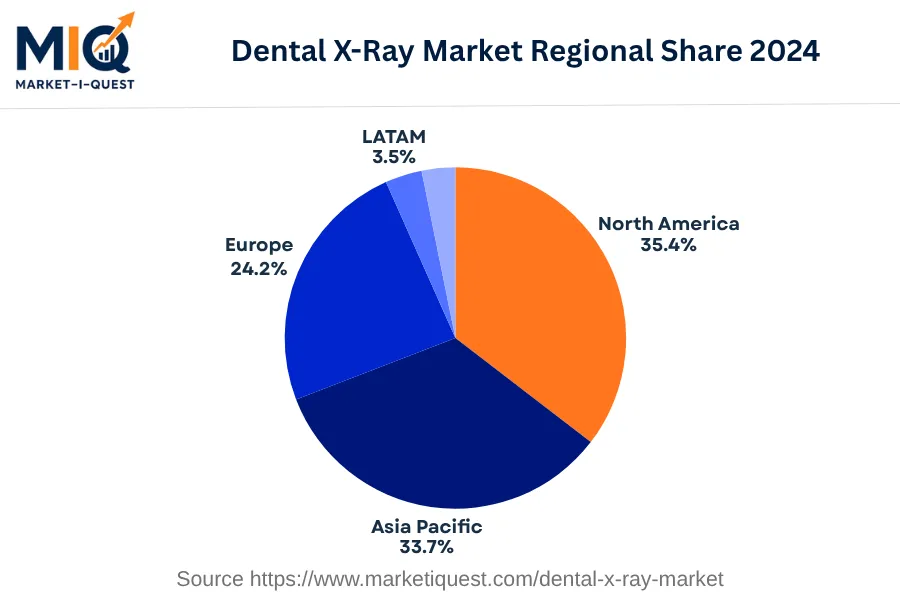
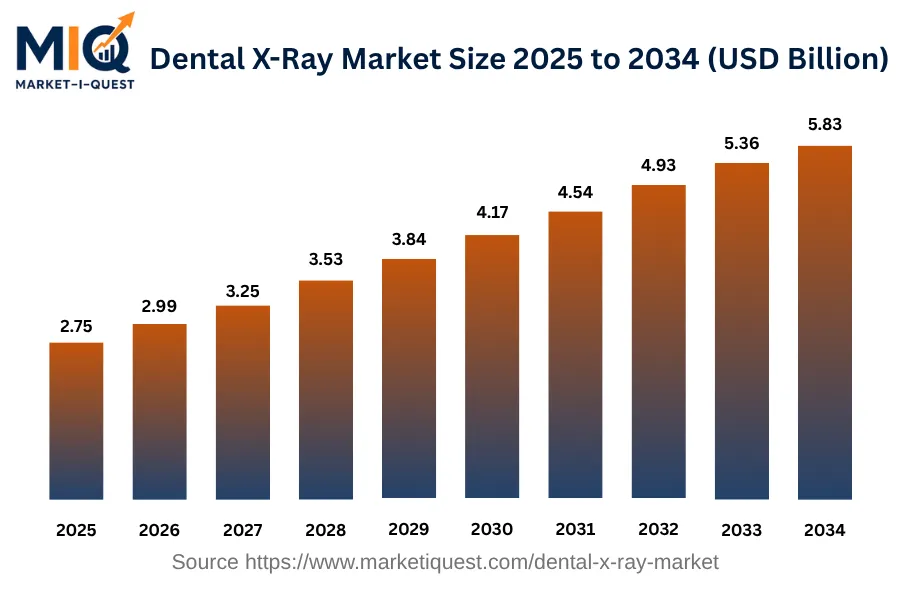
The Dental X-Ray Market is anticipated to grow from a size of USD 2.75 billion in 2025 to USD 5.83 billion by 2034, at a CAGR of 8.7%. The market, which is valued at USD 2.53 billion in 2024, indicates a steady growth expansion for the forecasted period. The significant growth of 8.7% CAGR happens between 2025 and 2034, nearly doubling the market size. The regional share distribution in 2024 shows North America leading with 35.43%, closely followed by Asia Pacific at 33.72%. Europe held a share of 24.18%, while Latin America and the Middle East and Africa held the smallest shares at 3.49% and 3.18% respectively. These shares reflect the geographical distribution of the Dental X-Ray Market in 2024.

Key Takeaways

  • By Product - Digital held a dominant position in the Dental X-Ray Market in 2024.
  • By Type - Intraoral led the market accounting for the highest market share in 2024.
  • By Application - Cosmetic Dentistry has the fastest growth within the forecasted period.
  • By End User - Hospitals held the top position attributing to a large customer base in 2024.
dental-x-ray-market market size

Key Driving Factors

Increasing incidence of Dental Diseases

A significant driving factor for the dental X-ray market is the increasing rate of dental conditions, such as periodontal diseases and oral cancer. Dental X-rays have become a vital tool for dentists to diagnose these conditions at an early stage. Furthermore, routine dental checkups often include X-rays to detect any hidden problems with teeth or gums. This trend of preventive dentistry is encouraging dental professionals to make significant investments in dental X-ray machines, thereby boosting the market.

Implementation of Strict Regulatory Protocols

Another prominent factor stimulating the dental X-ray market's growth is the increasing stringency of regulatory protocols. Regulatory authorities like the U.S. Food and Drug Administration (FDA) mandate the use of radiation safety measures and suitable X-ray equipment for dental practices. These regulations enforced by governmental bodies ensure that the equipment undergoes rigorous testing and approval procedures for safety and efficiency, thereby driving dentists to invest in high-quality dental X-ray systems. Additionally, these standards also promote the regular upgrade and maintenance of these devices.

Market Evolution by Timeline

2019-2023
However, within this period demand for dental X-rays rose especially in North America and Europe, driven by rising frequency of oral diseases and increased aging population likely to oral issues. Manufacturers in Japan, Germany and the U.S. shipped portable and digital technical dental X-ray equipment with high integration maturity. Regulatory bodies such as the American Dental Association (ADA) set standards for radiation protection in dental X-ray. Pricing models leaned towards premium quotes, reflecting technical advancement and effectiveness. Partnership deals were fairly common with dental clinics and hospitals.
2024
2024 saw a surge in demand for dental X-rays in emerging economies such as India and China, likely due to rising dental health awareness and improved healthcare infrastructure. Manufacturers piloted AI-infused dental X-ray systems, although integration was a work in progress. The ADA implemented stricter rules for machine calibration and patient safety. Prices continued on the premium side, with suppliers and buyers settling into recurring contract standards.
2025-2029
The Asia-Pacific region, particularly South-East Asia, became a significant demand center for dental X-rays in this period, driven by escalated access to dental services. Completeness and efficiency became key selling points of systems integrating AI. Regulatory bodies globally adopted and enforced the ADA's standards on patient safety, resulting in high compliance. More varied pricing options emerged, accommodating both premium and mid-range market segments. Notably, the typical contract involved rental agreements besides outright sales. The major supply risk was related to maintaining the quality of AI technologies, which typically needed constant updates and monitoring.
2030-2034
This period saw steady demand shifts towards African and South American regions. Further strides in AI made it a staple feature in most dental X-ray systems, with suppliers achieving seamless integration. New regulations regarding AI usage in healthcare, like the European Union's Regulations on AI, influenced the adoption of AI in dental X-rays. Pricing models show a shift towards subscription-based contracts, as suppliers and buyers crave flexibility and scalability. Security and reliability of AI have become critical supply risks. Providers gradually adopted blockchain technology and similar measures to mitigate these risks.

Future Market Outlook

Future Opportunities

The evolving dental X-ray landscape highlights various opportunities related to current technological and regulatory developments. The increasing demand for preventive care has driven dental professionals for integrating more advanced imaging techniques into their practices, particularly driven by the heightened focus on oral health. Partnerships between dental practices and technology providers, such as those seen between Dentsply Sirona and various dental schools for training with advanced X-ray systems, highlight an opportunity for enhanced education and expertise development. As tele-dentistry gains popularity, companies are innovating on remote diagnostic tools that leverage dental X-ray technology, providing patients access to expert opinions without the need to visit dental offices. The continued investment in research and development from major players, including Vatech and Planmeca, into new materials and imaging solutions demonstrates a clear trajectory towards merging imaging with emerging technologies. In this regard, both hardware advancements and software enhancements will be essential in shaping the future opportunities available within the dental X-ray market, as practitioners strive to meet the evolving needs of their patients.

Segmentation Analysis

By Product

The market is divided into subsegments including Digital and Analog. In the base year 24, the Digital subsegment secured the largest revenue share while Analog is expected to grow at the fastest CAGR during the forecast period.

Largest Revenue Share

Digital

Market Share Leader

The digital subsegment managed to garner the highest revenue in 2024 due to several factors. Firstly, the rapid expansion of broadband internet connections and the growing popularity of media streaming platforms globally has led to increased demand for digital products. The robust growth of e-commerce platforms is another key driver for the digital subsegment, offering an extensive range of digital products to consumers worldwide. However, demand was majorly driven by increasing demand towards digital options for their products due to their convenience, efficiency, and usability. Regionally, developed economies have indicated increased adoption of digital products mainly due to high purchasing power, advanced infrastructure, and consumer preference for digital options.

Fastest CAGR

Analog

Forecast Period Growth Leader

Analog it is expected to grow at a faster CAGR during the forecast period. Mainly, analog devices are known for their robustness and longevity, making them an attractive alternative for consumers in industries where these attributes are highly valued, such as automotive and industrial. Regulatory shifts encouraging environmentally friendly practices could also drive demand for analog products as they typically use less energy. Another factor for rise in growth is the lower capital expenditure required to manufacture these devices, making them an economical choice for manufacturers. Collaborations or partnerships between analog device manufacturers and designers can further drive innovation and demand for these devices.

By Type

The market is divided into subsegments including Intraoral and Extraoral. Intraoral accounted for the largest revenue share while Extraoral is expected to grow at the fastest CAGR during the forecast period.

Largest Revenue Share

Intraoral

Market Share Leader

Intraoral dominates the market due to its widespread use in diagnostic procedures. Widely used to diagnose dental diseases such as periodontal disease, cavities and tooth decay. Patients and dental professionals prefer intraoral due to close proximity imaging advantage, which gives high-resolution images and a detailed view of teeth and gums. This detailed imaging allows dental professionals to identify and treat diseases more efficiently, driving demand. Regulatory bodies such as FDA guidelines in the US, supporting the use of intraoral further establish this technology's credibility.

Fastest CAGR

Extraoral

Forecast Period Growth Leader

Despite representing a lower revenue share currently, the Extraoral segment is projected to register the fastest growth rate. This sharp increase can be attributed to technological advancements driving its rapid adoption. Extraoral machines provide full-mouth x-ray images, thereby offering dentists a more comprehensive view to detect problems such as impacted teeth, jaw fractures and even tumors. This makes it a favorable option for complex diagnostic cases and contributes to its growing popularity. Additionally, collaborations and partnerships among key market players to advance extraoral imaging systems will serve as a significant growth catalyst.

By Application

The market is divided into subsegments including Medical, Cosmetic Dentistry, and Forensic. Medical accounted for the largest revenue share while Cosmetic Dentistry is expected to grow at the fastest CAGR during the forecast period.

Largest Revenue Share

Medical

Market Share Leader

The Medical subsegment within the application segment dominated the market in terms of revenue. This can primarily be due to the constantly increasing demand for innovative healthcare solutions, especially in developed regions such as North America and Europe which are home to several leading pharmaceutical and medical device manufacturers. Moreover, the importance of efficient medical services to the general public, private entities and governments alike also contributed heavily to this subsegment's robust revenue figures. The healthcare industry's growing expenditure, notable advancements in technology, and the development of more efficient practices have also drove demand.

Fastest CAGR

Cosmetic Dentistry

Forecast Period Growth Leader

Cosmetic Dentistry subsegment that is predicted to experience the fastest CAGR. This growth momentum can majorly be chalked up to technological advancements and the growing demand for aesthetic dentistry procedures. Global societal trends are increasingly shifting towards recognized beauty and perfection and healthy, attractive teeth play a integral role in this perception. This heightened demand with aesthetic appeal has triggered a rise in demand for cosmetic dentistry products and services. Also, partnerships between dental practices and financing companies are making these expensive treatments more affordable.

By End User

The market is divided into subsegments including Hospitals, Dental Clinics, and Academic & Research Institutes. Hospitals accounted for the largest revenue share while Dental Clinics is expected to grow at the fastest CAGR during the forecast period.

Largest Revenue Share

Hospitals

Market Share Leader

Hospitals generated the largest portion of revenue in this market segment. Majorly due to several factors including their size, patient volume. Being the primary centers for advanced medical care, hospitals serve to a wide range of patients and hence generate significant revenue from diverse procedures. Moreover, regulatory norms often mandate certain types of treatments to be conducted only at established hospital facilities, leading to higher revenues. Also, hospitals maintain regular contracts with product and service providers, ensuring a steady revenue stream for those companies.

Fastest CAGR

Dental Clinics

Forecast Period Growth Leader

Dental clinics are expected to register the fastest growth. The major driver of growth in this sector can be linked to increased awareness and focus on oral hygiene among the general population. In addition, innovations in dental procedures and equipment are allowing clinics to offer quicker, more efficient services thereby driving higher patient turnover and revenue. Partnerships with insurance companies are also facilitating the affordability of these procedures, inducing more potential patients to opt for treatments. On a regulatory front, initiatives to promote regular dental checks are acting as catalysts, encouraging more people to visit dental clinics regularly.

Competitive Analysis

Key Market Players

Manufacturers / OEMs

Danaher Corporation
US
Carestream Health, Inc.
US
Planmeca OY
Finland

Key Suppliers & Raw Materials

Osram GmbH
Germany
Royal DSM
Netherlands
Momentive Performance Materials Inc.
US

Distributors, Integrators & Channel Partners

Henry Schein, Inc.
US
Patterson Companies Inc.
US
Burkhart Dental Supply
US

Porter’s Five Forces Analysis

This is an assessment of competitive dynamics within the Dental X-Ray Market.

Supplier Bargaining Power

Low

Domination by few large players and high switching costs limit supplier bargaining power.

Buyer Bargaining Power

Medium

Buyers, primarily dentists and clinics, have moderate power due to various X-ray machine options.

Threat of Substitutes

Low

Low threat due to lack of effective alternatives to Dental X-Ray machines.

Threat of New Entrants

Medium

Technological advancements and capital investments pose moderate barriers to entry.

Competitive Rivalry

High

Intense competition due to the presence of numerous established manufacturers.

Regional Analysis

Geographic market dynamics and growth opportunities across key regions

Global Market Outlook

dental-x-ray-market market regional share

North America

In 2024, the Dental X-Ray Market in North America saw substantial growth, primarily from the U.S., Canada, and Mexico. In terms of drivers, increasing oral health awareness, combined with a rising aging population, facilitated market expansion. Regulatory policies, such as the U.S’s Children’s Dental Health Project and Mexico’s Universal Access to Dental Health Care initiative, fostered the adoption of x-ray procedures. Technology adoption surged, particularly in 3D x-ray imaging, due to investments focusing on precise diagnostics. Supply dynamics remained stable, balancing increased demand without significant price hikes.

Trend-wise, consumer preference shifted towards less invasive and quicker procedures, such as cone-beam computed tomography (CBCT). Paired with technological advancements, the market saw a notable shift towards digital x-ray systems and devices. Channel-wise, sales through online medical platforms climbed due to eCommerce’s growth throughout North America. Meanwhile, partnerships between dental clinics and imaging technology providers became prevalent, fostering efficiency and quality in dental care. The standard setting bodies also strived for comprehensive dental x-ray standards, with policy enforcement favoring thorough dental health checks.

Sectors contributing significantly to this market included healthcare, particularly dental clinics and hospitals. Enterprises in the medical technology domain also played vital roles, with their investments in dental x-ray device manufacturing, innovation, and research. Government policies and initiatives remained pivotal, driving market growth in both demand and supply aspects.

Asia Pacific

In 2024, the dental X-ray market in the Asia Pacific witnessed substantial growth in response to rising dental health concerns and increasing technological innovation. Aging populations in Japan, China, and South Korea drove demand for dental assessment tools like X-rays, encouraging investment in innovative solutions. Adoption of advanced digital X-ray technologies increased, creating a buoyant supply dynamic in China and key ASEAN markets. Meanwhile, regulatory support boosted dental X-ray usage across India's healthcare sector, reflecting government commitment to oral health.

Additionally, clear trends emerged in buyer behavior and channel dynamics in 2024. With a strong predilection for quality services, consumers in Australia and larger Asian markets showed a preference for dental clinics equipped with modern X-ray equipment. Shifts in product technology, especially the widespread acceptance of portable X-ray units, were prominent in China, India, and Japan, implying growing convenience and cost-efficiency. The year also witnessed significant partnerships and M&A activities within the dental X-ray market, with leading manufacturers tying up with retail and manufacturing sectors to expand their reach. A notable regulatory trend was the enforcement of radiation safety standards across the Asia Pacific markets, which underscored the region's commitment to patient safety and care standards.

Overall, the Asia Pacific dental X-ray market in 2024 was characterized by strong demand and supply dynamics, shifts in technology adoption and regulatory enforcement driving growth.

Europe

In 2024, Europe's dental x-ray market experienced heightened activity due to various factors and emerging trends. Prominent drivers included the increased demand for dental services due to ageing populations and higher awareness of oral hygiene in Germany, Italy, UK, France, Spain, the Nordics, Benelux and Central & Eastern Europe. Additionally, integration of advanced technology in dental diagnostics facilitated the adoption of digital radiography systems, further driving market growth. Regulatory guidelines, such as the EU's Medical Device Regulation (MDR), also fostered the use of dental x-ray systems for ensuring optimal patient safety.

Simultaneously, changes in buyer behaviour were evident. Patients in Europe showed a preference for less invasive diagnostic procedures, accelerating the adoption of technologies such as Cone Beam Computed Tomography (CBCT). The dental x-ray market also witnessed the growing trend of merging dental practices into larger chains, particularly in the UK and Germany, influencing procurement strategies for diagnostic equipment. Furthermore, strict enforcement of radiation safety policies compelled dental healthcare providers to provide training programs to employees working with x-ray systems, impacting market dynamics. Hence, the healthcare sector had a significant role to play in 2024, with practices in all the listed regions influencing and responding to these market drivers and trends.

Latin America

In 2024, the dental X-ray market in Latin America experienced noticeable growth due to increased dental health awareness and advanced technology adoption. Drivers such as increasing incidences of oral disease in Brazil and Mexico, higher spending on dental healthcare in Argentina and Chile, and Panama's government investment in public dental clinics and radiography equipment fueled this expansion. Moreover, improvements in radiography technology and a notable increase in private dental practices in Colombia and Peru influenced the market positively.

The trends observed revolved around patients' growing preference for digital radiography over traditional film-based methods in urban clinics throughout LATAM, especially in Argentina and Chile. This shift was largely driven by the reduction in radiation exposure offered by digital X-rays. In the corporate sector, partnerships between LATAM healthcare companies and international dental equipment manufacturers saw a rise, particularly in Brazil and Mexico, enhancing the supply of advanced dental X-ray apparatus. Simultaneously, regional governing bodies in countries like Colombia and Peru implemented stricter regulations for dental radiography procedures, markedly impacting market dynamics. Furthermore, emerging tele-dentistry platforms in LATAM have begun to adapt dental X-ray services to their offerings which were primarily used for dental consultations until the base year. The dental X-ray market in Latin America in 2024 was thus a domain shaped by significant demand, technological advancements, governing policies and innovative partnerships.

Middle East & Africa

In 2024, the Dental X-Ray market in the Middle East and Africa demonstrated notable traction. Growing demand for better dental diagnostic modalities drove the market, specifically in countries like Saudi Arabia, United Arab Emirates, and South Africa, where economic prosperity has led to increased investment in health infrastructure. As a noteworthy driver, advancements in imaging technology also played a fundamental role, with countries such as Israel and Egypt rapidly adopting more complex radiographic techniques. Strict regulatory frameworks concerning radiological safety further stimulated demand for advanced, efficient dental X-ray systems.

Causing considerable shifts in the market, user preference for digital over conventional radiological systems emerged as a key trend. Digital systems, preferred for advanced image quality and radiation safety, seized a larger share of the market. Furthermore, escalating partnerships amongst healthcare facilities and imaging service providers have positively influenced market dynamics. For instance, in Saudi Arabia and the UAE, a growing number of private hospitals partnered with radiographic service providers to optimize imaging infrastructure. Changes in government policy to enforce advanced safety standards continued to mold the Dental X-Ray market, particularly in countries like Israel, South Africa, and Egypt, bolstering its overall growth in the region during 2024.

Recent Industry Developments

Latest market innovations, product launches, and strategic initiatives

May 2025

Fujifilm launched a next-generation digital intraoral X-ray sensor paired with built-in AI-assisted diagnostic software. The high-sensitivity hardware decreases required patient radiation doses while simultaneously optimizing contrast algorithms to accelerate early-stage caries (cavity) detection.

March 2025

Dentsply Sirona announced a strategic partnership with Konica Minolta to integrate its diagnostic imaging hardware with an AI-enabled cloud analytics platform. The collaborative infrastructure targets large dental networks to streamline image transfer and automate bone-level assessment workflows.

Frequently Asked Questions