Critical Infrastructure Protection Market Snapshot

Key Players

  • Raytheon Company (United States)
  • Thales Group (France)
  • Lockheed Martin Corporation (United States)
  • Honeywell International Inc (United States)
  • General Dynamics Corporation (United States)
  • BAE Systems PLC (United Kingdom)
  • Booz Allen Hamilton Inc. (United States)
  • Airbus SE (Netherlands)
  • DXC Technology Company (United States)
  • Leonardo S.p.A. (Italy)

Market Size

Base Year 2024
$149.83 Bn
CAGR
5.76%
Forecast 2034
$262.31 Bn

Market Segments

By Technology
  • Cyber Security
  • Physical Security
By Service
  • Consulting
  • Managed
  • Risk Management
  • Maintenance & Support
By End Use Industry
  • Transportation Services
  • Energy & Power
  • Others

Market Dynamics

Drivers
  • Rising cyber threats
  • Increased government regulations
Restraints
  • High implementation cost
  • Lack of skilled professionals
Opportunities
  • Emerging cyber threats
  • Smart cities development

Market Size

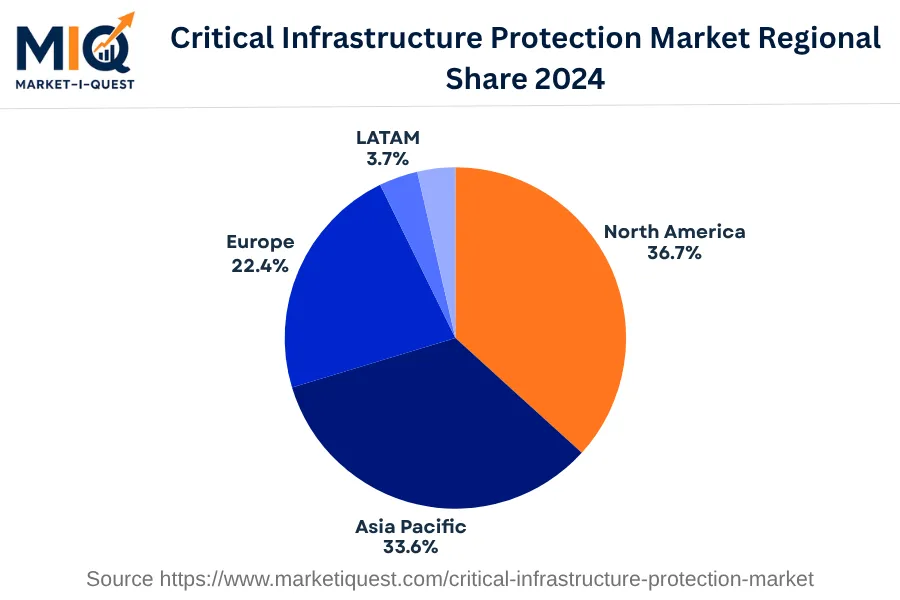
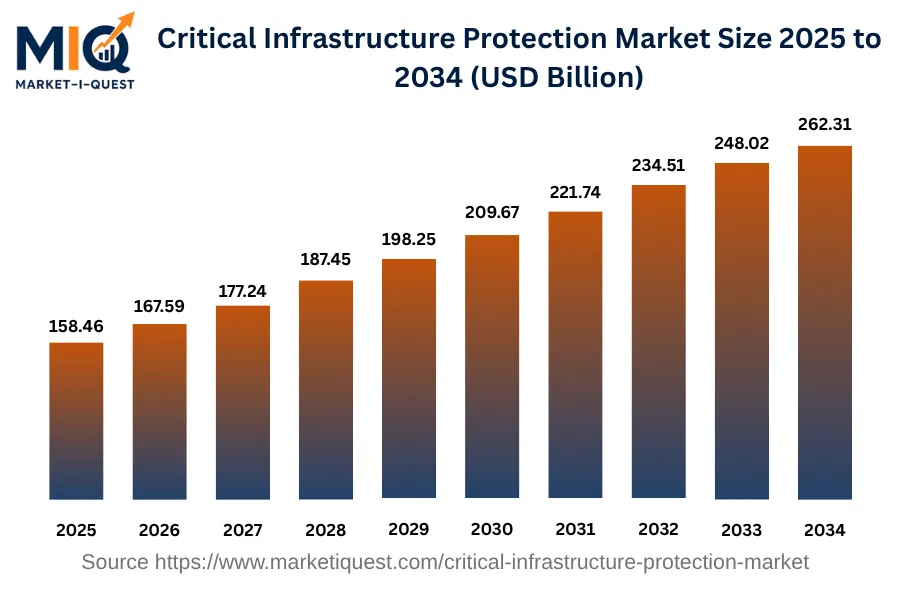
The Critical Infrastructure Protection Market size in 2025 is projected to be $158.46 billion, up from $149.83 billion in 2024. By 2034, the market size is estimated to reach $262.31 billion, reflecting a CAGR of 5.76% over the period from 2025 to 2034. The growth trajectory from 2025 to 2034 involves a steady escalation; over these years, infrastructural advancements and policy regulations are set to play a pivotal role in preserving and augmenting the critical infrastructure, thereby boosting the industry's size. Notably, the regional market share in 2024 was distributed among several regions: North America held a majority with 36.74%, closely followed by Asia Pacific at 33.58%. Europe was accounted for 22.41%, while Latin America and the Middle East and Africa constituted smaller shares of the market at 3.68% and 3.59% respectively.

Key Takeaways

  • By Technology -Cyber Security held the commanding position accounting for a major market share in 2024.
  • By Service - Managed led as the most entrusted service type in the Critical Infrastructure Protection market during the base year.
  • By End Use Industry - Transportation Services dominated
  • accounting for a significant share in 2024.
critical-infrastructure-protection-market market size

Key Driving Factors

Government Regulations on National Security

One significant driver of the Critical Infrastructure Protection market is the implementation of stringent government regulations around national security. Different governments worldwide mandate the protection of critical infrastructure to avoid potential disruptions that could severely impact national security or their population's health and safety. For instance, in the United States, the Patriot Act and the Homeland Security Act provide guidelines for critical infrastructure protection across various sectors including utilities, transportation, and communications. These regulations compel businesses in pertinent industries to invest in security solutions, thus propelling the Critical Infrastructure Protection market.

Influx of Cybersecurity Threats on Critical Infrastructure

The escalating frequency and sophistication of cybersecurity threats against critical infrastructure are another potent propellant for the Critical Infrastructure Protection market. Cybercriminals increasingly target critical infrastructure like power grids, transportation systems, and communication networks as they present a high-value target with potentially substantial impact. These cyber-attacks endanger not only the economy, but also national security and public safety. Consequently, owners and operators of these infrastructures are prioritizing investments in advanced security solutions, including those for intrusion detection, threat intelligence, and incident response, all of which are critical components of the growing Critical Infrastructure Protection market.

Market Evolution by Timeline

2019-2023
During this period, the main buyers of critical infrastructure protection solutions were predominantly government and private sector entities that were invested in the protection of energy, transportation, and telecommunications infrastructure. North America emerged as a major regional demand hub because of an increased focus on national security and infrastructure resilience. Major companies released more advanced intrusion detection systems and the increased use of artificial intelligence for threat analysis became evident. Regarding policies, the United States' Presidential Policy Directive 21 (PPD-21) on Critical Infrastructure Security and Resilience significantly influenced the adoption of these solutions. The prevailing commercial model featured subscription-based pricing and multi-year contracts, often with partnerships between technology providers and local agencies. The key identified risk was the potential for cyber-attacks to outpace the defensive capabilities of existing solutions.
2024
By 2024, the demand for critical infrastructure protection solutions saw an increase from sectors such as defense and healthcare, with particularly high demand witnessed in Asia due to escalating cyber threats. Drone-based surveillance technology was introduced as a new entrant in the market, offering a new layer of physical security. Regulatory standards like the European Programme for Critical Infrastructure Protection (EPCIP) pushed for stronger measures targeting infrastructure protection. Commercial models shifted towards integrated solutions encompassing both physical and cyber threat protection, and pricing models started focusing on tailored solutions based on specific industry requirements. The main risks included potential vulnerabilities existing within complex integrated systems, requiring advanced threat analysis.
2025-2029
During these years, buyers from banking and finance sectors also started expressing interest in critical infrastructure protection solutions. The Middle East increased its demand driven by concerns about potential geopolitical risks. Technological integration saw developed interoperability between different physical and cyber security solutions, enhancing their overall efficacy. Both the U.S. Cybersecurity Maturity Model Certification (CMMC) and China's Multi-Level Protection Scheme (MLPS 2.0) incentivized advancements in system protection standards. Value-based pricing models became popular, with contracts encompassing response services in case of breaches. The primary risk was the increasing sophistication of cyber threats, necessitating continuous adaptation and development of protection technologies.
2030-2034
By 2030-2034, Europe registered a surge in demand as buyers from the utilities and waste management sectors utilized critical infrastructure protection solutions to mitigate risks related to complex cyber-physical systems. Companies began experimenting with quantum computing solutions to create next-level intrusion detection systems. Regulatory frameworks such as the Directive on the European Programme for Critical Infrastructure (DEPCI) encouraged stricter tier-based compliance. Comprehensive pricing models that incorporated prevention, detection, and response services became the norm. Conversely, the key risk was the probable shortage of skilled workforce to meet the growing complexity of threats, calling for considerable investment in training and talent acquisition.

Future Market Outlook

Future Opportunities

The ongoing evolution of the Critical Infrastructure Protection Market indicates substantial future opportunities, particularly in the realm of advanced technologies and regulatory compliance. For instance, the introduction of the General Data Protection Regulation (GDPR) in the European Union in 2018 set a precedent for broader regulatory scrutiny across global markets, incentivizing infrastructure providers to enhance their data protection frameworks. Following this, organizations are increasingly prioritizing compliance with cybersecurity regulations, driving demand for consulting services that address compliance with regulations like the Health Insurance Portability and Accountability Act (HIPAA) in healthcare sectors. In 2023, various companies, including Palo Alto Networks, have expanded their offerings to include cybersecurity mesh architectures, which allow organizations to secure their distributed networks comprehensively. The integration of artificial intelligence and machine learning into threat detection capabilities presents opportunities for service providers to offer more adaptive solutions to clients, thereby reducing response times to potential threats. Additionally, the growing emphasis on public-private partnerships, particularly in the United States, facilitates collaboration in infrastructure projects, boosting resilience strategies. As countries like Germany continue to focus on national security regulations, there is a clear trajectory toward enhancing sector-specific solutions that align with broader geopolitical considerations. These evolving dynamics signal a shift, emphasizing the need for continuous improvement in infrastructure protection strategies and technologies.

Segmentation Analysis

By Technology

The Technology market is divided into subsegments including Cyber Security and Physical Security, with Cyber Security accounting for the largest revenue share while Physical Security is expected to grow at the fastest CAGR during the forecast period.

Largest Revenue Share

Cyber Security

Market Share Leader

Driven mostly by increasing digitization and technological advancements, Cyber Security subsegment holds the largest share in the market. The extensive spread of IoT devices and vast amounts of data being generated worldwide have upped the ante for businesses to protect themselves against cyber threats, hence driving the demand for cyber security solutions. Geographically, the developed regions with high levels of internet penetration and the presence of a significant number of tech enterprises, particularly North America, have been major revenue contributors. Stringent regulatory requirements for data protection also act as a driver for this subsegment. Businesses, to ensure they meet such regulatory compliances, invest heavily in securing their digital environments. Add to this, the increased sophistication of cyber threats makes the pursuit of comprehensive cyber security solutions a high purchase priority. The cost of switching cyber security providers is also significantly high due to the potential risk of vulnerabilities during the transition process, promoting customer retention. Therefore, the cyber security subsegment is leading today in terms of revenue.

Fastest CAGR

Physical Security

Forecast Period Growth Leader

The Physical Security subsegment is poised for the fastest growth, driven primarily by its increasing adoption across various industries such as retail, banking, and transportation. The fast-paced urbanization and growth of smart city initiatives have prompted an imperative need for advanced security systems capable of meeting diverse security concerns. Additionally, technology developments such as AI-powered surveillance cameras and biometric access controls provide catalysts for growth. On the flip side, the costs related to the purchase, installation, and maintenance of these systems can act as barriers. Yet, we anticipate overcoming of these barriers partly through partnerships with tech firms that can give access to affordable solutions. Also, the shift towards cloud-based security systems might lower the upfront capex for clients while offering scalable solutions. Near-term risks include data privacy concerns and regulatory challenges, especially in regions with stringent data protection laws. Nonetheless, the necessity for robust security measures in a rapidly urbanizing world lends strong growth potential to this subsegment.

By Service

The service market is categorized into subsegments including Consulting, Managed, Risk Management, and Maintenance & Support services. In the base year 2024, Managed services command the largest revenue chunk while the Risk Management services expected to present the most robust CAGR during the forecast period.

Largest Revenue Share

Managed

Market Share Leader

Managed services have dominated the market revenue in 2024 because they provide businesses the unique blend of cost-effectiveness and efficiency. As businesses increasingly understand the inherent complexities and evolving security threats, outsourcing day-to-day management responsibilities and functions becomes an attractive proposition to maintain a stable and reliable infrastructure. Another prime driver is the ability of managed services to manage scale as businesses grow. Additionally, this business model allows companies to focus on core capacities while the managed service providers can deal with IT requirements. Many large corporations are opting for this model due to the availability of experienced resources without the need for in-house hiring and training, thus reducing operating expenses. Besides, enterprises across North America and Europe have been major clients for Managed services contributing substantially to the segment's revenue lead.

Fastest CAGR

Risk Management

Forecast Period Growth Leader

Risk Management services are anticipated to grow at the fastest CAGR in the coming years. The increase in cyber threats, data breaches, regulations, compliance requirements, and the increased emphasis on data privacy are major catalysts for the growth of this segment. Risk Management services provide an efficient way of identifying, assessing, and preparing for business risks impacting IT in the modern corporate landscape. The growing adoption and integration of AI and machine learning technologies is another crucial factor in accelerating the growth of this segment. Capital investments in this sector are on the rise, improving service offerings and making them more accessible to smaller businesses. However, barriers to entry remain due to the required expertise and the continuous evolution of new threats. Businesses should be cognizant of these factors when planning long-term strategies in this rapidly expanding market.

By End Use Industry

The end use industry is segregated into subsegments including Transportation Services, Energy & Power, and Others. Transportation Services secured the most substantial revenue share in 2024, while Energy & Power is projected to be the fastest-growing segment.

Largest Revenue Share

Transportation Services

Market Share Leader

Transportation Services has led the market in terms of revenue share in 2024, due to its ubiquity and indispensability across all geographic regions. As economies grow and infrastructures develop, the demand for advanced and efficient transportation services escalates. Globally, the expansion of trade and commerce, along with the rising need for home deliveries, due to the rise of e-commerce and changes in consumer buying habits, have tremendously fuelled the growth of this subsegment. Regulatory initiatives towards modernizing transport infrastructures and incentivizing green transport solutions are also key factors driving this segment. Furthermore, corporate business travel and tourism are increasingly contributing to this rise. A wide spectrum of customers, including individual consumers, businesses, and government entities, implies a broad revenue stream, thereby bestowing the largest revenue share to this segment.

Fastest CAGR

Energy & Power

Forecast Period Growth Leader

The Energy & Power subsegment is poised to grow at a swift pace. The main catalyst of this growth seeks its origin in the ever-increasing global demand for sustainable energy sources and effective power management systems. Wider acceptance is likely to be driven by innovations in technology, including advancements in renewable energy production and smart grid solutions, as well as by governmental policy efforts designed to counteract climate change and promote greener power production. Capital investments into infrastructure development and research & development, and strategic initiatives like partnerships and collaborations with technology providers to leverage state-of-the-art solutions, are enhancing the growth in this subsegment. Potential risks could be regulatory hurdles, adoption barriers in developing regions due to financial constraints, and issues related to grid connectivity and integration of renewable sources. Given these circumstances, its strong CAGR outlook is plausible indeed.

Competitive Analysis

Key Market Players

Manufacturers and OEMs

Lockheed Martin
US
BAE Systems
UK
Raytheon
US

Key Suppliers & Raw Materials

Intel Corporation
US
ZTE Corporation
China
Huawei
China

Distributors, Integrators & Channel Partners

Thales Group
France
General Dynamics Corporation
US
Northrop Grumman Corporation
US

Porter’s Five Forces Analysis

This analysis evaluates the intensity of competition and attractiveness in the critical infrastructure protection market.

Supplier Bargaining Power

Low

The large size, varied capabilities, and number of suppliers lead to low bargaining power.

Buyer Bargaining Power

Medium

Buyers are fragmented and have varied needs, resulting in moderate bargaining power.

Threat of Substitutes

Low

High switching costs and the uniqueness of critical infrastructure protection reduce threat of substitutes.

Threat of New Entrants

Low

High capital expenditure, complex regulatory compliance barriers deter new market entrants.

Competitive Rivalry

High

Numerous major players and continuous technological enhancements drive high competitive rivalry.

Regional Analysis

Geographic market dynamics and growth opportunities across key regions

Global Market Outlook

critical-infrastructure-protection-market market regional share

North America

In the base year 2024, the North American Critical Infrastructure Protection Market was largely defined by robust measures to safeguard vital systems and assets from potential threats and disruptions. Regulatory provisions, such as the United States’ Presidential Policy Directive 21 (PPD-21) and Canada's National Strategy for Critical Infrastructure, propelled stringent safeguards, driving demand for advanced protective solutions. Increased investment in cybersecurity from governments across United States, Canada, and Mexico further fuelled market growth. The penetration of technology, specifically AI and machine learning, reshaped threat detection and response mechanisms contributing to a more effective protection paradigm.

Transitioning market trends witnessed leanings toward private-public partnerships for more comprehensive coverage and bolstered defenses. The implementation of 5G technology kindled a shift in product dynamics, necessitating upgraded security protocols to combat sophisticated threats. M&A activities in the cybersecurity realm provided a thrust to the development of more robust and integrated solutions, reinforcing market trends. Key sectors such as utilities and manufacturing ramped up their security investments owing to their critical status, while retail businesses increasingly focused on safeguarding their operations from disruptions. Government entities continued to be significant customers, pursuing robust security frameworks and instating strict policies to ensure protection and continuity of critical infrastructures.

Asia Pacific

In 2024, the Critical Infrastructure Protection (CIP) market gained significant momentum in the Asia Pacific region with a primary impetus being the governmental regulations. Standards imposed about cyber-security in countries like China, India, and Australia required enterprises, utilities, and governmental sectors to invest heavily in CIP. Additionally, South Korea’s initiative towards cyber resilience stimulated technology adoption within utilities and manufacturing sectors. In China and Japan, escalating demand for secure data management solutions from healthcare and retail industries propelled the market growth. High investment in infrastructure protection against physical threats by Indian enterprises was another stimulating factor. This was replicated in key ASEAN markets where the increasing adoption of cloud services necessitated advanced protection frameworks.

The year witnessed a trend aimed at the integration of Artificial Intelligence in CIP solutions across sectors in Australia and South Korea. Governmental sectors in China and India prioritized the acquisition of cloud-based CIP solutions to counteract increasing cyber threats. A notable trend was the strategic partnerships and M&A amongst CIP solution providers, especially in Japan and key ASEAN markets, aimed at enhancing cyber-security standards. Stringent policy enforcement regarding data protection in the healthcare sector was common throughout the Asia Pacific, particularly emphasizing the implementation of effective CIP systems. In summary, governmental regulations, investments by various sectors, and technology adoptions primarily drove the CIP market in the Asia Pacific in 2024.

Europe

In 2024, the Critical Infrastructure Protection (CIP) market is a key focus in Europe due to increased cyber threats and regulatory directives. The surge in demand was primarily driven by increasing cybercrime rate against key industries like healthcare, utilities, and manufacturing. The implementation of stringent regulations, such as the European Programme for Critical Infrastructure Protection (EPCIP) and the Directive on Security of Network and Information Systems (NIS Directive), set a high standard for protection across all member states, pushing businesses to invest in CIP. Technological shift towards smart infrastructures further elevates the need for advanced security solutions. Corporations are increasingly adopting artificial intelligence and machine learning for predictive threat detection and mitigation, especially in countries where digital transformation is robust, such as Germany and the United Kingdom.

The market also saw the enlargement of major security providers through partnerships and acquisitions to address the diverse needs of the market. For example, multinational companies joined alliances to streamline cyber threat intelligence sharing. Government authorities in France, Spain, and Italy prioritized enforcing policy recommendations in the power and transport sectors to prevent interruptions in essential services.
Lastly, Central and Eastern European nations witnessed significant development, catching up with their western counterparts, thanks to strategic cooperation and investment from the European Union.

Latin America

In 2024, the Critical Infrastructure Protection market in Latin America demonstrated significant activity, shaped largely by technology adoption, government regulations, and investment dynamics. Accelerated uptake of digital technologies in key sectors including enterprise, government, healthcare, utilities, manufacturing, and retail drove sustained demand for robust, secure computer networks. Regulations across the six major countries - Brazil, Mexico, Argentina, Colombia, Chile, and Peru - fostered a climate conducive to market activity. Each government implemented policies to ensure the security of their critical infrastructures, stimulating growth in the region. Additionally, increased investment in cybersecurity solutions by prominent multinational corporations played a pivotal role in market expansion.

Trends observed during 2024 included a shift toward cloud-based solutions in Brazil and Mexico, allowing these countries to maintain the integrity of their systems while maximizing operational efficiency. In Argentina and Colombia, partnerships and mergers & acquisitions provided firms with new strategies to scale up and diversify their portfolios. National regulations in Chile and Peru prioritized enhancing policy enforcement mechanisms in a bid to assuage public concerns about the vulnerability of critical infrastructure. This directed focus towards improving the quality of cybersecurity services, shaping the procurement patterns across LATAM countries. Thus, 2024 exhibited a dynamic market environment with strong growth catalysts in the Critical Infrastructure Protection landscape in Latin America.

Middle East & Africa

In 2024, the Critical Infrastructure Protection (CIP) market in the Middle East and Africa showed significant growth, propelled by diverse drivers. Regulatory standards like Saudi Arabia’s National Cybersecurity Authority fueled demand, as entities aimed to fortify digital safeguards. The adoption of advanced technologies, like IoT devices in United Arab Emirates' oil and gas sector, heightened the need for robust security measures. Nigeria capitalized on foreign investment, enhancing CIP in crucial sectors such as utilities and telecom.

Trends echoed these drivers. Entities across the board, particularly in government and healthcare sectors of countries such as Kenya and South Africa, increasingly prioritized fortified digital infrastructures. The surge in cybersecurity partnerships and M&A illustrated this – as exemplified by Israel's active cybersecurity ecosystem. The rising use of blockchain technology in financial services sector across Egypt reshaped CIP strategies. Enforcement of data protection policies emphasized the need for comprehensive CIP, particularly in sectors handling sensitive information like retail and manufacturing. Thus, through 2024, the CIP market in Middle East and Africa was catalyzed by evolving regulations, technology adoption, strategic investments, and innovative partnerships. The momentum was likely to continue, emphasizing the importance of CIP across critical sectors.

Recent Industry Developments

Latest market innovations, product launches, and strategic initiatives

December 2025

CiTech signed a three-way NDA with Babcock International and Draganfly Inc. to pursue strategic collaboration for defence and security capabilities across the Asia-Pacific region, covering border security, maritime security, and critical infrastructure protection.

September 2025

The U.S. Federal Energy Regulatory Commission (FERC) proposed approval of CIP Reliability Standard CIP-003-11, requiring entities to mitigate risks from coordinated cyberattacks on low-impact facilities through enhanced remote user authentication and malicious communication detection.

Frequently Asked Questions