Cell Expansion Market Snapshot

Key Players

  • Becton Dickinson and Company (US)
  • Thermo Fisher Scientific Inc. (US)
  • Merck KGaA (Germany)
  • Danaher Corporation (US)
  • Terumo Corporation (Japan)
  • Miltenyi Biotec (Germany)
  • Stemcell Technologies (Canada)
  • GE Healthcare (US)
  • Corning Incorporated (US)
  • Lonza Group (Switzerland)

Market Size

Base Year 2024
$21.59 Bn
CAGR
12.97%
Forecast 2034
$73.09 Bn

Market Segments

By Product
  • Cell Culture Media
  • Bioreactors
  • Cell Growth Supplements
  • Cell Counting Instruments
By Cell Type
  • Adherent Cells
  • Suspension Cells
  • Stem Cells
  • Primary Cells
By Application
  • Biopharmaceutical Production
  • Regenerative Medicine
  • Tissue Engineering
  • Stem Cell Research
  • Others

Market Dynamics

Drivers
  • Rising chronic disease prevalence
  • Increased biopharmaceutical demand
Restraints
  • High equipment cost
  • Strict regulatory policies
Opportunities
  • Rising prevalence of chronic diseases
  • Advancements in regenerative medicine

Market Size

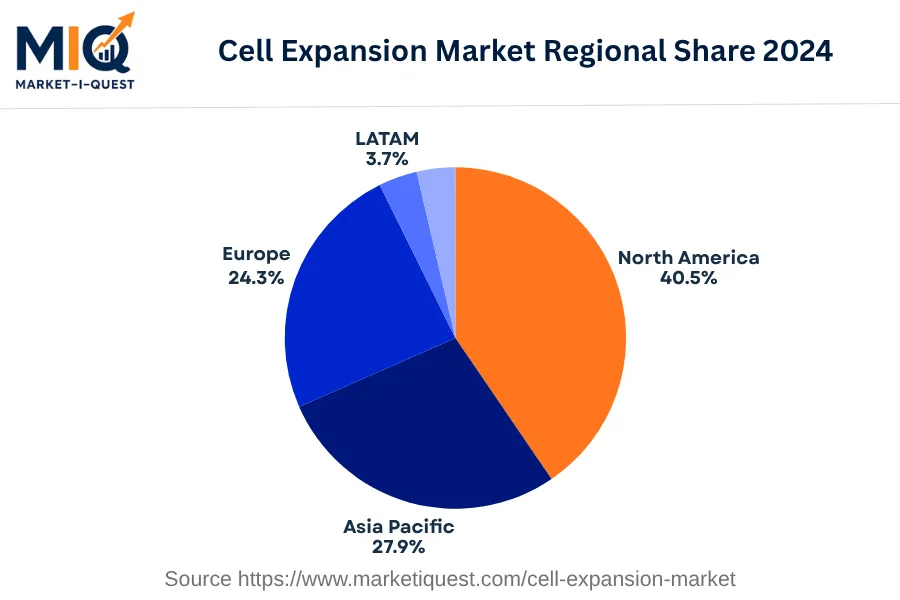
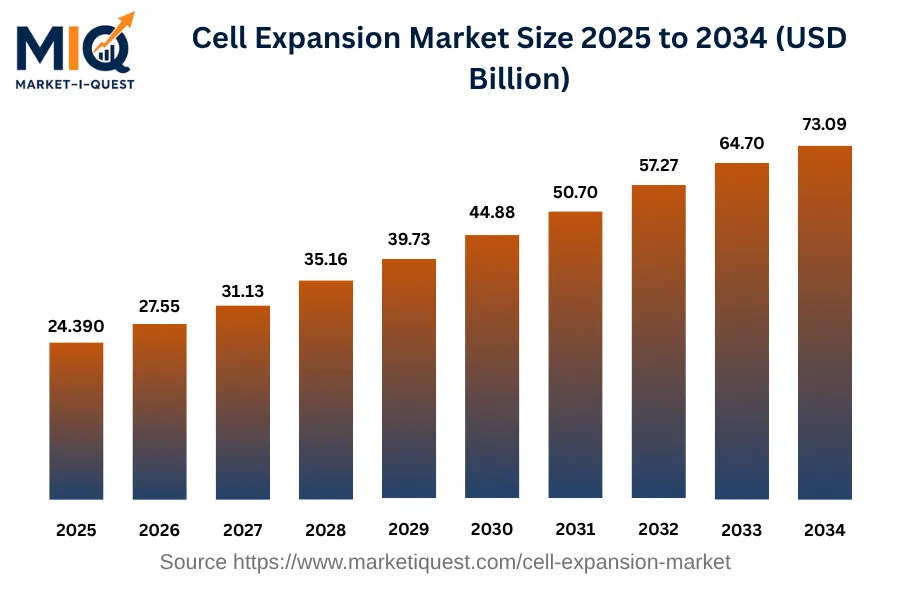
The Cell Expansion Market valued at USD 24.39 Billion in 2025 and is expected to reach USD 73.09 Billion by 2034, growing at a CAGR of 12.97%. This steady rise in market value can be traced back to 2024, when the market stood at USD 21.59 Billion, signifying a significant upward trajectory in just a year from 2024 to 2025. The growth over the almost decade-long period from 2025 to 2034 highlights an enduring expansion of this market. This rising trend is evidence to the expanding applications and increasing demand in this sector. However, the regional share distribution indicates North America holding the largest share at 40.48%, followed by Asia Pacific at 27.93%. Europe came in close with a 24.28% share, while both Latin America and the Middle East and Africa held nearly equal shares, each at approximately 3.65%.

Key Takeaways

  • By Product - Bioreactors led the market with a significant portion in the base year.
  • By Cell Type - Stem Cells held a major share of the market.
  • By Application - Biopharmaceutical Production led indicating the surging demand.
cell-expansion-market market size

Key Driving Factors

Increased Prevalence of Chronic Diseases

In recent years, a significant rise in chronic diseases such as cancer, diabetes and autoimmune disorders globally are witnessed. Many of these conditions require innovative and effective therapeutic solutions, for which cell expansion techniques are crucial. They play a vital role in developing regenerative medicines and biological drug discovery processes linked with these diseases. Cell expansion, used to cultivate cells from a single cell or cell strains, supports these treatments by promoting cell development. This growing demand for effective treatment of chronic diseases is an essential factor driving the expansion of the cell expansion market.

Surge in Biopharmaceutical and Biotechnology Industries

The rise in biotechnology and biopharmaceutical sectors is a strong driver in the cell expansion market. These industries heavily rely on cell-based products for drug discovery and the formulation of novel therapeutic agents. Such formulations require the cultivation of different types of cells which facilitates drug testing without the risk of human trials. Furthermore, these industries use cell expansion techniques in stem cell research and antibody production. The growing importance of these sectors enforces a direct positive impact on the cell expansion market as techniques and products related to cell expansion become increasingly essential.

Market Evolution by Timeline

2019-2023
The demand for cell expansion was primarily driven by biopharmaceutical companies and diagnostics centers, primarily located in North America and Europe due to their research capabilities and funds. Supplies came from companies investing heavily in their R&D, such as Thermo Fisher and Becton Dickinson, launching several advanced cell expansion products. Regulations were marked by stringent FDA policies, concerning the safety and efficacy of cell-based products. Commercially, pricing was dependent on the technology and type of cells, contract types involved long-term order commitments. The biggest risk during this period was product failure which could lead to significant losses due to the high cost of R&D.
2024
In 2024, a rise in demand for cell expansion witnessed from academic and research institutes specifically in developing regions such as Asia-Pacific due to the increasing rise towards advanced therapies. Technologies such as AI and machine learning started integrating into the cell expansion systems by market leaders such as GE Healthcare. Regulatory landscape influenced by new regional and international standards guiding cell expansion process. Commercially, partnership and collaborations gained pace for development and distribution of products. Market risk was driven by the potential data breaches from the integrated advanced technologies.
2025-2029
During this period, the demand for cell expansion might rise in the biotechnology sector, especially in regions such as Middle East and Latin America due to advancements in molecular and cell biology. The supply side will likely be characterized by the maturing of integration of artificial intelligence in the cell expansion technology. Policies is expected to impact by the World Health Organization's guidelines on good manufacturing practices. Typical commercial model might include the lease of equipment with training for widespread usage. Risks will likely involve in this period related to the replication and quality control of expanded cells
2030-2034
By this period, the consumer demand for cell expansion might continue to rise due to the increasing prevalence of chronic conditions and demand for regenerative medicines. On the supply side, the implementation of next-gen cell expansion systems will likely gain maturity, complete with machine learning algorithms and automation. The FDA might update regulations regarding concerns arising within development and manufacturing of cell-based medicinal products largely influenced the cell expansion processes. The commercial model will likely shift towards pay per use with SLA contracts, keeping maintenance and upgrades in mind.

Future Market Outlook

Future Opportunities

Future opportunities within the cell expansion market are increasingly tied to the rise in demand for regenerative medicine applications, especially in areas such as chronic disease management and tissue engineering. The growing focus on patient-specific treatment solutions is driving biotechnology firms for exploring novel cell lines and expansion methods, with a notable example being the partnership between Athersys Inc. and the University of Utah for developing cell-based therapies targeting neurological disorders. Regulatory approval processes, exemplified by the FDA's accelerated pathways for innovative therapies, provide a supportive environment for companies to bring new cell-based products to market more quickly. Countries such as Japan have also begun adopting policies that supports the commercialization of regenerative medicine products. Moreover, the mainstream acceptance of cell therapies in treating conditions such as cancer is fostering investments into research, as evidenced by the joint venture between Bristol-Myers Squibb and Celgene focused on advancing CAR T-cell therapies. The significant demand for efficient manufacturing processes is further highlighted by the ongoing development of closed-system technologies, and companies such as Merck KGaA are addressing these requirements through their equipment advancements.

Segmentation Analysis

By Product

The market is divided into subsegments including Cell Culture Media, Bioreactors, Cell Growth Supplements, and Cell Counting Instruments. Bioreactors accounted for the largest revenue share while Cell Growth Supplements are expected to grow at the fastest CAGR during the forecast period.

Largest Revenue Share

Bioreactors

Market Share Leader

Bioreactors, the vital component of the cell culture market, held the majority share in terms of revenue in 2024. Its gravitas lies in its necessity across a wide range of bio-industries including biopharma, agri-food, and bioenergy. Its crucial role in cell culture growth and maintenance, fermentation and bio-processing ensures consistent demand. Further, its capacity for large-scale production makes it indispensable to the industry. Technological advancements and stringent regulatory standards have increased demand for high-quality, industrially manufactured bioreactors which contributes to their leading market position. Moreover, the commercialization of biosimilars and monoclonal antibodies further increases the demand as they require bioreactors for mass production. Geographic regions particularly North America and Europe, due to established biotech infrastructure and resources, contribute substantially to the bioreactors market value.

Fastest CAGR

Cell Growth Supplements

Forecast Period Growth Leader

Cell Growth Supplements represents the sector within the market that's projected for the fastest growth. This growth is attributable to a several factors. Primarily, the increasing focus on cell-based research in areas such as stem cells, cancer and genetic disorders has increased demand. These supplements accelerate cell proliferation while ensuring their viability, aspects that are of cardinal importance in medical and bio-chemical research. Advanced research in proteomics and genomics has further highlighted the demand for these supplements. However, some adoption barriers exist such as high costs and the demand for stringent quality control. Technological advancements, development of cost-effective solutions and strategic collaborations.

By Cell Type

The market is divided into subsegments including Adherent Cells, Suspension Cells, Stem Cells, and Primary Cells. Stem Cells accounted for the largest revenue share, while Suspension Cells is expected to grow at the fastest CAGR during the forecast period.

Largest Revenue Share

Stem Cells

Market Share Leader

Stem cells offer a lucrative opportunity in the cell market due to their unique capability to fight various diseases as well as their potential applications in tissue engineering and regenerative medicine. These cells have a significant role in treating debilitating conditions, such as cancer, which has increased the demand from medical and pharmaceutical industries. Moreover, there has been a steady increase in the number of clinical trials using stem cells. These factors, along with significant financial investments in R&D, have contributed to the sizable revenue share of this subsegment. Furthermore, several countries around the world are lifting restrictions on stem cell research, further fostering demand. The broad therapeutic potential of stem cells justifies the expenses, leading to a larger market share.

Fastest CAGR

Suspension Cells

Forecast Period Growth Leader

Suspension Cells are projected to observe the fastest growth over the forecast period. This can be attributed to their ease of handling and scalability in bioreactors, which makes them ideal for large-scale, high-throughput applications, such as protein production, drug screening and development. The cell's adaptability for growth in a suspension culture is highly desirable for biopharmaceutical industries and academia for therapeutic protein production. Technological advancements in cell culture methods, complemented by robust investments in R&D. The demand for high-throughput cell-based assays in drug discovery is expected to sustain the growth trajectory.

By Application

The application-based market segment consists of Biopharmaceutical Production, Regenerative Medicine, Tissue Engineering, Stem Cell Research, and others. In the base year of 2024, Biopharmaceutical Production represented the largest revenue share, while Stem Cell Research is poised to be the fastest growing subsegment.

Largest Revenue Share

Biopharmaceutical Production

Market Share Leader

Biopharmaceutical production stands as a paramount subsegment due to several driving dynamics. These pharmaceuticals, derived from biological sources, play a significant role in treating numerous diseases, including life-threatening and chronic diseases such as cancer, diabetes, and rheumatoid arthritis. The high prevalence of such diseases drives demand for advanced treatment, revolving around biopharmaceuticals and stimulating market growth. Regulatory guidelines favor the use of biopharmaceuticals due to their effectiveness and safety profile. Key geographic markets include North America and Europe, both advanced in technological capabilities and boasting robust healthcare infrastructure. Moreover, biopharmaceutical production involves intricate processes, imparting high switching costs, and thereby maintaining a steady consumer base.

Fastest CAGR

Stem Cell Research

Forecast Period Growth Leader

Stem Cell Research, given its promising therapeutic potential, presents the fastest growth trajectory among the subsegments. Steady advances in technology and scientific understanding are propelling its expansion. Advanced techniques, such as organ-on-a-chip and mini-brain model studies, augment the potential of stem cell research, acting as catalysts for growth. Partnerships, capital expenditure in research and academia and policy support at national and international levels also boost the prospects of stem cell research. The demand is driven by its potential in regenerative medicine and personalized medicine areas that are increasingly capturing clinical and research interest.

Cell Expansion Market Competitive Analysis

Key Market Players

Manufacturers / OEMs

Thermo Fisher Scientific Inc.
US
Merck KGaA
Germany
Terumo BCT
US

Key Suppliers & Raw Materials

Sartorius AG
Germany
Danaher Corporation
US
Corning Incorporated
US

Distributors, Integrators & Channel Partners

STEMCELL Technologies Inc.
Canada
Miltenyi Biotec
Germany
Bio-Techne Corporation
US

Porter’s Five Forces Analysis

An analysis of the cell expansion market’s competitive dynamics and attractiveness.

Supplier Bargaining Power

Medium

Moderate power due to limited suppliers and high specialized raw materials.

Buyer Bargaining Power

High

Buyers have high power due to increasing number of cell expansion solutions.

Threat of Substitutes

Low

Low threat due to highly specialized nature of cell expansion technologies.

Threat of New Entrants

Medium

Potential new entrants face significant barriers such as high R&D costs and regulatory approvals.

Competitive Rivalry

High

Intense competition due to booming biotech sector and rapid tech advancements.

Regional Analysis

Geographic market dynamics and growth opportunities across key regions

Global Market Outlook

cell-expansion-market market regional share

North America

In 2024, the Cell Expansion Market in North America experienced considerable growth led by increased demand, technological advancements, and surges in research and development investments. Key drivers within this market included a rise in the prevalence of chronic diseases such as cancer, boosting the need for bio-pharmaceuticals, notably within the U.S., thereby amplifying cell expansion demand. Moreover, enhanced government investment in regenerative medicine and cell-based research, particularly in Canada, majorly propelled the market. Lastly, accelerated adoption of advanced technologies for cell expansion, primarily in the biotechnology and biopharmaceutical industries, largely in Mexico, stimulated market growth.

Trends within the cell expansion market were marked by significant shifts in product and technological advancements. Adapting to high-throughput screening methods, buyers displayed a heightened preference towards automated cell expansion systems. Companies increasingly involved in M&A activities, harnessing partnerships to leverage advancements in stem cell research and single-use bioreactor technologies. An example was the implementation of Good Manufacturing Practice (GMP) standards across North America, particularly in the U.S. biotech sector, improving the quality of cell manufacturing processes. Customer sectors such as healthcare, pharmaceutical and biotechnology industries largely drove the cell expansion market trends and demand in 2024. As a whole, the North American cell expansion market in 2024 showed dynamic growth influenced by disease prevalence, investment in research and technology adoption.

Asia Pacific

In 2024, the Cell Expansion Market in the Asia Pacific saw significant growth driven by multiple factors. Increased demand for cellular therapies in countries like China and South Korea due to a rise in chronic diseases spurred growth. Regulatory support for biopharmaceutical research in Australia and Japan made the business environment more conducive for market players. Increased capital investment in biotechnologies in China and advanced technology adoption in India contributed to the expansion.

With regards to trends, the market witnessed a shift towards advanced cell expansion technologies like 3D cell expansion, particularly in Japan. Consumer preference for regenerative medicine exhibited a marked increase across all key markets. Channel dynamics saw a tilt towards online orders in response to the growing digital transformation across the region. The enforcement of stringent quality and safety standards for therapeutic products, especially in the ASEAN countries, was another key trend. There were notable partnerships and mergers among international and local companies aiming to collaborate on cellular research and production. Major sectors driving this market included healthcare, pharmaceutical, and biotechnology industries. Government initiatives to promote biotechnological research was also a valuable customer segment. In conclusion, both drivers and trends of the Asia Pacific market in 2024 reflected the region's rapid advancement in biotechnology and healthcare sectors.

Europe

In 2024, the cell expansion market in Europe evidenced clear signs of growth culminating from distinct drivers and marked trends. Propelling its upward trajectory were demand factors driven by extensive biomedical research across Italy, Spain, and France, coupled with continuous technological advancements in cell expansion protocols in the United Kingdom and Germany. Government regulations across Europe, pushing to widen the scope of cell-based research, fuelled investment flow, particularly in the Nordics and Germany, subsequently invigorating the market. Furthermore, supply dynamics, particularly in Central and Eastern Europe, were optimized for stem cells, thus positively impacting overall market performance.

A shift in behaviour among key consumers, including healthcare institutions, educational institutes, and research centres, was noticeable. Specifically, these entities exhibited a rising preference for automated cell expansion systems, mirroring the global drive towards automation. Rapid technology integration into the cell expansion protocols in Germany and United Kingdom reflected this trend. Additionally, there was a substantial increase in licensing agreements and mergers among major enterprises, such as universities and biotechnology firms, especially in the Benelux countries. Lastly, a stringent adherence to quality assurance standards for cell expansion processes was widely observed, underlining a heightened focus on the credibility and utility of research outputs across the European market.

Latin America

In 2024, the Latin American (LATAM) Cell Expansion Market manifests a growing inclination toward advanced healthcare solutions. Multiple demand factors drive this market, like an aging population propelling an increased demand for regenerative medicines, higher investment in biopharmaceutical companies favoring cell-based research, and escalating technology adoption evident in procedural automation. Notable supply dynamics include Brazil's large scale stem cell production and Mexico's robust healthcare infrastructure. Pricing variations across Argentina, Colombia, Chile, and Peru further contribute to the market complexity.

The Cell Expansion Market's major trends include Brazil and Mexico's significant shift toward advanced cell therapies driven by the rise of chronic diseases. Chile demonstrates new channel dynamics with increased online sales and digital promotion of cell-line consumables and equipment. The noteworthy partnership between Colombian biotech firms and international research institutes captures the attention of the global market, reflecting LATAM's emerging relevance. Stringent policy enforcement concerning cell culturing and manipulation in Argentina emphasizes the ethical aspects of cell expansion technology. In summary, the healthcare and biopharmaceutical sectors largely form LATAM's cell expansion market in 2024, where Brazil and Mexico assume lead positions owing to their superior supply dynamics and rapid technology adoption.

Middle East & Africa

In 2024, the cell expansion market in the Middle East and Africa saw sturdy growth due to several crucial drivers and trends. Higher investment in healthcare infrastructure, particularly in countries like Saudi Arabia, UAE, and Qatar, fueled demand for cell expansion technologies. The rapid adoption of advanced technology in these regions, coupled with supportive regulatory frameworks established by the government sectors, facilitated this growth. Additionally, increasing cases of chronic diseases and cancer in Egypt, South Africa, Kenya, Nigeria, and Israel necessitated extensive research, thus driving the market.

Several trends characterized the cell expansion market that year. One was a distinct shift towards stem cell research in the healthcare sector, chiefly prompted by growing therapeutic applications. This trend was particularly evident in the UAE and Israel due to their technologically advanced healthcare systems. Another marked trend was the escalating partnerships and M&A activities among key players to enhance their market presence— prominent in South Africa and Kenya. Lastly, stringent policy enforcement towards standardization and quality control of cell-based products forged a robust foundation for market development. Thus, advancements in healthcare, strategic partnerships, and precise standard enforcement significantly determined the structure of the 2024 cell expansion market in the Middle East and Africa.

Recent Industry Developments

Latest market innovations, product launches, and strategic initiatives

June 2026

Pluri Inc. announced that its subsidiary Cellav completed U.S. cosmetic product listings for two flagship regenerative aesthetic products Regenativo+ and Placento+ clearing the path for commercial launch in the United States.

February 2026

Pluri Inc. secured a China patent grant for large‑scale immune cell expansion, complementing its prior U.S. patent and expanding IP protection across major global pharmaceutical markets including the U.S., China, and Asia‑Pacific.

Frequently Asked Questions