
Body Fat Measurement Market Snapshot

Key Players

  • Tanita Corporation (Japan)
  • Omron Corporation (Japan)
  • Inbody Co. Ltd (South Korea)
  • General Electric Company (USA)
  • Seca GmbH & Co. (Germany)
  • Fitbit Inc. (USA)
  • Hologic Inc. (USA)
  • Conair Corporation (USA)
  • Beurer GmbH (Germany)
  • Withings (France)

Market Size

Base Year 2024
$0.743 Bn
CAGR
6.9%
Forecast 2034
$1.45 Bn

Market Segments

By Product Type
  • Calipers
  • Bioimpedance Analyzers
  • DEXA (Dual-Energy X-Ray Absorptiometry)
  • Hydrostatic Weighing
  • Air-Displacement Plethysmography
  • Others
By End User
  • Hospitals & Clinics
  • Fitness Centers & Gymnasiums
  • Homecare Settings

Market Dynamics

Drivers
  • Rising health consciousness
  • Advancements in measuring technology
Restraints
  • High equipment costs
  • Lack of awareness
Opportunities
  • Rising health consciousness
  • Technological advancements in measurement tools

Market Size

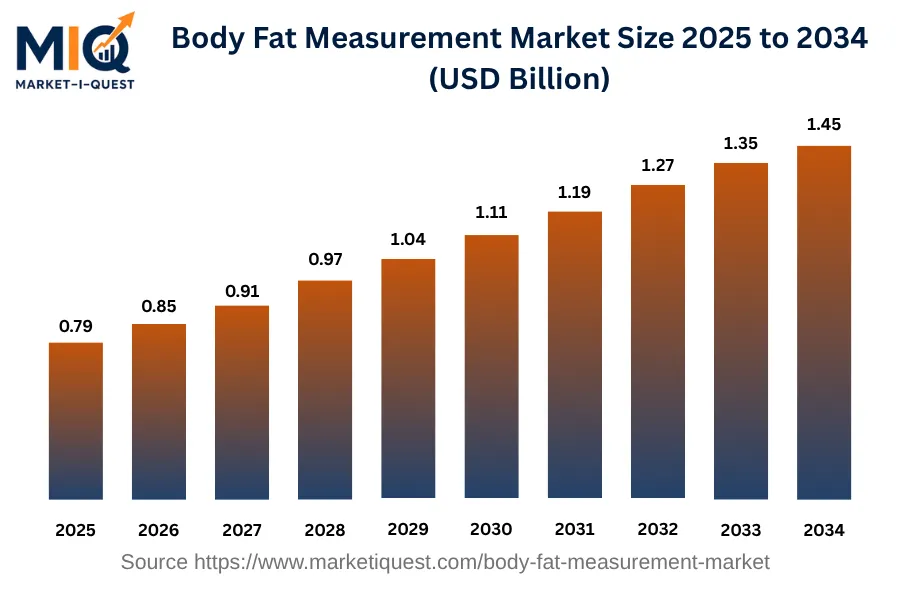
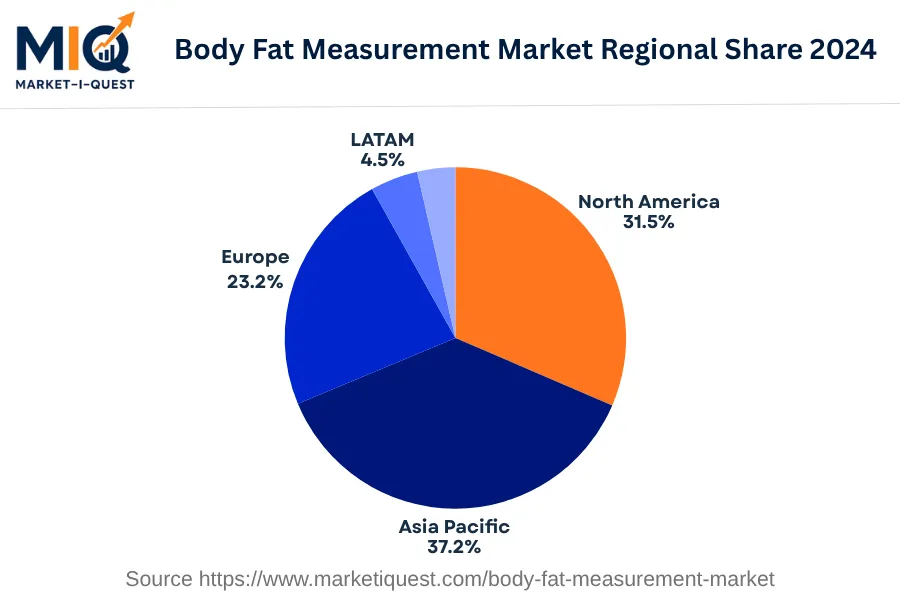
The Body Fat Measurement Market size stood at 0.79 billion USD in 2025 and is projected to reach 1.45 billion USD by 2034, recording a CAGR of 6.9%. This nearly two-fold increase over the decade reflects a steady growth path due to a rising awareness of the health implications of obesity and increased emphasis on fitness and well-being. Technological advancements have simplified body fat measurement tools, making them accessible and user-friendly. These factors have culminated in increased demand for precise, reliable tools for measuring body fat across different consumer segments. The regional market shares in 2024 were as follows: Asia Pacific at 37.2%, North America at 31.5%, Europe at 23.2%, Latin America at 4.5%, and the Middle East and Africa at 3.6%.

Key Takeaways

  • By Product Type - DEXA Analyzers held a dominant position in the Body Fat Measurement Market.
  • By End User - Hospitals and Clinics led the market accounting for a significant share.
body-fat-measurement-market market size

Key Driving Factors

Rise in Obesity-Related Health Problems

A marked increase in obesity-related health issues is one major driving factor for the Body Fat Measurement Market. According to globally accepted health reports, obesity is swiftly turning into a global epidemic, leading to severe ailments like heart diseases, hypertension, and type 2 diabetes. This rise is prompting health and fitness enthusiasts, as well as the general populace, to monitor their body fat percentage meticulously to keep such diseases at bay. Health institutions and fitness centers are therefore compelled to invest in sophisticated body fat measurement tools, in order to cater to this growing need and deliver precise results to their customers. The gravity of the issue is making body fat measurement a necessary part in regular health check-ups, fuelling the market demand.
Popularity of Home Fitness and Wellness

The proliferating trend of home fitness and wellness is another specific driver for the Body Fat Measurement Market. With the onset of the COVID-19 pandemic, the need for at-home fitness equipment and wellness appliances has escalated. This trend is driven by convenience, safety, and the increasing desire to manage personal health without going to crowded places like gyms and wellness centers. As a part of this trend, many individuals are purchasing body fat measurement devices for personal use to monitor their health regularly and accurately. This shift in consumer behavior towards an at-home health and fitness routine is consequently steering the growth of the Body Fat Measurement Market.

Market Evolution by Timeline

2019-2023
During this phase, there was higher adoption in Asia and North American regions, due to increased interest of buyers from healthcare and fitness industries in understanding body composition. Products like bioelectrical impedance analysers (BIA), whole-body air displacement plethysmography (ADP), and Dual-energy X-ray absorptiometry (DXA) were commonly supplied. However, technological integration did not see much progress with many instruments operating in silos. No significant policy or regulatory constraints were observed. But, products had to adhere to guidelines provided by health organizations like the WHO. Flat-based cost was the common commercial model prevalent. The key risk was the high equipment cost, managed by selective procurement by specialized health centers.
2024
In 2024, demand from the medical sector increased, particularly in diagnosing obesity-related issues. Products evolved with integration of AI and machine learning technologies to provide customized health advice. North America led in such tech-powered innovations. Policy-wise, stricter FDA guidelines for body fat measurement devices were introduced, specifically related to data privacy and accuracy. Subscription-based pricing models started to be adopted by many providers as a response. Delivering services online bottlenecked due to privacy concerns and challenges in online consultations, creating a major risk in this year.
2025-2029
As demand extended to the general consumer market, portable hand-held devices and smart scales became popular, many including the ability to sync with wearable technology. Asian markets saw an increased supply of these. Wearables data integration became an industry standard. Purchase decisions were typically driven by privacy features and device compatibility. Regulations focused on protecting user data while enhancing device accuracy. The 'pay-per-use' model and device sales became conventional and partnerships with fitness centers began to grow. The non-standardization of metrics across devices posed the main risk during this period.
2030-2034
Demand in countries with higher obesity rates, like the USA, surged. Devices had advanced machine learning and predictive analytics technology to guide users' health decisions. Integration with electronic health record systems became prevalent, enhancing personal health tracking capabilities. Regulations further tightened around accuracy and personal data security. The commercial model shifted towards bundled offerings, offering access to multiple health tracking services on a single platform. While data breaches posed a risk, 'Healthcare Cybersecurity' became an important compliance component for operating in this market.

Future Market Outlook

Future Opportunities

The future of the body fat measurement market is likely to be shaped by increasing consumer awareness of health metrics and the role of body composition in fitness. In 2023, as the World Health Organization underscores the importance of managing obesity and related health issues, consumers are actively seeking more precise body fat measurement options. The proliferation of health-focused applications by companies like MyFitnessPal will provide opportunities for integration of sophisticated body composition metrics. Corporate partnerships, such as that between Garmin and health organizations in 2022, highlight potential for developing robust tools for tracking body fat alongside other health indicators. Key demographics like fitness enthusiasts and health-conscious individuals are expected to drive demand, especially with products designed for home use, like smart scales that connect to mobile apps. Academic research from institutions such as Harvard University could unveil new methodologies in body composition analysis, fostering partnerships between tech companies and the health sector. As data privacy becomes critical for consumers, companies implementing transparent data protection measures, reflecting GDPR standards, will likely see increased adoption. Overall, grounding future initiatives in current consumer trends and regulatory standards will create opportunities for the body fat measurement market to expand its reach and technological capabilities in response to evolving health concerns.

Segmentation Analysis

By Product Type

The market is divided into subsegments including Calipers, Bioimpedance Analyzers, DEXA (Dual-Energy X-Ray Absorptiometry), Hydrostatic Weighing, Air-Displacement Plethysmography, and others. DEXA secured the largest revenue share, while Bioimpedance Analyzers is expected to grow at the fastest CAGR during the forecast period.

Largest Revenue Share

DEXA (Dual-Energy X-Ray Absorptiometry)

Market Share Leader

DEXA, short for Dual-Energy X-Ray Absorptiometry, dominated the market share in 2024 based largely on its precision and versatility. DEXA exams provide comprehensive body composition insights, enabling medical professionals to monitor bone health, identify risk of osteoporosis, and track body fat and muscle mass. Its ability to provide such diverse data made it an attractive option in various healthcare settings. The globalization of health consciousness has also helped amplify the relevancy of DEXA in multiple geographies, broadening its customer base. More countries are focusing on preventative healthcare, necessitating the need for accurate diagnostic tools such as DEXA. DEXA equipment, while higher in cost, often benefits from regulatory support due to its ability to detect potential health issues early, thus potentially lowering long-term healthcare costs. As awareness grows and emphasis shifts towards preventative health, the DEXA segment is expected to sustain its leading position.

Fastest CAGR

Bioimpedance Analyzers

Forecast Period Growth Leader

The Bioimpedance Analyzers subsegment is predicted to register the fastest growth rate in the coming years. These devices offer a non-invasive, affordable, and efficient method for body composition analysis, which boosts their appeal in cost-sensitive markets. With an expanding focus on fitness and nutrition, the rapid adoption of these analyzers within gymnasiums, fitness centers, and even amongst personal trainers is anticipated. Moreover, technological advancements are making the devices even more user-friendly, thereby improving their market penetration. Partnerships between fitness clubs and Bioimpedance Analyzers manufacturers can further fast-track this adoption. On the risks front, potential inaccuracies in results due to hydration level variations could slow down growth. However, manufacturers are investing in R&D to overcome this hurdle and thus maintain the sector’s positive trajectory.

By End User

The market is divided into subsegments including Hospitals & Clinics, Fitness Centers & Gymnasiums, and Homecare Settings, with Hospitals & Clinics commanding the largest revenue share and Fitness Centers & Gymnasiums experiencing the fastest CAGR during the forecast period.

Largest Revenue Share

Hospitals & Clinics

Market Share Leader

Hospitals & Clinics take significant charge in terms of income in the segment by end-user in 2024, driven largely by the sheer volume of potential customers they attract and service. This typically robust purchasing power allows them to invest in premium high-capacity products, serving broad patient demography. The healthcare industry, being a highly regulated sector, requires stringent quality and compliance checks, further bolstering purchases from trusted, high-cost providers. An expansive geographical footprint—extending beyond urban areas into semi-urban and rural regions—contributes to the substantial revenue generation. The nature of medical operations implies almost constant usage of equipment, yielding frequent replacement, upgrade cycles, and thereby high turnover. Factors like brand reputation, after-sales support and lifespan of the products play a significant role in purchasing decisions. Switching costs can be quite high, as it often involves system integration, compatibility checks, staff training, and potential operation disruptions.

Fastest CAGR

Fitness Centers & Gymnasiums

Forecast Period Growth Leader

Fitness Centers & Gymnasiums is the subsegment witnessing the fastest growth rate, propelled by a massive surge in health consciousness among consumers and a proliferating trend of gym cultures. Innovations in fitness technology, combined with the rapid proliferation of connected fitness applications and wearable technology, facilitate user engagement in fitness centers and gymnasiums. Capital investments in gym infrastructure, partnerships with corporate organizations for their employee wellness programs, and alliances with health insurance companies for incentivization schemes drive growth further. Barriers to adoption, however, exist in the form of competitor market saturation and high start-up costs. Near-term risks to growth include potential regulatory changes impacting business operations and the ambiguity of economic stability affecting consumer spending power on health and wellness.

Competitive Analysis

Key Market Players

Manufacturers / OEMs

Omron Corporation
Japan
Tanita
Japan
Inbody Co., Ltd.
South Korea

Key Suppliers & Raw Materials

Texas Instruments
US
Cypress Semiconductor Corporation
US
Murata Manufacturing Co., Ltd.
Japan

Distributors, Integrators & Channel Partners

CardioSales
Germany
Fitness Warehouse
UK
Complete Medical Solutions
US

Porter’s Five Forces Analysis

This analysis evaluates the competitiveness and attractiveness of the Body Fat Measurement Market.

Supplier Bargaining Power

Medium

Suppliers influence is reasonable due to few high-quality manufacturer of equipment and raw materials.

Buyer Bargaining Power

High

Individual consumers and fitness centers have ample product and technology choices resulting in high bargaining power.

Threat of Substitutes

Medium

Alternate methods of fat measurement and fitness tracking can substitute traditional body fat measurement devices.

Threat of New Entrants

Low

High development costs, technological expertise, and strong brand identities serve as entry barriers.

Competitive Rivalry

High

Several globally recognized firms are competing for market share with constant innovation.

Regional Analysis

Geographic market dynamics and growth opportunities across key regions

Global Market Outlook

body-fat-measurement-market market regional share

North America

In 2024, the North American body fat measurement market experienced significant growth driven predominantly by an escalating health-conscious population along with increased healthcare investment by both the public and private sectors. Furthermore, increasing technological advancement in body fat analyzers fuelled market growth — examples include Bio-impedance devices becoming more accessible in the U.S., and upgraded Dexa Hologic Machines gaining market traction in Canada. Consumers' growing interest in understanding their body composition analysis influenced buyer behavior within this market, notable in sectors like health and wellness, and professional sports. Specifically, adoption of body fat measurement devices accelerated in U.S. fitness firms, Canadian healthcare facilities, and Mexican professional sports teams.

Technological shifts also played a significant role: integrative hardware and software systems that track and analyze body fat data gained popularity. Moreover, policy enforcement aimed at mitigating obesity elevated the market's prominence—namely through governmental health campaigns in the U.S. and Canada promoting comprehensive body composition analysis. New partnerships and mergers became evident within the market. For instance, health tech companies started collaborating with established fitness centers and healthcare institutions to promote body fat measurement. These industry dynamics — from demand influx to technology adoption and partnerships — showcase how the North American body fat measurement market evolved in 2024.

Asia Pacific

In 2024, the Body Fat Measurement Market in Asia Pacific was characterized by increasing consumer health consciousness and rising healthcare expenditure. Driving this market was the widespread adoption of technologies such as BIA, skinfold calipers, and dual-energy x-ray absorptiometry in countries such as China, Japan, South Korea, and Australia. There was also a growing investment in healthcare and fitness infrastructure by governments and private entities, aiding in expanding the availability of body fat measurement devices. Regulatory policies promoting regular health checkups contributed to increased demand, while competitive pricing dynamics made such products affordable.

Trends observed included a surge in the popularity of smart wearable devices which measure body fat, reflecting a shift in consumer preference towards mobile health technologies. The market saw a significant increase in online sales channels, with e-commerce playing a pivotal role in the distribution of these products. Partnerships and M&As also shaped the market landscape, including across consumer electronics, sports industries, and the healthcare sector. Policies encouraging regular checkups and preventive healthcare were strictly enforced, influencing the market positively. This marked increase in concern for health and fitness was observed across key sectors like enterprise, government, healthcare, manufacturing, and retail, shaping the body fat measurement market across the Asia Pacific region in 2024.

Europe

In 2024, the Body Fat Measurement market in Europe exhibited robust growth due to various demand factors and technological advancements. With the rise in health consciousness and obesity rates, there was increased consumer demand, especially in Germany, the United Kingdom, France, Italy, Spain, the Nordics, Benelux, and Central & Eastern Europe. Regulatory authorities, particularly in the healthcare sector, promoted consumer awareness and preventive measures, which further propelled the market. Additionally, increased investment in healthcare infrastructures and the widespread adoption of technology saw the successful integration of body fat measurement capabilities into digital platforms.

The year saw a shift in consumer behavior, led by a demand for personal health monitoring and the convenience of at-home body fat measurements. Lifestyle and aesthetic factors, such as the prevalence of social fitness trends, also played a significant role. There was an upward trend in the use of smart scales and handheld body fat analyzers, with a preference for products that provide more comprehensive health data. Notably, several partnerships between traditional medical device companies and tech companies were observed, aiming to leverage cutting-edge technology in body fat devices. The European Union implemented stricter quality standards, soliciting significant improvements in device accuracy and reliability. These trends reflect a balanced focus on both user experience and the provision of highly reliable, medically significant data within the European Body Fat Measurement market.

Latin America

In 2024, the Body Fat Measurement Market in Latin America was characterized by a rise in health-conscious individuals and a surge in obesity rates. A significant driver of market growth in this period was increased demand for cost-effective technologies for body fat measurement, backed by rising health awareness in LATAM countries such as Brazil, Mexico, Argentina, Colombia, Chile, and Peru. Governments’ health regulations and investments in tertiary healthcare also spurred growth, promoting the use of high-precision devices in public hospitals and for private use. Additionally, technological adoption in the form of advanced medical devices boosted supply dynamics, resulting in competitive pricing across the region.

Observing market trends, a notable shift occurred in customer preference toward non-invasive body fat measurement devices due to the convenience they offer. The prevalence of tech-oriented solutions amplified this preference. Seemingly, the market was also affected by changing channel dynamics, with online sales gaining prominence due to the COVID-19 pandemic. Healthcare providers increasingly adopted fat measurement devices for better diagnostics. Meanwhile, partnerships and mergers among body fat measurement device manufacturers strengthened their market presence, enforced by standardization policies for device accuracy. The consumer retail sector registered notable growth, driven by demand for personal use devices.

Middle East & Africa

In 2024, the Body Fat Measurement market in the Middle East and Africa witnessed significant growth due to increased health awareness and investments in health technologies. Driving factors included high demand due to rising obesity rates, particularly in countries like Saudi Arabia, South Africa, and UAE; government health policies promoting fitness, such as Saudi Arabia's 'Healthy Living' initiative; and increased investment by global healthcare companies in market development and technology adoption across the region. Additionally, rising health consciousness among middle- and high-income groups stimulated the uptake of advanced body fat measurement devices.

Key trends included changing consumer behavior, with a shift towards non-invasive fat measurement technologies owing to their high convenience and accuracy. Digital platforms for body fat analysis also gained traction, coerced by COVID-19 pandemic’s boost to telehealth, particularly among younger populations in countries like Israel, UAE, and Kenya. M&A activities were noticed, as multinational companies sought collaborations with regional healthcare institutions to strengthen their market presence. In terms of sectorial application, beyond healthcare facilities, devices were increasingly utilized by fitness centers, sport professionals, and even retail consumers prioritizing personalized health management. The tolerance for these devices was amplified due to their competitive pricing strategy, scaled-up production, and enhanced accessibility across the region's diverse markets.

Recent Industry Developments

Latest market innovations, product launches, and strategic initiatives

February 2026

Researchers secured FDA clearance for an open-source artificial intelligence tool called Comp2Comp. Instead of requiring a separate test, this software automatically extracts precise body composition data, like muscle and fat levels, from standard CT scans that patients have already taken for other medical reasons.

September 2025

InBody expanded the medical use of its H30 home scale by releasing new guidelines for tracking visceral fat in women with hormonal disorders. This marked a strategic market shift toward using home sensors to detect hidden fat stored around internal organs, which standard weight scales completely miss.

Frequently Asked Questions