
Aerosol Container Market Snapshot

Key Players

  • Ball Corporation (United States)
  • Crown Holdings Inc. (United States)
  • Nampak Limited (South Africa)
  • Exal Corporation (United States)
  • West Rock (United States)
  • Colep Portugal S.A. (Portugal)
  • BWAY Corporation (United States)
  • Ardagh Group (Ireland)
  • Bharat Containers (India)
  • CCL Industries Inc. (Canada)

Market Size

Base Year 2024
$8.38 Bn
CAGR
5.38%
Forecast 2034
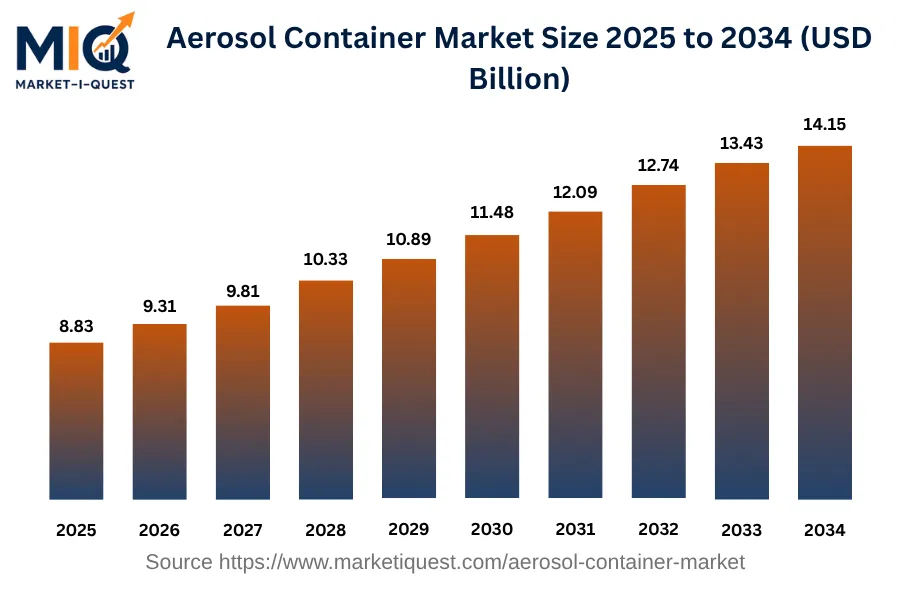
$14.15 Bn

Market Segments

By Type
Disposable, Reusable, Valves
By Material
Metal, Plastic, Glass
By Capacity
Small (Less than 100 mL), Medium (100–250 mL), Large (Greater than 250 mL)
By End Use
Personal Care, Household Care, Pharmaceuticals, Industrial, Others

Market Dynamics

Drivers
  • Increasing environmental consciousness
  • Rise in consumer goods demand
Restraints
  • Environmental regulations
  • Consumer health concerns
Opportunities
  • Increasing environmental awareness
  • Innovations in recyclable materials

Market Size

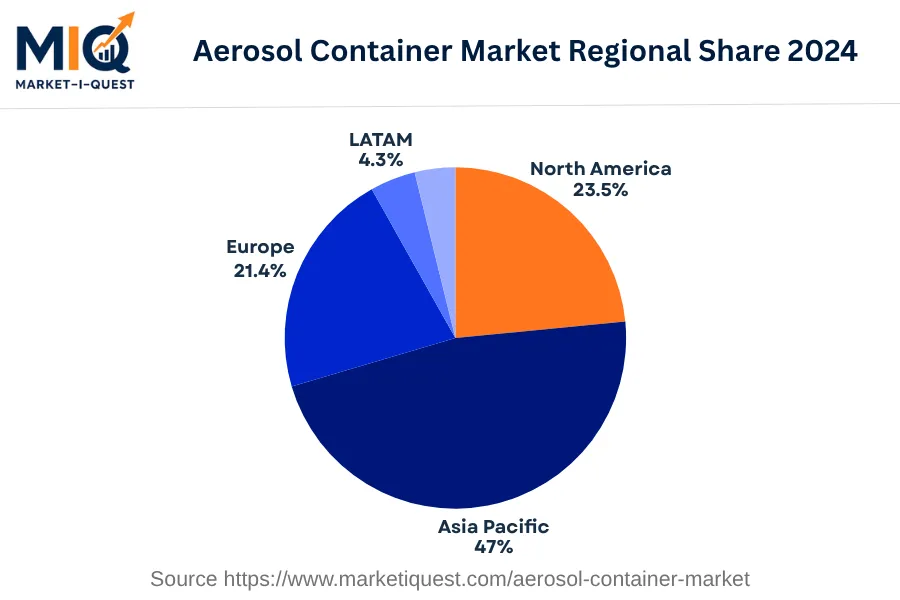
The Aerosol Container Market, which was valued at USD 8.83 billion in 2025, is projected to expand to USD 14.15 billion by 2034. The Compound Annual Growth Rate (CAGR) from 2025 to 2034 is 5.4%. The increase reflects steady growth over this period due to various determinants. The market growth can partially be attributed to changes in the economic environment and consumer behavior as well as advancements in the production technology of aerosol containers. In terms of regional share in 2024, Asia Pacific held the lion's share of the market with 47.0%, followed by North America with 23.5% and Europe with 21.4%. Meanwhile, the shares of Latin America (LATAM) and the Middle East and Africa (MEA) regions were significantly lower, registered at 4.3% and 3.8% respectively.

Key Takeaways

  • By Type - Disposable aerosol containers held a significant position.
  • By Material - Metal was the leader accounting for a major share.
  • By Capacity - Medium (100-250 mL) aerosol containers were predominant in the market.
  • By End Use - Pharmaceuticals emerged as the top subsegment in the Aerosol Container Market.
aerosol-container-market market size

Key Driving Factors

Expansion of DIY (Do-it-yourself) Consumer Segment

As an experienced market analyst, a significant driver propelling the aerosol container market is the increased popularity of the DIY culture, particularly within the home improvement shopper demographic. Aerosol containers are heavily utilized in a multitude of DIY projects, from spray painting to pest control application or lubrication tasks. The convenience and efficiency offered by aerosol containers substantially simplifies these tasks and delivers professional-grade results, thereby appealing to the DIY consumer base. Hence, as this group continues to grow due to cost-saving and personal satisfaction derived from their DIY endeavours, their growing preference towards aerosol products acts as a key drive in propelling the aerosol container market.
Implementation of Stringent Environmental Regulations

Another critical impact on the aerosol container market is the implementation of stringent environmental regulations. Governments and regulatory bodies worldwide are scrutinizing the environmental impact of packaging materials, including aerosol containers. This scrutiny has led manufacturers to innovate their aerosol container designs, shifting towards environmentally-friendly materials like aluminium and steel, which are recyclable and less harmful to the environment compared to traditional aerosol materials like CFCs and HCFCs. In regions like Europe and North America where such legislation is already being enforced, manufacturers are proactively adapting to 'green' manufacturing processes, a pivotal element in driving the demand for these eco-friendly aerosol containers.

Market Evolution by Timeline

2019-2023
In 2019-2023. the key buyers of aerosol containers were personal care and pharmaceutical industries primarily from North America and Asia Pacific regions. These regions had a steady demand due to the rising awareness for hygiene and healthcare. On the supply side, manufacturers like Ball Corporation and Crown Holdings adopted high manufacturing standards, such as BRC Global and SQF, to ensure product quality. Despite the increasing consumer demand and technological advancements, supply was constrained largely due to price fluctuations of raw materials (aluminium, steel). Regulatory bodies, like the FDA and European Commission, played crucial roles by enforcing stricter regulations on chemical usage in aerosol form, undergoing changes like banning certain chemicals. The commercial model revolved around long-term contracts and partnerships with raw material suppliers to balance price volatility risk.
2024
In 2024, the demand from pharmaceutical and cosmetic sectors for aerosol containers continued to rise notably from countries like India and China. On the supply side, new automation technology in production was piloted, enhancing the efficiency of manufacturing. However, such high-end technology implementation was not fully mature, leading to occasional supply disruptions. Besides, environmental concerns continued to tighten regulatory constraints from agencies like the EPA. The emerging circular economy trend started to impact commercial models as manufacturers began to adopt recycling practices into their processes and more contract manufacturing partnerships formed. The major risk factor was adapting to regulatory changes and finding balance in the transition to more sustainable practices.
2025-2029
Between 2025-2029, the aerosol container market began diversifying its buyer base amidst rising demand from home care, automotive, and industrial sectors, specifically from emerging economies. Improved, environmentally friendly aerosol technologies began gaining traction among manufacturers. However, the struggle to implement these changes amidst increasing raw material prices remained a common issue. Regulation-wise, single-use plastic bans across many countries propelled a move towards more sustainable alternatives. The commercial model saw a shift towards recycling schemes that boosted the market's sustainability credentials. Still, manufacturers grappled with the challenge of meeting high demand while transitioning to eco-friendly alternatives.
2030-2034
By 2030-2034, demand was driven largely by industries moving towards sustainable packaging, with particular interest from Europe and Asia-Pacific. Manufacturers began to attain maturity in implementing eco-friendly aerosol technologies, while constraints lightened due to stabilization of raw material prices. A significant market shift was noticed with regulations enforcing mandatory recycling of aerosol containers and banning certain harmful propellants further. As a result, manufacturers partnered extensively with waste management companies, marking a significant change in the commercial landscape. The potential risk of non-compliance with new regulations was a significant concern for industry participants.

Future Market Outlook

Future Opportunities

Future opportunities in the aerosol container market are emerging from existing regulatory frameworks and increasing consumer preferences for sustainable packaging. The ongoing transition in major markets, such as the European Union’s 2024 implementation of the Single-Use Plastics Directive, is driving manufacturers to explore alternatives that minimize single-use plastic utilization. This regulatory shift is likely to open avenues for innovations in biodegradable and compostable packaging technologies. Companies such as Unilever and Henkel are actively investing in research and development initiatives to launch new product lines that comply with these stringent regulations, indicating robust pathways for market expansion. Partnerships among manufacturers and sustainability-focused organizations are also anticipated, as seen with the collaboration between Procter & Gamble and the Ellen MacArthur Foundation, aimed at promoting circular economy practices. Moreover, the growing demand for personalized aerosol products, fueled by consumer trends towards bespoke skincare solutions, offers a ripe territory for businesses to introduce innovative formulations in customizable aerosols. As public awareness surrounding environmental issues heightens, brands that prioritize transparent sourcing and ethically produced materials are likely to gain competitive advantages. With these factors in play, the aerosol container market is expected to evolve, driven by a commitment to innovation and the adoption of sustainable practices while aligning with regulatory requirements and consumer demands.

Segmentation Analysis

By Type

The market is divided into subsegments including disposable, reusable, and valves with disposable commanding the largest revenue share and reusable being the fastest growing subsegment.

Largest Revenue Share

Disposable

Market Share Leader

Disposable products lead today's market due to several key factors. Importantly, the perceived convenience and ease-of-use associated with disposable units make them a popular choice among customers. Additionally, the standardization of sizes and shapes provides ambiguity reduction in a variety of applications, resulting in wider adoption. In certain specific geographies, regulatory mandates emphasize the use of disposable devices to maintain sanitation and safety standards, thereby driving up demand. These disposable units are often supplied through direct channels or via third-party distributors, thereby providing customers with diverse purchasing options. The purchasing criteria for disposable products hang particularly on their affordability and the low initial investment they demand, making them an attractive option for budget-conscious consumers. While the switching cost from reusable to disposable is generally low, the familiarity and habitual usage of the disposable products create user stickiness that results in sustained demand.

Fastest CAGR

Reusable

Forecast Period Growth Leader

Reusable products, despite having a smaller current revenue share, project a high compound annual growth rate (CAGR). This can be largely attributed to their long-term cost-effectiveness and the recent sustainability trends. As consumers and organizations alike are becoming increasingly eco-conscious, the adoption of reusable devices is surging. In addition to the environmental benefit, reusable products also offer robustness and durability. However, the initial cost outlay and lack of awareness among customers serve as barriers to adoption. Technological advancements such as the development of easy-to-clean and durable materials serve as catalysts for growth. Industry collaboration and public awareness campaigns can facilitate the wider acceptance and adoption of reusable devices. However, issues like regulatory shifts could pose near-term risks for the subsegment. Although the transition from disposable to reusable entails a considerable shift in customer behavior and purchasing patterns, the change is warranted by environmental considerations and long-term financial benefits.

By Material

The market, by material, is divided into metal, plastic, and glass subsegments. Based on industry logic in 2024, the metal subsegment accounted for the largest revenue share, while the plastic subsegment is expected to grow at the fastest CAGR during the forecast period.

Largest Revenue Share

Metal

Market Share Leader

In 2024, metal remains as the leading subsegment for most revenue. This is driven primarily by its vast range of unique properties that are unmatched by other materials. It is robust, durable, and resistant to numerous environmental conditions. It also provides excellent formability when heat treated, enabling a wide variety of applications in industries such as construction, automotive, aerospace, and industrial machinery. Moreover, metals' capability to be recycled and its inherent value contributes greatly to its significant market revenue. Patterns of globalization and the development of emerging economies have fostered a higher demand for metal-related products. Furthermore, varying regulations have substantiated the consumption of metal by imposing norms to use high-quality and environment-friendly materials. The supply side is equally strong with a mature chain of mining, refining, and distributing infrastructure in place across the globe.

Fastest CAGR

Plastic

Forecast Period Growth Leader

Meanwhile, the plastic subsegment is growing at a swift pace. Polymers present a cost-effective, lightweight, and strong alternative to conventional materials in several applications. Major growth drivers include evolving consumer trends, competitive pricing, and technological advancements that have enabled the diversification of plastics into a vast range of applications and products. A key enabler of plastics' growth is breakthroughs in material science allowing for improved performance characteristics and new applications. However, the plastic subsegment also faces some headwinds. Environmental concerns and regulation pose significant risks and barriers to adoption. This, coupled with the volatility of raw material prices, affects the market growth. Yet, continuous R&D, adoption of sustainable practices, and potential partnerships with government for waste management could play an integral role in mitigating these challenges and maintaining the upward growth trajectory.

By Capacity

The market is divided into subsegments including small (Less than 100 mL), medium (100–250 mL), and large (Greater than 250 mL) capacities. Among these, the medium segment accounted for the largest revenue share while the large segment is expected to grow at the fastest CAGR during the forecast period.

Largest Revenue Share

Medium (100–250 mL)

Market Share Leader

The medium (100–250 mL) segment holds the largest market share due to its universal appeal and usage in most applications. This segment represents a sweet spot in terms of size and cost-effectiveness, hence is often seen as an optimum choice for both producers and consumers. Given how well this size caters to default consumer needs across a wide array of sectors from beverages to health and beauty, the demand for this size is quite resilient. Moreover, the medium size offers a reasonable trade-off between portability and volume, making it popular among end-users. Regulatory issues around packaging sizes, particularly for certain medical and food industries, also may lean towards this size, further adding to its dominance. Due to these factors, this particular segment, being well-entrenched and versatile, manages to capture the largest share of the market revenue as compared to the other sub-segments.

Fastest CAGR

Large (Greater than 250 mL)

Forecast Period Growth Leader

The large (Greater than 250 mL) segment is projected to witness the fastest growth rate in the coming years. The fundamentals behind this growth can be attributed to factors such as improved storage capabilities, evolving consumer demands, and the move towards bulk production and packaging. Businesses are scaling up their operations to meet the rising demand and this directly influences the growing need for greater packaging sizes. At the consumer end, increased home storage, warehouse-style shopping trends, and a conscious move to reduce the frequency of purchases for environmental and practical reasons are supporting growth. However, this segment might also face constraints related to portability and regulatory policies which could influence its pace. Technological advancements in packaging design, strategic partnerships, and capital investments in the industry are acting as catalysts for this trend. Also, it's important to maintain watchfulness over possible risks like rising raw-material prices and environmental regulations that could impact this growth trajectory.

By End Use

The market is divided into subsegments including Personal Care, Household Care, Pharmaceuticals, Industrial, and Others. In 2024, the Pharmaceuticals subsegment accounted for the largest revenue share while Personal Care is expected to grow at the fastest CAGR during the forecast period.

Largest Revenue Share

Pharmaceuticals

Market Share Leader

The Pharmaceuticals subsegment leads in revenue due to several reasons. This subsegment caters to the growing global demand for medications, vaccines, and other pharmaceutical products. Additionally, factors such as medical research breakthroughs, innovation in drug discovery and increasing prevalence of chronic diseases are driving the revenue growth. Furthermore, the uptick in government healthcare expenditure and private insurance aid in capitalizing this growth. These factors and a cell of robust regulatory bodies to retain quality and efficacy of pharmaceutical products help in maintaining market exclusivity, contributing to its significance in the market. The dominance of North America and Europe, geographically, due to their developed healthcare infrastructure, better health awareness and increased healthcare spending puts pharmaceuticals subsegment at the top position for revenue generation. This trend is expected to continue into the foreseeable future.

Fastest CAGR

Personal Care

Forecast Period Growth Leader

The Personal Care subsegment is poised to grow at an impressive CAGR over the forecast period. This can be attributed to the consumer's increasing awareness about personal hygiene and wellness, coupled with escalating disposable income globally. Varied range of products, easy availability across channels and constant innovations in this space serve as catalysts for growth. In addition, sustainability and natural ingredient trends have been positively influencing purchasing decisions, encouraging companies for innovation thus, driving more adoption. High capital investment in marketing and branding activities further stimulate demand in this segment. Government initiatives promoting cleanliness and hygiene also acts as a growth booster. However, near-term risks in this segment include changes in consumer preferences and stern regulations on ingredient used. Despite these challenges, the outlook for growth in the personal care sector remains positive, driven by consumer preference for quality products and the industry's capacity for innovation.

Competitive Analysis

Key Market Players

Manufacturers / OEMs

Ball Corporation
US
Crown Holdings, Inc.
US
Ardagh Group
Ireland

Key Suppliers & Raw Materials

Alcoa Corporation
US
Norsk Hydro ASA
Norway
China Hongqiao Group Limited
China

Distributors, Integrators & Channel Partners

Berlin Packaging L.L.C.
US
TricorBraun
US
Packaging Options Direct
US

Porter’s Five Forces Analysis

This analysis evaluates the competitive forces impacting the Aerosol Container Market.

Supplier Bargaining Power

Low

Supplier power is low due to the relatively common raw materials used in aerosol container production.

Buyer Bargaining Power

High

Buyers have high bargaining power due to the availability of multiple manufacturers and low switching costs.

Threat of Substitutes

Medium

Threat of substitutes is medium due to increasing environmental concerns and alternative packaging solutions.

Threat of New Entrants

Low

New entrants face high barriers due to stringent regulations, high capital expenditure, and established OEM relationships.

Competitive Rivalry

High

High rivalry exists due to the presence of numerous well-established brands competing on cost, quality, and innovation.

Regional Analysis

Geographic market dynamics and growth opportunities across key regions

Global Market Outlook

aerosol-container-market market regional share

North America

In 2024, the North American aerosol container market witnessed significant growth due to multiple factors. Demand was driven by heightened sanitation requirements in sectors such as healthcare and hospitality in response to global health concerns, pressuring the need for efficient and easy-to-use disinfectants. Regulatory norms, particularly in the U.S., endorsing environmentally-friendly, low volatile organic compound (VOC) aerosol containers also boosted market expansion. Furthermore, investment in advanced manufacturing techniques improved the supply chain efficiency, reducing product costs and inspiring consumer adoption.

Trends in this market centered on changing buyer behavior and product evolution. Many consumers preferred aerosol containers with sustainable materials, prompting producers like Ball Corporation to use aluminium in their products, abiding by the sustainable procurement policies. Digital retail channels saw a rise in sales, as convenience drove consumers to purchase aerosols online. In terms of M&A activity, multinational companies continued to secure their market positions with strategic acquisitions, as seen in the case of Honeywell's acquisition of SPX Flow's dehydration portfolio. Regulations for product labeling became stringent, with the U.S. EPA enforcing rules to display the amount of recyclable content in the containers, addressing consumer transparency demands directed predominantly at retail and utilities sectors.

Asia Pacific

In 2024, the Aerosol Container market in Asia Pacific showcased a dynamic landscape driven by various factors. Key drivers included increased demand for personal care products across young demographics in China and India, regulatory frameworks promoting eco-friendly aerosol containers in Japan and Australia, and technological advancements in manufacturing processes improving supply dynamics in South Korea. Moreover, significant investments in the aerosol industry in key ASEAN markets such as Indonesia and Thailand stimulated market growth.

Shifting consumer trends significantly impacted the market. The demand for premium personal care and household products, favoring innovative and convenient aerosol packaging, escalated. This was particularly observable in retail sectors in China and India. Also, heightened environmental consciousness stimulated demand for sustainable, recyclable aerosol containers— a trend notable in Japanese and Australian markets. Furthermore, enhanced ecommerce channel dynamics boosted aerosol sales throughout the region. Increased partnerships and mergers & acquisitions were evident, especially in South Korea, as local companies sought collaborations with multinational entities to foster product and technology exchange. Moreover, stringent government policies enhancing quality standards, particularly in Australia and Japan, steered industry practices towards improved consumer safety and environmental conservation.

Europe

In 2024, the Aerosol Container Market in Europe showcased significant growth due to several key drivers and trends. Demand factors played a major role in this market's expansion, specifically the increased interest from the cosmetics and personal care industry, which saw booming sales in countries like France, Italy, and the UK, contributing to higher production rates of aerosol containers. Additionally, environmental regulations from the European Union encouraged companies to adopt sustainable practices, favoring the production of eco-friendly aerosol containers.

Investments in this market were primarily seen in Germany, the UK, and Central & Eastern Europe, where manufacturing companies sought to capitalize on the shift towards sustainable containers. Technology adoption also facilitated this move, with innovative production techniques resulting in cost-efficient manufacturing and reduced prices.

Retail channels across Europe, particularly in Spain and the Nordics, increasingly integrated aerosol products into their range, influencing buyer behavior and prompting a rising demand for aerosol containers. A significant trend of partnerships and M&A was observed in the Benelux region to meet this demand, while upholding EU standards for aerosol container safety. Lastly, policy enforcement in all key markets maintained the quality and safety standards of these containers, further propelling the growth of the market in the base year.

Latin America

In 2024, the aerosol container market in Latin America, particularly in Brazil, Mexico, Argentina, Colombia, Chile, and Peru, demonstrated a significant growth pattern. Several drivers triggered such expansion, including governmental regulations fostering sustainable practices which fueled the adoption of eco-friendly aerosol packaging. Increased investment in the manufacturing sector, primarily in Brazil and Mexico, amplified production capacity and supply, responding to the robust consumer demand for aerosol products. Heightened consumer preference for personal care products also buoyed the market. Furthermore, the cosmetic sector’s pricing trends played a pivotal role in shaping the market dynamics.

Trends observed within this period reflected changing buyer behaviors. Rapid urbanization in countries like Argentina and Colombia led to an increased inclination towards aerosol products due to convenience, hence, escalating their market share. There was also a notable shift towards aluminum aerosol containers from more traditional materials owing to their recyclability. Moreover, retail channels prominently drove the distribution of aerosol containers, with e-commerce platforms expanding their reach, echoing the digital transformation trend in LATAM. Corporate partnerships and acquisitions were active in the aerosol industry, as competitive strategic moves to consolidate market position. Notably, regulations and policies enforcing sustainable packaging norms significantly vectored the course of the market.

Middle East & Africa

In 2024, the aerosol container market in the Middle East and Africa displayed a compelling dynamism. The surge in demand was driven by a combination of factors, such as a growing cosmetics sector in countries like Saudi Arabia and United Arab Emirates, swift technological adoption in manufacturing, and stringent environmental regulations in South Africa. Decreased production costs and evolved supply dynamics in countries such as Nigeria and Kenya further fuelled the market.

Significant trends included a shift in buyer preference towards metal aerosol cans, especially in the healthcare and personal care sectors across the region. A growing trend of M&As in the manufacturing industry was witnessed, particularly in Israel, leading to improved production capabilities. With the heightened government policy enforcement for environmentally friendly packaging in Egypt, there was a noticeable uptick in the usage of recyclable aerosol containers.

Prominent sectors fuelling the demand in the market were oil and gas, predominantly in Qatar; manufacturing and retail in United Arab Emirates; and healthcare in South Africa. In the realm of utilities, a high demand for aerosol disinfectants was prevalent, highlighting the impact of the global health scenario on the aerosol container market in these specified geographies during the base year.

Recent Industry Developments

Latest market innovations, product launches, and strategic initiatives

November 2025

Paint and coatings manufacturer Valspar officially introduced a specialized Oil-Based Primer + Sealer utilizing professional-grade, high-precision aerosol container technology. The packaging was engineered to support consistent, heavy-duty structural coverage and prevent nozzle clogging, catering to both industrial and DIY consumers.

September 2025

Silgan Holdings Inc. finalized the strategic acquisition of a specialized technology company dedicated to developing next-generation aerosol dispensing systems. The merger integrates advanced, high-performance valving mechanisms into Silgan’s container portfolio, broadening its high-efficiency options for consumer packaging.

Frequently Asked Questions