Advanced Energy Storage Systems Market Snapshot

Key Players

  • Tesla Inc. (United States)
  • BYD Co Ltd (China)
  • Samsung SDI Co. Ltd (South Korea)
  • LG Chem Ltd. (South Korea)
  • Panasonic Corporation (Japan)
  • Eaton Corporation PLC (Ireland)
  • Fluence Energy LLC (United States)
  • ABB Ltd (Switzerland)
  • Siemens AG (Germany)
  • EnerVault Corporation (United States)

Market Size

Base Year 2024
$20.58 Bn
CAGR
8.4%
Forecast 2034
$46.10 Bn

Market Segments

By Storage Type
Batteries, Flywheels, Compressed Air Storage, Pumped Hydro-Power, Others
By Technology
Mechanical, Thermal, Electrochemical, Others
By Application
Grid Storage, Transportation, Others
By End User
Residential, Non-Residential

Market Dynamics

Drivers
  • Rising renewable energy investment
  • Increasing power consumption globally
Restraints
  • High initial investment costs
  • Lack of technological advancements
Opportunities
  • Growing renewable energy sector
  • Technological advancements in storage systems

Market Size

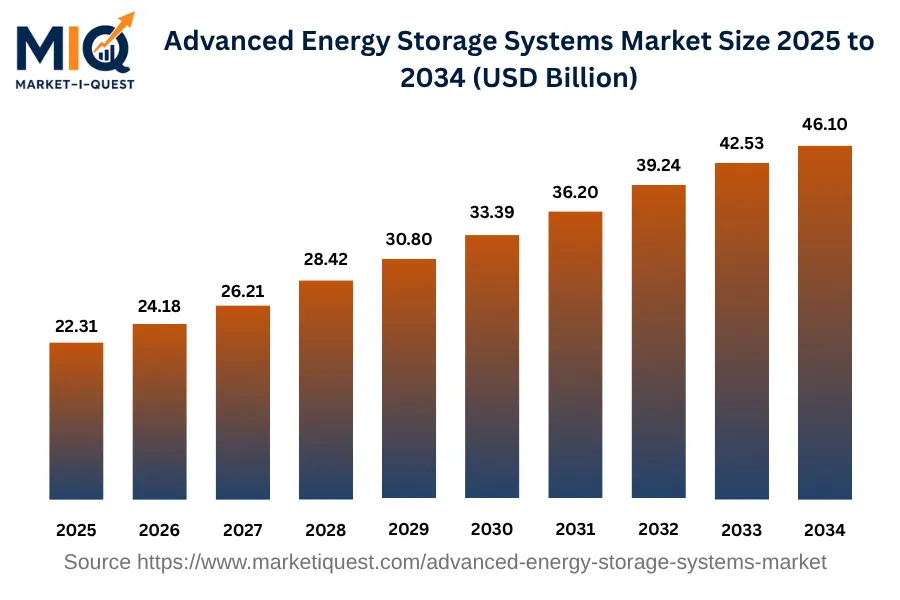
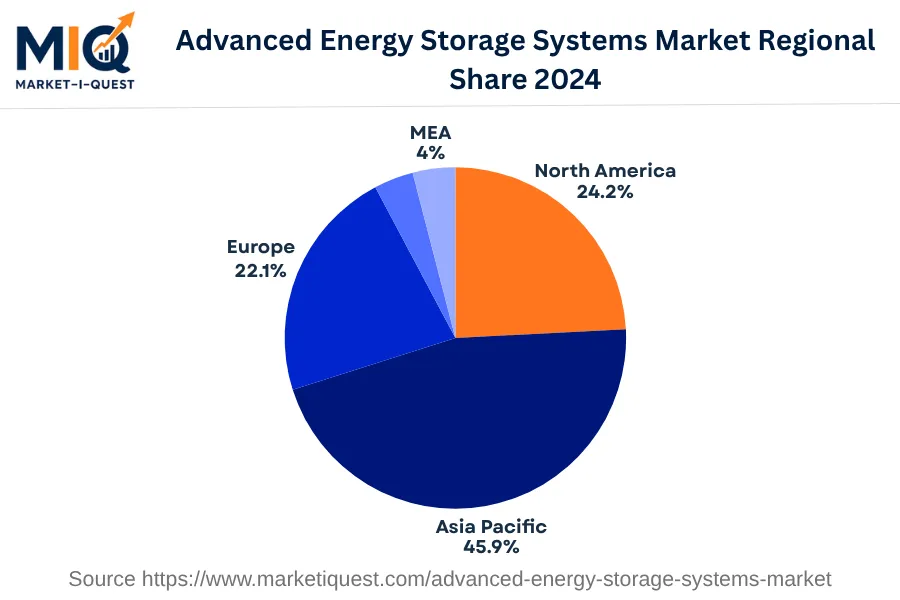
The Advanced Energy Storage Systems Market was valued at $22.31 billion in 2025 and is projected to reach $46.10 billion by 2034, expanding at a CAGR of 8.4%. The market, which was at $20.58 billion in 2024, has shown a steady rise over the ten-year period from 2025 to 2034, nearly doubling in size. This increase is a result of the continuous technological advancements and rising needs for energy storage solutions in various industry verticals. The year-to-year growth shows an upward trend, indicating a growing market throughout the forecast period. As of 2024, the regional market shares are significantly dispersed: The Asia Pacific led with 45.92%, followed by North America with 24.17%, Europe accounted for 22.14%, and finally, LATAM and MEA held smaller shares with 3.74% and 4.03% respectively.

Key Takeaways

  • By Storage Type - Batteries led the segment with the highest share.
  • By Technology - Mechanical sub-segment dominated holding the top position.
  • By Application - Grid Storage grew the fastest expanding at a remarkable pace.
  • By End User - Non-Residential sector held a notable position leading in the base year.
advanced-energy-storage-systems-market market size

Key Driving Factors

Stricter Environmental Regulations

Around the world, policy makers are implementing stricter environmental regulations to combat the critical challenge of climate change. A significant focal point of these regulations is lowering greenhouse gas emissions, with a specific emphasis on streamlining energy use in various sectors. These regulations apply pressure on businesses to shift from traditional energy sources to more environmentally friendly alternatives, a transition that often entails employing advanced energy storage systems. For instance, energy-intensive industries such as manufacturing and transportation are now more frequently adopting these systems to bolster their environmental credentials, significantly driving the market growth. These companies are leveraging energy storage systems to ensure a stable and reliable power supply while still adhering to the regulatory mandates imposed by their respective governments and international bodies.
Increasing Adoption of Electric Vehicles

The surge in the adoption of electric vehicles (EVs) is another significant factor contributing to the expansion of the advanced energy storage systems market. As a more sustainable mode of transport, EVs rely on battery-based storage systems for their operation. These systems require advanced energy storage solutions in order to enhance efficiency, driving range, and overall vehicle performance. As global push for electric vehicles intensifies, led by both government incentives and growing consumer preference for eco-friendly options, demand for these advanced energy storage solutions will likely correspondingly increase. Moreover, auto manufacturers are additionally incentivized to invest in optimizing these systems to gain competitive edge, thereby further fueling market development.

Market Evolution by Timeline

2019-2023
During this period, key buyers were primarily utility companies and industrial customers with a focus on renewable energy integration as well as load leveling. North America and Europe had high demand due to ambitious environmental policies. Supply was mainly characterized by Lithium-ion and flow batteries with intermittent renewable supply integration still maturing. Government programs like the US Department of Energy's Energy Storage Grand Challenge encouraged adoption. Major contenders adopted pricing models based on energy capacity (MWh) and power capacity (MW). Typical contract types included direct purchase and Energy Storage as a Service (ESaaS). The most common risk was thermal runaway in Lithium-ion batteries, which manufacturers like Tesla mitigated with advanced management systems.
2024
This year saw increased interest from commercial businesses and independent power producers as buyers, induced by the demonstrated economic benefits of energy storage. Asia-Pacific emerged as a key market due to the developing renewable sector in countries like India, China. Lithium-Sulfur battery pilot projects were noted, promising longer lifecycle and safer use. Regulatory initiatives such as China's National Energy Administration 14th Five-Year Plan propelled adoption further. Pricing remained energy and power capacity based but showed tendencies towards competitive rates due to emerging manufacturers. ESaaS gained popularity and partnerships between manufacturers and project developers thrived. The supply chain disruption due to global geopolitical issues posed a risk.
2025-2029
Residential usage augmented due to mass-scale solar installations, particularly in sunny regions like Australia, California. Supercapacitors began shipping, offering rapid charge/discharge abilities. Integrating these with intermittent renewable supply became mainstream. EU's 'Clean Energy for All Europeans' policy package spurred adoption. Contracts were increasingly longer-term, spanning 10–20 years and pricing saw a decline as technology matured and economies of scale came into effect. Increased partnership with utility providers was observed. Risks related to the recycling and disposal of spent storage systems came into focus, leading to the development of recycling programs.
2030-2034
Increased demand was seen from power-intensive industries like mining and hospitals, especially in emerging markets such as Africa, South America due to energy security needs. By now, solid-state batteries with higher energy densities were being shipped. Regulation took form of stricter grid resiliency standards, compelling utilities to invest in energy storage. Traditional kWh or kW pricing models became outdated in favor of holistic 'value-stack' pricing that took into account various provided grid services. Technology-agnostic tenders became prevalent. A major risk during this period stemmed from increased raw material prices, pushing manufacturers to explore new materials.

Future Market Outlook

Future Opportunities

As advancements in energy storage technologies continue to progress, future opportunities are emerging within the global market landscape. In 2023, significant attention is being focused on integrating energy storage systems with distributed energy resources, particularly in regions like California and Australia, where renewable energy adoption is accelerating. Companies such as Fluence are partnering with utility operators to deploy energy storage solutions that enhance grid resilience against disruptions. In Asia, countries like China are investing heavily in energy storage for electric vehicles and industrial applications, supporting policies that promote local manufacturing of battery components. The ongoing efforts to standardize energy storage systems, such as the IEEE 2030.2 standard for grid energy storage interoperability, provide a framework for interoperability and can spur innovation. Moreover, the push toward decarbonization and emission-reduction targets set by governments worldwide is driving research into sustainable and recyclable battery technologies, with companies like Redwood Materials leading efforts in battery material recycling. The anticipated growth of microgrid systems further creates opportunities for localized energy storage solutions, especially in remote areas. With the support of regulatory bodies like the European Commission, the market is expected to witness greater collaborations between technology providers and utilities, fostering a more integrated approach to energy storage deployment across various sectors.

Segmentation Analysis

By Storage Type

The market is divided into subsegments including Batteries, Flywheels, Compressed Air Storage, Pumped Hydro-Power, and Others. Of these, Batteries accounted for the largest revenue share while Pumped Hydro-Power is expected to grow at the fastest CAGR during the forecast period.

Largest Revenue Share

Batteries

Market Share Leader

The Batteries subsegment leads the market in terms of revenue owing largely to its widespread applications across various sectors. Consumer electronics, which is a massive global industry, heavily depends on batteries as a primary source of power. Additionally, the rise of electric vehicles has catapulted the demand for batteries even further, as they are an integral part of the core technology. With stricter emission regulations coming into place, the adoption rate for electric vehicles is set to increase, thus driving the demand for batteries. While geographical factors play a significant role, the growth is primarily driven by advancements in Asian markets where both, production and consumption of batteries, are exceedingly high. Battery technology also continues to evolve, improving performance and driving down costs, thus making it an attractive storage option for consumers and industries alike.

Fastest CAGR

Pumped Hydro-Power

Forecast Period Growth Leader

While Batteries currently hold the largest market share due to their diverse applications, the Pumped Hydro-Power storage method is projected to witness the fastest growth in the coming years. The driving factors for this growth are largely environmental, as countries seek more sustainable and green methods of power generation. Pumped Hydro-Power, being a renewable resource with large storage capacity, fits the bill perfectly. Major investments are being made in this sector, with new projects being commissioned worldwide. Governments are increasingly offering favorable policies and financial incentives to encourage the adoption of renewable energy sources, thus serving as a catalyst for the growth of this subsegment. However, its adoption does face challenges in terms of capital intensiveness and site-specific geological requirements, which may hinder its growth if not addressed appropriately.

By Technology

The market is divided into subsegments including Mechanical, Thermal, Electrochemical, and Others. The Electrochemical subsegment accounted for the largest revenue share while the Mechanical subsegment is expected to grow at the fastest CAGR during the forecast period.

Largest Revenue Share

Electrochemical

Market Share Leader

The Electrochemical subsegment commands the largest share in the technology market as of the base year 2024. This dominance can be attributed to the enhanced energy efficiency and cost-effectiveness offered by this technology type. Rising environmental concerns and emphasis on renewable energy sources have created a conducive environment for electrochemical devices, such as fuel cells and supercapacitors, which are key components of the subsegment. Besides, stringent regulations related to emissions are further driving the demand for electrochemical technology in industries. Their great adaptability for small to large scale applications and the ability to operate at lower temperatures compared to thermal systems escalates their appeal among customers. Robust demand from geographies with high industrialization rate bolsters the subsegment's revenue generation. A pronounced shift toward cleaner energy and sustainable operations in major business sectors present an optimistic market outlook for this subsegment.

Fastest CAGR

Mechanical

Forecast Period Growth Leader

The Mechanical subsegment is projected to register the highest CAGR over the forecast period. This technology type, encompassing devices such as flywheels and pump hydro storage, offers a number of advantages that drive its higher growth rate. Mechanical technology is highly reliable, durable, and requires minimal maintenance, aligning with a growing preference for cost-efficient and hassle-free operations in industries. A key catalyst propelling this growth is increased capital expenditure on mechanical devices by industries aiming to enhance their operational efficiency and output capacity. Though adoption barriers in the form of high initial investment costs exist, partnerships among key players and technological advancements are expected to open new avenues for growth. Near-term risks may stem from economic slowdowns and policy changes, but the outlook remains largely positive given the increasing demand for efficient, durable machines across various industrial verticals.

By Application

The market is divided into subsegments including Grid Storage, Transportation, and Others. The Transportation segment accounted for the largest revenue share while Grid Storage is expected to grow at the fastest CAGR during the forecast period.

Largest Revenue Share

Transportation

Market Share Leader

The Transportation segment is the clear revenue leader in 2024. This dominance in revenue is primarily dictated by the accelerating pace of electric vehicle (EV) adoption worldwide. The paradigm shift from traditional fossil fuel-run vehicles towards electric vehicles gradually increases the demand for advanced batteries for energy storage. Consequently, the transition drives the market for battery applications in the transportation sector. Major economies such as China, the US, and the European Union have stringent emission norms and are pushing for a reduction in carbon footprint, thereby further boosting the adoption of electric vehicles. Furthermore, improved battery technologies, declining costs, and substantial support from government policies are the primary driving factors for transportation applications. However, the increasing cost of raw materials might pose potential growth barriers in the longer term.

Fastest CAGR

Grid Storage

Forecast Period Growth Leader

While Grid Storage does not generate the most revenue in the base year 2024, it exhibits the fastest prospective CAGR. The compelling need for energy storage optimization and balancing power supply with demand plays a key role in driving growth in this subsegment. The integration of renewable energy into the grid, combined with growing awareness of peak-time grid stability, makes energy storage crucial. Therefore, utility companies are investing in energy storage to provide resilient, efficient, and sustainable grid systems. Potential limitations concerning the disposal and recycling of batteries and stringent environmental and safety regulations could pose challenges to the growth. However, technological advancements, emergent battery technologies and the rise of smart grids provide substantial growth opportunities for this segment.

By End User

The market is divided into subsegments including Residential and Non-Residential, with the Non-Residential subsegment accounting for the largest revenue share while the Residential subsegment is predicted to grow at the fastest CAGR in the forecast period.

Largest Revenue Share

Non-Residential

Market Share Leader

The Non-Residential subsegment, being the segment with the largest revenue, leverages off a broad customer base and dense geographies. This segment employs facilities such as offices, factories, and commercial complexes where the demand for quality products and services is an essential support to their operations, hence driving revenue growth. Given the trend towards urbanization and industrialization, the construction of non-residential buildings have seen an increase. Purchasing criteria typically involve factors such as cost-efficiency, simplicity and effectiveness of use, which the Non-Residential segment excels in. Switching costs are relatively high, as the transition of inventory and procedural changes can result in financial burden and operational hiccups. Non-Residential users generally establish long-term contracts with market providers, further bolstering stability in this segment. The segment benefits from laws and regulations encouraging workplace safety, heightening the demand for quality service and products.

Fastest CAGR

Residential

Forecast Period Growth Leader

The Residential subsegment shows potential as being the fastest-growing subsegment in the market. Consumers are increasingly focusing on improving their living conditions, which has led to a rise in demand for quality products and services in the residential market. Technology advancements, particularly in terms of internet connectivity and the adoption of smart home systems, are also significant catalysts for growth. They enable increased automation and improve residents' convenience and safety. As partnerships between property developers and service providers become more prolific, they help to quicken overall market penetration and growth. Investment in the residential housing sector also plans to be a driving force for growth. Despite the growth potential, the subsegment could face near-term risks such as fluctuations in real estate prices and economic uncertainties that could slow down housing projects and impact the demand in the residential segment.

Competitive Analysis

Key Market Players

Manufacturers / OEMs

LG Chem
South Korea
Tesla Inc.
US
Samsung SDI Co. Ltd.
South Korea

Key Suppliers & Raw Materials

DuPont
US
Panasonic Corporation
Japan
BASF
Germany

Distributors, Integrators & Channel Partners

Siemens AG
Germany
Schneider Electric
France
Hitachi Ltd.
Japan

Porter’s Five Forces Analysis

This is an analysis of the competitive forces within the advanced energy storage systems market.

Supplier Bargaining Power

Medium

Dependence on few suppliers for essential raw material supply.

Buyer Bargaining Power

High

Increasing consumer awareness and multiple options increase buyer power.

Threat of Substitutes

Low

Few viable substitutes due to the specialized nature of services.

Threat of New Entrants

Medium

Capex and technological expertise create entry barriers, yet potential is significant with rising demand.

Competitive Rivalry

High

Intense competition among established companies with similar product offerings.

Regional Analysis

Geographic market dynamics and growth opportunities across key regions

Global Market Outlook

advanced-energy-storage-systems-market market regional share

North America

In 2024, the North American Advanced Energy Storage Systems market demonstrated high growth dynamics, driven by a set of interrelated factors. Regulations like the US Federal Energy Regulatory Commission's Order 841, incentivizing storage integration, catalyzed demand, as they spurred utilities and manufacturing sectors to increasingly adopt advanced energy storage systems. Simultaneously, substantial investment funneled into the sector further amplified technology adoption. Canada's robust supply chain for lithium, essential in advanced energy storage production, also contributed to favorable supply dynamics.

Concurrent trends shaped the market landscape significantly. Buyers, comprising businesses and utilities, shifted towards storage systems offering flexibility, contributing to a proliferation of behind-the-meter installations in the U.S. and Mexico. This behavioural shift catalyzed technological shifts towards hybrid storage solutions that offered such flexibility. Notably, partnerships and M&A activities surged, with large utility companies like Florida Power & Light Company collaborating with battery storage firms to enhance grid reliability. Standards and policies around safe energy storage disposal were strictly enforced, especially in Canada, influencing product design and end-of-life management. For instance, the Canadian Standards Association's guidelines on the safe disposal of used batteries encouraged the development of easily recyclable batteries.

Asia Pacific

In 2024, the Advanced Energy Storage Systems Market in Asia Pacific registered marked developments dominated by exponential demand and regulatory shifts in clean energy policy. Rapid urbanization and industrialization particularly in China, India and key ASEAN markets spurred heightened demand for advanced energy solutions. Clean energy regulations, alongside substantial investments in renewable energy sectors by government bodies in Japan, South Korea, and Australia, prompted accelerated deployment of these systems. New energy storage technologies such as Lithium-ion batteries, helped utilities companies meet the rising demand for sustainable energy, while also boosting supply dynamics.

Market trends were shaped by alterations in buyer behavior and regulatory enforcement. A growing preference for renewable energy sources necessitated businesses to pivot towards innovative energy storage systems, intensifying product and technology shifts. China's stringent pollution controls and India's commitment to renewable energy targets mandated shifts in policy enforcement, promoting the integration of advanced energy storage systems in utilities and manufacturing sectors. Mergers and acquisitions were prevalent, consolidating market shares and amplifying channel dynamics, with the Japan-South Korea energy cooperation agreement being a significant instance. These transitions undeniably positioned the Asia Pacific at the forefront of the adoption of Advanced Energy Storage Systems in 2024.

Europe

In 2024, the European market for advanced energy storage systems presented a complex yet promising landscape, driven by diversified factors and exhibiting unique trends. Key drivers included robust demand dynamics, stringent regulatory mandates, strategic investments, heightened technology adoption, and volatile supply scenarios. Increased electrification and renewable energy integration, particularly in Germany, United Kingdom, and France, sparked significant demand. Concurrently, regulations such as the European Clean Energy Package amplified deployment of these systems. Investment from governments, utility sector, and manufacturing industries especially in Italy and Spain also spurred market growth. Technology adoption gained momentum with novel solutions like lithium-ion batteries and flow batteries gaining acceptance. Supply dynamics remained unpredictable, facing disruptions due to global disturbances and pricing mutations.

Trending patterns encompassed shifts in buyer behavior, product technology revolutions, changes in channel strategies, increased partnerships and M&A activities, and stricter policy enforcement. Notably, buyers leaned towards energy-efficient and sustainable options while enterprises exhibited a preference for advanced, scalable solutions. Product technology upheaval was witnessed with the rise of solid-state batteries and energy storage-as-a-service. Channel pathways became more digital, facilitated by digital transformation sweeping across Europe. Partnership ventures and M&As catalyzed market consolidation, with larger firms acquiring start-ups to diversify portfolios. Governmental bodies across Nordics, Benelux, and Central & Eastern Europe enforced stricter adherence to regulations, signaling a significant shift in regulatory landscape for energy storage systems.

Latin America

In 2024, the Advanced Energy Storage Systems Market in Latin America displayed vibrant dynamism driven by socio-economic and technological advancements in countries including Brazil, Mexico, Argentina, Colombia, Chile, and Peru. The growth was primarily driven by escalating energy demands, favorable regulatory frameworks supporting renewable energy adoption, and substantial investments in technological improvements relating to energy storage. Additionally, the surge in electric vehicle usage was marked by a parallel expansion in charging infrastructure, stimulating supply dynamics for energy storage systems. Furthermore, governmental support in countries like Brazil and Chile, resulted in the deployment of several energy storage projects, amplifying the market growth.

Trends reflected a shift in buyer behaviour; corporations and government entities increasingly opted for advanced energy storage systems to attain energy-efficiency targets. Notably, the utilities and manufacturing sectors displayed heightened activity, seeking to capitalize on reliable and sustainable energy sources to optimize operations. Technological advancements like solid-state batteries and flow batteries marked significant product shifts, accompanied by the proliferation of digital platforms for energy management. Partnerships and M&A contributed to the market consolidation, with companies such as AES Tiete and Fluence announcing major enterprises in Brazil. Lastly, the enforcement of net metering policies and renewable portfolio standards underlined regulatory efforts towards a cleaner energy mix.

Middle East & Africa

In 2024, the advanced energy storage systems market across the Middle East and Africa had magnetized notable attention due to its crucial role in alleviating energy supply-demand imbalances. In terms of drivers, the Saudi Arabian government's investment in renewable energy projects and the transition from conventional energy sources primarily fueled market growth. Further demand was invoked due to power stability concerns in Nigeria and South Africa, and the robust telecom and IT sector in United Arab Emirates and Qatar added impetus with its continuous energy requirements. Coexistent price reduction in energy storage technologies also catalyzed market growth.

Key market trends revolved around consumer's increasing preference for renewable energy sources, specifically in Israel and Egypt. This was backed by proactive government policies aimed at curbing fossil fuel dependence. Technological advances in lithium-ion batteries emerged as a popular choice for storage, prominently in the utilities sector. A stark shift was observed towards distributed generation system in South Africa and Kenya, pushing decentralization of energy resources. In Saudi Arabia, the trend of solar plus storage systems proliferated, facilitated by alliances between energy companies and technology providers. Sectors majorly utilizing these storage systems included government institutions, utilities, and oil and gas corporations, while telecom and healthcare sectors identified as emerging users. Companies in the manufacturing and retail sectors across the mentioned regions increasingly invested in energy storage systems to achieve energy efficiency and cost-effectiveness.

Recent Industry Developments

Latest market innovations, product launches, and strategic initiatives

September 2025

Electrovaya Inc. officially launched its new Infinity Technology line of advanced energy storage systems. Engineered specifically for heavy-duty, long-duration utility and commercial applications, the system introduces optimized cell chemistry to supply safer, higher-density stationary storage with a longer operational life cycle.

August 2025

Hitachi Energy, a major global provider of power and energy solutions, finalized the absolute acquisition of eks Energy, a specialized manufacturer of advanced power electronics and energy management software. The acquisition was structured to fold eks Energy’s high-power conversion systems directly into Hitachi Energy’s battery energy storage system (BESS) portfolio to enhance grid stability and multi-megawatt project execution.

Frequently Asked Questions