Wound Debridement Market Snapshot

Key Players

  • Smith & Nephew (United Kingdom)
  • Medtronic PLC (Ireland)
  • Zimmer Biomet (United States)
  • Lohmann & Rauscher (Germany)
  • DeRoyal Industries (United States)
  • BSN Medical (Germany)
  • Misonix (United States)
  • Soring Group (Germany)
  • Derma Sciences (Canada)
  • Convatec (United Kingdom)

Market Size

Base Year 2024
$1.34 Bn
CAGR
6.85%
Forecast 2034
$2.60 Bn

Market Segments

By Product
Gels, Ointments & Creams, Wound Irrigation Solution, Surgical Devices, Medical Gauzes, Ultrasonic Devices, Others
By Method
Autolytic, Enzymatic, Surgical, Mechanical, Others
By Wound Type
Pressure Ulcers, Diabetic Foot Ulcers, Venous Leg Ulcers, Burn Wounds, Others
By End Use
Hospitals, Ambulatory Surgical Centers, Emergency Clinics, Home Care

Market Dynamics

Drivers
  • Increasing cases of chronic wounds
  • Rise in surgical procedures
Restraints
  • High treatment costs
  • Limited patient awareness
Opportunities
  • Rising chronic disease prevalence
  • Technological advances in wound care

Market Size

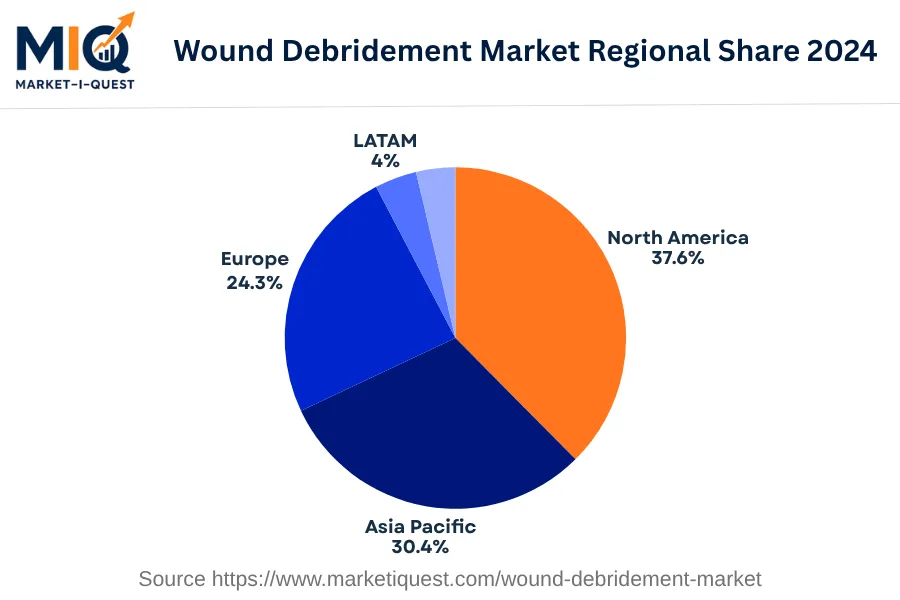
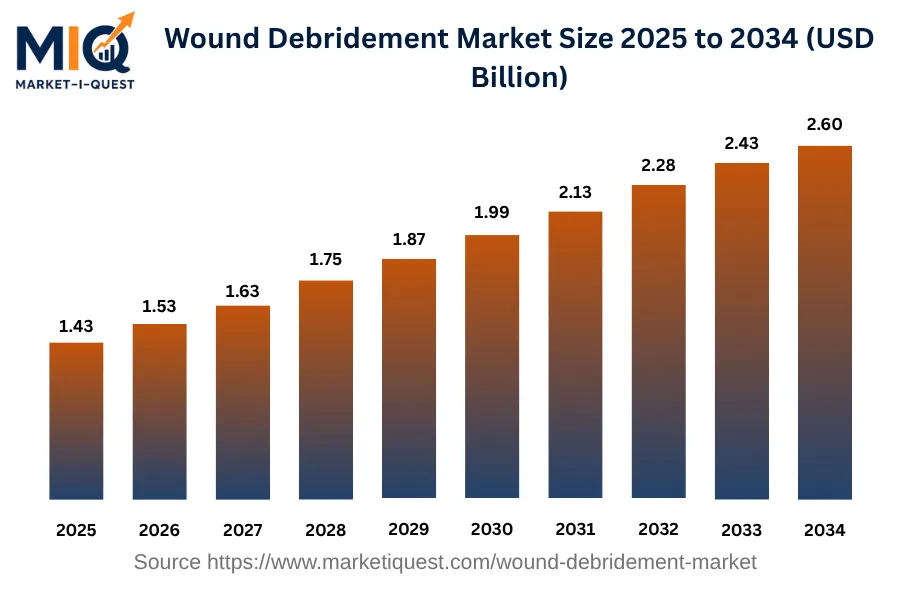
The Wound Debridement Market was valued at $1.34 billion in 2024 and increased to $1.43 billion in 2025. Over the duration of 2025 to 2034, the market is projected to expand to $2.60 billion, equating to a compound annual growth rate (CAGR) of 6.85%. This close-to-double increase in the market value within ten years is reflective of the uptake in the demand for wound debridement services. The cause of such growth is the increasing incidence of chronic conditions that necessitate wound care management, leaning towards the higher demand for wound debridement. Regionally, in 2024, North America held the largest share of the market at 37.58%, followed by Asia Pacific at 30.41%, Europe at 24.32%. The regions with lesser market shares were Latin America and Middle East & Africa, holding 3.98% and 3.71% respectively.

Key Takeaways

  • By Product - Medical Gauzes displayed a remarkable position in the during the base year.
  • By Method - Surgical significantly led the market.
  • By Wound Type -Diabetic Foot Ulcers held the predominant share of the market.
  • By End Use - Hospitals led the service providers due to an increased number of wound debridement procedures performed.
wound-debridement-market market size

Key Driving Factors

Increasing Incidence of Diabetes and Associated Ulcers

Rising cases of Type 1 and Type 2 diabetes have been a central driver for the wound debridement market. High sugar levels often result in nerve damage and poor blood circulation, particularly in the lower extremities. Such complications precipitate the development of diabetic foot ulcers, which require frequent debridement for effective healing. Debridement is a critical component in the management of diabetic ulcers, reducing the bacterial load and stimulating the healthy wound bed. Therefore, one propulsive factor for the wound debridement market is the identification and subsequent comprehensive treatment of diabetic foot ulcers.

Adoption of Innovative Debridement Techniques by Healthcare Professionals

Healthcare professionals are increasingly adopting more efficient debridement procedures and specialized tools that allow for more precise, less painful and quicker wound cleaning. An example of this is the ultrasonic technique which atomizes saline into fine droplets to help in wound debridement. The desirability of these techniques lies in their ability to remove devitalized tissue without causing unnecessary damage to the surrounding healthy tissue. As they become standard operating procedure in wound care centers, their increased adoption by healthcare professionals will significantly impact the wound debridement market.

Market Evolution by Timeline

2019-2023
Primary buyers in this period were from developed regions, primarily North America and Europe, dealing with chronic wounds and burns often related to diabetes and obesity. The supply was robust, with established technological advancements including autolytic, enzymatic, and surgical debridement methods. However, shortages of trained healthcare practitioners posed a significant constraint. Regulatory pressures came from healthcare authorities like FDA and NICE, enforcing strict standards around safety and efficacy. Commercial models often relied on health insurance and government healthcare funds, with certain players offering bundled pricing models integrating services like wound diagnosis and aftercare. There was a noteworthy risk of high R&D costs failing to yield fruitful results, leading to an industry-wide focus on strategic collaborations for shared R&D
2024
In 2024, a shift was noticed towards Asia Pacific due to rise in awareness about modern wound care and increasing diabetic population. Ultrasonic debridement, offering non-invasive technique, gained attention. Notable integration maturity with existing surgical procedures was seen, especially in developed markets. Regulatory standards saw a push towards non-invasive treatments, but procurement complexities increased due to diverse healthcare policies across countries. Commercial models evolved, with vendors focusing on partnerships with hospitals. High pricing of advanced debridement products became a significant risk, with focus on cost-effectiveness and addressing unmet needs.
2025-2029
Increased demand from Middle East and Africa was recorded, primarily due to higher trauma cases and burns incidents. Bio-surgical debridement started dominating the supply chain, introducing maggots as a safe, effective method. Unfortunately, reservations towards the method presented limitations. Regulatory ecosystems adapted accordingly, focusing more on biotech-inspired solutions. Commercially, pay-per-case models started thriving, taking pressure off healthcare systems and ensuring service quality. High implementation costs of biosurgical solutions continued to be a risk, with increased interest in public-private R&D partnerships to tackle these costs and improve profitability.
2030-2034
Growth was recorded across Latin America due to high incidence of venous ulcers and an aging population. New supply featured hybrid debridement methods, harnessing benefits of multiple techniques. Deep integration with telemedicine for remote patient monitoring was also observed, despite occasional network constraints. Regulatory bodies started dealing with hybrid formats, making procurement more complex. Value-based pricing models started gaining prominence, driven by telemedicine-based delivery. These accounted for patient outcomes and follow-up care, instead of basic service provision. The risk of cyber threats to remote patient data and the need to ensure compliance with data protection laws became a fresh challenge for this period.

Future Market Outlook

Future Opportunities

The future of the wound debridement market is poised for growth, hinged on the evolving landscape of patient care and surgical techniques in various regions. As of 2023, hospitals across the Asia-Pacific region have begun implementing integrated wound management systems employing advanced technologies for improved patient monitoring. In North America, a growing emphasis on outpatient care is prompting healthcare providers to explore portable debridement devices, which can enhance accessibility and treatment flexibility for patients. Partnerships between academic institutions and medical device companies, like the collaboration between Stanford University and a biotechnology firm announced in early 2023, are paving the way for breakthrough therapeutic developments in wound care. Furthermore, as a response to the global rise in chronic wounds, regulatory frameworks, including the FDA's guidance on innovative technologies for advanced wound care, are expected to incentivize companies to expedite product development cycles. Training programs are also evolving, as seen in the adoption of online learning modules by several healthcare organizations, which are intended to improve clinician competencies in wound management techniques. These opportunities signal a progressive trajectory in wound debridement, underpinned by an emphasis on patient-centric care and technological integration, promising more effective strategies for managing complex wound conditions in the near future.

Segmentation Analysis

By Product

The market is divided into subsegments including Gels, Ointments & Creams, Wound Irrigation Solution, Surgical Devices, Medical Gauzes, Ultrasonic Devices, and Others, among which Medical Gauzes accounted for the largest revenue share while Ultrasonic Devices is expected to grow at the fastest CAGR during the forecast period.

Largest Revenue Share

Medical Gauzes

Market Share Leader

The medical gauzes subsegment holds the highest share of revenue in the product segment. This is primarily due to their wide application in various medical procedures. They are one of the most basic and essential medical supplies used not only in surgeries but also in other procedures requiring cleaning and dressing of wounds. They have a higher demand due to their affordability and ease of use. Given their widespread utility, they are purchased in large quantities by hospitals, clinics, and healthcare institutions as a basic necessity, driving the revenue. The demand for medical gauzes is steady and spans across all geographies where healthcare services exist. Additionally, the absence of quick and cost-effective alternatives to this product allows a stable market position. It can be said that this segment is ruled more by volume than by technological advancements or innovation.

Fastest CAGR

Ultrasonic Devices

Forecast Period Growth Leader

Despite not being the current revenue leader, it is evident that the Ultrasonic Devices subsegment is set to grow at the fastest CAGR. This rapid growth is attributable to the increasing adoption in modern medical procedures and surgeries due to their efficiency and minimally invasive nature in wound treatment processes. Technological advancements are acting as a catalyst to this growth by making these devices more effective, compact, and affordable. Moreover, partnerships between device manufacturers and hospitals or medical institutions are propelling the adoption rates. Despite its fast growth, this segment faces potential risks such as regulatory hurdles and engineering challenges. Additionally, the high initial capital investment could pose as a barrier to adoption. However, given the clear benefits and ongoing advancements in the field, the Ultrasonic Devices subsegment is expected to overcome these barriers and continue to grow rapidly.

By Method

The market, by method of wound debridement, is divided into subsegments including Autolytic, Enzymatic, Surgical, Mechanical, and Others. The Surgical debridement accounts for the largest revenue share, while the Enzymatic debridement is anticipated to grow at the fastest CAGR during the forecast period.

Largest Revenue Share

Surgical

Market Share Leader

Surgical debridement is currently the market leader due to its widespread acceptance in hospitals and clinics worldwide. It is predominantly used in severe cases due to its efficiency in removing necrotic tissues quickly, especially in life-threatening situations. High standards in surgical training and the substantial number of skilled surgeons are also contributing factors to its popularity. Its growth is closely linked with the demand for advanced wound management in developed countries, where patient populations are typically older, treatment protocols are more sophisticated, and the acceptance of invasive procedures is higher. Its adoption is consistent across key geographies because surgical debridement is often the most direct and fastest method to manage severe tissue necrosis. However, high procedural costs and the risks associated with surgical interventions are limiting factors that may impact its overall revenue growth.

Fastest CAGR

Enzymatic

Forecast Period Growth Leader

Enzymatic debridement is projected to become the fastest-growing subsegment in the wound debridement market. Due to advances in biotechnology and an increase in research and development investments within the healthcare industry, this method seems to be gaining traction. Partnerships between companies to develop and commercialize enzymatic debridement products are a significant catalyst for growth. These partnerships are generally a result of increased capital expenditures within the industry. Though relatively higher initial costs may act as a barrier to adoption, the benefits of enzymatic debridement, such as less pain and fewer side effects compared to traditional methods, are appealing to both healthcare providers and patients. Additionally, regulatory support for innovative wound care solutions could act as a growth driver. Yet, the lack of awareness and knowledge among healthcare providers in less-developed markets could pose a near-term risk.

By Wound Type

The wound type market is divided into subsegments including Pressure Ulcers, Diabetic Foot Ulcers, Venous Leg Ulcers, Burn Wounds, and Others. In 2024, Diabetic Foot Ulcers accounted for the largest revenue share while Pressure Ulcers is expected to grow at the fastest CAGR during the forecast period.

Largest Revenue Share

Diabetic Foot Ulcers

Market Share Leader

Diabetic Foot Ulcers proved to be the most profitable subsegment in 2024 due to a combination of factors, predominantly the increasing prevalence of diabetes worldwide. The persistent high sugar levels in the bloodstream of diabetics often lead to nerve damage and poor blood circulation, making these patients highly susceptible to foot ulcers. Diabetic foot ulcers also require prolonged and costly treatment, leading to higher market revenue associated with this condition. Geographically, the mature healthcare infrastructures in developed regions like North America and Europe heavily contribute to this subsegment's profitability. These regions have a high prevalence of diabetes, coupled with the ability to afford and access advanced treatment options. Regulatory perspective also supports increased revenue, given the numerous FDA-approved treatment modalities for diabetic foot ulcers. Thus, driving factors such as extensive disease prevalence, geographical consumer distribution, and regulatory support affirm Diabetic Foot Ulcers as the highest-revenue subsegment.

Fastest CAGR

Pressure Ulcers

Forecast Period Growth Leader

Pressure Ulcers, also known as 'bedsores', are anticipated to have the fastest CAGR during the forecast period. A key growth driver is the subsegment's strong connection to prolonged immobility that may be due to several reasons – old age, obesity, long-term hospitalization, or disability. The increased aging population worldwide, alongside a rise in obesity, naturally expands the potential patient pool, driving growth. Technological advances, such as the introduction of pressure-relieving devices like specialty beds and mattresses, further serve as catalysts, not only enhancing patient comfort but also improving prognosis. Potential hindrances to growth could be lesser awareness in underserved regions and the stigma associated with bedsores. It's important to note that pressure ulcers, although preventable, are often associated with care negligence, which might hinder open reporting and thus market visibility. However, government initiatives aiming at reducing healthcare-acquired complications including pressure ulcers support this subsegment's accelerated growth, outweighing potential constraints.

By End Use

The market divides into subsegments including Hospitals, Ambulatory Surgical Centers, Emergency Clinics, and Home Care. In 2024, Hospitals accounted for the largest revenue share while Home Care is projected to be the fastest-growing segment.

Largest Revenue Share

Hospitals

Market Share Leader

Hospitals lead in revenue generation due to their crucial role in healthcare, treating a broad range of health conditions across all demographics. Patients usually resort to hospital services for severe conditions, surgeries, and intensive treatments, thereby resulting in a high inflow of revenue. Hospitals also count wealthy philanthropists, government funding, and health insurance premiums amongst their significant sources of income, all contributing to their rich and diverse revenue stream. Furthermore, the presence of specialized departments and skilled healthcare professionals allows for a wide breadth of services under one roof, augmenting the revenue substantially. Regulatory framework favors hospitals as well, with several policies in place aimed at enhancing their infrastructure and service quality. However, the reliance on high budget allocation and cumulative expenses pose a challenge to the profitability.

Fastest CAGR

Home Care

Forecast Period Growth Leader

Home Care is poised to be the fastest growing segment, driven by the shift towards personalized patient care within the comfort of their homes. This trend is majorly accelerated by advances in technology, enabling remote patient monitoring and telemedicine capabilities. Patients with chronic conditions, the elderly, and those needing post-surgical recovery are increasingly preferring home care to traditional hospital visits, stimulating this sector's growth. Demand for home healthcare professionals is also on the climb, contributing to the rapid development. Nonetheless, regulatory hurdles and the cost associated with employing a full-time healthcare professional are the main barriers this segment faces. Reliance on technology integration could also be a double-edged sword, with security breaches and privacy concerns being potential issues.

Competitive Analysis

Key Market Players

Manufacturers / OEMs

Smith & Nephew
UK
Misonix
US
ConvaTec
UK

Key Suppliers & Raw Materials

Integra LifeSciences
US
Medtronic
Ireland
Zimmer Biomet
US

Distributors, Integrators & Channel Partners

Stryker
US
B. Braun
Germany
Johnson & Johnson
US

Porter’s Five Forces Analysis

This analysis evaluates the competitive intensity and attractiveness of the Wound Debridement Market.

Supplier Bargaining Power

Medium

Controlled by several large suppliers providing specific technologies and patented products.

Buyer Bargaining Power

High

Numerous healthcare providers with demand stability, yet price sensitivity due to healthcare cost pressures.

Threat of Substitutes

Low

Few alternatives to wound debridement exist, and competitive methods have higher risks or slower effectiveness.

Threat of New Entrants

Medium

Moderate due to the need for technical expertise, stringent FDA regulations, and significant R&D in wound care.

Competitive Rivalry

High

Intense competition among established global medical device companies with high stakes for innovation.

Regional Analysis

Geographic market dynamics and growth opportunities across key regions

Global Market Outlook

wound-debridement-market market regional share

North America

In 2024, the North American wound debridement market saw significant growth due to several factors, particularly in the U.S., Canada, and Mexico. Rising cases of chronic diseases, increasing geriatric population, and growing incidences of traumatic wounds were the predominant demand factors. Innovations in healthcare and widespread adoption of technology-driven wound debridement procedures also propelled the market. Regulatory approval for new wound debridement devices and consistent investment in healthcare infrastructure further stimulated market growth. By contrast, complex pricing structures and supply chain disruptions posed challenges.

Notably, there were shifts in buyer behavior towards advanced wound debridement methods, emphasizing quality over cost. A significant trend was the shift towards bio-surgical debridement and ultrasonic methods, driven by improved patient outcomes. Channel dynamics changed as well, with e-commerce platforms turning into essential sale points for debridement devices. Market consolidation through partnerships and acquisitions was observed across the region, with companies seeking to broaden their product portfolios. Changes in healthcare policy enforcement, notably in the U.S. and Canada, led to an increased emphasis on comprehensive wound management, raising the bar for standards in wound debridement procedures. The sectors most affected by these changes were healthcare and retail, as they played vital roles in the product's distribution and application.

Asia Pacific

The Wound Debridement Market in Asia-Pacific showed significant dynamism in 2024. The key drivers for this market were increased healthcare investments in China and India, growing prevalence of chronic wounds in aging Japan and South Korea, and rapid technology adoption in Australia and key ASEAN markets. Notably, China increased its healthcare expenditures substantially, fueling an increased demand for wound care products such as debridement tools. India, in parallel, witnessed a rise in diabetes rates, driving the market for wound debridement services. Meanwhile, the aging populations in Japan and South Korea resulted in a rise in chronic or non-healing wounds, further energizing the market.

On the trend side, buyer preference for minimally invasive wound debridement procedures was a significant catalyst for growth across the region. Technological shifts towards the development of enzymatic and autolytic debridement products were also evident, driven by the emerging standard of prioritizing patient comfort and speeding wound recovery. Channel dynamics saw a substantial increase in online sales across all markets, specifically in Australia and ASEAN countries. Changing policy enforcement in countries like Japan and South Korea, preferring advanced treatment procedures, laid a supportive regulatory environment boosting the market dynamics. Notably, majority sectors - encompassing hospitals, specialty clinics, and home healthcare - cumulatively drove the debridement market across Asia-Pacific in 2024.

Europe

In 2024, Europe's wound debridement market experienced notable activity due to several key drivers and trends across its focal countries. Influencing the market's momentum, regulatory changes applied greater emphasis on wound care management due to rising incidences of chronic wounds in aging populations across countries like Germany, the UK, France, and Italy. Advances in technology also played a major role, with an increased adoption of automated debridement techniques showing promising signs of fostering a healthier market environment. Additionally, steady investment in wound care research, particularly by healthcare providers in Spain and Benelux, contributed to market growth.

Shifting buyer behavior reflected the increasing preference for non-invasive debridement procedures, fostering innovative solutions within the market. This, in tandem with the proliferation of digital-health driven partnerships between medical technology firms and healthcare providers, brought about a considerable evolution in product offerings. Growing enforcement of European Union (EU) standards related to safety and quality of debridement products ignited a newfound approach to market regulation, affirming the wound debridement market's stability in Central and Eastern Europe, including the Nordics. Sectors particularly influenced included healthcare and retail, with a rise in over-the-counter wound debridement products playing a significant role in the market dynamics of 2024.

Latin America

In 2024, the Wound Debridement Market in Latin America underwent significant expansions due to increased demand and technology adoption. Increased diabetes prevalence, surge in geriatric population, and a rise in traumatic injuries were dominant drivers in Brazil and Mexico. Governments implemented stringent standards for wound care and debridement services, ensuring healthcare providers used cutting-edge technology, hence improving the overall quality of care. Colombia saw increased hospital investments, resulting in amplified usage of surgical and mechanical debridement.

Trends in the region showed a shift towards minimally invasive procedures for wound debridement such as ultrasonic methods. These were prevalent in Chile and Argentina, assisted by favorable healthcare policies emphasizing patient comfort. Bio-surgeries also grew in popularity, driven by increased awareness among medical practitioners and patients about the effectiveness of biosurgery in wound debridement. Peru witnessed substantial partnership and M&A activities among local healthcare companies and international wound care organizations, aiming to participate fully in the growing market. Nevertheless, the market's growth was moderated by high costs associated with wound debridement procedures, limited healthcare infrastructure in some regions, and lack of skilled professionals. Still, industries such as healthcare, manufacturing, and retail were the primary market customers, contributing significantly to the overall market revenue in the region.

Middle East & Africa

In 2024, the Wound Debridement Market in the Middle East and Africa notably expanded, driven by key factors like investment, technology adoption, and changing demand dynamics. The increasing prevalence of diabetes and related wounds primarily boosted the market's growth in countries like Saudi Arabia, United Arab Emirates, and South Africa. Advanced wound debridement products were adopted substantially due to sustained healthcare investment particularly by UAE and Qatar, leading the charge for improved wound management.

The supply chain improved significantly, benefiting from partnerships between local manufacturers and global players, attracting investors. This landscape was shaped by tighter regulations across countries – Nigeria and Kenya enforced stringent standards for wound care products, bolstering market quality and competitiveness. However, pricing hampered market growth in regions like Egypt, where high costs of new technologies led to reduced adoption. Yet, this spurred a trend of cost-effective innovation among manufacturers. A shift was observed towards non-surgical debridement products across sectors, especially healthcare; it appeared more prevalent in Saudi Arabia and Israel. Buyers leaned towards cost-effective and minimally invasive options. New distribution channels also emerged, with e-commerce experiencing a notable boom in nations like South Africa and Nigeria. Governments played a key role in the expansion of this market as well, particularly through policy enforcement that favored the domestic production and importation of wound care products.

Recent Industry Developments

Latest market innovations, product launches, and strategic initiatives

January 2026

Irrimax Corporation, a developer of specialized wound debridement and cleansing systems, entered into an operational expansion partnership backed by private equity firm ARCHIMED. The alliance provides Irrimax with the capital and commercial resources required to globally scale its core offering, the Irrisept Antimicrobial Wound Lavage system, across new critical care and surgical markets.

December 2025

Solventum (formerly 3M Healthcare) successfully completed the acquisition of Acera Surgical for approximately $725 million upfront. This transaction directly expands Solventum’s wound debridement and tissue reconstruction portfolio by absorbing Acera’s specialized synthetic tissue matrix technology, engineered to support cellular integration following structural wound bed preparation.

Frequently Asked Questions