Waterborne Epoxy Resin Market Snapshot

Key Players

  • Hexion Inc. (United States)
  • Dow Inc. (United States)
  • Huntsman International LLC (United States)
  • BASF SE (Germany)
  • Evonik Industries AG (Germany)
  • Kukdo Chemical Co. Ltd. (South Korea)
  • Aditya Birla Chemicals (India)
  • Nanjing Phoenix Chemical Co. Ltd. (China)
  • EMS-CHEMIE HOLDING AG (Switzerland)
  • DIC Corporation (Japan)

Market Size

Base Year 2024
$2.47 Bn
CAGR
6.85%
Forecast 2034
$4.79 Bn

Market Segments

By Type
  • High Molecular Weight
  • Low Molecular Weight
By Application
  • Coatings
  • Adhesives
  • Composites
By End Use
  • Construction
  • Textiles
  • Automotive
  • Others

Market Dynamics

Drivers
  • Rising environmental concerns
  • Increasing demand in coatings industry
Restraints
  • Price volatility of raw materials
  • Stringent environmental regulations
Opportunities
  • Rising demand in Marine applications
  • Increasing adoption in Industrial sector

Market Size

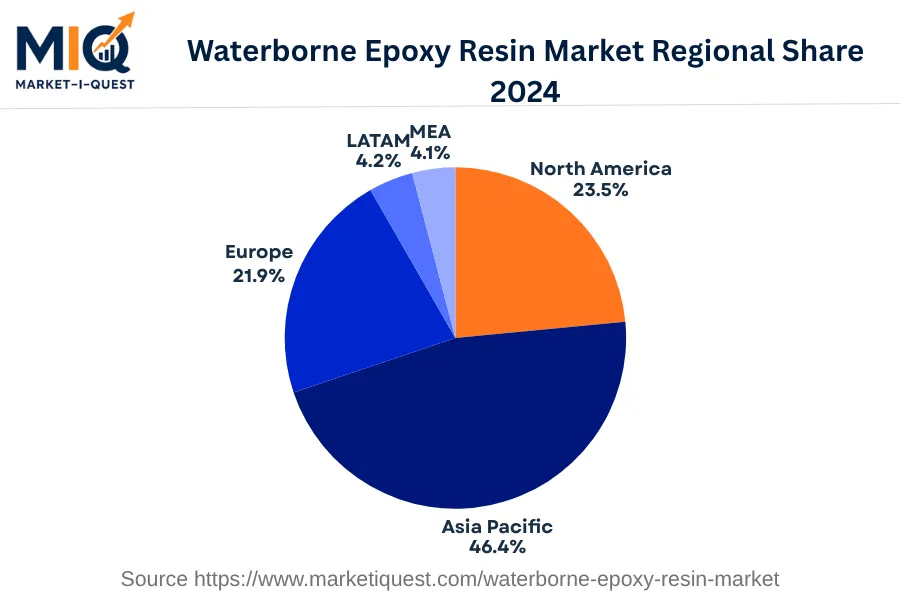
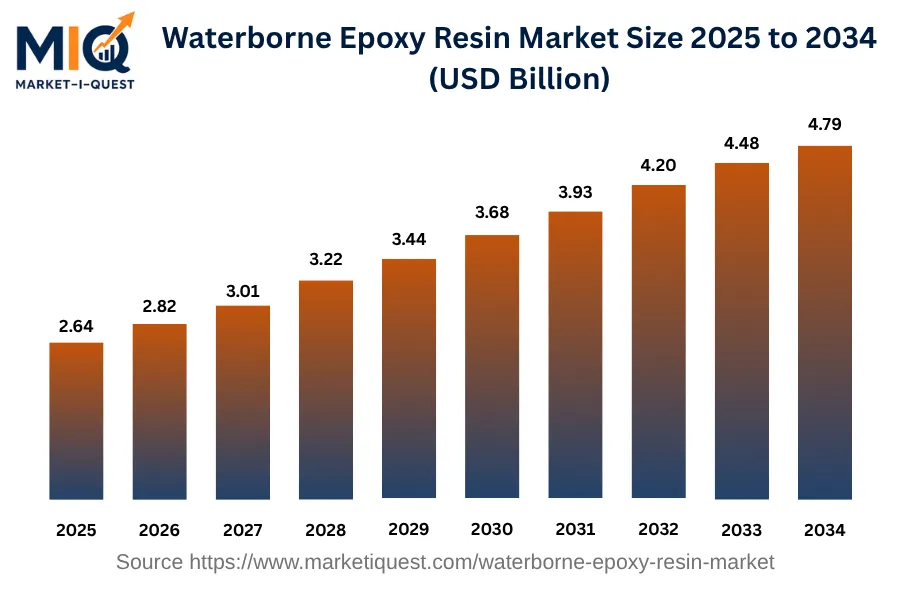
The Waterborne Epoxy Resin Market was estimated to be $2.47 billion in 2024, and it grew to about $2.64 billion in 2025. By 2034, it reached an impressive value of $4.79 billion, showing a compound annual growth rate (CAGR) of 6.85%. This continual, steady growth over the decade from 2025 to 2034 represents a substantial increase in the market size for Waterborne Epoxy Resin. In terms of regional market shares in 2024, the Asia Pacific region dominated the market with about 46.4%, followed by North America at 23.5% and Europe at 21.9%. The Latin America and Middle East and Africa regions held smaller shares of 4.2% and 4.1% respectively. These figures underscore the prevalence of the Waterborne Epoxy Resin market in the Asia Pacific region, though it maintained a significant presence across different global regions.

Key Takeaways

  • By Type - High Molecular Weight held a significant position in the market.
  • By Application - Coatings emerged as the leading subsegment in terms of usage.
  • By End Use - Automotive stood as the top consumer of Waterborne Epoxy Resin.
waterborne-epoxy-resin-market market size

Key Driving Factors

Implementation of Strict Environmental Regulations

There has been a significant increase in the enforcement of environmental regulations related to solvent-based coatings globally, particularly in regions like Europe and North America. These regulations primarily focus on restricting the use of volatile organic compounds (VOCs), which contribute to air pollution. Specifically, policies such as the Clean Air Act in the U.S. and the REACH regulation in the EU put a limit on VOC emissions. As waterborne epoxy resins are low in VOCs compared to their solvent-based counterparts, industries such as automotive, construction, and marine are shifting towards the use of waterborne epoxy resins for coatings. This regulatory environment is serving as a crucial driving factor in the current market landscape for waterborne epoxy resin.

Improving Performance in humid conditions

Waterborne epoxy resins are becoming increasingly popular in industries like construction, where performance in humid and damp conditions is a paramount consideration. Traditional epoxy resins tend to absorb water over time and break down, leading to maintenance problems and additional costs. However, waterborne epoxy resins have superior water resistance properties, thereby reducing the likelihood of degradation in humid conditions. In regions with high rainfall and humidity, such as Southeast Asia, there is a growing trend towards the use of waterborne epoxy resins as protective and decorative coatings for buildings. This shift is primarily being driven by the need for higher-performance materials that can withstand challenging environmental conditions.

Market Evolution by Timeline

2019-2023
During this period, the construction industry mainly drove the demand for waterborne epoxy resin, with Asia Pacific being the leading consumer due to rapid infrastructure development. Some noticeable suppliers included Olin Corporation and Hexion, widely recognized for advanced product development techniques. Market integration was still in early stages due to lack of global standards in epoxy resin industry. Pricing dynamics involved competitive rates due to presence of multiple suppliers. Potential risk pertained to harmful environmental impact of epoxy resin production, curtailed by using waterborne technology.
2024
In 2024, demand increased in the automotive sector, specifically for protective coatings, across North America and Europe. Companies like Allnex established a robust supply chain framework for efficient product delivery. Pilot projects were undertaken by KUKDO Chemical to test waterborne epoxy resin's durability in harsh environmental conditions. Regulatory bodies like EU's REACH implemented stricter controls on volatile organic compound emissions which boosted product demand. Pricing leaned toward premium due to strict emission standards and supply constraint issues. The fluctuating prices of raw materials presented a risk.
2025-2029
This phase saw an increased demand from marine and industrial sectors, prevalent in countries like China and India. Leading suppliers such as Aditya Birla Chemicals started leveraging green technology to mitigate environmental concerns. Integration matured with the adoption of global waterborne epoxy resin standards promoted by ISO. More binding contracts between buyers and suppliers emerged, with partnerships focused on environmentally friendly resin development. The top risk was the non-biodegradable nature of epoxy resins, countered by recycling initiatives.
2030-2034
Between 2030 and 2034, the demand surged in sectors like flooring and adhesives, mainly in Europe and North America, due to rise in construction and renovation activities. Suppliers such as DowDuPont aimed to provide technologically advanced products well-suited for diverse applications. Constraints involved production inefficiencies and quality control issues. The European Chemicals Agency imposed stricter guidelines for resin production processes, pushing suppliers towards greener alternatives. Collaborative contracts with shared risk became more prevalent. Risks associated with human health concerns were addressed by continuous improvements in product formulation.

Future Market Outlook

Future Opportunities

The ongoing shift towards sustainability presents numerous future opportunities for the waterborne epoxy resin market. Current initiatives focused on reducing environmental footprints, such as the U.S. Environmental Protection Agency's strategy outlined in 2021 to promote green chemistry, are likely to phase out traditional solvents, pushing industries further into waterborne solutions. Additionally, manufacturers can explore partnerships with academic institutions to innovate new waterborne formulations. As seen with PPG’s collaboration with Carnegie Mellon University, the results show promise for developing efficient, environmentally friendly epoxy products. The rising popularity of electric vehicles will create a demand for waterborne epoxy resins in protective coatings, illustrated by Ford's efforts to use sustainable materials in new model releases. Moreover, the construction sector's increasing demand for moisture-resistant coatings offers opportunities to introduce advanced waterborne formulations. In 2022, Singapore's Building and Construction Authority launched initiatives promoting sustainable construction materials, which may bolster local uptake of waterborne epoxy products. Regulatory compliance will also be critical, as countries like Canada continue to implement stricter environmental regulations. The introduction of new ISO standards focused on sustainability will further encourage industry players to innovate. Finally, the growing e-commerce sector is likely to drive demand for protective coatings and packaging, thus providing a widening market for waterborne epoxy solutions globally.

Segmentation Analysis

By Type

The market is divided into subsegments including High Molecular Weight and Low Molecular Weight, with High Molecular Weight accounting for the largest revenue share while Low Molecular Weight is expected to grow at the fastest CAGR during the forecast period.

Largest Revenue Share

High Molecular Weight

Market Share Leader

The High Molecular Weight subsegment currently leads the market in terms of revenue, primarily due to its pervasive usage across various industries such as polymers, pharmaceuticals, and biotechnology. The presence of high molecular weight substances often correlate with greater complexity and functionality, hence, they find myriad applications and represent a more lucrative market segment. In the pharmaceutical industry, for instance, high molecular weight polar substances exhibit superior bioactivity and remain a primary choice. This intense demand from high-value industries invariably propels the revenue stream for the high molecular weight segment. Furthermore, their superior efficacy and tolerance have fortified their presence across key geographies, thereby ensuring their dominant position in terms of market share. Given existing regulations supporting their use due to their minimal environmental impact and lower toxicity levels, the high molecular weight segment maintains impressive switching costs and keeps demand consistent.

Fastest CAGR

Low Molecular Weight

Forecast Period Growth Leader

Despite a comparatively smaller market share, the Low Molecular Weight subsegment exhibits a promising growth trajectory, expected to register the fastest Compound Annual Growth Rate (CAGR) in the forecast period. This growth is primarily due to increased adaptability and the subsegment's diverse applications in the cosmetics, dietary supplements and food and beverage industry. Low molecular weight substances have been gaining popularity due to their enhanced properties such as improved absorption rate and better solubility. This convenience of use coupled with technological advancements in the processing of these substances has lowered barriers to adoption. Notably, the recent shift towards more sustainable and compact production methods favors low molecular weight substances. Therefore, in the near future, strategic partnerships between producers and consumers of low molecular weight substances may be on the rise, further expediting market growth. However, one must remain alert to near-term risks such as fluctuating raw material prices.

By Application

The market is divided into subsegments including Coatings, Adhesives, and Composites. Coatings accounted for the largest revenue share, while Composites is expected to grow at the fastest CAGR during the forecast period.

Largest Revenue Share

Coatings

Market Share Leader

Coatings constitute the leading subsegment in revenue terms, primarily driven by increasing demand in various industries including construction and automotive. Rapid urbanization and industrialization, especially in emerging economies, have spurred the need for high-quality and durable coatings, resulting in substantial revenue growth. This trend is further fueled by the rising adoption of advanced coating technologies that offer superior protection and aesthetic appeal. A robust supply chain, coupled with widespread availability, allows coatings to effectively penetrate diverse markets. Regulatory support such as product standardization and eco-friendly policies have also encouraged the use of coatings, strengthening their market position. Customer preference is influenced by factors such as durability, quality, and the environmental impact of coatings, enhancing their overall demand and revenue generation. However, the high switching costs from traditional coating products to advanced ones could pose a potential hindrance for this segment in the future.

Fastest CAGR

Composites

Forecast Period Growth Leader

Composites represent the fastest-growing subsegment in terms of CAGR. High growth rates are explained primarily by the technological advancements in composite materials that offer strength, durability, and flexibility, making them ideal for diverse industries such as construction, automotive, and energy. While substantial capital expenditure (CAPEX) on advanced manufacturing technologies and processes forms a potential adoption barrier, strategic partnerships and alliances with raw material suppliers and technology providers are emerging as successful countermeasures, further accelerating growth. Composites also benefit from progressive policies promoting lightweight and energy-efficient materials. Near-term growth risks include volatile raw material prices, which could impact the cost structure and thereby adoption rates. However, the continuous innovation in the composites field is expected to offset such challenges, driving its significant growth in the forthcoming years.

By End Use

The market is divided into the following subsegments: Construction, Textiles, Automotive, and Others. In 2024, the Automotive subsegment represented the largest revenue share, while the Construction segment is predicted to experience the fastest compounded annual growth rate (CAGR) in the following years.

Largest Revenue Share

Automotive

Market Share Leader

The Automotive subsegment leads the market's revenue generation primarily due to the consistent demand for automobiles worldwide, backed by the growing population and increasing disposable income in developing countries. The significant push towards electric vehicles has revitalized the automotive industry and further expanded its market share. As more countries aim to reduce their carbon footprint, the demand for eco-friendly vehicles has surged, largely influencing revenue generation in this sector. The robust supply chain and mature distribution networks established over the years by automakers globally have further facilitated the accessibility of vehicles, making it the subsegment with the most revenue. Moreover, government policies and regulations supporting automotive development with attractive incentives added to the momentum.

Fastest CAGR

Construction

Forecast Period Growth Leader

The Construction subsegment in this end-use market is predicted to grow at the fastest pace in the subsequent years. The primary driver for this trend is the expanding urbanization and increasing population, both demanding better infrastructure and housing. Notable, technological advancements like green building and smart infrastructure concepts have opened new growth verticals for the construction industry. Moreover, a host of emerging economies are increasing their expenditure on infrastructural development, thus propelling the growth of this subsegment. On the other hand, barriers such as the high initial investment and stringent regulatory landscape may slow down adoption. However, initiatives like public-private partnerships and government subsidies are acting as catalysts, facilitating and encouraging faster growth in this sector. Potential threats include an unpredictable economic landscape and fluctuating raw material costs.

Competitive Analysis

Key Market Players

Manufacturers / OEMs

Hexion Inc.
US
Olin Corporation
US
Kukdo Chemical Co.
South Korea

Key Suppliers & Raw Materials

Shell Chemicals
Netherlands
ExxonMobil Chemical
US
Saudi Basic Industries Corporation (SABIC)
Saudi Arabia

Distributors, Integrators & Channel Partners

Brenntag North America, Inc.
US
Univar Solutions
US
Covestro AG
Germany

Porter’s Five Forces Analysis

Here is a Porter's analysis exploring the competitive environment of the Waterborne Epoxy Resin Market.

Supplier Bargaining Power

Medium

Raw material availability and price volatility influence supplier power.

Buyer Bargaining Power

High

Many product options and low switching costs increase buyer power.

Threat of Substitutes

Low

Waterborne epoxy resins have unique properties hard to mimic, lowering substitute threat.

Threat of New Entrants

Medium

High capital cost is a barrier, but increasing demand attracts new players.

Competitive Rivalry

High

Market is characterized by intense competition among numerous established players.

Regional Analysis

Geographic market dynamics and growth opportunities across key regions

Global Market Outlook

waterborne-epoxy-resin-market market regional share

North America

In 2024, the North American market for Waterborne Epoxy Resin (WER) witnessed substantial traction. Drivers included enhanced regulations such as the U.S. Environmental Protection Agency (EPA)'s lower Volatile Organic Compound (VOC) emission standards, which incentivized the transition from solvent-borne to waterborne epoxy resins. Increased investment in infrastructure development, particularly in the U.S. and Canada, also boosted demand. Additionally, the rise in technological adoption in Mexico's manufacturing sector accelerated the supply dynamics of WER.

Trends in 2024 underscored evolving buyer behavior towards environmentally friendly products. There was a perceptible shift towards the use of WER in protective coatings across utilities and manufacturing sectors as they exhibited lower toxicity levels. Notably, the coatings segment led the demand, attracting partnerships and mergers & acquisitions, enhancing R&D efforts in WER technology. Enforcement of VOC emission regulations across the U.S., Canada, and Mexico saw stricter adherence, influencing a shift from traditional to greener materials in construction and paint industries. Overall, the regulatory environment alongside the rising cognizance toward minimizing environmental impact spurred the demand and supply in WER market across key sectors in North America in 2024. This shift was complemented by a pivot towards sustainability-focused partnerships and merger activities.

Asia Pacific

In 2024, the Asia Pacific Waterborne Epoxy Resin Market evidenced significant activity across multiple aspects. Increased demand from key sectors like automotive and construction, owing to their high-performance characteristics, served as a primary driver for market growth. Regulation on VOC emissions, specifically in China and Japan, prompted manufacturers to prioritize waterborne epoxy resin. The noted rise in investments in technology adoption across manufacturing facilities in countries like India and South Korea also positively impacted the market, coupled with favorable pricing dynamics observed in ASEAN economies.

On the trend front, a clear shift towards sustainable raw materials was seen, altering product technologies majorly. E-commerce emerged as a popular sales channel; companies in China and Australia specifically leveraged this platform efficiently. Strategic partnerships and M&A activities were dominant within India, Japan, and South Korea dealing with new capacity establishment and technology integration attempts. Governments maintained strict adherence to environmental policies that indirectly promoted the use of waterborne epoxy resin, given its environmentally-friendly nature. Market activity inviting the attention of enterprises and government institutions indicates a substantial interest from these sectors. The wave of waterborne epoxy resin preference has been gaining in sectors like retail, healthcare, and utilities, considering the product's versatility. The Asia Pacific, in 2024, portrayed a robust momentum in the Waterborne Epoxy Resin Market, stimulated by strategic demand and supply factors coupled with meaningful trends.
Europe

In the base year of 2024, the Waterborne Epoxy Resin Market in Europe demonstrated noteworthy growth due to the diverse drivers and trends acting in its favor. Notably, ramped up investment in the construction and automotive sectors of major markets such as Germany, France, the UK, Italy, and Spain fueled the demand for waterborne epoxy resins. Moreover, stringent European Union environmental regulations mandating the reduction of volatile organic compounds (VOCs) led to the widespread adoption of this low-VOC product. The supply dynamics shifted favorably toward Eastern Europe due to competitive pricing from local manufacturers in the region.

On the trends front, an increased consumer preference for ecofriendly products catalyzed the customer transition to waterborne epoxy resins, echoed by the adoption of the product in utilities, manufacturing, and retail sectors. An influx of technological advancements in the product's formulation led to improved product performance, further solidifying its market position. Additionally, substantial policy enforcement by the EU on environment-safe products set a consistent standard, influencing partnership and M&A activities majorly in Central Europe and the Nordics. The market landscape was greatly influenced by these drivers and trends, shaping the industry's growth narrative in the base year 2024.

Latin America

In 2024, the Latin American waterborne epoxy resin market was a dynamic field, driven primarily by environmental legislations, technology introduction, and a healthy investment scenario. Tightening VOC emission regulations compelled the region's paint and coatings industries – importantly in Brazil and Mexico – to switch from solvent-borne to waterborne epoxy resins. Technology adoption played a parallel role as manufacturers like Argentina’s Sinteplast invested in advanced production techniques, yielding improved product quality. Supply dynamics also impacted this environment, with Peru and Colombia observing a surge in locally manufactured waterborne epoxy resin, which helped moderate pricing.

Market trends in 2024 largely centered around buyer behavior and product shifts. The manufacturing sector demonstrated an increased preference for waterborne epoxy resins due to their inherent properties such as low flammability and high adhesion. Concurrently, a shift towards eco-friendly and sustainable products across retail and enterprise sectors created an additional demand thrust. In response, companies like Chile’s Pinturas Ceresita introduced efficient, water-based epoxy formulations. Additionally, strengthened policy enforcement targeting VOCs bolstered the conversion from traditional solvent-based options, reflecting an overarching commitment to environmental sustainability. Further, notable partnerships were observed between local manufacturers and international additives suppliers to introduce superior waterborne epoxy products in the LATAM market.

Middle East & Africa

In 2024, the Waterborne Epoxy Resin Market in the Middle East and Africa experienced noteworthy dynamics. Soaring demand in industries such as oil and gas, utilities, and manufacturing, particularly from rapidly developing countries like Saudi Arabia and UAE due to urban and industrial developments, drove the trajectory of the market's expansion. Initiatives for eco-friendly alternatives and stringent environmental regulations in Egypt and Israel also paved the way for the increased adoption of waterborne epoxy resins. Increased investments from external companies in South Africa and Nigeria further added to the robust supply chain.

The market observed several trends. There was a substantial shift towards the preference for low-VOC and HAPS-free waterborne epoxy resin due to stringent policy enforcement in countries such as Israel and South Africa. Commercial partnerships between local manufacturers and international companies, as evident in Qatar and the UAE's manufacturing sector, led to technology transfers that enhanced product quality. This collaborative approach often aimed at meeting specific standards in the oil and gas sector. Finally, reorientation of channel dynamics was marked with introductions of e-commerce platforms for direct supply to individual retail customers, thereby boosting market accessibility and potentially profitability. In doing so, the waterborne epoxy resin market played a critical role in the wider economic and environmental landscape.

Recent Industry Developments

Latest market innovations, product launches, and strategic initiatives

April 2026

Shanghai Handai Chemical launched the new HDE8273-64-WB modified waterborne epoxy resin, specifically designed for waterborne two-component systems. The product features a solid content of 64% and a tightly controlled epoxy equivalent weight of 700–760 g/eq, targeting infrastructure protection, civil engineering, architectural coatings, industrial protective coatings, and high-end composite materials.

February 2026

Olin Corporation implemented a strategic realignment following a credit rating downgrade to "BB," prioritizing high-margin, specialty waterborne epoxy resin systems. This marks a structural industry shift from commoditized products toward high-value-add formulations.

Frequently Asked Questions