
Vitamin Tonics Market Snapshot

Key Players

  • Amway (United States)
  • Bayer AG (Germany)
  • Pfizer Inc. (United States)
  • Nature’s Bounty Co. (United States)
  • Vemedia (Netherlands)
  • Sundown Naturals (United States)
  • Swisse Wellness Inc. (Australia)
  • Otsuka Pharmaceutical Co. Ltd. (Japan)
  • Procter & Gamble Co. (United States)
  • Hunan Er-Kang Pharmaceutical (China)

Market Size

Base Year 2024
$6.38 Bn
CAGR
6.14%
Forecast 2034
$11.58 Bn

Market Segments

By Product Type
  • Syrup
  • Capsules
  • Tablets
  • Multivitamin Injections
By Distribution Channel
  • Hospital Pharmacies
  • Retail Pharmacies
  • Online Pharmacies

Market Dynamics

Drivers
  • Increasing health consciousness
  • Rising demand for dietary supplements
Restraints
  • Regulatory challenges
  • Consumer skepticism
Opportunities
  • Increased health consciousness
  • Expanding elderly population

Market Size

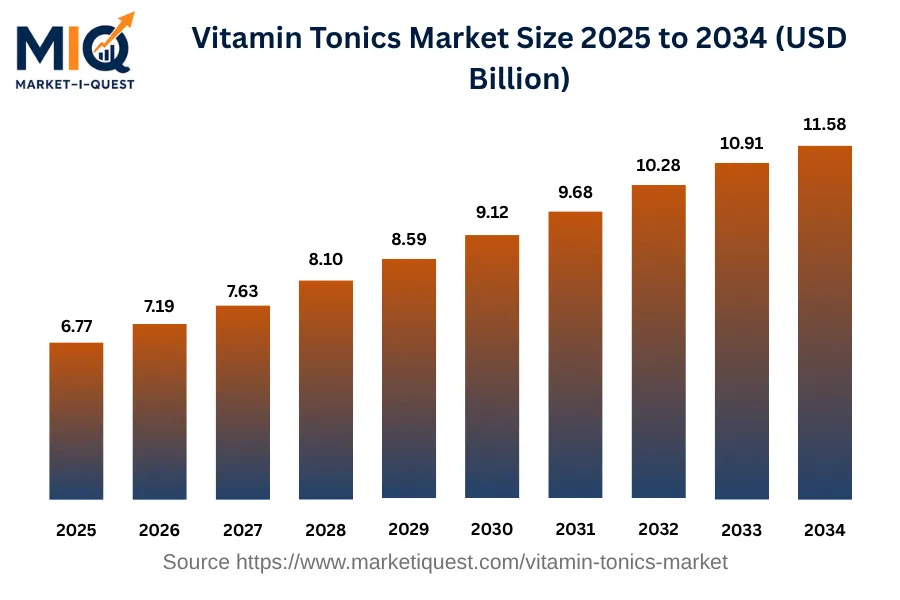
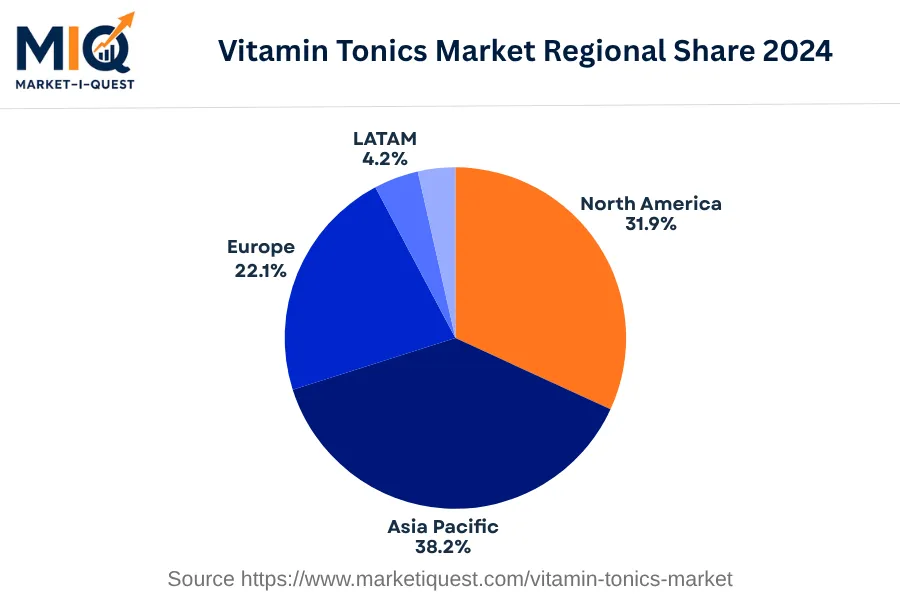
The Vitamin Tonics Market stood at 6.38 Billion in 2024 and then reached 6.77 Billion in 2025. By 2034, the market is projected to expand to 11.58 Billion, indicating a Compound Annual Growth Rate (CAGR) of 6.1%. The progression from 6.38 Billion in 2024 to 6.77 Billion in 2025 to eventually settling at a speculative size of 11.58 Billion in 2034 clearly illustrates the market's steady advancement. The growth in these years is a result of increasing consumer awareness about health and well-being, which in turn drives the demand for vitamin tonics. In 2024, the market was notably segmented in terms of regional share. The Asia Pacific region held the majority share at 38.2%, followed by North America at 31.9% and Europe at 22.1%. The remaining shares were occupied by LATAM and MEA at 4.2% and 3.5% respectively.

Key Takeaways

  • By Product Type - Tablets held the leading market share in the Vitamin Tonics Market in 2024.
  • By Distribution Channel - Hospital Pharmacies marked a remarkable growth accounting for a key market share in 2024.
vitamin-tonics-market market size

Key Driving Factors

Increased Consciousness towards Preventive Healthcare

Over the years, consumers have become more health conscious and mindful about their lifestyle choices. This transformation is largely driven by greater access to health-related information on digital platforms and the detrimental health effects associated with sedentary lifestyles and poor dietary habits. This significant shift in consumer behavior is pivotal for the vitamin tonics market as increasing numbers of individuals seek supplements, including vitamin tonics, to prevent rather than treat diseases. Vitamin tonics, often enriched with multiple vitamins, minerals, and other essential nutrients, are perceived as beneficial to overall health and well-being. Consequently, the market for vitamin tonics is getting traction as they easily integrate into preventive healthcare regimes that many consumers are adopting currently.
Propensity towards Natural and Organic Products

The prevailing consumer propensity towards natural and organic products is another critical factor driving the vitamin tonics market. Consumers are increasingly becoming discerning about the products they consume and their ingredient compositions. The demand for naturally derived products, including dietary supplements and functional beverages like vitamin tonics, has surged, as they are perceived as safer with minimal side effects. This trend is forcing many vitamin tonic manufacturers to innovate and reformulate their products with natural and organic ingredients, not only to meet this demand but also to differentiate their products in a highly competitive market. Moving forward, this trend is expected to persist and remain a significant driver for the vitamin tonics market.

Market Evolution by Timeline

2019-2023
During this period, demand in the Vitamin Tonics Market mainly came from consumers turning to healthier lifestyles in North America and Western Europe. Supply was primarily facilitated through the introduction of innovative products like the men's vitality tonic from Planetary Herbals. Still, supply constraints were felt due to increased awareness about health benefits and moderate R&D investments. The European Union introduced the Novel Food Regulation, influencing adoption as it set standards for new food types, including vitamin tonics. Commercial models largely remained traditional, with companies setting competitive pricing and partnering with local grocery chains. However, risks were observed in the form of counterfeit products that led to regulatory scrutiny.
2024
In 2024, Asia witnessed a surge in market demand, particularly in China and India due to an increase in health awareness and disposable income. Companies such as Herbalife and GNC launched various vitamin tonics targeting these new markets. Technology allowed for better product quality and variety. The lack of stringent regulation in these markets allowed for easy market penetration but led to the high probability of subpar products, posing a risk to the market's reputation. E-commerce became a popular platform for sales, and partnerships with online marketplaces were common among vitamin tonic producers.
2025-2029
The demand for vitamin tonics shifted largely toward the ageing population of developed countries like Japan and Germany during this period. Suppliers were required to adjust product formulations to cater to this group. The WHO's department of Ageing and Lifecourse, advocated for standards on supplements for the elderly, influencing global policies. Subscription models started to gain popularity, offering scheduled product deliveries at discounted rates. The main risk factor during this period came from skepticism about the actual health benefits of these products, leading to class-action lawsuits in various regions.
2030-2034
The period saw a strengthening in the demand for personalised vitamin tonics tailored for individual health profiles. Major players like Amway and NOW Foods invested in intensive R&D to realise this personalisation. Regulations around the world tightened, enforcing stricter quality standards and benefit claims for nutritional supplements. Companies adopted direct-selling models, leveraging data analytics for targeted marketing. The advancement of technology, however, raised concerns about data privacy, thus impacting on the trust of consumers and becoming a significant risky issue.

Future Market Outlook

Future Opportunities

The vitamin tonics market is ripe for opportunities driven by evolving consumer preferences towards holistic health and wellness approaches. As of 2023, interest in plant-based supplements, particularly in regions like North America and Europe, has escalated significantly, with companies like MaryRuth Organics expanding their offerings to include vegan vitamin formulations. Additionally, the increasing recognition of mental health will likely foster growth in products tailored specifically for cognitive support, evidenced by formulations from brands such as Brainiac targeting both parents and children. Collaborations between traditional supplement brands and tech firms are also becoming more prevalent; for instance, GNC introduced a partnership with health-tech startup Vytal in August 2023 to enhance product personalization. This indicates a probable increase in technology-driven health solutions. Furthermore, emerging markets present a viable pathway for expansion. A report released by the Food and Agriculture Organization in early 2023 signifies that developing countries are increasingly focusing on micronutrient fortification as a public health strategy. Companies that strategically position themselves in these regions, aligning with local health initiatives, could greatly capitalize on the upward trend in vitamin tonic consumption. As regulators tighten regulations around health claims, firms emphasizing transparency in ingredient sourcing and efficacy, such as Garden of Life, are likely to resonate more with discerning consumers looking for credible health solutions.

Segmentation Analysis

By Product Type

The market is divided into subsegments including Syrup, Capsules, Tablets, and Multivitamin Injections, with Tablets accounting for the largest revenue share while Multivitamin Injections are expected to grow at the fastest CAGR during the forecast period.

Largest Revenue Share

Tablets

Market Share Leader

Tablets, as a product type in this market, command the most substantial revenue share due to a variety of factors. Their durability, ease of use, transportability, and longevity contribute to their popularity. Many consumers appreciate the visibility of physically seeing their dosage, a level of assurance that is offered by tablets. The cost-effectiveness and simplified logistics of tablet production fuel a robust supply side that meets this demand. Reinforcing this dynamic are stringent healthcare regulations – a global phenomenon – that often favor tablets due to their measurable and consistent dosing. Geographically, the Asia Pacific region provides a significant boost to tablet sales due to their large population and an increase in the prevalence of lifestyle diseases. Tablets also cater to a wide range of customer preferences due to the flexibility in formulation techniques, making it possible to cater to broader market demographics.

Fastest CAGR

Multivitamin Injections

Forecast Period Growth Leader

On the other hand, Multivitamin Injections are expected to register the fastest CAGR. Their rapid growth can be attributed to several reasons. One of the main drivers includes their ability to provide immediate delivery of needed vitamins in acute situations, thus appealing to the healthcare sector's critical segments. In addition, they are particularly useful in instances where oral multivitamin consumption is not feasible due to medical conditions related to the digestive system or absorption issues. This development is significant in regions where access to routine healthcare is lower, thus spurring demand for effective and immediate remedial interventions. Key catalysts such as the development of advanced administration technologies, the emergence of targeted therapies, and increased R&D investments by pharmaceutical companies will also contribute to this growth. However, it is crucial to consider potential barriers, such as the higher cost related to these injections, potential side effects, and the requirement for professional administration, which could limit rapid adoption.

By Distribution Channel

The market is divided into subsegments including Hospital Pharmacies, Retail Pharmacies, and Online Pharmacies. In 2024, Hospital Pharmacies accounted for the largest revenue share while Online Pharmacies had the fastest compounded annual growth rate (CAGR).

Largest Revenue Share

Hospital Pharmacies

Market Share Leader

Hospital pharmacies form the largest revenue share segment due to the fact that most critical and complex drugs, including specialized medicines, are dispensed through this channel. The constant flow of patients to hospitals, particularly for life-threatening conditions, ensures a robust stream of pharmaceutical needs that drive revenues. Additionally, hospital pharmacies can leverage bulk purchasing power, which often results in cost savings transferred to patients. High prescribing rates in hospitals also enhance the volume of drug sales via hospital pharmacies. The need for immediate administration of drugs in hospital settings also provides an impetus to the segment growth. Furthermore, in many regions, higher regulatory control over critical drugs necessitates their sale through hospital pharmacies, contributing to their lead in terms of revenue.

Fastest CAGR

Online Pharmacies

Forecast Period Growth Leader

Online Pharmacies form the fastest-growing subsegment. They are exhibiting a high compounded annual growth rate largely due to increased customer convenience and the exploding digital footprint. The rapid proliferation of internet services and smart devices have catalyzed the adoption of online sales channels, including pharmacies. Furthermore, business advancements like round-the-clock availability, door-step delivery, and automated supply chain processes are contributing to faster segment growth. The COVID-19 pandemic has also pushed consumers towards online sources for health and wellness products due to physical distancing norms and convenience. Near-term risks include regulatory constraints and difficulty in handling complex medicines. A continued focus on digital literacy and internet penetration, especially in emerging markets, can accelerate this growth further.

Competitive Analysis - Vitamin Tonics Market

Key Market Players

Manufacturers / OEMs

Pfizer Inc.
US
Bayer AG
Germany
Amway
US

Key Suppliers & Raw Materials

BASF SE
Germany
DSM
Netherlands
Ajinomoto Co., Inc.
Japan

Distributors, Integrators & Channel Partners

Walgreens Boots Alliance
US
CVS Health
US
Walmart Inc.
US

Porter’s Five Forces Analysis

This analysis evaluates the competitive dynamics and market attractiveness of the Vitamin Tonics Market.

Supplier Bargaining Power

Medium

Dependent on supply chain for specific ingredients, with some rare botanicals possibly conferring power.

Buyer Bargaining Power

High

Varied selection of brands and products gives consumers high bargaining power.

Threat of Substitutes

High

Dietary supplements and fortified foods are direct substitutes, posing a major threat.

Threat of New Entrants

Medium

Regulatory hurdles and ingredient sourcing present a barrier, but niche opportunities exist.

Competitive Rivalry

High

High competition among established firms, with constant innovation and branding efforts.

Regional Analysis

Geographic market dynamics and growth opportunities across key regions

Global Market Outlook

vitamin-tonics-market market regional share

North America

In 2024, the North American market for vitamin tonics experienced substantial growth driven by several key factors. Rising health consciousness among consumers, particularly in the US, Canada, and Mexico, led to increased demand for vitamin-enriched supplements and beverages. Government regulations promoting healthier lifestyles and improved nutrition increased the acceptance and use of vitamin tonics. Technological innovations in the formulation and packaging of these products enhanced market penetration.

In terms of trends, consumer preference showed a marked shift towards organic and natural vitamin tonics, largely on account of growing awareness about the potential health risks associated with artificial additives. Omnichannel retailing provided greater accessibility and convenience for consumers to purchase these products, leading to accelerated sales growth. An increase in strategic partnerships and mergers among the leading manufacturers was also observed, a move aimed at expanding product offerings and market reach. Compliance with stringent regulatory standards, particularly in the US, became a decisive criterion for market positioning and branding. Prominent customer segments included the healthcare sector, fitness enthusiasts, and the aging population. The pattern of purchase and consumption suggested a key role for vitamin tonics in preventative healthcare and maintenance of overall health and wellbeing. Supply dynamics indicated a strong presence of both local and international players, with competitive pricing strategies employed to capture significant market share.

Asia Pacific

In 2024, the Vitamin Tonics Market in the Asia Pacific observed robust growth, spurred by enhanced health awareness and increasing disposable income. The market saw substantial boosts driven by factors such as urbanization and increased health consciousness among consumers, particularly in China, India, and Australia. Additionally, increasing investments from public and private organizations in the healthcare sector augmented the demand for vitamin tonics. Technological advancements in manufacturing processes also played a crucial role, enabling manufacturers to offer vitamin tonics in various forms like drinkable shots and gummies, further pushing supply dynamics.

Strikingly, consumer behavior trended towards organic and natural vitamin tonics, signifying a shift towards products with minimal chemical intervention. This was primarily observed in mature markets like Japan and South Korea. In addition, the Indian market displayed an increase in online purchases of vitamin tonics due to the ongoing e-commerce boom. One notable trend was a rise in the strategic partnerships and M&As among existing players aiming to enhance their market reach, especially in key ASEAN markets. Primarily, vitamin tonics saw significant uptake in sectors like healthcare, retail, and fitness. For instance, the enterprise sector in China implemented these products as a part of their employee wellness programs. Furthermore, the retail sector in Australia expanded vitamin tonics' availability across major supermarket chains, magnifying the market penetration.

Europe

In 2024, Europe's Vitamin Tonics Market experienced robust activity centered on achieving a healthier lifestyle, driven by a growing appetite for natural products and preventative healthcare among the European population. Increased investments by key market players in R&D and marketing have underpinned the traction in Germany, the United Kingdom, France, Italy, Spain, the Nordics, Benelux, and Central & Eastern Europe, contributing significantly to market growth. Regulatory policies such as the EU's Health Claims Regulation have also influenced market dynamics by controlling product labeling and claims, thereby fostering trust and transparency in the industry.

Buyer preference for vitamin tonics with organic and natural ingredients has been stark, compelling producers to modify their product lines. The increased use of technology, particularly e-commerce platforms, have greatly expanded distribution channels, enabling greater market penetration and diversification. Concurrently, strategic partnerships and acquisitions have contributed to industry consolidation, enhancing the product ranges and customer base of major manufacturers, while ensuring compliance with European Union standards. The primary consumers of these tonics are found in sectors such as healthcare and retail, reflecting a wider societal push for wellness and health maintenance. This is underscored by the significant uptick in vitamin tonic sales within these sectors and beyond in the base year.

Latin America

In 2024, the Vitamin Tonics Market witnessed a substantial upswing in Latin America, primarily driven by an increased health consciousness among individuals and an emphasis on preventive healthcare. Changes in dietary habits in countries like Brazil, Argentina, and Mexico, spurred on by the growing penetration of Western dietary behaviors, played a significant role in enhancing market growth. Investment in the manufacturing sector, notably in Colombia and Chile, led to an amplified production capability, fulfilling escalating local and regional demand. An important regulatory influence was Peru's policy promoting the manufacture and consumption of locally sourced vitamin tonics.

Behavioral trends underscored a shift towards organic and gluten-free vitamin tonics, especially in Brazil and Argentina, reflecting a larger global movement. The prevalence of e-commerce across LATAM boosted the distribution and sales of vitamin tonics substantially. Partnerships between local enterprises and international health firms emerged as a dominant trend, aiding in market expansion and improved product quality. In contrast, offline retail channels, especially pharmacies, remained pivotal in Mexico and Chile. Finally, the standardization and stringent quality control policies executed by governments across LATAM ensured the availability of premium quality vitamin tonics, further fueling the market's growth. Various sectors, notably healthcare and retail, derived significant benefits from these developments, with consumers demonstrating increased acceptance and adoption.

Middle East & Africa

In 2024, the Middle Eastern and African vitamin tonics market experienced a dynamic shift due to various demand factors and consumer choices. The key drivers stimulating this market were increased health consciousness among consumers, amplified demand for vitamin supplement products, and improved healthcare infrastructure. In Saudi Arabia, the sharp rise in vitamin tonic consumption correlated with growing awareness of preventive healthcare, while in South Africa, investment in the pharmaceutical and healthcare sector facilitated new market ventures. Additionally, the UAE and Qatar observed an increased adoption of technology in the delivery of vitamin tonics, enhancing consumer accessibility.

Trends that dominated the region include emerging consumer preferences for organic and herbal vitamin supplements, a shift recognized predominantly in Israel and Kenya. E-commerce platforms becoming primary sales channels, as seen in Nigeria and northern Africa countries, another significant development. Partnerships between local and international health companies gained momentum, particularly in Egypt, where multinational pharmaceutical behemoths collaborated with local companies. Lastly, in response to quality concerns raised by consumers, stricter policy enforcement was evident across the market in 2024. These dynamics were primarily prevalent in the healthcare sector, though the impact was also discernable in relevant fields like retail and manufacturing. Moreover, the engagement of governments, particularly in countries like Saudi Arabia and UAE, posing several regulatory implications, became crucial within the market realm in 2024.

Recent Industry Developments

Latest market innovations, product launches, and strategic initiatives

June 2026

Canadian vitamin manufacturer Jamieson Wellness is in talks with potential buyers after receiving an unsolicited acquisition offer, with analysts estimating the transaction could exceed $2 billion. Concurrently, Jamieson is actively seeking to acquire additional U.S. assets.

May 2026

UK supplement brand Tonic Health completed a £250,000 secondary share sale, allowing early investors to realize returns.

Frequently Asked Questions