Vascular Closure Device Market Snapshot

Key Players

  • Teleflex Incorporated (US)
  • Cardinal Health (US)
  • Abbott Laboratories (US)
  • St. Jude Medical (US)
  • Meril Life Sciences (India)
  • Essential Medical (US)
  • Cardiva Medical (US)
  • Endocor GmbH (Germany)
  • Vasorum Ltd (Ireland)
  • Beijing Puyishengji Medical Technology (China)

Market Size

Base Year 2024
$2.76 Bn
CAGR
7.37%
Forecast 2034
$5.62 Bn

Market Segments

By Device Type
Passive Closure Devices, Active Closure Devices, Suture Closure Devices, Collagen-based Closure Devices
By Procedure Type
Transvascular Procedures, Cardiac Procedures, Peripheral Procedures
By Distribution Channel
Direct Sales, Online Sales, Third-party Distributors
By End User
Hospitals, Ambulatory Surgical Centers, Specialty Clinics

Market Dynamics

Drivers
  • Increasing cardiovascular disease prevalence
  • Advancements in medical technology
Restraints
  • High procedure costs
  • Limited healthcare infrastructure
Opportunities
  • Emerging economies demand growth
  • Technological advancements in VCDs

Market Size

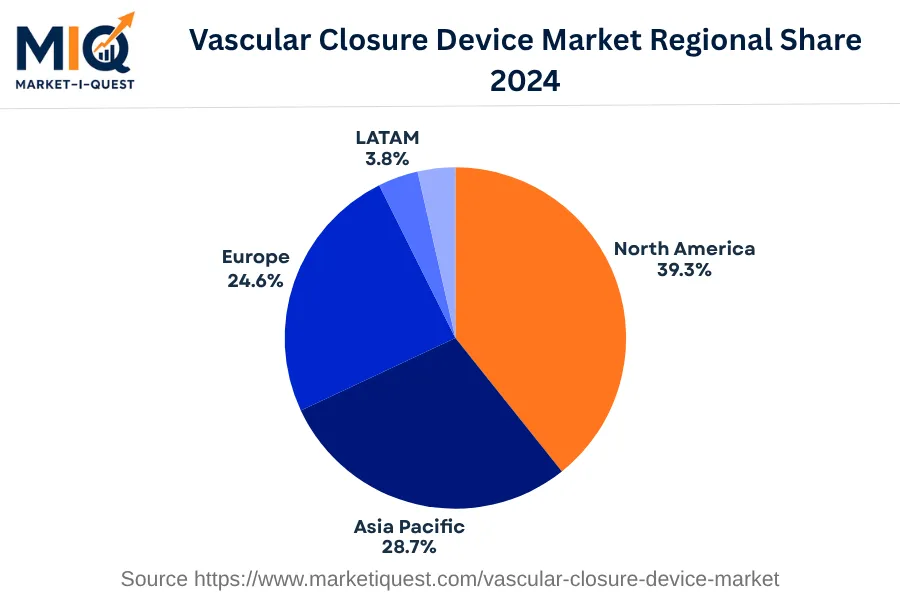
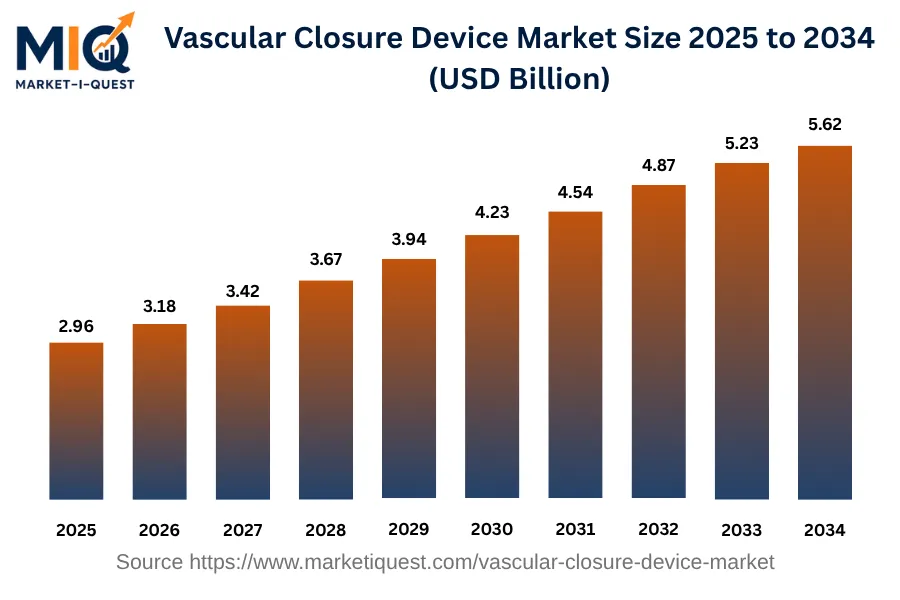
The Vascular Closure Device Market valued at USD 2.96 billion in 2025 and is projected to reach USD 5.62 billion by 2034, growing at CAGR of 7.37%. The substantial increase in market size over this period indicates a continually growing demand for these products. The steady rise in market value reflects a positive trend in the sector, indicating a consistently expanding market base that has almost doubled in size from 2025 to 2034. However, the regional share distribution indicated North America holding 39.3% of the market share, followed by Asia Pacific at 28.7%, Europe at 24.6%, Latin America at 3.8%, and the Middle East and Africa at 3.6%. The data shows that the majority of the market is concentrated in North America, followed closely by the Asia Pacific and Europe regions. Meanwhile, the Latin America and Middle East and Africa regions command a smaller portion of the market share.

Key Takeaways

  • By Device Type - Active Closure Devices held the most significant portion in recent years.
  • By Procedure Type - Cardiac Procedures top the segment contributing a substantial share of the total market.
  • By Distribution Channel - Direct Sales contributed to the majority market share in the past year signifying their dominance.
  • By End User - Hospitals led the Vascular Closure Device Market with the largest chunk of overall market share.
vascular-closure-device-market market size

Key Driving Factors

Escalating incidence of Cardiovascular Diseases worldwide

Cardiovascular Diseases (CVDs) are the leading cause of mortality worldwide, accounting for nearly 32% of all global deaths. As most CVDs require some form of vascular surgery, the prevalence of these diseases directly correlates to an increased demand for vascular closure devices. Moreover, the expanding obese and elderly population who are at a higher risk for CVDs are compelling healthcare providers to adopt more vascular closure devices. These devices are prominently used to seal the puncture made in the artery after a catheterization procedure, reducing recovery time and risk of complications. Therefore, the surging prevalence of CVDs is a key driving factor for the vascular closure device market.

Implementation of value-based healthcare models

The shift towards value-based healthcare is a major driver for the uptake of vascular closure devices. In a quest for enhanced patient outcomes, this model encourages the adoption of advanced medical tools that offer high reliability, effectiveness and reduce patient's time in the healthcare facility. Vascular closure devices are viewed favorably in this model, as they minimize potential complications, lower hospital readmissions, and quicken patient discharge after invasive cardiovascular procedures such as angiography and angioplasty. As healthcare systems worldwide continue to transition to these models, the demand for vascular closure devices will likely see a boost.

Market Evolution by Timeline

2019-2023
During this period, vascular closure devices (VCD) served majorly cardiology patients in North America and Europe due to rise in cardiovascular diseases. VCD manufacturers like Abbott Laboratories and Medtronic released novel devices. However, integration of these was slow, given the concerns over device failures and complications. To regulate the adoption, the American Heart Association recommended stringent protocol for VCD use in 2019. The procurement model involved direct sales agreement with hospitals and clinics, putting high pricing pressure on manufacturers. Supply shifts from invasive surgical procedures to VCDs noted during this period posed a risk due to slow adoption and acceptance from healthcare providers and patients.
2024
During 2024, Non-invasive vascular closure devices became a common choice for Asia-Pacific population tackling obesity. Companies like Cardinal Health made their debut, but faced constraints due to lacking technological maturity. The introduction of EN 1041:2020 - Information supplied by the manufacturer, a European standard, ensured better patient information and safe usage of devices, impacting the adoption. Volume-based long-term contracts became a standard practice between manufacturers and healthcare providers. However, the dominance of traditional closure methods posed a risk to VCD market growth in this year.
2025-2029
Reliance on VCDs for people with vascular diseases might become common worldwide, increasing demand from Asia and Africa. Suppliers will likely counter this demand by introducing AI-based vascular closure devices. Integration maturity level is expected to reach a significant stage in these years. There will likely be adherence to ISO 13485:2016, detailing quality management system requirements, thus promoting better product quality. Competitive pricing models and collaborations with local healthcare providers will likely become prevalent. The lack of skilled healthcare professionals to handle advanced VCDs is expected to be a major risk. To mitigate this, training programs are likely to be initiated by major manufacturers.
2030-2034
The trend of personalized healthcare might lead to demand for customized VCDs for specific patient cohorts. Technologically, biodegradable VCD's might gain popularity due to their safety profile and better healing potential. Health authorities such as the FDA might rigorously enforce guidelines for VCD production, leading manufacturers to conform with GMP guidelines for device production. Performance-based contracts are projected to be encouraged, ensuring manufacturers committed to measurable health outcomes. Potential risks during this period will likely raise around improper waste disposal of biodegradable VCDs. Therefore, firms might respond by implementing environmentally friendly disposal practices.

Future Market Outlook

Future Opportunities

As regulatory frameworks evolve, future opportunities in the vascular closure device market are likely to expand. The implementation of updated guidelines by the FDA in 2022 for the evaluation of new medical devices creates a pathway for emerging technologies and devices that can meet stringent safety requirements. Companies like Boston Scientific and Medtronic are already exploring biodegradable materials, which represents a potential shift in closure technologies to enhance biocompatibility. Additionally, the increased focus on outpatient and ambulatory surgical centers, supported by health policies in the United States aiming to promote cost-effective healthcare, opens avenues for vascular closure devices. The adoption of personalized medicine is gaining traction, with hospitals in Japan leading research into custom-fit closure devices that align with individual patient anatomical characteristics. Furthermore, the ongoing clinical trials, such as those analyzing the effectiveness of new closure methods in various settings by the American College of Cardiology, indicate a greater acceptance of these devices in diverse medical environments. This convergence of technological advancements and shifts in healthcare delivery models provides an optimistic outlook for the vascular closure device market, as companies adapt to meet the demand for effective, safe, and patient-centered solutions in diverse surgical settings.

Segmentation Analysis

By Device Type

The market is divided into subsegments including Passive Closure Devices, Active Closure Devices, Suture Closure Devices, and Collagen-based Closure Devices. Active Closure Devices accounted for the largest revenue share while Collagen-based Closure Devices are expected to grow at the fastest Compound Annual Growth Rate (CAGR) during the forecast period.

Largest Revenue Share

Active Closure Devices

Market Share Leader

Current industry logic indicates that Active Closure Devices are leading the market because of their unparalleled efficiency and ease of use. Advanced healthcare systems especially in developed countries such as US, Western Europe, and parts of Asia have been demanding more of these devices, resulting in impressive market revenues. Additionally, regulations favor the use of these devices, leading to substantial investments and an abundance of supply, further increasing accessibility and adoption rates. Patients and healthcare providers also generally prefer Active Closure Devices due to their affordability and the minimal amount of time required for recovery post usage, lending to an increase in demand. Moreover, key channels of distribution have been direct purchases from manufacturers and online ecommerce platforms.

Fastest CAGR

Collagen-based Closure Devices

Forecast Period Growth Leader

Collagen-based Closure Devices are projected to grow at the fastest CAGR during the forecast period. Several key drivers are influencing this trend, including technological advancements in biomaterials and an increased acceptance of collagen-based closures by both doctors and patients. Moreover, complex surgical procedures are yielding a higher rate of adoption due to the favourable properties of collagen, such as promoting haemostasis and tissue regeneration. Barriers to entry such as high production costs and regulatory issues are gradually melting away due to improvements in manufacturing processes and policy structures. Additionally, partnerships between market players and organizations all over the world are enhancing the distribution network, leading to increased market penetration.

By Procedure Type

The market is divided into subsegments including Transvascular Procedures, Cardiac Procedures, and Peripheral Procedures. Cardiac Procedures accounted for the largest revenue share while Peripheral Procedures are expected to grow at the fastest CAGR during the forecast period.

Largest Revenue Share

Cardiac Procedures

Market Share Leader

In the base year 2024, cardiac procedures held the largest market share due to the high prevalence of cardiovascular diseases worldwide. A combination of genetic, environmental and lifestyle factors has led to an increase in the number of people affected by heart diseases, thereby driving the demand for cardiac procedures. These procedures include surgeries like heart bypass, installation of stents and pacemakers which are vital for the diagnosis, treatment, and management of cardiovascular conditions. The demand for cardiac procedures is particularly high in developed countries where the aging population is high. Regulatory bodies have also significantly influenced this market by approving innovative and minimally invasive cardiac procedures, further fuelling the demand. Other factors contributing to the subsegment's market position include increasing healthcare expenditure, improvement in hospital infrastructure, and widespread acceptance of these procedures by medical professionals and patients.

Fastest CAGR

Peripheral Procedures

Forecast Period Growth Leader

Peripheral Procedures is forecasted to record the fastest growth in the future. Occurrence of peripheral artery diseases is the main driver behind the increasing demand for peripheral procedures. Unhealthy lifestyle habits such as smoking and harmful dietary practices are contributing to the rise of these diseases, subsequently boosting this subsegment. Technological advancements have played a key role in stimulating growth. Industry leaders have invested heavily in R&D to develop safer, less invasive methods. As these procedures become more well-known, regulatory approvals are likely to intensify, further positioning peripheral procedures for growth. However, the reformation of healthcare policies and strengthening partnerships with healthcare providers and insurers could propel the adoption of peripheral procedures.

By Distribution Channel

The market is divided into subsegments including Direct Sales, Online Sales and Third-party Distributors, with Direct Sales accounting for the largest revenue share while Online Sales is expected to grow at the fastest CAGR during the forecast period.

Largest Revenue Share

Direct Sales

Market Share Leader

Direct sales continue to dominate in 2024 based on its effectiveness and popular acceptance. It's driven by the companies' need to maintain direct contact and build relationships with their customers. This system provides them control over their products, customer service and pricing. Another major factor is the personal interaction involved in direct sales which allows for in-depth product demonstrations, instant customer feedback and higher chances of closing sales. Geographically, this method is prevalent in both developed and emerging markets, providing a stable customer base. Reduced regulatory constraints and flexibility of supply further boost this segment. However, the purchasing decision in this channel largely depends on the reputation of the seller and quality of the product.

Fastest CAGR

Online Sales

Forecast Period Growth Leader

Online sales have the fastest growth outlook. The meteoric growth in this segment is due to significant tech advancements along with changes in consumer behavior. A key driver is the increasing penetration of smartphones and internet across the globe, which is opening up new markets for online sales. Shifting customer preferences towards e-commerce due to the convenience of shopping from home, a wide range of product availability, and easy price comparisons is propelling its growth. Strategic partnerships with logistics providers and capital investment in robust technological infrastructure could mitigate these challenges.

By End User

The market is divided into subsegments including Hospitals, Ambulatory Surgical Centers, and Specialty Clinics. Hospitals accounted for the largest revenue share while Ambulatory Surgical Centers is expected to grow at the fastest CAGR during the forecast period.

Largest Revenue Share

Hospitals

Market Share Leader

The hospital sector typically dominates in terms of revenue. The reasons for this are multifaceted. Most importantly, hospitals handle a greater volume of patients and a wide range of medical conditions compared to other sectors. They offer services including inpatient care, outpatient care, emergency room services, and surgical procedures, all of which generate significant revenue. Moroever, hospitals attract patients with serious, often life-threatening conditions that require intensive and costly treatments and procedures. Geographically, hospitals are often more accessible than other healthcare facilities, especially in urban or densely populated areas. Regulatory support for emergency services in hospitals, and the fact that hospitals are usually the first point of contact in healthcare, allow this sector to maintain a strong revenue-share position.

Fastest CAGR

Ambulatory Surgical Centers

Forecast Period Growth Leader

Ambulatory Surgical Centers (ASCs) are expected to grow at the fastest rate. A main driver for their growth is the changing landscape in healthcare, which is seeing a shift towards fewer inpatient hospital stays and more ambulatory care. Lower cost is an important factor pushing this shift, as procedures in ASCs generally cost less than in regular hospitals. This is attractive to patients, health insurers, and governments alike. Besides cost, the convenience of ASCs for patients, together with advancements in technology enabling outpatient surgeries, offer further impetus for growth. Regulatory support also plays a key role, with policies enacted to reduce healthcare costs and improve efficiency.

Competitive Analysis

Key Market Players

Manufacturers / OEMs

Abbott Laboratories
US
Medtronic
Ireland
Terumo Corporation
Japan

Key Suppliers & Raw Materials

Johnson & Johnson
US
Vascular Solutions, Inc.
US
Teleflex Incorporated
US

Distributors, Integrators & Channel Partners

Boston Scientific Corporation
US
Cardinal Health
US
Merit Medical Systems
US

Porter’s Five Forces Analysis

This is an analysis of the competitive forces shaping the Vascular Closure Device Market.

Supplier Bargaining Power

Medium

Reliance on specialized suppliers has given moderate power, combined with high switching costs.

Buyer Bargaining Power

High

Buyers (hospital networks, clinics) often have increased negotiating power due to bulk purchases.

Threat of Substitutes

Low

Few alternatives exist for effective vascular closure, creating low substitutability.

Threat of New Entrants

Medium

Regulatory barriers and capital requirements moderate the entry threat, but technology improvements may lower these barriers.

Competitive Rivalry

High

Competition intensifies due to many players, advancing technology, and buyer power.

Regional Analysis

Geographic market dynamics and growth opportunities across key regions

Global Market Outlook

vascular-closure-device-market market regional share

North America

In 2024, the North American Vascular Closure Device (VCD) market was characterized by dynamic competition and continuing advancements in the medical devices sector. Drivers included increasing demand due to the prevalence of cardiovascular diseases in this region, particularly in the US. A surge in concerted efforts by healthcare stakeholders to streamline the process of interventional procedures also contributed to this demand. Technological adoption was another key driver, with top medical device manufacturers like Abbott Laboratories introducing sophisticated and highly efficient VCDs. Regulatory policies such as FDA's enforcement of stringent quality control measures impacted the supply dynamics, ensuring the safety and efficacy of VCDs across the region.

Trends unfolded around the buyer's inclination toward minimally invasive procedures, which led to high adoption of VCDs in healthcare institutions. Technology shifts were noticeable as quality management systems increasingly integrated AI and machine learning for the production of reliable and efficient VCDs. Channel dynamics were influenced by medtech companies tying up with hospitals and clinics for the provision of their VCDs directly to the end-user. The merger between Terumo and Vascular Solutions was an example of the strategic partnerships taking place to expand market presence. Policies enforcing transparency in medical device pricing also took the forefront, further influencing the VCD market dynamics in the region.

Asia Pacific

In 2024, the Asia Pacific market for vascular closure devices showed notable growth driven primarily by several distinct factors. An increasing aging population, particularly in nations like Japan and China, raised the demand for endovascular procedures, thus necessitating vascular closure devices. Advances in technology adopted by local manufacturers, particularly in countries like South Korea and India which have a burgeoning biomedical sector, resulted in a more diversified product market. Concurrently, positive regulatory environments in countries such as Australia and key ASEAN markets due to the emphasis on healthcare advancements promoted the introduction of new and improved devices.

The sector experienced several trends, notably the increase in patient preference for minimally invasive procedures. This led to a high demand for advanced biodegradable vascular closure devices, mainly from healthcare institutions and elderly care centers. There was also significant growth in the online sales channel owing to the convenience and breadth of options it offered to consumers. Furthermore, we observed an increased interest in collaborative initiatives among local and international manufacturers, aiming to improve technology and reach. An example is partnerships between Chinese manufacturers and international companies striving to tap into the expansive Chinese market with advanced offerings. These trends shaped the market landscape in the Asia Pacific in 2024.

Europe

In 2024, the Vascular Closure Device (VCD) market in Europe experienced noteworthy growth propelled by specific factors. A rise in cardiovascular procedures in key regions, including Germany, the United Kingdom, France, and Italy, contributed to increasing demand for VCDs, following an increasing prevalence of lifestyle diseases. Enhanced investment in healthcare infrastructure saw the adoption of advanced technologies across hospitals in Spain, Benelux, the Nordics, and Central & Eastern Europe, increasing VCD utilization. Regulation-wise, the EU's commitment to patient safety stimulated the adaptation of high-quality VCDs. The competitive pricing climate, spurred by suppliers identifying Europe's growing market potential, further enhanced the accessibility of these devices.

Key market trends include a marked shift towards bio-absorbable closure devices due to perceived benefits like lower complication rates. The use of e-commerce channels witnessed noteworthy growth as healthcare providers sought seamless, prompt purchasing solutions. Additionally, consolidation activities were visible in the marketplace, with multi-national corporations acquiring successful startups to bolster product offerings. Policy enforcement was distinct, with the European Union focusing on tightening standards to ensure product integrity. Key consumers included diverse healthcare bodies ranging from large hospitals to smaller clinics. The VCD market maintained a steady growth trajectory, exhibiting substantial potential stimulated by consumer demand, regulatory standards, and evolving market dynamics.

Latin America

In 2024, Latin America's Vascular Closure Device (VCD) market was dynamically influenced by technological advancements, regulatory standards, and healthcare demands. Technological strides in countries like Brazil and Mexico increased the adoption of VCDs, accelerating market expansion. However, stringent regulatory frameworks in countries such as Argentina and Chile posed significant challenges to manufacturers, impacting supply dynamics. Furthermore, large-scale investments in healthcare infrastructure by governments, particularly in Colombia and Peru, were a considerable market driver, promoting VCD usage.

A key trend shaping the LATAM VCD Market was the shift towards minimally invasive procedures, increasing the demand for VCDs in the healthcare sector. Consumers exhibited a growing preference for VCDs due to their efficiency and decreased recovery time. Furthermore, there was a noticeable surge in partnerships and mergers among VCD manufacturers to strengthen market presence. Lastly, active enforcement of patient safety policies across all LATAM countries enhanced the standardization of VCDs, pushing healthcare providers to adopt them. In essence, the healthcare sector in Latin America showed increased reliance on vascular closure devices in 2024, primarily driven by technical advancements, healthcare investments, and a clear inclination towards minimally invasive procedures facilitated by regulatory policy enforcement.

Middle East & Africa

In 2024, the Vascular Closure Device (VCD) market in the Middle East and Africa was shaped by various factors. The prevalence of cardiovascular conditions in countries such as Saudi Arabia and South Africa drove the demand for VCDs, leading to investment in healthcare infrastructure and adoption of advanced medical technologies. Regulatory procedures streamlined the regional VCD market, particularly in nations like the United Arab Emirates and Qatar, fostering a competitive commercial environment. Trend-wise, the shift towards minimally invasive procedures was noticed particularly in Egypt and Kenya, accelerating the adoption of VCDs in these regions. This was complemented by the rise in healthcare partnerships and M&A activities in Nigeria and Israel, aimed towards broadening the distribution of VCDs. Furthermore, stringent enforcement of healthcare standards in Israel and South Africa ensured quality control, thereby moulding the regional VCD market.

Governments played a key role in the VCD market by prioritizing healthcare expenditure, influencing both manufacturing and retail sectors. Meanwhile, healthcare providers, being primary consumers of VCDs, shaped the demand dynamics through their procurement and utilization patterns. Overall, the VCD market in the Middle East and Africa in 2024 was driven by healthcare needs, steered by regulatory frameworks, and sustained by strategic partnerships and quality adherence.

Recent Industry Developments

Latest market innovations, product launches, and strategic initiatives

July 2026

Dreame Technology launched the L50 Plus and L50 robotic vacuum cleaners in India, priced at INR 34,999 and INR 27,999 respectively, featuring 25,000Pa Vormax™ suction and automatic dust collection with a 5L dust bag enabling up to 120 days of hands-free cleaning.

February 2026

Ojinyanghaeng signed an exclusive partnership agreement with Dreame to serve as the official domestic distributor and sales partner for the Dreame Z10 Station cordless vacuum cleaner in South Korea.

Frequently Asked Questions