Thermal Management Technologies Market Snapshot

Key Players

  • Honeywell International Inc. (United States)
  • Laird PLC (United Kingdom)
  • Aavid Thermalloy LLC (United States)
  • Delta Electronics Inc. (Taiwan)
  • Advanced Cooling Technologies (United States)
  • Parker Hannifin Corp (United States)
  • European Thermodynamics Ltd (United Kingdom)
  • Thermal Management Technologies (Canada)
  • Vertiv Co. (United States)
  • Lord Corporation (United States)

Market Size

Base Year 2024
$14.28 Bn
CAGR
8.54%
Forecast 2034
$32.41 Bn

Market Segments

By Material
Adhesive Material, Non-adhesive Material
By Device
Conduction Cooling Device, Convention Cooling Device, Advance Cooling Device, Others
By Service
Installation & Calibration, Optimization & Post Sales Service
By End Use
Consumer Electronics, Service & Data Centers, Automotive, Healthcare, Others

Market Dynamics

Drivers
  • Growing demand for energy-efficient devices
  • Technological advancement in thermal solutions
Restraints
  • High procurement costs
  • Reliability issues in harsh environments
Opportunities
  • Growing electric vehicle industry
  • Advancement in semiconductor technologies

Market Size

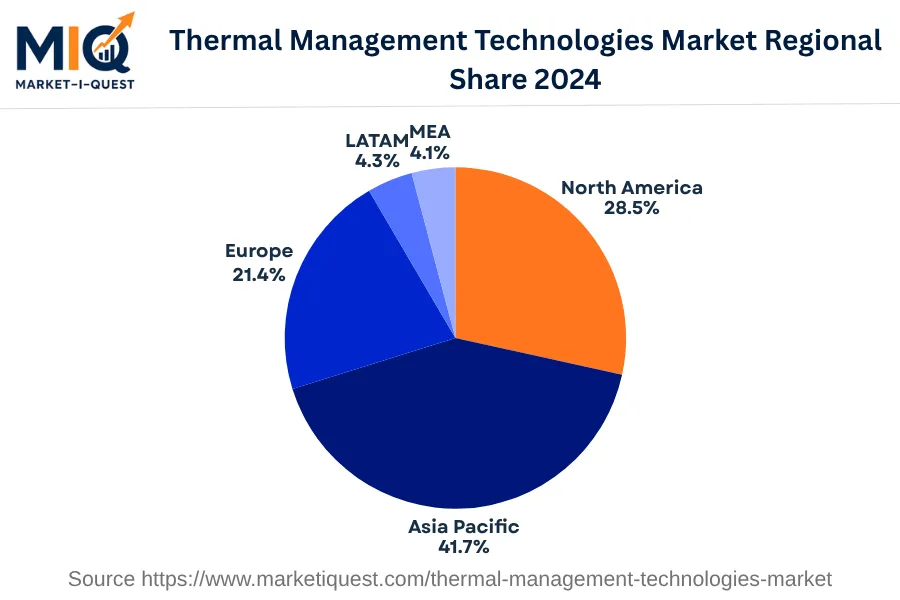
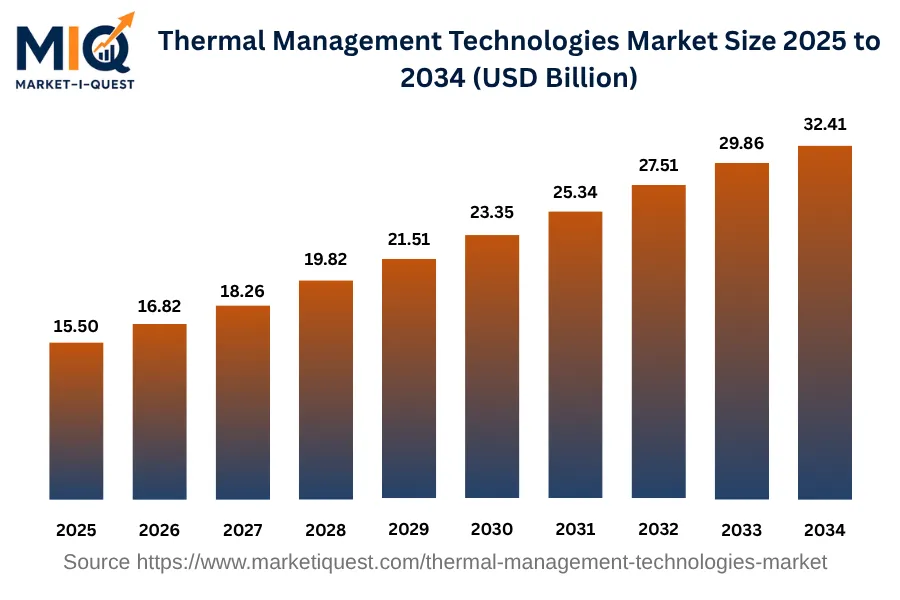
The Thermal Management Technologies market size in 2025 is projected to be $15.50 billion, up from $14.28 billion in 2024. By 2034, the market size is expected to nearly double to $32.41 billion, marking a CAGR of 8.5% over the span of almost a decade. This steady trajectory of growth is attributed to an increase in demand for thermal management technologies across multiple sectors. In terms of regional market shares in 2024, the Asia Pacific led with 41.7%, followed by North America with 28.5%. Europe made up 21.4% of the market, while the shares of Latin America (LATAM) and the Middle East and Africa (MEA) were significantly less, at 4.3% and 4.1% respectively.

Key Takeaways

  • By Material - Adhesive Material led under the Materials segment in 2024.
  • By Device - Conduction Cooling Device held a dominating share in 2024.
  • By Service - Installation & Calibration held the leading market share in 2024.
  • By End Use - Service & Data Centers accounted the largest share of the segment.
thermal-management-technologies-market market size

Key Driving Factors

Stringent Regulations on CO2 Emissions

Many countries globally have imposed strict regulations on CO2 emissions to combat climate change. For example, in the European Union, the stringent emission standards 95g CO2/km for new passenger vehicles. In such scenario, thermal management technologies are now a key focus area for various sectors, especially the automotive industry. These technologies can optimally manage heat generated from various sources such as engines, batteries, and exhaust systems, thereby helping manufacturers adhere to the CO2 emissions standards. Hence, strict government regulations on CO2 emissions are pushing the adoption of thermal management technologies.

Rapid Urbanization Leading to Increase in HVAC Systems

Increasing urbanization and infrastructural development around the world have led to a surge in demand for Heating, Ventilation, and Air Conditioning (HVAC) systems. These systems are important fixtures in urban infrastructure such as offices, retail outlets, transportation, and residential apartments. The effective functioning of HVAC systems is reliant on thermal management technologies for efficient heat dissipation, preventing overheating and ensuring longevity of the systems. Hence, the worldwide growth in urban infrastructures demanding HVAC systems is contributing to the increased use of thermal management technologies.

Market Evolution by Timeline

2019-2023
During this period, key buyers in the Thermal Management Technologies Market were from the consumer electronics and automotive industries, predominantly based in Asia and North America. Supply came largely through liquid cooling systems and advanced materials such as graphene and carbon nanotube, although the maturity of these integrations was still developing. In terms of policy, the European Union introduced eco-design standards for cooling products prompting the industry to innovate to meet defined energy efficiencies. Cost-wise, long-term equipment maintenance contracts were still common, while partnerships between manufacturers and software companies emerged to facilitate development of smart thermal management technologies. Risks during this period included potential supply chain disruptions due to increasingly strict environmental regulations.
2024
By 2024, renewable energy sectors had become major buyers of thermal management technologies, with demand rising particularly in regions like Europe and South Asia that were heavily investing in green energy. Thermoelectric coolers and heat pipes were the dominant offered technologies, with significant improvements in integration maturity over the past year. The EU's eco-design standards were largely adopted worldwide, creating a unified regulatory context. Suppliers started trending towards upfront service contracts with lifetime warranties. The key risk was a potential lack of materials due to ever stricter environmental policies globally, but this was partially mitigated by the development of renewable and recyclable materials for thermal management technology.
2025-2029
Demand in this period continued to be driven by the renewable energy sectors, however large-scale industrial processes and data centers also demonstrated high demand. Technologies such as solid-state cooling devices and electrocaloric coolants made their market entries. Adoption was slow at first due to their high prices and integration challenges. Countries like China and India introduced specific optimization standards for thermal management in industrial applications. Value-based pricing models became more popular, leading suppliers to focus on enhancing the value propositions of their offerings. The main risk was the pace of technological change, potentially rendering some existing technologies obsolete quickly.
2030-2034
In this period, the aerospace and defense sectors joined the major buyers for thermal management technologies, with increasing requirements for thermal solutions in high-temperature, ruggedized environments. Products such as advanced phase change materials (PCMs) and thermal interface materials (TIMs) rose in popularity. Their adoption however faced challenges due to the requirement of specific application expertise for integration. Governments globally were in the process of creating standardization around these newer technologies. The pricing remained consistent with a value-based approach, and risks in this period included increased competition and regulatory uncertainties related to the new, emerging technologies.

Future Market Outlook

Future Opportunities

The ongoing evolution in thermal management technologies presents considerable future opportunities as industries seek enhanced efficiency and performance. With the global push towards decarbonization, companies are increasingly expected to provide solutions that comply with stringent climate regulations, catalyzing innovation in thermal management. In 2023, governments in Canada and Japan have implemented policies promoting the development of eco-friendly thermal solutions in industries such as automotive manufacturing. Companies like Ford are already focusing on sustainable thermal management systems for their electric vehicle lineups as part of their strategic initiatives. The opportunity for thermal interfaces in residential and commercial sectors is growing with the rise of smart HVAC technologies. The adoption of the ASHRAE 90.1 standard in the United States emphasizes better thermal performance, opening avenues for companies specializing in energy-efficient solutions. Additionally, advancements in nano-technology and smart materials are poised to redefine traditional thermal management systems, with research teams at Stanford University exploring advanced composites that adapt based on temperature changes. Given that sectors like renewable energy and data centers are under increasing scrutiny for their energy consumption, the integration of advanced thermal management solutions is becoming essential. The heightened focus on sustainability and regulatory compliance is expected to drive further investments and partnerships, cultivating a fertile environment for enhanced thermal management innovations across various global markets.

Segmentation Analysis

By Material

The market is divided into subsegments including Adhesive Material and Non-adhesive Material, with Adhesive Material accounting for the largest revenue share while Non-adhesive Material is expected to grow at the fastest CAGR during the forecast period.

Largest Revenue Share

Adhesive Material

Market Share Leader

The Adhesive Material subsegment presently leads in revenue due to several influencing factors. Its dominance can be attributed to the versatile application of adhesive materials across various industries like automotive, construction, and packaging. The continuous innovations and technological advancements in adhesive chemistry have also played a significant role. Another driver behind this revenue lead is the evolving consumer demands for high durability and resistance in their products, which adhesive materials effectively fulfill. On the geographic front, the Asia-Pacific region, with its booming industrial and manufacturing sectors, contributes significantly to the demand. The regulatory environment is also pilot as it generally supports the use of adhesive materials over traditional bonding methods owing to their reduced environmental impact. However, the market’s growth is restrained by some factors like volatility in raw material prices and stringent environmental regulations related to VOC emissions in some countries.

Fastest CAGR

Non-adhesive Material

Forecast Period Growth Leader

The Non-adhesive Material subsegment has the fastest CAGR outlook. This growth is driven by technological advancements and emerging applications in sectors such as healthcare, electronics, and aerospace, among others. Continual developments aim to enhance the performance of non-adhesive materials, which will increase their acceptance and market share. A significant catalyst for growth is the increasing investment in research and development. Various partnerships and collaborations foster innovation in this area. However, adoption barriers exist, such as initial capital expenditure and a lack of awareness in some markets. Moreover, fluctuations in raw material prices present a potentially volatile aspect for this segment’s growth. Yet, given its ongoing technological advancements and applications, the non-adhesive material sector has a promising growth trajectory.

By Device

The device market is categorized into subsegments including Conduction Cooling Device, Convention Cooling Device, Advance Cooling Device, and Others. The Conduction Cooling Device accounts for the largest revenue share while the Advance Cooling Device is expected to grow at the fastest rate during the forecast period.

Largest Revenue Share

Conduction Cooling Device

Market Share Leader

The Conduction Cooling Device subsegment leads the market with the highest revenue in the base year 2024. This leading position is driven primarily by its wide-scale adoption across various industries, as these devices provide an efficient and reliable solution for thermal management issues. Conduction cooling devices have seen a significant uptake in sectors such as telecom, electronics and aerospace, among others, owing to their ability to regulate temperature effectively and ensure optimal performance of the equipment. The purchasing criteria for these devices often revolve around the efficiency, durability and the ability of the device to withstand different operational conditions, where conduction devices have proved their mettle. Limited regulatory barriers for these conventional devices and closely-knit supply chains and distribution channels also complement their market position. The markets in regions such as North America and Europe also provide a significant portion of their revenue, mainly due to the large presence of industries and the developed infrastructure in these regions.

Fastest CAGR

Advance Cooling Device

Forecast Period Growth Leader

The Advance Cooling Device is projected to experience the fastest CAGR during the forecast period. The primary driver of its growth is the ongoing technological evolution towards more efficient and optimized cooling solutions. Industries are increasingly acknowledging the critical role that superior cooling plays in enhancing the longevity and efficiency of their equipment. Adopting advanced cooling devices helps reduce operational costs, thus creating a compelling case for their investment. However, their uptake may encounter some resistance due to their higher upfront costs compared to conventional cooling devices, but strategic partnerships and financing models are being developed to overcome these barriers. Moreover, governmental policies promoting energy efficiency and sustainability are providing a positive impetus to these advanced solutions. Potential risks include rapid technological obsolescence and the need for skilled labor for maintenance, but these are expected to be mitigated by the introduction of next-generation solutions and training initiatives.

By Service

The market is divided into subsegments including Installation & Calibration and Optimization & Post Sales Service. In 2024, Installation & Calibration accounted for the largest revenue share, while Optimization & Post Sales Service is expected to grow at the fastest CAGR during the forecast period.

Largest Revenue Share

Installation & Calibration

Market Share Leader

Installation and Calibration led the market in terms of revenue generation in 2024. This can be attributed primarily to the necessity of appropriately installing and calibrating devices to maintain optimal functionality and efficiency, which directly impact the operational efficiency and productivity of an organization. Regulations and standards governing the installation and calibration of equipment further emphasise the importance of this segment, contributing to its substantial revenue. Certain technical equipment require qualified professionals for accurate installation and calibration, adding to the costs of the service. Beyond the initial set-up, regular calibration is fundamental to ensure equipment is delivering correct results, necessitating recurring expenditure that contributes to this segment's high revenue. Geographically, developed regions like North America and Europe, with rigorous quality control practices and heavy reliance on automated systems, contribute significantly to this segment's revenue.

Fastest CAGR

Optimization & Post Sales Service

Forecast Period Growth Leader

Optimization & Post Sales Service is anticipated to be the fastest growing segment, with a substantial CAGR forecasted for the upcoming period. This is primarily due to the ever-evolving business landscape and technological advancements that necessitate regular optimization of systems and operations to stay competitive. Adoption barriers such as lack of knowledge about the importance and benefits of regular optimization and post sales service, and fear of disruption during the optimization process can temporarily hamper the growth of this segment, but businesses are increasingly realising the long-term benefits and return on investments of these services. Government policies encouraging digital transformation and regular system audits also act as catalysts to the growth of this segment. Near-term risks could include drastic economic changes impacting business investments in these services. However, the increased partnerships between service providers and businesses contribute to this segment's fast growth.

By End Use

The market is divided into subsegments including Consumer Electronics, Service & Data Centers, Automotive, Healthcare, and Others. Service & Data Centers accounted for the largest revenue share, while the Automotive segment is expected to grow at the fastest CAGR during the forecast period.

Largest Revenue Share

Service & Data Centers

Market Share Leader

The Service & Data Centers subsegment saw the greatest revenue generation in the base year of 2024, due largely to rising digitalization and the increasing demand for storing and processing vast amounts of data. This was further strengthened by the accelerated shift towards the cloud, facilitated by the advantages of cost-effectiveness and scalability, and the continually growing need for robust IT services and infrastructure. The global market trend towards data-driven decision-making models in businesses resulted in an amplified need for advanced, large-scale data centers. The growth in this segment was even more prominent in developed regions where IT infrastructure is already well-established. Regulatory compliance towards data privacy and security further pushed firms to adopt high-grade service and data centers. All these factors resulted in high switching costs for businesses, firmly establishing the dominance of this subsegment in terms of revenue generation.

Fastest CAGR

Automotive

Forecast Period Growth Leader

The highest CAGR is anticipated in the Automotive subsegment with a surge in the adoption of advanced technologies driving growth. A critical factor influencing this growth rate is the shift towards autonomous and electric vehicles that highly rely on complex electronic systems. The increased focus on safety features and the need for advanced vehicle infotainment systems have further amplified this growth. Regulatory changes pushing for greener transportation and high capex investments by automobile companies in research and development of technologically advanced vehicles are also crucial growth catalysts. However, near-term risks could include unexpected regulatory hurdles or technological issues that could potentially slow the rate of adoption. Rapid technological changes and intense competition within the industry command a focus towards innovation and strategic partnerships to retain and improve market positions. The interaction of these dynamics is expected to propagate accelerated growth in this subsegment.

Competitive Analysis

Key Market Players

Manufacturers / OEMs

Honeywell International Inc
US
Emerson Electric Co.
US
Parker Hannifin Corp
US

Key Suppliers & Raw Materials

DuPont
US
Laird Performance Materials
US
AOS Thermal Compounds
US

Distributors, Integrators & Channel Partners

Mouser Electronics
US
Digi-Key Electronics
US
Newark
US

Porter’s Five Forces Analysis

This analysis pertains to the competitive forces shaping the thermal management technologies market.

Supplier Bargaining Power

Medium

Specialized component manufacturing and presence of significant market players contribute to moderate supplier power.

Buyer Bargaining Power

High

High technology demand, numerous suppliers, and rising action on climate change increase buyer power.

Threat of Substitutes

Low

The technical specificity and performance requirements of thermal management technologies restricts the threat of substitutes.

Threat of New Entrants

Medium

High R&D costs and technical knowledge barriers limit yet do not prevent new market entries.

Competitive Rivalry

High

Intense rivalry exists due to technological advancements and strong presence of established companies.

Regional Analysis

Geographic market dynamics and growth opportunities across key regions

Global Market Outlook

thermal-management-technologies-market market regional share

North America

In 2024, the North American Thermal Management Technologies market experienced substantial growth due to various drivers and emerging trends. Key drivers included stringent environmental regulations across the U.S., Canada, and Mexico that necessitated efficient thermal management systems. Investments in advanced technologies in sectors such as enterprise tech firms, healthcare centers, and manufacturing units also pushed demand growth. Further, the advent and adoption of miniaturization and microprocessor techniques induced significant supply dynamics, particularly in the U.S.

Several critical trends surfaced during the year, broadly influencing buyer behavior and technological development across the region. Businesses increasingly preferred integrated solutions that combined HVAC, insulation, and thermal interface materials, a shift from traditional standalone systems. Furthermore, advances in nanotechnology-driven thermal materials gained popularity, led prominently by companies in the Mexico Tech Hub. Policy enforcement around energy consumption standards, specially in Canada, also drove businesses to adopt next-gen thermal management tech. Additionally, a surge in partnerships and M&A activity was witnessed with global entities interested in leveraging North America's leadership in thermal tech innovation. Participation of industries including utilities and retail in adopting thermal tech demonstrated the broad-based applicability of these systems. Overall, the 2024 thermal management technologies market in North America pivoted significantly around environmental compliance and energy efficiency needs, bolstered by emerging tech trends.

Asia Pacific

In 2024, Asia Pacific's thermal management technologies market stood out as a bustling landscape of growth and innovation. Robust demand in sectors such as automotive, electronics and telecommunications primarily drove the market. To meet increasingly stringent carbon-emission regulations, manufacturers actively sought out effective thermal management solutions. Significant upticks in consumer electronics sales across China, India, and key ASEAN markets enhanced market traction. Additionally, wide adoption of cutting-edge technologies, such as cloud computing and artificial intelligence, by enterprises and governments further bolstered the market.

Market trends reflected changing consumer preferences and a sharp shift in technology. The e-commerce boom, particularly in India and China, influenced buyer behavior as consumers leaned towards the convenience of online shopping for thermal management products. Tech advancements manifested in the form of compact, efficient thermal management solutions that promised minimal heat loss and energy conservation. Japan emerged as a frontrunner in this shift, with major corporations engaging in strategic partnerships and M&A activities. Lastly, implementation of government policies- especially in South Korea and Australia- incentivised eco-friendly thermal management technologies, reinforcing commitment to sustainably meeting rising thermal solution demands in sectors as diverse as healthcare, utilities, and manufacturing.

Europe

In 2024, the European Thermal Management Technologies market displayed robust growth, shaped by various drivers and trends. Factors such as stringent environmental regulations, the drive for energy efficiency, and escalated investment in technology innovation contributed to market growth. Particularly, Germany and the UK saw significant investments in research and development, promoting technology adoption across different sectors, including manufacturing, automotive, and utilities. Additionally, the growing adoption of electric vehicles, especially in France, Italy and Benelux, increased the demand for advanced thermal management solutions.

Concurrently, several trends influenced market behavior. There was significant consumer inclination towards sustainable and energy-efficient products due to environmental awareness and policy enforcement across the region. The shift towards digitalization, notably in Central & Eastern Europe, amplified the need for efficient thermal management in electronic devices and data centers. Also, noteworthy were the strategic partnerships and mergers among key players, aimed at expanding market presence and enhancing product portfolios. Particularly in Spain and the Nordics, several thermal management companies collaborated with local manufacturing units, reflecting a new trend in market expansion strategy. In conclusion, both drivers and trends played critical roles in shaping the Thermal management technologies market in Europe in 2024.

Latin America

In 2024, the Latin American thermal management technologies market presented a dynamic landscape shaped by significant digital transformation efforts across numerous sectors. Drivers included robust demand within the enterprise and manufacturing sectors in countries like Brazil, Mexico, and Argentina, heavily influenced by investments in immersive and automation technologies. Additionally, regulations advocating energy efficiency in Chile and Colombia spurred the adoption of advanced thermal management solutions. Furthermore, the digitalization of utilities in Peru increased the demand for effective thermal solutions, with a resultant impact on pricing and supply dynamics.

Concurrent trends indicated a shift in buyer behavior towards innovative technologies such as phase change materials, particularly in Brazil's growing automobile industry. In Mexico and Argentina, the rise of partnerships and M&A within the tech sector signaled a preference for thermally efficient devices, facilitating tech and product advancement. Meanwhile, strict standards governing thermal management systems in sectors like healthcare, combined with rigorous policy enforcement in Chile and Colombia, informed a significant market trend. Therefore, the LATAM thermal management technologies market in 2024 was driven by a multitude of industry-specific demands, regulatory landscapes, and evolving consumer behaviour, underlined by a broad acceptance of digital transformation across sectors. These elements combined to facilitate a market context characterized by constant technological progression and demand diversification.

Middle East & Africa

In 2024, the Thermal Management Technologies Market in the Middle East and Africa has seen a spike in growth influenced by diverse factors. Increased demands engendered by rapid urbanization and development in countries such as Egypt, Saudi Arabia, and the United Arab Emirates are driving the need for efficient thermal management solutions. Additionally, government regulations and policies favoring energy-efficient measures in sectors like utilities, healthcare, and telecommunications have boosted market activity. Significant investments in technology adoption have also played a role, with South Africa and Israel showing increased innovative inclination towards advanced thermal management systems.

Furthermore, evident industry trends are shaping the market landscape. One trend is a noticeable shift in buyer behavior, with an increasing number of customers prioritizing smart, energy-efficient products. This has led to the acceleration in the adoption of advanced cooling methods in sectors like data centers and telecommunication infrastructure. Similarly, partnership agreements and M&A activities are influencing the market dynamics, like the collaboration between Qatar and Nigeria in oil and gas related thermal technology. Finally, the imposed energy-efficiency standards by governments are actively motivating technology shifts and shaping policy enforcement, particularly in Kenya's manufacturing sector.

Recent Industry Developments

Latest market innovations, product launches, and strategic initiatives

June 2026

Vertiv officially finalized its acquisition of the cooling company ThermoKey. This purchase allows Vertiv to rapidly expand its manufacturing capacity in Europe, the Middle East, and Africa to build the heavy-duty cooling systems required to keep new artificial intelligence data centers from overheating.

May 2026

The massive investment firm Blackstone closed its transaction to acquire a majority stake in Advanced Cooling Technologies (ACT). Blackstone is betting billions that ACT's specific cooling hardware will become mandatory as global power grids struggle to support the massive energy and heat demands of modern computer chips.

February 2026

Great Wall Motor unveiled a major expansion known as the MIND project. The automaker is investing over 1.1 billion yuan to construct two brand new factories dedicated strictly to manufacturing the temperature control parts needed for modern vehicle production.

Frequently Asked Questions