Thermal Insulation Coating Market Snapshot

Key Players

  • Akzo Nobel N.V. (Netherlands)
  • PPG Industries Inc. (United States)
  • Carboline Company (United States)
  • KCC Corporation (South Korea)
  • Nippon Paint Holdings Co. Ltd. (Japan)
  • BASF SE (Germany)
  • Hempel A/S (Denmark)
  • Sherwin-Williams (United States)
  • Jotun A/S (Norway)
  • Asian Paints Limited (India)

Market Size

Base Year 2024
$11.47 Bn
CAGR
7.9%
Forecast 2034
$24.53 Bn

Market Segments

By Type
  • Acrylic
  • Epoxy
  • Polyurethane
  • Yttria Stabilized Zirconia
  • Others
By End Use Industry
  • Aviation
  • Transportation
  • Industrial
  • Construction
  • Others

Market Dynamics

Drivers
  • Rising energy conservation awareness
  • Increasing industrial infrastructure investments
Restraints
  • High production costs
  • Stringent environmental regulations
Opportunities
  • Rising energy efficiency trend
  • Increasing industrialization in emerging economies

Market Size

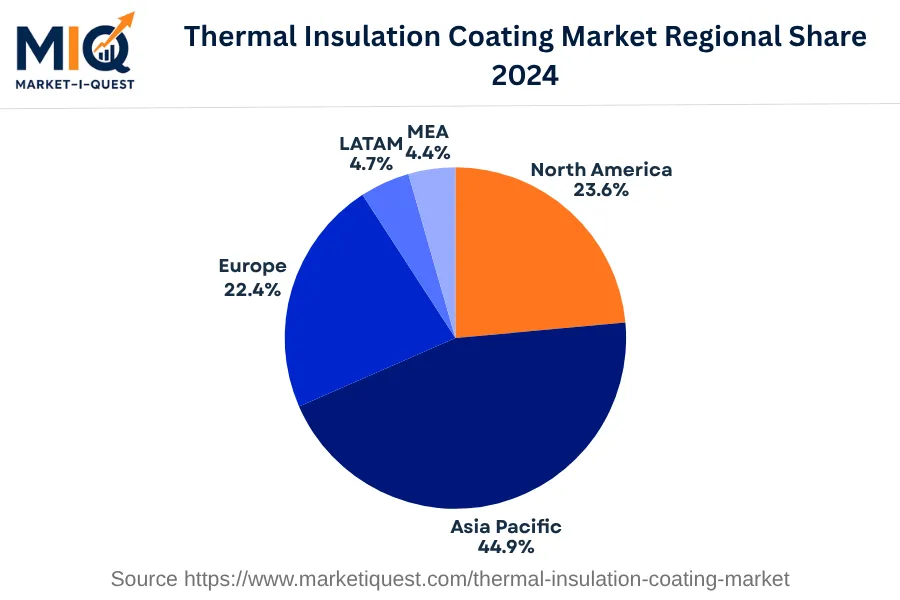
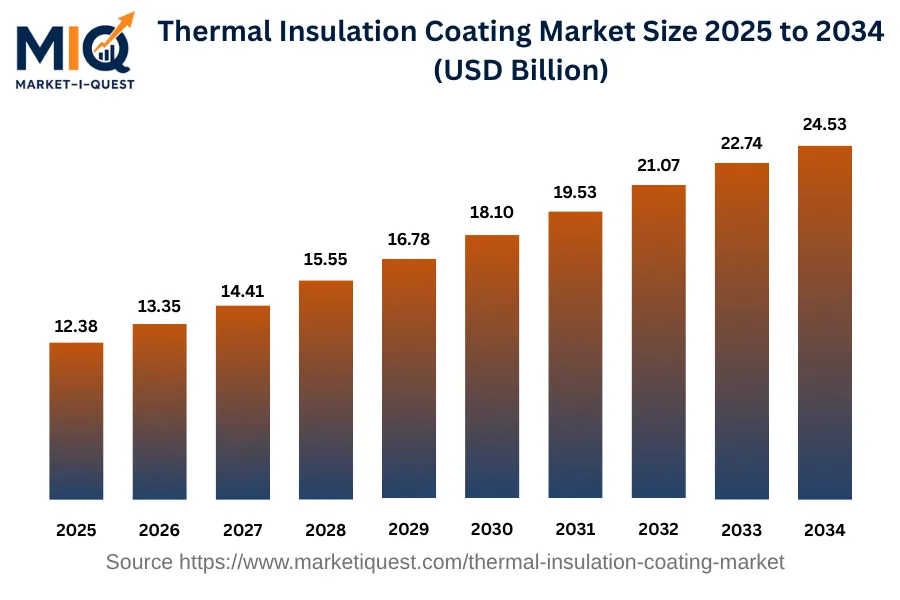
The Thermal Insulation Coating Market was worth USD 12.38 billion in 2025, and it is estimated to increase to USD 24.53 billion by 2034, represented by a CAGR of 7.9%. This growth path demonstrates a nearly doubled market size over nine years, notably from USD 12.38 billion in 2025 to an elevated estimation of USD 24.53 billion by 2034. Multiple factors spurred this considerable growth, including a rise in industrialization leading to increased demand for efficient and energy-saving insulation solutions, as well as advancements and improvements in coating technology contributing to the surge of market potential. In terms of regional share in 2024, the Thermal Insulation Coating Market displayed a significant aggregate mixed percentage of varied regions. Asia Pacific held the highest contribution of 44.9%, followed by North America and Europe, with regional shares of 23.6% and 22.4% respectively. The remaining shares were covered by LATAM with a contribution of 4.7%, and MEA closely followed with a 4.4% share.

Key Takeaways

  • By Type - Acrylic held the largest share of the segment in 2024.
  • By End Use - Industrial subsegment led the major share of the segment.
thermal-insulation-coating-market market size

Key Driving Factors

Stringent Energy Efficiency Regulations

Global initiatives to reduce greenhouse gas emissions are encouraging widespread implementation of energy efficiency standards across industries. In many countries, stringent regulations such as the European Union's Energy Efficiency Directive (EED) and the United States Energy Independence and Security Act mandate energy-efficient operations in industrial and residential sectors. These legislations necessitate the use of thermal insulation coatings in buildings and manufacturing plants to minimize energy consumption by reducing heat loss or gain. Businesses and homeowners are investing in thermal insulation coatings to comply with these laws, increase energy savings and reduce their overall carbon footprint.

Surge in Construction and Infrastructure Projects

The construction sector is witnessing a boost, particularly in developing regions like Asia Pacific and Middle East, attributed to the rapid urbanization and investment in infrastructure projects. A key investment focus in these projects is building sustainability and energy efficiency, to which thermal insulation coatings significantly contribute. They are extensively used in these infrastructure projects to ensure energy conservation and temperature regulation in buildings. Thus, the proliferation of construction and development projects, characterized by sustainability requirements, presents an influential factor driving the growth of the thermal insulation coating market.

Market Evolution by Timeline

2019-2023
During the 2019–2023 period, the thermal insulation coating market saw increased demand mainly from commercial and residential building projects across Western Europe and Asia. North America also reported increasing use in industrial settings. The shift towards green building codes and energy-efficient structures was a primary driver. Many suppliers, such as Akzo Nobel and PPG Industries, delivered silicon-based products with improved durability and insulating capacity. However, procurement was still marred by fluctuating raw material prices. Globally, standards like LEED and ENERGY STAR led to wider adoption. Contract types gravitated towards project-based bulk buying. On the downside, issues like coating failures and surface compatibility problems surfaced, calling for meticulous surface preparation.
2024
By 2024, the shift towards more sustainable options leading to the rise in market for biodegradable insulation coatings was evident. Buyers included not only conventional segments but also niche markets, like art conservation. Availability remained steady, with firms like Sherwin-Williams introducing water-based coatings, addressing VOC emission concerns. Higher regulatory scrutiny was seen, with stricter enforcement of the EU's REACH regulations. Commercial models were adjusted accordingly, and more manufacturers offered leasing options to mitigate upfront costs. The risk of uncontrolled application conditions, leading to inadequate thickness and coverage, created quality control challenges.
2025-2029
In the period from 2025 to 2029, demands from the automotive and aerospace sectors increased considerably, especially in North America and Asia due to rising temperatures. The supply chain matured with the introduction of nanotechnology-enhanced coatings, offering enhanced thermal insulation qualities. The commercial model transformed to accommodate greater integration of technology, with digital platforms offering direct-to-customer sales. Compliance to newly established ISO standards became a prerequisite and contracts typically came with thermal performance guarantees. Risk mitigation involved enhanced technician training to minimize application errors.
2030-2034
By 2030, the growth of renewable energies saw elevated demand in wind turbines and solar energy systems. Historically cooler regions like Scandinavia and Canada also recorded high demand due to climate change. Bio-based, recyclable coatings took the spotlight as key sustainable technologies. Acrylics rose in preference for the enhanced durability and resistance it offers. Increased competition led to more competitive pricing. Strict penalties for non-adherence to emission standards were enforced, nudging suppliers to sustainable sourcing and cleaner processes. A significant risk was the possibility of bio-based products being less efficient if not appropriately sourced and processed.

Future Market Outlook

Future Opportunities

As the demand for sustainable construction continues to rise, opportunities in the thermal insulation coating market are expanding significantly. Industry analysts note that the growing emphasis on retrofitting existing buildings to enhance energy efficiency presents a substantial opportunity for manufacturers. With 2023 marking heightened awareness of climate change impact, regulatory bodies like the U.S. Department of Energy are encouraging energy-efficient retrofitting of residential and commercial structures. Leading companies such as AkzoNobel are actively marketing their high-performance thermal insulation coatings to leverage this growing interest. Additionally, the shift towards renewable energy sources, particularly in Europe, is creating a demand for coatings that support solar panels and wind turbines. This is further evidenced by the European Commission's report on renewable energy published in 2022, which highlighted the need for insulating materials that can withstand diverse environmental challenges. The growing trend of smart buildings equipped with emerging technologies like IoT sensors is also driving development within this space. Smart insulation coatings can adapt to changes in temperature and energy demands, aligning well with the objectives set forth in the International Energy Agency's Net Zero by 2050 report. Moreover, as organizations focus on regulatory compliance and the adoption of green building certifications like LEED, the thermal insulation coating market is poised to benefit from the increased focus on sustainable practices across the globe.

Segmentation Analysis

By Type

The market is divided into subsegments including Acrylic, Epoxy, Polyurethane, Yttria Stabilized Zirconia, and Others. Acrylic accounted for the largest revenue share while Polyurethane is expected to grow at the fastest CAGR during the forecast period.

Largest Revenue Share

Acrylic

Market Share Leader

Acrylic, owing to its wide-ranging applications, has emerged as the subsegment generating the most revenue. Its properties including excellent optical clarity, durability, and resistance to weathering are some of many reasons for its enormous demand in the current market. Acrylic is widely used in a variety of industries, such as automotive, construction, electronics, signage, and consumer goods, because of its versatility. This extensive usage can justify its leading position in revenue generation. On the geographic front, the dominance of North America and Europe in the industrial market further accentuates the demand for Acrylic. Regulatory policies in these regions also favor the use of Acrylic, adding to its market revenue. Also, the established distribution channels in developed countries assist in maintaining revenue dominance for Acrylic in the industry.

Fastest CAGR

Polyurethane

Forecast Period Growth Leader

On the other side of the spectrum, Polyurethane is projected to register the highest growth rate owing to its superior properties and broadening applications across several industries. Driving this growth is a combination of factors, mainly technology advancements and policy-enforced environmental concerns. As the evolution of tech-enabled manufacturing continues, there is an increasing use of Polyurethane in diverse sectors such as automotive, construction, and furniture due to its excellent flexibility, durability and insulation properties. Furthermore, the push for sustainable and green solutions is encouraging manufacturers to use more environment-friendly materials like Polyurethane, which also aligns with global policy directions. In addition to this, capital investment in research and development to enhance polyurethane applications, coupled with strategic partnerships for market expansion, is anticipated to fuel its growth. However, there remains a risk with the volatile price of raw materials, which could potentially hamper the growth trajectory.

By End Use Industry

The market is divided into subsegments including Aviation, Transportation, Industrial, Construction, and Others. Among these, the Industrial subsegment has accounted for the largest revenue share, while the Aviation sector is projected to witness the fastest growth in the coming years.

Largest Revenue Share

Industrial

Market Share Leader

The industrial subsegment dominates in terms of revenue, as it is paved by a broad range of applications and the need for many industries to meet stringent efficiency and safety regulations. Industrial end users cover a vast array of sectors including manufacturing, chemical, oil and gas, and power generation to name a few. This wide-ranging application area contributes significantly to its dominant share in the market revenue. Industrial infrastructures around the globe are typically ageing or outdated and require substantial maintenance, replacement, or modernization, which fuels revenue generation in this segment. Additionally, advancements in technology require consistent updating, further driving the need for industrial equipment or automation. Finally, the trend towards digital transformation and industrial automation has significantly increased demand for industrial solutions, contributing to its large revenue share.

Fastest CAGR

Aviation

Forecast Period Growth Leader

The fastest-growing subsegment is expected to be the Aviation sector. The prime drivers for this growth are increasing air travel demands, the launch of new airports, and substantial investments in airport infrastructure globally. Regulatory bodies across the world are enforcing stringent safety standards, propelling the demand for advanced technology and solutions in the aviation industry. Moreover, technological advancements like the integration of artificial intelligence and machine learning are opening up new avenues for market expansion. However, barriers to adoption include high costs linked with the integration of advanced technologies and potential cybersecurity threats. Partnerships between aviation companies and tech providers can act as a catalyst driving growth in this sector. In the near term, the impact of the global pandemic on air travel might pose a risk to growth, but recovery trends indicate resilience and an upward surge in growth.

Competitive Analysis

Key Market Players

Manufacturers / OEMs

Akzo Nobel N.V.
Netherlands
PPG Industries, Inc.
US
The Sherwin-Williams Company
US

Key Suppliers & Raw Materials

BASF SE
Germany
Dow
US
Nippon Paint Holdings Co., Ltd.
Japan

Distributors, Integrators & Channel Partners

3M
US
Saint-Gobain
France
Compagnie de Saint-Gobain S.A.
France

Porter’s Five Forces Analysis

This analysis uncovers the competitive intensity and attractiveness of the Thermal Insulation Coating Market.

Supplier Bargaining Power

Medium

Suppliers possess moderate power due to the presence of various raw materials providers.

Buyer Bargaining Power

High

Buyers have significant power due to the increasing demand and availability of varied options.

Threat of Substitutes

Low

Threat from substitutes is low given the specific, technical nature of thermal insulation coating.

Threat of New Entrants

Medium

Entry barriers are reduced due to technological progress but capital requirements remain high.

Competitive Rivalry

High

The competitive rivalry is high, driven by numerous well-established companies vying for market share.

Regional Analysis

Geographic market dynamics and growth opportunities across key regions

Global Market Outlook

thermal-insulation-coating-market market regional share

North America

In 2024, the North American thermal insulation coating market was primarily driven by the growing demand for energy-efficient methods and the stringent regulatory environment focusing on reducing greenhouse gas emissions. Increasing investment in research and development, and the high rate of adoption of new technologies by the manufacturing industry, were key factors influencing market growth. The upswing in construction activity, particularly in the U.S., and increased awareness about energy conservation also considerably impacted the demand for thermal insulation coatings.

On the trends front, buyer behavior was shifting towards eco-friendly and sustainable thermal insulation products, catering to the prevailing narrative of environmental consciousness. Technological advancements improved product effectiveness, further fueling the market growth. Additionally, the year witnessed a surge in partnerships and mergers among leading market players in an attempt to shape the competitive landscape and solidify their position. Rigorous enforcement of energy codes and standards played a vital role in driving the market. Sectors contributing significantly to the demand included utilities, manufacturing, and construction. Enterprise customers emerged as a noteworthy category, focusing on reducing energy costs and enhancing building efficiency. Government policies encouraged the public sector to integrate thermal insulation coatings in its facilities. Overall, the market dynamics in 2024 reflected both the industry's innovation-oriented outlook and stringent regulatory norms.

Asia Pacific

In 2024, the Asia Pacific Thermal Insulation Coating Market witnessed significant activity amid growing economic development. Rising construction activities in China and India, coupled with regulations favoring energy-efficient solutions, have propelled demand. South Korean technological advancements have further stimulated market activity, characterized by an increased adoption of nanotechnology-based insulating coatings. Robust infrastructure investments across key ASEAN markets, dictated by industrial expansion, have necessitated cost-effective thermal management solutions, compounding market growth.

Market trends were led by consumer preference towards green building concepts which accelerated the shift towards eco-friendly insulation coatings. As environmental norms stiffened, markets like China and Japan saw an upswing in the adoption of renewable raw materials for insulation coatings. Moreover, the growing partnership between Australian insulation coating manufacturers and ASEAN manufacturers has strengthened distribution channels, fostering greater inclusivity. Regulation conformance also dictated market trends, with retail and manufacturing sectors in countries like India investing more in compliances to secure higher energy ratings.

Several sectors, most notably manufacturing, enterprise, utilities, and construction, were significant customers of the thermal insulation coating products. Companies in these sectors made strategic investments in thermal insulation coatings as part of their wider aim of adopting energy-efficient solutions, thereby reducing operating costs. Across the region, it was commonplace for governments to collaborate with local manufacturers to meet their burgeoning energy needs. The market, therefore, revolved around a mix of policy adherence, technology adoption, and strategic partnerships.
Europe

In 2024, the European thermal insulation coating market was energized by multiple drivers. Increasing energy conservation measures and stringent governmental regulations such as the EU’s Energy Performance of Buildings Directive resulted in higher utilization across various sectors - particularly in retail, utilities, and manufacturing. Germany led the charge with significant investment in advanced coating technologies. Increased adoption of aerogels in Italy and the United Kingdom, due to its high insulation properties, notably impacted supply dynamics.

Emerging trends also defined the market. Customer preference for durable and lightweight materials dramatically influenced buyer behavior, with Spain witnessing a significant rise in demand for micro-spherical insulation coatings. Companies in the Nordics embarked on numerous partnerships and M&A activities to sustain growth, with AkzoNobel's collaboration with PPG Industries being a key instance. The enforcement of ISO 50001 standards regarding energy management was another dominant trend, shaping the ways energy-intensive sectors such as healthcare and manufacturing operated in Benelux and Central & Eastern Europe. Coupled with the rise of online sales channels, these drivers and trends fashioned an active and evolving thermal insulation coating market across Europe in 2024.

Latin America

In 2024, the Thermal Insulation Coating market in Latin America witnessed a substantial boom propelled by diverse facets. Enhanced demand from energy-intensive industries like manufacturing and utilities in Brazil and Argentina, driven by the pursuit of energy efficiency and cost savings, amplified the market growth. Strict regulations in Mexico and Colombia to minimize energy consumption and lower carbon footprints favored market proliferation. Investment in advanced technology adoption in Chile, such as nanotechnology-based insulating coatings, further accelerated market evolution.

The market trends were marked by a dramatic shift in buyer behavior. A substantial inclination towards green and sustainable products was observed, spurred by the environmental policies in countries like Peru. Channel dynamics changed, with a bump in online sales due to the expanding e-commerce sector. Significant instances of partnerships and acquisitions were noticed, where firms maneuvered to capitalize market potential and improve their product portfolio. The demand for high-temperature-resistant coatings, particularly in manufacturing industries, was on the rise. The enforcement of stringent industry standards and policies was another significant trend, aiming to maintain product quality and ensure industrial safety. In conclusion, 2024 saw the Thermal Insulation Coating market in Latin America influenced by myriad drivers and trends, while policies and technological advancements played crucial roles in market expansion and evolution. Industries such as manufacturing, utilities, and retail were the key takers of these solutions.

Middle East & Africa

In 2024, the thermal insulation coating market in the Middle East and Africa surfaced as a vital segment of the construction and manufacturing sectors. Driving this, high demand from Saudi Arabia and the UAE report the need for energy-efficient solutions in residential and commercial buildings. The adoption of advanced coating technologies in Egypt, Kenya and South Africa boosted the market given their benefits in temperature regulation and comprehensive energy savings. In Nigeria and Israel, rigorous government regulations required the utilisation of thermal insulation coatings in the manufacturing and utility sectors, further buoying the market.

Conversely, trends showed that customers in these regions are progressively opting for eco-friendly and sustainable products, making waterborne thermal insulation coatings increasingly popular. In sectors including oil and gas, telecom and healthcare, there is growing preference for coatings with superior characteristics such as corrosion resistance and flexibility. Notably, numerous partnerships and mergers and acquisitions occurred in the thermal insulation coating industry across the region in 2024 to expand product portfolios and gain competitive advantage. Finally, strict enforcement of energy conservation policies in countries like Qatar and Kenya ensured a consistent demand for thermal insulation coatings. These drivers and trends significantly shaped the thermal insulation coating market in the Middle East and Africa during the year.

Recent Industry Developments

Latest market innovations, product launches, and strategic initiatives

May 2025

AkzoNobel launched a building coating system that acts like a sunscreen for structures. It uses specialized layers to block and reflect heat, which can drop the outside surface temperature of a building by up to 10% during the summer to save on cooling costs.

September 2024

The company released an expanded line of coatings specifically for heavy industrial use, such as oil refineries. Instead of just keeping heat inside pipes and tanks, this new lineup focuses heavily on preventing the metal underneath from rusting, which reduces expensive maintenance delays.

Frequently Asked Questions