Specialty Chemicals Market Snapshot

Key Players

  • BASF SE (Germany)
  • Dow Inc. (United States)
  • Evonik Industries (Germany)
  • Clariant (Switzerland)
  • AkzoNobel (Netherlands)
  • Ashland Global Holdings (United States)
  • Croda International (United Kingdom)
  • Lanxess (Germany)
  • Huntsman Corporation (United States)
  • Albemarle Corporation (United States)

Market Size

Base Year 2024
$710.74 Bn
CAGR
5.86%
Forecast 2034
$1256.12 Bn

Market Segments

By Source
  • Crude Oil
  • Naphtha
  • Ethane
  • Propane
  • Butane
  • Wood
  • Others
By Type
  • Agrochemicals
  • Flavor Ingredients
  • Fragrance Ingredients
  • Dyes & Pigments
  • Personal Care Active Ingredients
  • Water Treatment Chemicals
  • Construction Chemicals
  • Surfactants
  • Textile Chemicals
  • Polymer Additives
  • Bio-Based Chemicals
  • Others

Market Dynamics

Drivers
  • Rising demand in end-user industries
  • Technological advancements in chemical synthesis
Restraints
  • Regulatory compliance challenges
  • Fluctuating raw material prices
Opportunities
  • Emerging eco-friendly trends
  • Underserved developing markets

Market Size

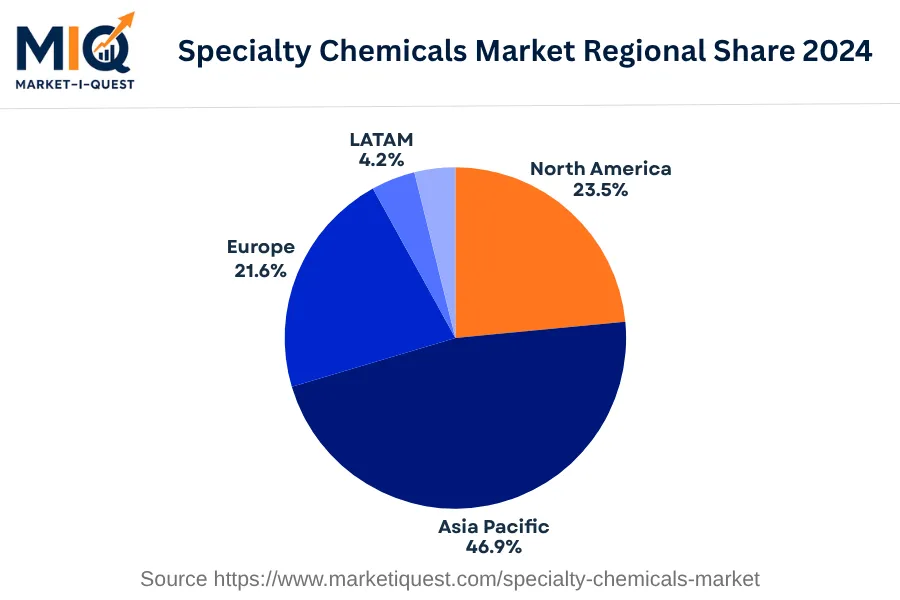
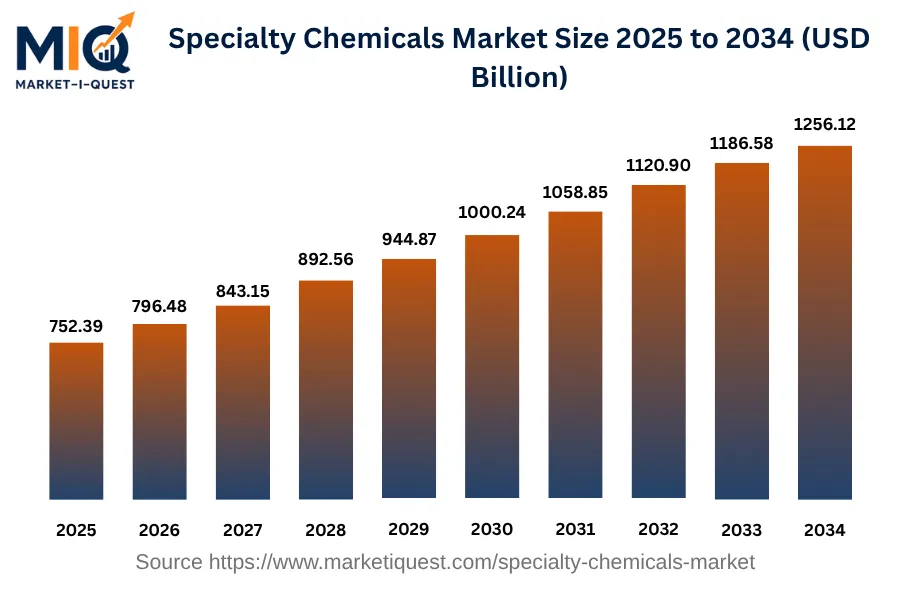
The Specialty Chemicals Market valued at $752.39 billion in 2025 and is expected to reach a market size of $1,256.12 billion by 2034, growing at a CAGR of 5.9%. This upward trajectory from 2025 to 2034 indicates steady and consistent growth in the market. Contributing factors to this progress include technological advancements leading to product innovations and the rising demand for these chemicals in end-user industries. Looking at the regional distribution in 2024, the Asia Pacific region held the largest share at 46.9%, followed by North America at 23.5%, then Europe at 21.6%. The regions with the smallest shares were Latin America (LATAM) and the Middle East and Africa (MEA) with 4.2% and 3.9%, respectively.

Key Takeaways

  • By Source - Crude Oil held the lead in the Specialty Chemicals Market in 2024.
  • By Type - Agrochemicals accounted for the foremost share in the Specialty Chemicals Market segment in 2024.
specialty-chemicals-market market size

Key Driving Factors

Stringent Environmental Regulations

Many industrial sectors are currently contending with stringent environmental regulations. These regulations demand adoption of eco-friendly practices, forcing manufacturers for seeking alternative materials and methods. One such area is the production and usage of specialty chemicals. Globally, governments, particularly in Europe and North America imposing strict regulations on chemical production and usage to protect the environment. These include the REACH regulation in Europe and the Toxic Substances Control Act in the USA. Such legislation accelerates the move towards specialty chemicals as industries seek to comply while maintaining productivity and quality.

Adoption by the Automotive Sector

The automotive industry is a significant driver for the specialty chemicals market. As automakers pursue efficiency and performance improvements, they increasingly rely on specialty chemicals. One prominent area is the production of lightweight auto parts through high-performance polymers, a subset of specialty chemicals. Moreover, specialty chemicals play a crucial role in the production of electric and hybrid vehicles. They provide critical solutions in battery technology, from improved electrolytes to the development of heat management systems. With the continued growth of the electric vehicle market, especially in Asia, adoption of these specialty chemicals is likely to rise significantly.

Market Evolution by Timeline

2019-2023
This period saw an increased buying trend towards Specialty Chemicals from industries such as pharmaceuticals, food, and automotive due to product customization features. Most demand was witnessed in Asia, Europe and North America. The supply was primarily from BASF, DowDuPont, and Sinopec. The EU's REACH (Registration, Evaluation, Authorization, and Restriction of Chemicals) and China's Decree 591 heavily influenced market transactions. Typically, supply contracts were approved at fixed prices for specified quantities, though variable pricing contracts surfaced by 2023. Trade uncertainties, including the US-China trade war, strangled the supply chain, driving companies to diversify sourcing and reduce risk.
2024
In this year, the Specialty Chemical Industry's reliance on lab-scale synthesis was reduced due to Digitalization and process simulation technologies. The adoption of digital twin technology became mainstream, replicating the performance of live plants. The demand was predominantly from urbanizing countries in Asia and South America. Digitialization in regulatory compliance, especially with the EU's REACH and the USA's TSCA (Toxic Substances Control Act) became more convenient. The pricing dynamics shifted towards real-time price determination based on market factors.
2025-2029
In this period, the circular economy might gain traction. Demand for bio-based and recycled Specialty Chemicals will likely surge, led predominantly by Europe and North America. Partnerships between chemical manufacturers and waste management companies were increasingly common. Digital solutions such as 3D printing and blockchain is expected to improve supply chain transparency and traceability. Restrictions might be tighten around GhG emissions from the chemical industry under regimes such as the Paris Agreement, influencing product development. Fluctuating crude oil prices will likely pressure negotiated pricing models. The challenges of raw material sourcing may become prominent due to environmental concerns, forcing manufacturers for exploring alternative sources.
2030-2034
Specialty Chemicals market in this period might witness considerable demand from budding sectors such as electric mobility and sustainable packaging. Africa and Middle-East will likely emerge as new demand centers due to industrial growth. Reverse innovations, i.e., creating products in and for low-income markets. Standardization around sustainable sourcing is expected to begin taking shape under UN's SDG's (Sustainable Development Goals). Demand-driven pricing models will likely be largely adopted due to market predictability. However, Intellectual Property issues might become a potent risk considering the wide usage of digital technologies, driving industries for ensuring rigorous IP rights protection.

Future Market Outlook

Future Opportunities

As the global landscape evolves, significant future opportunities exist within the specialty chemicals market. The ongoing transition to sustainable practices is creating demand for bio-based chemicals, a trend highlighted by the partnership between DuPont and Corteva Agriscience to accelerate the development of agricultural solutions derived from renewable resources. Countries such as China have also imposed stricter environmental regulations, motivating local producers to innovate and adapt their chemical processing techniques. The United States Environmental Protection Agency reformed its Chemical Facility Anti-Terrorism Standards, driving the adoption of safety technologies and opening avenues for partnership with technology companies specializing in industrial safety solutions. Furthermore, the acceleration of electric vehicle (EV) production has generated demand for advanced battery materials, as demonstrated by LG Chem's joint venture with General Motors to develop battery components. Specialty chemicals for energy storage applications are consequently becoming increasingly vital. The potential for advancements in nanotechnology also signifies a key opportunity, as materials engineered at the nanoscale are being researched for improvements in product performance.

Segmentation Analysis

By Source

The market is divided into subsegments including Crude Oil, Naphtha, Ethane, Propane, Butane, Wood, and Others. Crude Oil accounted for the largest revenue share while Naphtha is expected to grow at the fastest CAGR during the forecast period.

Largest Revenue Share

Crude Oil

Market Share Leader

Crude oil subsegment leads today due to several driving factors. One of them is the widespread use of crude oil. Along with being an essential source of energy, it also forms the base for many products, ranging from transportation fuels to petrochemical products used to create everyday items. These extensive applications support the steady demand and major share in revenue. Further, crude oil's distribution network, already well-established globally, is a significant factor for its large sales volume. The oil industry has significant influence and is regulated by international agreements and individual country policies, ensuring a consistent flow of crude oil. The buyers' purchasing criteria are often influenced by its availability, reliability, price stability, and established supply chains. The switching costs to alternate energy sources are high due to the required infrastructural investments and technical adjustments. Finally, indirect sales channels through intermediaries such as wholesalers, distributors, and retailers contribute to the large revenue of the crude oil subsegment.

Fastest CAGR

Naphtha

Forecast Period Growth Leader

Naphtha subsegment is expected to be the fastest growing, driven by multiple growth catalysts. Naphtha is a crucial component in the petrochemical industry, used extensively in steam cracking process to produce olefins. The growing global demand for petrochemicals, particularly from emerging economies, is bound to increase naphtha consumption. Further, naphtha is gaining traction due to its use as a blending component in gasoline, boosting its demand. On the barriers front, volatility in crude oil prices can affect naphtha pricing and create market uncertainties. However, strategic partnerships and investments in refineries and processing units should help overcome these barriers. Technology advancements offering efficient processing of naphtha and environmental policies promoting cleaner fuels may act as catalysts for its growth. However, the market needs to be cautious about near-term risks associated due to fluctuations in crude oil availability and changes in energy policies.

By Type

The market is divided into subsegments including Agrochemicals, Flavor Ingredients, Fragrance Ingredients, Dyes & Pigments, Personal Care Active Ingredients, Water Treatment Chemicals, Construction Chemicals, Surfactants, Textile Chemicals, Polymer Additives, Bio-Based Chemicals, and others. Among these, Agrochemicals accounted for the largest revenue share while Bio-Based Chemicals are expected to grow at the fastest CAGR during the forecast period.

Largest Revenue Share

Agrochemicals

Market Share Leader

Agrochemicals stand as the largest revenue generating category within the market in 2024. This is primarily driven by the integral role these chemicals play in enhancing agricultural productivity, controlling pests and diseases, and improving crop quality, attributes that are crucial in supporting an ever-increasing global population. Geographically, rapidly developing regions such as Asia-Pacific and Africa significantly contribute to this revenue due to their strong dependency on agriculture. Regulatory frameworks also pave the way for agrochemical usage. While the environmental impact of some of these chemicals are concerning, their adoption is maintained due to the relative higher costs and lower efficacy of alternative solutions. Considering the purchasing criteria, agrochemicals are seen as indispensable and cost-effective measures for boosting crop yield. Switching costs are relatively high given the accessibility and proven effectiveness of agrochemicals. These elements collectively enable this subsegment to secure the largest revenue share.

Fastest CAGR

Bio-Based Chemicals

Forecast Period Growth Leader

Bio-Based Chemicals are projected to grow at the fastest CAGR during the forecast period. This robust growth rate can be attributed to several key factors. Technological advancements are enabling the production of bio-based chemicals from waste biomass, reducing the reliance on non-renewable resources and making the production process more sustainable and cost-effective. Policy initiatives aimed at reducing carbon emission and promoting sustainable practices are further propelling the adoption of bio-based chemicals. In terms of catalysts, increased capital expenditure in research and innovation in the area of green chemistry is anticipated to drive the subsegment’s growth. It's also worth noting partnerships between major chemical companies and biotechnology firms have emerged as a key trend, fostering increased production and application. However, adoption barriers such as high production costs relative to their fossil-based counterparts and the need to overcome technical hurdles in feedstock usage are near-term risks to the subsegment's growth trajectory.

Competitive Analysis

Key Market Players

Manufacturers / OEMs

BASF SE
Germany
Dow Inc.
US
Evonik Industries AG
Germany

Key Suppliers & Raw Materials

Sinopec
China
ExxonMobil
US
Royal Dutch Shell
Netherlands

Distributors, Integrators & Channel Partners

Univar Solutions
US
Brenntag AG
Germany
Nexeo Solutions
US

Porter’s Five Forces Analysis

This analysis probes the competitive trends and dynamics within the Specialty Chemicals Market.

Supplier Bargaining Power

Medium

Controlled by a few large players, the supply chain features moderate switching costs and pricing power.

Buyer Bargaining Power

Low

High product specificity reduces substitution opportunities, giving end users limited price negotiation ability.

Threat of Substitutes

Low

Due to the unique properties and applications of specialty chemicals, substitute threats are minimal.

Threat of New Entrants

Low

High entry barriers from R&D expenses, regulatory compliance and complex production processes limit new entrants.

Competitive Rivalry

High

Fierce competition and high fragmentation characterize this market, with firms continually innovating to gain an edge.

Regional Analysis

Geographic market dynamics and growth opportunities across key regions

Global Market Outlook

specialty-chemicals-market market regional share

North America

In 2024, North America's specialty chemicals market experienced substantial economic activity fueled by diverse factors. Drivers of this market include robust demand from key sectors such as manufacturing, healthcare, and utilities. Notably, increased investments in U.S. manufacturing industries spurred the adoption of high-performance specialty chemicals, enhancing efficiency and output. Furthermore, regulations in Canada, primarily centered around reducing greenhouse gas emissions, fostered innovation and led to a rise in bio-based specialty chemicals. Meanwhile, favourable policy frameworks in Mexico encouraged the local production of specialty chemicals, mitigating supply disruptions and price fluctuations experienced earlier.

Trends shaping the market include a marked shift in buyer behavior towards sustainable and green chemicals, propelled by heightened environmental consciousness. Technology advancements led to next-gen specialty chemicals offering unparalleled performance attributes, thus widening their applications across sectors, particularly in the U.S governmental projects. Strategic M&A were common as major players consolidated their market position while enhancing product portfolios. In the context of policy enforcement, strict adherence to safety and quality standards was observed, particularly in the Canadian retail sector. Lastly, change in channel dynamics was significant as digital sales platforms emerged as vital, providing smooth procurement for customers ranging from enterprise-level buyers to smaller-scale manufacturers.

Asia Pacific

In 2024, the Asia Pacific specialty chemicals market flourished primarily due to rising demand, favorable regulatory environment, strategic investments, technology adoption, and dynamic pricing structures. Heightening demands in China and India were driven by the substantial growth of end-user industries, including electronics, personal care, construction, and automotive. Innovative production methods were fostered by technological advances in South Korea and Japan, leading to enhanced specialty chemicals quality and performance. A supportive regulatory landscape, particularly in Australia and key ASEAN markets, facilitated market development, invigorated by sustainable chemical manufacturing policies. Market concentration remained high due to kinetic pricing strategies and substantial investments in R&D and capacity expansion.

Trends underlining this market included a clear shift towards green and bio-based specialty chemicals in response to growing environmental concerns. Digitalization and process automation became optimal productivity tools, with South Korea and Japan at the forefront of this transition. There was a noticeable preference for personalized, multi-functionality products in sectors like personal care and cosmetics, particularly in China and India. Strategic partnerships and M&A activities, such as Australia's Nufarm Limited acquisition of Sumitomo Chemical Company, offered growth avenues through synergies and expanded product portfolios. Policymaking aimed at ensuring chemical safety affected market dynamics, with major emphasis on adhering to established industry norms and enforcement of regulatory standards.

Europe

In the 2024 base year, Europe's specialty chemicals market witnessed substantial growth leveraging increasing demand, stringent regulatory compliance, and technology adoption. Demand for specialty chemicals escalated, driven primarily by industries such as pharmaceuticals, agriculture, and construction, accentuated by Germany's burgeoning industrial sector. Regulatory compliance in EU nations, particularly the REACH regulation, prompted many manufacturers to make major investments in producing safer, environmentally-friendly chemicals. Concurrently, the uptick in digitalization, particularly in the Nordics, saw companies adopting advanced technologies like AI and machine learning in chemical production, improving efficiency and quality.

Market trends reflected a stark shift towards sustainability and strategic collaborations. Eco-friendly specialty chemicals were the top choice for manufacturers like France's L'Oréal, signaling a shift in buyer preference towards greener alternatives. Italy and Spain also observed similar trends in their textile industry, mandating eco-friendly chemicals. Partnership among companies for research and development in chemical technology was another common trend; the alliance between UK's Johnson Matthey and Denmark's Haldor Topsoe being a prime example. Lastly, the implementation of stringent policies, especially in Central & Eastern Europe, enforced strict adherence to chemical safety and quality standards, signalling premiumization in the market.

Latin America

In 2024, the specialty chemicals market in Latin America (LATAM) was dominated by sectors such as agriculture, construction, and manufacturing in Brazil, Mexico, Argentina, Colombia, Chile, and Peru. Increases in local production, aided by favorable government regulations and a rise in foreign direct investment, drove the market. For instance, the adoption of advanced technology in Brazil's agricultural sector boosted the demand for agrochemicals. Similarly, Mexico experienced an expanded demand for construction chemicals due to a revival in its housing sector. Among supply dynamics, Argentina's efforts to increase shale gas extraction heightened the need for oilfield chemicals.

Trends shaping the market mainly included shifts in buyer behavior and strategic partnerships. For instance, an increased preference for eco-friendly products in Chile's retail sector prompted companies to develop green alternatives. In Peru, manufacturers collaborated with local and international firms to enhance their product portfolio and market reach. Additionally, enforcement of policy standards played a crucial role, with Colombia's stringent regulation concerning waste management influencing the increased usage of water treatment chemicals. In terms of product and tech shifts, digitalization of operations in sectors like Brazil's retail industry pushed for the use of electronic chemicals. These drivers and trends collectively defined LATAM’s specialty chemicals market scene in 2024.

Middle East & Africa

In 2024, the Specialty Chemicals Market in the Middle East and Africa indicated crucial developments led by significant economics including Saudi Arabia, United Arab Emirates, Qatar, Egypt, South Africa, Nigeria, Kenya, and Israel. Drivers of this growth include increased demand for speciality chemicals in sectors such as manufacturing and healthcare, particularly in Egypt and South Africa as they enhanced their industrial base. Regulatory changes in Saudi Arabia and the UAE, aimed at diversifying their oil dependent economies spurred investment in this sector. Furthermore, Israel's adoption of advanced technologies in chemical manufacturing introduced innovative products, fostering growth.

Trends observed in 2024 disclosed shifts towards green and sustainable chemicals predominantly in Saudi Arabia and UAE, in response to global and domestic environmental policies. Increasing online sales channels driven by extensive digital transformations have been seen in South Africa and Kenya, primarily in the retail and financial service sectors. There's also been an upsurge in partnerships and M&A activities particularly in Israel and Nigeria to enhance product offerings and expand market reach. In the healthcare sector, the heightened demand for pharmaceutical grade chemicals has been boosted by the need for improved healthcare services in Egypt and South Africa.

Recent Industry Developments

Latest market innovations, product launches, and strategic initiatives

June 2026

IMCD to Acquire Merit Solution in Thailand – IMCD N.V. signed an agreement to acquire 100% of Merit Solution Co., Ltd, a distributor of additives serving the plastics and compounding industry in Thailand. Merit Solution generated revenues of approximately THB 406 million (~€10.7 million) in 2025 and has a team of 24 employees. The transaction is expected to close in Q3 2026.

April 2026

LANXESS Debuts Sustainable Rubber Additive at India Rubber Expo 2026 – LANXESS debuted Vulkanox HS Scopeblue, a sustainable version of its trusted TMQ antioxidant, at the 12th India Rubber Expo 2026.

Frequently Asked Questions