Naphtha Market Snapshot

Key Players

  • Shell (Netherlands)
  • BP (United Kingdom)
  • Chevron (United States)
  • Exxon Mobil (United States)
  • Total SA (France)
  • Indian Oil Corporation (India)
  • PetroChina (China)
  • Sasol (South Africa)
  • Reliance Industries (India)
  • Saudi Aramco (Saudi Arabia)

Market Size

Base Year 2024
$186.82 Bn
CAGR
4.41%
Forecast 2034
$287.64 Bn

Market Segments

By Type
  • Light Naphtha
  • Heavy Naphtha
By Source
  • Refinery-Based
  • Bio-Naphtha
  • Others (Condensate
  • Gas-to-Liquids (GTL))
By End-User Industry
  • Petrochemicals
  • Agriculture
  • Paints & Coatings
  • Aerospace
  • Others

Market Dynamics

Drivers
  • Growing demand in petrochemical industry
  • Increased usage in gasoline blending
Restraints
  • Environmental regulations
  • Fluctuating crude oil prices
Opportunities
  • Growing petrochemical industry
  • Rising demand for energy fuels

Market Size

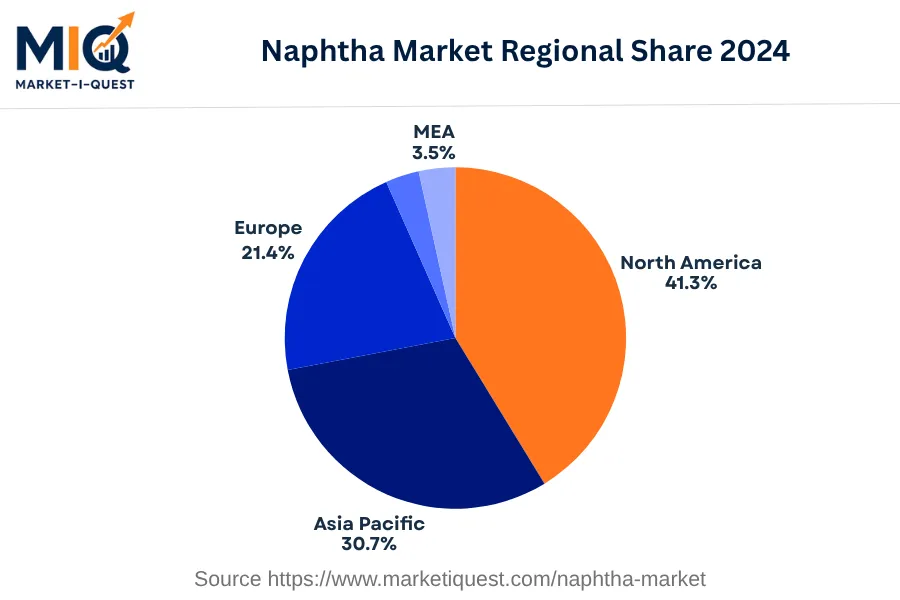
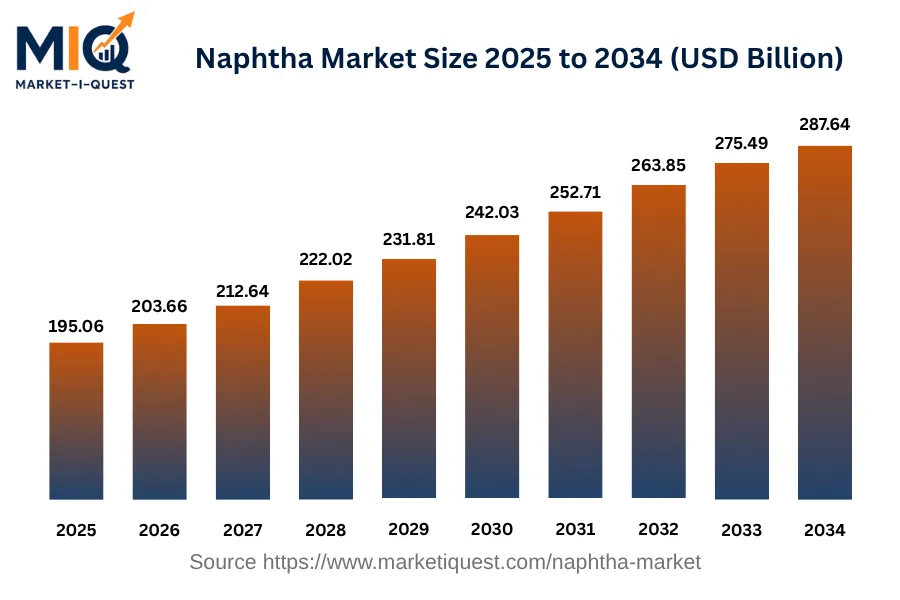
The Naphtha Market was valued at USD 195.06 billion in 2025, experienced growth to reach USD 287.64 billion in 2034, with a CAGR of 4.41%. The increase in market size over the years is primarily due to the increasing demand for Naphtha in a wide range of industrial applications. The Naphtha market maintained a steady momentum of growth from 2025 to 2034, driven by emerging end-use industries and technological advancements providing more efficient and affordable utilization of naphtha. These factors have positively impacted the revenue escalation of the naphtha market, hence contributing to its size increment. In terms of regional market shares in 2024, North America held the largest share of 41.3%, followed by Asia Pacific at 30.7%, Europe at 21.4%, while LATAM and MEA comprised the remainder with 3.2% and 3.5%, respectively.

Key Takeaways

  • By Type - Heavy Naphtha led the market holding a significant share in 2024.
  • By Source - Refinery-Based Naphtha accounted for the largest market share in 2024.
  • By End User Industry - Petrochemicals led the Naphtha market taking up the highest share in 2024.
naphtha-market market size

Key Driving Factors

Implementation of Stricter Environmental Regulations

In recent times, various countries are introducing stricter regulations to control emissions resulting from industrial activities. For instance, the European Union's Industrial Emissions Directive and the United States' Clean Air Act necessitate industries to minimize their greenhouse gas emissions. This has led to an increased interest in cleaner fuels. Naphtha, due to its greater efficiency and lesser pollutants, is steadily gaining preference over other heavier fuel oils in industrial applications. Moreover, naphtha is a critical ingredient in the production of eco-friendly plastics and resins, further contributing to its increased adoption.

Growth in the Petrochemical Industry

Naphtha is a crucial raw material in the petrochemical industry, essential for producing a wide range of products including gasoline, solvents, and various types of plastics. The global petrochemical industry has been experiencing robust growth due to emerging economies such as China and India. These regions are witnessing rapid industrialization and urbanization, leading to expansion of their petrochemical sector. As a result, the demand for naphtha, being integral to this industry, has seen a substantial rise. An example of this can be seen in the recent expansion of petrochemical plants in China, which has directly affected the demand for naphtha in the global market.

Market Evolution by Timeline

2019-2023
During this period, naphtha was primarily used in the production of gasoline and as a feedstock in the petrochemical industry in countries like China, India, and the United States. The availability of naphtha increased because of the surge in shale gas production. However, the low return on capital and the push for more sustainable energy sources presented constraints for the market. Regulations such as the Paris Agreement impacted the adoption of naphtha, pushing for lower dependency on fossil fuels. The pricing was influenced by Crude Oil prices and international trade policies. Risks during this period included geopolitical tensions and tighter emission standards.
2024
In 2024, demand for naphtha for petrochemical production remained high, especially in Asia and the Middle East, while demand for its application in gasoline blending decreased in Western countries. Technological advances allowed for more efficient naphtha processing, but the market saw limited growth due to heavy regulations in response to climate change. Policy changes included stricter emission standards and tax incentives promoting renewable energy. Naphtha prices still depended on crude oil prices. Market risks included increased competition from renewable energy sources and changes in government policies.
2025-2029
In this phase, demand for naphtha shifted towards its use in plastic and chemical industries, particularly in developing countries. Though technological advancements increased efficiency in naphtha production, the global movement towards sustainability suppressed growth. Carbon capture and storage technologies were increasingly incorporated into naphtha production to comply with stricter emission standards. Commercially, suppliers experimented with more diversified pricing strategies to compete with renewable energy sources. Risks in this period included trade disputes and the potential destabilizing effects of the transition to a low-carbon economy.
2030-2034
Naphtha's demand is projected to remain steady, mainly from the plastic and chemical industries. Technological advancements around carbon capture are expected to improve, leading to greater market acceptance. Still, stricter environmental regulations, like the European Green Deal, can pose challenges to the naphtha market. Commercially, the pricing model for naphtha would likely depend on the global oil market, and long-term contracts might become more common as suppliers seek price stability. The main risk in this period would potentially be the continuation of the global shift towards renewable energy sources.

Future Market Outlook

Future Opportunities

Future opportunities in the naphtha market are driven by emerging trends in electrification and the transition to cleaner energy. The increasing electrification of the automotive sector, highlighted by the rise of electric vehicles (EVs) manufacturers like Tesla in recent years, is expected to reshape demand dynamics for naphtha products. Consequently, this could lead refiners to explore opportunities in producing chemicals that serve as feedstocks for high-performance batteries. Additionally, with ongoing projects in countries such as Saudi Arabia, where Aramco is planning significant petrochemical expansions, naphtha will likely continue to play an integral role in new product streams. Furthermore, growth in the Asia-Pacific region, specifically in countries like India and China, focusing on economic development, presents new avenues for naphtha consumption in the petrochemical industry. Collaboration among major stakeholders, including refiners and petrochemical firms, emphasizes the need for specialized naphtha grades tailored to specific applications. Regulatory measures taken by the U.S. Environmental Protection Agency promote the use of low-sulfur naphtha, thereby expanding opportunities for compliant producers. Moreover, ongoing shifts toward renewable petrochemicals introduce a transformative perspective on naphtha's role, indicating partnerships and investments in bio-naphtha production are likely to increase. These evolving market conditions suggest that the naphtha sector will continuously adapt, fostering opportunities across diverse applications.

Segmentation Analysis

By Type

The market is divided into subsegments including Light Naphtha and Heavy Naphtha. Heavy Naphtha accounted for the largest revenue share while Light Naphtha is expected to grow at the fastest CAGR during the forecast period.

Largest Revenue Share

Heavy Naphtha

Market Share Leader

Heavy Naphtha currently leads the market in terms of revenue, predominately due to its expansive range of applications in various industries. Heavy Naphtha is primarily used as a feedstock in refineries and petrochemical plants, particularly in the production of gasoline. As gasoline continues to be a primary transportation fuel in many parts of the world, the demand for Heavy Naphtha remains high. Additionally, Heavy Naphtha offers high flexibility to responders in adjusting the output based on the market's preference for fuel, thus making it a preferred choice. Furthermore, major economies like USA, China, and India have been seen to be dominant consumers of Heavy Naphtha due to their large-scale industrial activities. Legislation that favor the use of naphtha as a cleaner fuel also contributes to the extensive usage of Heavy Naphtha in the industrial sector. Despite the push for renewable energy sources, the transition is expected to be gradual, hence the demand for Heavy Naphtha is predicted to hold the larger revenue share for a considerable amount of time.

Fastest CAGR

Light Naphtha

Forecast Period Growth Leader

Light Naphtha, although currently holding a smaller revenue share than Heavy Naphtha, is expected to exhibit a faster growth rate. The growth drivers for Light Naphtha primarily lie in its utility in the production of ethylene and other chemicals, which are vastly used in varied industries such as plastics, resins, and synthetics. Expansion of these industries particularly in emerging economies is expected to propel the demand for Light Naphtha. Technology improvements fostering more efficient extraction and processing of Light Naphtha also acts as a catalyst for growth. Significant investments in refining capacities and strategic partnerships towards sourcing raw materials will likely further accelerate the growth. The main obstacle for Light Naphtha is the volatility of crude oil prices, which can impact its cost and subsequently, its demand. Nevertheless, given the projected industrial growth and increasing applications, Light Naphtha is expected to surmount these challenges and grow at the highest CAGR.

By Source

The market is divided into subsegments including Refinery-Based, Bio-Naphtha, and Others (Condensate, Gas-to-Liquids (GTL)). Out of these, the Refinery-Based segment accounted for the largest revenue share, while the Bio-Naphtha is expected to grow at the fastest CAGR during the forecast period.

Largest Revenue Share

Refinery-Based

Market Share Leader

The Refinery-Based sub-segment holds the largest revenue share owing to a number of factors. To begin, this sub-segment benefits from an established infrastructure and a correspondingly large customer base encompassing various sectors, supporting a robust demand. It also leverages the well-developed supply chains of the oil and gas industry. Furthermore, the concerted worldwide push for cleaner, more sustainable energy may incentivize the development of lower-emission refinery processes, resulting in a potential mild increase in revenue over the base year. Contrarily, customers prize the reliability and familiarity of refinery-based products, due to their long-standing prevalence in the market. Ultimately, they are more likely to purchase a tried-and-tested product with sizable switching costs involved in adopting a new product. This entrenches the dominance of refinery-based naphtha in the market, and these factors continue to underpin its leading position in terms of revenue.

Fastest CAGR

Bio-Naphtha

Forecast Period Growth Leader

The Bio-Naphtha sub-segment is projected to grow the fastest, driven by an amalgamation of factors. Notably, increasing ecological concerns and stringent environmental regulations are pushing industries toward cleaner, renewable sources of fuel. Bio-Naphtha is well-positioned to meet these demands due to its eco-friendly qualities. The expectation of support in the form of incentives, subsidies, and partnerships can also act as catalysts for growth in this area. Technological advancements are also driving down the costs of production and consequently, the capital expenditure, making Bio-Naphtha a more viable option. However, the sub-segment also faces adoption barriers, most significantly in the form of the lack of a robust supply chain and all the complexities and risks that come from being a pioneer in a nascent industry. Nonetheless, the push for sustainability and a shift away from more traditional sources of energy is likely to spur growth in this segment.

By End-User Industry

The market is divided into subsegments including Petrochemicals, Agriculture, Paints & Coatings, Aerospace, and others. Petrochemicals accounted for the largest revenue share while Aerospace is expected to grow at the fastest CAGR during the forecast period.

Largest Revenue Share

Petrochemicals

Market Share Leader

The Petrochemicals subsegment currently leads the market in terms of revenue. This is primarily due to the growing demand for petrochemical products across various end-use industries. Petrochemicals are integral to many industrial processes and consumer goods, from plastics and fertilizers to solvents and additives. As the global economy continues to grow, the demand for these products increases, especially in rapidly developing regions like Asia and Africa. This creates a continuously expanding consumer base for petrochemicals. Additionally, advancements in process technology and the development of efficient catalysts have allowed for more cost-effective production, further driving the market. However, potential fluctuations in crude oil prices and the shift towards renewable resources can pose challenges to this dominance over the long term.

Fastest CAGR

Aerospace

Forecast Period Growth Leader

Despite Petrochemicals currently leading in revenue, Aerospace is set to experience the fastest growth. The surge in air travel, particularly in emerging markets, has led to increased demand for new aircraft, driving the Aerospace subsegment. Moreover, ongoing advancements in aerospace technology, such as the development of more fuel-efficient aircraft and the growing interest in space exploration, are likely to further stimulate this market. On the policy front, increased defense spending by major economies also acts as a growth catalyst. Partnerships between manufacturers and governments could intensify, aiding faster market expansion. However, there are near-term risks, including geopolitical tensions and the enduring impact of the Covid-19 pandemic on travel demand. Despite these threats, the sector's long-term growth outlook remains robust and it is poised to exhibit the fastest CAGR throughout the forecast period.

Competitive Analysis

Key Market Players

Manufacturers / OEMs

Exxon Mobil Corporation
US
Royal Dutch Shell
Netherlands
BP Plc
UK

Key Suppliers & Raw Materials

Chevron Corporation
US
Total SA
France
Sinopec Corporation
China

Distributors, Integrators & Channel Partners

Indian Oil Corporation Limited
India
PetroChina Company Limited
China
Reliance Industries Limited
India

Porter’s Five Forces Analysis

This analysis assesses the competitive environment of the global naphtha market.

Supplier Bargaining Power

Medium

Suppliers have power due to the limited sources and specialized process of naphtha extraction.

Buyer Bargaining Power

Low

Buyers have low power due to high switching costs and the essential nature of naphtha.

Threat of Substitutes

Medium

Potential substitutes like natural gas are available but face technological and socioeconomic barriers.

Threat of New Entrants

Low

High capital costs and regulatory barriers make market entry difficult for new ventures.

Competitive Rivalry

High

Fierce competition exists between established players in the oligopolistic naphtha market.

Regional Analysis

Geographic market dynamics and growth opportunities across key regions

Global Market Outlook

naphtha-market market regional share

North America

In 2024, the North American Naphtha Market was primarily driven by the increasing demand for energy and the rising production of petrochemicals in the U.S., Canada, and Mexico. This was further supported by several major investments in the refining sector by key North American oil companies seeking to upgrade their capacities. High adoption rates of advanced cracking technologies also played a significant role, enabling producers to optimize yields and improve operational efficiency. The market witnessed increased use of shale gas instead of naphtha in the utilities and manufacturing sectors, leading to a shift in buying behavior and product preferences. Additionally, significant channel dynamics were observed with the growing prominence of digital platforms for trade and a rising trend of vertical integration, mainly driven by the large oil corporations. Furthermore, enforcement of environmental policies like the Cleaner Fuels Program by the U.S. Environmental Protection Agency fostered a shift towards cleaner production methods.

Naphtha's appeal remained strong for petrochemical producers and refineries, particularly in the U.S.; demand also came from the retail sector, primarily driven by consumers requiring heating fuels. Meanwhile, Mexico witnessed significant demand from their utilities sector. Similarly, Canada saw growth in demand from their enterprise and manufacturing sectors, primarily fuelled by resource-intensive industries such as metal and mining. The Naphtha Market was thus inherently tied to the overarching energy and petrochemical production dynamics across North America in 2024.

Asia Pacific

In 2024, the Naphtha market in the Asia-Pacific exhibited stable dynamics, primarily driven by escalating demand from downstream sectors. The varying petroleum refining capacities across China, India, and South Korea significantly impacted the market supply. Concurrently, Japan's investments in refinery upgrades and Australia's policy for energy efficiency bolstered the region's production. In India, the surge of infrastructure projects demanded increased naphtha volumes, validating the correlation between urbanization and naphtha demand. The region's competitive pricing strategies further stimulated the market's vibrancy.

Market trends unveiled a shift in customer preferences, emphasizing cleaner energy sources. It significantly influenced companies in China and ASEAN markets to adopt technologies optimizing naphtha yields from raw petroleum. Japan enforced stringent emission standards affecting the utilities sector, encouraging manufacturers to adhere to green production. The impetus was on partnerships and M&As, exemplified by the prominent China-South Korea refining collaborations. India's retail sector reflected a strong propensity towards quality-certified naphtha, leading to stringent controls in the supply chain. Utilization of naphtha in the healthcare equipment manufacturing in Australia showed a distinctive rise, thereby altering buyer behavior patterns. Wholly, these trends indicated a cautiously progressive Asia Pacific Naphtha market for the base year.

Europe

In 2024, Europe's Naphtha market experienced complex dynamics driven by a combination of demand, regulatory, and technological factors. Industry demand was shaped by the need for Naphtha in petrochemical plants across Germany and the United Kingdom, driven by its function as a vital feedstock in the production of high-quality olefins and aromatics. Furthermore, environmental regulations across European countries like France and Italy prompted manufacturers to invest in cleaner burning fuels hinging on Naphtha, promoting market demand. Due to the strong push for sustainability, technological shifts towards efficient, low-emission Naphtha production methods were observed. Notably, Spanish and Nordic companies were at the forefront of adopting these technologies, setting benchmarks for Central and Eastern Europe. Concurrently, M&A activity was prevalent among market players in the Benelux region as, amidst economic uncertainties, firms sought strategic alliances to secure supply dynamics.

There was a noticeable trend towards enforcing European Union emissions standards across different sectors, including utilities and manufacturing. This compliance requirement meant industrial customers introduced Naphtha into their operations as an alternative to heavier fuels. Moreover, the Naphtha trading market experienced considerable shifts in channel dynamics, with an emphasis on digital trading platforms becoming increasingly apparent. This was particularly visible in the United Kingdom and Germany, where these platforms facilitated higher market transparency and efficient trading operations.

Latin America

In 2024, the Naphtha market in Latin America exhibited significant dynamism influenced by various factors. Increased demand for Petrochemicals in Brazil, Mexico, Argentina, Colombia, Chile, and Peru drove Naphtha consumption, as Naphtha is a key feedstock in the petrochemical industry. Environmental regulations implemented by governments in these countries compelled industries to adopt cleaner fuels, leading to greater use of Naphtha. Moreover, accelerated investment in technology pushed Naphtha refineries to augment their capacity, aligning with the supply dynamics. Altering buying behavior presented significant impact on the market trends. Brazilian and Argentine industries shifted towards Naphtha for energy production instead of traditional fuel sources, reflecting a changing trend within the energy sector. Petrochemical businesses witnessed ongoing M&A activities, streamlining the market structure and impacting the Naphtha supply chain.

Furthermore, enforcement of stringent environmental policies lead to the adoption of cleaner fuels, indirectly amplifying the Naphtha demand. Naphtha saw usage extend to multiple sectors, including manufacturing and utilities. The Brazilian Government's push for environmental-friendly energy options witnessed a surge in Naphtha's demand from the utility sector. Similarly, manufacturing sectors in Mexico and Argentina pivoted towards Naphtha as a primary source of power generation. Thus, the dynamic Naphtha market in LATAM in 2024 was steered by a combination of regulatory shifts, market consolidations, technology adoption, and evolving consumer preferences.

Middle East & Africa

In 2024, the Naphtha market witnessed tangible growth in the Middle East and Africa, prompted by a few critical factors. Product demand increased significantly due to the rigorous expansion of downstream petrochemical sectors in countries like Saudi Arabia and the United Arab Emirates. Imposed environmental regulations in the region drove the adoption of cleaner fuels such as Naphtha, particularly in coastal and transport sectors in Qatar and Egypt. Investments in refinery upgrades and the adoption of advanced refining technologies, notably in Nigeria and South Africa, further stimulated Naphtha production and spurred market growth.

Trends reshaping the region's Naphtha market in 2024 included an accelerated shift towards high-grade Naphtha products due to stricter quality standards, particularly evident in Israel's petrochemical sector. A wave of partnerships and mergers among oil companies, like those in Saudi Arabia, aimed to expand their refining capacities. In countries such as the United Arab Emirates and Saudi Arabia, there was a clear policy enforcement to reduce the flaring and venting of gas, which increased the use of Naphtha in the oil and gas sector. In Kenya, the growth of retail fuel outlets indirectly spurred the demand for Naphtha. As a whole, 2024 saw the MEA Naphtha market influenced by regulatory, technological, and partnership trends while anchored by demand growth within several key sectors.

Recent Industry Developments

Latest market innovations, product launches, and strategic initiatives

June 2026

A Chinese nanomaterials producer unveiled a new high-purity nanosilver powder designed for advanced semiconductor packaging and photonics applications, achieving a particle size distribution of less than 10 nanometers with 99.99% purity.

Frequently Asked Questions