
Printed Electronics Market Snapshot

Key Players

  • Thin Film Electronics ASA (Norway)
  • E Ink Holdings (Taiwan)
  • DuPont (United States)
  • BASF SE (Germany)
  • Molex (United States)
  • Samsung Electronics (South Korea)
  • CERADROP (France)
  • Printechnologics (Germany)
  • T-Ink Inc. (United States)
  • GSI Technologies (United States)

Market Size

Base Year 2024
$12.83 Bn
CAGR
17.9%
Forecast 2034
$66.58 Bn

Market Segments

By Material
Inks, Substrates, Conductive Polymers, Organic Materials, Others
By Technology
Screen Printing, Inkjet Printing, Gravure Printing, Flexographic Printing, Others
By Application
Displays, Sensors, Batteries, RFID Antennas, Lighting, Others
By End User Industry
Consumer Electronics, Automotive, Healthcare, Aerospace & Defense, Others

Market Dynamics

Drivers
  • Rising IoT Applications
  • Increasing demand for flexible electronics
Restraints
  • High production cost
  • Slow adoption rate
Opportunities
  • Increasing IoT adoption
  • Emerging flexible device demand

Market Size

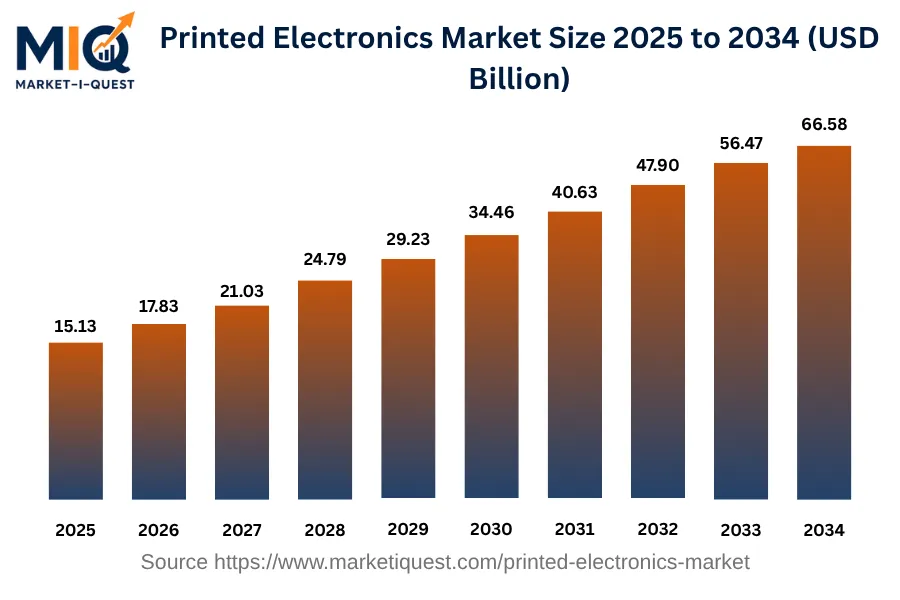
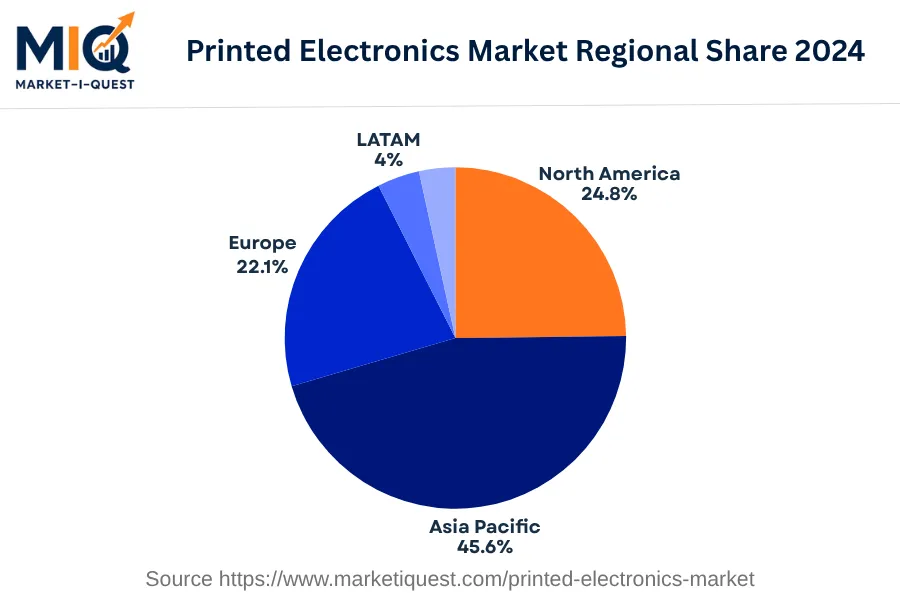
The Printed Electronics Market valued at $15.13 billion in 2025 and is projected to grow to $66.58 billion by 2034, with a CAGR of 17.9%. The market's growth trajectory includes notable advancements, like initial value of $12.83 billion in 2024, followed by a notable rise in value in the subsequent year. The market's expansion over the decade is largely attributed to rapid advancement of printed electronic technology and its increasing incorporation in various industries. Enhanced functionality, lighter weight and flexible mechanics of printed electronics have drove its wider acceptance across multiple market segments. Regionally, printed electronics market highlighted varying shares in 2024 with the Asia Pacific held the majority share with 45.6%, followed by North America at 24.8%, Europe at 22.1%, and LATAM along with MEA accounting for 4.0% and 3.4% respectively.

Key Takeaways

  • By Material - Substrate led the Printed Electronics Market holding a considerable share in the base year.
  • By Technology - Screen Printing dominated accounting for a significant share in the base year.
  • By Application - Displays emerged as the leading subsegment in the Printed Electronics Market in the base year.
  • By End User Industry - Automotive held a major position in the Printed Electronics Market in the base year.
printed-electronics-market market size

Key Driving Factors

Increased Sustainability Requirements in Production Processes

As societal awareness and governmental regulations around environmental impact strengthen, industries are forced to seek more sustainable methods for their operations. The printed electronics market benefits directly from this trend due to relatively green nature of its production process. In comparison with conventional electronics manufacturing, printed electronics typically use less energy and raw materials, significantly reducing carbon footprint. Companies seeking to meet these sustainability regulations often consider switching to printed electronics. Moreover, combination of regulations such as European Union's Waste Electrical and Electronic Equipment Directive and increased consumer awareness heightens demand for eco-friendly option, significantly driving the printed electronics market.
Adoption in the Healthcare Industry due to Compact and Flexible Nature

The unique properties of printed electronics, including flexibility, thinness and light weight, have majorly increased their applicability in healthcare industry. Specifically, these features enable novel applications in wearable and implantable medical devices. For example, printed electronics are increasingly being incorporated into health monitors that tracking vital signs or even in smart textiles for advanced therapeutic applications. The urgent demand for more accessible, convenient patient monitoring, especially during the global Covid-19 pandemic, has accelerated this adoption. Moreover, related industries such as pharmaceuticals also utilize these technologies for smart packaging, which further drove the growth of the printed electronics market.

Market Evolution by Timeline

2019-2023
From 2019 to 2023, the printed electronics market witnessed companies such as ThinFilm Electronics and E Ink leading in technology research, development and supply. North America and Europe led the regionally adopting these technologies, mainly due to increased environmental sustainability. Along with consumer electronics, key applications were observed in healthcare for wearable technology and medical devices. Economy of scale was for maintaining standard printed electronics price, while short-term contracts were common in transaction models. The major regulatory influence was Europe's Restriction of Hazardous Substances Directive (RoHS), driving manufacturers for using less hazardous materials. Thus, this period played a major role in the growth of the market.
2024
In 2024, the supply shifted notably towards Asian manufacturers such as Samsung and LG Display, led by advanced technological capabilities these companies possessed. With multiple features such as flexibility, portability and adaptability drove demand, with Asia-Pacific indicating substantial adoption, closely trailing North America and Europe. Sensors and displays emerged as leading applications within consumer electronics. As mass production became more streamlined, long-term partnership models dominated contracts. The terms of RoHS continued to be a significant regulation influence. Thus, making year a major contributor in the growth of the market.
2025-2029
The period 2025–2029 will likely witness printed electronics becoming mainstream in automotive and logistic industries apart from healthcare and consumer electronics. Growing adoption in emerging markets such as India and Brazil will expand global market reach. Increased robust supply chains will likely develop, with both big and small players reaching technological maturity, causing competitive pricing models. Regulation will likely be influenced by the United Nations' Sustainable Development Goals, will likely include industry, innovation and infrastructure. Thus, this period will likely be a major turner for the printed electronics market.
2030-2034
Between 2030–2034, printed electronics will likely find new demand in the field of green technology. Usage of solar panels and other energy-saving products will likely create new buyer segment. Adoption rate will increase in Middle Eastern and African regions as developing infrastructure. The supply side will likely be dominated by companies that observed to 'green tech' standards. Pricing will subject to the nature of technology use - organic or inorganic. The introduction of the Circular Economy Action Plan by the European Union will likely influence disposal and recycling standards. Thus, this period will likely make a significant contribution in the market.

Future Market Outlook

Future Opportunities

Future of printed electronics market is closely tied to current push for smart functionality in everyday products. By 2025, the integration of printed electronics into textiles is expected to gain momentum as universities like MIT have begun research projects focused on smart fabrics that can respond to environmental stimuli. Partnerships among major brands, like the collaboration between Adidas and Carbon for 3D-printed shoes, indicate growing trend towards personalization and customization, potentially driving demand for printed electronic components that enhance product interactivity. Furthermore, regulatory bodies such as the European Union are placing increased emphasis on sustainability, which can create opportunities for companies developing eco-friendly electronic solutions that align with EU’s Green Deal. Rise of Internet of Things (IOT) applications is prompting companies like Texas Instruments to explore how printed sensors can be integrated into IoT devices, offering new avenues for connectivity in diverse sectors including healthcare and environmental monitoring. Additionally, emergence of smart packaging technologies, propelled by firms like Avery Dennison, is reshaping packaging industry by adding functionality through printed sensors that monitor freshness. Such developments underline growing need for cost-effective, scalable solutions, positioning the printed electronics market for significant growth driven by interdisciplinary innovation and regulatory alignment.

Segmentation Analysis

By Material

The market by material is segmented into Inks, Substrates, Conductive Polymers, Organic Materials, and Others. Among these, Substrates secured the largest revenue share, while Organic Materials are projected to grow rapidly during the forecast period.

Largest Revenue Share

Substrates

Market Share Leader

Substrates holds the largest revenue share of this segment. This prominence can be attributed to crucial role they play in industry. As crucial components in production process, substrates facilitate embedding or transfer of other materials, thus providing a basis for product formation. This property renders them heavily used in manufacturing, especially in large-scale operations, ultimately drive revenue growth in this segment. Remarkably, substrates' effectiveness in supporting other materials across variety of processes means that they enjoy an extensive range of applications, further cementing their position as revenue leaders. Additionally, combination of their availability in diverse forms and compatibility with various inks and polymers also contributes to their substantial revenue share. Moreover, they hold strategic advantage in regions with heavy industrial and manufacturing activities, as requirement for substrates is naturally higher. Lastly, being crucial part of compound, customers often prioritize quality, durability, and compatibility while choosing substrates, which often leads to repetition in purchasing, contributing to a steady revenue stream.

Fastest CAGR

Organic Materials

Forecast Period Growth Leader

Organic Materials segment is projected to witness fastest growth rate. Embrace of organic materials readily meshes with growing trend towards sustainable and environmentally friendly solutions, acting as key driver for this subsegment. Organic materials often boast of reduced environmental impact due to their biodegradability and are thus, seen as an ideal choice in light of increasing eco-consciousness. This shift towards organic materials is being fueled by supportive regulatory policies that incentivize use of eco-friendly alternatives. For instance, companies investing in R&D for development of high-quality organic materials could benefit from tax reliefs and government grants. Partnerships with institutes and universities dedicated to organic research and development, could accelerate growth further. However, there are adoption barriers, such as higher upfront costs and potential compatibility issues with traditional production processes. Despite these challenges, key players' consistent efforts towards developing organic materials with superior characteristics at competitive prices should drive the fastest growth in this subsegment.

By Technology

The market is divided into subsegments including Screen Printing, Inkjet Printing, Gravure Printing, Flexographic Printing, and Others. Among these, Screen Printing accounted for the largest revenue share while Inkjet Printing is expected to grow at the fastest CAGR during the forecast period.

Largest Revenue Share

Screen Printing

Market Share Leader

Screen Printing held the largest revenue share of the market. Major driver included versatility of screen-printing technology, which has wide range of applications including textiles, ceramics, metal, glass, electronics and packaging industries. High volumes of screen-printed products in these industries, particularly in developing countries, have contributed to its significant market share. Furthermore, relatively low-cost of screen printing compared to its counterparts and the durability of screen printed products attract high volume of customers, thus boosting this segment's revenue. Notably, screen print's ability to print on any surface with high-quality finish makes it favorable choice across various industries. Additionally, ease of switching to alternative printing methods and established distribution channels for screen-printing technology have also contributed to its dominance.

Fastest CAGR

Inkjet Printing

Forecast Period Growth Leader

Inkjet Printing is predicted to grow at the fastest rate during the forecast period. Due to inkjet technology is evolving rapidly and becoming more efficient and cheaper to produce. Rapid technological advancements, increased adoption due to better quality print, and ability to print vast amounts of data swiftly are key drivers of growth in this sub-segment. High resolution and speed offered by inkjet printers make them an attractive choice for commercial use, thus boosting adoption. Partnerships with third-party vendors that provide regular maintenance and supplies for inkjet printers further drive the adoption. However long-term ROI and productivity benefits provided by technology are considered significant. Thus inkjet printing are the fastest growing subsegment of this segment.

By Application

The market is divided into subsegments including Displays, Sensors, Batteries, RFID Antennas, Lighting, and Others. As of the base year 2024, Displays accounted for the largest revenue share while Batteries are expected to grow at the fastest CAGR during the forecast period.

Largest Revenue Share

Displays

Market Share Leader

Displays subsegment holds the largest revenue share of the segment. This can be attributed primarily to rapidly evolving technological landscape that calls for more advanced display technology across various applications such as computer monitors, televisions, mobile phones, tablets and other digital devices. High-resolution displays with enhanced features for better user experience have become critical for these devices and are priced at a premium, driving significant revenue. Hence, investment in research and development for continual innovation also contributes to higher cost structure and revenue generation. Geographically, dominance of APAC region in electronics production, with hubs like China and Taiwan in display technology, is a significant factor in leading position of this subsegment.

Fastest CAGR

Batteries

Forecast Period Growth Leader

The Batteries subsegment is expected to grow at the fastest growth rate, driven by combination of various significant drivers. Proliferation of electric vehicles (EVs) along with increased dependency on portable electronic devices is causing a surge in demand for high-performance batteries. In addition, advancements in energy storage technology and shift towards renewable energy systems add influence to growth in this segment. Governments worldwide are launching favourable policies to boost renewable sectors and EV adoption, simultaneously promoting growth of advanced batteries. Thus, capital investment in battery production facilities is also increasing, enabling large scale production and reduced costs over time.

By End User Industry

The market is divided into subsegments including Consumer Electronics, Automotive, Healthcare, Aerospace & Defense, and Others. The Automotive subsegment accounted for the largest revenue share, while the Healthcare subsegment is expected to grow at the fastest Compound Annual Growth Rate (CAGR) during the forecast period.

Largest Revenue Share

Automotive

Market Share Leader

Automotive holds the largest revenue share of the market, largely driven by increasing adoption of smart technologies in vehicles. Significantly increased digital integration of various vehicular systems for enhanced safety, navigation, entertainment and operational efficiency. Such trends in vehicle automation and smart connectivity have fueled demand for advanced electronic components and systems. Moreover, rising purchasing power of consumers, especially in emerging regions, and their growing preference towards luxury and convenience drive sales of high-end vehicles equipped with sophisticated technologies. Furthermore, growth is also supported by government regulations promoting safety and emissions reductions, which compel automakers to incorporate these advanced systems. Automotive industry customers value reliability, efficiency and technological innovation, thus leading to high revenue generation in this subsegment.

Fastest CAGR

Healthcare

Forecast Period Growth Leader

Healthcare subsegment is forecasted to be fastest growing, with driving factors largely based around technological advances, healthcare policies, capital investments, and partnerships. Swift digital transformation within healthcare industry has resulted in widespread adoption of advanced technologies for effective disease management and improved patient outcomes. Telemedicine, remote patient monitoring, advanced diagnostics, and artificial intelligence are becoming increasingly prevalent, driving growth of this sector. Government initiatives and policies also play a fundamental role in shaping industry's landscape. Investment in healthcare infrastructure, especially focusing on digital health, is anticipated to drive subsegment growth. But there exist potential barriers to adoption revolving around data security and patient privacy. Overcoming these hurdles through effective data regulation and fostering trust can act as a growth catalyst in near term.

Competitive Analysis: Printed Electronics Market

Key Market Players

Top Manufacturers / OEMs

E Ink Holdings Inc
Taiwan
Thinfilm Electronics ASA
Norway
Samsung Electronics Co. Ltd.
South Korea

Key Suppliers & Raw Materials

DuPont
US
BASF SE
Germany
Merck KGaA
Germany

Distributors, Integrators & Channel Partners

Molex LLC
US
Flex Ltd
Singapore
Multi-Fineline Electronix Inc
US

Porter’s Five Forces Analysis

Analysis of the Printed Electronics Market using Porter’s Five competitive forces methodology.

Supplier Bargaining Power

Medium

Materials are accessible, but specialized components can be limited.

Buyer Bargaining Power

High

Numerous suppliers and evolving technologies enhance buyer's power.

Threat of Substitutes

Low

Printed electronics unique characteristics make it hard for substitutions.

Threat of New Entrants

Medium

Initial costs are high but innovations might enable newcomers.

Competitive Rivalry

High

Rife competition between established electronics manufacturers and startups.

Regional Analysis

Geographic market dynamics and growth opportunities across key regions

Global Market Outlook

printed-electronics-market market regional share

North America

In 2024, North America's printed electronics market was environment of innovation and demand driven by various factors. Technological progressions and increased adoption of printed electronics in key driving industries such as healthcare, manufacturing and retail. Additionally, rising investments in this sector by both private firms and governmental entities contributed to a robust market environment. This growth was further boosted by favorable policies promoting the use of printed electronics in the public sector.

Significant trends shaping this market included shift in consumer preference towards products that utilized printed electronics in their operations. For instance, smart packaging in retail sector was preferred due to product authenticity and tracking. There were remarkable technological advancements in the industry, expanding scopes of printed electronics market into new sectors. Mergers and acquisitions were commonplace, facilitating entry of traditional printing companies into electronics sectors. This resulted in these companies partnering with technology firms to utilize their technical expertise while expanding their footprint. Lastly, stringent environmental regulations led to more use of printed electronics that are known for energy efficiency and environmental friendliness. Specifically, sectors like utilities and government actively sought out these benefits in 2024. But all these factors shaped the North American Printed Electronics Market in different yet significant ways in base year.

Asia Pacific

In 2024, Asia Pacific Printed Electronics Market emerged as significant technological advancement. Adoption accelerated due to advances in manufacturing processes, increased investment in R&D, and favorable regulations endorsing environment-friendly alternatives. India and China, recognizing potential energy conservation, have incorporated printed electronics in their national clean energy strategies, encouraging vigorous adoption. Rising demand from sectors like healthcare, retail, and manufacturing spurred expansion throughout the region, further boosted by aggressive pricing strategies of manufacturers.

The market witnessed notable trends. An upsurge in buyer inclination towards flexible and wearable electronics, particularly in Japan and South Korea, steered product development. There was growing shift from silicon-based electronics to printed electronics in Australia due to superior features of the latter, lightweight and flexibility. Key players resorted to strategic partnerships, with China's BOE Technology acquiring several printed electronics startups. market saw stiffened policy enforcement with ‘Act on Resource Recycling of Electrical and Electronic Equipment and Vehicles' in South Korea, bolstering e-waste management. In India, the government's ‘Digital India’ campaign centered on digital empowerment, accelerated the use of printed electronics.

Europe

The European printed electronics market in 2024 showed significant traction, driven by increasing need for flexible, thin, and energy-efficient electronics. The demand was primarily fueled by enterprise clients, government initiatives, and major industries like healthcare, utilities, and manufacturing. Investment in technology adoption and implementation of supportive regulation played key roles in market expansion. Cost-efficiency and eco-friendliness of production were pivotal in strengthening supply dynamics, while competitive pricing strategies were instrumental in boosting market penetration.

Trends in buyer behavior were shaped by an inclination towards smart and sustainable electronics. Technological breakthroughs were notable in diversification of product applications - for instance, integration of printed electronics in smart packaging by retail giants. Market witnessed numerous strategic partnerships and M&A activities aimed at bolstering R&D capabilities and widening consumer bases. Standards like BS EN 62647 underscoring process of obsolescence management further characterized the market trends. Regulatory enforcement of policies like Electronic Waste Directive (WEEE) administered environmental impact mitigation, influencing producers to adopt green manufacturing practices. Notably, countries like Germany, United Kingdom, and France led the region in technology assimilation and product innovation.

Latin America

The Printed Electronics market in Latin America experienced noteworthy developments in 2024. Its growth was propelled by increasing demand from sectors like healthcare and retail, investments in research and development activities, and advancements in technology. Countries such as Brazil, Mexico, Argentina, Colombia, Chile, and Peru recorded significant market activity.

Key driving forces comprised of increased adoption of wearable tech in healthcare for remote monitoring applications, stimulating demand. Regulatory reinforcement regarding electronic waste management encouraged eco-friendly printed electronics in the region. Government-driven initiatives such as 'Digital Argentina' increased investment in digitalization, pushing technology adoption.

Trendwise, consumers increasingly favored flexible and lightweight printed electronics, prompting product innovation. Technological advancements led to a shift towards organic printed electronics owing to their superior flexibility and cost-effectiveness. There was pronounced growth in online sales channels owing to heightened digital literacy, changing channel dynamics. Moreover, strategic partnerships increased. For example, the collaboration between Mexican electronics manufacturer, Mabe, and Argentine tech company, Novix, aimed to introduce printed electronics in home appliances, altering the market landscape. Finally, adherence to standard ISO/IEC 29170-1:2020 for printed electronics was widely observed, impacting policy enforcement and assuring quality. Thus, 2024 witnessed substantial maturation in the LATAM printed electronics market.

Middle East & Africa

The Printed Electronics Market in Middle East and Africa witnessed notable activity in 2024, driven by diverse factors. Investment in advanced technology adoption was prevalent in countries like Saudi Arabia, United Arab Emirates and Qatar, contributing to growing demand for printed electronics. Regulatory shifts in favor of cleaner, tech-driven economies, seen predominantly in Egypt and South Africa, drove the market further. In Nigeria and Kenya, the expanding telecom sector was a significant demand driver, with marked interest in flexibility and cost-effectiveness of printed electronics.

Market trends in 2024 featured several shifts. Buyer behavior gravitated towards flexibility, eco-friendliness and efficiency of printed electronics, seen particularly in healthcare and retail sectors across the region. Partnership and M&A activities were high in countries like Israel, stimulated by need to access advanced printed electronics technologies. Adoption of these technologies was seen prominently in utilities and manufacturing sectors of the region. Compliance with policies enforcing reduced electronic waste also shaped the market.

Sectors that recorded significant demand include government, oil and gas, utilities, telecom, healthcare, manufacturing and retail. The financial services sector, especially in Saudi Arabia and United Arab Emirates, saw rising use of printed electronics for improved security features in cards and other devices. Overall, the market experienced shifts in both drivers and trends, reflecting the region's evolving technological landscape.

Recent Industry Developments

Latest market innovations, product launches, and strategic initiatives

February 2026

At the LOPEC 2026 trade fair, Epishine and Google publicly showcased commercial energy-autonomous TV remote control equipped with printed indoor solar cells. This specific integration marks a crucial pivot toward replacing traditional batteries with printed photovoltaic components in mass-market consumer electronics.

January 2026

BASF officially announced expansion of its Ultradur specialty engineering plastics (flame-retardant and hydrolysis-resistant grades) into the Indian market. This expansion directly supplies localized high-performance materials needed for regional eMobility and printed electronic manufacturing.

June 2025

The Agfa-Gevaert Group entered into strategic distribution partnership with Technica to supply its Orgacon range of conductive printed electronics materials across United States. This agreement was executed to secure supply chain for conductive materials within growing North American sector.

Frequently Asked Questions