Paraformaldehyde Market Snapshot

Key Players

  • Ercros SA (Spain)
  • Caldic (Netherlands)
  • Lanxess (Germany)
  • Mitsui Chemicals (Japan)
  • Celanese Corporation (United States)
  • Chemanol (Saudi Arabia)
  • LCY Chemical Corp. (Taiwan)
  • Hexion (United States)
  • Kothari Sugars And Chemicals Ltd. (India)
  • Shandong Shuangqi Chemical Co. Ltd. (China)

Market Size

Base Year 2024
$1.07 Bn
CAGR
5.86%
Forecast 2034
$1.89 Bn

Market Segments

By Product Type
  • Paraformaldehyde Granules
  • Paraformaldehyde Powder
  • Paraformaldehyde Flakes
  • Paraformaldehyde Solution
  • Others
By Application
  • Construction Chemicals
  • Agriculture
  • Pharmaceuticals
  • Textile
  • Others
By End User Industry
  • Automotive
  • Building & Construction
  • Chemicals & Manufacturing
  • Agriculture Equipment
  • Consumer Goods
  • Others

Market Dynamics

Drivers
  • Increasing polymer production
  • Rising medical applications
Restraints
  • Regulatory compliance challenges
  • Fluctuating raw material prices
Opportunities
  • Growing pharmaceutical industry
  • Rise in agrochemical applications

Market Size

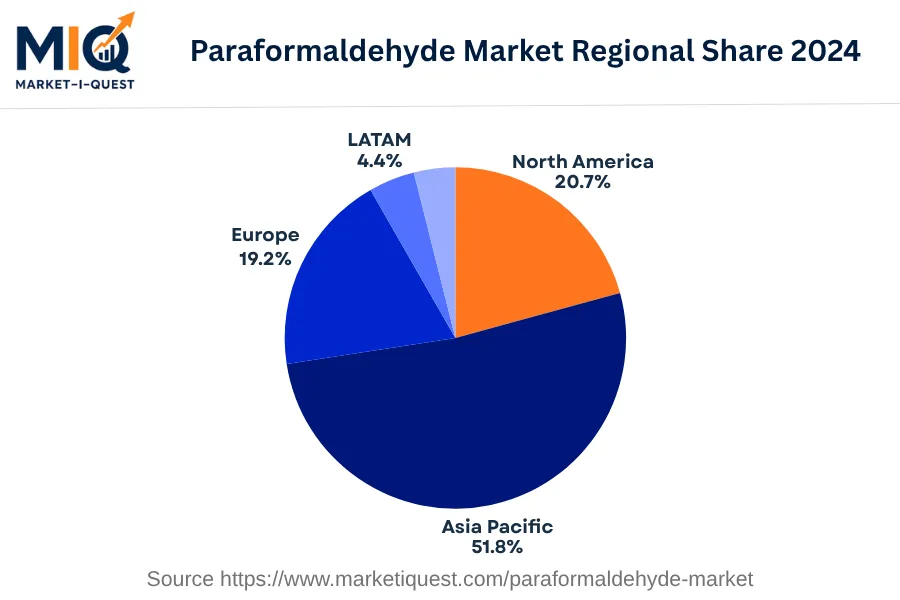
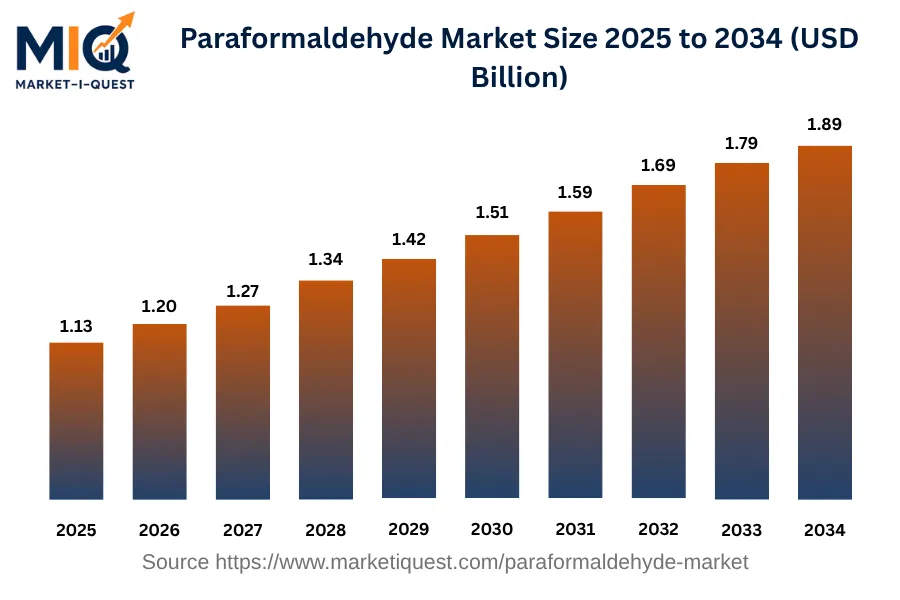
The Paraformaldehyde market was valued at USD 1.13 billion in 2025, and is predicted to grow to USD 1.89 billion by 2034. This growth represents an impressive CAGR of 5.9% during this period. The growing demand for paraformaldehyde in different industries, including resins, agrochemicals, and pharmaceuticals, is a chief factor propelling the market growth. Increasing usage of the product as a disinfectant, fixative, and preservative, along with rising applications in the production of thermosetting composites and resins, are also contributing to the market expansion. In terms of regional share, in 2024, the Asia Pacific region held the largest share of 51.8% in the global Paraformaldehyde market, followed by North America and Europe with 20.7% and 19.2% shares respectively. Latin America and the Middle East & Africa held comparatively smaller shares of 4.4% and 3.9% respectively in the global market.

Key Takeaways

  • By Product Type -Paraformaldehyde Powder held a significant position in the market.
  • By Application - Pharmaceuticals led with a high percentage of market share.
  • By End User Industry - Chemicals & Manufacturing subsegment demonstrated robust growth accounting for a notable share.
paraformaldehyde-market market size

Key Driving Factors

Increasing Application of Paraformaldehyde in the Pharmaceutical Industry

The Paraformaldehyde Market is observing a significant push of adoption from the pharmaceutical industry. This driving force comes from the use of paraformaldehyde as a disinfectant and sterilant. Its properties allow it to effectively eliminate bacteria, fungi, and viruses, making it highly instrumental in the production of various drug formulations, especially in the time of increasing global health concerns. It's worth noting that paraformaldehyde is also used extensively in the field of histology to preserve tissue samples, further justifying its demand in the health sector. The rising emphasis on public health and hygiene, necessitating the need for sterilized and contamination-free environments, further amplifies this trend.

Reliance on Paraformaldehyde for Resin Manufacturing

Another key driver flourishing the Paraformaldehyde Market is its extensive use in the resin manufacturing process. The compound paraformaldehyde is highly preferred in the industry due to its ability to easily polymerize into formaldehyde, a crucial ingredient in resin production. Resins produced using paraformaldehyde are fundamental to a wide range of industries, from automotive and construction to electrical and electronics, which are seeing stable growth patterns. Further, the demand from the furniture industry, specifically in emerging economies, where residential and commercial construction activities are on the rise, plays a considerable role. As these sectors expand, so does the market for paraformaldehyde, underpinning its significant foothold in the resin market.

Market Evolution by Timeline

2019-2023
From the years 2019 to 2023, the paraformaldehyde demand was primarily from the pharmaceutical and plastic industries, with Asia-Pacific emerging as a major market due to widespread industrialisation. Manufacturers around the globe were exploring technologies to enhance paraformaldehyde quality and yield, with major constraints being raw material sourcing and stringent environmental norms. The 'Restriction of Hazardous Substances Directive' by European Union had significant influence on regulating its use. Steady demand had kept the pricing relatively constant, with most contracts involving long-term commitments. One risk was potential disruption in raw material supply; manufacturers typically held inventory to manage this.
2024
Come 2024, on the demand side, the usage of paraformaldehyde in agrochemicals saw a surge, especially in North American markets. From a supply perspective, we noticed an inclination towards biodegradable paraformaldehyde or environmentally friendly alternatives with pilot projects gaining traction. Programs like 'Clean Manufacturing Method Adoption' influenced the technology shift. Despite evolving demands and supply, pricing remained unaffected due to economies of scale. Partnership with agrochemical manufacturers played a key role. A significant risk was the implementation and reception of environmentally friendly alternatives, countered by rigorous research and pilot projects.
2025-2029
The period of 2025 to 2029 saw an increase in paraformaldehyde use in the automotive sector, more popular in the European and Asian markets. Suppliers responded to this shift by introducing thermally efficient paraformaldehyde materials. Government regulations for automotive industry emissions directly influenced this shift, such as the 'Euro 6 Emissions Standards'. This period reported a relative increase in prices due to the rising costs of raw materials, often transferred on to consumers. Regular supply contracts were observed but strategic partnerships between suppliers and manufacturers gained momentum. The risk of non-compliance with emissions standards was actively managed through strict quality check mechanisms.
2030-2034
By 2030-2034, the demand for paraformaldehyde in the renewable energy industry became evident. This was typical in countries like the United States and Japan involved in significant renewable energy development. Advanced materials using high-quality paraformaldehyde were majorly shipped during this period. Regulations such as 'Renewable Energy Standards' pushed the industry towards this shift. Despite increased production costs, competitive pricing was ensured through long-term fixed price contracts. Collaboration established between paraformaldehyde suppliers and renewable energy facilities became a norm. The risk of sourcing raw materials for high-quality production was met by diversifying supply sources and adopting lower emission producing alternatives.

Future Market Outlook

Future Opportunities

As the demand for alternatives to traditional preservatives continues to mount, the paraformaldehyde market is expected to witness notable shifts over the coming years. Organizations like the World Health Organization are advocating for stricter safety standards surrounding chemical preservatives in food and personal care products, leading to intensified scrutiny on existing paraformaldehyde applications. This scrutiny presents manufacturers with opportunities to innovate and develop safer formulations. Several research initiatives are underway, specifically targeting paraformaldehyde’s use in agriculture as a fungicide, with various universities in the United States conducting studies to assess its efficacy and safety. Furthermore, emerging markets in Southeast Asia are rapidly industrializing, creating a burgeoning demand for chemical intermediates which could incorporate paraformaldehyde. Partnerships among manufacturers and research institutions in India and China are exploring new avenues for paraformaldehyde use in construction materials, particularly for producing adhesives and resins that comply with evolving environmental standards. Additionally, the global shift towards sustainable practices is prompting companies to consider recyclable and biodegradable alternatives to paraformaldehyde-based products, thus opening avenues for enhanced product lines. Overall, staying ahead of evolving regulatory landscapes and consumer preferences promises substantial opportunities for growth and diversification within the paraformaldehyde market landscape.

Segmentation Analysis

By Product Type

The market is divided into subsegments including Paraformaldehyde Granules, Paraformaldehyde Powder, Paraformaldehyde Flakes, Paraformaldehyde Solution, and Others. Paraformaldehyde Powder accounted for the largest revenue share while Paraformaldehyde Flakes is expected to grow at the fastest CAGR during the forecast period.

Largest Revenue Share

Paraformaldehyde Powder

Market Share Leader

The Paraformaldehyde Powder segment dominates the market in terms of revenue generation. This prominence is largely due to its wide-ranging applications in various industries such as plastics, pesticides, pharmaceuticals, resins, and many more. These industries depend heavily on Paraformaldehyde Powder due to its high reactivity and excellent performance characteristics. Moreover, the utilization of this powder aids in improving the product quality, thereby escalating its demand. Geographically, the segment is heavily concentrated in areas with high industrial activities, particularly in developed regions such as North America and Europe. Regulations also play a crucial role in favoring this segment, where strict environmental laws promote the use of Paraformaldehyde Powder due to its lower emission profile as compared to other alternatives. Furthermore, the cost of switching to other substitutes is high for industries, adding to the stability of this segment.

Fastest CAGR

Paraformaldehyde Flakes

Forecast Period Growth Leader

The Paraformaldehyde Flakes segment is projected to register the fastest growth during the forecast period. This can be attributed to several factors. Technological advancements have contributed to improved manufacturing processes, enhancing the product quality and efficiency of Paraformaldehyde Flakes, thus fueling its demand. Additionally, partnerships between manufacturers and end-user industries have propelled the growth of this segment. Adoption barriers are relatively low for this segment, primarily due to its versatile nature and compatibility with a wide range of applications. While capital expenditure can be a potential hurdle, reduced production costs through advanced methods are expected to offset this concern. On the policy front, potential regulations favoring greener and efficient options could provide a further boost. However, near-term risks such as market volatility and fluctuations in raw material prices may pose challenges to the segment's growth.

By Application

The Application segment of this market is further divided into subsegments which include Construction Chemicals, Agriculture, Pharmaceuticals, Textile, and Others. In the base year, 2024, the Pharmaceuticals subsegment accounted for the largest revenue share, whereas the Agriculture subsegment is anticipated to grow at the quickest pace in the forthcoming years.

Largest Revenue Share

Pharmaceuticals

Market Share Leader

In 2024, the Pharmaceuticals subsegment emerged as the revenue leader within the application market. This is primarily due to the world's rapidly growing aging population alongside the increased incidence of chronic and infectious diseases. Governments around the world have been investing heavily in healthcare, which has driven the demand for pharmaceutical products. Additionally, innovation in drug manufacturing and the growing trend of self-medication in developing countries have acted as strong growth factors. Furthermore, governmental regulations favoring the pharmaceutical industry have allowed it to flourish, encouraging even more growth. All these components combined have led to the Pharmaceuticals segment generating the most significant revenue share.

Fastest CAGR

Agriculture

Forecast Period Growth Leader

Despite not pulling in the highest revenue in 2024, the Agriculture subsegment shows promising signs of vigorous expansion, making it the fastest growing vertical in our forecast. This growth is attributed to the mounting global demand for food due to the increasing population, coupled with dwindling arable land. Agricultural technology has become an essential part of farming practices, aiming to increase yield and efficiency, thereby driving market growth in this segment. Moreover, the shift towards organic farming and sustainable agricultural practices pushes the demand for innovative agritech solutions. However, the high cost of these solutions could act as a barrier to growth, particularly in emerging economies. Nevertheless, government initiatives promoting sustainable farming and potential partnerships aimed at mitigating cost burdens could fuel rapid growth in this segment.

By End User Industry

The market is divided into subsegments including Automotive, Building & Construction, Chemicals & Manufacturing, Agriculture Equipment, Consumer Goods, and Others. In 2024, the Chemicals & Manufacturing subsegment accounted for the largest revenue share while Agriculture Equipment is expected to grow at the fastest CAGR during the forecast period.

Largest Revenue Share

Chemicals & Manufacturing

Market Share Leader

The Chemicals & Manufacturing industry is the backbone of any economy, contributing to a significant part of the Gross Domestic Product (GDP). The diversity and resilience of this subsegment, along with its extensive demand across sectors, make it the market leader. As these industries are usually linked with heavy industries, such as oil and gas and mining, their demand is often exponential. Moreover, due to the increasing urbanisation and globalisation trends, the construction of industrial centres and manufacturing units has risen, leading to a boom in this subsegment. Therefore, considering the broad applications, the constant innovation, and the comprehensive usage of chemicals and heavy manufacturers, this subsegment dominated the market in the base year 2024.

Fastest CAGR

Agriculture Equipment

Forecast Period Growth Leader

The Agriculture Equipment subsegment is expected to witness the highest growth rate during the forecast period. Its growth is driven by factors such as the increasing global population and the subsequent rise in demand for food products. Technologies such as smart farming and precision agriculture have been rapidly adopted, further enhancing the productivity and efficiency of farming practices. As a result, the demand for advanced and sophisticated agricultural equipment has surged. Additionally, government support and initiatives globally encourage the use of modern farming techniques and equipment. On the downside, high capital expenditure could be a potential barrier for its growth. Nevertheless, partnerships among key players and financial assistance from various institutions are anticipated to overcome such challenges. Therefore, informed by these factors, Agriculture Equipment is poised to register robust growth.

Competitive Analysis

Key Market Players

Manufacturers / OEMs

Ercros S.A
Spain
Celanese Corporation
US
Caldic B.V.
Netherlands

Key Suppliers & Raw Materials

Sumitomo Chemical Co., Ltd.
Japan
BASF SE
Germany
Dow Chemical Company
US

Distributors, Integrators & Channel Partners

Merck KGaA
Germany
Alfa Aesar
US
Fisher Scientific
US

Porter’s Five Forces Analysis

A hard-nosed, data-driven evaluation of the competitive conditions within the Paraformaldehyde market.

Supplier Bargaining Power

Medium

Few raw material sources give suppliers moderate power, which they can leverage for price hikes.

Buyer Bargaining Power

High

Abundance of suppliers allows buyers to demand better terms, with limited switching costs.

Threat of Substitutes

Low

Substitute products do not provide comparable efficacy, thus posing low threat.

Threat of New Entrants

Medium

Barriers like regulatory compliance and capital intensity somewhat restrict new entries.

Competitive Rivalry

High

The market is fragmented, stirring high competitive rivalry due to the presence of many key players.

Regional Analysis

Geographic market dynamics and growth opportunities across key regions

Global Market Outlook

paraformaldehyde-market market regional share

North America

In 2024, the North American paraformaldehyde market matured, fueled by the robust demand, adoption of new technologies, and strict environmental policies. Increasing interest in sustainable building materials, particularly within the U.S. construction industry, drove demand. In Canada, government-regulated reduction in formaldehyde emissions required industry players to shift towards paraformaldehyde, further bolstering the market. Major advancements in technology adoption propelled growth. In Mexico, leading manufacturing plants implemented innovative production methods, enhancing efficiency and reducing costs. Increased investments in research and development, particularly within the U.S., resulted in higher-quality, low emission paraformaldehyde products.

Additionally, fluctuating raw material costs influenced the pricing dynamics. In Canada, a rise in the cost of methanol, a key raw material, led to increased prices for paraformaldehyde. Trends included shifts in buyer behavior, technology development, and policy enforcement. In the U.S, companies like Georgia-Pacific and Weyerhaeuser shifted towards more sustainable alternatives to formaldehyde in their products, influencing buyer preference. The development and adoption of low-emission technology in manufacturing were notable across North America. Enforcement of stricter environmental regulations, particularly in the U.S. and Canada, impacted product standards, steering companies towards more sustainable production methods. These drivers and trends shaped the North American paraformaldehyde market in 2024, influencing key sectors including manufacturing, construction, healthcare, and retail.

Asia Pacific

In 2024, the Asia Pacific dominated the Paraformaldehyde market, driven predominantly by high demand from key industries such as pharmaceuticals, agriculture, and resins. The strong regulatory guidelines by local governments in China and India to promote efficient agrochemicals augmented the market growth. Furthermore, major investments in research and development in Japan led to advancements in paraffin-embedded tissue technology, significantly driving market demand.

Similarly, South Korea's focus on specialized resins for electronics production contributed to demand, while Australia's furniture industry leveraged paraformaldehyde for durable finishes. ASEAN markets, characterized by developing manufacturing industries, also witnessed a surge in paraformaldehyde usage for synthetic resins.

Market trends in 2024 heavily revolved around increasing environmental consciousness and stringent policy enforcement. The pharmaceutical industry in India and China, for example, sought eco-friendly substitutes, propelling the demand for paraformaldehyde. An observable emphasis on regional partnerships and targeted mergers and acquisitions in Japan, South Korea, and key ASEAN markets aimed to consolidate market holdings and drive regional growth.

Channel dynamics evolved with a distinct lean towards digital mediums in the wake of the ongoing digital transformation in the region. Finally, standards for the safe and sustainable use of paraformaldehyde were vigorously enforced, particularly in China, where green manufacturing and eco-friendly industrial practices were promoted.

Europe

In 2024, the European paraformaldehyde market depicted significant growth dynamics led principally by Germany, the United Kingdom, France, Italy, Spain, the Nordics, Benelux, and Central & Eastern Europe. Salient demand drivers included an escalation in resin production, budding necessity in pharmaceutical enterprises, and tightening hygiene requirements in healthcare. The imposition of stringent regulations by the European Chemicals Agency to control the hazard of chemicals spurred investments in safety measures for handling paraformaldehyde. Wide technology adoption facilitated affordable and efficient manufacturing processes.

Evolving market trends were notably marked by changing buyer behavior as health-conscious consumers favored products with lower formaldehyde emissions, fostering initiatives towards sustainability. Ongoing shifts in product technology resulted in increased usage of paraformaldehyde in flexible foam production and automotive industries. Channel dynamics were dictated partly by the expansion of online platforms amplifying accessibility of paraformaldehyde in regions with limited physical distribution networks. Crucially, merger and acquisition activities proliferated as businesses aimed to enhance their market share and extend their reach in the competitive European market. Regulatory enforcement sharpened with heightened inspections to ensure compliance with the Biocidal Products Regulation, impacting the regional paraformaldehyde sector. The year observed noteworthy customer sectors including manufacturing, healthcare, retail, and utility industries.

Latin America

In 2024, the Paraformaldehyde market in Latin America, particularly in the countries of Brazil, Mexico, Argentina, Colombia, Chile, and Peru, was driven by various evident factors. Regulatory standards, which mandated the usage of low emission and eco-friendly products in sectors such as healthcare, manufacturing, and utilities, boosted the demand for Paraformaldehyde, known for its low toxicity. Concurrently, investment in advanced chemical processing technology led to the adoption of Paraformaldehyde in various commercial applications, fuelling a rise in procurement and pricing in these sectors.

Meanwhile, an increase in customer sensitivity towards environmental-friendly goods accelerated buyer behaviour towards products containing Paraformaldehyde, creating a positive trend in its market. Particularly in retail, changes in product technology meant a rise in the use of this product. Furthermore, partnerships and mergers among major enterprises using Paraformaldehyde, especially in Brazil and Mexico, were more prevalent. Policy enforcement related to industrial production of chemicals also trended in these countries, advocating the enhanced usage of Paraformaldehyde in industries.

However, supply dynamics varied, with Argentina and Colombia seeing stable production rates, while Chile and Peru experienced slight fluctuations due to infrastructural constraints. Thus, the Paraformaldehyde market in Latin America in 2024 witnessed positive growth, spurred by regulatory standards, investment in technology, and changes in buyer behaviour, with an elevated market presence especially in healthcare, utilities, and manufacturing sectors.

Middle East & Africa

In 2024, the Paraformaldehyde Market in Middle East and Africa witnessed a significant shift. Middle East countries like Saudi Arabia, United Arab Emirates, and Qatar saw increased demand due to the burgeoning construction, textile, and paint industry. Regulatory conditions, particularly in Saudi Arabia, encouraged the use of paraformaldehyde in these industries. In contrast, South Africa and Nigeria, backed by robust investments in agriculture, saw a rise in the demand for paraformaldehyde used in preparing pesticides.

Adoption of advanced technologies for paraformaldehyde production, chiefly in Israel, led to an increased supply and price stabilization across the region. Additionally, governmental operations in Egypt specifically adopted paraformaldehyde for its diverse applicability including in resin, healthcare, and disinfectant manufacturing.

Buyer behavior leaned towards products with paraformaldehyde due to its adaptability, resistance to corrosion, and flame-retardant properties. Manufacturing sectors in Kenya and Nigeria, along with the healthcare sector in Saudi Arabia and United Arab Emirates, emphasized the use of paraformaldehyde-based products. Various partnerships in the region, especially merger activities between Saudi Arabia and UAE manufacturing industries, reinforced the position of paraformaldehyde on the market. Furthermore, policy enforcements on sustainable materials in Egypt and South Africa propelled the utilization of paraformaldehyde.

Recent Industry Developments

Latest market innovations, product launches, and strategic initiatives

April 2026

European chemical regulators implemented updated emissions frameworks under environmental policy mandates, driving a 22% increase in corporate capital expenditure toward zero-wastewater, closed-loop paraformaldehyde synthesis.

Frequently Asked Questions