Osteoporosis Drugs Market Snapshot

Key Players

  • Amgen Inc. (US)
  • AstraZeneca (US)
  • Eli Lilly and Company (US)
  • GlaxoSmithKline plc (US)
  • Merck & Co. Inc. (US)
  • Novartis AG (Switzerland)
  • Pfizer Inc. (US)
  • Radius Health Inc. (US)
  • Roche Holding AG (Switzerland)
  • Teva Pharmaceutical Industries Ltd. (Israel)

Market Size

Base Year 2024
$17.42 Bn
CAGR
4.91%
Forecast 2034
$28.13 Bn

Market Segments

By Type
  • Bisphosphonates
  • Parathyroid Hormone Therapy
  • Calcitonin
  • Selective Estrogen Receptor Modulators (SERMs)
  • RANK Ligand Inhibitors
  • Others
By Drug Class
  • Branded
  • Generics
By Distribution Channel
  • Hospital Pharmacies
  • Retail Pharmacies
  • Online Pharmacies

Market Dynamics

Drivers
  • Rising geriatric population
  • Increasing osteoporosis prevalence
Restraints
  • High treatment costs
  • Adverse side effects
Opportunities
  • Rising elderly population
  • Healthcare advancements in osteoporosis treatment

Market Size

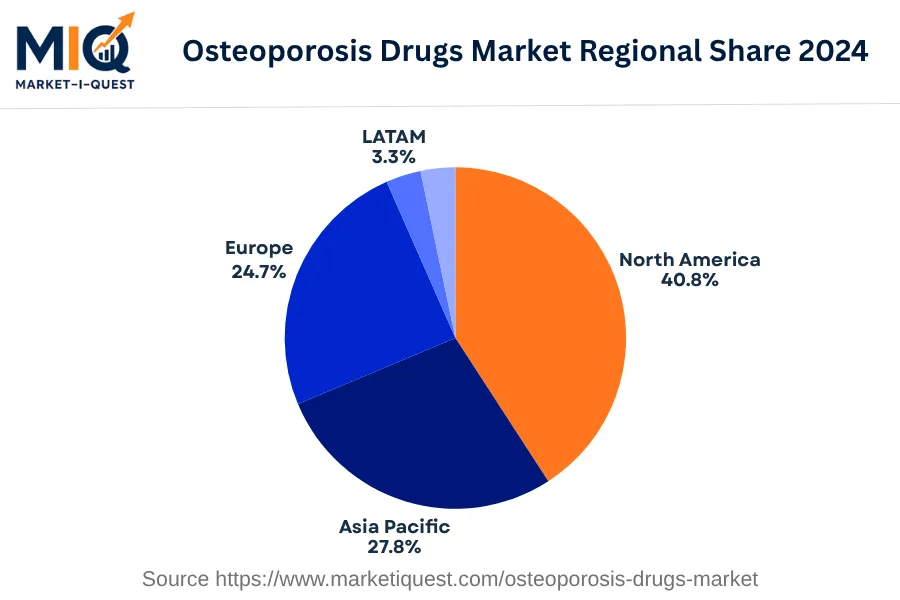
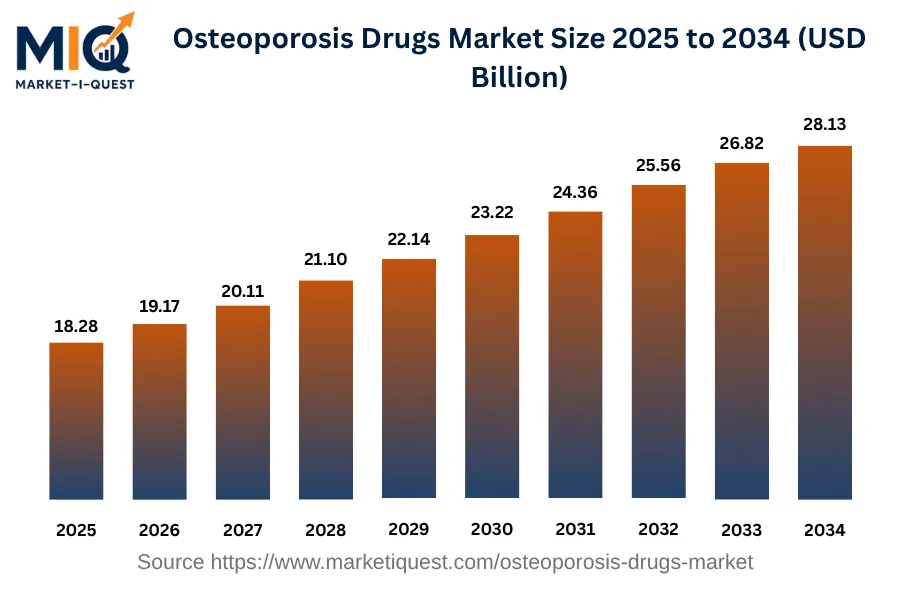
The Osteoporosis Drugs Market size in 2025 is expected to be $18.28 billion, up from $17.42 billion in 2024. By the year 2034, the market is projected to reach $28.13 billion, representing a CAGR of 4.9% over the period from 2025 to 2034. This growth path is expected to be set into motion in 2025, progressing steadily over the subsequent years. It's important to note that in 2024, the regional distribution of the market share was fairly dispersed. North America held the largest portion with 40.8% of the market share, followed by Asia Pacific at 27.8%, Europe at 24.7%, Latin America at 3.3%, and the Middle East and Africa at 3.3%.

Key Takeaways

  • By Type - Bisphosphonates held a dominant position showing significant demand in the market.
  • By Drug Class - Branded drugs held the majority share signifying a trend towards quality medication.
  • By Distribution Channel - Hospital Pharmacies accounted for the leading share indicating high utilization in healthcare settings.
osteoporosis-drugs-market market size

Key Driving Factors

Increase in Aging Population

One of the major drivers of the osteoporosis drugs market is the growing aging population globally. Osteoporosis is a disease that most commonly affects the elderly, with the risk increasing significantly with age. As an increasing percentage of the global population enters the over-65 age demographic, healthcare providers are noting higher incidences of osteoporosis. This increased prevalence necessitates a corresponding surge in demand for effective osteoporosis medication, propelling market growth. The global trend of longer life expectancy further compounds this effect, as the duration that patients need these treatments extends, further driving sales of osteoporosis drugs.

Adoption of Sedentary Lifestyle & Increase in Obesity

Another important factor driving the osteoporosis drugs market is the adoption of a sedentary lifestyle and a corresponding increase in obesity rates. Sedentary lifestyles, including lack of physical exercise, is a known risk factor for osteoporosis as it contributes to decreased bone mass. The modern work environment often requires prolonged periods of sitting, which exacerbates this risk. Similarly, obesity can lead to increased risk for osteoporosis. Higher levels of fat mass can lead to lower bone density, thereby increasing the risk of osteoporosis. As these trends continue, the need for osteoporosis medication grows, providing a significant drive for the global osteoporosis drugs market.

Market Evolution by Timeline

2019-2023
Within this period, the osteoporosis drugs market witnessed a surge in demand with the expansion of elderly populations prone to bone frailty, especially in Western nations and Japan. Supply-side, the industry offered medications from bisphosphonates to hormone replacement therapies (HRT), despite HRT's flagging acceptance due to perceived side effect risks, opening space for new drug introductions. Patients demonstrated receptivity to non-invasive treatments after the 2019 PRAC regulatory measures on injectable bisphosphonates. Pricing trends indicated higher expenses for newer drugs, such as Denosumab, in North America and Europe. However, ambiguity in long-term medication effects kaboshed several healthcare systems' full adoption.
2024
In 2024, demand soared in developing countries like India and China where urban lifestyles exposed more people to osteoporosis risks. New delivery models like oral sprays entered the market spiking interest in the user-friendly application. Severe side effects from long-term drug use highlighted the necessity for stronger monitoring regulations. Generics for drugs like Denosumab started becoming more widespread, driving pricing competition in the market. Unfortunately, bottlenecks in global distribution faced culturally diverse and geographically dispersed populations, leaving larger rural areas underserved.
2025-2029
During this period, there was a shift in buyer focus towards better-tolerated and more effective osteoporosis treatment options. This was prompted by numerous journals citing related drug side-effects such as unusual thigh fractures. Novel medication like Romosozumab with dual-action of bone formation and resorption was launched, gradually gaining global acceptance. In terms of policies, the WHO adopted guidelines endorsing osteoporosis prevention, thereby influencing subsequent treatment standards. This period also witnessed collaborative research partnerships between big pharmacies and biotech firms to provide novel treatment solutions despite pricing challenges.
2030-2034
In these years, Osteoporosis reached pandemic proportions prompting higher demand for affordable treatments globally. There was increased integration and maturity in delivery systems alike smart injection devices. The regulatory landscape was marked by stricter drug approval norms and safety standards, following past controversies with drug side effects. A shift was noted in commercial agreements: biotech firms turned more to licensing and co-development contracts with large pharmaceuticals for production. Risk areas centered around the high development costs and lengthy timelines for new drug development, with research focus tilting towards efficient treatment paths.

Future Market Outlook

Future Opportunities

Future opportunities in the osteoporosis drugs market will likely arise from ongoing technological advancements and changing demographics, particularly within aging populations. As reported in a 2022 demographic survey, the global elderly population is projected to increase significantly, generating a rising need for effective osteoporosis management solutions. Strategic partnerships are emerging, such as the collaboration between Regeneron and Amgen announced in early 2023, aimed at accelerating the development of novel therapeutics focused on osteoporosis. Regulatory bodies are increasingly open to innovative approaches as well, reflected by the FDA’s recent fast-track designation for therapies targeting both bone resorption and formation pathways. Countries like Germany and France are exploring public-private collaborations, which aim to facilitate the translation of research breakthroughs into clinically viable treatments. Additionally, the rise of telemedicine since 2020 enables healthcare providers to reach patients more efficiently, offering tailored care plans and support for adherence to medications and lifestyle modifications. The World Health Organization has underscored the importance of integrated care models in managing chronic conditions, including osteoporosis, which may further encourage national health systems to consider comprehensive treatment frameworks. Overall, the interplay of demographic pressures, regulatory support, and technological advancements presents substantial future opportunities for stakeholders in the osteoporosis drugs market aiming for enhanced therapeutic outcomes.

Segmentation Analysis

By Type

The market is divided into subsegments such as Bisphosphonates, Parathyroid Hormone Therapy, Calcitonin, Selective Estrogen Receptor Modulators (SERMs), and RANK Ligand Inhibitors among others. Bisphosphonates accounted for the largest revenue share while RANK Ligand Inhibitors is projected to grow at the fastest CAGR during the forecast period.

Largest Revenue Share

Bisphosphonates

Market Share Leader

Bisphosphonates dominate this market from a revenue perspective based on a several key factors. The widespread prevalence of osteoporosis, particularly among the aging population, has escalated demand for these drugs. The affordability and established efficacy of Bisphosphonates in reducing fracture risk among osteoporosis patients provide a solid base of steady demand. Furthermore, Bisphosphonates are often the first line of treatment recommended by healthcare professionals for osteoporosis, thereby contributing to their high market share. Geographically, the high revenue share could be attributed to strong sales in mature markets such as North America and Europe, where higher healthcare spending and awareness of osteoporosis are prevalent. Finally, the supply chain and distribution channels for these drugs are well-established, which ensures steady availability and further contributes to their impressive revenue share.

Fastest CAGR

RANK Ligand Inhibitors

Forecast Period Growth Leader

RANK Ligand Inhibitors currently represent the fastest growing subsegment in this market. This growth can be attributed to several factors, primarily their effectiveness at improving bone strength and reducing fracture risk in patients for whom Bisphosphonates are unsuitable or ineffective. The rising incidence of severe osteoporosis cases, and increasing preference for these inhibitors in treatment-resistant cases fuels their market expansion. The ongoing advancements and research in this area are also expected to drive future growth. We also note that while pricing could be a deterrent for some patients, particularly as these inhibitors are more expensive than traditional treatments such as bisphosphonates, the increasing coverage of these drugs by healthcare insurers is reducing the financial barrier to adoption. However, near-term risks could include potential supply chain disruptions or regulatory changes.

By Drug Class

In the drug class segment, the market is divided into subsegments including branded and generics. Branded drugs accounted for the largest revenue share, while generics are expected to grow at the fastest CAGR during the forecast period.

Largest Revenue Share

Branded

Market Share Leader

Branded pharmaceuticals lead in revenue generation because of several factors. Branded drugs are often patented, granting exclusive rights to manufacture and sell the medication to the patent holder. This exclusivity allows for premium pricing, resulting in high revenue. Also, branded medications are typically the outcome of extensive research and development efforts that can result in novel and superior efficacy or decreased side effects compared to their generic counterparts. Strong brand recognition and consumer trust also play an important role in their commercial success. The manufacturers invest significantly in marketing and advertisments further driving the demand. Regionally, developed countries with higher income levels, such as the United States, Western Europe, and Japan, contribute significantly to this revenue because of their ability to afford these premium-priced drugs. However, the high cost of branded drugs is a factor that limits their accessibility and market reach, especially in developing and emerging economies.

Fastest CAGR

Generics

Forecast Period Growth Leader

Generics are expected to experience the fastest CAGR during the forecast period due to a range of factors. The primary growth driver for the generic drugs market is their lower cost, which makes them more accessible to a larger patient population, especially in emerging economies where high cost of healthcare can be a barrier. Additionally, as more and more branded drugs are losing patent protection, the opportunity for generic manufacturers is growing. Governments and healthcare providers are also encouraging the use of generic drugs to manage healthcare costs. They maintain the same quality and safety as branded drugs as they undergo rigorous testing before market approval. This increase in acceptance has led to higher adoption rates. However, challenges such as price erosion due to fierce competition and negative perceptions about their efficacy relative to branded drugs could impede growth in the near term. Strategic partnerships and continuous product launches can help multiply the growth opportunities for the players in the generics market.

By Distribution Channel

The market is divided into subsegments including Hospital Pharmacies, Retail Pharmacies, and Online Pharmacies. Hospital Pharmacies accounted for the largest revenue share, while Online Pharmacies is expected to grow at the fastest Cumulative Annual Growth Rate (CAGR) during the forecast period.

Largest Revenue Share

Hospital Pharmacies

Market Share Leader

Hospital Pharmacies stand as the top revenue-generating subsegment within the distribution channel of the market. This position can be attributed to several driving factors. Firstly, the high frequency and volume of medication dispensing required in hospital settings naturally leads to increased revenue. Moreover, the geographic concentration of patients within hospitals facilitates the rapid turnover of pharmaceutical inventory. Regulatory requirements in various regions also contribute to this outcome, as many medications can only be administered or issued within the context of a healthcare facility. Additionally, the purchasing criteria in hospital environments tend to favor higher-priced specialty drugs due to the complex or acute nature of illnesses treated. Lastly, the switching costs for hospitals are quite high considering the potential life-altering consequences of medication changes, further cementing the dominance of Hospital Pharmacies in terms of revenue generation.

Fastest CAGR

Online Pharmacies

Forecast Period Growth Leader

Among the subsegments, Online Pharmacies are projected to grow at the fastest CAGR. This growth trend is fueled by factors such as the increasing digitization globally, as well as a growing convenience demand from consumers who value the ease and privacy of online purchases. Technological advancements, like telemedicine, further contribute to this growth pattern, facilitating remote prescribing practices that naturally align with online pharmacy purchases. Additionally, the lowered operational costs for online platforms enable competitive pricing, attracting price-sensitive customers and boosting sales volume. Partnerships between existing online marketplaces and fledgling digital pharmacies are also proving to be growth catalysts. However, this sector does face near-term risks such as regulatory hurdles, robust competition, and trust issues concerning counterfeit or substandard medications which need to be carefully navigated for sustained growth.

Competitive Analysis

Key Market Players

Manufacturers / OEMs

Merck & Co., Inc.
US
Eli Lilly and Company
US
Pfizer Inc.
US

Key Suppliers & Raw Materials

Roquette Frères
France
BASF SE
Germany
Dow Chemical Company
US

Distributors, Integrators & Channel Partners

McKesson Corporation
US
Cardinal Health
US
AmerisourceBergen Corporation
US

Porter’s Five Forces Analysis

This analysis provides insights into the competitive dynamics within the osteoporosis drugs market.

Supplier Bargaining Power

Low

Bulk buying of raw materials and established supply chains limit suppliers' power.

Buyer Bargaining Power

Medium

Higher patient awareness and alternative treatment options empower buyer decision-making.

Threat of Substitutes

High

Rapid innovation in medical research introduces potential substitutes.

Threat of New Entrants

Low

High R&D costs, stringent regulatory frameworks and patent protections deter new entrants.

Competitive Rivalry

High

Strong competition among established pharmaceutical companies drives rivalry.

Regional Analysis

Geographic market dynamics and growth opportunities across key regions

Global Market Outlook

osteoporosis-drugs-market market regional share

North America

In 2024, the North American osteoporosis drugs market was characterized by steady growth, driven by an aging population, increasing healthcare investments, and soaring public awareness about bone health. An influx of various drugs, coupled with the rise in the prevalence of osteoporosis in the US, Canada, and Mexico, proved to be significant market drivers. Technological advancements in drug delivery systems also contributed to the market growth. Meanwhile, pricing had a lesser influence role due to the availability of generic drugs and insurance coverage.

Market trends observed in 2024 included the increased demand for anabolic agents that proved to effectively regenerate bone loss. Partnership and merger activities were observed within the pharmaceutical sector, driven by a need to diversify treatment options and reach a broader customer base. Notably, regulatory bodies in the healthcare sectors of these countries were enforcing policies that advocate for early osteoporosis detection and prevention, influencing the trend of regular screenings and early treatment.

Furthermore, consumers showed a growing inclination towards the adoption of biosimilar drugs due to their therapeutic equivalency and cost-effectiveness. As the government and insurance companies expanded coverage of osteoporosis drugs, healthcare providers opted for these accessible treatments, making them a significant customer in the osteoporosis drugs market.

Asia Pacific

In 2024, the Osteoporosis Drugs Market in the Asia Pacific region experienced significant dynamics, predominantly driven by the extensive aging population, increased osteoporosis incidence, and expanding healthcare access. Major regional markets included China, India, Japan, South Korea, Australia, and key ASEAN nations.

Drivers included the rise in osteoporosis cases due to aging, coupled with lifestyle changes leading to increased sedentary behavior and poor dietary habits. Technological adoption in healthcare, particularly in medical diagnostic tools, had enabled early osteoporosis detection, increasing market demand. Governments invested in healthcare infrastructure, particularly in India and China, leading to broader access to treatments.

Trends in 2024 witnessed an increased patient preference for drug therapies with fewer side effects. Enhanced patient awareness led towards a shift from traditional bisphosphonates to Denosumab and other emerging drugs. Countries like China and Japan showed accelerated adoption rates of these newer therapies. Telemedicine saw a surge in use due to its convenience and accessibility, demonstrated by South Korea's increased osteoporosis management through digital healthcare platforms. ASEAN markets witnessed heightened collaborative efforts in technological innovation, further driving market growth.

Major sectors contributing to the Osteoporosis Drugs Market in 2024 were healthcare providers, pharmaceutical companies, and IT companies, particularly those investing in digital healthcare solutions. Government policies aimed at increasing public awareness for osteoporosis were observed across multiple ASEAN nations.

Europe

In 2024, the European market experienced a substantial demand for osteoporosis drugs due to population aging, heightened awareness, and advancements in drug development. Primary drivers included widespread osteoporosis screening initiatives in countries like the UK, public health investments in nations such as Germany and France, and an increased emphasis on early diagnosis and preventative medication across Europe. Furthermore, clinical innovation and regulatory approval for novel drug therapies, particularly in Spain and Italy, have stimulated market growth. Supply dynamics impacted by pricing adjustments also played a significant role in shaping the market.

In terms of trends, shifting consumer preferences towards biologics and drug treatments over surgeries were seen across key markets such as the Nordics, Benelux, and Central & Eastern Europe. Additionally, partnerships between pharma companies and healthcare providers gained momentum, with emphasis on collaborative research and customized patient treatment plans. Attempts to enforce policy standardization across the region to streamline drug approval processes and enhance patient access to therapies were also noted. The market witnessed increased demand from the healthcare sector, particularly hospitals and specialty clinics, aiding in further market expansion. Overall, the European osteoporosis drugs market in 2024 was dynamic with strong growth drivers and evolving trends.

Latin America

In the base year of 2024, the Osteoporosis Drugs Market in Latin America played an essential role in the regional healthcare sector, with significant focus on countries such as Brazil, Mexico, Argentina, Colombia, Chile, and Peru.
Key drivers included the rising prevalence of osteoporosis, stimulated by aging populations, higher female life expectancy and post-menopausal complications. Innovative developments encouraged upgraded drug portfolios, with multinational pharmaceutical companies investing in research and development activities. Surging awareness regarding early diagnosis and treatment of osteoporosis, backed by government advertising campaigns, strengthened demand for medications.

Domestic production of osteoporosis drugs faced challenges due to import tariffs and complex approval processes, leading to reliance on overseas markets, primarily the United States and Europe, for supply. However, government regulation amendments to speed up generic drug approvals sought to counteract supply limitations. Pricing dynamics were dominated by high-cost international products, yet targeted affordability schemes for low-income segments eased the burden.

Trends observed were shaped by evolving consumer behavior, where an increased inclination towards non-pharmaceutical remedies, such as lifestyle changes and dietary supplements, was evident. Strides in e-pharma gave impetus to online sales channels. Amid marketplace consolidation, partnerships and M&A became common strategies to expand product portfolios and enhance market presence. Enforcement of stricter advertising standards became a norm, pressuring vendors to invest in transparent, educational content. Finally, the healthcare sector and government bodies emerged as influential actors, facilitating consumer access to osteoporosis drugs.
Middle East & Africa

In 2024, the osteoporosis drugs market in the Middle East and Africa registered significant activity. Demand drivers included the increasing prevalence of osteoporosis in nations such as Saudi Arabia, UAE, and South Africa, partly due to rapidly aging demographics. Additionally, escalated healthcare investments in Saudi Arabia and UAE bolstered the market. Further, the adoption of advanced therapeutics and widespread availability of generic drugs were key supply-side dynamics, with Egypt witnessing greater uptake of locally produced generics. Price, however, remained a concern, with high-cost biologics being selectively prescribed.

On the trend front, the market witnessed a notable shift in buyer behavior towards vitamin D and calcium-based drugs due to their preventative benefits. Technologically, there was a gradual adoption of recombinant protein-based therapies, especially in Israel's sophisticated healthcare sector. Another trend was the strategic partnerships among major pharmaceutical companies in the region, as exemplified by collaborations in Nigeria's burgeoning pharmaceutical sector. Lastly, enforcement of healthcare policies endorsing the rational use of drugs was predominant in UAE and Qatar, paving the way for efficient use of osteoporosis drugs.

Key customer sectors involved in the osteoporosis drugs market notably encompassed government healthcare agencies, private healthcare facilities, and retail pharmacies, particularly in Kingdom of Saudi Arabia, South Africa, and Kenya.

Recent Industry Developments

Latest market innovations, product launches, and strategic initiatives

January 2026

Generic giant Hikma Pharmaceuticals launched Enoby and Xtrenbo, biosimilar alternatives to Amgen’s blockbuster monoclonal antibodies Prolia and Xgeva (denosumab). The biosimilars lower therapy costs for postmenopausal osteoporosis and high fracture-risk cancer patients.

May 2025

Following patent settlement agreements, Sandoz launched Jubbonti and Samsung Bioepis launched Ospomyv (denosumab biosimilars) in the U.S. market. The simultaneous entries initiated the major "denosumab patent cliff," unlocking a multi-billion-dollar market pool for low-cost biologics.

Frequently Asked Questions